
As humans became more sophisticated after thousands of years evolving, they became conquerors of land when explorers sailed to new lands and staked rights to it in the name of their monarchs. Vasco da Gama was one such explorer trying to find India, but locating South Africa on his perilous ocean travels.
South Africa
The Portuguese nobleman Vasco da Gama (1460-1524) sailed from Lisbon in 1497 on a mission to reach India and open a sea route from Europe to the East. After sailing down the western coast of Africa and rounding the Cape of Good Hope, his expedition made numerous stops in Africa before reaching the trading post of Calicut, India, in May 1498. Da Gama received a hero’s welcome back in Portugal, and was sent on a second expedition to India in 1502, during which he brutally clashed with Muslim traders in the region. Two decades later, da Gama again returned to India, this time as Portuguese viceroy; he died there of an illness in late 1524.
https://www.history.com/topics/exploration/vasco-da-gama

A hugely important part of Africa, there are so many fossils often found through modern day mining activities. The history of early human existence has been pieced together and some finds are stored in a museum:

But when Europeans arrived and gradually traded then explored then moved into the pristine land, they became a presence which left shame on their impact on this land over the centuries.

https://www.sahistory.org.za/article/eastern-cape-wars-dispossession-1779-1878
Under apartheid, nonwhite South Africans—a majority of the population—were forced to live in separate areas from whites and use separate public facilities. Contact between the two groups was limited.
https://www.history.com/topics/africa/apartheid
Palestine
It first came under Muslim control when Jerusalem fell to the Rashidun Caliphate in 637, less than five years after the Prophet Muhammed’s death. During the Crusades, Christian armies from Western Europe fought both Muslims and local Christian factions for control of their religions’ holy sites. Between 1517 and 1917, the Ottoman Empire—whose official religion was Islam—ruled the region.
https://www.history.com/topics/middle-east/palestine#what-is-palestine

When World War I ended in 1918, the British took control of Palestine. The League of Nations issued a British mandate for Palestine—a document that gave Britain administrative control over the region, and included provisions for establishing a Jewish national homeland in Palestine—which went into effect in 1923.
https://www.history.com/topics/middle-east/palestine#what-is-palestine
Unknown to the Palestinians, there was a plan for a Jewish covert army to be put together to eventually take Palestine and replace it with a Jewish State see https://hahagana.org.il/ when the British were supposed to be protecting the Palestinians after WW2.
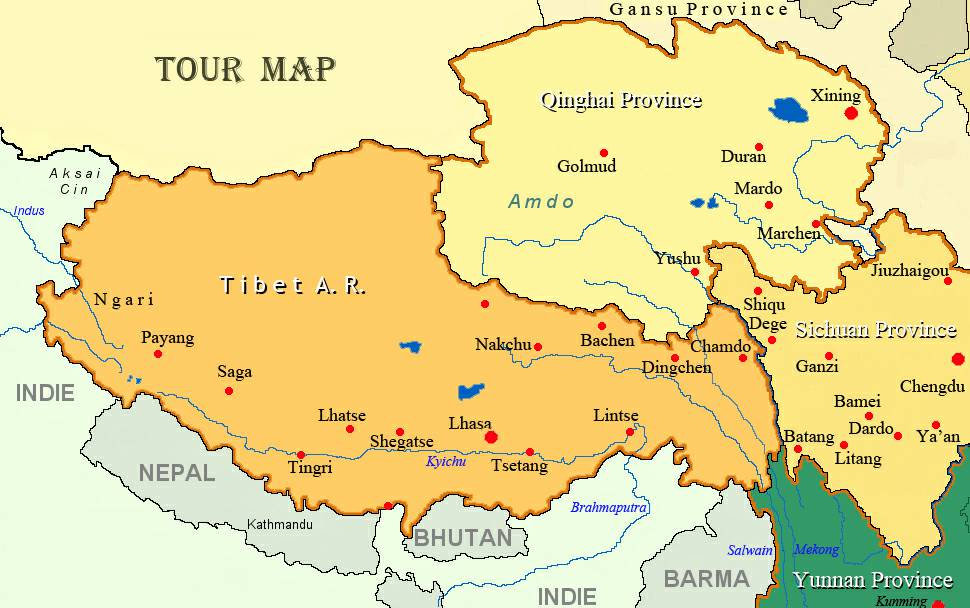
Tibet

Tibet closed its borders to foreigners in 1792, keeping the British of India (Tibet’s southwestern neighbor) at bay until the British desire for a trade route with China caused them to take Tibet by force in 1903. In 1906 the British and Chinese signed a peace treaty that gave Tibet to the Chinese. Five years later, the Tibetans expelled the Chinese and declared their independence, which lasted until 1950………
After China took control…….Many Chinese have been financially encouraged to move to Tibet, diluting the effect of the ethnic Tibetans. It’s likely that the Tibetans will become a minority in their land within a few years. The total population of Xizang is approximately 2.6 million.
https://www.thoughtco.com/tibet-geography-and-history-1435570
See:
https://savetibet.org/what-we-do/our-team/richard-gere/
Moving populations to replace an existing ethnic group reduces the visibility of the earlier resident cultures in a slow and cruel negation and degradation of human existence. That has become a negative pattern of human behaviour over the past centuries.

 borderslynn
You must be logged in to post a comment.