An estimated 600,000 people have been affected by flooding across southern and central Mozambique, particularly in Gaza, Maputo, and Sofala provinces, following heavy and persistent rainfall since mid-December. The majority of the people affected, 75 percent, are in Gaza.
Access bottlenecks are hampering relief operations, as road access to affected areas is largely cut off. This is also significantly disrupting supply chains. Air and maritime assets are urgently needed to allow the dispatch of urgent supplies, including those being airlifted to Maputo.
High-volume dam releases are contributing to elevated river levels and continued downstream flooding with more areas being affected. The floods have had severe impacts on lives, livelihoods, and essential services, including damage to sections of the main road linking Maputo to the rest of the country.
Key priorities include the rapid deployment of air assets for search and rescue and to secure humanitarian access to hard-to-reach areas, urgent mobilization of civil engineering and disaster management specialists to temporarily restore key access routes and reinforce flood control measures.
A large-scale increase in humanitarian assistance is required with a particular focus on food, WASH, emergency shelter and NFIs, and essential health services with strong protection measures in place to prevent sexual exploitation and abuse, and gender-based violence.
Tulsi Gabbard monitors raid by FBI on election office as she carries out, as she sees it, “President Trump’s directive to secure our elections and work with our interagency partners to do so.”
Warner: ‘Why is Tulsi Gabbard at an FBI raid on an election office in Fulton County?’
Story by Ryan Mancini
• 15h
Sen. Mark Warner (D-Va.) ono Wednesday shared Reuters’s photo of Director of National Intelligence Tulsi Gabbard during the FBI’s search of 2020 voting records at the Fulton County, Ga., elections office, questioning why she was there.
“Why is Tulsi Gabbard at an FBI raid on an election office in Fulton County?” Warner asked in a post on the social platform X, which included a video.
Reuters photographer Elijah Nouvelage captured the photo of Gabbard wearing a baseball cap and talking into a smartphone while next to a vehicle loaded with boxes, her eyes turned toward the camera.
Warner said there were two explanations for why Gabbard would be at the election offices.
“Either Director Gabbard believes there was a legitimate foreign intelligence nexus — in which case she is in clear violation of her obligation under the law to keep the intelligence committees ‘fully and currently informed’ of relevant national security concerns — or she is once again demonstrating her utter lack of fitness for the office that she holds by injecting the nonpartisan intelligence community she is supposed to be leading into a domestic political stunt designed to legitimize conspiracy theories that undermine our democracy,” he wrote in a response to his first post.
==============
“We don’t know why they took them, and we don’t know where they’re taking them to,” county Board of Commissioners Chair Robb Pitts said.
Fulton County played a pivotal role following President Trump’s loss in the 2020 election. Fulton County District Attorney Fani Willis (D) indicted Trump on racketeering charges in 2023 for allegedly conspiring to subvert the election results and win Georgia to stay in office. The case was dropped in 2025 ahead of the president’s return to the White House and after Willis was disqualified from the case.
We’ve broken lots of major stories about ICE this month, but we’re just getting started (I have more leaked documents than time to write them up!)
“We have a nice little database and now you’re considered a domestic terrorist,” a masked federal agent taunted a protester filming him in Maine last week.
Department of Homeland Security spokesperson Tricia McLaughlin’s response was firm: “There is NO database of ‘domestic terrorists’ run by DHS.”
There’s just one problem: She’s lying.
Two senior national security officials tell me that there are more than a dozen secret and obscure watchlists that homeland security and the FBI are using to track protesters (both anti-ICE and pro-Palestinian), “Antifa,” and others who are promiscuously labeled “domestic terrorists.”
I can reveal for the first time that some of the secret lists and applications go by codenames like Bluekey, Grapevine, Hummingbird, Reaper, Sandcastle, Sienna, Slipstream, and Sparta (including the ominous sounding HEL-A and HEL-C reports generated by Sparta).
Some of these, like Hummingbird, were created to vet and track immigrants, in this case Afghans seeking to settle in the United States. Slipstream is a classified social media repository. Others are tools used to link people on the streets together, including collecting on friends and families who have nothing to do with any purported lawbreaking.
There’s practically nothing available that further describes what these watchlists do, how large they are, or what they entail.
“We came out of 9/11 with the notion that we would have a single ‘terrorist’ watchlist to eliminate confusion, duplication and avoid bad communications, but ever since January 6, not only have we expanded exponentially into purely domestic watchlisting, but we have also created a highly secretive and compartmented superstructure that few even understand,” says a DHS attorney intimately familiar with the subject. The attorney spoke on the agreement that their identity not be disclosed.
Prior to 9/11, there were nine federal agencies that maintained 12 separate watchlists. Now, officially there are just three: a watchlist of 1.1 million international terrorists, a watchlist of more than 10,000 domestic terrorists maintained by the FBI, and a new watchlist of transnational criminals, built up to more than 85,000 over the past decade.
The new domestic-related watchlists—a set of databases and applications—exist inside and outside the FBI and are used by agencies like ICE and the Border Patrol to organize the Niagara of information in possession of the federal government. Collectively, they create ways to sort, analyze, and search information, a task that even artificial intelligence has failed to conquer (so far).
Among other functions, the new watchlists process tips, situation reports and collected photographs and video submitted by both the public and from agents in the field; they create a “common operating picture” in places like Minneapolis; they allow task forces to target individuals for surveillance and arrest; and they create the capacity for intelligence people to link individuals together through geographic proximity or what is labeled “call chaining” by processing telephone numbers, emails, and other contact information.
Administration officials have alluded to all of this, though contrary to the Hollywood idea of some all-seeing eye, actual government watchlists are more a patchwork system of lists and applications, each of which might have individual justification or even legitimate purpose to aid law enforcement but overall form the basis for massive violations of American civil rights.
“One thing I’m pushing for right now … we’re going to create a database where those people that are arrested for interference, impeding and assault, we’re going to make them famous,” Tom Homan, Trump’s border czar, told Fox News earlier this month.
Watchlists in general fly in the face of the spirit of the Constitution and the protections it’s supposed to embody against unreasonable search and seizure, and relating to the right of privacy.
“The very essence of the ‘list’ is its secrecy and its lack of any opportunity for the listed to be heard,” Supreme Court Justice Felix Frankfurter said of a Justice Department list of subversives during the Red Scare. “It is the shrouding of the process in a veil of secrecy that is the most offensive to our democratic traditions.”
Now, the national security community has developed an interlocking set of lists and applications that are secret not just to the public but opaque to most who toil in the federal agencies themselves. Asked about the watchlists, a Border Patrol agent recounted to me how they punch their data into their own proprietary application, not really knowing what happens after that.
Again, these watchlists aren’t the all-seeing eye of Sauron that many imagine. They’re more like the compound eye of a fly, a fragmented array of lenses (over 3,000 per eye in the common housefly!) that collectively form a mosaic. That mosaic—the ability to unify all the disparate lists into one master picture—doesn’t yet exist, sources tell me. That, however, is the direction we’re going, especially with software packages like Palantir that can be customized to aggregate all that is collected.
“We do of course monitor and investigate and refer all threats, assaults and obstruction of our officers to the appropriate law enforcement,” says McLaughlin. “Obstructing and assaulting law enforcement is a felony and a federal crime.”
Impeding federal law enforcement has emerged as the Trump administration’s primary justification for actions against people like Renee Good and Alex Pretti.
As part of its new effort to support its operations in places like Minneapolis and Los Angeles, the Homeland Security Department, working with the Justice Department, has started more methodically tracking what it calls “aggressive protesters.” According to one senior official, this is a new designation the agency uses to describe the supposed threat posed by people on the streets.
Both Good and Pretti were considered aggressive protesters; in Good’s case, for criticizing ICE officers while operating a vehicle; and in Pretti’s case, getting up close to immigration officers while filming them.
Bangor plane crash kills 7: Private jet linked to ‘anti‑Trump’ lawyers who defended illegal aliens
Story by TOI World Desk
• 2d
Bangor plane crash kills 7: Private jet linked to ‘anti‑Trump’ lawyers who defended illegal aliens
Seven people were killed and one crew member seriously injured when a private jet crashed on takeoff at Bangor International Airport in Maine on Sunday night, officials said.
The Bombardier Challenger 600 went down during a heavy winter storm as it tried to lift off at about 7.45 pm local time. The aircraft was reportedly connected to a Houston law firm.
The Federal Aviation Administration confirmed that the jet, carrying eight people, crashed during takeoff amid freezing snow and icy conditions.
Emergency responders were on the scene for hours as the airport was closed and flights were cancelled in the region.
Here is an extract from Michael D Sellers Substack, January 29, 2026, showing his belief Minnesotans have set the example for America:
They showed how accountability can be built quickly:
A simple neighborhood signal that mobilizes bodies.
A distributed set of cameras that creates an evidentiary wall.
Rapid dissemination that prevents early narrative capture.
A swarm of analysis that makes denial look ridiculous.
A press ecosystem forced—by the thickness of the record—to engage reality rather than press releases.
That’s not just “resistance.” It’s civic competence. It’s the muscle memory of self-government.
And it appears to have mattered on the ground. ICE isn’t gone. The larger machine doesn’t dissolve because one community stands up. But it does seem like something shifted. Peak madness—at least in that place, in that phase—hit a limit. Not because power became kinder, but because citizens made the cost of unchecked lying higher.
Vigilance remains essential; anyone who thinks the story ends neatly is not paying attention. But we should still be able to say, without embarrassment, that ordinary people pushed back—and that pushback changed the weather.
So the question becomes the one you asked implicitly: have we learned enough to repeat this?
Will other cities show the same spirit and resolve?
It’s too soon to promise. Civic courage is not guaranteed, and it is never evenly distributed. But Minnesota has set an example that can’t be unseen. It has reminded the country of something we forget at our peril: institutions are not the only guardians of public truth. Sometimes they are the problem. Sometimes they are late. Sometimes they are compromised. Sometimes they are trapped by access and incentives.
When that happens, the people become the record.
And maybe that is the most hopeful part of this story: not the outrage, not even the exposure, but the quiet competence of a community that remembers how to become a community in a crisis.
A whistle. A door opening. Footsteps in the snow. Phones raised, not for spectacle, but for the simple insistence that what is happening is seen.
In that sense, “The Eyes of Minnesota” is not just a poetic line. It’s a civic achievement.
The eyes prevailed—not because they were perfect, but because they were many. Because they were close. Because they were brave enough to be present. Because they understood, at last, that the first battle is for the story, and that the story belongs to the people who show up.
And for that, Minnesota has shown the rest of the country a standard worth honoring—and worth imitating.
The example has been set.
The Eyes of Minnesota have prevailed.
Over to you America
Another 2 apps which provide an ICE worker with phone details in targetted locations:
How ICE uses phone and internet data to identify and track people
People listen to clergy and faith leaders call for accountability at the site where Renee Good was killed by an ICE agent in Minneapolis on Jan. 8.
Ben Hovland | MPR News
404Media identified these apps:
What acting ICE Director Todd Lyons called the “largest immigration enforcement operation ever” continues to unfold in Minnesota. And we are learning about the tools federal law enforcement agents use to track the people they’re trying to arrest, as well as protesters.
ICE recently purchased two programs called Tangles and Webloc, which are used to track the cell phone activity of entire neighborhoods and monitor people over social media and through internet data, according to reporting by 404 Media. 404 Media journalist Joseph Cox joined MPR News host Nina Moini with insight on those tools and how they’re used to track people.
More ICE software surveillance app, Mobile Fortify:
An ICE agent points a government-issued smartphone at someone’s face, snaps a photo, and within seconds knows whether that person has a deportation order—or at least, whether an algorithm thinks they do. The tool, called Mobile Fortify, went live in June 2025, and it searches more than 200 million photographs stored in federal databases. No warrant required. No reasonable suspicion needed. Point and scan.
US immigration agents are using an app developed by Palantir that draws on the health records of millions of Americans to find and detain people they deem illegal immigrants.
The revelation comes as the US’s Immigration and Customs Enforcement (ICE) comes under increased scrutiny after the shooting of Alex Pretti, a 37 year old intensive care nurse, by ICE agents in Minneapolis over the weekend.
It has now emerged that data from the Department of Health and Human Services (HHS) is being fed—along with other commercial and public datasets—into an analytics app developed by Palantir, according to an investigation by news outlet 404 Media.1
Testimony from an ICE official and internal documents obtained by 404 show the app, Enhanced Leads Identification and Targeting for Enforcement (Elite), maps areas to help agents decide where to conduct detention raids.
The tool was reportedly used in recent operations, including a raid in Oregon in October in which 30 people were arrested.
According to the 404 investigation, Elite pulls names, addresses, and photos from health records. It reportedly works like Google Maps, showing ICE agents which areas have higher densities of people who could be detained. It also generates dossiers on individuals, including their name, photo, and “confidence scores” that they are at home.
An HHS spokesperson contacted by The BMJ did not clarify what information was given to ICE but said the information sharing was permitted under national law.
“Several federal laws authorise the Centers for Medicare and Medicaid Services (CMS) to make certain information available to the Department of Homeland Security (DHS),” the spokesperson said. “Under the Immigration and Nationality Act, ‘any information in any records kept by any department or agency of the government as to the identity and location of aliens in the US shall be made available to’ immigration authorities.”
There is no data sharing agreement between CMS and DHS on “US citizens and lawful permanent residents,” they added.
In July 2025, it was revealed that a data sharing agreement between the US health department and ICE would see the personal data of 79 million Americans receiving Medicaid assistance handed over to the deportation agency.
This includes names, addresses, birth dates, and ethnic and racial information.2
In November 2023, NHS England awarded Palantir a £330m contract to create a new data management system called the Federated Data Platform (FDP) that aims to provide “joined up” NHS services.1 Palantir is an American technology company that specialises in artificial intelligence powered military and surveillance technology and data analytics.2 Concerns have been raised about the cost of NHS England’s contract with Palantir and whether it offers value for money, as well as questions about public trust in Palantir and the procurement process.3
This contract has become increasingly controversial as Palantir has vocally announced it is supporting the Israeli Occupation Forces (IOF) with their assault in Gaza. Since October 2023, Palantir has been outspoken in its support for the Israeli military.45 In January 2024, Palantir signed a deal with the IOF to increase its “advanced technology provision” to Israel in support of war related missions.2 Palantir’s CEO Alex Karp says he is “exceedingly proud” of Palantir’s involvement in what he calls “operationally crucial operations in Israel.”6
IOF operations have been described as a “war on hospitals” because of the systematic destruction of Gaza’s entire health system and 943 IOF attacks on healthcare.78 Hundreds of health workers have been detained, tortured, and killed.91011
In addition to directly attacking healthcare, ongoing bombardment, forced displacement of Palestinians, and near complete siege of Gaza, the IOF has created a severe health and humanitarian crisis with high rates of malnutrition, infectious disease, famine, and dehydration. In January 2024 the International Court of Justice issued an interim judgment which stated that Israel’s actions constitute plausible genocide.
The fact that NHS England still considers Palantir an appropriate partner raises serious questions about NHS England’s integrity. The multiple contracts awarded to Palantir over recent years have brought with them allegations of favouritism by NHS executives, backdoor meetings, donations to the Conservative party, ministerial directives being used to override patient confidentiality rules, and Palantir’s Peter Thiel’s own confession that the company is “buying its way in”’ to the NHS.121314
Patients and campaigners have been raising concerns about Palantir’s creeping involvement with the NHS for years based on concerns about ethics, outsourcing, and privacy. The tech company has a long and controversial history of supporting predictive policing, deportations, state surveillance, and drone strikes in Iraq and Afghanistan.15
NHS England risks further losing the trust of health workers, patients, and the public if it continues with this contract with Palantir. On 3 April 2024, more than 100 health workers, patients, and allies picketed the offices of NHS England to demand that the contract is cancelled.16
Outrage from health workers, patients, and the public will only grow as further atrocities are committed by the IOF. If NHS England is to recover its own reputation and maintain public trust in health data systems, it must cancel the contract with Palantir.
NHS England, a quango under the Tories, is due to be incorporated into the non-departmental public body and will be integrated into the Department for Health and Social Care (DHSC). The Prime Minister criticised the excessive overlap between the DHSC and NHSE. He argued the move to make NHSE more autonomous from central government.
NHS England to be abolished – what it means and how it could affect you
I am reproducing this Substack I found analysing the Mamdani interview with Trump in November last year.
It is a ‘a case study in how a bully behaves when he can’t rely on fear, and how a principled politician behaves when he refuses the role of the victim.’
There’s a strange thing that happens when you watch the full thirty-minute interview instead of the clipped version the internet tosses around. The edges soften. The masks slip. And you start to see the actual geometry of the interaction — where power sits, where insecurity leaks, where the tone changes, where the truth speaks by accident. The viral clip makes it look like a moment. The full meeting reveals a dynamic.
This wasn’t a showdown. It wasn’t a humiliation. It wasn’t a triumph for either man. It was something far more revealing: a case study in how a bully behaves when he can’t rely on fear, and how a principled politician behaves when he refuses the role of the victim.
The meeting begins as all Trump meetings do — with noise.
The first five minutes are pure Trump: monologues disguised as greetings, numbers inflated beyond physics, scattered recollections of the 1980s like the era froze and preserved him in amber. You can practically hear his brain flipping through its greatest hits, trying to set the tone: This is my room. My chair. My story.
But Mamdani doesn’t react to any of it.
And that is the first hinge of the meeting.
A man like Trump needs emotional feedback to function. Fear works. Flattery works. Even anger works. Mamdani gives him nothing. He sits there with the calm of someone who refuses to let the other person set the emotional tempo. It’s a small thing, but with Trump, it’s enough to break the cycle.
Then comes the shift — the “gracious Trump” phase.
People mistake this for maturity or diplomacy. It’s not. It’s a reflex Trump only deploys when he can’t dominate the room. The tone goes soft, the eyebrows lift, the compliments come out in forced, syrupy bursts.
“You’re doing great work.”
“New York is lucky to have you.”
“You’re a very smart guy.”
It sounds statesmanlike until you remember the same man called him a communist threat two weeks earlier. What’s happening here isn’t respect — it’s adaptation. A chameleon trying to match the color of the wall.
Trump is gracious when graciousness benefits Trump.
As Mamdani shifts to policy, Trump drifts into autobiography.
This is the most telling stretch — minutes twelve to eighteen. Mamdani tries to talk like a mayor-elect:
transit
housing
Rikers
federal cooperation
immigrant protections
Real issues, real stakes, real governance.
Trump responds by vanishing into his own mythology. Crime statistics from memory that don’t exist. Grievances about prosecutors. Stories from “the old days.” Complaints about how unfairly he’s been treated.
It’s not sabotage — it’s incapacity.
Mamdani is speaking a civic language Trump’s brain can’t decode.
They aren’t having the same conversation.
They aren’t even on the same continent.
Then comes the moment everyone’s dissecting — the “fascistic tendencies” line.
And yes, it happened in the room, not after. Mamdani doesn’t weaponize the word. He doesn’t turn it into a headline. He does something more dangerous: he analytically names the pattern.
Immigrant raids.
Political retribution.
Targeting dissent.
Erosion of checks and balances.
Threats against the judiciary.
He lays out the evidence and names the behavior: fascistic tendencies.
Trump nods and smiles like someone being told he has an excellent golf swing.
It’s not bravado. It’s not denial.
It’s something almost sadder: he doesn’t understand the language of critique unless it’s blunt and emotional. Mamdani moved the discussion into the realm of political analysis, and Trump’s instincts don’t live there. So he simply… accepts it. Not because he agrees, but because he can’t absorb what the words actually mean.
The last ten minutes are the clearest portrait of Trump’s psyche.
Once Mamdani refuses to bend, Trump compensates by overcorrecting into flattery:
“You’re going to surprise people.”
“I feel very comfortable with you.”
“We’re going to get along great.”
It’s dominance disguised as benevolence. When Trump can’t conquer, he tries to adopt. He folds the other person into his narrative: You and I are the same. We’re allies. You approve of me. I approve of you.
It’s a kind of political camouflage — digest the threat by complimenting it.
Mamdani doesn’t take the bait.
He doesn’t fight.
He doesn’t flatter.
He just continues speaking plainly.
Which leaves Trump in the one position he hates most:
performing civility for an audience that isn’t fooled.
What the meeting really showed
The full interview isn’t about Mamdani calling Trump a fascist.
It’s not about Trump pretending to be gracious.
It’s not about a progressive mayor meeting an authoritarian president.
What the meeting showed is simpler and more damning:
Trump is only powerful when the room fears him.
Take the fear away, and he becomes oddly gentle, strangely polite, and completely unable to dominate the conversation.
People think tyrants rage because they’re strong.
But the truth is they only rage when they know the room will absorb it.
Mamdani didn’t absorb it.
So Trump didn’t rage.
He folded.
Nicely. Neatly.
Like a man who knows the cameras are watching and doesn’t want the world to see what he looks like when the mask cracks.
And if there’s a lesson here for the rest of the country, it’s this:
Fear is the oxygen of authoritarianism.
Take it away, and even a strongman starts to sound like a man.
Now we have Homan in Minneapolis, Charlie Sykes on Substack describes the man:
Homan is a blister of a man who relishes and celebrates brutality. His rhetoric frequently frames all undocumented individuals as criminals and threats; and he is notorious for “promoting cruelty as deterrence” and normalizing abusive practices like ripping children from their parents. Indeed, he has been a voluble supporter of family separation.
“I’m sick and tired of hearing about the family separation,” he declared in 2023. “I’m still being sued over that…
“I don’t give a s***, right? Bottom line is, we enforced the law.”
Last year Senator Chris Hollen (D-MD) described Homan as “the Trump thug who wants to deny due process rights to migrants and brag about tearing families apart.”
And now we learn Alex Pretti was already on the database (Palantir/Oracle) of federal immigration authorities:
Slain ICU Nurse Broke Rib in ICE Encounter Days Before Death
Updated Jan. 27 2026 3:53PM EST Published Jan. 27 2026 3:33PM EST
The ICU nurse who was shot and killed by Border Patrol agents on Saturday reportedly broke his rib during a prior interaction with federal officers about a week before his death.
Sources told CNN that federal immigration authorities had documented information about Alex Pretti, 37, before he was killed on Saturday, as part of an effort to collect personal and identifying details about anti-ICE protesters in Minneapolis.
The Guardian has confirmed that ICE is increasingly using a smartphone app called Mobile Fortify to scan faces in Minnesota and nationwide, allowing agents to instantly pull biometric data from multiple databases, a practice critics warn risks misidentification, racial bias, and privacy violations, has sparked lawsuits and protests, and prompted Democratic lawmakers to push legislation restricting or banning its use outside ports of entry.
Wired has confirmed that Meta blocked users on Facebook, Instagram, and Threads from sharing links to a database listing names and photos of ICE agents, citing privacy violations, as tensions rose in Minneapolis after aggressive ICE operations, with critics calling the move censorship and the Trump administration arguing the site endangers officers by effectively doxing them
A UC Berkeley analysis found that in the first nine months of the Trump administration, ICE street arrests and internal deportations surged—driven by an 11-fold increase in street arrests—resulting in a sevenfold rise in arrests of immigrants with no criminal convictions as enforcement shifted away from prioritizing criminal history and detention capacity expanded.
404 Media/ Podcast research on Palantir tool tailored for ICE – ELITE:
‘ELITE’: The Palantir App ICE Uses to Find Neighborhoods to Raid
Internal ICE material and testimony from an official obtained by 404 Media provides the clearest link yet between the technological infrastructure Palantir is building for ICE and the agency’s activities on the ground.
Dave Aronberg, Substack 28th Jan 2026 on important Trump regime rebukes by Judge Schiltz:
First, we look at the case of Juan Hugo Tobay Robles, an Ecuadorian man wrongfully detained for weeks despite a court order. When Judge Schiltz threatened to hold Acting ICE Director Todd Lyons in contempt, the administration finally blinked and released Robles.
Then, there is the stunning attempt to arrest journalist Don Lemon for covering an anti-ICE protest inside of a Minneapolis church. Judge Schiltz and the 8th Circuit recently rejected the DOJ’s emergency bid for arrest warrants,. It’s a vital reminder that even in a aggressive ICE crackdown, the rule of law must prevail.
In Minneapolis, USA, another valuable human being has been executed.
Alex Pretti, ICU nurse, executed whilst trying to protect a woman who had been thrown to the ground by ICE agents
We are heartbroken but also very angry.
“Alex was a kindhearted soul who cared deeply for his family and friends and also the American veterans whom he cared for as an ICU nurse at the Minneapolis VA hospital.
“Alex wanted to make a difference in this world. Unfortunately he will not be with us to see his impact.
“I do not throw around the hero term lightly. However, his last thought and act was to protect a woman.
“The sickening lies told about our son by the administration are reprehensible and disgusting.
“Alex is clearly not holding a gun when attacked by Trump’s murdering and cowardly ICE thugs.
“He has his phone in his right hand and his empty left hand is raised above his head while trying to protect the woman ICE just pushed down all while being pepper-sprayed.
“Please get the truth out about our son. He was a good man. Thank you
Sky News
ICU nurse with no criminal record who ‘cared deeply for people’: What we know about Alex Pretti, victim of DHS shooting
Alex Pretti worked as an ICU nurse and had spent time working with the Department of Veterans Affairs
Graig Graziosi in Washington, D.C.Sunday 25 January 2026 01:39 GMT
This photo is gleaned from a video the NYT verified as real, shows the execution of a helpless PRETTI by a manic, untrained, unsupervised group of ICE agents
Terrence Goggin on Substack, Jan 25th 2026:
Today is a very sad day in my household. The murder of the Intensive Care Nurse Alex Pretti, one of our own, he worked at the VA Medical Center in Minneapolis taking care of the sickest of us, struck me hard. Very hard. I looked at the numerous videos of him trying to aid a female protestor. His last words to her before he was shot were “Are you all right”. He was shot helping another human being who was gassed by ICE. HE WILL NEVER BE FORGOTTEN BY THE VETERAN COMMUNITY. And neither will his killing. It demands justice!
Today:
Recently, seven House Democrats voted in favor of a bill to fund the Department of Homeland Security, which includes funding for Immigration and Customs Enforcement (ICE). This decision has sparked significant backlash from their party, as many Democrats oppose ICE’s actions and are calling for more oversight and accountability. Newsweek The Independent
The 7 are:
The seven Democratic representatives who voted yes to approve ICE funding were:
Tom Suozzi (New York)
Henry Cuellar (Texas)
Don Davis (North Carolina)
Laura Gillen (New York)
Jared Golden (Maine)
Vicente Gonzalez (Texas)
Marie Glusenkamp Perez (Washington)
Chris Murphy revealed:
Pam Bondi just sent a letter to MN officials saying ICE will leave if the state turns over its voter database to Trump.
So that is what ICE are really being tasked to do, it would seem: to implement fear, chaos, death and economical damage until a state agrees to turn over its voter database. Then the mid term elections can be manipulated.
If they continue to resist then the Insurrection Act hangs over them like the Sword of Damocles.
Just looked back at a Huffington Post article almost 2 years ago:
Ex-GOP Strategist Has A Stunningly Scathing Response To Latest Republican Loss
“Is there really any question why this party is losing?” Stuart Stevens asked.
Stevens then detailed just some of the stark issues facing the party, scathingly writing:
A party led by a rapist that believes it can fix its problem with women by attacking Taylor Swift, with weird little creeps like Mike Johnson as a public face in Congress, that has no serious policy, that has decided to abandon decades of support for freedom in Europe to back a genocidal dictator, a party that is 85% white in a 59% white country, a party that has decided higher education is a gateway drug to Socialism, that believes public health policy should be set by random freaks on the internet and not doctors, a party that is still fighting cultural wars of gender politics the rest of America ended a decade ago, a party that has replaced American optimism with anger and fear of the future.
Catch up with Stuart Stevens today on Substack, Lincoln Project.
Perpetuating the misery are Trump’s Appellate Judges:
Trump’s ‘Superstar’ Appellate Judges Have Voted 133 to 12 in His Favor
President Trump promised to fill the appeals courts with “my judges.” They have formed a nearly united phalanx to defend his agenda from legal challenges.
Mattathias Schwartz covers the federal courts. Emma Schartz has spent months tracking lawsuits challenging Donald Trump’s agenda.
Jan. 11, 2026
President Trump has found a powerful but obscure bulwark in the appeals court judges he appointed during his first term. They have voted overwhelmingly in his favor when his administration’s actions have been challenged in court in his current term, a New York Times analysis of their 2025 records shows.
Time and again, appellate judges chosen by Mr. Trump in his first term reversed rulings made by district court judges in his second, clearing the way for his policies and gradually eroding a perception early last year that the legal system was thwarting his efforts to amass presidential power.
When Mr. Trump criticized a ruling from a so-called “Obama judge” in 2018, Chief Justice John G. Roberts Jr. responded that “we do not have Obama judges or Trump judges, Bush judges or Clinton judges.”
I am adding a piece from Chris Hedges’ Substack today, Jan 26 2026, entitled ‘Imperial Boomerang’:
The murders of unarmed civilians on the streets of Minneapolis, including the killing today of the intensive-care nurse Alex Jeffrey Pretti, would not come as a shock to Iraqis in Fallujah or Afghans in Helmand province. They were terrorized by heavily armed American execution squads for decades. It would not come as a shock to any of the students I teach in prison. Militarized police in poor urban neighborhoods kick down doors without warrants and kill with the same impunity and lack of accountability. What the rest of us are facing now, is what Aimé Césaire called imperial boomerang. Empires, when they decay, employ the savage forms of control on those they subjugate abroad, or those demonized by the wider society in the name of law and order, on the homeland. The tyranny Athens imposed on others, Thucydides noted, it finally, with the collapse of Athenian democracy, imposed on itself. But before we became the victims of state terror, we were accomplices. Before we expressed moral outrage at the indiscriminate taking of innocent lives, we tolerated, and often celebrated, the same Gestapo tactics, as long as they were directed at those who lived in the nations we occupied or poor people of color. We sowed the wind, now we will reap the whirlwind. The machinery of terror, perfected on those we abandoned and betrayed, including the Palestinians in Gaza, is ready for us.
Greg Bovino ‘loses top job at Border Patrol’ and locked out of social media
Story by Stephen M. Lepore and Phillip Nieto
• 5h
Border Patrol commander Gregory Bovino, one of the faces of Donald Trump‘s immigration crackdown, has been removed from his role and sent back to California.
He will return to his former job in El Centro, California, where he is expected to retire soon, the Atlantic reported on Monday, citing a Homeland Security official and two people with knowledge of the change.
Bovino had his government social media accounts revoked on the orders of his boss, Border Patrol Commissioner Rodney Scott, Homeland Security sources confirmed to the Daily Mail. Bovino had spent the weekend sparring online over the shooting of 37-year-old Alex Pretti.
He had tweeted multiple times ‘don’t assault federal officers’ in response to people sharing positive information about Pretti.
Bovino also, in response to one account claiming that Pretti ‘never at any time produced a gun,’ wrote that ‘the SUSPECT confronted and assaulted officers and was armed while doing so.’
He even got into it with lawmakers, including Republican Thomas Massie, after the Kentucky Congressman wrote that ‘carrying a firearm is not a death sentence, it’s a Constitutionally protected God-given right and if you don’t understand this you have no business in law enforcement or government.’
Bovino responded: ‘Attacking law enforcement is not a right like you want it to be.’
The commander also wrote angrily at Republican Louisiana Senator Bill Cassidy and Texas Democrat Senate candidate James Talarico, both of whom called for independent investigations into the shooting, as well as author Stephen King.
Border Patrol commander Gregory Bovino, one of the faces of Donald Trump’s immigration crackdown, has been removed from his role as ‘commander at large’
The move would be a part of a major shakeup by the Trump administration at the request of Border Czar Tom Homan
After tweeting over 40 responses to various reactions to the Pretti shooting on Saturday and Sunday, Bovino’s X account has gone silent for the past 11 hours.
Tricia McLaughlin, assistant press secretary for the Department of Homeland Security, said Bovino had not been fired and remained a ‘key part of the president’s team.’
Bovino – who has been dubbed ‘little Napoleon’ – and Department of Homeland Security Secretary Kristi Noem have both been sidelined as Homan heads for Minneapolis.
He had previously served as the Chief Patrol Agent of the El Centro Sector of the Border Patrol in southern California before he was elevated during the second Trump administration.
The Daily Mail has reached out to Customs and Border Patrol for comment.
The decision is aimed at de-escalating the violence between federal agents and rioters which exploded on Saturday after the killing of Pretti, an ICU nurse.
Bovino, the controversial face of Trump’s crackdown and a close ally of Noem, sparked fury in the White House when he claimed Pretti intended to ‘massacre’ federal agents.
Bovino – who has been dubbed ‘little Napoleon’ – and Department of Homeland Security Secretary Kristi Noem have both been sidelined as Homan (pictured) heads for Minneapolis
Bovino has reportedly lost access to his government social media accounts, after spending much of the weekend sparring online over the shooting of 37-year-old Alex Pretti (pictured)
Trump spent hours on Sunday and Monday watching cable news coverage and was unsettled by how the administration was being portrayed, one official told CNN.
Noem branded the ICU nurse a ‘domestic terrorist’ and claimed he brandished a firearm, sparking further frustration among administration officials.
White House Press Secretary Karoline Leavitt distanced Trump from Noem’s language on Monday, arguing that it was not a position that the President had taken.
Bovino is a loyalist to Noem and her rumored lover Corey Lewandowski, and both have quietly pushed him as a potential replacement for current Border Patrol chief Rodney Scott, a longtime ally of Homan.
Noem has sought to sideline Scott by having Bovino report directly to her, an unprecedented move within the agency.
Bovino’s removal from Minneapolis underscores Noem’s fading standing with the White House as Trump dispatches Homan and his closest allies to seize control of the operation on the ground.
A Border Patrol veteran of 30 years, Bovino was selected last year from his role as chief patrol agent of the agency’s El Centro sector in Southern California to lead highly publicized immigration crackdowns across the country.
His aggressive tactics, often highly choreographed public displays, sparked backlash from local officials.
Bovino often stood out as the only agent not wearing a face covering when Border Patrol descended on Home Depots and gas stations.
The decision is aimed at de-escalating the violence between federal agents and rioters which exploded on Saturday after the killing of Pretti, an ICU nurse
He has gone viral on social media as he is frequently spotted on the frontlines sporting a severe buzzcut and trench coat, which German media has likened to a ‘Nazi aesthetic’.
California Governor Gavin Newsom said on X: ‘Greg Bovino dressed up as if he literally went on eBay and purchased SS garb. Greg Bovino, secret police, private army, masked men, people disappearing quite literally, no due process.’
Bovino hit back, claiming he had the coat for more than 25 years and it was official Border Patrol merchandise.
Jenn Budd, an author and expert on Border Patrol, described Bovino as ‘the Liberace’ of the agency.
‘He was just a little Napoleon who wants you to think that he is the most moral and capable guy in the world, and everything around you is dangerous but he’s the one who’s going to save you,’ Budd told The Times. ‘It’s all a show for him.’
He once invited journalists to watch him swim across a canal in Southern California’s Imperial Valley in a bid to deter migrants considering the crossing.
After Trump was re-elected Bovino used similar public relations expertise to catch the president’s eye.
He sent dozens of agents to arrest migrants at gas stations along the highway ahead of Trump’s inauguration.
Asked why Bovino was chosen to lead the force, McLaughlin told reporters bluntly: ‘Because he’s a badass.’
But while Bovino’s strongman image earned him Trump’s respect, his self-proclaimed ‘turn and burn’ enforcement strategies have sparked concern.
A federal judge accused Bovino in November of being ‘evasive’ and at times ‘outright lying’ in sworn testimony about an immigration crackdown in Chicago, finding his account ‘simply not credible.’
Judge Sara Ellis wrote that Bovino even admitted he lied about being hit with a rock before ordering tear gas used, and noted that video evidence flatly contradicted his claim that he never tackled a protester.
A Substack author, Ken Klippenstein, obtained reactions from experienced ICE agents about new recruits after the Pretti shooting. Here is an extract:
Though all of the federal agents I’ve spoken to this weekend support immigration enforcement, they indeed see the Minneapolis operation as something else entirely” an open-ended counterinsurgency in a faraway land and under an out-of-touch leadership in Washington more concerned with optics than immigration.
“This is a no-win situation for agents on the ground or immigration enforcement overall,” a Border Patrol agent said in the private group chat shared with me.
He closed on a plaintive note: “I think it’s time to pull out of Minnesota, that battle is lost.”
“Fuck this,” a senior ICE officer said about the shooting of Pretti.
A former chair of Labour Friends of Israel (LFI), a lobby group which promotes Israeli interests and gambling lobbyist, Mendelsohn was embroiled in the 1990s ‘Lobbygate’ scandal. He and his partners at Lawson Lucas Mendelsohn, a public affairs and political communications consultancy otherwise known as LLM Communications, were recorded offering access to the Blair government for substantial sums. They claimed influence over policy, helped Rupert Murdoch shape law and offered suggestions on how to greenwash polluting infrastructure proposals.
It’s not simply a quid pro pro – here’s some cash and you do what I want – it’s about creating a relationship of mutual interestTom Mills
Tom Mills, a researcher on political donations, attributes such scandals to a systemic shift in Labour after 1997. New Labour figures “wanted to insulate themselves” against political pressure from the party so sought funding from “high net-worth individuals” rather than unions, Mills argues. He adds that the party’s increased reliance on wealthy donors may have limited its responsiveness to ordinary members.
Embodying this trend, Mendelsohn worked as a fundraiser for then-PM Gordon Brown during the 2007 ‘Donorgate’ scandal, which revealed he was seemingly aware for months that a wealthy donor had anonymously funneled over £600,000 to Labour through proxies.
I had at first thought this was Lord Mandelson of Jeffrey Epstein fame…this Lord Mandelson:
The happiest day of my life… Mandelson finally marries his partner of 27 years
By Jo Macfarlane
29 Oct 2023
LABOUR peer Peter Mandelson has spoken movingly about why he has married his long-term partner at the age of 70. The veteran politician nicknamed ‘the Prince of Darkness’ said he was ‘delighted’ to have finally tied the knot with Brazilian…
Yet more embarrassment for the Prime Minister over his close links to wealthy peers. Lord Mandelson, one of Keir Starmer‘s key advisers, is under investigation by the lobbying regulator.
The Office of the Registrar of Consultant Lobbyists is looking into the former business secretary’s public affairs firm Global Counsel ‘in relation to potentially inaccurate quarterly information returns’.
Only last week, Labour donor Lord Alli, who has given Starmer thousands of pounds in designer clothes and spectacles, apologised to the House of Lords over four breaches of Parliament’s rules relating to his declaration of financial interests.
Now Global Counsel, founded by Mandelson, a former EU trade commissioner, is under investigation over claims it lobbied British ministers on behalf of the state-backed Qatar Free Zones Authority while failing to list the Qatar authority as a Global client.
Mandelson is close to the Labour high command. Before the election, Global Counsel spent £36,000 seconding a staff member to the office of then shadow treasury minister Tulip Siddiq.
Getting back to the first article, it goes on to talk about a billionaire donor, Trevor Chinn:
Foreign policy, Labour Friends of Israel and Zionist donors
The idea of an ‘Israel lobby’ remains controversial. Yet groups such Labour Friends of Israel clearly have significant political ties, including to Bristol MPs – Darren Jones, Karin Smyth, and Dan Norris have all been listed supporters.
LFI and its Tory counterpart Conservative Friends of Israel (CFI) advocate for British support of Israel. In 2022 it was reported that over 10 years, 320 MPs’ trips to Israel had been funded mostly by LFI and CFI.
In March, during Israel’s escalating use of violence in the Gaza Strip, Damien Egan, MP for Bristol North East, accepted an LFI-funded trip costing £2,400, a month after his by-election victory in the now-defunct Kingswood seat. He justified it as an opportunity to understand the Israeli-Palestinian conflict.
In response to questions from the Cable, Egan noted that, as someone with a local government background, he “was grateful to join a delegation by [LFI] to meet politicians, NGOs and peace activists in both Israel and the West Bank.” He added that “although the delegation was focused on meeting people from the political left,” there were “balanced” perspectives “not shying away” from the region’s “difficult complexities”.
LFI-linked donors have also donated to other local Labour MPs. Sir Trevor Chinn, a prominent British Zionist (or advocate for the existence of an independent Jewish state), longtime LFI supporter and funder/director of Labour Together, donated £2,000 to Dan Norris in July 2024 and £2,500 to Egan in August 2023, and £50,000 to Starmer’s 2020 leadership campaign.
Other prominent Zionist donors, including Gary Lubner and Stuart Roden, have more recently started contributing to Labour’s Bristol MPs. Former Autoglass boss Lubner donated £5,000 to Damien Egan in July 2024 on top of the £4.5 million-plus he has donated to Labour and £600,000 to Labour Together since 2023.
Lubner has been a patron of United Jewish Israel Appeal (UJIA), an influential Zionist NGO, since at least 2016. UJIA, where Chinn is president for life, describes itself as having “decades of experience in sending young Jews in the UK to Israel on rite of passage programmes” including “birthright” to strengthen relationships with the country. The organisation faced criticism in 2022 for housing participants in illegal Israeli settlements in the West Bank.
Meanwhile, Roden, a chairman of Tel Aviv-based venture capital firm Hetz Ventures, contributed £5,000 in July 2024 to Dan Norris, and more than £1.5 million to Labour overall since 2023.
Mills warns against simply seeing political donations as a “quid pro quo – I give you some cash and you do what I want”. Instead, there are powerful individuals wanting access to “a party they’re [ideologically] committed to… it’s creating a relationship of mutual interest and presumably a social and political relationship”.
And an article by Nasim Ahmed goes into more detail. It was published in September 2025, but I suppose I have been totally distracted by the shocking events emanating from ‘over the pond’
The UK Labour Party has been rocked by yet another scandal and is facing scrutiny over revelations that its leadership has been captured by a network of unelected funders and lobbyists with deep ties to Israel and Zionist organisations.
At the centre of the controversy is Morgan McSweeney, Keir Starmer’s powerful chief of staff, and his long-time association with billionaire businessman Trevor Chinn. Documents and leaks show that between 2017 and 2020, McSweeney oversaw Labour Together, a factional project that secretly accepted more than £730,000 (around $930,000) in undeclared donations, allegedly in breach of electoral law.
Much of this money is said to have come from Chinn, a figure whose involvement in Labour politics has for decades been bound up with the defence of Israel and the advancement of Zionist networks inside the party.
Chinn is no ordinary donor. A director of Labour Together until 2024, he has bankrolled both Conservative and Labour Friends of Israel (LFI) throughout his career. In early 2025, he was awarded the Israeli Presidential Medal of Honour by President Isaac Herzog for his services to the apartheid state. Chinn’s commitment to Israel has been described as one of his “animating concerns” over three decades of political donations.
An investigation by Jody McIntyre, who stood as a candidate for the Workers Party in the last general election, shows how deeply enmeshed Chinn became with McSweeney’s project. McSweeney reportedly concealed donations “to protect Trevor” from scrutiny, according to McIntyre’s investigation. Labour Together, however, later dismissed the failure to declare the funds as an “administrative error,” a line advised by solicitor Gerald Shamash, another Labour figure with a record of blocking debates on sanctions against Israel.
Chinn’s influence was not limited to donations. According to minutes of a 2020 meeting revealed by Electronic Intifada, Chinn and five other lobbyists set up a “regular channel of communication” with Labour MP Steve Reed, a close ally of McSweeney and vocal supporter of LFI. The leaked record illustrates the extent to which pro-Israel lobbyists were embedded in Labour’s factional leadership project.
McSweeney’s own ties to Zionism go back further than his dealings with Chinn. In his youth, he spent time living on Sarid, a Zionist settlement built on the ruins of the Palestinian village of Ikhneifis. There, he is said to have become closely acquainted with Hashomer Hatza’ir, a Zionist movement that played a central role in Israel’s settler-colonial project.
McIntyre’s research and internal documents allege that McSweeney campaigned for Steve Reed—who is known to have received funding from LFI for travel to occupied Palestine—and later worked closely with Margaret Hodge, a self-declared Zionist. Some sources also suggest McSweeney oversaw Liz Kendall’s 2015 leadership run, during which she made public statements against boycotts and sanctions of Israel—though the precise nature and funding of these campaigns remain under investigation.
By 2017, McSweeney was director of Labour Together, where Chinn sat on the board. Internal documents revealed that the group’s work included secret projects to undermine Jeremy Corbyn by inflaming the anti-Semitism crisis, planting hostile media stories, and fracturing the party’s left wing.
McSweeney, according to Double Down News, even devised a covert strategy dubbed Operation Red Shield, aimed at “burning down” Corbyn’s Labour in order to capture the party for a pro-business, pro-Israel faction.
The secret funding allowed McSweeney to commission hundreds of thousands of pounds’ worth of polling into the Labour membership. This research shaped Starmer’s leadership campaign, presenting him as a “unity” candidate who pledged to uphold policies such as public ownership and a Green New Deal.
However, once elected, Starmer rapidly U-turned on those commitments, dropping all ten of his leadership pledges. The sequence of events suggests that Starmer’s campaign positions were adopted to secure victory rather than to be implemented in government.
Starmer’s subsequent record confirmed that pattern of deception. Within months of becoming leader, he ditched all ten of his leadership pledges and moved Labour sharply to the right. On Palestine, Starmer has repeatedly echoed Israeli government narratives, refusing to condemn the genocide while expelling Labour members who criticised Israel.
While Trevor Chinn is central to this latest scandal, he is not the only pro-Israel donor bankrolling Labour. Since Starmer’s election, the party has increasingly relied on wealthy businessmen with strong ties to Zionist organisations.
One of these is Gary Lubner, the South African-born former CEO of Autoglass, who has donated more than £5 million ($6.3 million) to Labour. Lubner’s family fortune was built during apartheid South Africa, when his father and uncle were accused of helping to bust international sanctions.
Today, Lubner is a major supporter of the United Jewish Israel Appeal, a fundraising arm for Israeli causes. His son Jack is active in the Jewish Labour Movement and other pro-Israel networks.
Lubner’s uncle Bertie was a major donor to Ben-Gurion University, an institution identified by human rights groups as complicit in Israel’s apartheid system. Under Starmer’s leadership, Labour has drawn heavily on donations from pro-Israel businessmen such as Lubner, underlining the party’s financial dependence on figures with strong political and financial ties to Israel.
The cumulative effect of these revelations is stark: Labour under Starmer has been captured by a narrow, unrepresentative network of pro-Israel donors and lobbyists. Their influence was decisive in undermining Corbyn’s leadership, installing Starmer, and silencing members who demanded a just policy on Palestine.
As Israel’s genocide in Gaza has killed more than 68,000 Palestinians, mostly women and children, the Labour government has aligned itself with Israeli war crimes—refusing to halt arms sales, authorising surveillance flights over Gaza and granting Israel political cover on the international stage.
Labour’s latest scandal is not simply about undeclared donations. It speaks to the hollowing out of democracy inside Labour and its subordination to interests directly tied to the Israeli state. Decisions in Labour today are shaped less by members or voters than by figures like McSweeney, Chinn and Lubner—unelected operators whose record and affiliations show a consistent commitment to defending Israel, often over the views of party members.
A cameraman and CBS News contributor was among three journalists killed Wednesday by Israeli forces while working in Gaza, prompting some observers to ask when—or if—Bari Weiss, the network’s pro-Israel editor-in-chief, would condemn the attack.
Anas Ghneim, Mohammed Salah Qashta, and Abdul Raouf Shaat were using a drone to record aid distribution by the Egyptian Relief Committee in al-Zahra in central Gaza when, according to eyewitness accounts, an airstrike targeted one of the group’s vehicles accompanying the journalists.
Larry Ellison owns CBS. He is a long time donor of the Israeli Defence Force and enabled them to track targets by their use of Palantir/Oracle installations
In recent years, Palantir has become one of the most intriguing contractors of Israel’s security forces. The fact of such cooperation is no secret: immediately after his appearance at the university, Karp travelled to military headquarters in Tel Aviv, where he signed an upgraded agreement with the Ministry of Defense, and was even photographed with Danny Gold, head of the Israeli Directorate of Defense Research & Development (DDR&D), who became well known as the manager of the development of the Iron Dome missile defense system.
The picture didn’t appear in the Israeli press, but did make it to Bloomberg, which reported that Israel was set to buy from Palantir an AI-based system called AIP, designed to assist decision making on the basis of intelligence, and capable of analyzing enemy targets and proposing combat moves. Palantir expects revenue in the tens of millions of dollars from the agreement with Israel.
Just what is Palantir doing in Israel’s defense establishment? None of the parties would elaborate. Last summer, however, the company did allow a reporter for “Time” magazine a peep into its offices in London, from which the company fulfills an important role in the war in Ukraine. One of the most intriguing products that the company offers, according to “Time”, is MetaConstellation, a system for managing aerial photographs from a huge network of satellites. Palantir enables the Ukrainians not just to gather extensive intelligence with the satellite photographs and to track intelligence targets, but also to respond to the intelligence quickly, in what is known as a very rapid “find, track, target, and prosecute” cycle.
Palantir/Oracle offers an effective system, as did IBM during WW2, used by Nazis to log and locate Jews and organise logistics for their genocide.
American technology leading the way now for those who suffered from its application to now apply it to exact revenge against those who enabled and hideously murdered them; and those who stood by and let it happen.
But along the way those Palestinians who were not part of that evil in WW2 became swept up in the vicious cycle.
Just monitoring early comments about the ‘Board of Peace’ which President Trump unveiled at Davos 2026, and who invited Putin to join. Trump is the Gatekeeper.
Here is an extract from a Substack musing by Michael D Sellers:
Now the immediate swirl has eased just enough to do what I try to do here: slow down, do a deep dive, read the governing documents, map the structure, and separate what this is claimed to be from what it is actually built to do.
What follows is a Deeper Look at Trump’s Board of Peace: what it purports to be, how it’s set up, who’s in and out as of Davos, and the questions the charter itself raises—before you even get to the politics.
1) What it purports to be
In public messaging, the Board of Peace is being sold as a mechanism to lock in and operationalize “Phase Two” of Trump’s Gaza plan: demilitarization, technocratic governance, and reconstruction—while also positioning the Board as a template that could scale beyond Gaza into a broader conflict-resolution body.
Trump himself has leaned into the “expandable” concept (“start with Gaza and then do conflicts as they arise”), and at Davos he framed it as something that can “spread out to other things as we succeed with Gaza.”
At Davos, the Trump administration’s line also shifted slightly from “this might replace the UN” to “we’ll work with many others, including the United Nations,” after earlier comments sparked alarm.
That’s the pitch: a high-prestige, action-oriented body, supposedly designed to do what existing institutions can’t—or won’t.
2) What the charter actually builds
If you read the charter (the actual governing instrument attached to invitations), you immediately notice something that feels almost like a tell:
It does not mention Gaza.
That’s not a minor drafting quirk. Gaza is the political rationale used to sell the Board. But the document is written as a general-purpose institution—one that could outlive and outgrow the Gaza mission. And notably, the Times of Israel reporting flags that while a UN Security Council mandate approved in November is described as limited to Gaza and only until the end of 2027, the charter itself is broader.
Now look at the structural features:
A) Membership is time-limited… unless you can write a $1 billion check
The charter states that member states serve no more than three years, renewable by the Chairman = i.e. Trump. But that term limit “shall not apply” to states that contribute more than $1,000,000,000 in cash within the first year of entry into force.
That is, in plain English: there is a formal path to quasi-permanent membership by paying a very large sum—while everyone else remains on a renewable lease, controlled at the top.
B) The Chairman isn’t first among equals; the Chairman is the gate
Decision-making is majority-based only up to a point: decisions are subject to the approval of the Chairman, who can also vote to break ties.
The charter also makes the Chairman the final authority on interpretation of the charter itself.
And it authorizes the Chairman, acting on behalf of the Board, to adopt resolutions or directives to implement the mission.
If you’re trying to understand the Board’s DNA, it’s here: this isn’t a neutral multilateral body with diffuse authority. It’s an institution designed for centralized control by a Chairman who basically has a final say on anything important.
C) The charter contemplates privileges and immunities
The charter provides for privileges and immunities “necessary for the exercise of functions,” to be established via agreements with host states or other measures consistent with domestic law.
That’s a familiar feature of international organizations—but combined with the governance model above, it’s exactly the kind of clause that will make legal ministries in allied capitals sit up straight.
3) The executive cast (and the Gaza machinery beneath it)
On the U.S. side, the Board’s “founding” executive layer includes a mix of state officials and private-sector heavyweights—Marco Rubio, Steve Witkoff, Jared Kushner, Tony Blair, Ajay Banga, Marc Rowan, plus a Trump adviser—depending on the reporting.
Reuters also reported an 11-member “Gaza Executive Board” supporting the technocratic governance concept, naming figures including Turkey’s foreign minister, the UN’s Middle East coordinator Sigrid Kaag, UAE’s international cooperation minister, and others.
And Reuters has described criticism that the arrangement resembles a colonial structure, while also noting that the early list did not include any Palestinians.
At Davos, the Board was framed as oversight for a technocratic Gaza administration committee (the NCAG), and the “High Representative for Gaza” role has now been publicly attached to Bulgarian diplomat Nikolay Mladenov, per Reuters’ Albania/Bulgaria story.
4) Who’s in, who’s out (as of Davos)
A key point: this has taken shape fast, but unevenly.
The “yes” list is Middle East–heavy, plus a scattering of smaller states
Multiple reports describe participation from Gulf and regional states (and a joint statement from several foreign ministers) as well as sign-ons from a range of other countries.
In Europe, Reuters reports Albania and Bulgaria joining, and notes that Bulgaria and Hungary are the only EU members that have joined so far. Kosovo has joined as well.
Major European allies are conspicuously absent
Observers noted a “notable lack” of Western European leaders on stage with Trump in Davos.
The UK has explicitly declined to sign, with Foreign Secretary Yvette Cooper citing concerns about Russian involvement and the fact that this is a “legal treaty” raising broader issues.
The Putin problem (and the credibility problem)
This might be the single cleanest early diagnostic:
Trump said at Davos that Putin had accepted an invitation. The Kremlin immediately contradicted that, saying Russia is still seeking clarifications and “studying” it.
Whether Putin ultimately joins matters less than the fact that the question exists at all—and that it became an immediate reason for Western democracies to hold back.
Canada: invited, cautious, then uninvited
Canada’s Mark Carney publicly signaled openness “in principle” while flagging governance and decision-making concerns. Within days, Trump publicly withdrew the invitation.
Whatever you think of Carney, the episode tells you something important: membership is being treated as leverage and signaling, not merely coalition-building.
5) The real questions the charter forces us to ask
You don’t need a conspiracy theory here. The document itself gives you the analytical frame.
Is this a Gaza mechanism—or a new model of international authority?
When a charter doesn’t mention the war it’s supposedly designed to manage, it’s worth asking if Gaza is the proof-of-concept for something larger.
Is “peace” the brand, and centralized dealmaking the operating system?
A structure where membership is invite-based, renewable by the Chairman, decisions require Chairman approval, and permanence can be purchased for $1 billion is not an accident of drafting.
Who is represented—and who is being “administered”?
Reuters highlighted that early member lists did not include Palestinians even as the Board is framed as supervising a transitional governance structure for Palestinian territory.
Why are financiers embedded at the top?
Whatever your politics, this is unusual: a peace-and-governance body with private equity and development finance figures integrated into the founding executive layer.
That might be defensible as “reconstruction realism.” It also might be the clearest sign that this is being designed as a capital-and-security project more than a rights-and-sovereignty project.
6) What to watch next
A few near-term tells that will clarify what the Board is becoming:
Whether major democracies continue to stay out (UK already has) and whether others publicly cite the charter’s governance model.
Whether Russia actually joins—or uses the $1B “permanent seat” concept as a bargaining chip amid frozen assets and sanctions politics.
Whether the Board begins to speak and act beyond Gaza in concrete ways (appointments, “directives,” resolutions).
Whether the UN and key capitals treat this as complementary… or as a rival institution in embryo.
A note on tone
I’m skeptical. Anyone paying attention should be.
But skepticism isn’t enough. This is a formal structure with a charter, membership terms, and an explicit theory of authority—and it’s being rolled out at Davos with the U.S. President as the Chairman.
Just as a contrast to the above, here is the International Peace Charter:
The International Peace Charter
The text below is the formal, adoptable version of the International Peace Charter. It translates our public-facing principles into clear, legally actionable commitments that governments and institutions can endorse, implement, and measure. It is designed to complement existing international law, align with domestic frameworks, and provide a common standard for cooperation, accountability, and peaceful conflict resolution.
Declare Peace
Commit to the cessation of military conflicts by ending all forms of military conflict and to renouncing war, armed conflict, and all forms of organized violence as tools of policy, and to cultivating nonviolence, cooperation, and mutual respect across nations and communities.
Dialogue
Commit to resolving disputes through peaceful dialogue, backed by professional mediation, reconciliation, and early-warning systems, so tensions de-escalate and conflicts transition into durable peace.
Disarm for Humanity
Commit to the progressive reduction and eventual elimination of nuclear and conventional weapons, end the profit motive in the arms trade, and redirect resources toward education, health, and human development.
Redefine Military Purpose
Commit to limiting militaries to defense, civilian protection, and lawful peacekeeping, and to prohibiting offensive operations or foreign intervention that undermine stability.
Respect Sovereignty
Commit to respecting territorial integrity under international law while upholding peoples’ right to pursue self-determination peacefully, democratically, and without external coercion.
Protect Humanity
Commit to ending discrimination and group-based exclusion; protect cultural, ethnic, racial, gender, and religious diversity and equal rights, recognizing inclusion and dignity as foundations of lasting peace.
Fair Justice
Commit to fair, impartial justice at local, national, and international levels – including the ICC – and to transitional-justice processes that deliver truth, accountability, reconciliation, and healing
Defend Truth
Commit to safeguarding the information commons by countering disinformation, incitement, and hate speech, while protecting free expression and expanding access to reliable, independent information.
Environmental Peace
Commit to preventing conflict by addressing climate risks, resource scarcity, and ecological degradation, and by ensuring fair access to land, water, food, and energy for all.
Collective Harmony
Commit to promoting meditation in public institutions and communities to enhance well-being, reduce stress and violence, and strengthen collective harmony.
Heal & Rebuild
Commit to healing the wounds of violence through truth-telling, reparations, trauma-informed support, and community reconciliation, restoring trust and social bonds for future peace.
The Trump Project 2025 has moved up a gear in 2026 and we are certainly witnessing a ‘no going back’ historical and painful period for this fragile and still beautiful Planet.
25th Jan 2026
Phillips P O’Brien, on Substack, has analysed the Charter for the ‘Board of Peace’. Here is an extract:
Trump’s Board of Peace (signing picture above) is in some ways the pinnacle of Trump’s foreign policy making. It is a board which has no oversight or real purpose beyond spreading around money, and it is a board that he controls completely. Here is the list of signatories who appeared with Trump at his signing event in Davos.
Isa bin Salman bin Hamad Al Khalifa, minister of the prime minister’s court, Bahrain
Nasser Bourita, minister of foreign affairs, Morocco
Javier Milei, president, Argentina
Nikol Pashinyan, prime minister, Armenia
Ilham Aliyev, President, Azerbaijan
Rosen Zhelyazkov, prime minister, Bulgaria
Viktor Orban, prime minister, Hungary
Prabowo Subianto, president, Indonesia
Ayman Al Safadi, minister of foreign affairs, Jordan
Kassym-Jomart Tokayev, president, Kazakhstan
Vjosa Osmani-Sadriu, president, Kosovo
Mian Muhammad Shehbaz Sharif, prime minister, Pakistan
Santiago Peña, president, Paraguay
Mohammed Bin Abdulrahman Al Thani, prime minister, Qatar
Faisal bin Farhan Al Saud, minister of foreign affairs, Saudi Arabia
Hakan Fidan, minister of foreign affairs, Turkey
Khaldoon Khalifa Al Mubarak, special envoy to the U.S. for the UAE
Shavkat Mirziyoyev, president, Uzbekistan
Gombojavyn Zandanshatar, prime minister, Mongolia
And, of course, Putin has been invited to join, an offer which the Russians have taken up with gusto. European democracies, Canada, Japan, South Korea, Australia, etc have mostly given the board a wide birth.
Though the Board was originally conceived up as part of the reconstruction/looting of Gaza, it seems a far greater construct now,; an entirely new international body. However its purpose is very different from all others. It is, as explicitly designed, a body to allow its chairman to have total control over tens, maybe hundreds of billions of dollars. Here is an article laying out its structure. In a nutshell, the chairman rules and everyone else pays. Here are some of my favorite bits from the founding charter. And remember, that Donald Trump is the chairman.
First—the chairman chooses all the members of the board.
Article 2.1: Member States Membership in the Board of Peace is limited to States invited to participate by the Chairman, and commences upon notification that the State has consented to be bound by this Charter, in accordance with Chapter XI.
The chairman then gets paid. Once the chairman invites a member, how do they become a member? They do so by paying the princely sum of $1billion every three years into the funds controlled entirely by the chairman.
(c) Each Member State shall serve a term of no more than three years from this Charter’s entry into force, subject to renewal by the Chairman. The three-year membership term shall not apply to Member States that contribute more than USD $1,000,000,000 in cash funds to the Board of Peace within the first year of the Charter’s entry into force.
And once a member, all states are operating at the whims of the chairman.
The Board of Peace shall convene voting meetings at least annually and at such additional times and locations as the Chairman deems appropriate. The agenda at such meetings shall be set by the Executive Board, subject to notice and comment by Member States and approval by the Chairman.
Btw, not only does the chairman schedule all meetings, the chairman has what looks like total veto power over all decisions. All decisions require the “approval” of the chairman to become official—see emphasis added below.
Decisions shall be made by a majority of the Member States present and voting, subject to the approval of the Chairman, who may also cast a vote in his capacity as Chairman in the event of a tie.
[Dan Bashakov/Global Images Ukraine via Getty Images]
An overnight Russian bombardment on Kyiv left thousands of residential buildings and parliament without heating and water in -14C temperatures and killed at least one man on Tuesday, just as the Ukrainian capital was scrambling to restore vital utilities destroyed in earlier attacks.
More than half a million people have evacuated from the capital this month, when Russia unleashed its strongest attack on the capital’s energy infrastructure in the war, the city’s mayor, Vitali Klitschko, told AFP.
Sheltering in a metro station in the centre of Kyiv, Marina Sergienko, a 51-year-old accountant, said she thought the repeated Russian strikes, which have left millions in the cold and dark over recent weeks, had a clear purpose.
“To wear down the people, push things to some critical point so there’s no strength left, to break our resistance,” she told AFP, taking cover alongside dozens of others bundled in hats and coats.
Foreign Minister Andriy Sybiga lashed out at Russian President Vladimir Putin, saying Putin, whom he called a war criminal, continued to wage a genocidal war against women, children and the elderly.
He said Russian forces had targeted energy infrastructure overnight in at least seven regions, and urged Ukraine’s allies to bolster its air defence systems
Zelensky says ‘we are living in Groundhog Day’ in scathing attack on world leaders over lack of support
Volodymyr Zelensky delivered a scathing speech at Davos, criticising European leaders for their perceived inaction, “endless internal arguments”, and ‘Groundhog Day’ approach to supporting Ukraine against Russia.
During his address, the Ukrainian president announced that the first trilateral peace talks involving Kyiv, Moscow, and the US would take place in the UAE on Friday.
Zelensky implored European leaders to demonstrate greater unity and courage, urging them to act independently of the US and not rely on Donald Trump to change his stance.
He specifically criticised Europe’s failure to utilise frozen Russian assets for Ukraine’s benefit and questioned why the continent was not stopping Russia’s ‘shadow fleet’ of oil tankers.
Hours after Zelensky’s remarks, the French navy, supported by Britain, intercepted a sanctioned Russian ‘shadow fleet’ oil tanker in the Mediterranean, with French President Emmanuel Macron confirming the action.
PARIS (AP) — France’s navy, working with intelligence provided by the United Kingdom, on Thursday intercepted an oil tanker in the Mediterranean Sea that traveled from Russia, in a mission targeting the sanctioned Russian shadow fleet, officials said.
French maritime authorities for the Mediterranean said the ship, the Grinch, is suspected of operating with a false flag. The French navy is escorting the ship to anchorage for more checks, the statement said. The tanker departed from the city of Murmansk in northwestern Russia, it said.

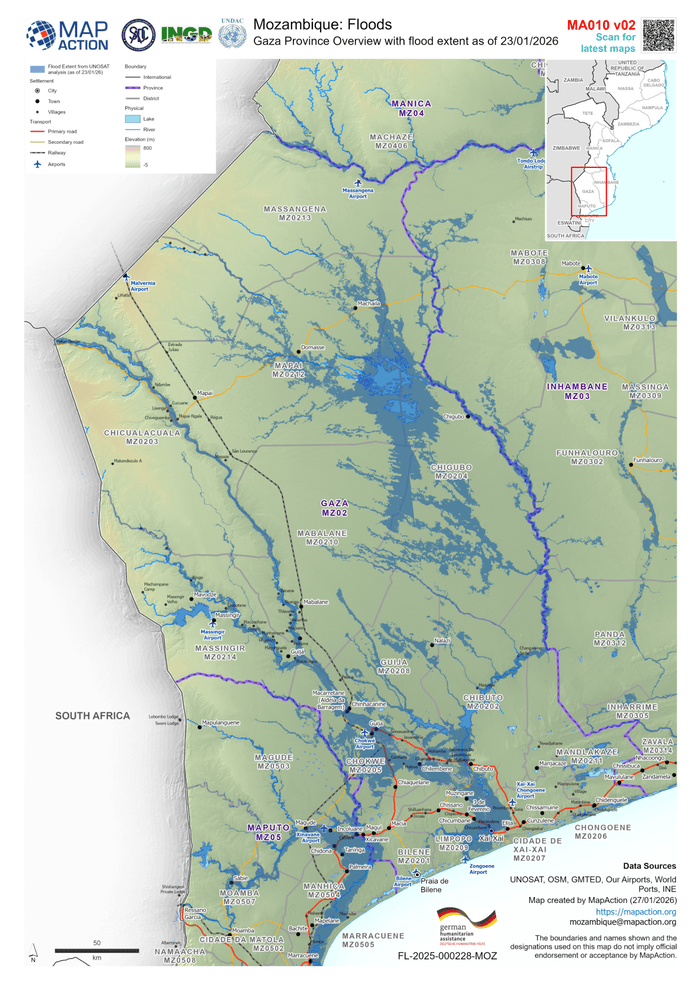





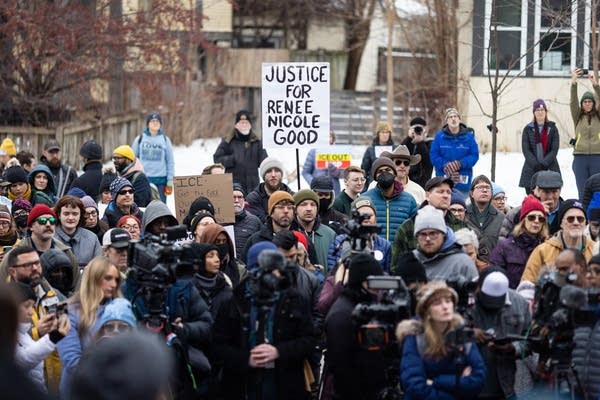
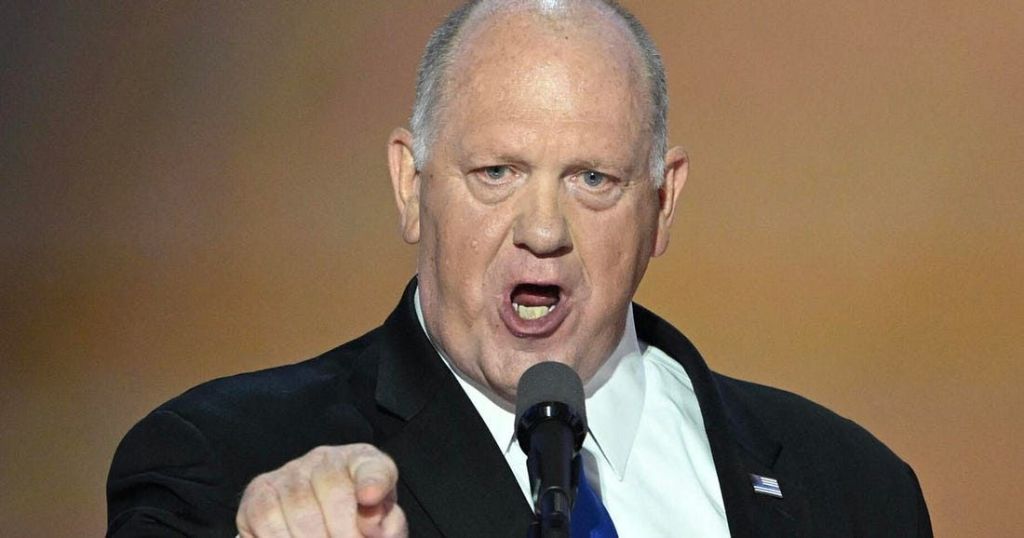



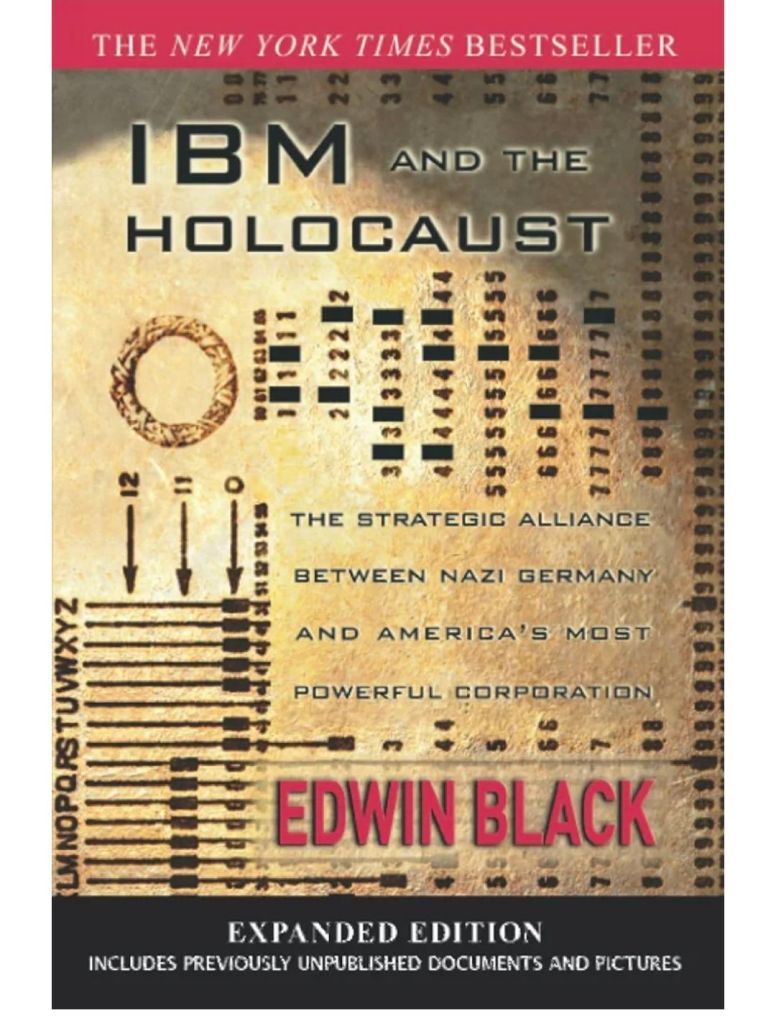




 borderslynn
You must be logged in to post a comment.