“We are a uniquely destructive species, and the only one on the planet capable of pushing another one to extinction.”
So says Vigliotti, in his book, Before It’s Gone”.
Later, when talking about bad land management whilst the huge expansion of farming tore up the balanced ecosystem and resulted in the Dust Bowl tragedy of the 1930s, he quotes Dr. Hugh Bennett, born 1881 whose research led him to say:
“Americans have been the greatest destroyers of land of any race of people, barbaric or civilized. “
With Hugh at the helm of the newly created “Operation Dust Bowl,” he enlisted farmers and ranchers, backed by federal assistance, to plant rows of trees and grasses to form wind brakes. People were trained in soil retention and crop rotation techniques (which Native Americans practised long before the settlers drove them off this precious land).
Americans don’t tend to appreciate Hugh now and so bad practices have returned, disrespecting caring for the earth beneath their feet.
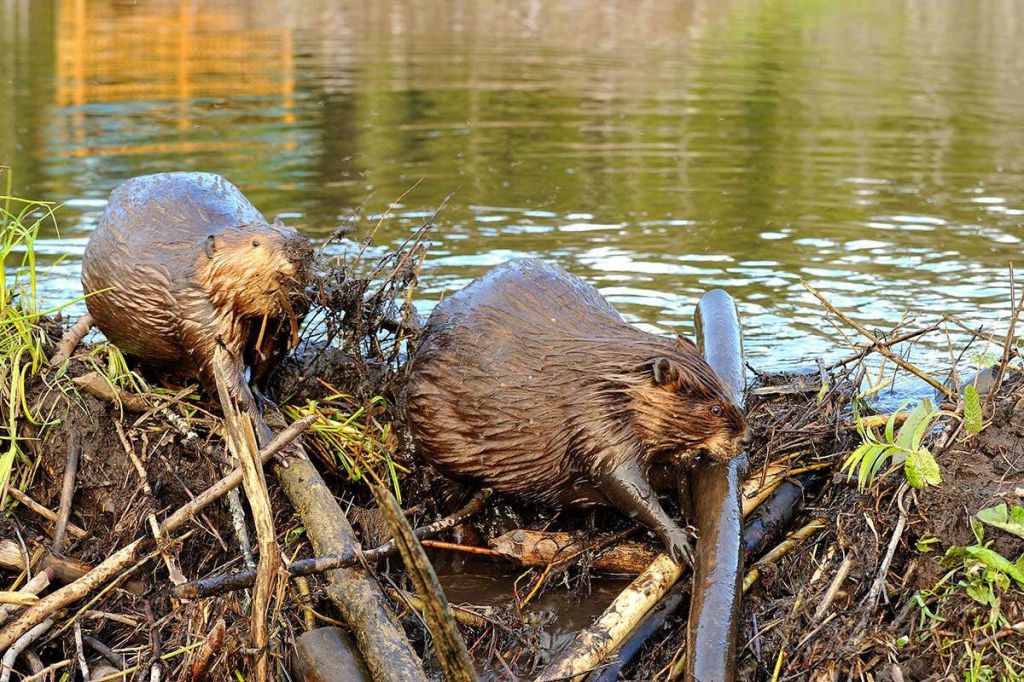
And when it was fashionable to sport a beaver hat, hunters eradicated the beavers with an insane eagerness. Yet the beavers were an asset to the land, controlling water and preventing extensive flooding as they worked so hard in waterways in wild land.
We humans have built hydroelectric dams which are yet another ecological disaster. We seem to pride ourselves in finding ways to thwart Nature.
Vigliotti sought out knowledgeable people to answer vital questions:
“How are beaver dams better than, say, hydroelectric dams that provide clean energy?” I wondered. “That energy comes at a cost,” Emily said. “Hydro dams are walled-off concrete fortresses that can cut off the entire flow of a river, leading to droughts downstream and disrupting species migration and freshwater biodiversity. I think of beaver dams as speed bumps,” she said. “Beaver dams are nature’s way.” As Emily explained, when a beaver builds a dam, the structure slows rainwater and snowmelt from rapidly draining down rivers into oceans. The result is a natural reservoir capable of storing water for years while still supporting wildlife migration. “When the beavers move in here and they slow this water down, a lot of it goes into recharging the groundwater, and that’s what we’re pumping for irrigation. That’s what we use for our food, that’s what we use for our lawns. And these beavers are recharging it for us. So they’re sort of depositing water into the bank that we take out at a later date.” The drier an area is, the more critical dams are because soil, over extended periods of time without water, becomes too brittle to retain water when it eventually arrives. It’s like watering parched soil in a potted plant. The water simply flows right out of that hole at the bottom, not giving the roots time to hydrate. But if you obstruct that hole, the water sticks around, replenishing the soil and the roots. The results in the natural world are wetlands, which are breeding grounds for about 80 percent of animal species in the American West. According to the Fish and Wildlife Service, California’s wetlands have shrunk by 90 percent since the 1800s, around the time beavers started vanishing from the landscape. “The desertification of California aligns with the loss of our beaver population. The science isn’t clear, but I think it’s safe to assume wildfires wouldn’t be as bad as they are today if we had more beavers,” Emily said. “And if we can keep vegetation alive and prevent fires, we can also prevent other related environmental disasters like mudslides and extreme flooding.”
Nick is the head of the Beaver Ecology and Relocation Center based out of Salt Lake City, Utah, and oversees a team of volunteers who travel across the West building “starter dams,” what’s technically known in the emerging industry as beaver dam analogues. That’s how I found myself waist deep in a babbling creek on a mountainous ranch in Coalville, Utah, slinging handfuls of mud over layers of tree branches and sticks. The landowner had heard about Emily Fairfax’s research and Nick’s relocation project and wanted in. “Too much water can be a bad thing, but when there’s none of it and crops are dying and ranchers are selling off their cattle and there’s no end in sight, well, that’s enough to change people’s opinions,” Nick said as he grabbed a pile of mud from the bank of the creek. “Beavers, what they do is they get in here and they scoop the mud up, they just come and grab a whole bunch, push it with their chest and hand and it into the crevasses. I would get on my belly and push it in, but I don’t want to do that yet,” he chuckled.
More than one thousand beaver dam analogues have been successfully resettled in the West, with hundreds of more requests coming in from farmers and ranchers. “At some point in history people just accepted beavers were commodities and pests and never stopped to ask what removing them would mean for the environment and our own lives. We trapped and killed them out of some kind of necessity and now we’re working twice as hard to reintroduce them because we’ve run out of all other ways of restoring our planet,” Nick said.
As we invest in the future by cutting back greenhouse gasses, we can also invest in strategies that have near immediate impact. As I watched our two beavers bob in the water of their new home like they had lived there all their lives, it was clearer than ever that restoring the land and learning to coexist with nature could be the fastest, most cost-effective, and lasting way to make our communities—our ecosystems—resilient to failure.”
Retired, living in the Scottish Borders after living most of my life in cities in England. I can now indulge my interest in all aspects of living close to nature in a wild landscape. I live on what was once the Iapetus Ocean which took millions of years to travel from the Southern Hemisphere to here in the Northern Hemisphere. That set me thinking and questioning and seeking answers.
In 1998 I co-wrote Millennium Countdown (US)/ A Business Guide to the Year 2000 (UK) see https://www.abebooks.co.uk/products/isbn/9780749427917




 borderslynn
You must be logged in to post a comment.