
After wildfires destroyed homes across California, innovative, but expensive, intensely fire-resistant homes have been designed. Some are already in place in the still sparsely rehomed community of Paradise.
These are modular, pre clad built homes and 12 month round produce protecting units. So you can live and farm remotely, protected from Nature’s ravages.
https://www.theqcabin.com/q-cabin-kit-models
And state of the art solar powered new build communities:
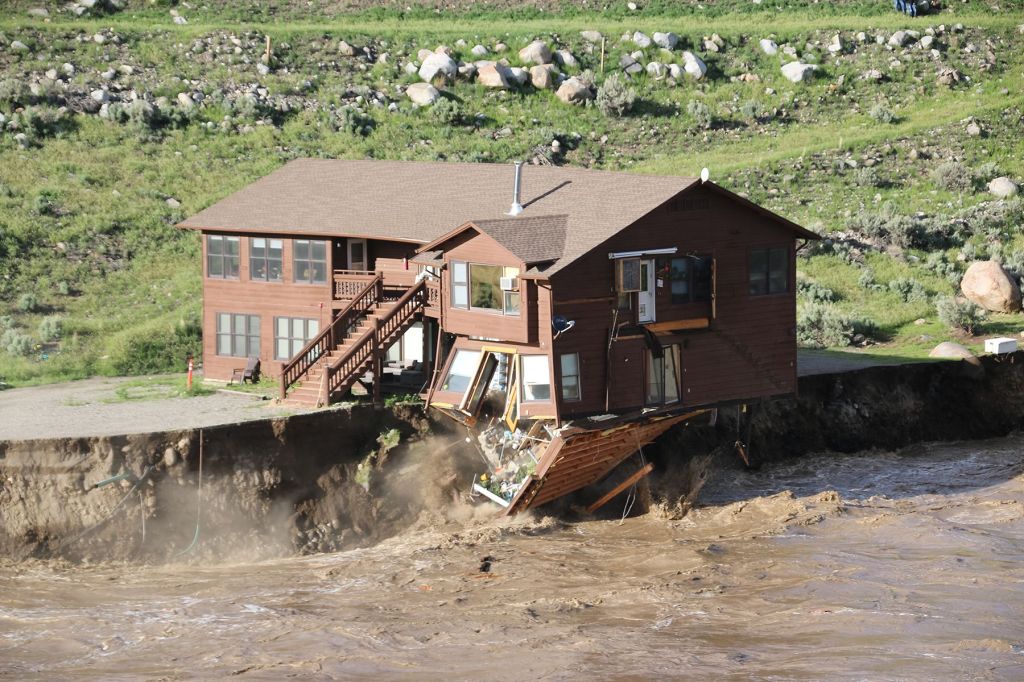
When Yellowstone Park suffered a catastrophic sudden snow melt during a storm and unleashed boulders as the violent waters cut through the land below, the assessment of the situation by engineers left many heads shaking with anxiety that maybe solutions were out of reach.

In a section of the book entitled “Hwy 89”, Vigliotti says:
The NPS is now drafting ways to adapt their hardest-hit parks to climate change, and they’ve had help from the federal government. For all the criticism President Trump’s environmental policies have received—and most of it is well deserved—in 2020, he flooded the National Park Service with money. The Great American Outdoors Act allocated $900 million a year to the Land and Water Conservation Fund and provided up to $9.5 billion over five years to help maintain the country’s national parks. President Joe Biden’s $1 trillion infrastructure bill, passed in late 2021, set aside an additional $1.7 billion to specifically help upgrade roads and bridges and support environmental adaptations. It all sounds like a lot of money, until you do the math. According to National Park Service records, the agency manages more than 12,600 miles of roads nationwide, 40 percent of which were in need of repairs according to a 2019 park study. In Yellowstone, the price tag for roadwork in 2019 was $1 billion. That was before the flood hit. Highway 89, the one that would cost an estimated $1 billion to repair, wasn’t even on the park’s to-do list. In 2020, after the first round of funding was approved, John Garder, the senior director of budget and appropriations at the National Parks Conservation Association, a nonpartisan advocacy group for the NPS, said the money was “helping stem the tide, but certainly not enough.” Similar financial hurdles are also hitting America’s concrete forests. In New York City, erosion from floods and inadequate drainage led to a 38 percent spike in sidewalk and street sinkholes in 2021 compared to the previous year, according to the mayor’s office. City leaders linked the problem directly to climate change and said repairing the sunken holes to last another fifty to one hundred years would be expensive but save taxpayers money in the end. They pointed to a report from the National Institute of Building Sciences that found that, for every dollar a community invests on climate adaptation, they save six dollars on needing to rebuild again. But as our extreme elements outpace humanity’s ability to adapt to them, not all problems can be solved by throwing money at them. While asking for more funding for sinkhole repairs, Rohit Aggarwala, NYC’s chief climate officer and the commissioner of the Department of Environmental Protection, warned money would only help so much because they were quickly exhausting all available engineering solutions. “The issue right now is we don’t know exactly what we would do with more money that would systematically reduce the likelihood of sinkholes,” Rohit said at a city council meeting on the topic in 2022. Protecting modern-day Rome and places like Yellowstone (Mother Nature’s Notre Dame) from ecosystem collapse will require more than just dollars. Fortunately, there is another lifeline, but it too has started to fray. The Clean Air Act (CAA) was passed in 1970 and is considered by legal experts to be the most powerful environmental law in the world. Overseen by the EPA, which was established around the same time, the CAA monitored and restricted harmful air pollution in American cities. The act initially targeted gasses including carbon monoxide, lead, and nitrogen dioxide, but expanded over time to include carbon dioxide as concerns over global warming grew. The act gave the EPA the power to place hefty fines on companies that emitted these gasses at toxic levels and is partly credited with keeping annual emissions in the United State’s relatively stable since the 1990s, despite the nation’s population growing by nearly 80 million people. Even so, there’s still plenty of room for progress.
And what did Vigliotti explain about the clipping of the wings of the Environmental Protection Agency by the Supreme Court? He tells us here:
The U.S. remains one of the highest emitters of CO2 per capita in the world, and collectively, the global community emits around 36 billion tons annually, according to Global Carbon Project. That’s a more than 200 percent spike since the 1960s. While the CAA was seen as a blueprint for developing nations, the landmark policy hit its own major roadblock in 2022 when the Supreme Court limited the EPA’s ability to regulate carbon emissions from power plants, which alone are responsible for around 25 percent of the United States’s total CO2 output each year. The vote was 6 to 3, with the courts three liberal judges in dissent saying the majority had stripped the EPA of “the power to respond to the most pressing environmental challenge of our time.” They weren’t exaggerating. Our air controls everything from summer highs to winters lows and has the power to throw Earth’s natural cycle into a tailspin of extreme and unpredictable reactions. The same radicalized air that caused a freak spring snowstorm followed by a freak steamy downpour in Yellowstone was also linked to a series of heat waves that killed 339 people in Arizona. The summer of 2022 was the state’s deadliest on record, and the summer of 2023 was the hottest, with temperatures in Phoenix exceeding 110 degrees for an entire month. Overnight lows never dropped below 95. ER doctors showed me how they treated a wave of patients suffering from heatstroke by slipping them into body bags full of ice and water. My team and I also rode along with paramedics who were injecting patients with ice-cold IV to rapidly cool them off. It’s not just heat. This destabilized air is also responsible for transforming a typical blizzard in Buffalo, New York, into an apocalyptic winter storm that entombed entire neighborhoods in walls of ice and snow. Dozens of people died, and many of the victims were found trapped in their cars. The deep freeze quickly engulfed the city like a fast-moving wildfire, and you could almost hear the crackle of ice forming when looking at the pictures of the frozen still life.

Anyone left doubting the challenges ahead of finding resilience solutions fast enough, must surely be persuaded by now….for it is “events, dear boy, events” (as said by Harold Macmillan, PM of UK, 1957 – 63).
In the UK, Scotland has been building resilience against flooding, spending millions on future proofing towns such as Hawick, Scottish Borders. The progress report is shown in the image above. The Hawick community have been kept informed by detailed construction reports like these posted to residents in the surrounding area over the years. The project is nearing completion and it has added aesthetic walks, cycle ways and gardens to the picturesque tourist town.
Our power grids are so supportive to our human existence that we cannot afford to ignore future proofing them against extreme demands or attacks from cyber warfare. Sadly, weapons of war can destroy these infrastructures in minutes, no matter how much investment we have ploughed in. However, where research exists to point to resilience being designed in to old grid networks to cope with extreme weather, there is no time to be lost.
Here is an extract from one area of research which governments will use to help them plan infrastructure upgrades:
The rise of power outages caused by extreme weather events and the frequency of extreme weather events has motivated the study of grid resilience. This paper presents a state-of-the-art review of existing research on the study of grid resilience, which focuses on the point of view of power system engineering with respect to extreme weather events. Firstly, it investigates confounding terminologies used in the study of grid resilience, such as the definitions, the differences with grid reliability, the extreme weather events, and their extreme impact on the power systems. Secondly, it presents a grid resilience framework as a general provision to understand the subjects in the study of grid resilience. Thirdly, it describes several methodologies of grid resilience assessment and some quantitative indices. Finally, various grid resilience enhancement strategies implementations are discussed.
https://www.sciencedirect.com/science/article/abs/pii/S0306261919303071
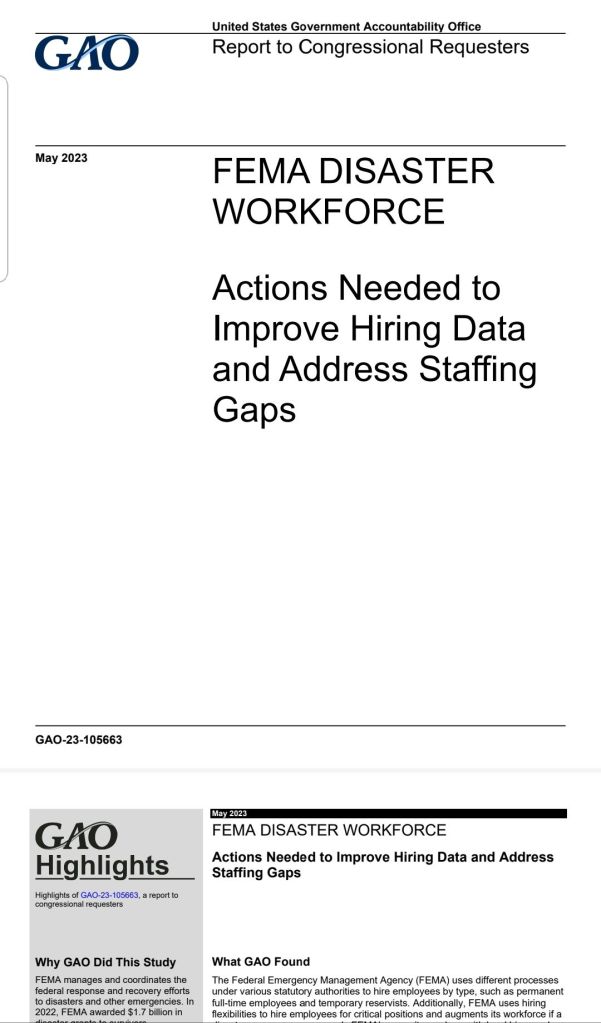
In the US First Responders are exhausted and are operating at 65%. There is an urgent need to train and hire more.

And as countries lose their freshwater supply and watch their crops fail and livestock die, the funds must be focused on these drought areas to rescue them, especially using modern, tried and tested techniques such as:
https://borderslynn.com/2022/12/26/desalination-long-term-solution-to-drought

 borderslynn
You must be logged in to post a comment.