
The higher you live, the more likely you are to experience impacts of climate change, as these impacts are increasing at a more rapid rate in recent years than human experience can adapt to.
I only live 900ft above sea level in the Scottish Borders, but the changes in the last few years are affecting the ecosystem around me. So I read this article on the subject:
https://igeography.net/mountains-and-climate-how-elevation-affects-weather
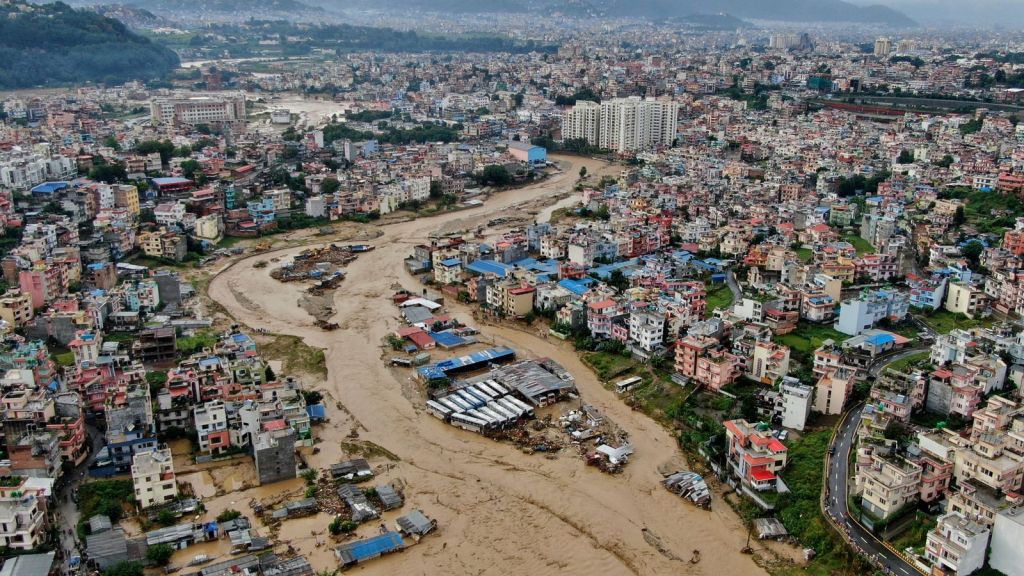
I was seeing grave consequences of Hurricane Helene on Asheville nestled below the Blue Mountains in the Appalachian range. At the same time, those living in Nepal in the Himalayas were experiencing similar devastation when huge floods roared through their city of Kathmandu.
The hills around me are not mountainous but the elevation is such that alpine plants grow here.
The article explains:
With mountains constituting 25% of the Earth’s land surface, their role in our climatic system is as expansive as it is crucial.
The higher the elevation the greater the chance of precipitation:
The orographic effect is instrumental in fostering verdant landscapes along the windward slopes of mountain ranges. Ascending air masses, upon elevation, undergo cooling and condensation, culminating in cloud formation and consequential intensified precipitation. Such phenomena elevate mountain precipitation levels beyond what would manifest without these significant geological features. An exemplary observation of this can be made within the verdant Appalachians, where the lushness is directly attributable to this very effect.
It is the very lushness which attracts people to live in such stunning landscapes. Asheville was hit by devastating floods in 1916, and they have a memorial to those who died as a result of inescapable muddy torrents. They were struck again in 2004, then 2021. They dwell in a geological bowl, with two major rivers, the French Broad and the Swannanoia intersecting and always vulnerable to flooding.
On the lee side of the slopes conditions are arid. So Asheville is constantly promoted as this beautiful place to live where forests won’t burn and landscapes of flowing rivers, fresh clean air and community living are magnets for those escaping harsher environments.
The article continues:
The disparity in mountain temperature variations is starkly presented when comparing Asheville, NC’s average annual temperature of 56.5°F to Mount Mitchell’s 42.6°F. High-resolution data accentuate such temperature fluctuation with altitude, emphasizing elevation’s pivotal role in climatic differentiation.
As the Anthropocene era shows, human activity has caused rapid warming of the earth’s atmosphere and upset the balance of our ecosystem.
Alpine zones reveal a poignant interplay between natural forces and human activity. Human impact alters approximately 57% of mountainous regions, persisting even beyond 4500 meters. These areas, crucial for climate and environmental sustainability, face heightened scrutiny owing to their vulnerability.
As the mountains warm, glaciers melt. Snow leopards decline to near extinction and polar bears in the Arctic circle struggle to exist in melting ice flows.
Borders have recently changed as, for example where the Matterhorn Peak in the Swiss Alps has suffered warming and the glaciers no longer play their vital role of replenishing vital freshwater to lower slopes. See GLAMOS, the Swiss University glacier monitoring network.
Many places which were idyllic for humans are no longer safe for any living thing to have a chance to adapt to, everything is in a momentum of loss as we humans refuse to work out how to live without fossil fuels.

 borderslynn
You must be logged in to post a comment.