
As flags fly at half mast for 30 days in mourning the death of Jimmy Carter, who lived to an amazing age of 100 years, we are being reminded through the media of his landmark successes as a President, and more substantially, of his achievements in his post presidential years.
But, as Palestinians endure collective punishment for the heinous acts against Israelis on October 7th, 2023, I watched the historical coverage of the Peace Accord between Egyptian President Anwar Sadat and Israeli PM Menachem Begin, signed at Camp David and persuasively argued for by President Jimmy Carter. Jimmy Carter brought humanity into the equation.
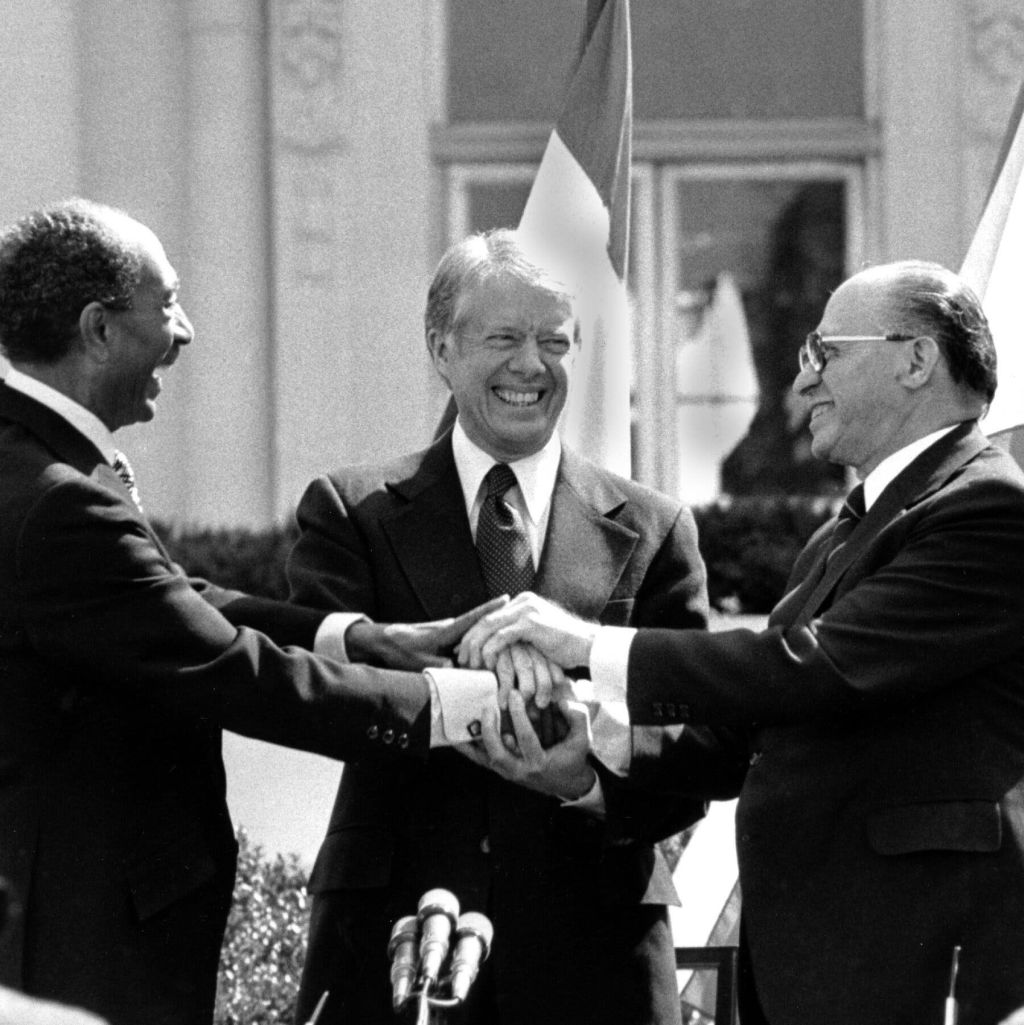
And here in the book by Ronen Bergman, “Rise and Kill First..” there is an extract about that historical moment:
IN MAY 1977, ISRAEL’S Labor Party, which had ruled the country since its establishment in 1948, lost a national election for the first time. It was defeated by the Likud, a nationalist right-wing party led by Menachem Begin, the former commander of the Irgun, the anti-British underground. A combination of various factors—the discrimination and humiliation suffered by Jewish immigrants from Arab countries, revelations of corruption in the Labor Party, the shortcomings of the Yom Kippur War, and the ability of the charismatic Begin to take advantage of these factors and ride a wave of populism—led to an upset that shocked both Israelis and observers abroad. Begin was viewed by many foreign leaders and local top officials as an extremist and a warmonger. Some of the chiefs of Israel’s military and intelligence agencies were convinced that they would soon be replaced by partisans of the new government. But Begin’s initial moves as prime minister surprised everyone, foreign and domestic. At a dramatic summit meeting with Presidents Jimmy Carter and Anwar Sadat at Camp David in 1978, he agreed to a breakthrough peace treaty with Egypt that provided for Israel’s eventual total pullout from the Sinai Peninsula, conquered from Egypt in 1967. The withdrawal of the army, the dismantling of settlements, and the relinquishment of oil fields and tourism facilities were bitterly opposed by Israel’s right wing. But Begin, risking his own political standing, forced his party to comply. He also greatly strengthened the security alliance with the United States and bolstered the overarching authority of the Israeli Supreme Court. Internally, there was no purge. Indeed, Begin even asked two men with strong ties to Labor—Shin Bet chief Avraham Ahituv and Mossad head Yitzhak Hofi—to remain in their jobs. “It was very strange for us,” Hofi said. The Labor Party was hard-boiled and pragmatic when it came to matters of the military and intelligence. “But for Begin,” Hofi said, “the army was something sacred.”
Begin knew of negative attitudes in the US to Jews who lived there, and no doubt wanted to persuade the US to learn to value the Jews in their midst:
The KKK and other segregationists bombed Southern synagogues and the homes of outspoken Jews in response to Jews’ support for the civil rights movement in the 1950s and 1960s. The “No Dogs, No Coloreds, No Jews” sign at the Baltimore Country Club in Maryland didn’t come down until 1970.

 borderslynn
You must be logged in to post a comment.