
I was watching an old, rare archive piece of film, introduced by Christopher Hitchens, which appeared to show Saddam Hussein asserting his control over the Ba’ath Party, sorting loyalists from covert opposition at a conference.
Hitchens was referring to a book by Samir al Khalil (a pseudonym for his later to be known name of Kanan Makiya). The book is Republic of Fear, and it told us Saddam, on that day, had instructed the opposition members to be shot by the loyalists left in the conference hall.
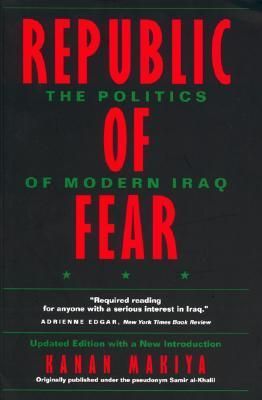
I have found a section in Wikipedia about this author, which is truly enlightening.
It would seem Makiya’s persuasive perspective of his recollection of events helped steer the US and UK into the disastrous decision to remove Saddam Hussein using ‘shock and awe’ military force.
Kanan Makiya (born 1949) is an Iraqi-American[1][2] academic and professor of Islamic and Middle Eastern Studies at Brandeis University. He gained international attention with Republic of Fear (1989), which became a best-selling book after Saddam Hussein’s invasion of Kuwait, and with Cruelty and Silence (1991), a critique of the Arab intelligentsia. In 2003, Makiya lobbied the U.S. government to invade Iraq and oust Hussein.[3]
Makiya was born in Baghdad and left Iraq to study architecture at the Massachusetts Institute of Technology, later working for his father’s architectural firm, Makiya & Associates which had branch offices in London and across the Middle East. As a former exile, he was a prominent member of the Iraqi opposition, a “close friend” of Ahmed Chalabi, and an influential proponent of the Iraq War (2003–2011) effort.[4][5] He subsequently admitted that effort “went wrong”.[6]
Critics of Makiya:
Said, a professor of English at Columbia University, was a vocal critic of Makiya.[15] Said contended that Makiya was a Trotskyist in the late 1960s and early 1970s, but that he later “switched sides,” profiting by designing buildings for Saddam Hussein.
Said also asserted that Makiya mistranslated Arab intellectuals (including himself) so he could condemn them for not speaking out against the crimes of Arab rulers. Makiya had criticised Said for encouraging a sense of Muslim victimhood and offering inadequate censure to those in the Middle East who were themselves guilty of atrocities.[16] Similar criticism about mistranslations was voiced by Michael W. Suleiman when reviewing Republic of Fear.[17]
George Packer wrote in his book The Assassin’s Gate that it was Makiya’s father who worked for Saddam, but Makiya himself used those profits to fund his book Republic of Fear.[18] Packer also noted Makiya’s drift from radical to liberal to sudden alliance with American neoconservatives: “Look behind Kanan Makiya and you found Richard Perle, Paul Wolfowitz, Donald Rumsfeld.”
Packer and many others have faulted him for his enthusiastic support for Ahmad Chalabi, “the most controversial exile of them all” and convicted felon.[19] He championed Chalabi to the exclusion of a wider opposition network, resulting in the marginalizing of experienced figures like Feisal al-Istrabadi who supported a wider net.
Concluded journalist Christopher Lydon in 2007: “My friend Kanan Makiya was the most influential Iraqi advocate in America of the war to “liberate” his country five years ago. Today he is the most articulate casualty of his own fantasy.” Lydon goes on to call Makiya “an idealist who stands for me as a warning about the dangerous misfit of idealism and military power. He’s an example, I’m afraid, of what the French call the trahison des clercs; the treason of the intellectuals. He is a caution to us intellectuals and wannabes against the poison of very bad ideas — like the notion of transformation by conquest and humiliation.”[20]
In a 2016 interview with NPR to promote his new novel, Makiya explores aloud what went wrong in Iraq and who is to blame: “I want to understand that it went wrong, and who I hold responsible for why it went wrong — including myself.”[21]
Taken from
https://en.m.wikipedia.org/wiki/Kanan_Makiya
A related history of Iraqi Jews is beautifully expressed at:
Here is a short couple of extracts:
When George Bush went to war in Iraq in 1990 and clips from Iraq started showing on TV, I called my father to ask if it is possible that this depressingly bleak place was their paradise. My father was surprised: “What did you expect? This is one big desert with two rivers.” I guess I did know, but it wasn’t what I imagined about this country. This imagination was a fantasy based upon their stories, which seemed so ideal: the swimming and boating in the Tigris River, picnics on its bank in fruit gardens (bustan). The true picture is in the middle between what was shown on TV and my imagination. (I know that cameras that are aimed at filming war do not show the pleasant places.) The feeling of paradise is not the picture portrayed in history books, but indeed the Jews in Iraq maintained their community for many centuries, without any extremely traumatic incidents and in a relatively safe environment. What stands out is the great co-existence they had with their neighbors, the Muslim Arabs. This coexistence can be exemplified by customs of reciprocity during holidays. Iraqi Jews remember that Muslim neighbors used to bring hot tea to Jews returning from the synagogue at the end of Yom Kippur, and trays with bread and cheese at the conclusion of Passover. In Basra, where a significant number of Jews lived, there was no Jewish quarter; Jews lived in mixed neighborhoods.
and
My father’s family lived in Baghdad and apparently was from a somewhat lower middle class. My grandfather, Shkuri Ta’ufik, was a self-made person. When he was 13-years old, his father died and he had to leave school and work to support his mother and siblings. He worked for a while as an apprentice of the shochet – the Jewish butcher. His breakthrough came thanks to a punishment by the British. Failing to register to the British authorities, he was sent on a British Navy ship to India, where he stayed for a year, learning English while abroad. Upon returning he started working in the Jewish owned Zilkha Bank in Baghdad. This was one of the most important banks in Iraq – and the first chain banking in the Arab world, with branches in Beirut, Damascus, Cairo and Alexandria, and the Iraqi government was invested in it.[8] My grandfather made his way up and became the treasurer of the Zilkha Bank. He bought a big house outside of the Jewish quarter, in a mixed neighborhood, and was able to house a few relatives in it as well. (When he moved to Israel he was much better off than most, as he was able to transfer some money in advance to Israel, and to buy a house and a store there.) His children attended the prestigious Anglo-Jewish school Shamash, which was the only Jewish school outside of the crowded Jewish neighborhood.[9] At that period, it was allowed to teach reading Hebrew, but the newly independent Iraqi government (since 1932) banned the teaching of the Bible and Jewish history. My father studied the Hebrew Bible only in Israel.
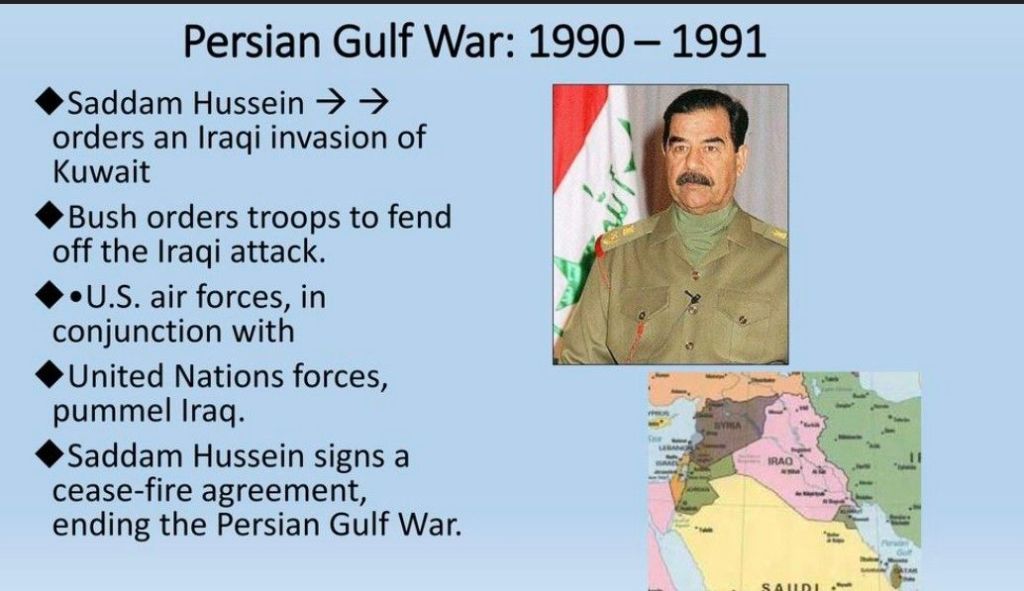
Read the history of British control over Iraq, here is an extract:
Merging the three provinces of Mosul, Baghdad, and Basra into one political entity and creating a nation out of the diverse religious and ethnic elements inhabiting these lands were accomplished after World War I. Action undertaken by the British military authorities during the war and the upsurge of nationalism afterward helped determine the shape of the new Iraqi state and the course of events during the postwar years until Iraq finally emerged as an independent political entity in 1932.
https://www.britannica.com/place/Iraq/British-occupation-and-the-mandatory-regime

 borderslynn
You must be logged in to post a comment.