Lifesaving relief efforts to help remote Afghan communities devastated by last month’s deadly earthquake have already been hit by the de facto authorities’ decision to cut internet access nationwide, UN aid agencies said on Tuesday.
The United Nations Assistance Mission in Afghanistan (UNAMA) called on Taliban leaders to immediately and fully restore Internet and telecommunications services.
“As of yesterday, 1700 hours, we were informed that the telecommunications and fibreoptic connectivity in Afghanistan is going to be suspended until further notice,” said the top UN official in the country, Indrika Ratwatte, via a patchy satellite video link from Kabul.
“The rest of the country is completely cut off right now, by and large,” he explained, adding that connectivity has been lost with aid teams in the “deep field” who are delivering assistance to survivors of last month’s quake in eastern Afghanistan.
“We don’t have connectivity with them,” he stressed, highlighting needs among families originally from hillside villages who now live in crowded informal settlements on the valley floor in Kunar province.
In one community, Mr. Ratwatte met one woman who had lost 11 members of her family. “The trauma is quite immense,” he said.
More than 43 million people in Afghanistan are now believed to be offline, after the Taliban began cutting communications cables several weeks ago, reportedly to tackle “vice” and immorality in the light of their strict interpretation of Sharia law.
The work of UN humanitarians has been also set back by the de facto authorities’ ban on women nationals on staff from entering its premises, earlier this month.
Total shutdown
In addition to impacting the work of the UN and partner organizations, the internet shutdown has affected health programmes, banking services and financial services, UN humanitarian coordinator Mr. Ratwatte stressed.
“At a community level, I would imagine that for normal business transactions, for banking, for cash transfers, for remittances that come from abroad, which are critical for these communities, that’s been cut off,” he explained.
One month since the 6.0 magnitude quake struck eastern regions of Afghanistan, remote communities are still struggling to recover. The disaster killed around 2,000 people and injured 3,600, damaging 8,500 homes.
“The winter is not anymore on the way, it’s upon us,” Mr. Ratwatte warned, stressing the need to insulate shelters for displaced people and provide warm clothing amid plummeting temperatures.
We all remember the Trump first administration negotiating a Peace deal in 2020:
The Trump administration in February 2020 negotiated a withdrawal agreement with the Taliban that excluded the Afghan government, freed 5,000 imprisoned Taliban soldiers and set a date certain of May 1, 2021, for the final withdrawal.
And the Trump administration kept to the pact, reducing U.S. troop levels from about 13,000 to 2,500, even though the Taliban continued to attack Afghan government forces and welcomed al-Qaeda terrorists into the Taliban leadership.
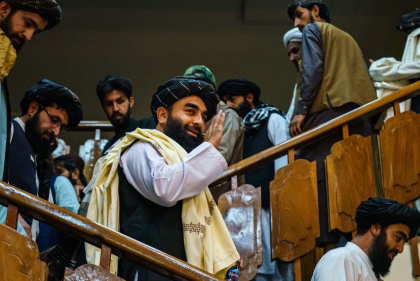
Zabihullah Mujahid, the Taliban spokesman for nearly two decades, appears at a press conference in Kabul, Afghanistan, Aug. 17. (Marcus Yam/Los Angeles Times)
Biden delayed the May 1 withdrawal date that he inherited. But ultimately his administration pushed ahead with a plan to withdraw by Aug. 31, despite obvious signs that the Taliban wasn’t complying with the agreement and had a stated goal to create an “Islamic government” in Afghanistan after the U.S. left, even if it meant it had to “continue our war to achieve our goal.
In September 2025, President Trump demanded from the Taliban the return of the US base at Bagram, but was denied.
October 1, 2025, 12:41 AM
It’s not every day that a U.S. president publicly demands the return of a military base from a former adversary. But that’s exactly what happened last week, when President Donald Trump said that his administration is “trying to get” Bagram back from the Taliban.
Bagram was the scene of appalling torture of Afghan captives by US soldiers:
In 2021, ex-Bagram inmates recounted stories of abuse and torture, including electric shocks, beatings, confinement in tiny, windowless cells, and sexual abuse. The United Nations (UN) has also released reports highlighting the continued use of torture and mistreatment of conflict-related detainees by Afghan security forces, with at least 39% of interviewees reporting such experiences. In addition, there have been reports of Taliban fighters torturing and killing members of ethnic minorities, such as the Hazara Shia Muslims. These incidents contradict the Taliban’s promises and raise concerns about a return to their harsh rule in the 1990s
An al-Qaida leader with close ties to Osama bin Laden was arrested Friday, Pakistani counterterrorism police announced.
Amin ul Haq was detained in Pakistan’s Punjab province following a yearlong manhunt.
“In a significant breakthrough in the fight against terrorism, CTD [Counter-Terrorism Department], in collaboration with intelligence agencies, successfully apprehended Amin ul Haq, a senior leader of al-Qaida,” the counterterrorism police department’s spokesperson said in the statement, according to Reuters.
The CTD arrested Haq in a town near Jhelum, The Associated Press (AP) reported. Deputy Inspector General of Police Usman Gondal said at a news conference that the arrest had foiled possible future attacks being planned by Haq.
Haq, whose full name is listed in the U.N. Security Council’s sanction list as Amin Muhammad ul Haq Saam Khan, was added in January 2001, for his association with al-Qaida and the Taliban, and for “supporting acts or activities of” bin Laden.
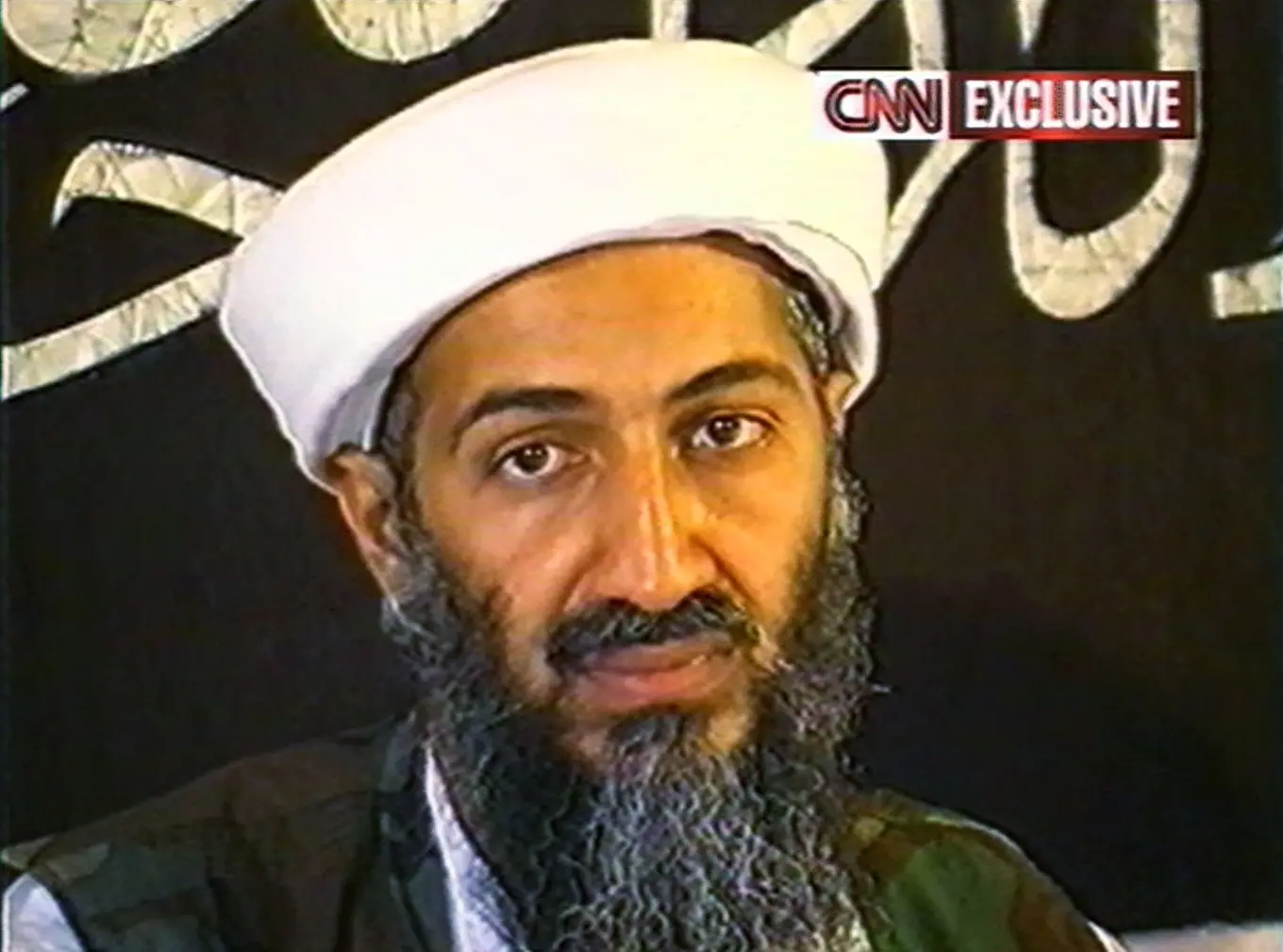
The sanction notes that Haq “coordinated security for [Osama] bin Laden.”
Deputy spokesperson for the U.N. Secretary-General told Newsweek in an email Friday: “All efforts to comply with the U.N. Security Council’s sanctions are positive and we encourage such steps by Member States.”
Newsweek reached out to the Punjab Police and the U.S. State Department for comment via email on Friday.
A U.N. Security Council document identifies Haq as born in Afghanistan’s Nangarhar province in 1960. The U.N. document says he remained in Afghanistan as of August 2021, when the Taliban took control of the country and the U.S. withdrew from Kabul after 20 years.
Javid Ahmad, senior fellow at the Atlantic Council and the Middle East Institute, told Newsweek in an email, “While it was interesting to see his grandiose public return to Afghanistan right after the Taliban’s takeover in 2021, possibly in breach of AQ’s [al-Qaida] security protocol, he operated silently from Nangarhar and Kunar provinces and played an important liaison role in reorganizing AQ [al-Qaida] forces and forging new tactical partnerships with various groups.”
Ahmad said Haq was “intimately familiar with the caves where bin Laden hid in eastern Afghanistan.”
In the region, Saudi Arabia and Pakistan firm up security plans:
Saudi Arabia and Pakistan’s mutual defence pact sets a precedent for extended deterrence
Riyadh may not want to rely solely on Washington for its defence, but it remains to be seen how robust its new security agreement with Islamabad will be in practice.
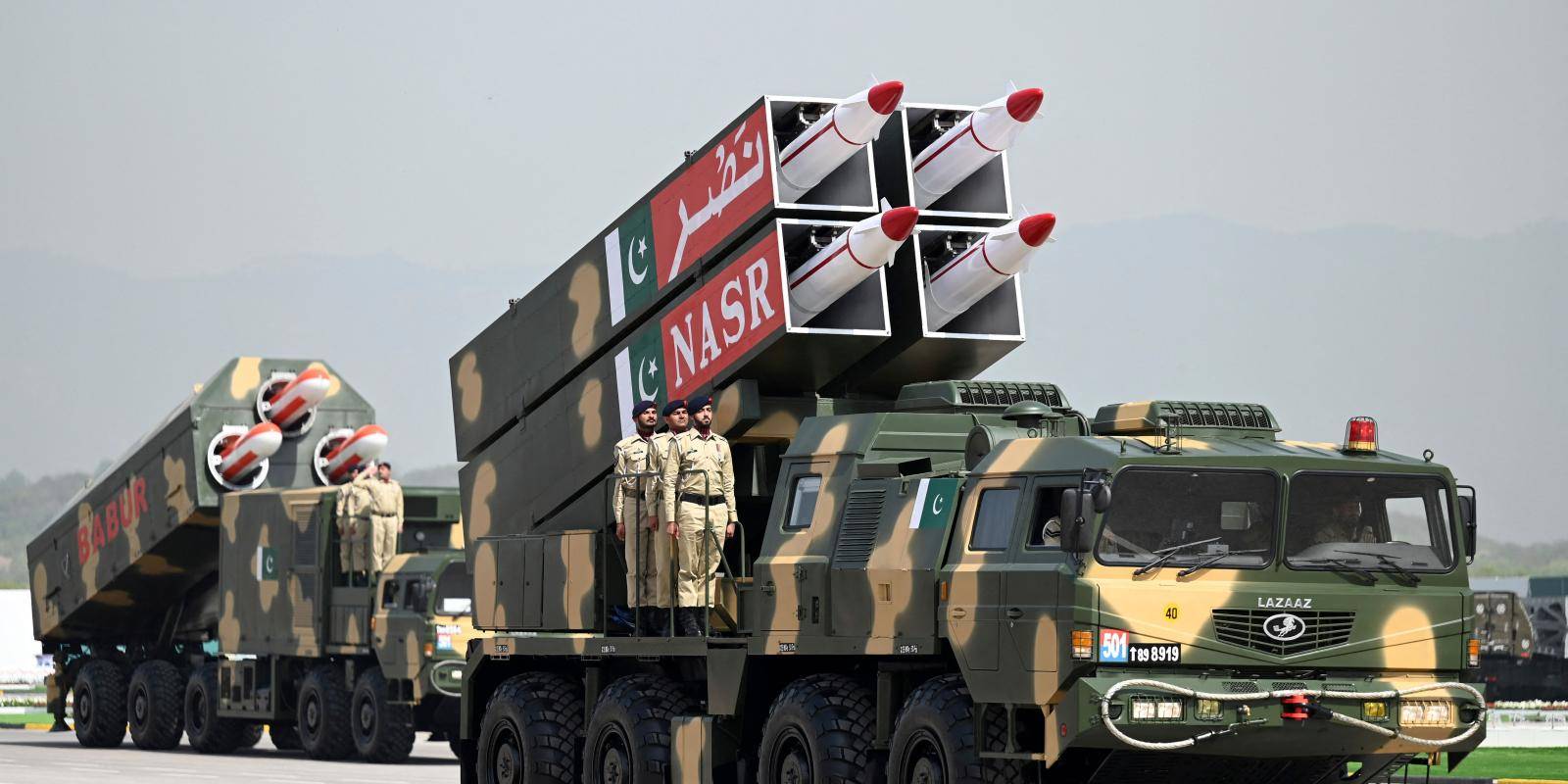
During last week’s state visit by Pakistan’s Prime Minister Muhammad Shehbaz Sharif to Saudi Arabia, the two countries announced a ‘Strategic Mutual Defence Agreement’. This marks a significant upgrade in their long-standing bilateral security relationship, stating that ‘any aggression against either country shall be considered an aggression against both.’
The pact is significant for regional security dynamics between South Asia and the Middle East. It also reflects an increasingly multipolar strategic environment, whereby countries hedge against growing insecurity by diversifying their security partnerships in novel ways.
Response to regional threats
Saudi Arabia has had generally warm relations with Pakistan since the latter’s independence in 1947, reflecting in part ideological convergences between their Sunni Muslim majority populaces.
Retired, living in the Scottish Borders after living most of my life in cities in England. I can now indulge my interest in all aspects of living close to nature in a wild landscape. I live on what was once the Iapetus Ocean which took millions of years to travel from the Southern Hemisphere to here in the Northern Hemisphere. That set me thinking and questioning and seeking answers.
In 1998 I co-wrote Millennium Countdown (US)/ A Business Guide to the Year 2000 (UK) see https://www.abebooks.co.uk/products/isbn/9780749427917



 borderslynn
You must be logged in to post a comment.