No 1: Larry Summers whose ‘wingman’, he said in an email, was Epstein. (2013 to 2019).
Larry Summers had a connection with Jeffrey Epstein that spanned several years, including meetings and communications even after Epstein’s 2008 guilty plea for soliciting prostitution from an underage girl. Summers served as president of Harvard University from 2001 to 2006, during which Epstein donated millions to the university, and their interactions continued until Epstein’s arrest in 2019. The Harvard Crimson Wikipedia
The Zionist link cannot be ignored.
Summers joked about ‘intelligence’ of females with Epstein.
Ex-Harvard president Larry Summers joked about ‘women being less intelligent than men’ in emails to Epstein
Larry Summers, as president of Harvard from 2001 to 2006, continued to engage with Epstein after the financier’s first arrest and plea deal. Summers’ administration accepted substantial Epstein donations, including funds channeled into the Program for Evolutionary Dynamics. Summers and his wife dined at Epstein’s Manhattan home. After leaving Harvard, Summers stayed in touch with Epstein even as the financier’s abuses became increasingly public. Summers used the same revolving door that has long connected elite universities, Wall Street, and presidential administrations—moving freely and comfortably across all three.
Alan Dershowitz, former Harvard Law Professor and Epstein’s close associate and legal strategist, exemplifies another pillar of this system: elite legal protection. Dershowitz defended Epstein vigorously, attacked survivors publicly, and remains embroiled in litigation connected to the case. Whether one believes Dershowitz’s claims of innocence is secondary to the structural fact: elite institutions reliably shield their own
Published date: 9 February 2021 11:54 GMT|Last update: 4 years 9 months ago
Lawyer Alan Dershowitz helped craft a proposal for the release of convicted paedophile and businessman George Nader from prison so he could be sent to the United Arab Emirates to help in diplomatic talks, according to a report by the New York Times.
According to the report, Dershowitz told Nader’s representatives that he had reached out to officials in the US and Israeli governments to see if they would support the commuting of his 10-year sentence for possessing child pornography and sex trafficking a minor if he would help negotiate what would become the Israeli-UAE normalisation deal.
Nader, 61, previously served as a key point of contact between members of former US President Donald Trump’s inner circle and Abu Dhabi Crown Prince Mohammed bin Zayed, to whom he had served as a senior political adviser.
George Nader: How a convicted paedophile became key to an Emirati hook-up with Trump
Exclusive: Jeffrey Epstein’s investment in an Israeli start-up reveals a myriad of links to Donald Trump and Israeli spies.
What we found:
Jeffrey Epstein is an Israeli spy. He is an investor in a start-up with ties to Israeli Intelligence. Two Putin-linked oligarchs are his partners. The start-up poses a privacy risk. + Ties to Erik Prince, Michael Cohen, Ge…
The publicly available material paints a remarkably consistent picture. Epstein helped facilitate a security cooperation agreement between Israel and Mongolia on behalf of former prime minister Ehud Barak. He took part in discussions about a possible diplomatic pathway in Syria that would involve Russian participation, an effort that—had it succeeded—would have been profoundly consequential for Israeli strategic interests during the height of the civil war. He inserted himself into talks concerning a surveillance infrastructure package in Côte d’Ivoire, a project tied to Israel’s intelligence-industrial ecosystem. Taken together, these emails place Epstein in the middle of conversations that resemble private-statecraft more than social networking………
………American administrations have used unofficial intermediaries from Henry Kissinger to Erik Prince to Jared Kushner. Israel operates parallel networks of former intelligence officials and private contractors who move between government and commercial projects across the world. The pattern documented in the Epstein emails fits that existing model. If anything, Epstein’s wealth, discretion, and international reach made him unusually suited to operate in this murky space where private power intersects with state strategy.
How Jeffrey Epstein Helped Israel Establish A Police State In This Country
Story by Edited by NDTV News Desk
When a West African nation teetered on the edge of chaos, two unlikely figures moved behind the scenes to shape its future. One was Jeffrey Epstein, infamous financier and convicted sex offender. The other, Ehud Barak, former Israeli prime minister and defence minister. Together, they turned Cote d’Ivoire’s political unrest into a business opportunity using secret emails, private meetings, and behind-the-scenes diplomacy.
In the 1980s, Wall Street’s trading floors were dominated by open‑outcry systems. Brokers shouted orders across crowded rooms, using hand signals and verbal commands to complete trades. This method had been the backbone of exchanges for decades, but it was limited by human speed and physical presence.
The shift to electronic trading in the 1990s and 2000s transformed how markets operated. Orders could be executed in milliseconds, and investors no longer needed to rely on floor brokers. According to Market Daily, this transition marked one of the most significant changes in modern finance, reducing costs and increasing efficiency.
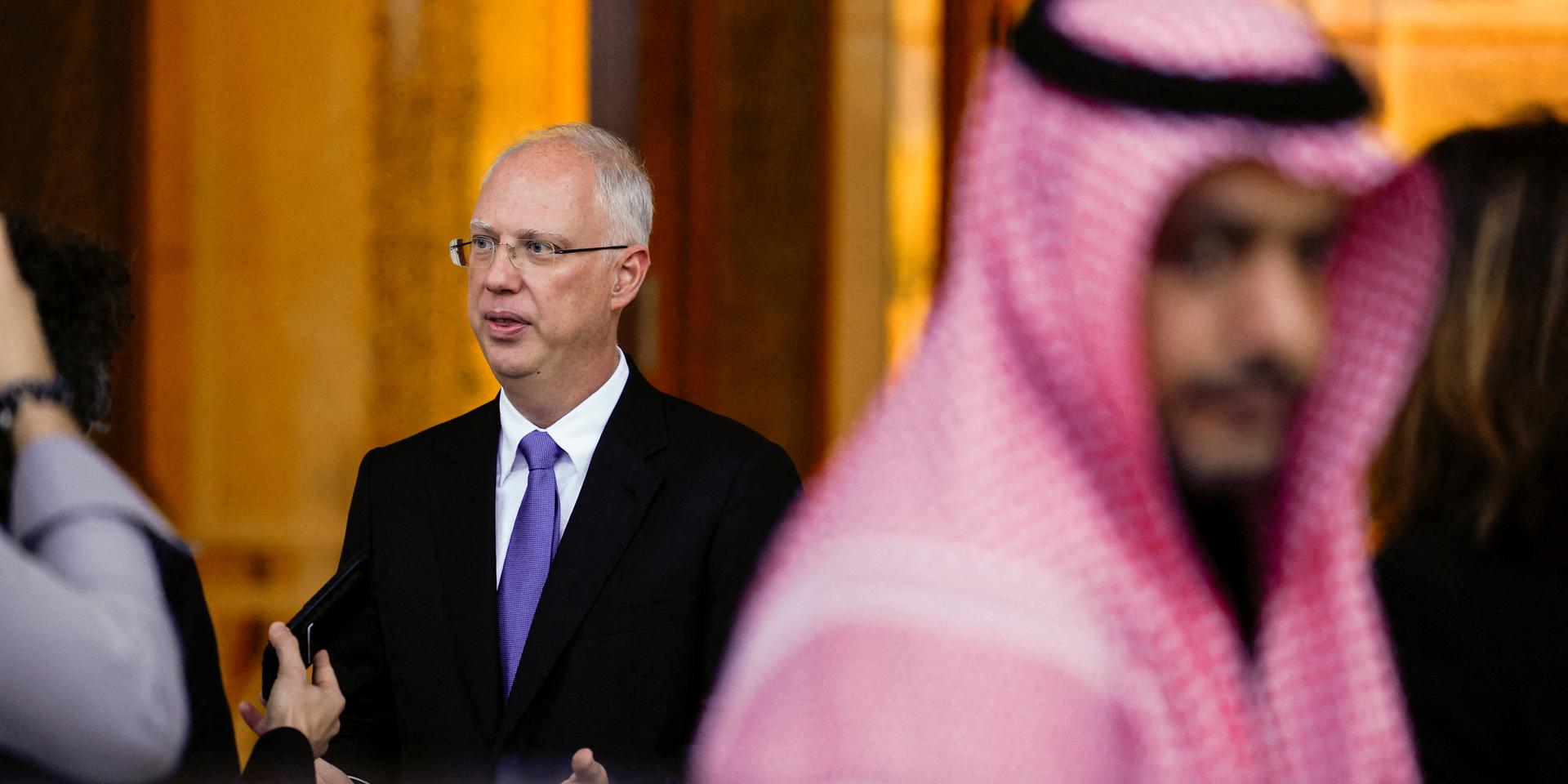
Someone who was born in Kyiv, Ukrane in 1975, went on to graduate at Stanford, then worked at Goldman Sachs and earned an MBA at Harvard, whose life has been travelling to key locations like Saudi Arabia and Ukraine, and who is now a key negotiator for Putin, trying to force the surrender of Ukraine at Nov 21, 2025:
Putin’s Man From Stanford
Who is Kirill Dmitriev, the key Russian negotiator with the U.S.?Доступно на русском
Date
18 Feb 2025
Kirill Dmitriev at the negotiations in Riyadh, February 18. Photo: REUTERS / Hamad I Mohammed / SCANPIX / LET
Negotiations between the U.S. and Russia on the terms of ending the war in Ukraine have begun in Saudi Arabia. One of the main figures on the Russian side is Kirill Dmitriev, a Stanford graduate, head of the Russian Direct Investment Fund (RDIF), and a person close to Vladimir Putin. Bloomberg has named him, along with Putin’s aide Yuri Ushakov and Foreign Intelligence Service (SVR) chief Sergei Naryshkin, as part of the team of “heavyweights” in the negotiations. Dmitriev arrived in Saudi Arabia with Ushakov and Foreign Minister Sergei Lavrov.
IStories has gathered the main points about Dmitriev.
Kyiv native at Stanford and Harvard
Kirill Dmitriev was born in 1975 in Kyiv, Ukraine. He studied at a physics and mathematics school and wanted to continue his education in the U.S. In the early 1990s, he met an American family who had come to Kyiv through a “citizen diplomacy” program. They told him what a foreign applicant needed in the U.S. First, Dmitriev studied for two years at Foothill College in California, and then entered Stanford University. “I had no relatives there, I was one of the few foreign students who received a full scholarship for the entire duration of their studies,” he said.
After graduating from Stanford with honors, Dmitriev worked at Goldman Sachs and McKinsey, then received an MBA from Harvard Business School.
In 2000, he moved to Russia, taking the position of Deputy General Director at IBS. Two years later, Dmitriev became Investment Director at Delta Private Equity, a division of the U.S. Russia Investment Fund, which was created under Bill Clinton. The fund was later transformed into the U.S. Russia Foundation. In 2015, Russian authorities designated it an “undesirable organization.” Dmitriev worked at Delta Private Equity until 2007, overseeing several major deals, including the sale of the TV-3 television channel to the Profmedia holding for $530 million.
In 2007, he returned to Ukraine, heading the Icon Private Equity fund with a capital of about $1 billion. The fund was owned by Viktor Pinchuk, the son-in-law of former Ukrainian President Leonid Kuchma. Returning to Russia several years later, Dmitriev spoke about Ukraine: “There were so-called democratic changes as a result of the Orange Revolution, which led to a three- to fourfold increase in corruption, to a wild battle between these democratic clans, which were only united at the beginning of the struggle, and after coming to power, began to devour others and each other, and as a result, they lost. Accordingly, the democratic idea in Ukraine has been largely discredited precisely because of the Orange Revolution.”
Fixer close to Putin
An important event in Dmitriev’s life was meeting and then marrying Natalya Popova. She is a friend of Katerina Tikhonova, Vladimir Putin’s younger daughter. They studied together at Moscow State University. Popova is now Tikhonova’s deputy at the Innopraktika Foundation. According to Popova, Putin’s daughter “called her into service.” Dmitriev is on the board of trustees of Innopraktika. It was Popova’s friendship with Tikhonova that made Dmitriev a “powerful figure in the Kremlin,” the Financial Timeswrote.
Retired, living in the Scottish Borders after living most of my life in cities in England. I can now indulge my interest in all aspects of living close to nature in a wild landscape. I live on what was once the Iapetus Ocean which took millions of years to travel from the Southern Hemisphere to here in the Northern Hemisphere. That set me thinking and questioning and seeking answers.
In 1998 I co-wrote Millennium Countdown (US)/ A Business Guide to the Year 2000 (UK) see https://www.abebooks.co.uk/products/isbn/9780749427917



 borderslynn