Just read this about the present situation around Steve Witkoff’s deal making, by Susan Zakin, Journal of Plague Years, Substack:
Steve Witkoff, the real estate developer who is the point man for Trump’s foreign policy, along with Kushner, is also suspected of mixing the personal with the political, engaging in private tete a tetes not only with Vladimir Putin but also with Kirill Dmitriev, Russia’s top economic negotiator and, as the Kyiv Independent put it in a Nov. 22 article, “an operator in Moscow’s efforts to influence Washington.”
Witkoff, as reported earlier by the Journal, has significant financial ties to Leonard Blavatnik, the richest, and arguably, the most urbane of the Russian businessmen who became billionaires in the so-called “aluminum wars,” of the 1990s, a resource grab that followed the breakup of the Soviet Union. While Blavatnik denies that he has ongoing contact with Putin, he is regarded as a prime purveyor of Russia’s soft power, making massive contributions to universities, think tanks, and cultural institutions. A few years ago, he became involved in multi-billion real estate deals with Witkoff. Real estate had not been Blavatnik’s business, but it seems likely that the relatively obscure real estate developer caught the oligarch’s attention because of Witkoff’s long friendship with Trump.
Whatever his motives, according to the Independent, Witkoff has successfully sidelined the foreign policy professionals that remained in the Trump White House. Most prominent among them is Keith Kellogg, the career diplomat and special envoy to Ukraine, who announced recently that he will be leaving his post.
The result of Witkoff’s private meetings was a proposal that has been roundly criticized as a Russian template – one that includes ceding territory that Russia does not currently control, giving up the hope of NATO membership, slashing the Ukrainian military, and dividing Ukraine into Russian and Ukrainian-controlled territory with a high-security, 21st century Berlin Wall.
“Witkoff has spent the past month quietly shaping the framework, working directly with Dmitriev, a source familiar with the matter said,” according to the Independent.
“Multiple sources noted that European allies were excluded from drafting the plan — and Ukraine was cut out as well.”
The proposal appears to be dead in the water already.
And this latest plan for Ukraine’s surrender which Trump is pressuring them to accept? The international view was that this was drawn up by Americans, but it seems the wording was drawn up by Russians:
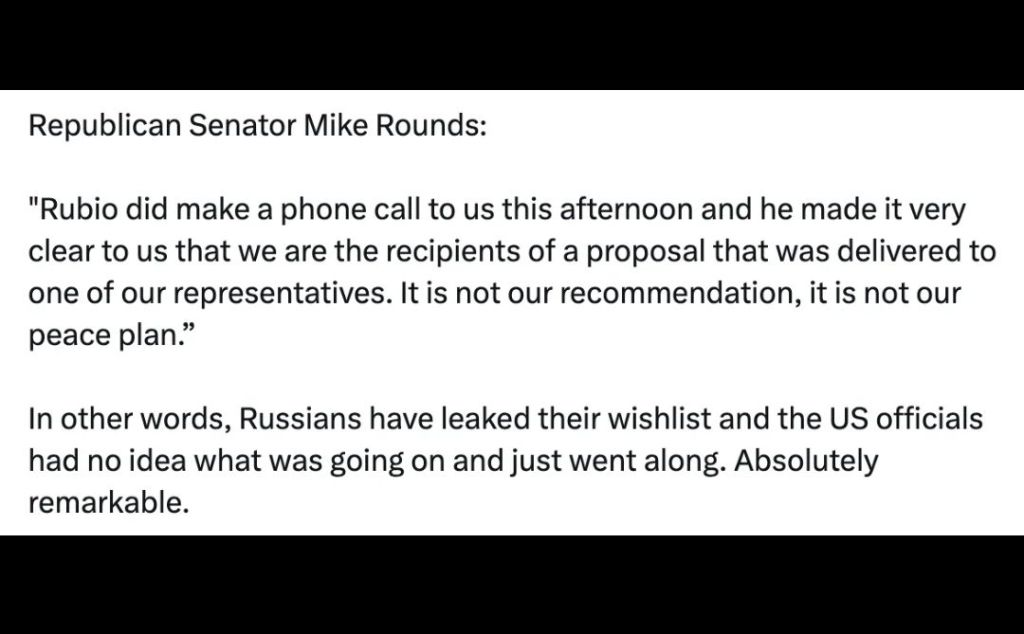
Marco Rubio told US senators that Ukraine peace plan was not America’s — but a ‘leaked’ Russian ‘wish list’
Donald Trump is pressuring Ukrainian President Volodymyr Zelensky to accept a controversial 28-point peace plan that includes significant concessions from Ukraine, such as ceding territory and reducing its military size. Zelensky has warned that Ukraine faces one of its most difficult moments in history due to this pressure and the potential loss of U.S. support. BBC chathamhouse.org
And sadness prolongued for Ukraine, written by Viktor Kravchuk on Substack:
I lived there for several months when I had nowhere to go after the invasion.
A moment in our nation when the war scattered millions of us and forced us to find new places to just carry on with life.
I had never visited this city before. No friends, no contacts there. My father used to say that our peasant roots came from that part of Ukraine generations ago, but nothing concrete.
Still, Ternopil opened its doors to me when I was lost.
I cooked, delivered food, baked bread. I worked any job I could find just to stay afloat.
I walked those streets late at night trying to rebuild a life that had collapsed in my hands.
In streets I did not know, trying to convince myself that life had not ended yet.
Ternopil held me up so softly, that is why I felt the attack this week like a knife reaching my soul.
When I knew that the missile hit the eastern side of the city, I checked the map.
It was only some blocks from where I used to stay.
I knew those windows. I knew those balconies where people used to keep bicycles and flower pots.
Above, the residential building after the attack. Below, the image of the same building from 2015 in Google Maps, you can check it here
Russia struck a place where people trusted the distance.
I do not know exactly, it must be one thousand or so kilometers or miles from the nearest frontline.
A place closer to Berlin than to Moscow, where parents sent their children to feel safer.
Putin sent missiles that hit two apartment buildings.
They created poison in the air.
Chlorine levels six times above normal.
And there are still those in the world who believe this nightmare can be settled with a handshake with that demon in the Kremlin.
You would understand the truth if you ever walked through that city.
Humble workers. Mothers at the market selling berries.
Families who keep the Ukrainian flag in their windows even after losing sons at the front.
People who believe in this country with strength even though they have no idea where it comes from.
They deserved a morning that stayed whole. A night that did not collapse on them.
I tried to write about this attack several times.
Three or four full drafts, all in trash now.
None of them worked. Nothing felt worthy of the people who died.
Nothing really seemed to carry their faces, their streets, their kindness.
To see them hit is more than unbearable.
The horror is so strong that it knocks the words out of us, but I cannot stay silent.
Not when a city that once gave me shelter is now digging the bodies of children out of its ruins.
And on the same day, at the same moment of that insanity, many voices outside Ukraine were speaking about peace at any cost.
Land concessions, reduced armies.
Surrender wrapped in polite language.
And yet here we are, burying families in a city located one hour’s drive from the border with that bastion of civilization called the European Union.
This other building above, below in a Google Maps photo from 2015. Russians are so mad that I would not be surprised if the graffiti “Slava Ukraini” was behind their decision to attack these innocent places (even though the ink probably did not survive the weather for so long, but still…)
I keep thinking about how I used to walk those sidewalks while trying to rebuild my own life.
I never felt like a stranger there.
Ternopil made room for me in a moment when I needed it. And suddenly the streets I walked were full of smoke and broken glass.
But I will not let Ternopil vanish into a headline of a past week.
This city once held me up when I had nothing, now it is my part to carry some words for her.
For some significant time I really thought that Ternopil would be the last stop of my life.
It would be much more justice if I would be in those apartments than those families and children there.
But I learned not to question the decisions that destiny makes beyond our control.
I can only mourn. To feel. To cry.
To write.
To carry this city in my heart.
Forever.
And today at least, you are carrying Ternopil with me.
—Viktor
🇺🇦
This work is entirely reader-supported and it lives exclusively here on Substack. If you enjoyed this piece, make sure to join me so you do not miss whatever comes next.
Everything here will always remain free to read, but if you can, becoming a paid subscriber helps me keep this space alive for anyone who arrives here looking for a little strength.
If you enjoyed reading this post, feel free to share it with friends!
From left, Donald Trump, Aras Agalarov and Emin Agalarov walk the red carpet at the Miss Universe pageant competition in Moscow in November 2013. (Victor Boyko/Getty Images)
Now, like an anxious schoolboy dying to ask out a girl to the prom, Trump reached out to Putin again. He couldn’t keep his feelings to himself. So on June 18, 2013, just as the planning for the pageant was getting underway, Trump tweeted: “Do you think Putin will be going to The Miss Universe Pageant in November in Moscow — if so, will he become my new best friend?”
It was not until June 26, 2013, more than a week after his tweet, that Trump finally mustered the courage to write Putin, inviting him to be “guest of honor” at the upcoming pageant in November. Dropping Aras Agalarov’s name, as if to show that he was in bed with one of the Russian’s president’s favored oligarchs, Trump noted that “we turned down many other competing countries in favor of Russia.”
At the bottom of the typewritten letter, he added, in his own familiar penmanship, “The World’s Most Beautiful Women!”
See Chris Ungar, Substack: 34. From Las Vegas to Moscow: The Miss Universe Pageant and Trump’s Russian Ties (2013)
1990s, the ‘aluminium wars’ when gangsters and billionaires flourished in Russia:
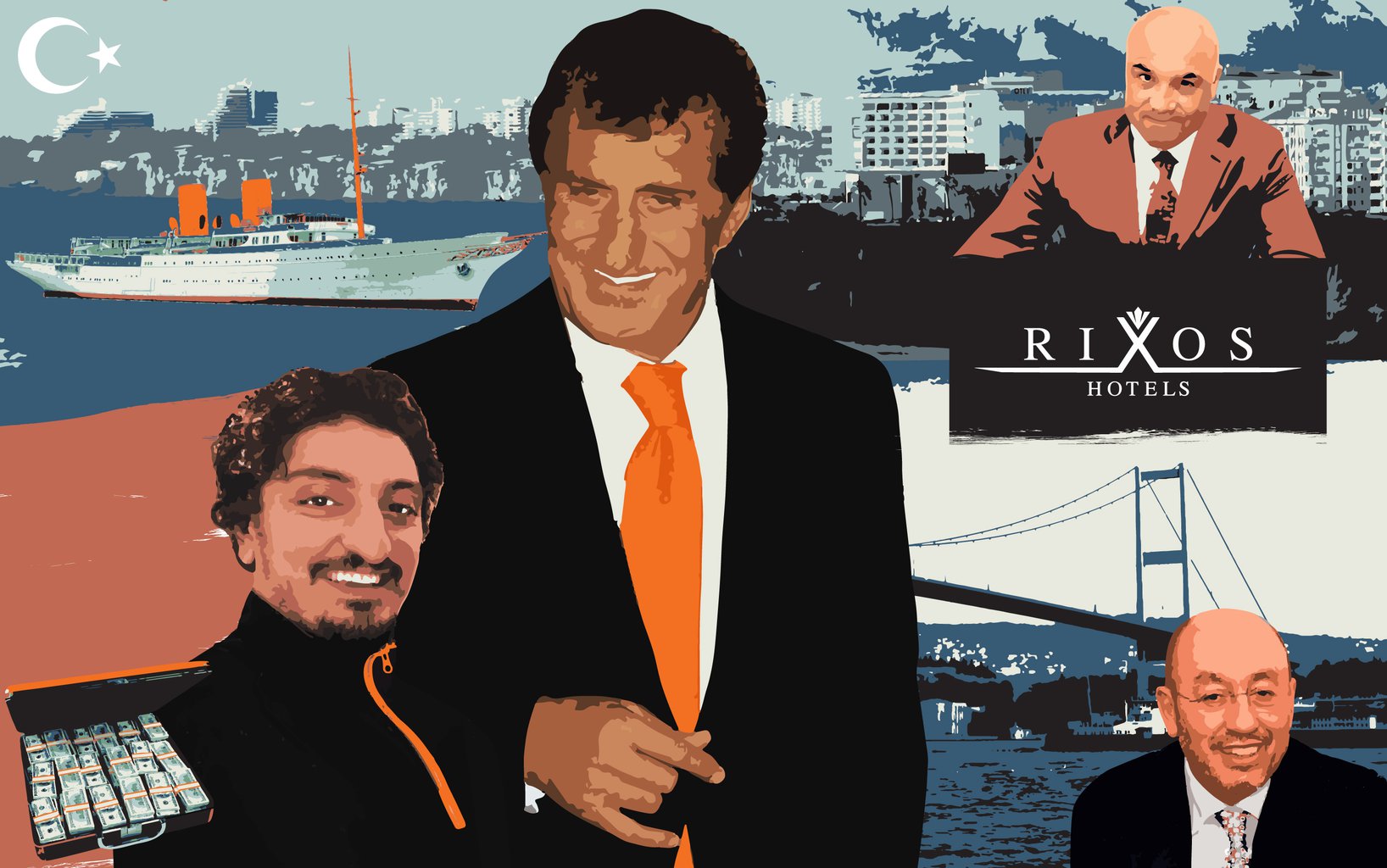
Millions of files in the Football Leaks dataset relate to the business of a Kazakh-Turkish family called the Arifs. For the past 25 years they have operated almost unnoticed, but built an empire which has cultivated relationships with Russian mobsters, post-soviet plunderers, wealthy Turks and even presidents.
The source of the Arifs’ wealth is a polluting chrome foundry in Kazakhstan. Since the 1990s, the Arifs have been in business with the ‘Kazakh trio’, controversial businessmen close to Kazakhstan president, Nursultan Nazarbayev. It is these relationships that the family has spent over two decades trying to protect
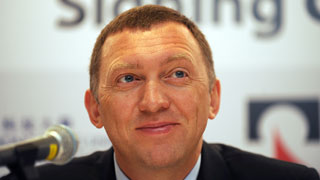
Oleg Deripaska has a colourful history, much of which has come under scrutiny in the courtroom. Despite clearing his name several times, there’s another high-profile case on the cards
Oleg Deripaska and the Russian aluminium wars
Oleg Deripaska has a colourful history, much of which has come under scrutiny in the courtroom. Despite clearing his name several times, there’s another high-profile case on the cards
The story contains colour, adventure, allegations of criminality and accolades for public service. Much of it, for legal reasons, remains unprintable. The sole owner and chief executive of diversified investment group, Basic Element, Deripaska has been in several courts of law in several countries attacking and defending his countrymen over manoeuvres to control lucrative corporate interests. Estimates of his net worth have seen his position in the Forbes list of billionaires swing from ninth to 164th place in the space of one year (2008-2009), but by 2010 he was back up to number 57. This is certainly a man to watch.
Born in 1968 in a region east of Moscow, Deripaska grew up in a poor rural area to the south of the country, not far from the Black Sea. He studied theoretical physics at the Moscow State University, and later earned an economics degree from the Plekhanov Russian Academy of Economics. During the breakup of the Soviet Union in the early 1990s he claims to have been close to starvation, working on building sites to earn money for food and the continuation of his studies. As with so many other modern-day Russian oligarchs, he is then vague about his wealth accumulation, obtaining a 20 percent holding in a Siberian aluminium factory during the period 1993-96.
The wild wild East This was the start of what is now referred to as the Russian ‘aluminium wars’, a bloody period in the country’s post-communist asset grab from which a few dozen oligarchs emerged – and several potential oligarchs lost their lives. At the beginning of the period, Russian aluminium production was in disarray. Alumina, the main raw material, was in short supply domestically, and the foreign holders of refining plants were engaging in a lucrative practice called ‘tolling’. In this complex form of tax evasion, offshore companies took advantage of duty exemptions on the purchase of raw materials which they sold on to their refining facilities at market prices, booking the profits in the low-tax jurisdictions of their offshore havens. The government, allegedly, looked the other way.
As the state began to sell off its resource assets, the size and value of the global market for aluminium, along with the potential for moving money around the globe, attracted such fierce competition that it is estimated 100 people were killed. In the words of Roman Abramovich, who testified recently in his suit over events of that period, “Every three days, someone was being murdered.”
Deripaska rose to the top of the pile with a controlling interest in Sibirsky Aluminium Investment Industrial Group, having somehow managed to survive the influence of the local Russian mafia and other threats to his life. With allegations of organised crime and multiple murders apparently dogging his every move, his wealth grew over the next ten years into one of the largest fortunes in Russia.
Retired, living in the Scottish Borders after living most of my life in cities in England. I can now indulge my interest in all aspects of living close to nature in a wild landscape. I live on what was once the Iapetus Ocean which took millions of years to travel from the Southern Hemisphere to here in the Northern Hemisphere. That set me thinking and questioning and seeking answers.
In 1998 I co-wrote Millennium Countdown (US)/ A Business Guide to the Year 2000 (UK) see https://www.abebooks.co.uk/products/isbn/9780749427917




 borderslynn
You must be logged in to post a comment.