Global energy markets are deeply interconnected, and oil remains the lifeblood of modern economies. However, when geopolitical tensions lead to sanctions on major oil-producing nations, such as Russia, Iran, or Venezuela, these countries often seek alternative methods to keep their crude flowing to international buyers. One of the most controversial and opaque mechanisms enabling this is the so-called “shadow fleet”—a clandestine network of aging oil tankers operating outside traditional regulatory and safety frameworks. This article explores what the shadow fleet is, why it exists, how it operates, and the risks it poses to global trade, environmental safety, and maritime security.
Inside Venezuela’s growing arsenal of Iranian weapons
Iranian-made attack boats, missiles, drones, and Hezbollah-linked networks have given Venezuela a small but real combat capability in the Caribbean – and a new way for Tehran to poke at the United States.
A menacing ‘shadow fleet’ of Iranian-linked tanker ships is operating in the Caribbean, sparking alarm amid ongoing US military action in the region.
Despite a long history of brazenly transporting sanctioned Iranian oil, the vessels have been seen sailing just miles from the American coastline as President Trump continues his unrelenting bombardment of alleged drug boat
The Royal Association of Netherlands Shipowners (KVNR) has revealed that several dozen vessels are fraudulently flying the flags of Aruba, Sint Maarten, and Curaçao. These ships, believed to be part of the so-called “shadow fleet,” are operating under false registrations, raising alarm over safety, environmental, and legal risks.
Flags Without Registers
KVNR’s weekly checks in August 2025 uncovered that a fluctuating number of vessels are sailing under the flags of Aruba, Sint Maarten, and Curaçao. However, none of these territories maintain a flag register for sea-going vessels or issue valid Certificates of Registry, making the practice fraudulent. This development is particularly concerning for Dutch shipowners who are legitimately entitled to fly the Kingdom flag.
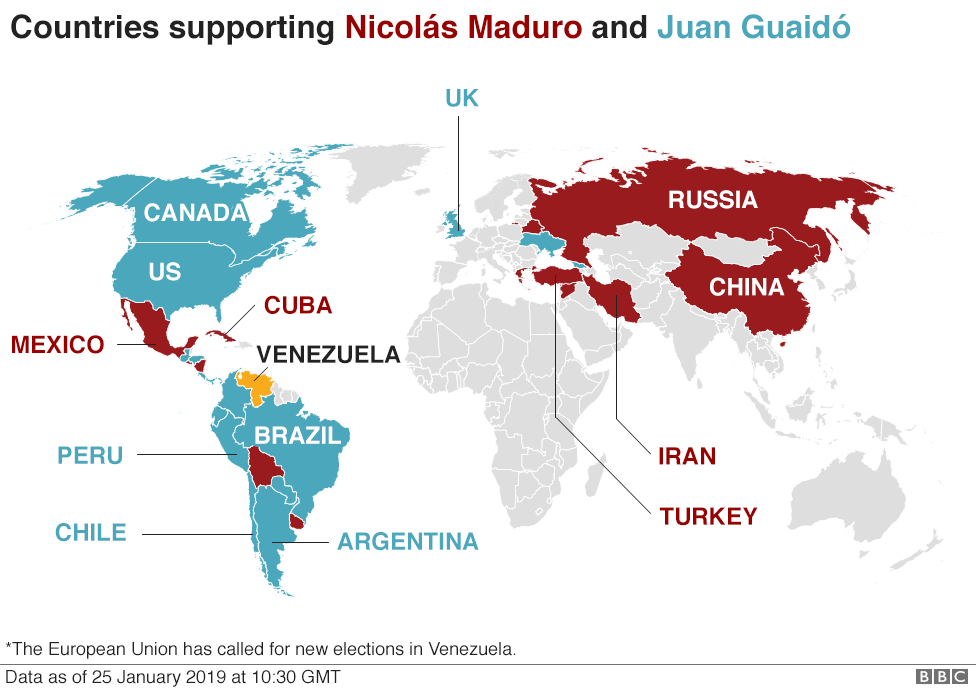
And 6 years ago, the UK Conservative government, as an ally of the US::
Why is Venezuela’s gold still frozen in the Bank of England?
Four years ago, the UK government recognised Juan Guaidó as Venezuela’s president. He’s now gone, but the Bank of England is still holding some of the country’s key assets.
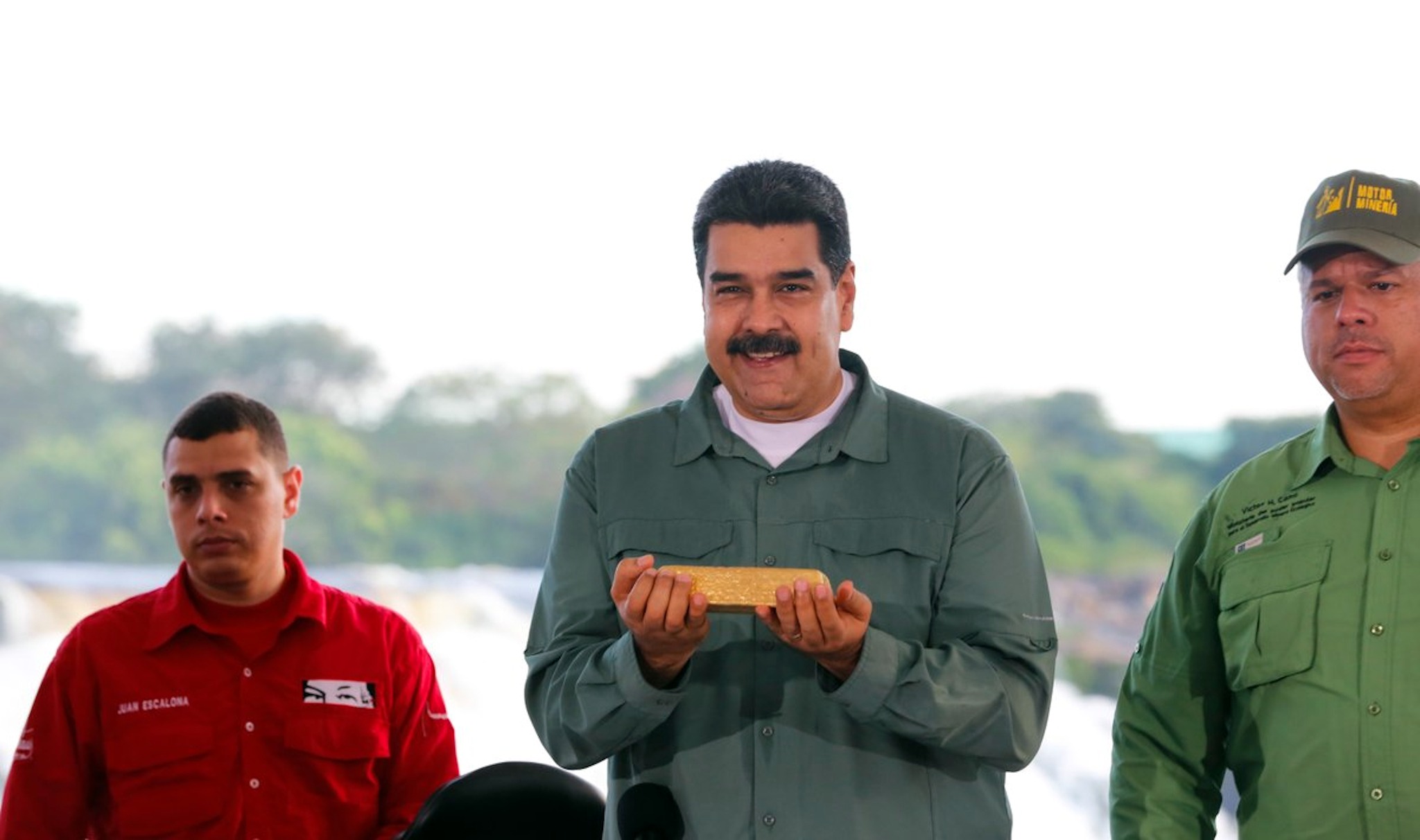
President Maduro wants Venezuela’s gold back from Britain. (Photo: Hand out / Prensa Presidencial)
In late December, Venezuela’s leading opposition parties voted to oust Juan Guaidó as “interim president” and dissolve his parallel government.
This was clearly not the ending the UK government had in mind.
Four years ago, the British government made the bold decision to recognise Guaidó as Venezuelan president, and proceeded to facilitate his legal battle to seize roughly $2bn of gold held in the Bank of England.
Indeed, the UK government insisted at every turn that it recognised Guaidó – and not Nicolás Maduro – as Venezuelan president. In turn, Guaidó’s lawyers argued that he was authorised to represent and control the assets of the Central Bank of Venezuela held in London.
A long-running legal battle between Venezuelan President Nicolas Maduro and opposition leader Juan Guaido over who should hold the key to more than $1.5 billion of gold stored at the Bank of England resumed at the London High Court on Wednesday.
The UK Supreme Court ruled last year that Guaido should be recognised as the Latin American country’s head of state, taking a lead from the British government’s position, and that he had the authority to determine the future of the 31 tonnes of bullion.
The High Court will now grapple with the novel question, over a four-day trial, about how to treat rulings by the Venezuelan Supreme Tribunal of Justice (STJ) that say Guaido’s appointments to an “ad hoc” central bank board are invalid.
“At stake is the question of whether the English courts can sit in judgment on the validity of decisions made by another sovereign nation’s highest court,” said Sarosh Zaiwalla, a partner at law firm Zaiwalla & Co., who is representing the Maduro-led Banco Central de Venezuela.
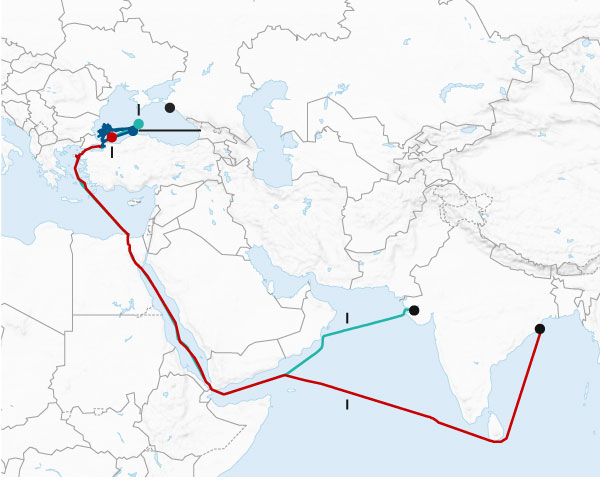
Ukraine has recently attacked three tankers in the Black Sea that it says are Russian ‘shadow fleet’ vessels engaged in sanctions-busting
Guardian graphic. Source: MarineTraffic
“The shadow fleet itself is not a new threat,” said Gonzalo Saiz Erausquin, a research fellow at the finance and security centre at the Royal United Services Institute thinktank. “But [it] has expanded drastically after Russia’s full-scale invasion of Ukraine in 2022. That saw what we call the shadow fleet explode to some 900-1,200 vessels globally.
Military oil spill: How the Kerch Strait tanker disaster is linked to Russia’s ‘shadow fleet’ oil exports, 18 January 2025
…With Russia’s seizure of Crimea, its military and civilian activity in the area has increased, further worsening oil pollution in the Azov Sea and Black Sea.
Oil spills are clearly visible in satellite images made available in a review of the environmental consequences for marine ecosystems published by the Conflict and Environment Observatory (CEOBS) and Zoi Network. In one case, the spills resulted from missile attacks on ChernoMorNeftegaz drilling platforms in June 2022.
Risks posed by wrecked ships have also increased, with roughly 100 additional ships, military and civilian, sinking or damaged since the war began. For example, evidence of a limited oil spill was visible from space at the site where the Moskva military cruiser sank. Most of its fuel reserves, which may exceed 2,000 tons, are probably still stored in its fuel tanks at a depth of 50 meters—a huge risk for the future…
At the same time, there is still insufficient direct evidence regarding the shadow fleet’s negative consequences for marine ecosystems. A review of tanker leaks around the world, published in October 2024 by Politico, lists just nine examples of oil spills likely associated with the shadow fleet (shown in the map below)…
On December 15, 2024, two small river tankers located at the southern anchorage at the exit from the Kerch Strait awaited transshipment to a large sea tanker. Both were caught in stormy weather and broke in half. On the Volgoneft-212, which sank completely, one sailor died from hypothermia and exposure, but the remaining 12 crew members were rescued. The stern half of Volgoneft-239, which also broke apart during the storm, managed to approach the shore and run aground 80 meters offshore. The entire crew was rescued.
According to various estimates, between 2,400 and 8,000 metric tons of mazut originating from the Saratov Oil Refinery spilled out of the damaged tankers into the sea…
The desire and capacity of the Russian Federation to ensure the safety of oil and gas shipping has diminished substantially during this war, hostilities which are fundamentally nourished by oil exports. However, even prior to this catastrophe, environmental safety in the oil and gas shipping sector has not been a priority.
The main reason for these accidents, according to an independent environmental expert who wishes to remain anonymous, is the careless disregard of the state and all its structures, as well as big business, for environmental safety. These tragedies occur because of irresponsible individuals and organizations, as well as gaps in legislation and deliberate weakening of environmental law in recent years (especially since 2021, when the requirement for constituent regions to maintain oil spill response plans (OSRs) was abolished), corporate lobbying lowering environmental standards and procedures, and stifling of the professional environmental conservation community and the country’s news media…
Dr Sian Prior, lead advisor to the Clean Arctic Alliance told UWEC, “The Clean Arctic Alliance believes that other regions would benefit from following the example of theInternational Maritime Organization, through which a new ban (with notable caveats) on the carriage and use of HFO as fuel in polar regions came into force in July 2024.”
Cuba is a classic example of how economic sanctions cannot achieve their intended objectives. The U.S. has maintained an almost complete trade embargo against Cuba since Fidel Castro took power in 1959, aiming to push the country toward democracy and better human rights observance. Nevertheless, almost sixty years later, Cuba remains a one-party state under communist rule.
On the contrary, these very measures have worsened life for Cubans by drastically reducing the availability of goods, including humanitarian items such as medicines and other essentials for survival. Although the regime has exploited this situation to blame its internal problems on the embargo and to increase anti-American propaganda among segments of the population, it has not weakened its hold on power, all while compromising the welfare of ordinary citizens under sanctions. Successive U.S. administrations have, at times, failed to bring about democratization through adjustments in the sanctions.
Iran: Sanctions and Nuclear Ambitions
Iran has faced tough sanctions, particularly regarding its nuclear program, for many years. Sanctions on Iran’s energy sector and financial institutions are not new; major Western nations, including the U.S., have enforced them to compel the country to abandon its nuclear weapons aspirations, which are deemed unacceptable according to international standards of human rights and regional order. Like Cuba and Russia, achieving these objectives through sanctions has proven fruitless.
Consequently, despite skyrocketing inflation, unemployment, and shortages of basic commodities, the leadership refuses to conform to external pressures due to adverse economic conditions. Public support for the regime serves as an excuse for rallying nationalist sentiments among its people against Western aggression. Iran has managed to find new trading partners, such as China and Russia, allowing it to continue its nuclear program even after sanctions were imposed by multiple countries as a stance against its leadership. The ordinary populace in Russia, along with Cubans, has been worst affected, suffering more than those in power.
Retired, living in the Scottish Borders after living most of my life in cities in England. I can now indulge my interest in all aspects of living close to nature in a wild landscape. I live on what was once the Iapetus Ocean which took millions of years to travel from the Southern Hemisphere to here in the Northern Hemisphere. That set me thinking and questioning and seeking answers.
In 1998 I co-wrote Millennium Countdown (US)/ A Business Guide to the Year 2000 (UK) see https://www.abebooks.co.uk/products/isbn/9780749427917




 borderslynn

You must be logged in to post a comment.