It seems appropriate right now to try to clarify one of the most basic questions America is (or should be) struggling with: What does it mean to be a human being?
The confusion is mounting.
Three illustrations:
1. Corporations
Corporations are not human beings. That should be self-evident.
But in 2010, the Supreme Court ruled (in its Citizens Unitedcase) that corporations are the equivalent of “people” under the First Amendment to the Constitution, with rights to free speech.
This ruling has made it nearly impossible for the government to restrict the flow of money from giant corporations into politics. As a result, the political voices — and First Amendment rights — of most real human beings in America are being effectively drowned out.
But in coming years, states will have an opportunity to circumvent Citizens United by redefining what a “corporation” is in the first place.
Absent state charters that empower them to become “corporations,” business organizations are nothing more than collections of contracts — between investors and managers, managers and employees, and consumers and sellers.
In the 1819 Supreme Court case Trustees of Dartmouth College v. Woodward, Chief Justice John Marshall established that:
“A corporation is an artificial being, invisible, intangible [that] possesses only those properties which the charter of its creation confers upon it …. The objects for which a corporation is created are universally such as the government wishes to promote.”
Montana is now readying a proposition for its 2026 ballot that would empower organizations that sought to be corporations there to do many things — except to fund elections. (I’ve written more on this, here.)
And
Corporate political spending was growing before Citizens United, but the decision opened the floodgates to the unlimited super PAC spending and undisclosed dark money we suffer from today.
Between 2008 and 2024, reported “independent” expenditures by outside groups exploded by more than 28-fold — from $144 million to $4.21 billion. Unreported money also skyrocketed, with dark money groups spending millions influencing the 2024 election.
Some pushback:
Jayapal’s bill to overturn Citizens United targets Musk’s ‘shadow presidency’
As billionaires like Elon Musk reshape American democracy, a new amendment seeks to reverse the Supreme Court ruling that allowed corporate money to dominate politics.
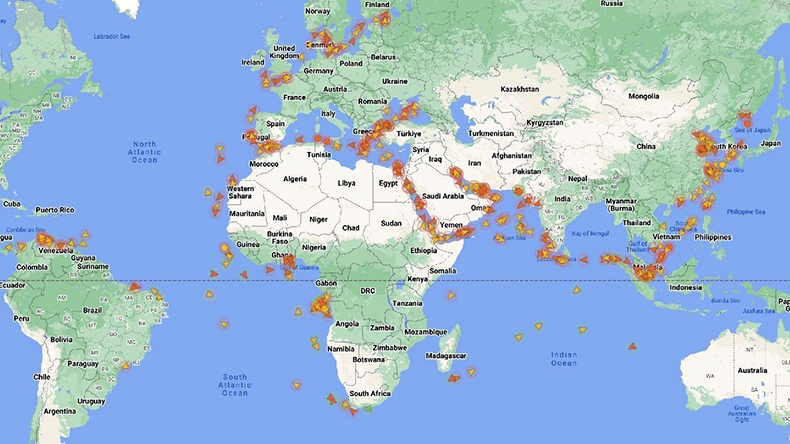
A shadow fleet, also referred to as a dark fleet, is a “ship or vessel that uses concealing tactics to smuggle sanctioned goods”. Shadow fleets are a direct response to international or unilateral economic sanctions Continued in Wikipedia
Shifty shades of grey: The different risk profiles of the dark fleet explained
Tankers no longer fit the catch-all definition of ‘dark fleet’ even if they share similarities and meet the established criteria
Silk Road, online black market known for providing a platform to buy and sell illegal drugs and for hosting other illicit activities. The site was founded by Ross Ulbricht in February 2011 and eventually shut down by law enforcement in 2013.
Ulbricht attempted to appeal, and in May 2017, the United States Court of Appeals for the Second Circuit denied his attempt. Also in 2017, Ulbricht appealed to the Supreme Court, with attorneys arguing that his case involves unresolved constitutional questions regarding the Fourth Amendment and the digital age. In June 2018, the court declined to hear Ross’s case.10
In late 2020, national media reported that former President Donald Trump was considering commuting Mr. Ulbricht’s sentence, but he did not at that time.11 Since Ulbricht’s incarceration, more than 570,000 have signed an online petition created by Lyn Ulbricht, Ross’ mother, to commute his double life sentence.12
On Jan. 21, 2025, President Donald Trump pardoned Ulbricht.13
Stephen Miller’s Dark Legacy: A Tale of Influence written by Jennifer Anderson September 14, 2025
Stephen Miller’s name has become synonymous with a polarizing era of policy-making during Donald Trump‘s presidency. Known for his hardline stances, particularly on immigration, Miller’s influence extended deep into the corridors of power. This article delves into the intricate fabric of Miller’s potent presence in the White House and the far-reaching effects of policies crafted under his guidance. Unveiling the dynamics of his “Reign of Terror,” both his admirers and adversaries provide a layered understanding of his political legacy.
Retired, living in the Scottish Borders after living most of my life in cities in England. I can now indulge my interest in all aspects of living close to nature in a wild landscape. I live on what was once the Iapetus Ocean which took millions of years to travel from the Southern Hemisphere to here in the Northern Hemisphere. That set me thinking and questioning and seeking answers.
In 1998 I co-wrote Millennium Countdown (US)/ A Business Guide to the Year 2000 (UK) see https://www.abebooks.co.uk/products/isbn/9780749427917



 borderslynn
You must be logged in to post a comment.