As of 18:00 on 12 January 2026, unless otherwise noted
This report, issued every Tuesday and Friday, outlines efforts and progress made by the UN and its partners to scale up the humanitarian response across the Gaza Strip under the ceasefire that entered into effect on 10 October 2025. The next report will be issued on 16 January. For all situation reports see here.
HIGHLIGHTS
Over 3,000 people have been affected by a new wave of heavy rains and strong winds across the Gaza Strip since the evening of 12 January, with at least 47 injuries and six reported fatalities caused by hypothermia and collapsing shelter structures, according to the Site Management Cluster.
Despite sustained response efforts and the relatively increased entry of shelter items since the October 2025 ceasefire, recent rainstorms have reversed gains made.
A shipment of chemicals, including antiscalant and sodium hypochlorite, was delivered to the Southern Gaza Desalination Plant and is being distributed to desalination facilities across the Strip to ensure safe and continued production of potable water.
To strengthen Gender-Based Violence prevention and response services, 20 new Women and Girls’ Safe Spaces (WGSS) have been established, bringing the total number of operational WGSSs to 56 across the Gaza Strip.
SITUATION OVERVIEW
Between 8 and 12 January, airstrikes, shelling and gunfire continued to be reported across the Gaza Strip.Harsh weather conditions are taking a heavy toll on civilians, especially families living in makeshift shelters, flood-prone areas, or war-damaged buildings, further compounding their vulnerabilities and exposing them to cold temperatures and contaminated floodwaters.
Between 9 and 10 January, the Site Management Cluster (SMC) received urgent alerts from 34 sites in northern Gaza, where heavy rains affected more than 1,300 households whose shelters were destroyed and who are now in immediate need of tarpaulins and tents.
New heavy rainfalls and strong winds have been recorded since the evening of 12 January, causing extensive damage across multiple displacement sites. Field teams report that 597 tents and makeshift shelters were blown off or heavily damaged, directly impacting more than 3,000 people and leaving many exposed to severe weather conditions.
As of 13 January, Site Management partners report 47 injuries, while six fatalities have been confirmed: three children who succumbed to extreme cold in Khan Younis and Gaza city and three other people who lost their lives in the Al Shati area of Gaza City due to the collapse of the structure in which they were sheltering. In addition, SMC partners recorded 18 distress calls relating to critical site maintenance and hazard mitigation. These included opening clogged manholes, cleaning drainage systems, clearing blocked gullies, reinforcing shelters with tarpaulins, and garbage removal. In response, rescue and emergency teams coordinated by Site Management partners responded to multiple life-threatening incidents affecting families in Khan Younis, Rafah, and Gaza city.
While the overall shelter gap was expected to decrease due to sustained response efforts and the increased entry of shelter items – albeit limited – recent rainstorms have significantly reversed these gains, with thousands of households affected, preventing a reduction of shelter needs as anticipated.
The latest WFP Market Monitor indicates food consumption patterns in December remained broadly similar to November, reflecting a modest recovery from October but continuing to remain well below pre-conflict levels. While further improvements are possible with increased humanitarian and commercial entries, overall access to food remains severely constrained, particularly for meat and eggs, with most households relying primarily on cereals, pulses, and limited amounts of dairy and oil. Availability of cooking gas remains critically constrained. The limited entry of cooking gas covers the needs of less than 3 per cent of the population. As a result, 46 per cent of households continue to rely on waste burning for cooking, while others use raw materials such as wood.
Recent market monitoring by the Gaza Market Monitoring Committee (GMMC) indicates continued improvement in the flow of commercial and humanitarian goods, with no reported looting incidents during the reporting period (5–11 January) and sustained entry through Kerem Shalom Crossing and other crossings. Food markets remained generally supplied, with stable or slightly declining prices for key staples. However, non-food and winter-related items, including shelter materials, bedding, and heating-related goods, remained limited and costly, particularly in northern Gaza.
Despite improved market supply, household access continued to be constrained primarily by limited income and purchasing power rather than market availability. GMMC price and index trends confirm that while prices have moderated compared to previous months, the overall cost of the consumer basket remains well above pre-October 2023 levels.
Preliminary analysis indicates further improvement in the nutritional status of children and pregnant and breastfeeding women (PBW). Preparations are underway to conduct a Standardized Monitoring and Assessment of Relief and Transitions (SMART) survey to gain deeper insights into malnutrition levels across the Gaza Strip. Although the number of acute malnutrition cases has decreased compared to previous months, levels remain significantly higher than those recorded in February–March of last year’s ceasefire and the pre-war period.
Child Protection risks remain elevated, including increasing child labour involving hazardous activities such as collecting plastic and firewood; heightened exposure to explosive remnants of war, particularly in newly accessed or return areas; health risks linked to overcrowding, poor hygiene, and limited access to medical care; and psychosocial distress due to prolonged displacement and insecurity. Access to education is severely limited in several locations due to overcrowded or inaccessible schools and the absence of recreational or safe spaces.
UNITED NATIONS-COORDINATED AID ENTRY*
Between 9 and 12 January, at least 2,708 pallets of aid administered by the UN and its partners were offloaded at Gaza’s crossings, based on data retrieved from the UN 2720 Mechanism dashboard at 18:00 on 13 January. About 55 per cent of these pallets contained food, followed by nutrition (16 per cent), shelter (15 per cent), water, sanitation and hygiene (WASH) items (8per cent), health items (5 per cent) and protection supplies (1 per cent).
During the same reporting period, UNOPS international monitors deployed at Gaza’s crossings verified the collection of at least 10,277 pallets of aid – all collected from Kerem Shalom Crossing. These comprised inter alia over 6,000 pallets of food assistance, and more than 2,800 pallets of shelter items including tents, blankets, tarpaulins and kitchenware.
The above data does not include bilateral donations and the commercial sector.
Between 9 and 12 January, 14 out of 17 humanitarian movements inside Gaza that required coordination with Israeli authorities were fully facilitated, of which 11 were accomplished and two partially, enabling inter alia the collection of food, nutrition, shelter, medical, hygiene supplies and fuel from the crossings, while one – the attempted rescue of an injured minor from the Az-Zaytoun area of Gaza city – could not be completed. Two movements faced impediments: one was eventually completed, while the other was only partially accomplished. In addition, one mission was cancelled by the organizer.
HUMANITARIAN RESPONSE
The below are preliminary updates shared by Clusters at the time of reporting and will be reconciled and aggregated in the coming days as Clusters receive more data from the capillary network of partners active on the ground.
Food Security
As of 10 January, Food Security Sector (FSS) partners continued to prepare and deliver 1,622,000 hot meals daily through 190 kitchens across the Strip, including 482,000 meals through 50 kitchens in northern Gaza and 1,140,000 meals through 140 kitchens in southern and central Gaza.
As of 11 January, approximately 170,000 two-kilogram bread bundles were produced and distributed daily. One third of this bread is distributed for free to more than 400 shelters and community sites, while two thirds are sold through 148 retailers at a subsidized price of 3 NIS ($0.95) per bundle. The subsidized bread distribution network continues to expand, with 30 more retailer shops contracted by FSS partners as of 1 January 2026, compared to 118 as of late 2025.
Nutrition
In December, Nutrition Cluster partners screened over 76,000 children and identified 4,971 cases of acute malnutrition, including 822 with the most severe form. This brings the total number of acute malnutrition cases identified in 2025 to 94,455, including approximately 19,000 children with severe acute malnutrition (SAM).
To strengthen response efforts, partners have continued expanding nutrition service sites, including in the North Gaza governorate, where two additional sites were opened by a Cluster partner this week.
Water, Sanitation and Hygiene
Between 8 and 12 January, WASH Cluster partners distributed 744,000 bars of soap, 3,400 water jerry cans, 1,750 hygiene kits and 795 latrine kits, as well as laundry and dishwashing powder, benefiting approximately 400,000 people in northern and southern Gaza.
A shipment of water chemicals, including antiscalant and sodium hypochlorite, was delivered to the Southern Gaza Desalination Plant and is being distributed to other desalination facilities across the Strip to ensure safe, and continued production of potable water.
Solid waste collection activities have resumed to previous levels following the securing of sufficient fuel this week, with partners collecting 1,100 cubic meters of solid waste daily. However, waste collection in North Gaza and Gaza city remains insufficient to meet daily needs due to increased population pressure and the significant waste accumulation that built up during the two-week reduction in services caused by fuel shortages.
WASH partners have received eight new dump trucks, which are currently being operationalized, with an additional 14 dump trucks expected by the end of the month to further support solid waste collection activities.
Health
Over the past four days, Health Cluster partners launched the Limb Reconstruction Screening Programme at the Nasser Medical Complex in Khan Younis, with 40 cases screened during the first outpatient clinic day, of which 13 were identified as complex cases requiring major limb reconstruction. Such treatment typically spans six months to three years, involving 2–8 surgeries and 12–30 physiotherapy sessions, with costs reaching up to $40,000 per patient. However, essential surgical items, including advanced imaging, power drills, and carbon fiber fixators, remain unavailable in Gaza. Plans are ongoing to expand screenings to the Al-Aqsa Hospital in Deir al Balah, and Al-Shifa Hospital in Gaza city to cover patients in the two northern governorates.
During the first few days of 2026, Health Cluster partners resumed operations at one Primary Healthcare Center (PHC) for Non-Communicable Diseases in Gaza city and established a new PHC in the same governorate. As of 10 January, 91 out of 197 PHCs were partially functional across the Gaza Strip, including 27 in Gaza city.
Shelter
Between 8 and 12 January, Shelter Cluster partners distributed 369 tents, 2,400 tarpaulins, 10,992 blankets and other bedding items, 1,656 kitchen sets, and 350 clothing kits and vouchers, benefiting 7,773 households cumulatively
The Shelter Cluster continues to coordinate and support the relocation of households living in locations at high risk of flooding, including shoreline areas, and structures at risk of collapse. However, limited land availability remains one of the most significant challenges affecting the scale and speed of shelter interventions.
Site Management
From 9 to 11 January, site care and maintenance activities were integrated into the winterization response, with Cash-for-Work and community mobilization focusing on winter preparedness and flood risk mitigation, including the clearing of clogged water channels to address cold-season risks. Fire safety awareness campaigns were launched, alongside three community-led initiatives addressing critical needs such as fire prevention, though progress remains constrained by the high cost and limited availability of suitable materials.
Lighting systems were installed in two displacement sites to improve safety and living conditions, with procurement underway for eight additional units, while site maintenance toolkits were distributed to support ongoing operations. Help desks and site management committees were established in 10 camps, with efforts ongoing to create dedicated coordination spaces for winterization and risk reduction, and collaboration with the Health Cluster is underway to provide first aid training to site committees.
Protection
Child Protection
Between October 2025 and 11 January 2026, Child Protection partners distributed approximately 320,000 winter clothing sets and 112,503 pairs of children’s shoes, primarily targeting younger children. They also installed 150 high-performance tents at child protection service delivery points, including child-friendly spaces (CFS) and safe spaces, to support service continuity across the Gaza Strip.
Community feedback highlighted appreciation for psychosocial and awareness activities, alongside persistent concerns regarding limited education access, insufficient winter assistance, and critical gaps in winter clothing for adolescents aged 11–17.
Gender-Based Violence (GBV)
Between 8 and 11 January, GBV response partners continued providing multisectoral services through Women and Girls’ Safe Spaces (WGSSs) across Gaza, which serve as a critical entry point for psychosocial support, case management, cash assistance, and referrals to other essential services. Efforts to scale up GBV services resulted in the establishment of 20 new WGSSs, bringing the total number to 56. Of these, 25 per cent are located in the north and 75 per cent in the south, extending GBV response services across the governorates.
Between 8 and 11 January, approximately 1,500 people were reached with multisectoral GBV services, including case management, MHPSS, legal awareness, cash for protection, and recreational activities.
Forty-three consultations with women across multiple governorates to support navigating legal procedures.
GBV response partners distributed menstrual hygiene and dignity kits to meet the essential hygiene needs of women and girls to 872 people across Gaza, as well as others distributed through the UN-led joint distribution platform.
Mine Action
Between 8 and 11 January, two Explosive Hazard Assessments (EHAs) were conducted in Gaza city in support of ongoing humanitarian operations by assessing the risks posed by the presence of explosive ordnance (EO).
During the same period, mine action partners conducted 62 Explosive Ordnance Risk Education and Conflict Preparedness and Protection (EORE-CPP) sessions, reaching 1,394 people and four targeted EORE training sessions for 89 humanitarian workers
Education
Cluster partners established 18 additional temporary learning spaces (TLSs) across the Gaza Strip over the past four days, serving 35,479 school-aged children, with the assistance of 768 teachers. Overall, a total of 440 TLSs are now operational across Gaza, serving 268,000 learners supported by 6,308 teachers.
Damage assessments of accessible public-school buildings aimed at identifying sites eligible for tent installation and light rehabilitation for TLSs have assessed 160 schools to date.
As part of winterization preparedness efforts, cluster partners dispatched to the Ministry of Education and Higher Education:
7,500 lice-treatment shampoos for 14 learning sites across the Gaza Strip. The intervention targets approximately 7,500 students, including 3,500 in Khan Younis, 1,000 in Deir al Balah, and 3,000 in North Gaza. In addition, 2,500 anti-lice kits were dispatched to Khan Younis for distribution across five learning centers.
370 mattresses to equip 30 unfurnished classrooms in three learning spaces in Khan Younis, and 4,000 blankets to support 53 learning sites across the Gaza Strip.
Multi-Purpose Cash Assistance (MPCA)
Between 9 and 11 January, Cash Working Group (CWG) partners distributed Multi-Purpose Cash Assistance (MPCA) to over 2,600 households. Each household received 1,250 NIS (approximately US$378) in digital payments, in line with the minimum expenditure basket (MEB) transfer value.
Emergency Telecommunications
To enhance VHF coverage in southern Gaza, the ETC relocated a repeater from Deir al Balah to Khan Younis. Installation was completed on 7 January with coordination ongoing to reconfigure and test the secure link to the Jerusalem Security Operations Centre (JSOC).
* All figures solely refer to UN and partner assistance dispatched through the UN-coordinated system. They are preliminary and will be reconciled in the course of the ceasefire. Supplies entering through bilateral donations and the commercial sector are not reflected.
CAIRO/GAZA: A rainstorm swept across the Gaza Strip on Tuesday, flooding hundreds of tents, collapsing homes sheltering families displaced by two years of war and killing at least six people, local health officials said.
Medics said five people, including two women and a girl, died when homes collapsed near Gaza City’s beach, while a one-year-old boy died of extreme cold in a tent in Deir Al-Balah in central Gaza.
Tents were torn from their stakes, some flying dozens of meters before crashing to the ground. Others lay crumpled in muddy pools as families scrambled to salvage what they could. Residents tried to re-secure remaining shelters, hammering in loosened pegs and stacking sandbags around the edges to keep floodwaters from pouring inside.
And now (Jan 17 2026) news which has not been widely warmly received:
“The Trump administration has named US Secretary of State Marco Rubio and former UK prime minister Sir Tony Blair as two of the founding members of its ‘Board of Peace’ for Gaza.
Trump’s Middle East envoy Steve Witkoff and the president’s son-in-law Jared Kushner will also sit on the ‘founding executive board,’ the White House said in a statement on Friday.
Trump will act as chairman of the board, which forms part of his 20-point plan to end the war between Israel and Hamas.”
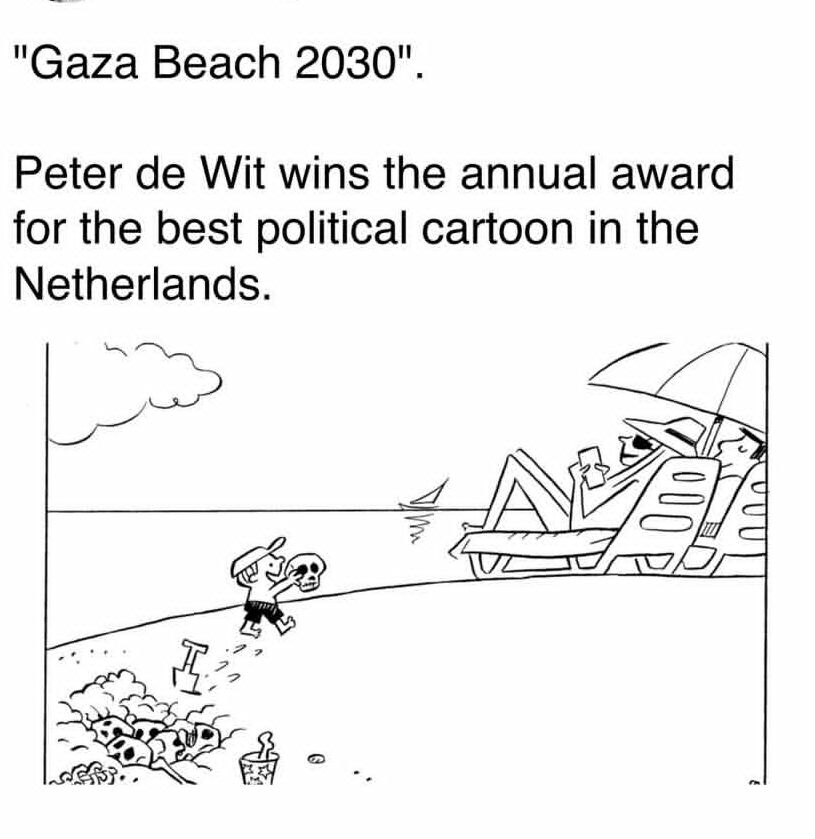
Trump relishes the concept of a Riviera style complex over the corpses of Gazans:
Retired, living in the Scottish Borders after living most of my life in cities in England. I can now indulge my interest in all aspects of living close to nature in a wild landscape. I live on what was once the Iapetus Ocean which took millions of years to travel from the Southern Hemisphere to here in the Northern Hemisphere. That set me thinking and questioning and seeking answers.
In 1998 I co-wrote Millennium Countdown (US)/ A Business Guide to the Year 2000 (UK) see https://www.abebooks.co.uk/products/isbn/9780749427917



 borderslynn
You must be logged in to post a comment.