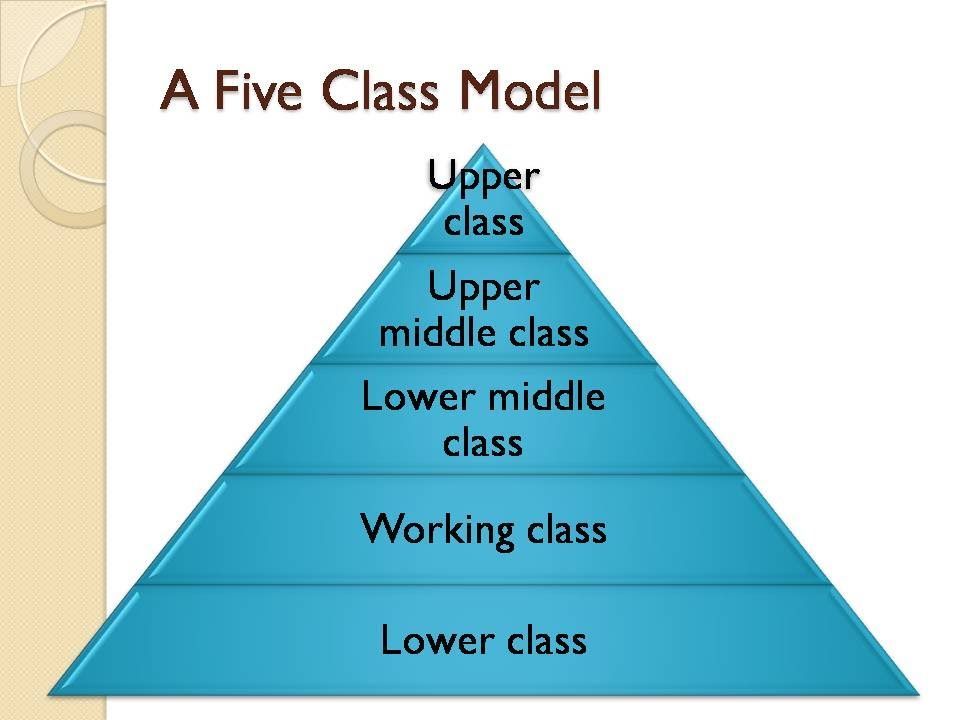
Globally, the base of the human pyramid has its strength in the healthy and supported working class people. They are vital to the solidity of the pyramid. Those at the top of the pyramid who disregard that fact do so at the peril of all mankind.
Greed drives the climbers to be at the top. But it allows for 1 percent only. And they compete with each other, knocking each other off if they can.
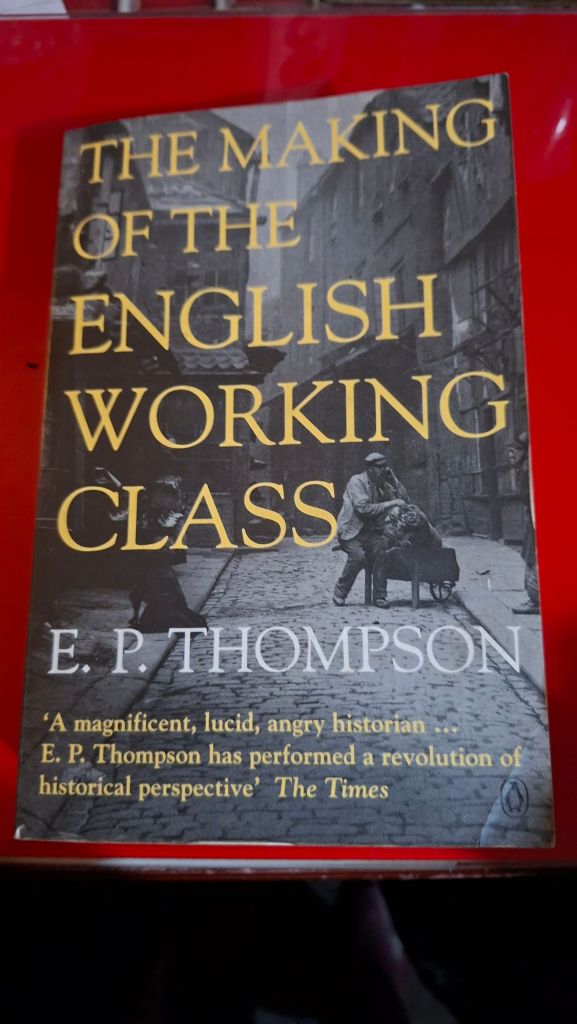
E.P.Thompson wrote the impressive British history ‘The Making of the English Working Class’ a copy of which I still treasure as it reflects the struggle of my ancestors.
A modern perpective:
understanding the working class and its historical context offers valuable insights into socioeconomic structures and dynamics. The significance of this group extends beyond their numbers as they constitute the backbone of economies by providing essential goods and services. As such, analyzing the characteristics, challenges, and evolution of the working class remains a crucial aspect of understanding contemporary societies and the global economy.
Migrants tend to be better educated than in the past as some countries define the profile of a likely valuable migrant as against one merely seeking safety from harm in their homeland:
Recent immigrants tend to be better educated than native populations: 50% of immigrants in the OECD had a tertiary degree in 2020, and in 2021, more than one-third of recent arrivals in the EU held highly skilled professions, compared to just over one-fifth in 2011 (OECD, 2023). A U-shaped curve emerges when examining the social positions of migrants, showing an over-representation of both working class and, increasingly, upper-class groups.
The current ‘working class’ jobs are very different to those of 50 years ago:
There have been substantial changes in the material reality of working-class life, and, just as the concept of tradition must be investigated, material changes must also be recognised. There have been substantial demographic changes in many of England’s communities in the last fifty years, capitalism has provided new industries such as platform and call centre work, and working conditions have rapidly declined in the last ten years. The working-class looks quite different today than it did thirty years ago.
===========
The overlapping fractions that constitute the bulk of the English working-class (excluding children and retired pensioners) are: the proletariat, labour aristocracy, organised labour, unorganised labour, wage labourers (who’s employment may be relatively stable but is still tied to a wage), and unpaid domestic labourers. Indeed, throughout their lives, most members of the working-class will have been part of many, and some even part of all, of these fractions. This list is by no means complete, and while it is possible to identify other groups, I think that these categories account for the majority of the working-class and sufficiently illustrate the nuances of this class’ internal relationships. I define the proletariat as being the part of the working-class whose employment conditions are characterised by insecurity, and therefore their employment conditions (though not their culture, sense of class, and assets) may have more in common with some precarious members of the middle-class, for instance actors, than other members of the working-class.8
Stress crisis’ in UK as 5m struggle with financial, health and housing insecurity
Exclusive: Levels of ‘multi-stress’ at highest since 2008 crash, study says, with people feeling profoundly powerless
Patrick Butler Social policy editorFri 6 Jun 2025 05.00 BSTShare
More than 5 million UK adults are experiencing a triple whammy of financial, health and housing insecurity as British households hit levels of “multi-stress” not seen since the global economic crash well over a decade ago, research shows.
One in 10 working-age adults are juggling low income and debt, insecure tenancies and high rents, and problems accessing NHS care. They are at least twice as likely as the rest of the population to report mental stress, sleeplessness and isolation.
Researchers said the explosion in multiple insecurity amounted to a “national stress crisis”, with those affected experiencing heightened volatility and uncertainty in their lives and profound feelings of powerlessness and lack of control.
Education system failing children from working class families:
A tsunami of unhappiness is sweeping over British schools. According to international research surrounding children and young people’s sense of well-being in school, the UK was ranked 24th out of the 29 richest countries. While the research did not look at social class differences among British children, The Children’s Society found that the UK was the European country with the largest gap in average life satisfaction between the 25% most advantaged and the 25% most disadvantaged 15-year-olds. Children and young people in the UK are generally unhappy at school but it is working class pupils who are the most unhappy.
My book, Miseducation: Inequality, Education and the Working Class(Policy Press, 2025) examines why schools continue to fail working class children, neglecting to provide them with either a meaningful education or the opportunity to realise their potential. I draw on my own extensive research going back over 30 years of researching in English schools, bolstered by interviews I conducted with pupils and teachers in 2022 and 2023, as well as contemporary research which reveals the depth of unhappiness caused by being labelled a failure by our remorseless testing regime or by being placed in the bottom sets.
Rather than “working people” (Labour) or “white working class” (Reform UK), Faiza Shaheen argues that we need a politics that serves the whole working class – as well as an increasing number of middle-class families currently failed by the system we have in Britain today.
“The British class system is far subtler and more pervasive than any system of legal inequality” — George Orwell, The Road to Wigan Pier (1937)
The British have long been preoccupied with class, but how relevant is this obsession in understanding modern society? A decade has passed since the findings of the BBC’s Great British Class Survey, and while conversations about class have waned in sociology and public discourse, its impact on people’s lives remains undeniable. Class isn’t just an abstract sociological concept – it shapes real lives, opportunities, and policy decisions. Last month, we brought together working-class people, practitioners working in these communities, and academics to reignite this crucial conversation. The takeaway was clear: even if we’re not talking about class, it doesn’t mean it’s not important. In fact, after 20 years of working on inequality, I can confidently say that class, and indeed class war, has never been more evident in my lifetime
=============
Class remains a powerful lens through which to understand and address inequality in modern Britain. Reinvigorating class consciousness – the awareness of one’s position in the class hierarchy and the collective power to challenge it – could be key to countering the Far Right, the concentration of elite power, and a whole range of policies, such as cuts to disability benefits. The voices of working-class people remind us that this isn’t just about statistics or abstract theories – it’s about real lives, real struggles, and real opportunities for change.
But now there are oligarchs at the top avoiding taxes whilst the masses below scrabble to make ends meet, heavily taxed and living with insecurity. Any jobs they do leaves them overburdened with debt, inadequate housing, poor education opportunities and feeling powerless.
Retired, living in the Scottish Borders after living most of my life in cities in England. I can now indulge my interest in all aspects of living close to nature in a wild landscape. I live on what was once the Iapetus Ocean which took millions of years to travel from the Southern Hemisphere to here in the Northern Hemisphere. That set me thinking and questioning and seeking answers.
In 1998 I co-wrote Millennium Countdown (US)/ A Business Guide to the Year 2000 (UK) see https://www.abebooks.co.uk/products/isbn/9780749427917



 borderslynn
You must be logged in to post a comment.