Binance Fired Staff Who Flagged $1 Billion Moving to Sanctioned Iran Entities
Weeks after Trump pardoned Binance’s founder, the company dismantled probe and suspended the investigators; Binance denied inquiry ended or staff fired for the concerns
Listen
Richard Teng, CEO of Binance, and Changpeng Zhao, the crypto exchange’s founder. Daisy Korpics/WSJ, Kent Nishimura/Bloomberg News, Abedin Taherkenareh/Shutterstock, Jason Redmond/AFP/Getty, Sepahnews/Zuma Press
Weeks after President Trump granted a pardon to convicted Binance founder Changpeng Zhao in October, executives at the crypto exchange dismantled a staff investigation into $1 billion that had recently moved through Binance to a network funding Iran-backed terror groups, according to company documents and people familiar with Binance’s operations.
A trading account belonging to a close Binance business partner was identified as a primary channel that moved cryptocurrency to the Iranian network.
Wall Street Journal
Comment from Olga Lautman, Substack:
Why It Matters: Trump’s pardon weakened deterrence against terror financing and sanctions evasion as Binance did business with Trump-linked crypto ventures. When a firm tied to illicit flows is politically shielded while connected to a president’s family, enforcement becomes favoritism—blurring national security, private profit, and presidential power.
Add Decrypt as your preferred source to see more of our stories on Google.
In brief
Illicit cryptocurrency addresses received at least $154 billion in 2025.
Sanctioned entities accounted for about $104 billion of those flows.
Activity tied to Iran, Russia, and North Korea drove much of the volume.
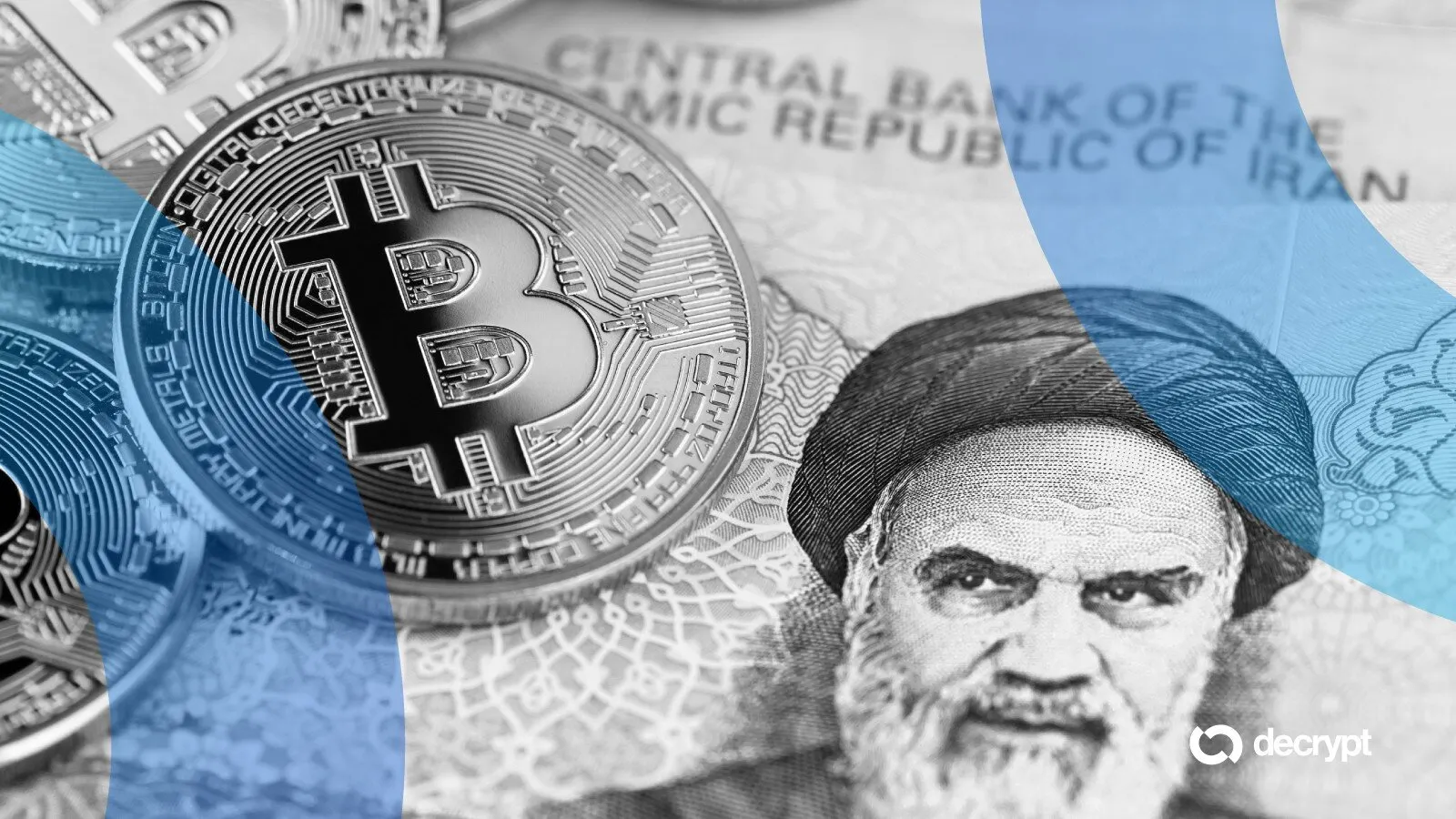
Iran’s use of cryptocurrency to move money under sanctions is expanding, with more than $3 billion tied to networks linked to the Islamic Revolutionary Guard Corps in 2025, according to blockchain analytics firm Chainalysis.
Iran’s Crypto Market Shuts Down Amid U.S.-Israel Strikes and Internet Blackout
Iran’s cryptocurrency ecosystem has been severely disrupted following the U.S.-Israeli airstrikes that began on February 28, 2026, targeting military and leadership sites in Tehran—including the confirmed death of Supreme Leader Ayatollah Ali Khamenei. Trading volume on Iranian exchanges collapsed by nearly 80% between February 27 and March 1, according to blockchain research firm TRM Labs, with activity grinding to a near halt due to a nationwide internet blackout imposed shortly after the strikes.
Key Impacts on Iran’s Crypto Market
Volume crash: TRM Labs data shows an approximately 80% drop in trading volume on major Iranian platforms like Nobitex (Iran’s largest exchange) in the immediate aftermath.
Internet restrictions: NetBlocks and other monitors reported connectivity falling to 1–4% of normal levels within hours of the first strikes, severely limiting access to exchanges, wallets, and blockchain explorers. The blackout—lasting over 48 hours in many areas—has been attributed to both infrastructure damage from strikes and deliberate government throttling to prevent coordination of unrest and information flow.
Central bank intervention: Iran’s central bank ordered platforms to temporarily suspend trading of the USDT–toman pair (the main crypto-to-local-currency bridge). When trading resumed, liquidity was extremely thin, with uneven pricing and slow execution.
Massive but Brief Outflow Spike
While trading slowed dramatically, capital flight surged initially:
Blockchain analytics firm Elliptic reported outflows from Nobitex jumped over 700% within minutes of the first strikes, with roughly $500,000–$3 million in crypto moving offshore in the first hour.
Many transactions were traced to foreign exchanges, suggesting users rushed to protect savings by moving assets beyond Iran’s borders.
The spike was short-lived—outflows slowed sharply as the internet blackout expanded, preventing further large-scale transfers.
Experts describe the current state of Iranian exchanges as “risk-managed” mode — slower withdrawals, tighter controls, and limited functionality to maintain operations under extreme uncertainty.
Broader Crypto Market Reaction
The geopolitical shock briefly rattled global crypto:
Bitcoin dipped to around $63,000 in the initial panic before recovering to the $66,000–$69,000 range.
Altcoins like Ethereum, XRP, Solana, and others fell 7–10% in the first wave but also saw partial rebounds.
The event underscores crypto’s dual nature: a potential hedge during local currency instability, but highly vulnerable to infrastructure disruptions like internet blackouts.
What This Means Going Forward
Short-term: Iran’s crypto market is effectively frozen for most users due to the blackout and controls. Any sustained conflict or prolonged restrictions could further isolate domestic traders.
Long-term: If tensions de-escalate and connectivity returns, outflows may stabilize. However, the episode highlights crypto’s dependence on internet access and the risks of centralized choke points (even in decentralized systems).
Global implication: The crisis demonstrates how quickly geopolitical events can trigger capital flight into crypto—then trap it when infrastructure fails.
The situation remains highly fluid, with the internet blackout now exceeding 48 hours in many areas and no clear timeline for restoration. Iranian crypto users are effectively cut off from global markets for now, underscoring the real-world limits of digital assets during national emergencies.Todor Tsonev publication: “Nationwide Blackout Freezes Iran’s Crypto Trading After Khamenei’s Death” was written for 24crypto.news
Retired, living in the Scottish Borders after living most of my life in cities in England. I can now indulge my interest in all aspects of living close to nature in a wild landscape. I live on what was once the Iapetus Ocean which took millions of years to travel from the Southern Hemisphere to here in the Northern Hemisphere. That set me thinking and questioning and seeking answers.
In 1998 I co-wrote Millennium Countdown (US)/ A Business Guide to the Year 2000 (UK) see https://www.abebooks.co.uk/products/isbn/9780749427917




 borderslynn