A former chair of Labour Friends of Israel (LFI), a lobby group which promotes Israeli interests and gambling lobbyist, Mendelsohn was embroiled in the 1990s ‘Lobbygate’ scandal. He and his partners at Lawson Lucas Mendelsohn, a public affairs and political communications consultancy otherwise known as LLM Communications, were recorded offering access to the Blair government for substantial sums. They claimed influence over policy, helped Rupert Murdoch shape law and offered suggestions on how to greenwash polluting infrastructure proposals.
It’s not simply a quid pro pro – here’s some cash and you do what I want – it’s about creating a relationship of mutual interestTom Mills
Tom Mills, a researcher on political donations, attributes such scandals to a systemic shift in Labour after 1997. New Labour figures “wanted to insulate themselves” against political pressure from the party so sought funding from “high net-worth individuals” rather than unions, Mills argues. He adds that the party’s increased reliance on wealthy donors may have limited its responsiveness to ordinary members.
Embodying this trend, Mendelsohn worked as a fundraiser for then-PM Gordon Brown during the 2007 ‘Donorgate’ scandal, which revealed he was seemingly aware for months that a wealthy donor had anonymously funneled over £600,000 to Labour through proxies.
I had at first thought this was Lord Mandelson of Jeffrey Epstein fame…this Lord Mandelson:
The happiest day of my life… Mandelson finally marries his partner of 27 years
By Jo Macfarlane
29 Oct 2023
LABOUR peer Peter Mandelson has spoken movingly about why he has married his long-term partner at the age of 70. The veteran politician nicknamed ‘the Prince of Darkness’ said he was ‘delighted’ to have finally tied the knot with Brazilian…
Yet more embarrassment for the Prime Minister over his close links to wealthy peers. Lord Mandelson, one of Keir Starmer‘s key advisers, is under investigation by the lobbying regulator.
The Office of the Registrar of Consultant Lobbyists is looking into the former business secretary’s public affairs firm Global Counsel ‘in relation to potentially inaccurate quarterly information returns’.
Only last week, Labour donor Lord Alli, who has given Starmer thousands of pounds in designer clothes and spectacles, apologised to the House of Lords over four breaches of Parliament’s rules relating to his declaration of financial interests.
Now Global Counsel, founded by Mandelson, a former EU trade commissioner, is under investigation over claims it lobbied British ministers on behalf of the state-backed Qatar Free Zones Authority while failing to list the Qatar authority as a Global client.
Mandelson is close to the Labour high command. Before the election, Global Counsel spent £36,000 seconding a staff member to the office of then shadow treasury minister Tulip Siddiq.
Getting back to the first article, it goes on to talk about a billionaire donor, Trevor Chinn:
Foreign policy, Labour Friends of Israel and Zionist donors
The idea of an ‘Israel lobby’ remains controversial. Yet groups such Labour Friends of Israel clearly have significant political ties, including to Bristol MPs – Darren Jones, Karin Smyth, and Dan Norris have all been listed supporters.
LFI and its Tory counterpart Conservative Friends of Israel (CFI) advocate for British support of Israel. In 2022 it was reported that over 10 years, 320 MPs’ trips to Israel had been funded mostly by LFI and CFI.
In March, during Israel’s escalating use of violence in the Gaza Strip, Damien Egan, MP for Bristol North East, accepted an LFI-funded trip costing £2,400, a month after his by-election victory in the now-defunct Kingswood seat. He justified it as an opportunity to understand the Israeli-Palestinian conflict.
In response to questions from the Cable, Egan noted that, as someone with a local government background, he “was grateful to join a delegation by [LFI] to meet politicians, NGOs and peace activists in both Israel and the West Bank.” He added that “although the delegation was focused on meeting people from the political left,” there were “balanced” perspectives “not shying away” from the region’s “difficult complexities”.
LFI-linked donors have also donated to other local Labour MPs. Sir Trevor Chinn, a prominent British Zionist (or advocate for the existence of an independent Jewish state), longtime LFI supporter and funder/director of Labour Together, donated £2,000 to Dan Norris in July 2024 and £2,500 to Egan in August 2023, and £50,000 to Starmer’s 2020 leadership campaign.
Other prominent Zionist donors, including Gary Lubner and Stuart Roden, have more recently started contributing to Labour’s Bristol MPs. Former Autoglass boss Lubner donated £5,000 to Damien Egan in July 2024 on top of the £4.5 million-plus he has donated to Labour and £600,000 to Labour Together since 2023.
Lubner has been a patron of United Jewish Israel Appeal (UJIA), an influential Zionist NGO, since at least 2016. UJIA, where Chinn is president for life, describes itself as having “decades of experience in sending young Jews in the UK to Israel on rite of passage programmes” including “birthright” to strengthen relationships with the country. The organisation faced criticism in 2022 for housing participants in illegal Israeli settlements in the West Bank.
Meanwhile, Roden, a chairman of Tel Aviv-based venture capital firm Hetz Ventures, contributed £5,000 in July 2024 to Dan Norris, and more than £1.5 million to Labour overall since 2023.
Mills warns against simply seeing political donations as a “quid pro quo – I give you some cash and you do what I want”. Instead, there are powerful individuals wanting access to “a party they’re [ideologically] committed to… it’s creating a relationship of mutual interest and presumably a social and political relationship”.
And an article by Nasim Ahmed goes into more detail. It was published in September 2025, but I suppose I have been totally distracted by the shocking events emanating from ‘over the pond’
The UK Labour Party has been rocked by yet another scandal and is facing scrutiny over revelations that its leadership has been captured by a network of unelected funders and lobbyists with deep ties to Israel and Zionist organisations.
At the centre of the controversy is Morgan McSweeney, Keir Starmer’s powerful chief of staff, and his long-time association with billionaire businessman Trevor Chinn. Documents and leaks show that between 2017 and 2020, McSweeney oversaw Labour Together, a factional project that secretly accepted more than £730,000 (around $930,000) in undeclared donations, allegedly in breach of electoral law.
Much of this money is said to have come from Chinn, a figure whose involvement in Labour politics has for decades been bound up with the defence of Israel and the advancement of Zionist networks inside the party.
Chinn is no ordinary donor. A director of Labour Together until 2024, he has bankrolled both Conservative and Labour Friends of Israel (LFI) throughout his career. In early 2025, he was awarded the Israeli Presidential Medal of Honour by President Isaac Herzog for his services to the apartheid state. Chinn’s commitment to Israel has been described as one of his “animating concerns” over three decades of political donations.
An investigation by Jody McIntyre, who stood as a candidate for the Workers Party in the last general election, shows how deeply enmeshed Chinn became with McSweeney’s project. McSweeney reportedly concealed donations “to protect Trevor” from scrutiny, according to McIntyre’s investigation. Labour Together, however, later dismissed the failure to declare the funds as an “administrative error,” a line advised by solicitor Gerald Shamash, another Labour figure with a record of blocking debates on sanctions against Israel.
Chinn’s influence was not limited to donations. According to minutes of a 2020 meeting revealed by Electronic Intifada, Chinn and five other lobbyists set up a “regular channel of communication” with Labour MP Steve Reed, a close ally of McSweeney and vocal supporter of LFI. The leaked record illustrates the extent to which pro-Israel lobbyists were embedded in Labour’s factional leadership project.
McSweeney’s own ties to Zionism go back further than his dealings with Chinn. In his youth, he spent time living on Sarid, a Zionist settlement built on the ruins of the Palestinian village of Ikhneifis. There, he is said to have become closely acquainted with Hashomer Hatza’ir, a Zionist movement that played a central role in Israel’s settler-colonial project.
McIntyre’s research and internal documents allege that McSweeney campaigned for Steve Reed—who is known to have received funding from LFI for travel to occupied Palestine—and later worked closely with Margaret Hodge, a self-declared Zionist. Some sources also suggest McSweeney oversaw Liz Kendall’s 2015 leadership run, during which she made public statements against boycotts and sanctions of Israel—though the precise nature and funding of these campaigns remain under investigation.
By 2017, McSweeney was director of Labour Together, where Chinn sat on the board. Internal documents revealed that the group’s work included secret projects to undermine Jeremy Corbyn by inflaming the anti-Semitism crisis, planting hostile media stories, and fracturing the party’s left wing.
McSweeney, according to Double Down News, even devised a covert strategy dubbed Operation Red Shield, aimed at “burning down” Corbyn’s Labour in order to capture the party for a pro-business, pro-Israel faction.
The secret funding allowed McSweeney to commission hundreds of thousands of pounds’ worth of polling into the Labour membership. This research shaped Starmer’s leadership campaign, presenting him as a “unity” candidate who pledged to uphold policies such as public ownership and a Green New Deal.
However, once elected, Starmer rapidly U-turned on those commitments, dropping all ten of his leadership pledges. The sequence of events suggests that Starmer’s campaign positions were adopted to secure victory rather than to be implemented in government.
Starmer’s subsequent record confirmed that pattern of deception. Within months of becoming leader, he ditched all ten of his leadership pledges and moved Labour sharply to the right. On Palestine, Starmer has repeatedly echoed Israeli government narratives, refusing to condemn the genocide while expelling Labour members who criticised Israel.
While Trevor Chinn is central to this latest scandal, he is not the only pro-Israel donor bankrolling Labour. Since Starmer’s election, the party has increasingly relied on wealthy businessmen with strong ties to Zionist organisations.
One of these is Gary Lubner, the South African-born former CEO of Autoglass, who has donated more than £5 million ($6.3 million) to Labour. Lubner’s family fortune was built during apartheid South Africa, when his father and uncle were accused of helping to bust international sanctions.
Today, Lubner is a major supporter of the United Jewish Israel Appeal, a fundraising arm for Israeli causes. His son Jack is active in the Jewish Labour Movement and other pro-Israel networks.
Lubner’s uncle Bertie was a major donor to Ben-Gurion University, an institution identified by human rights groups as complicit in Israel’s apartheid system. Under Starmer’s leadership, Labour has drawn heavily on donations from pro-Israel businessmen such as Lubner, underlining the party’s financial dependence on figures with strong political and financial ties to Israel.
The cumulative effect of these revelations is stark: Labour under Starmer has been captured by a narrow, unrepresentative network of pro-Israel donors and lobbyists. Their influence was decisive in undermining Corbyn’s leadership, installing Starmer, and silencing members who demanded a just policy on Palestine.
As Israel’s genocide in Gaza has killed more than 68,000 Palestinians, mostly women and children, the Labour government has aligned itself with Israeli war crimes—refusing to halt arms sales, authorising surveillance flights over Gaza and granting Israel political cover on the international stage.
Labour’s latest scandal is not simply about undeclared donations. It speaks to the hollowing out of democracy inside Labour and its subordination to interests directly tied to the Israeli state. Decisions in Labour today are shaped less by members or voters than by figures like McSweeney, Chinn and Lubner—unelected operators whose record and affiliations show a consistent commitment to defending Israel, often over the views of party members.
A cameraman and CBS News contributor was among three journalists killed Wednesday by Israeli forces while working in Gaza, prompting some observers to ask when—or if—Bari Weiss, the network’s pro-Israel editor-in-chief, would condemn the attack.
Anas Ghneim, Mohammed Salah Qashta, and Abdul Raouf Shaat were using a drone to record aid distribution by the Egyptian Relief Committee in al-Zahra in central Gaza when, according to eyewitness accounts, an airstrike targeted one of the group’s vehicles accompanying the journalists.
Larry Ellison owns CBS. He is a long time donor of the Israeli Defence Force and enabled them to track targets by their use of Palantir/Oracle installations
In recent years, Palantir has become one of the most intriguing contractors of Israel’s security forces. The fact of such cooperation is no secret: immediately after his appearance at the university, Karp travelled to military headquarters in Tel Aviv, where he signed an upgraded agreement with the Ministry of Defense, and was even photographed with Danny Gold, head of the Israeli Directorate of Defense Research & Development (DDR&D), who became well known as the manager of the development of the Iron Dome missile defense system.
The picture didn’t appear in the Israeli press, but did make it to Bloomberg, which reported that Israel was set to buy from Palantir an AI-based system called AIP, designed to assist decision making on the basis of intelligence, and capable of analyzing enemy targets and proposing combat moves. Palantir expects revenue in the tens of millions of dollars from the agreement with Israel.
Just what is Palantir doing in Israel’s defense establishment? None of the parties would elaborate. Last summer, however, the company did allow a reporter for “Time” magazine a peep into its offices in London, from which the company fulfills an important role in the war in Ukraine. One of the most intriguing products that the company offers, according to “Time”, is MetaConstellation, a system for managing aerial photographs from a huge network of satellites. Palantir enables the Ukrainians not just to gather extensive intelligence with the satellite photographs and to track intelligence targets, but also to respond to the intelligence quickly, in what is known as a very rapid “find, track, target, and prosecute” cycle.
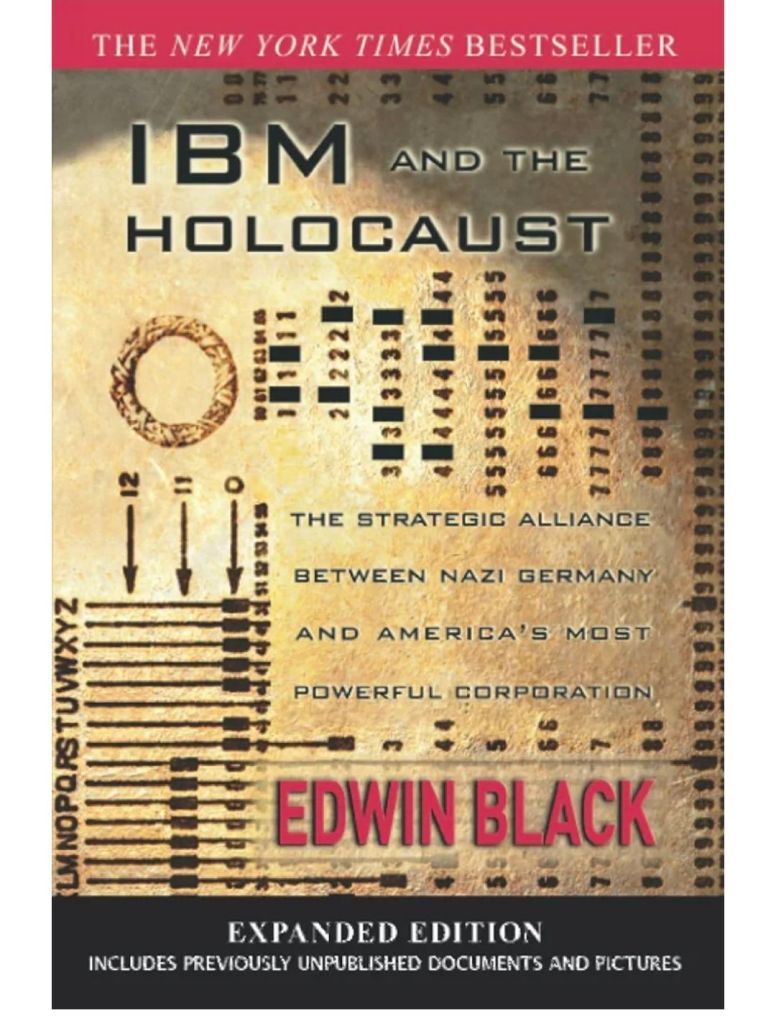
Palantir/Oracle offers an effective system, as did IBM during WW2, used by Nazis to log and locate Jews and organise logistics for their genocide.
American technology leading the way now for those who suffered from its application to now apply it to exact revenge against those who enabled and hideously murdered them; and those who stood by and let it happen.
But along the way those Palestinians who were not part of that evil in WW2 became swept up in the vicious cycle.
Just monitoring early comments about the ‘Board of Peace’ which President Trump unveiled at Davos 2026, and who invited Putin to join. Trump is the Gatekeeper.
Here is an extract from a Substack musing by Michael D Sellers:
Now the immediate swirl has eased just enough to do what I try to do here: slow down, do a deep dive, read the governing documents, map the structure, and separate what this is claimed to be from what it is actually built to do.
What follows is a Deeper Look at Trump’s Board of Peace: what it purports to be, how it’s set up, who’s in and out as of Davos, and the questions the charter itself raises—before you even get to the politics.
1) What it purports to be
In public messaging, the Board of Peace is being sold as a mechanism to lock in and operationalize “Phase Two” of Trump’s Gaza plan: demilitarization, technocratic governance, and reconstruction—while also positioning the Board as a template that could scale beyond Gaza into a broader conflict-resolution body.
Trump himself has leaned into the “expandable” concept (“start with Gaza and then do conflicts as they arise”), and at Davos he framed it as something that can “spread out to other things as we succeed with Gaza.”
At Davos, the Trump administration’s line also shifted slightly from “this might replace the UN” to “we’ll work with many others, including the United Nations,” after earlier comments sparked alarm.
That’s the pitch: a high-prestige, action-oriented body, supposedly designed to do what existing institutions can’t—or won’t.
2) What the charter actually builds
If you read the charter (the actual governing instrument attached to invitations), you immediately notice something that feels almost like a tell:
It does not mention Gaza.
That’s not a minor drafting quirk. Gaza is the political rationale used to sell the Board. But the document is written as a general-purpose institution—one that could outlive and outgrow the Gaza mission. And notably, the Times of Israel reporting flags that while a UN Security Council mandate approved in November is described as limited to Gaza and only until the end of 2027, the charter itself is broader.
Now look at the structural features:
A) Membership is time-limited… unless you can write a $1 billion check
The charter states that member states serve no more than three years, renewable by the Chairman = i.e. Trump. But that term limit “shall not apply” to states that contribute more than $1,000,000,000 in cash within the first year of entry into force.
That is, in plain English: there is a formal path to quasi-permanent membership by paying a very large sum—while everyone else remains on a renewable lease, controlled at the top.
B) The Chairman isn’t first among equals; the Chairman is the gate
Decision-making is majority-based only up to a point: decisions are subject to the approval of the Chairman, who can also vote to break ties.
The charter also makes the Chairman the final authority on interpretation of the charter itself.
And it authorizes the Chairman, acting on behalf of the Board, to adopt resolutions or directives to implement the mission.
If you’re trying to understand the Board’s DNA, it’s here: this isn’t a neutral multilateral body with diffuse authority. It’s an institution designed for centralized control by a Chairman who basically has a final say on anything important.
C) The charter contemplates privileges and immunities
The charter provides for privileges and immunities “necessary for the exercise of functions,” to be established via agreements with host states or other measures consistent with domestic law.
That’s a familiar feature of international organizations—but combined with the governance model above, it’s exactly the kind of clause that will make legal ministries in allied capitals sit up straight.
3) The executive cast (and the Gaza machinery beneath it)
On the U.S. side, the Board’s “founding” executive layer includes a mix of state officials and private-sector heavyweights—Marco Rubio, Steve Witkoff, Jared Kushner, Tony Blair, Ajay Banga, Marc Rowan, plus a Trump adviser—depending on the reporting.
Reuters also reported an 11-member “Gaza Executive Board” supporting the technocratic governance concept, naming figures including Turkey’s foreign minister, the UN’s Middle East coordinator Sigrid Kaag, UAE’s international cooperation minister, and others.
And Reuters has described criticism that the arrangement resembles a colonial structure, while also noting that the early list did not include any Palestinians.
At Davos, the Board was framed as oversight for a technocratic Gaza administration committee (the NCAG), and the “High Representative for Gaza” role has now been publicly attached to Bulgarian diplomat Nikolay Mladenov, per Reuters’ Albania/Bulgaria story.
4) Who’s in, who’s out (as of Davos)
A key point: this has taken shape fast, but unevenly.
The “yes” list is Middle East–heavy, plus a scattering of smaller states
Multiple reports describe participation from Gulf and regional states (and a joint statement from several foreign ministers) as well as sign-ons from a range of other countries.
In Europe, Reuters reports Albania and Bulgaria joining, and notes that Bulgaria and Hungary are the only EU members that have joined so far. Kosovo has joined as well.
Major European allies are conspicuously absent
Observers noted a “notable lack” of Western European leaders on stage with Trump in Davos.
The UK has explicitly declined to sign, with Foreign Secretary Yvette Cooper citing concerns about Russian involvement and the fact that this is a “legal treaty” raising broader issues.
The Putin problem (and the credibility problem)
This might be the single cleanest early diagnostic:
Trump said at Davos that Putin had accepted an invitation. The Kremlin immediately contradicted that, saying Russia is still seeking clarifications and “studying” it.
Whether Putin ultimately joins matters less than the fact that the question exists at all—and that it became an immediate reason for Western democracies to hold back.
Canada: invited, cautious, then uninvited
Canada’s Mark Carney publicly signaled openness “in principle” while flagging governance and decision-making concerns. Within days, Trump publicly withdrew the invitation.
Whatever you think of Carney, the episode tells you something important: membership is being treated as leverage and signaling, not merely coalition-building.
5) The real questions the charter forces us to ask
You don’t need a conspiracy theory here. The document itself gives you the analytical frame.
Is this a Gaza mechanism—or a new model of international authority?
When a charter doesn’t mention the war it’s supposedly designed to manage, it’s worth asking if Gaza is the proof-of-concept for something larger.
Is “peace” the brand, and centralized dealmaking the operating system?
A structure where membership is invite-based, renewable by the Chairman, decisions require Chairman approval, and permanence can be purchased for $1 billion is not an accident of drafting.
Who is represented—and who is being “administered”?
Reuters highlighted that early member lists did not include Palestinians even as the Board is framed as supervising a transitional governance structure for Palestinian territory.
Why are financiers embedded at the top?
Whatever your politics, this is unusual: a peace-and-governance body with private equity and development finance figures integrated into the founding executive layer.
That might be defensible as “reconstruction realism.” It also might be the clearest sign that this is being designed as a capital-and-security project more than a rights-and-sovereignty project.
6) What to watch next
A few near-term tells that will clarify what the Board is becoming:
Whether major democracies continue to stay out (UK already has) and whether others publicly cite the charter’s governance model.
Whether Russia actually joins—or uses the $1B “permanent seat” concept as a bargaining chip amid frozen assets and sanctions politics.
Whether the Board begins to speak and act beyond Gaza in concrete ways (appointments, “directives,” resolutions).
Whether the UN and key capitals treat this as complementary… or as a rival institution in embryo.
A note on tone
I’m skeptical. Anyone paying attention should be.
But skepticism isn’t enough. This is a formal structure with a charter, membership terms, and an explicit theory of authority—and it’s being rolled out at Davos with the U.S. President as the Chairman.
Just as a contrast to the above, here is the International Peace Charter:
The International Peace Charter
The text below is the formal, adoptable version of the International Peace Charter. It translates our public-facing principles into clear, legally actionable commitments that governments and institutions can endorse, implement, and measure. It is designed to complement existing international law, align with domestic frameworks, and provide a common standard for cooperation, accountability, and peaceful conflict resolution.
Declare Peace
Commit to the cessation of military conflicts by ending all forms of military conflict and to renouncing war, armed conflict, and all forms of organized violence as tools of policy, and to cultivating nonviolence, cooperation, and mutual respect across nations and communities.
Dialogue
Commit to resolving disputes through peaceful dialogue, backed by professional mediation, reconciliation, and early-warning systems, so tensions de-escalate and conflicts transition into durable peace.
Disarm for Humanity
Commit to the progressive reduction and eventual elimination of nuclear and conventional weapons, end the profit motive in the arms trade, and redirect resources toward education, health, and human development.
Redefine Military Purpose
Commit to limiting militaries to defense, civilian protection, and lawful peacekeeping, and to prohibiting offensive operations or foreign intervention that undermine stability.
Respect Sovereignty
Commit to respecting territorial integrity under international law while upholding peoples’ right to pursue self-determination peacefully, democratically, and without external coercion.
Protect Humanity
Commit to ending discrimination and group-based exclusion; protect cultural, ethnic, racial, gender, and religious diversity and equal rights, recognizing inclusion and dignity as foundations of lasting peace.
Fair Justice
Commit to fair, impartial justice at local, national, and international levels – including the ICC – and to transitional-justice processes that deliver truth, accountability, reconciliation, and healing
Defend Truth
Commit to safeguarding the information commons by countering disinformation, incitement, and hate speech, while protecting free expression and expanding access to reliable, independent information.
Environmental Peace
Commit to preventing conflict by addressing climate risks, resource scarcity, and ecological degradation, and by ensuring fair access to land, water, food, and energy for all.
Collective Harmony
Commit to promoting meditation in public institutions and communities to enhance well-being, reduce stress and violence, and strengthen collective harmony.
Heal & Rebuild
Commit to healing the wounds of violence through truth-telling, reparations, trauma-informed support, and community reconciliation, restoring trust and social bonds for future peace.
The Trump Project 2025 has moved up a gear in 2026 and we are certainly witnessing a ‘no going back’ historical and painful period for this fragile and still beautiful Planet.
25th Jan 2026
Phillips P O’Brien, on Substack, has analysed the Charter for the ‘Board of Peace’. Here is an extract:
Trump’s Board of Peace (signing picture above) is in some ways the pinnacle of Trump’s foreign policy making. It is a board which has no oversight or real purpose beyond spreading around money, and it is a board that he controls completely. Here is the list of signatories who appeared with Trump at his signing event in Davos.
Isa bin Salman bin Hamad Al Khalifa, minister of the prime minister’s court, Bahrain
Nasser Bourita, minister of foreign affairs, Morocco
Javier Milei, president, Argentina
Nikol Pashinyan, prime minister, Armenia
Ilham Aliyev, President, Azerbaijan
Rosen Zhelyazkov, prime minister, Bulgaria
Viktor Orban, prime minister, Hungary
Prabowo Subianto, president, Indonesia
Ayman Al Safadi, minister of foreign affairs, Jordan
Kassym-Jomart Tokayev, president, Kazakhstan
Vjosa Osmani-Sadriu, president, Kosovo
Mian Muhammad Shehbaz Sharif, prime minister, Pakistan
Santiago Peña, president, Paraguay
Mohammed Bin Abdulrahman Al Thani, prime minister, Qatar
Faisal bin Farhan Al Saud, minister of foreign affairs, Saudi Arabia
Hakan Fidan, minister of foreign affairs, Turkey
Khaldoon Khalifa Al Mubarak, special envoy to the U.S. for the UAE
Shavkat Mirziyoyev, president, Uzbekistan
Gombojavyn Zandanshatar, prime minister, Mongolia
And, of course, Putin has been invited to join, an offer which the Russians have taken up with gusto. European democracies, Canada, Japan, South Korea, Australia, etc have mostly given the board a wide birth.
Though the Board was originally conceived up as part of the reconstruction/looting of Gaza, it seems a far greater construct now,; an entirely new international body. However its purpose is very different from all others. It is, as explicitly designed, a body to allow its chairman to have total control over tens, maybe hundreds of billions of dollars. Here is an article laying out its structure. In a nutshell, the chairman rules and everyone else pays. Here are some of my favorite bits from the founding charter. And remember, that Donald Trump is the chairman.
First—the chairman chooses all the members of the board.
Article 2.1: Member States Membership in the Board of Peace is limited to States invited to participate by the Chairman, and commences upon notification that the State has consented to be bound by this Charter, in accordance with Chapter XI.
The chairman then gets paid. Once the chairman invites a member, how do they become a member? They do so by paying the princely sum of $1billion every three years into the funds controlled entirely by the chairman.
(c) Each Member State shall serve a term of no more than three years from this Charter’s entry into force, subject to renewal by the Chairman. The three-year membership term shall not apply to Member States that contribute more than USD $1,000,000,000 in cash funds to the Board of Peace within the first year of the Charter’s entry into force.
And once a member, all states are operating at the whims of the chairman.
The Board of Peace shall convene voting meetings at least annually and at such additional times and locations as the Chairman deems appropriate. The agenda at such meetings shall be set by the Executive Board, subject to notice and comment by Member States and approval by the Chairman.
Btw, not only does the chairman schedule all meetings, the chairman has what looks like total veto power over all decisions. All decisions require the “approval” of the chairman to become official—see emphasis added below.
Decisions shall be made by a majority of the Member States present and voting, subject to the approval of the Chairman, who may also cast a vote in his capacity as Chairman in the event of a tie.
[Dan Bashakov/Global Images Ukraine via Getty Images]
An overnight Russian bombardment on Kyiv left thousands of residential buildings and parliament without heating and water in -14C temperatures and killed at least one man on Tuesday, just as the Ukrainian capital was scrambling to restore vital utilities destroyed in earlier attacks.
More than half a million people have evacuated from the capital this month, when Russia unleashed its strongest attack on the capital’s energy infrastructure in the war, the city’s mayor, Vitali Klitschko, told AFP.
Sheltering in a metro station in the centre of Kyiv, Marina Sergienko, a 51-year-old accountant, said she thought the repeated Russian strikes, which have left millions in the cold and dark over recent weeks, had a clear purpose.
“To wear down the people, push things to some critical point so there’s no strength left, to break our resistance,” she told AFP, taking cover alongside dozens of others bundled in hats and coats.
Foreign Minister Andriy Sybiga lashed out at Russian President Vladimir Putin, saying Putin, whom he called a war criminal, continued to wage a genocidal war against women, children and the elderly.
He said Russian forces had targeted energy infrastructure overnight in at least seven regions, and urged Ukraine’s allies to bolster its air defence systems
Zelensky says ‘we are living in Groundhog Day’ in scathing attack on world leaders over lack of support
Volodymyr Zelensky delivered a scathing speech at Davos, criticising European leaders for their perceived inaction, “endless internal arguments”, and ‘Groundhog Day’ approach to supporting Ukraine against Russia.
During his address, the Ukrainian president announced that the first trilateral peace talks involving Kyiv, Moscow, and the US would take place in the UAE on Friday.
Zelensky implored European leaders to demonstrate greater unity and courage, urging them to act independently of the US and not rely on Donald Trump to change his stance.
He specifically criticised Europe’s failure to utilise frozen Russian assets for Ukraine’s benefit and questioned why the continent was not stopping Russia’s ‘shadow fleet’ of oil tankers.
Hours after Zelensky’s remarks, the French navy, supported by Britain, intercepted a sanctioned Russian ‘shadow fleet’ oil tanker in the Mediterranean, with French President Emmanuel Macron confirming the action.
PARIS (AP) — France’s navy, working with intelligence provided by the United Kingdom, on Thursday intercepted an oil tanker in the Mediterranean Sea that traveled from Russia, in a mission targeting the sanctioned Russian shadow fleet, officials said.
French maritime authorities for the Mediterranean said the ship, the Grinch, is suspected of operating with a false flag. The French navy is escorting the ship to anchorage for more checks, the statement said. The tanker departed from the city of Murmansk in northwestern Russia, it said.
I’m interrupting our data center tour to post about the turmoil President Trump has caused with his obsession for controlling Greenland.
As with mass tariffs last April, the president has now pushed through the line where Trump-talk — volatile blather easily reversed the next week with little real-world impact — becomes Trump transforming the real world. He’s openly demanding Greenland now, and threatening to use military force to do it.
Here at The Energy Adventure(r), I try to look past most of the craziness and disruption emanating from Washington, for all sorts of reasons. There are other news organizations and analysts focused on these developments as they follow on one another like the finale of a July Fourth fireworks show.
But as far away as Greenland may feel, Trump’s crossing this line bears directly on data centers and artificial intelligence and energy, on the role America will play leading the AI revolution or being overwhelmed by it.
Trump did something like this last April, when his “liberation day” tariff blitz transformed forever the way the world’s economy has functioned for more than a century.
Trump followed through on some of those tariff threats and backed off others. What was important, though, is that America’s trade partners understood that the rules-based international economic order was over.
Ever since, financial institutions, businesses and governments the world over have been groping for a new way forward, with economic stress rising almost everywhere as a result.
All knew there’s no going back.
With this new Greenland push — coming fast on the heels of a military action to capture the head of the Venezuelan state — Trump has struck an equivalent blow against the global security system. Anchored by the same America — always self-interested but usually ways that shared the benefits, even with competitors — that framework of international rules has now been shattered.
Russia broke those rules when it forcibly annexed Crimea in 2014, and again in attempting to swallow Ukraine. Europe, Japan, South Korea and many other countries took advantage of the rules, to one extent or another, to freeload some on their own defense — with America’s blessing and sometimes encouragement.
The North Atlantic Treaty Organization and America’s security alliances in Asia could survive that.
Only the U.S. could break the system, which is what Trump has now done. The U.S. may wind up “buying” Greenland, whatever might mean. It might annex Greenland. Or Donald Trump may not get Greenland at all, because he changes his mind or is somehow denied. It matters very much which of those comes to be. But not in terms of the system surviving.
NATO is meaningless once its most important member has territorial designs on another member. That’s true whether the coercion works or not in the end.
And if U.S. commitments to Europe are meaningless, so are alliances in Asia.
All know there’s no going back.
As Europe scrambles for its footing with troop deployments to Greenland and speeches at Davos, as Japan’s new Prime Minister calls for new elections, the groping for a new path forward has already begun.
With its anchor pulled up, the international security order is already adrift, just as the global economic order has been since April.
This is not some disaster in the abstract. It bears as concretely on the competition for the three seas we looked at last month as it does the data centers we’re touring now.
Remember that the super-advanced semiconductor chips used in the data centers of Tennessee, Louisiana and Texas are manufactured exclusively in Taiwan with indispensible, irreplaceable machines from Europe and Japan.
The international economic and security order built by the U.S. after World War II — first and foremost for itself, also the benefit of allies — made that happen in some sense.
With both legs now knocked out from under that order, we’ll have to see whether a new system can be found to do the same anywhere near as well.
And in the US energy bills are rising rapidly as the cost of energy increases due to many factors, but a major pull is the drawdown from datacenters:
Energy bills in the U.S. have been rising significantly, with residential electricity prices increasing by about 25% from 2020 to 2024. This rise is largely driven by growing demand from data centers and other commercial users, while residential customers are facing the highest price increases. theinvadingsea.com CNBC
And consumers are shocked by simple use of AI can cost a massive amount of energy:
Before you can ask an AI model to help you with travel plans or generate a video, the model is born in a data center.
Racks of servers hum along for months, ingesting training data, crunching numbers, and performing computations. This is a time-consuming and expensive process—it’s estimated that training OpenAI’s GPT-4 took over $100 million and consumed 50 gigawatt-hours of energy, enough to power San Francisco for three days. It’s only after this training, when consumers or customers “inference” the AI models to get answers or generate outputs, that model makers hope to recoup their massive costs and eventually turn a profit.
“For any company to make money out of a model—that only happens on inference,” says Esha Choukse, a researcher at Microsoft Azure who has studied how to make AI inference more efficient.
As conversations with experts and AI companies made clear, inference, not training, represents an increasing majority of AI’s energy demands and will continue to do so in the near future. It’s now estimated that 80–90% of computing power for AI is used for inference.
All this happens in data centers. There are roughly 3,000 such buildings across the United States that house servers and cooling systems and are run by cloud providers and tech giants like Amazon or Microsoft, but used by AI startups too. A growing number—though it’s not clear exactly how many, since information on such facilities is guarded so tightly—are set up for AI inferencing.
Praxis Group plans to set up cryptocurrency cities:
These Billionaires Bet Big On Greenland—After Trump Took Interest
ByMartina Di Licosa,Forbes Staff. Martina Di Licosa is a reporter covering consumer businessesFollow Author
Jan 09, 2026, 06:30am ESTJan 16, 2026, 07:02pm EST
Topline
Just months after President Donald Trump first expressed interest in the United States possibly gaining control over Greenland, some of the richest people in the world—including Jeff Bezos, Bill Gates and Michael Bloomberg—began making strategic investments in the mineral-rich island.
A network state is a highly aligned online community with a capacity for collective action that crowdfunds territory around the world and eventually gains diplomatic recognition from pre-existing states.
When we think of a nation state, we immediately think of the lands, but when we think of a network state, we should instantly think of the minds. That is, if the nation state system starts with the map of the globe and assigns each patch of land to a single state, the network state system starts with the 7+ billion humans of the world and attracts each mind to one or more networks.
Here’s a more complex definition that extends that concept and pre-emptively covers many edge cases:
A network state is a social network with a moral innovation, a sense of national consciousness, a recognized founder, a capacity for collective action, an in-person level of civility, an integrated cryptocurrency, a consensual government limited by a social smart contract, an archipelago of crowdfunded physical territories, a virtual capital, and an on-chain census that proves a large enough population, income, and real-estate footprint to attain a measure of diplomatic recognition.
OK, that’s a mouthful! It’s lengthy because there are many internet phenomena that share some but not all of the properties of a network state. For example, neither Bitcoin nor Facebook nor a DAO is a network state, because each lacks certain qualities — like diplomatic recognition — which are core to anything we’d think of as the next version of the nation state.
(If you want to skip ahead, we expand on each part of the definition in Chapter 5. But it’ll make more sense if you read the text all the way through. For what it’s worth, the technical definition of a nation state is similarly multi-clausal, because it needs to exclude things we don’t typically think about, like stateless nations.)
‘The Old Order is Not Coming Back’: Mark Carney’s Speech to the World Economic Forum
The following is the text of Prime Minister Mark Carney’s speech to the World Economic Forum in Davos, Switzerland on January 20, 2026.
It’s a pleasure — and a duty — to be with you at this turning point for Canada and the world.
I’ll speak today about the rupture in the world order, the end of the pleasant fiction and the dawn of a brutal reality in which great-power geopolitics is unconstrained.
But I submit to you all the same that other countries, in particular middle powers like Canada, aren’t powerless. They have the power to build a new order that integrates our values, like respect for human rights, sustainable development, solidarity, sovereignty and the territorial integrity of states.
The power of the less powerful begins with honesty.
Every day we are reminded that we live in an era of great power rivalry. That the rules-based order is fading. That the strong do what they can, and the weak suffer what they must.
This aphorism of Thucydides is presented as inevitable — the natural logic of international relations reasserting itself. And faced with this logic, there is a strong tendency for countries to go along to get along. To accommodate. To avoid trouble. To hope that compliance will buy safety.
It won’t.
So, what are our options?
In 1978, the Czech dissident Václav Havel wrote an essay called The Power of the Powerless. In it, he asked a simple question: how did the communist system sustain itself?
His answer began with a greengrocer. Every morning, this shopkeeper places a sign in his window: “Workers of the world, unite!” He does not believe it. No one believes it. But he places the sign anyway — to avoid trouble, to signal compliance, to get along. And because every shopkeeper on every street does the same, the system persists.
Not through violence alone, but through the participation of ordinary people in rituals they privately know to be false.
Havel called this “living within a lie.” The system’s power comes not from its truth but from everyone’s willingness to perform as if it were true. And its fragility comes from the same source: when even one person stops performing — when the greengrocer removes his sign — the illusion begins to crack.
It is time for companies and countries to take their signs down. For decades, countries like Canada prospered under what we called the rules-based international order. We joined its institutions, praised its principles, and benefited from its predictability. We could pursue values-based foreign policies under its protection.
We knew the story of the international rules-based order was partially false. That the strongest would exempt themselves when convenient. That trade rules were enforced asymmetrically. And that international law applied with varying rigour depending on the identity of the accused or the victim.
This fiction was useful, and American hegemony, in particular, helped provide public goods: open sea lanes, a stable financial system, collective security, and support for frameworks for resolving disputes.
So, we placed the sign in the window. We participated in the rituals. And largely avoided calling out the gaps between rhetoric and reality. This bargain no longer works. Let me be direct: we are in the midst of a rupture, not a transition. Over the past two decades, a series of crises in finance, health, energy, and geopolitics laid bare the risks of extreme global integration.
More recently, great powers began using economic integration as weapons. Tariffs as leverage. Financial infrastructure as coercion. Supply chains as vulnerabilities to be exploited. You cannot “live within the lie” of mutual benefit through integration when integration becomes the source of your subordination. The multilateral institutions on which middle powers relied— the WTO, the UN, the COP—the architecture of collective problem solving — are greatly diminished.
As a result, many countries are drawing the same conclusions. They must develop greater strategic autonomy: in energy, food, critical minerals, in finance, and supply chains. This impulse is understandable. A country that cannot feed itself, fuel itself, or defend itself has few options. When the rules no longer protect you, you must protect yourself. But let us be clear-eyed about where this leads. A world of fortresses will be poorer, more fragile, and less sustainable.
And there is another truth: if great powers abandon even the pretence of rules and values for the unhindered pursuit of their power and interests, the gains from ‘transactionalism’ become harder to replicate. Hegemons cannot continually monetize their relationships. Allies will diversify to hedge against uncertainty. Buy insurance. Increase options. This rebuilds sovereignty— sovereignty which was once grounded in rules—but which will be increasingly anchored in the ability to withstand pressure.
This classic risk management comes at a price. But that cost of strategic autonomy, of sovereignty, can also be shared. Collective investments in resilience are cheaper than everyone building their own fortress. Shared standards reduce fragmentation. Complementarities are positive sum.
The question for middle powers, like Canada, is not whether to adapt to this new reality. We must. The question is whether we adapt by simply building higher walls — or whether we can do something more ambitious.
Canada was amongst the first to hear the wake-up call, leading us to fundamentally shift our strategic posture. Canadians know that our old, comfortable assumption that our geography and alliance memberships automatically conferred prosperity and security is no longer valid.
Our new approach rests on what Alexander Stubb has termed ‘values-based realism’ — or, to put it another way, we aim to be principled and pragmatic. Principled in our commitment to fundamental values: sovereignty and territorial integrity, the prohibition of the use of force except when consistent with the UN Charter, respect for human rights. Pragmatic in recognising that progress is often incremental, that interests diverge, that not every partner shares our values.
We are engaging broadly, strategically, with open eyes. We actively take on the world as it is, not wait for the world as we wish it to be. Canada is calibrating our relationships, so their depth reflects our values. We are prioritizing broad engagement to maximize our influence, given the fluidity of the world, the risks that this poses, and the stakes for what comes next. We are no longer relying on just the strength of our values, but also on the value of our strength.
We are building that strength at home. Since my government took office, we have cut taxes on incomes, capital gains and business investment, we have removed all federal barriers to interprovincial trade, and we are fast-tracking a trillion dollars of investment in energy, AI, critical minerals, new trade corridors, and beyond. We are doubling our defence spending by 2030 and are doing so in ways that builds our domestic industries.
We are rapidly diversifying abroad. We have agreed a comprehensive strategic partnership with the European Union, including joining SAFE, Europe’s defence procurement arrangements. We have signed twelve other trade and security deals on four continents in the last six months. In the past few days, we have concluded new strategic partnerships with China and Qatar. We are negotiating free trade pacts with India, ASEAN, Thailand, Philippines, Mercosur.
To help solve global problems, we are pursuing variable geometry — different coalitions for different issues, based on values and interests. On Ukraine, we are a core member of the Coalition of the Willing and one of the largest per-capita contributors to its defence and security. On Arctic sovereignty, we stand firmly with Greenland and Denmark and fully support their unique right to determine Greenland’s future.
Our commitment to Article 5 is unwavering. We are working with our NATO allies (including the Nordic Baltic 8) to further secure the alliance’s northern and western flanks, including through unprecedented investments in over-the-horizon radar, submarines, aircraft, and boots on the ground.
On plurilateral trade, we are championing efforts to build a bridge between the Trans-Pacific Partnership and the European Union, creating a new trading block of 1.5 billion people. On critical minerals, we are forming buyer’s clubs anchored in the G7 so that the world can diversify away from concentrated supply. On AI, we are cooperating with like-minded democracies to ensure we will not ultimately be forced to choose between hegemons and hyperscalers.
This is not naive multilateralism. Nor is it relying on diminished institutions. It is building the coalitions that work, issue by issue, with partners who share enough common ground to act together. In some cases, this will be the vast majority of nations. And it is creating a dense web of connections across trade, investment, culture on which we can draw for future challenges and opportunities. Middle powers must act together because if you are not at the table, you are on the menu. Great powers can afford to go it alone. They have the market size, the military capacity, the leverage to dictate terms. Middle powers do not.
But when we only negotiate bilaterally with a hegemon, we negotiate from weakness. We accept what is offered. We compete with each other to be the most accommodating. This is not sovereignty. It is the performance of sovereignty while accepting subordination.
In a world of great power rivalry, the countries in between have a choice: to compete with each other for favour or to combine to create a third path with impact. We should not allow the rise of hard power to blind us to the fact that the power of legitimacy, integrity, and rules will remain strong — if we choose to wield it together.
Which brings me back to Havel. What would it mean for middle powers to “live in truth”?
It means naming reality. Stop invoking the “rules-based international order” as though it still functions as advertised. Call the system what it is: a period where the most powerful pursue their interests using economic integration as a weapon of coercion.
It means acting consistently. Apply the same standards to allies and rivals. When middle powers criticize economic intimidation from one direction but stay silent when it comes from another, we are keeping the sign in the window.
It means building what we claim to believe in. Rather than waiting for the hegemon to restore an order it is dismantling, create institutions and agreements that function as described. And it means reducing the leverage that enables coercion.
Building a strong domestic economy should always be every government’s priority. Diversification internationally is not just economic prudence; it is the material foundation for honest foreign policy. Countries earn the right to principled stands by reducing their vulnerability to retaliation.
Canada has what the world wants. We are an energy superpower. We hold vast reserves of critical minerals. We have the most educated population in the world. Our pension funds are amongst the world’s largest and most sophisticated investors. We have capital, talent, and a government with the immense fiscal capacity to act decisively. And we have the values to which many others aspire.
Canada is a pluralistic society that works. Our public square is loud, diverse, and free. Canadians remain committed to sustainability. We are a stable, reliable partner—in a world that is anything but—a partner that builds and values relationships for the long term.
Canada has something else: a recognition of what is happening and a determination to act accordingly. We understand that this rupture calls for more than adaptation. It calls for honesty about the world as it is.
We are taking the sign out of the window. The old order is not coming back. We should not mourn it. Nostalgia is not a strategy. But from the fracture, we can build something better, stronger, and more just. This is the task of the middle powers, who have the most to lose from a world of fortresses and the most to gain from a world of genuine cooperation.
The powerful have their power. But we have something too — the capacity to stop pretending, to name reality, to build our strength at home, and to act together. That is Canada’s path. We choose it openly and confidently. And it is a path wide open to any country willing to take it with us.
Investigative journalist Ellie Leonard broke major news on today’s show about Michael Cohen’s previously unknown connections to Jeffrey Epstein’s network. Leonard, who has been meticulously combing through the Epstein files, discovered that Cohen was working on Epstein-related matters as early as 2003 – years before his official role as Trump’s personal attorney. According to Leonard’s analysis of the documents, Cohen was involved in the same kind of catch and kill operations he later executed for Trump with Stormy Daniels and Karen McDougal. Blundell observed that Cohen’s pattern was consistent across cases, handling these matters with the same playbook. The discovery raises significant questions about the depth of Trump’s knowledge of Epstein’s activities and when that relationship really began. Leonard explained that Cohen was Trump’s fixer during a critical period when Trump and Epstein were allegedly involved together in the Katie Johnson case.
And of Greenland, Nev Shalev writes on Substack today:
Back in April, I exposed how Vladimir Putin —not Trump— laid the groundwork for this crisis. My piece, “Putin’s Arctic Narrative,” revealed how he reframed Trump’s Greenland ambitions as a justified continuation of American history—cherry-picking the 1860s and glossing over Russia’s Arctic Council expulsion after Ukraine.
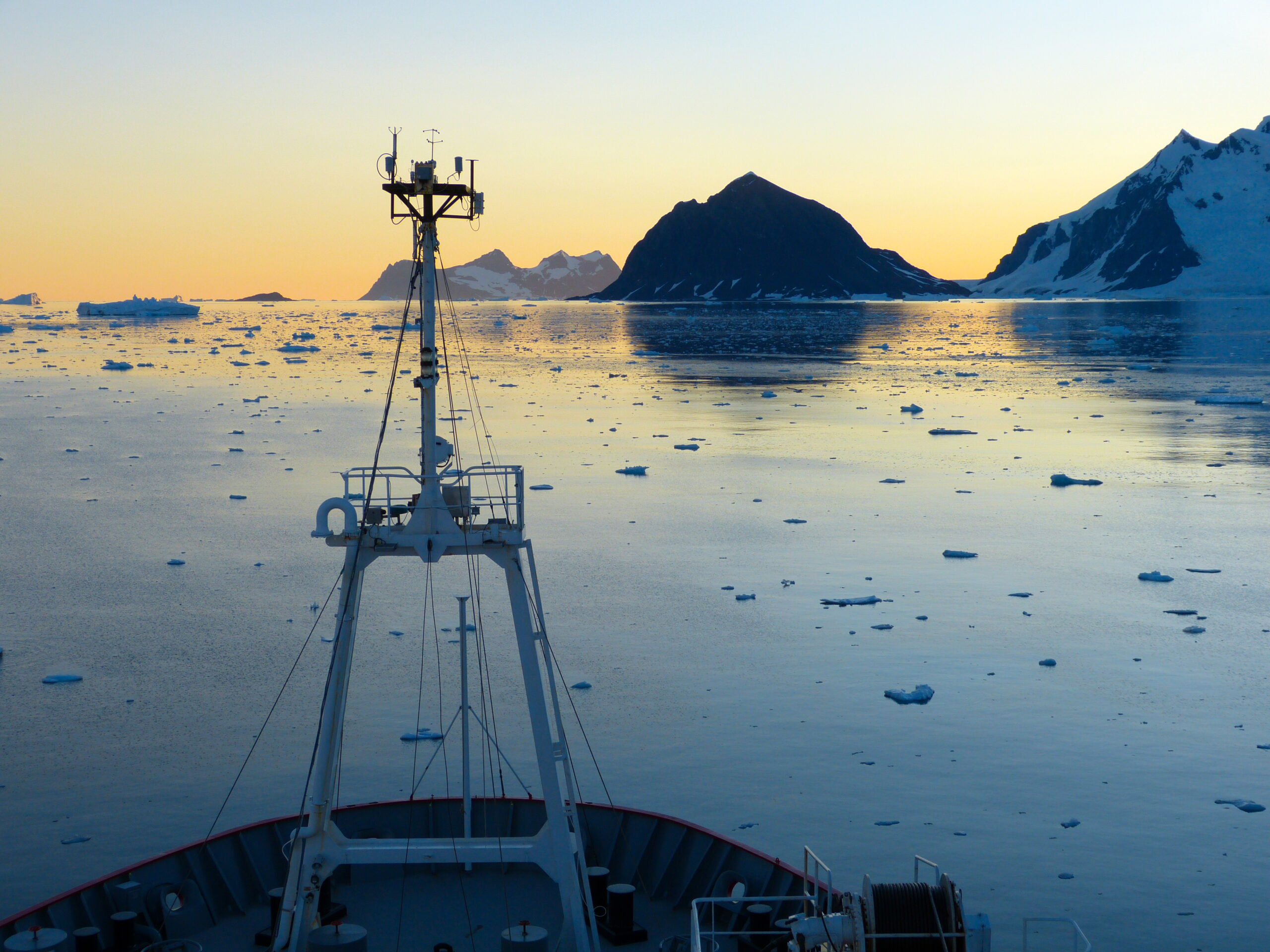
An international team of researchers, led by British Antarctic Survey (BAS), is setting out to discover how glacier calving around Antarctica can trigger powerful underwater tsunamis.
When icebergs break off glacier fronts and fall into the ocean (a process called calving) they can create powerful underwater tsunamis. These hidden waves, often several metres in height, cause powerful bursts of ocean mixing, where different layers of water get churned together. This process strongly mixes heat, oxygen and nutrients between different depths, and is critical for marine life and climate regulation in the region.
This mixing was previously thought to be primarily driven by wind, tides and heat loss at the ocean surface. However, initial calculations suggest underwater tsunamis play a significant role in polar oceans, rivalling the effect of wind-driven mixing in certain locations, and having a bigger impact than tides in redistributing heat in the ocean.
================
Underwater tsunamis, and the resulting mixing, could have significant implications for the Southern Ocean and beyond. Increased ocean mixing could draw more warm water up from the deeper parts of the ocean, speeding up the melting of the Antarctic Ice Sheet which would raise sea levels around the world. It can also change how nutrients are distributed in the ocean, which would affect the growth of phytoplankton (the “grass of the sea”), with consequences for the rest of the ocean food chain.
“Antarctica remains one of the most mysterious places on Earth, and we’re constantly discovering previously unknown processes that are shaping our planet. What makes this research so important is that everything in Antarctica is connected – ice, ocean and atmosphere – and those connections reach all the way back to our doorsteps. Rising sea levels, shifting weather patterns, these are Antarctic processes playing out in our lives.”
A key question going forward is understanding whether the current warming climate might increase how often these calving and tsunami events occur, and how strong they are. By learning more about this phenomenon, scientists will refine the ocean models that predict how climate will change in the future.
SANTIAGO, Jan 18 (Reuters) – Chilean President Gabriel Boric declared a state of catastrophe in two regions in the south of the country on Sunday as raging wildfires forced at least 20,000 people to evacuate and left at least 18 people dead.
According to Chile’s CONAF forestry agency, firefighters were battling 24 active fires across the country as of Sunday morning, with the largest being in the regions of Ñuble and Bío Bío, where the government declared the emergency. The regions are about 500 km south of the capital, Santiago.
Climate Change, due to excessive carbon emissions, is devastating Latin America:
Climate Change Impacts in Latin America
Latin America’s climate is changing. Precipitation patterns are shifting, temperatures are rising, and some areas are experiencing changes in the frequency and severity of weather extremes such as heavy rains. The impacts range from melting Andean glaciers to devastating floods and droughts.
The two great oceans that flank the continent—the Pacific and the Atlantic—are warming and becoming more acidic while sea level also rises.
Unfortunately, greater impact is in store for the region as both the atmosphere and oceans continue to rapidly change. Food and water supplies will be disrupted. Towns and cities and the infrastructure required to sustain them will be increasingly at risk. Human health and welfare will be adversely affected, along with natural ecosystems.
This photo story shows the devastating impacts across Latin America.
Gripped by a terrible drought now entering its sixth year, Iran’s cities are on the brink of what its meteorological organisation calls “water day zero”: the boundary beyond which supply systems no longer function. This was crossed by Chennai in India in summer 2019 and is now threatening Mashhad, Tabriz and Tehran, where taps in the city’s southern districts had already run dry by early December.
According to the Middle East expert Juan Cole, the head of the regional water company reported in early November that the five main water supply dams to Tehran, the capital, were only 11% full, and criticised the government for its inaction.
Tehran, home to 10 million people, has been threatened with the most drastic measure of all – evacuation. “If it does not rain in Tehran by December we should ration water; if it still does not rain, we must empty Tehran,” the country’s president, Masoud Pezeshkian, said back in November
During the summer of 2025, Iran experienced an exceptional heat wave, with daytime temperatures across several regions, including Tehran, approaching 50 degrees Celsius (122 degrees Fahrenheit) and forcing the temporary closure of public offices and banks. During this period, major reservoirs supplying the Tehran region reached record-low levels, and water supply systems came under acute strain. By early November, the reservoir behind Amir Kabir Dam, a main source of drinking water for Tehran, had dropped to about 8 percent of its capacity. The present crisis reflects not only this summer’s extreme heat but also several consecutive years of reduced precipitation and ongoing drought conditions across Iran. As a result, the capital of Iran is now facing a potential “Day Zero” when taps could run dry.
The drought quickly disrupted Tehran’s urban systems. With dry soils and high evaporation, rivers and wetlands shrank. Falling reservoir levels led to disruptions in hydropower generation, and water shortages prompted strict saving measures across parts of the capital. Amid these escalating pressures, officials warned that the capital city may even have to be evacuated if water supplies fail to recover. In November, President Masoud Pezeshkian said the capital would have to be moved. These cascading impacts exposed how vulnerable Tehran’s infrastructure, economy, and communities have become under compounding heat and drought stress.
These cascading impacts stem from a prolonged shortage of precipitation in recent years (Figure 1a). Precipitation around Tehran typically peaks between December and April, replenishing reservoirs behind dams before the onset of the dry summer. Over the past five years, precipitation during this wet period has remained consistently below the long-term climatological baseline, with the 2024-25 season showing the most pronounced and prolonged deficit across the entire rainy season. When such prolonged dryness was followed by an exceptionally hot summer, it amplified hydrological stress across the region.
This prolonged precipitation deficit was not confined to Tehran but was part of a broader regional anomaly extending across much of Iran (Figure 1b). Satellite-based estimates for November 2024 to April 2025 reveal a pronounced north–south precipitation dipole, with enhanced precipitation north of latitude 40° N but markedly reduced precipitation across central and southern Iran. The precipitation deficit was particularly evident along a broad corridor extending from the eastern Mediterranean through Iran, indicating reduced storm activity across the region. This weakening of storm activity led to marked reductions in snowpack accumulation and reservoir inflows, aggravating the ongoing water scarcity crisis. In maps of global projections of climate change impacts on precipitation, the region over and around the Mediterranean basin stands out because of the magnitude and significance of its precipitation decline. MIT researchers Alexandre Tuel and Elfatih Eltahir have explained why this region stands out as a hot spot for climate change. A more recent follow-up study by our group projects future declines in winter and spring precipitation extending to Mesopotamia and surrounding regions under a high-emission scenario by the end of the century. The projected change of the air circulation over the central and eastern Mediterranean, where most storms originate during winter, inhibits the formation of storm systems and consequently limits their eastward propagation, thereby reducing precipitation over Mesopotamia and adjacent regions eastward, including the area around Tehran.
Another contributing factor is the poleward displacement of storm tracks. During the spring season, the projected changes in regional air circulation due to global climate change move northward from the Mediterranean into southern Europe pushing the storm tracks further north and creating a dipole pattern (more precipitation in the north, less precipitation to the south) that reduces precipitation around Tehran. Consistent with this theory, simulations by IPCC (Intergovernmental Panel on Climate Change) models of future climate in this region project a pattern of change that resembles the regional pattern observed this last year, especially during the spring (Figure 1c). This similarity between observed and projected patterns suggests that the dry conditions observed this year may offer a glimpse of relatively dry conditions in the future, especially in spring season.
The region around Tehran falls in a transitional zone between the tropics and midlatitudes, with complex dynamics of storms systems. The nature and origins of storms in this region are different between winter and spring seasons. IPCC models do not fully agree on the projections of winter precipitation around Tehran. Future research will be needed to better understand natural climate variability as well as impacts of future climate change on precipitation, especially during the winter season.
The extreme heat and drought affecting Tehran this year were exceptional in both magnitude and duration. Events of this kind are projected to become more frequent in the future around this region as the climate warms. If this trajectory continues, Tehran is likely to face more frequent droughts, reducing reservoir levels, limiting urban water supply, and presenting significant hazards to the vital systems of public health, energy, and food supply. Taken collectively, the findings from this recent event expose an outstanding set of climate related risks and underscore the need for immediate, dual-track action—rapid global emissions mitigation alongside proactive local adaptation—to limit escalating risk.
Iran has gone through a decade of economic woes marked by international sanctions, the COVID-19 pandemic, and high inflation. Despite a slight recovery in 2021, the economy is fragile and remains the government’s top priority. Developments in climate policy, including renewable energy, have been limited. Notably, Iran remains one of the few countries that has not yet ratified the Paris Agreement. The Climate Action Tracker continues to rate Iran’s provisional climate pledge and climate policy as “Critically insufficient”.









 borderslynn
You must be logged in to post a comment.