I just photographed a Peacock and a Red Admiral on my Autumn Glory.
19th September 2024
In previous years there could be at least 12 to 20 on this plant. These two are the highest count in a day for this year. I am distraught. Seeing butterflies all my life has always lifted my spirits, no matter what adversity life throws at me.
So I hoped this was something to do with living where I do after unseasonal and turbulent weather all year. But no. I read in my Butterfly Conservation news this reproduced article:
Wondering where all the butterflies have gone? You’re not alone.
In 2024, we’ve seen butterfly numbers fall across the UK. With 80% of butterflies having declined since the 1970s and a third of moth numbers having fallen in that same period, the time has come to tell the Government enough is enough.
Our message to Government
We’re calling on the Government to:
Declare a nature emergency
Implement an immediate and permanent ban on butterfly-harming neonicotinoid pesticides, without exceptions.
If you agree, sign our letter and join leading conservation figures in calling on the Government to take action now.
And we know pesticides are being used extensively in gardens and farmland. But also climate change plays an obvious role. In a link from 2018 National Geographic pointed out the impact of lack of habitat due to climate change disruption which cut the Monarch butterfly population in Mexico drastically:
And activists try in vain to fight against big banks funding these operations:
Mana Pools National Park (219,600 ha) forms part of a natural World Heritage Site (WHS) that was inscribed based on its intact wilderness and beauty in 1984. This 676,600 ha WHS also encompasses the Sapi Safari Area (118,000 ha) and Chewore Safari Area (339,000 ha). Mana Pools is a Key Biodiversity Area, home to remarkable wildlife including iconic species such as elephants, buffalos, and lion in addition to a variety of plans game, leopards and cheetahs, and many resident and migratory birds, with over 450 bird species recorded. Mana Pools National Park was also designated as a wetland of international importance under the Ramsar Convention in 2013. The site’s pristine ecosystem is an important tourist attraction and crucial for Zimbabwe’s tourism industry.
The Mana Pools World Heritage Site, part of the larger Middle Zambezi Biosphere Reserve, is located directly opposite the Lower Zambezi National Park in Zambia. The Lower Zambezi National Park is also currently under serious threat by the development of an open pit copper mine in the middle of the national park. There are grave concerns around the overall effect of large-scale mining in this ecologically sensitive area which would also invariably impact the Mana Pools World Heritage Site.
Growing Threat
Despite its significance, Mana Pools is now under growing threat of damaging developments, particularly oil and gas exploration. In a gazette notice on 28th April 2023, the Zimbabwean Ministry of Mines and Mining Development announced that Shalom Mining Corporation Pvt Ltd had applied for a licence to prospect for oil and natural gas in an area of very high conservation value contiguous to Mana Pools. If allowed to go ahead, this development potentially poses a serious risk to the adjacent World Heritage Site and Ramsar Site, in addition to the damage it might cause within the proposed prospecting area itself.
In response to the oil and gas prospecting threat, BirdLife partners in Southern Africa put together a strong objection to the proposal. BirdLife Zimbabwe (BirdLife partner in Zimbabwe) and BirdWatch Zambia (BirdLife in Zambia) submitted it to the Ministry of Mines and Mining Development of Zimbabwe. The letter was also shared with the UNESCO World Heritage Centre, the IUCN World Heritage Programme, and the Secretariats of the Convention on Migratory Species and Ramsar Convention on Wetlands of International Importance.
“Zimbabwe and Zambia have just signed a Memorandum of Understanding to set up the Lower Zambezi Mana Pools Transfrontier Conservation Area to enhance wildlife conservation. In a report by the Zimbabwe Broadcasting Corporation, “the agreement is set to enhance ecosystem integrity and natural ecological processes by harmonising environmental management procedures” With so much at stake, we implore the Zimbabwe Ministry of Mines and Mining Development to turn down the prospecting application and the Governments of Zimbabwe and Zambia to work together to protect the intact ecosystem of the Zambezi comprising both Mana Pools and Lower Zambezi National Park” , said Julia Pierini, CEO BirdLife Zimbabwe.
“Mana Pools in Zimbabwe holds immense ecological importance, interconnecting with the Lower Zambezi National Park in Zambia. The proposed oil exploration programme by Shalom Mining, threatens this wildlife haven, and would upend the delicate balance of this critical ecosystem” said Daniel Phiri, National Coordinator, BirdWatch Zambia.
“Mana Pools in Zimbabwe holds immense ecological importance, interconnecting with the Lower Zambezi National Park in Zambia. The proposed oil exploration programme by Shalom Mining, threatens this wildlife haven, and would upend the delicate balance of this critical ecosystem”
Daniel Phiri, National Coordinator, BirdWatch Zambia.
We are plundering Africa yet again and the world is on fire, glaciers are melting at great speed, floods are drowning people and displacing millions. Freak weather is impacting the planet so fast resilience measures cannot be laid down fast enough.
An estimated 196 land and environmental defenders were killed in 2023 around the world, according to a new Global Witness report published today
The new figures take the total number of defenders killed between 2012 to 2023 to 2,106
For the second year running, Colombia had the highest number of killings worldwide – with a record 79 defenders killed last year, followed by Brazil (25), Mexico (18) and Honduras (18)
Once again, Latin America had the highest number of recorded killings worldwide, with 166 killings overall – 54 killings across Mexico and Central America and 112 in South America
Environmental defenders are also being increasingly subject to range of tactics for silencing those who speak out for the planet across Asia, the UK, EU and US
Tuesday 10 September 2024, London – At least 196 land and environmental defenders were killed last year for trying to protect their homes, community or the planet, according to a new report by Global Witness released today, working in collaboration with global partners. The new figures bring the total number of defender killings to 2,106 between 2012 and 2023.
Overall, Colombia was found to be the deadliest country in the world, with 79 deaths in total last year – compared to 60 in 2022, and 33 in 2021. This is the most defenders killed in one country in a single year Global Witness has ever recorded. With 461 killings from 2012 to 2023, Colombia has the highest number of reported environmental defender killings globally on record.
Other deadly countries in Latin America include Brazil, with 25 killings last year, and Mexico and Honduras, which both had 18 killings.
Central America has emerged as one of the most dangerous places in the world for defenders. With 18 defenders killed in Honduras, the country had the highest number of killings per capita in 2023. A total of 10 defenders were also killed in Nicaragua last year, while four were killed in Guatemala, and four in Panama.
Worldwide, Indigenous Peoples and Afrodescendents continue to be disproportionately targeted, accounting for 49% of total murders.
Laura Furones, Lead Author and Senior Advisor to the Land and Environmental Defenders Campaign at Global Witness said:
“As the climate crisis accelerates, those who use their voice to courageously defend our planet are met with violence, intimidation, and murder. Our data shows that the number of killings remains alarmingly high, a situation that is simply unacceptable.
“Governments cannot stand idly by; they must take decisive action to protect defenders and to address the underlying drivers of violence against them. Activists and their communities are essential in efforts to prevent and remedy harms caused by climate damaging industries. We cannot afford to, nor should we tolerate, losing any more lives.”
While establishing a direct relationship between the murder of a defender and specific corporate interests remains difficult, Global Witness identified mining as the biggest industry driver by far, with 25 defenders killed after opposing mining operations in 2023. Other industries include fishing (5), logging (5), agribusiness (4), roads and infrastructure (4) and hydropower (2).
In total, 23 of the 25 mining-related killings globally last year happened in Latin America. But more than 40% of all mining-related killings between 2012 and 2023 occurred in Asia – home to significant natural reserves of key critical minerals vital for clean energy technologies.
As well as highlighting the number of killings worldwide, the report unearths wider trends in non-lethal attacks and their harmful impacts on communities globally. It highlights cases of enforced disappearances and abductions, pointed tactics used in both the Philippines and Mexico in particular, as well as the wider use of criminalisation as a tactic to silence activists across the world.
The report also explores the crackdown on environmental activists across the UK, Europe and the US, where laws are increasingly being weaponised against defenders, and harsh sentences are more frequently imposed on those who have played a role in climate protests. The findings form part of a concerning trend of criminalisation cases emerging worldwide.
Jonila Castro, a Filipino activist who was abducted by the Philippines military in 2023 and currently facing criminalisation, featured in the report, said:
“Even after our release from abduction, threats continued. We are facing difficulties in returning to our homes and communities. We are still experiencing surveillance, red-tagging, and intimidation. Attacks to silence environmental defenders challenge our advocacy for environmental protection and people’s rights.
“Environmental devastation and human rights violations are interconnected, both sustained by governments and the extractive systems they defend. Our experience highlights the urgent need for stronger protection and recognition of community activists and environmental defenders in the global fight for climate justice.”
Despite the escalating climate crisis – and governments pledging to achieve the Paris Agreement target of 1.5C – land and environmental defenders are being increasingly subject to a wide range of attacks to stop their efforts to protect the planet. At least 1,500 defenders have been killed since the adoption of the Paris Agreement on 12 December 2015.
Nonhle Mbuthuma, author of the report’s foreword and Goldman Environmental Prize Winner 2024, said:
“Across every corner of the globe, those who dare to expose the devastating impact of extractive industries—deforestation, pollution, and land grabbing—are met with violence and intimidation. This is especially true for Indigenous Peoples, who are essential in the fight against climate change, yet are disproportionately targeted year after year.
“Yet the brutality of these attacks reveals something profound: the power that ordinary people wield when they unite for justice. Leaders have a duty to listen and ensure that land and environmental defenders can speak out, everywhere, without fear of reprisal. This responsibility falls squarely on the shoulders of every wealthy and resource-rich nation worldwide
I purchase about 4 x 500g organic peanut butter (palm oil free, as it is toxic to dogs) a month. Last year, for a single jar of 500g, it was going up from £5 to £6 and this year it has crept up to nearly £9 by September.
We can’t grow peanuts in this country, but they are a popular food. They are imported from across the world and I looked up details using this link:
In 2023, exports of peanuts (also called groundnuts) were worth a total US$4.4 billion.
That was an increase since 2019 of 47.3%.
Year over year, overall export revenues for the popular snacking nut grew via a 12.2% advance compared to $3.91 billion during 2022.
Covid hit many economies very hard between 2020 and 2023.
Below are the top 20 countries that exported the highest dollar value worth of peanuts during 2023, regardless of whether the shipped peanuts were in-shell or shelled.
India: US$872.6 million (19.9% of total exported peanuts)
United States: $629.1 million (14.3%)
Brazil: $443.7 million (10.1%)
Sudan: $435.6 million (9.9%)
Netherlands: $230.8 million (5.3%)
Senegal: $197.8 million (4.5%)
mainland China: $185.4 million (4.2%)
Nicaragua: $127.6 million (2.9%)
Egypt: $97.1 million (2.2%)
Mozambique: $69.1 million (1.6%)
Malawi: $54 million (1.2%)
Tanzania: $41 million (0.9%)
Germany: $29.7 million (0.7%)
Israel: $19.9 million (0.5%)
Madagascar: $19.2 million (0.4%)
Belgium: $16.9 million (0.4%)
Bolivia: $14.6 million (0.3%)
South Africa: $13.6 million (0.3%)
Myanmar: $11.38 million (0.3%)
Türkiye: $8.99 million (0.2%)
Then we see the highest importers:
Below are the 20 best buying markets as measured by the highest dollar value worth of peanuts imported during 2023, for any peanuts regardless of whether shelled or not.
mainland China: US$758.5 million (16.7% of total imported peanuts)
Netherlands: $571.2 million (12.6%)
Indonesia: $374.2 million (8.2%)
Vietnam: $269.6 million (5.9%)
Germany: $233.4 million (5.1%)
Mexico: $173.9 million (3.8%)
Russia: $173.6 million (3.8%)
United Kingdom: $162.3 million (3.6%)
Canada: $156.5 million (3.4%)
Algeria: $132.7 million (2.9%)
Poland: $127.2 million (2.8%)
Spain: $99.7 million (2.2%)
Italy: $85.8 million (1.9%)
France: $75.4 million (1.7%)
Thailand: $60.2 million (1.3%)
Türkiye: $53.5 million (1.2%)
Philippines: $52.9 million (1.2%)
United Arab Emirates: $49.6 million (1.1%)
Malaysia: $47.2 million (1%)
Ukraine: $38.4 million (0.8%)
The article explains:
By value, the listed 20 countries shipped 80.1% of globally exported peanuts in 2023.
Among the top exporters, the fastest-growing peanuts exporters since 2022 were: Tanzania (up 86.7%), Madagascar (up 63.1%), Mozambique (up 62.7%) and Senegal (up 45.6%).
Those countries that posted declines in their exported peanuts sales were: Türkiye (down -65.6% from 2022), Myanmar (down -49.8%), Malawi (down -36.2%), Bolivia (down -12.5%) and South Africa (down -0.1%)
Interestingly note of exporters in the top 20 was no.16. Türkiye: $53.5 million (1.2%) yet posted a decline Türkiye (down -65.6% from 2022). That made me wonder about why Turkey should become a big importer rather than be in the top 20 exporters, see below:
Among the top importers, the fastest-growing peanuts importers since 2022 were: Algeria (up 160.7%), Türkiye (up 142.0%), Vietnam (up 80%) and Mexico (up 54.8%).
I began to wonder about the economy of a country as to its choices if they are hit by climate change which can destroy crops, or disasters such as the Gaziantep centred earthquake in Turkey when the Turkish economy was struggling for a variety of reasons already. We know global warming of the planet must be reducing food security in many areas of the world.
Maybe we should also add in the impact of terrible wars as in the Middle East, Ukraine, Myanmar, not forgetting Sudan, one of the exporters of peanuts, where a famine looms that could be deadlier than Ethiopia’s in the 1980s: some estimate that 2.5m civilians could die by the end of the year.
When we notice big leaps in prices of staple foods, perhaps we should all think a bit more about the fragility of the agricultural sector and the crisis of wildfires, drought, floods, hurricanes and so on, and restricted food transportation due to wars on land and sea.
Watching the incredibly extreme heat of America this year, and in India, the two main exporters of peanuts have been hit hard. Growing peanuts requires reliable weather, the right amount of sun, but not extreme and the right amount of rain, but not too much. There are numerous considerations in advance of planting each year:
So I realise now that the price increases are likely due to shortages as my regular supplier is also out of stock, and I can’t remember that ever happening.
But for those people who feel abandoned in their own country, starving and searching to find a place of safety and food security, it is up to us all to help our fellow human beings. See this World Food Programme short explanation, made just under a year ago, before Gazans were placed in such cruel circumstances:
And if, after understanding more about the vital need for us all to help those without regular food and water due to no fault of their own, you can donate here:
Did you know there’s enough food in our world to feed everyone? Yet 783 million people go to bed hungry every night.
We believe no mother or father should struggle to feed their child.
Established in 1961, we are the world’s largest humanitarian organization – and it’s generous people like you that help us save and change lives in over 120 countries around the world.
The Pacific Ocean holds the nation of Kiribati, a 313-square-mile republic on 33 atolls divided into three groups.4 Of the Line Islands, the Gilbert Islands, and the Phoenix Islands, the Gilbert Islands are the most heavily populated and this is also where the capital, Tarawa, is located. Most of the islands in this nation sit at just 6.5 feet above sea level. By 2050, some experts predict that Kiribati will be flooded and the over 100,000 inhabitants forced to leave.56 Even without mandatory relocation orders, thousands of residents have already fled.
For decades we have known that industrial growth dependent on fossil fuels will flood our lands and return them to the seas, and force evacuations from homes which have been settled for hundreds of years by islanders of the Pacific.
The 2021 article starts with the facts:
What we must do now is focus all humanity on reducing emissions which have tipped the momentum of climate change into a downward spiral of harm.
NOAA’s website constantly displays the harm across the planet, they have told us:
The annual rate of increase in atmospheric carbon dioxide over the past 60 years is about 100 times faster than previous natural increases,” NOAA wrote on their website. “Human activities have increased the concentration of carbon dioxide in our atmosphere, amplifying Earth’s natural atmosphere.”
Despite massive amounts of reliable and stunningly accurate data available for us all to see, corporates still push for growth which can only be obtained by increasing the use of fossil fuels. They may say this is a transitioning away from their use, but the acceleration reflects the irresponsibility of industrial processes.
Instead of we should be using the joint mental capacity of all humans to think more constructively how to live NOW without drilling for more oil, gas, coal and how to develop alternative, sustainable and zero carbon solutions to our future survival.
But radical influencers who push the limits encourage a ‘no holes barred’ approach and disregard and disrespect those who plead for us to be more responsible.
And Musk himself doesn’t seem particularly interested in addressing this. In fact, he recently tweeted that corporate environmental and social governance – a common method of reporting and addressing environmental impacts – was “the devil incarnate”.
Those who agree with Musk choose to ignore the sinking islands in the Pacific and care not that their islands, full of diverse wildlife, flora and fauna, where humans have extremely low carbon footprints, are disappearing under the waves. Musk and others who develop technological advances could have also turned their minds to preventing this acceleration of harm and heating of the oceans and subsequent sea level rising at such a rapid rate. They would be far more appreciated by the rest of us if they could help reverse the harm.
Here I present more extracts from Saleh Mohsin’ excellent book, ‘Paper Soldiers’ which has helped me understand the history of ‘weak’ or ‘strong’ dollar through the eyes of US Treasury secretaries.
The United States started freezing assets as a method of economic aggression more than eighty years ago when President Franklin Roosevelt sought to keep U.S.-held assets of European governments invaded by Germany out of Nazi hands. As terror spread across Europe, Roosevelt signed an executive order in 1940 to keep billions of dollars out of the grasp of Nazis. OFAC as a unit was created a decade later during the Korean War. For the following fifty years, it was a comparatively quiet part of Treasury (some called it an orphan of the agency), mostly for blunt embargo-based actions against Cuba and others. It was out of tragic necessity after 9/ 11 that the Bush administration expanded sanctions authorities and brought the tiny unit into the center of the battlefield. The power that OFACers, as some in the private sector call them, wield from this unambiguous office is palpable when they emerge from their dusty government building to meet with Wall Street executives in the sheen and shine of fancy conference rooms in Manhattan high-rises. “One visit from someone in that office can leave us in disarray for hours,” shared one New York banking compliance officer. “Running afoul of OFAC is not an option.” Penalties for violating sanctions levied by Gacki and her coterie of investigators are costly. BNP Paribas, a French banking behemoth, faced a record fine of $ 8.9 billion for violating U.S. sanctions against Sudan, Cuba, and Iran. HSBC and JPMorgan Chase have paid tens of millions of dollars in fines in recent years.
From ‘Paper Soldiers: the weaponisation of the dollar, Saleh Mohsin
It’s not a good idea to get on the United States’ bad side. As the wealthiest country in the world, the U.S. also lays claim to the world’s most powerful military. But military might is nothing compared to the repercussions that economic and trade sanctions from the U.S. can bring about.
Economic sanctions are a way for large governments to exert their disapproval over one another. While wars are costly, both economically and politically, economic sanctions tend to be somewhat less tangible, at least for the country doing the sanctioning. For the country being sanctioned, the results can be enormous and long-lasting.
Key Takeaways
The U.S. tends to sanction countries that violate human rights or sponsor terrorism.
The U.S. can sanction an entire nation or specific individuals or entities within a nation.
The countries with the longest-standing sanctions against them are Cuba, Iran, North Korea, and Syria.
In February of 2022, U.S. President Joe Biden announced economic and trade sanctions against Russia due to Russia’s military aggression against Ukraine.1
Why the U.S. Imposes Sanctions
What does a country need to do to attract the ire of the U. S.? Overwhelmingly, the U.S. sanctions countries that sponsor terrorism or perpetrate human rights violations against their own people and others.
The U.S. also imposes sanctions on countries that threaten its interests, such as with unfair trade practices. Such sanctions are intended to deter bad behavior through economic penalty.
Countries Sanctioned by the U.S.
As of June 2023, active U.S. sanctions programs cover the following countries and regions, or companies and individuals within listed countries:2
Afghanistan
The Balkans
Belarus
Burma
Central African Republic
China
Cuba
Democratic Republic of Congo
Ethiopia
Hong Kong
Iran
Iraq
Lebanon
Libya
Mali
Nicaragua
North Korea
Russia
Somalia
Sudan
South Sudan
Syria
Ukraine
Venezuela
Yemen
Zimbabwe
…….
For example, under the Global Magnitsky Act, since December 2017, the United States has imposed targeted visa restrictions and financial sanctions on “perpetrators of atrocities” in Burma (Myanmar).14
If we go back to Saleh Mohsin’s book she described how the Trump administration further weaponized the dollar and the backlash that followed, particularly when oligarchs are the target:
Of course, the scene that unfolded in Davos, Switzerland, in 2018—when Mnuchin inadvertently talked up the benefits of a weak dollar—revealed that it wasn’t always Trump who was unsettling markets with loose commentary. One by one, the administration blew up key pillars of dollar governance: to speak about it with care and caution, to project strength, to be stable and predictable with policies, and to refrain from blatantly using it as a cudgel. That final pillar was knocked down in several blows, through economic sanctions levied sloppily but also by Trump’s attempt in the summer of 2019 to actively intervene in foreign exchange markets to control the dollar, a bid that Mnuchin ultimately blocked—not through silence but by vociferous lobbying internally and externally. He didn’t always win those battles. On August 5, 2019, just a few weeks after considering manipulating currency markets itself, the United States finally formally designated China with that charge. (The statement came out after Trump insisted that Mnuchin’s press release have the words Currency Manipulator with a capital “C” and “M.”) The move fell flat. The designation didn’t cause any major market or diplomatic catastrophe—for the first time, the world saw how hollow that charge really was. The Trump presidency showed what happens when U.S. leaders are not cautious with power. But the currency channel wasn’t the only sphere through which Trump moved the dollar further down the path of weaponization. A round of economic sanctions on a Russian entity that may have proved too big to mess with created even more uncertainty around the United States’ ability to manage the dollar.
Then the move on an oligarch:
Early on April 6, 2018, the U.S. Department of the Treasury announced that Oleg Deripaska, and any entity in which he had a majority stake, would be severed from the U.S. financial system. The economic sanctions were intended to be a damaging blow to Moscow for using its oligarchs as conduits to, as Mnuchin said in the sanctions announcement, “engage in a range of malign activity around the globe.” Deripaska owned a massive share in the world’s second-largest aluminum maker, United Company Rusal, meaning that Mnuchin’s sanctions ricocheted across most of the global metals market. Deripaska, a multibillionaire, had a complex business setup, holding a 66 percent stake in a company called En+ Group,which in turn had a 48 percent stake in Rusal. Now that he was on Treasury’s blacklist, both companies were facing sanctions. With Rusal on the brink of becoming a financial pariah, the jobs of thousands of miners and factory workers across Europe’s aluminum industry were at risk. Those trading commodities that Friday morning saw the price of aluminum swing wildly throughout the day. Investors didn’t know what to do. With Rusal producing 6 percent of the world’s aluminum, Treasury had just blown a $10 billion hole in the industry. “With two paragraphs on an eight-by-eleven piece of paper, the U.S. government fucked up a whole corner of the commodities market, and fucked up the world of a Russian multibillionaire,” according to one metals trader based in Canada. Years later, he still refuses to discuss the event on the record and use his name, or even reveal the firm he worked for, because Mnuchin’s sanctions surprise had cost traders like him millions of dollars. It was embarrassing. By the end of the day, commodities markets swung 20 percent, while shares of Rusal closed 18 percent lower. Over the coming weeks, the company’s share price would plummet even further, and the ruble would drop an astounding 8 percent as investors braced for the fallout to hit the Russian economy. Metals traders across Wall Street and financial hubs around the world started watching the Treasury department’s every move related to the sanctions package, looking for openings to recoup their losses from the April 6 surprise. The United States went after Deripaska because of his ties to Putin, contrary to the popular theory that Donald Trump only aimed to please the Russian president (sanctions during his presidency indicate otherwise, in large part due to congressional pressure). Once described as Putin’s “favorite industrialist,” Deripaska was seen as a leading member of a club of billionaires in Russia whose fortunes rise and fall alongside commodity booms and busts. He’d been in Putin’s orbit since the pair first met in 2000. To help do Putin’s bidding, Deripaska allegedly back-channeled with Trump’s campaign adviser, Paul Manafort (contact that was later scrutinized as part of the Mueller investigation into Trump’s ties with Russia). The charge that Mnuchin’s Treasury laid against Deripaska was serious. “Worldwide malign activity,” the agency called it. With the help of the oligarch, plus half a dozen other business tycoons, twelve companies, and seventeen top Russian government officials named in that day’s press release, Putin was able to instigate violence in Ukraine, supply the Syrian dictator Bashar al-Assad with weapons to bomb civilians, and engage in other “malicious” cyber activities to “subvert Western democracies,” per Treasury. “Russian oligarchs and elites who profit from this corrupt system will no longer be insulated from the consequences of their government’s destabilizing activities,” Mnuchin said in a statement announcing the sanctions. The world had just two months to cut ties with Deripaska and his vast holdings before the Treasury department would levy draconian punishments on anyone found violating the sanctions, such as hefty fines and public naming and shaming. It was a tall order for the private sector to figure out. The tentacles of Russian oligarchs, and especially Deripaska’s stake in Rusal, were notoriously hard to track. A back-of-the-envelope survey of the sector would show that dozens of European metals and auto factories had ties to Deripaska. They would all suffer if they couldn’t buy metal from Rusal. If they were forced to close, the impact would be catastrophic. Prices exploded in anticipation of a dearth of supply. It was new terrain for Treasury, since its actions are usually meant to calm markets. This one led to an eruption of skittishness in a key corner of the commodities sector. It went on to become an embarrassing spectacle—Treasury tried to unwind some of the damage, and with each move managed to trigger more volatility in markets. In one episode just seventeen days after the sanctions were announced, the department issued a statement that laid out a path for Rusal to escape being sanctioned, which included Deripaska relinquishing control of the company. The softening of its position on sanctions sparked a record plunge in aluminum prices, with markets reacting to the expectation of more metals supply in global markets. But those first few weeks of chaos in markets persisted throughout 2018 as Treasury tweaked its program and Deripaska moved closer to shedding his massive stake in Rusal. This volatility continued. Being the cause of that much instability was the exact behavior that the Treasury department was supposed to refrain from. Prices for aluminum, palladium, nickel, and more were in disarray, but Mnuchin remained steadfast in his defense of the April 6 actions. “We completely understood in sanctioning Deripaska what the impact would be on Rusal, the aluminum market, and on our allies. . . . This was a very well thought through decision.” But behind closed doors, many Treasury officials were shocked at the market reaction. Multiple accounts from officials who served in the administration in 2018 contradict the secretary’s public statements that the sanctions were well thought out. These officials, who spoke on the condition of anonymity to protect their public reputations, say the department did not undertake enough due diligence, such as liaising with private sector executives and allies to assess the full possible impact of banishing the world’s second-largest aluminum maker from using the U.S. financial system. The consequences, which became quickly apparent, reached far beyond the borders of the intended target in Moscow. The looming financial restrictions on Rusal threatened cash flow and factory operations that would require aluminum refineries to be shut down. Take Aughinish Alumina, a metal refinery located in County Limerick in Ireland. The plant was a vital cog in Rusal’s ability to supply metal to the global auto and tech industry. After Mnuchin’s sanctions were announced, there was speculation that the factory, run by some 450 workers, could become sanctioned and forced to shutter. There were also environmental consequences. Turning off a smelter running at 2,800 degrees Fahrenheit is costly and has to be managed carefully to avoid letting the noxious toxins such as sulfur dioxide pollute air and local water supply. The loss of operating cash from the sanctions would trigger an immediate closure, which had the potential to cause an environmental disaster. In the end, the plant in Ireland remained open, and the worst of the real-world consequences were avoided after officials in Europe lobbied Mnuchin to tweak the sanctions program. In fact, Rusal escaped sanctions altogether after Deripaska reduced his controlling stake in the company before the sanctions were officially imposed. Not that the intended prey didn’t feel the pressure. Deripaska saw 60 percent of his wealth wiped out. But alongside the business tycoon’s pain was a harsh and embarrassing lesson for the United States. The manner in which those sanctions were rolled out was, by some measures, a display of American arrogance. Past administrations had employed tried-and-tested methods of turning to the private sector to investigate the impact of potential sanctions, and took discreet steps to mitigate market turmoil. They also first sought buy-in from key allies around the world, a strategy that maximized impact and curbed mishap. None of that happened in the case of Mnuchin’s attempt to block Deripaska and his companies from to the U.S. financial system. The event instead suggested to the world that perhaps there are some people, like a Russian oligarch with deep ties to the global market, who are too big to be punished, even if they had a hand in trying to interfere with American democracy.
Reading the above, created in 2009, it is interesting to see their comparisons of salaries. This was as the world was trying to recover from the sub prime mortgage risk lending catastrophe which resulted in a global financial crisis.
The term ‘Blue collar’ is derived from the days when manual workers dressed in blue denim uniforms. An advert for blue collar workers first appeared in a 1924 newspaper in Iowa.
Office workers and administrators tended to wear white shirts and suits. During the 19th and 20th centuries, white collar workers believed themselves to be superior to blue.
White collar became the middle class, a buffer to the upper class, whilst blue collar were the least well paid.
Over recent decades the salaries of many blue collar workers overtook office staff. These were the lucrative jobs such as in welding, plumbing, infrastructure work. As trades emerged through training to become a highly skilled blue collar worker, salaries reflected the particular skill.
The middle class were then growing where education and training lifted people into roles where many more people could attain skills to match demands in diverse occupations.
In 2009, the above payscale site has salaries for occupations and the first example I reproduce here is College Professor and a Prison Guard:
Do white collar jobs bring home more bacon than blue collar jobs? It’s common to assume so. But according to a recent PayScale survey of job duties, salaries and career paths, white collar jobs don’t always beat their blue collar counterparts. Let’s take a look and compare the average job salaries from a list of white collar jobs and a list of blue collar jobs. (Note: for up-to-date salary information, click on each job title.)
College Professor or Prison Guard The average job salaries for mid-career prison guards range around $60,880, 3 percent higher than the typical salary of $58,876 for a mid-career college professor. Prison guards in California enjoy an annual salary of $73,428 with only a high school education, and with overtime they can surpass the income of California judges, police and even the state attorney.
Then you can click the link and find out what each can earn today. They provide many examples of occupations and can locate salaries for these careers around the world. A useful website, I believe.
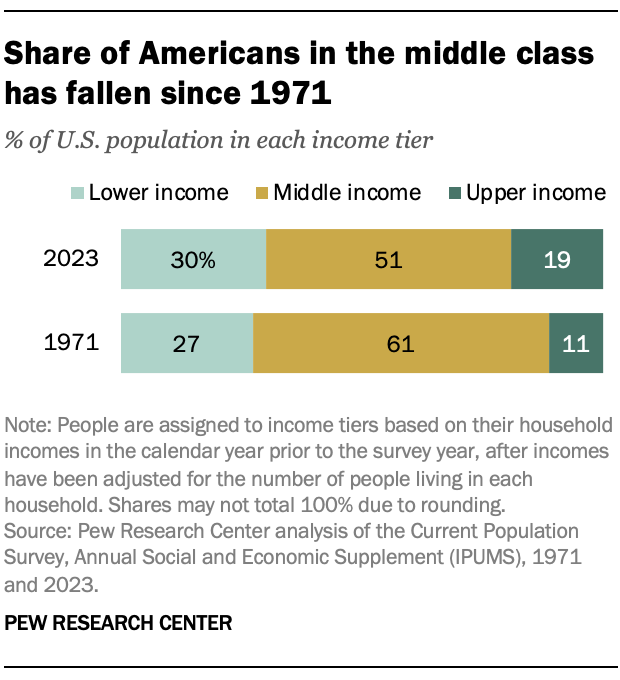
But according to Pew Research, the size of the middle class in America has shrunk. Incomes for the rich has increased whilst the lowest is even lower. Since 1970 incomes are higher by 2022, but distribution is skewed to benefit those in the higher wealth band. The country is wealthier overall.
For instance, American Indians or Alaska Natives, Black and Hispanic Americans, and people who are not married are more likely than average to be in the lower-income tier.
The share of Americans who are in the middle class is smaller than it used to be. In 1971, 61% of Americans lived in middle-class households. By 2023, the share had fallen to 51%, according to a new Pew Research Center analysis of government data.
As a result, Americans are more apart than before financially. From 1971 to 2023, the share of Americans who live in lower-income households increased from 27% to 30%, and the share in upper-income households increased from 11% to 19%.
Notably, the increase in the share who are upper income was greater than the increase in the share who are lower income. In that sense, these changes are also a sign of economic progress overall.
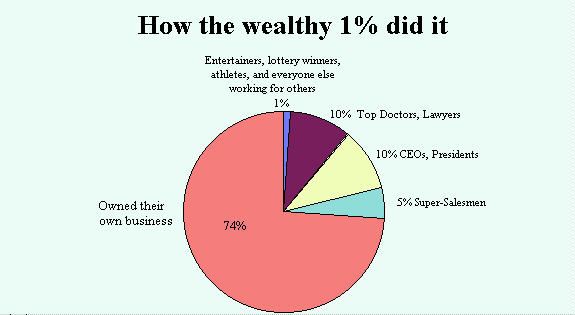
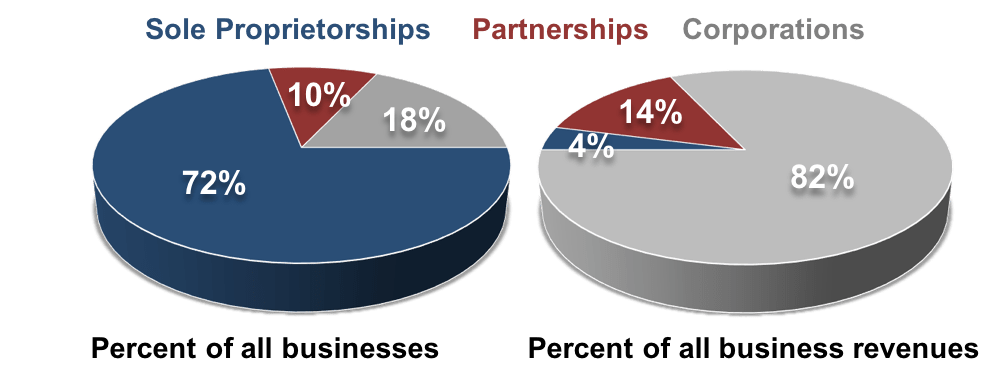
I am sure it isn’t easy to gather the kind of fair minded and cooperative people together to form a strong and successful employee owned business but it seems there are a number of them proving their worth.
And then there is a question of tax, which you can always investigate and wonder why certain politicians succeed to be leaders of their countries.
My mantra is ‘no-one can be in charge of the country whilst corporates are in charge of the world!’
Now I’ve reached the modern day, and I’m now asking about the mysteries of the global economy, trade and the power plays of those who seek to be the next dominant force in this complex arena.
Below you will find extracts from Saleh Mohsin’s book, Paper Soldiers, which has so enlightened me I have intertwined my thoughts with hers below. Here I am thinking about what my future might be like without Chinese products if the US places tariffs on Chinese imports which may mean the UK does too.
I do hope more people will read her fascinating book, also referenced in previous blogs.
I have purchased goods made in China in recent years, but not because I select Chinese made goods knowingly, but because they have become a major, high quality producer of many items I choose.
My community once fought an application to build a wind farm which would have wrecked our ancient landscape. This was my awakening to the importance of neodymium:
This was in 2013. Studying what is involved in sourcing essential materials to build turbines made me realise how Chinese people paid a heavy health price mining such minerals as neodymium. And now I realise China led the world as a supplier of neodymium which is used extensively in all our familiar electronic devices.
China saw it could exploit the high demand and supply the west by bringing the rural workers to cities to work to satisfy demand. I subsequently realised our advanced, clean environments were thanks to those Chinese working in heavily polluted areas of China. As they toiled tirelessly in unsafe conditions to sell to us what we cannot produce for ourselves, they also made us feel good about our goal to be a Zero Carbon country. They increased their carbon footprint burning coal, but created all the industries which once we were famous for, like steelmaking.
Our western societies are consumer driven which is not encouraged in Chinese society. But our addictive purchasing culture is fed by China and it understands how to create a dependence on its vast range of products, often designed in western countries but built in China.
Their work ethic is high but financial rewards are much lower than, say, America. Earnings in the US are the highest in the world, so they can’t begin to compete with Chinese manufacturers as employees would not accept the lower salaries which are necessary to offer similar goods at competitive prices. And if tariffs are applied on vital goods we have so far bought cheaply, we will be unable to recreate them in our post industrial societies. Suddenly our regular and reliable goods will be off the shelves.
After reading Paper Soldiers I realise the US administration is always nuancing the signals to keep global trade healthy and avoiding harmful volatility. For this, all countries try hard to work to this end for mutual benefit. However, ‘the slightest slip between tongue and lip’ can tip the economies of the world into hazardous situations.
In the UK the Tories made it very difficult for foreign students to study in the UK, and yet the funds from them underwrite UK student universities funding. So as we lose the value of our students making friends on their courses with foreign classmates we also note universities are forced to offer fewer courses due to less funds. Subjects such as English are less likely to be taught. Whole departments will disappear. How is that advantageous to our struggling educational system which once led the world?
Political decision making can stifle world cooperation. It is educational activities where cultural differences are encountered and harmful prejudices are often diminished.
Saleha Mohsin, in her book Paper Soldiers, is helping me along with this. This book helps me see behind political rhetoric and spin.
We might not understand why our economic life has suddenly become disrupted until we one day find out why it happened, damaging and redirecting our lives unexpectedly.
Mohsin also shows the human weakness of the volatile stock market which can be panicked so easily by the wrong words at a crucial moment in time by people in positions of influence.
She provides a historic perspective of what occurred after the trauma of 9/11. The ongoing shock of that event on the World Trade Centre pervades the mental approach to retaining cooperation amongst the banks of the world. Significant efforts were made to regain confidence in the dollar after that attack, then a few years later we suffered the global slide due to the 2007/8 financial crisis. Political parties had to find solutions which were not easy to find.
She explained that, after the 2007 financial crisis, caused by US reckless banks, China became the protector of the dollar by continuing to buy American bonds. This fuelled China’s growth as well. Gradually the struggling global economies recovered as long as China kept buying US debt in the form of US bonds. Thus the two major US mortgage companies, Fannie Mae and Freddie Mac received 30 percent investment from Beijing in their $5.4 trillion securities. This was a tense time of diplomatic engagement to retain that investment, creating close cooperation between US and China.
In turn, China’s recovery depended on Americans ‘eating up its exports’ whilst China soaked up the US debt. Below are some extracts from Mohsin’s excellent book.
China’s currency had become the ultimate trade weapon, supporting its economic ambitions. A highly undervalued renminbi caused a surging current account surplus and a humongous bilateral surplus with America. Even when it belatedly let its currency rise, the central bank continued adding massively to its foreign exchange reserves, slowing the currency’s rise. This behavior created huge distortions in the pattern of global trade, hurt many U.S. manufacturing firms and took away U.S. jobs, and generated severe protectionist pressures in America. China was also becoming more brazen as the world dealt with the American-brewed global financial crisis. The overlords of the U.S. dollar had made huge mistakes, and allies were now paying for them through blowback from the financial meltdown. China’s high exposure to dollar-denominated financial assets was damaging to the nation, boosting the case that countries should wean themselves off their dollar addiction. Sick and tired of bullying from America on its currency regime, in 2009 China’s central banker called for a “super sovereign reserve currency” to be housed in the International Monetary Fund, to replace the dollar. The concept went nowhere, but it was the introduction to a concept that for decades was considered inconceivable: a world not reliant on the dollar.
In order to not rock the boat, the US could never openly call out China for currency manipulation, which it had once done when Tim Geithner, Treasury secretary, spoke out of line during the early days of the Obama administration, saying to senators,” President Obama, backed by the conclusions of a broad range of economists, believes that China is manipulating its currency.” This was just as Washington needed to maintain a strong reliance with Beijing to help keep the world economy afloat. Investors panicked. China reacted furiously.
The Chinese government reacted quickly and fiercely. “This kind of wrong accusation against China on exchange rate issues will intensify protectionism within the U.S., and will not help resolve the problem,” its Commerce Ministry said. A top central bank official said Geithner’s allegations were “untrue and misleading.” The episode illustrates the deep-rooted fear among global investors of a fight between the world’s two largest economies, with interdependencies and rivalries borne of their contradictory views on governance but shared ambition to expand influence. It was anxiety that crept into how senior U.S. Treasury officials dealt with key economic issues with China for the preceding years, and it continued to serve as the mood music for the next decade.
Mohsin has explained to me something I never knew. She must have thought more people needed this historical perspective or she would not have written the book. But new political administrations need to also read this book to understand how words matter, especially in a time when the dollar is losing credibility.
Since the Roman empire, trade and currency exchange has created so many positives yet unavoidable negatives and imbalances across the globe. There is never just one ‘villain of the piece.’ It is often some off the cuff remark in a sensitive situation which can trigger panic and result in a thousand errors of judgement.
We in Britain are proud of our tradition of welcoming and including immigrants in our society.
The world has seen, through media outlets, how some poisoned hearts and minds have used social media to attack the fair and just immigration service of this country.
Elon Musk has allowed his platform Xitter to incite hate toward immigrants. This has accelerated those intent on violence, 70 percent already with criminal backgrounds, to attack hotels housing asylum seekers, immigration lawyers and offices around Britain.
Under-fire Elon Musk urged to get a grip on X and reality – or resign
Exclusive Echoing objections to social-media fueled violence from the government of the United Kingdom and others, the Chamber of Progress, a tech business advocacy group, is urging billionaire Elon Musk to take his leadership role at X more seriously or resign if he cannot do so.
Since July 29 when right-wing influencers made false claims on Twitter and other social media platforms that blamed the stabbing murder of three children on Muslims and immigrants, dozens of far-right riots have erupted around the nation.
Groups like the Institute for Strategic Dialogue and Amnesty International have blamed posts on social media services such as X, Telegram, and TikTok for amplifying racial hatred and inciting violent unrest, which was followed by counter-protests, some peaceful and some not.
And UK Justice Minister Heidi Alexander on Tuesday urged Musk to behave more responsibly following Musk’s quip that “civil war is inevitable” in response to a post about the violence.
On Wednesday, Ofcom, the UK telecom regulator, published an open letteradvising online service providers of current and pending obligations to prevent their platforms from being used to promote violence and hatred.
Under Ofcom’s regulations that pre-date the Online Safety Act, UK-based video-sharing platforms must protect their users from videos likely to incite violence or hatred,” said Gill Whitehead, Ofcom Group Director for Online Safety. “We therefore expect video-sharing platforms to ensure their systems and processes are effective in anticipating and responding to the potential spread of harmful video material stemming from the recent events.”
Whitehead advised service providers that while they face new content moderation duties soon under the Online Safety Act, the time to act is now. (It was further reported this week that the online act, which comes into force next year, may be unable to sufficiently tackle anti-immigration lies on social media anyway.)
Amid all this, the Chamber of Progress plans to join the chorus calling for Musk to moderate his speech and his platform. In a letter [PDF] provided to The Register in advance of publication, Kayvan Hazemi-Jebelli, senior director for the Chamber of Progress in Europe, calls on Musk to consider the impact of his words.
The recent far-right race riots in the UK, spurred by false claims about the Southport stabbings, highlight the moral duty of each individual using these platforms, especially those with hundreds of millions of followers like yourself, to act responsibly,” Hazemi-Jebelli’s letter says.
You have an influential position in tech and media, and control X, a mainstream social media platform where nearly 200 million users follow your commentary. You therefore carry a heightened responsibility not to personally amplify content that will provoke violence, the destruction of property, and the possible loss of human life. Sadly, you have failed to meet that bar.
Since the anti-immigrant attack began, you have parroted far-right talking points, minimized the gravity of the harm, mocked the UK’s policing efforts in response to these riots, and driven further division. Your comments that ‘civil war is inevitable’ run dangerously close to attempted justification for further violence and destruction.”
According to The Financial Times, Xitter has been less responsive than Google, Meta, and TikTok to social media posts flagged by the UK’s National Security Online Information Team.
X, when it was known as Twitter, cut back on content moderation staff following Musk’s October 2022 takeover of the company. But in the start of 2024, the biz decided it needed to staff up its content moderation group amid regulatory scrutiny.
The Register asked X to comment and received the company’s auto-responder reply, “Busy now, please check back later,” the successor boilerplate to what was previously just a scatological emoji. The fact that the company doesn’t take inquiries about matters of public interest seriously reflects the attitude of its management.
The Chamber of Progress is supported by major Silicon Valley tech firms including Amazon, Apple, Google, and Meta, to name a few. These firms did not ask the group to make an appeal to Musk, according to director of communications Chris MacKenzie.
MacKenzie said that while Musk tanking his own platform probably benefits the group’s partners by driving reasonable people to other platforms, the group’s letter represent an effort to support calls for responsible content moderation from other sectors.
This comes in the context of a global debate about how online platforms should moderate content,” said MacKenzie. “We have a lot of thoughts on that. One is that leaders should lead by example. We’re encouraging Musk personally to set a better example.”
MacKenzie’s suggestion that Musk’s behavior tarnishes the entire industry offers another clue as to why the Chamber of Progress is trying to temper Musk’s trolling: Online rabble-rousing is bad for online business and may lead to unwanted regulation.
When social media platforms incite violence and protests, legislators face more pressure to respond to calls from civil society groups like Amnesty International to ban social media data gathering and subject algorithms “to strict regulatory oversight.” ®
PS: The Irish Data Protection Commission has launched legal action against Twitter, alleging the social network’s use of EU user posts to train Grok – the AI search assistant built by Musk’s xAI lab that’s intertwined with X – breaks Europe’s tough GDPR.
I’m reading ‘Paper Soldiers: How weaponization of the dollar changed the world’ by Saleha Mohsin. I am most grateful to the author, for it has taken me until now to learn the history behind what led to Globalization being caused by a short mantra perpetuated by Treasury Secretary, Bob Rubin, under the Clinton administration, 1994: “A strong dollar is very much in this nation’s economic interests.”
All our trials and tribulations go back to that effort to maintain a strong dollar.
Yet, I realise our time has come as the UK, the First industrialised nation, and America, the Second, must finally be philosophical about this benefit to other developing nations. We have been replaced in our standing in the world yet we kick and fight to resist. This is difficult for us to live with.
The 2008 financial crisis during Treasury Secretary Hank Paulson’s time, under George Bush’s Presidency, was to result in bailing out the banks who had caused the crisis through excessive risk taking.
The goal was to maintain confidence in the dollar globally – and Paulson (with help from long time beauracrat Mark Sopel) did that.
However, a strong dollar equals cheap imports but also destroys jobs and livelihoods within the US. The cheap imports came from developing nations like China and India who had grasped the opportunity to build competitive and subsidised manufacturing. Labour was cheap and no unions meant easy exploitation and disregard of harmful work environments.
The UK had been a developing nation before it became a rich country, with eventually bringing in laws to create safer working conditions, allowing unions to negotiate for improvements and higher standards for workers, plus education and training. The UK eventually cleaned its grime out of rivers, buildings and drinking water and health care became free at the point of need, for every citizen.
Similarly, the USA had built its strength on industrialization and was also able to combine energy found not just from coal and gas, but oil too. Many people toiled in unsafe smelting furnace and other toxic work environments, emulating the British innovations but building bigger and more productive capacity. WW2 created a boom of manufacturing and millions of jobs, enabling new homes for many and a feeling of security which lasted until Globalization bit them.
Then China was accepted into the World Trade Organization. The final poisonous bite of the snake saw the manufacturing industries tumble into closure, accelerated by the financial crash of 2008.
Open trade borders help foreign competitors. They raised the quality and standards during their learning phase until their goods were not only cheaper, but better made, than many goods first designed and built in America. American industries moved their manufacturing to those nations who offered cheap labour (no questions asked) and higher productivity (no limit on working hours). This offshoring was endemic amongst corporates whose profits boomed as a consequence. But it also enabled host countries to directly learn about modern technology, techniques and design. Now they don’t need the First World to teach them, they innovate without assistance. They have transitioned away to a “command economy.” They have lifted millions of their own populations out of poverty, just as the UK did, then America did, and now it is their turn.
There was the combination of China being admitted to the WTO and the North American Free Trade Agreement which further opened trade with Canada, Mexico and China which Mohsin calls a “seismic shock” in middle America. Between 2000 to 2007 40 percent of manufacturing job losses occurred, that’s around 2 million jobs.
David Autor has produced ground-breaking research revealing the deep scars of globalization across middle America:
He reveals how an entire generation of blue-collar workers have been left behind despite other economists having lauded open markets and free trade as benefits for all. Their suggestion was to simply retrain such workers into a computer related industry.
I witnessed this myself when I, being experienced in IT in the 1980s, was offered a job training ex-miners in Durham, England to retrain in using computers in the service sector. When I saw the miners situation, I realised asking them to adapt to such an alien environment as a Call Centre compared to the camaraderie of going down a mine, was unthinkable.
So it was with these forgotten workers in middle America. And to add more insult to injury, inward investment was encouraged to restart closed factories by Chinese investment and Chinese run operations. A similar situation happened in the mill town of Hawick, Scottish Borders, famous for its quality woollen goods. The famous brands were bought out by a Chinese company who took all their machines to China and the skilled workers trained the Chinese to produce the garments. Hawick quality of life plummeted when the mills closed, just as it did in towns and cities in middle America.
It might be easy to see China as the ‘villain of the piece’ but that is simplistic. They really are not to blame for seizing opportunities we handed to them.
After the horrors of WW1 many countries tried to come together to forge peace. But, somehow, along the way, those who saw the possibility of weapons manufacturing as a means to create jobs and bring wealth, won the arguments.
epichistory.tv
The League of Nations was an international diplomatic group developed after World War I as a way to solve disputes between countries before they erupted into open warfare. A precursor to the United Nations, the League achieved some victories but had a mixed record of success, sometimes putting self-interest before becoming involved with conflict resolution, while also contending with governments that did not recognize its authority. The League effectively ceased operations during World War II.
What Was the League of Nations?
The League of Nations has its origins in the Fourteen Points speech of President Woodrow Wilson, part of a presentation given in 1918 outlining of his ideas for peace after the carnage of World War I. Wilson envisioned an organization that was charged with resolving conflicts before they exploded into bloodshed and warfare.
Now, campaigns are run to try and stop investing in weapons which are evolving to perpetuate, even incite, wars around the world. For returns to investors are obvious. Here is an extract from a campaign:
It’s all illegal. The International Court of Justice in The Hague just confirmed that Israel’s occupation of Palestinian territory — including Gaza — breaks the law. Netanyahu says he’d “fight with fingernails” — but the truth is that he depends on arms pouring in from weapons manufacturers, which depend on financing from our banks.
Israel’s occupation of Palestinian land is illegal, the International Court of Justice has confirmed.
The Advisory Opinion of the UN’s highest court makes clear that helping to maintain the occupation now would be illegal too. But that’s exactly what our banks and pension funds are doing when they help finance Israel’s arms supplies.
Even with lavish government support, Western arms manufacturers couldn’t last a day without help from financial institutions.
We know that some financiers are seriously considering their options. Norway’s biggest private pension fund cut ties to Caterpillar for its role with Israel’s army, even before the court’s opinion was announced. It’s time that they all took action to cut Netanyahu’s weapons supply and stop aiding and abetting Israel’s illegal occupation:
In Europe alone, 20 banks have provided 36.1 billion EUR in loans and underwritings to Israel’s biggest international arms suppliers in 2019-2023. A study published in June identified France’s BNP Paribas as the biggest lender to Israel’s top arms suppliers (4.7 billion EUR), followed by Crédit Agricole, Deutsche Bank, and Barclays.
Pension funds and insurers are also named in the NGO report and by UN experts who warned that if they fail to respond now, financial institutions linked to Israel’s arms suppliers risk becoming complicit in war crimes.
Big US and Canadian banks are just as bad. New York’s Citigroup, for example, led a consortium of banks that helped the Israeli government buy its F35 jets. The bank has also invested billions more in Israel’s arms suppliers since October 2023. But they can also divest, and help end this horror.
Some may say that governments should decide this sort of thing, and bankers should just stick to their jobs and make money. Indeed, our politicians have a lot to answer for, and some of them may end up behind bars some day for their part. But bankers are people too, and with enough public pressure, they can be moved to use their power for good.
Experience shows that International law takes years to grind on, and rarely punishes those whose greed has driven the wars, such as those whose finances flourished as a result.
To be pacifist can result in death through a thousand cuts. For example, the white feather handed to those who wouldn’t fight in the World Wars.
white feathernoun
A sign of cowardice.
A symbol of cowardice.
idiom
(show the white feather) To act like a coward.
The American Heritage® Dictionary of the English Language, 5th Edition • More at Wordnik
It is always a minority who incite wars, but the majority die as fodder whilst new, immensely cruel, weapon designers evolve their lucrative trade.
War builds nothing. War destroys everything we love.













 borderslynn
You must be logged in to post a comment.