Two US House of Representatives members have asked a federal judge to appoint a special master to compel the justice department to release all files related to Jeffrey Epstein, the disgraced financier and convicted sex offender.
On Thursday, Ro Khanna, a Democratic representative of California and his Republican colleague Thomas Massie of Kentucky asked US district judge Paul Engelmayer to release the full Epstein files, as required by the Epstein Files Transparency Act.
Criticizing the justice department for not releasing the full set of files on last year’s 19 December deadline, Khanna and Massie in a letter said: “The conduct by the DOJ is not only a flagrant violation of the mandatory disclosure obligations under the Epstein Files Transparency Act, but as this Court has recognized in its previous rulings, the behavior by the DOJ has caused serious trauma to survivors.
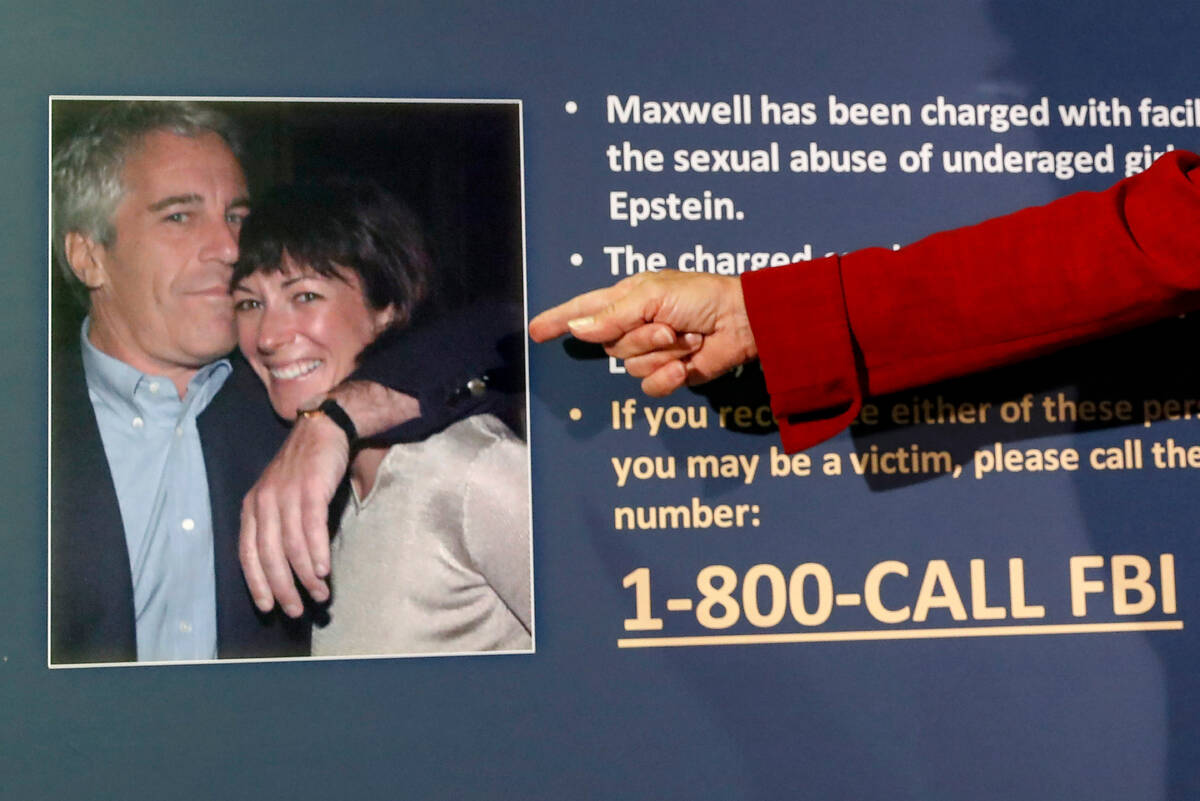
Justice Department can unseal Ghislaine Maxwell sex trafficking case records, judge says
FILE — Audrey Strauss, Acting United States Attorney for the Southern District of New York, speaks during a news conference to announce charges against Ghislaine Maxwell for her alleged role in the sexual exploitation and abuse of multiple minor girls by Jeffrey Epstein, July 2, 2020, in New York. (AP Photo/John Minchillo, File)
So I thought I would educate myself about Rare Earth Processing:
Rare earth metal processing involves extracting and refining rare earth elements from ores, which are typically found in complex mixtures. The process includes crushing the ore, separating the rare earth elements using various chemical methods, and purifying them into usable forms for applications in electronics, magnets, and other technologies. ameslab.gov sfa-oxford.com
‘Blue solution’:
Rare Earth Metal Processing. Blue solution in tanks at a rare earth metal processing plant, with technicians in the background ensuring quality control and efficient production.
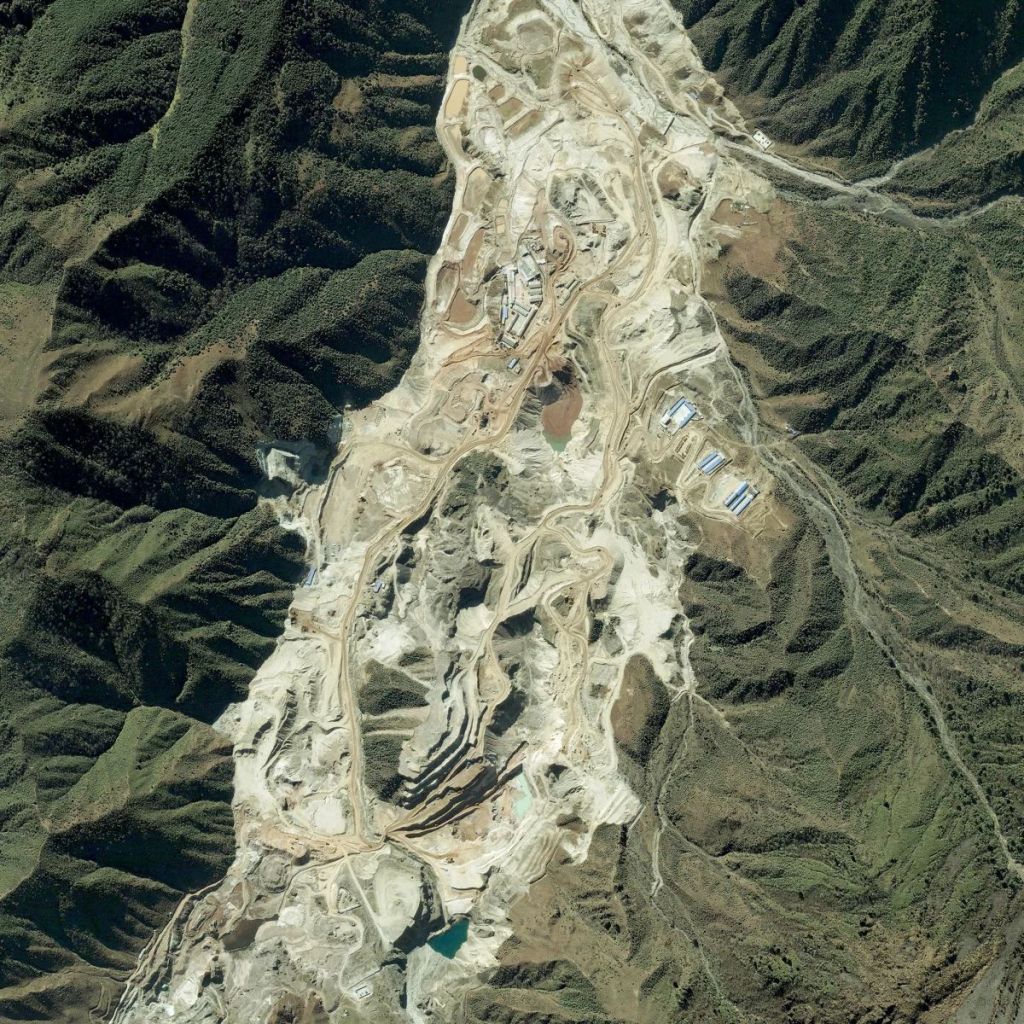
This is a satellite image collected on Nov. 13, 2012, of the Maoniuping Mine, one of China’s largest rare earth elements mines, located near Mianning, Sichuan province, China. DigitalGlobe/Maxar via Getty Images
How China came to rule the world of rare earth elements
It has taken China many decades of trial and error before they could achieve the world dominance in mining THEN PROCESSING rare earth elements. Other countries are trying to catch up, such as Germany and Riyadh.
Human industrial activity always harms the ennvironment. That is why everyone has let China get poisoned first but they are trying to mitigate the harm:
Highlights
•REEs are 17 critical metals essential for green technologies like electric vehicles and wind turbines.
•Conventional mining is energy-intensive, generating hazardous and radioactive wastes.
•In-situ leaching causes severe soil acidification and water contamination.
•EKM offers high efficiency with minimal environmental impact.
•LCA is crucial for evaluating and mitigating environmental impacts of REEs production.
The engine of industry is still coal in many countries, but also oil. The crisis in Iran is said to foresee the likely collapse of the Iranian supply chain of oil to China:
This is the potential unraveling of a 1.8 million bpd oil supply chain that exclusively feeds Chinese refineries at an $8-12 discount to global benchmarks. When that supply chain breaks,and what we are seeing suggest it will, the ripple effects will reshape everything from Brent crude pricing to Beijing’s refining margins to the geopolitical balance of power across the Persian Gulf.
See Giacomo Prandelli, Merchant News, Substack, Jan 14, 2026
He goes on to explain:
After Trump walked away from the nuclear deal in 2018 and reimposed sanctions, Iran’s oil exports cratered from 2.5 million barrels per day to just 350,000-500,000 bpd by 2020.
The regime should have collapsed under that pressure (It didn’t) instead, Tehran found a lifeline… China’s independent refineries in Shandong province, desperate for cheap crude and willing to look the other way on sanctions.
Fast forward to today, and Iran is exporting near-record volumes again—roughly 1.8 to 2.3 million bpd—with 90-95% going exclusively to China. In 2024 alone, Chinese buyers imported 533 million barrels of Iranian crude, representing about 13.6% of China’s total oil purchases. That’s not a marginal source anymore. That’s a structural dependency.
But Iranian crude doesn’t just flow to China because of political alignment. It flows because of the discount. Iranian oil consistently trades $7-12 below Brent benchmark prices. For Chinese refiners operating on low margins, that discount is the difference between profitability and bankruptcy. They’re not buying Iranian crude out of ideology…they’re buying it out of economic necessity.
The sanctions evasion machinery is sophisticated: ship-to-ship transfers in international waters, rebranding Iranian crude as “Oman Blend” or “Malaysian Light,” routing payments through Chinese banks outside the US financial system, and shell companies in the UAE and Malaysia providing plausible deniability. It works because Washington has largely looked the other way during Biden’s presidency, and because China has been careful not to involve state-owned oil majors that need access to Western capital markets.
And the regime appears desperate:
In at least one city, security forces have already refused to fire on protesters. That’s the domino that brings down authoritarian regimes.
So as China contemplates the implications, countries around the world are not in a position to replace China’s sophisticated prowess in rare earth process:
China’s Role and Global Constraints
China’s near-monopoly is not limited to mining but extends to processing and refining, stages that are capital-intensive, environmentally contentious, and politically sensitive in many democracies. This reality constrains how quickly alternatives can be built. Even with strong political will, new mines and processing facilities take years to develop, and environmental and labour standards emphasised by Japan and others add further complexity. As a result, efforts to diversify supply chains are likely to be gradual and uneven, leaving countries exposed in the interim.
The countries of the world are gripped with the crises facing us all just now.
And as Merchant News warns:
Trump wants low oil prices. But oil staying cheap makes Venezuela investment economically not feasible.
And China depends on oil imports:
China imports roughly 10 million barrels of crude oil per day. Domestic production covers only about 3.5 million barrels, leaving a 6.5 million barrel gap that must come from overseas.
We are on the edge of our seats as history unfolds.
Of course, Israel been keen to see Khamenei disappear:
How deeply are Israel’s Mossad spymasters involved in Iran protests?
Story by YONAH JEREMY BOB
• 54m
Protestors burn images of Ayatollah Ali Khamenei during a rally held in Solidarity with Iran
The IDF and Israel in the public sphere are doing all they can to stay out of the current Iran protests crisis to avoid being caught in Tehran’s crosshairs with ballistic-missile fire. But what about the Mossad in the shadows?
Why is US moving USS Abraham Lincoln Carrier Strike Group to Middle East amid Iran tensions?
US carrier deployment to the Middle East is underway as the USS Abraham Lincoln Carrier Strike Group has been redirected to the CENTCOM area of responsibility
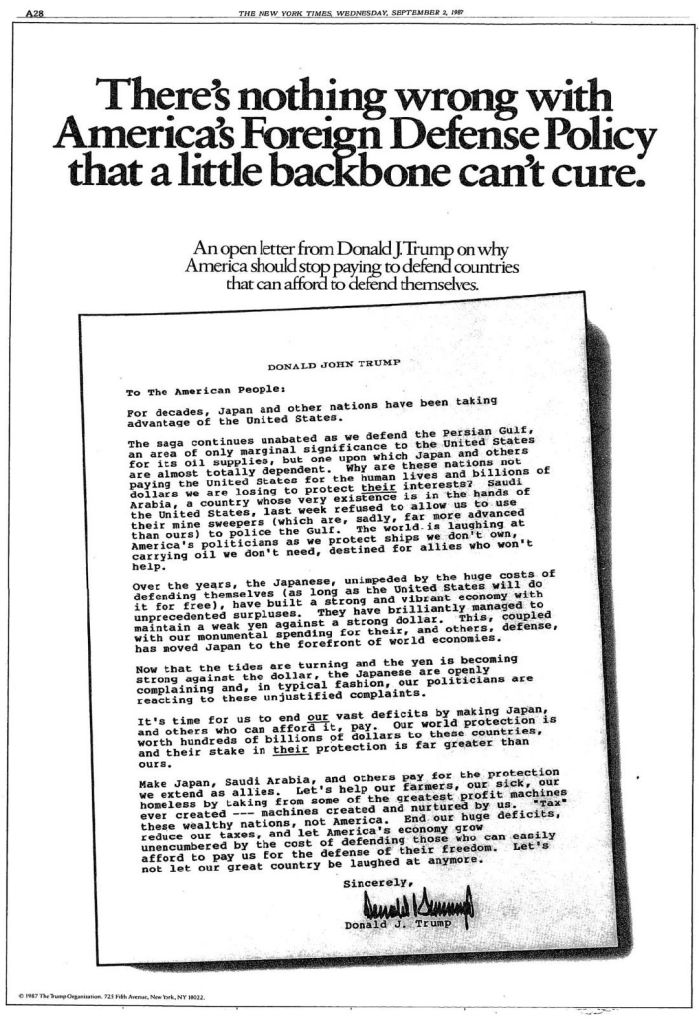
Chris Unger, in his book ‘House of Trump, House of Putin’ told us how, after Trump caught the attention of Putin in 1987 as a potential President of the United States, Trump returned to the US and had this advert appear in an obscure conspiracy theory journal, Executive Intelligence Review:
The ultimate goal of the KGB was to break NATO.
And Chris Unger reminds us in his Substack today:
At the time, thanks to his mentor, Roy Cohn, the dark, Satanic prince of American politics, Trump had hooked up with political strategist and lobbyist Roger Stone, who was cut from the same ethically challenged cloth as Cohn. Under Stone’s tutelage, on September 1, 1987, Trump suddenly went full steam ahead promoting his newly acquired foreign policy expertise, by paying nearly $100,000 for full-page ads(see above) in the Boston Globe, Washington Post, and New York Times calling for the United States to stop defending allies who were taking advantage of it.
The ads, which ran under the headline “There’s nothing wrong with America’s Foreign Defense Policy that a little backbone can’t cure,” marked Trump’s first foray into a foreign policy that was overtly pro-Russian in the sense that it called for the dismantling of America’s postwar alliance with Europe and Japan and was very much a precursor of the “America First” policies Trump is enacting today. The ad focused more on dismantling our alliance with Japan—a subject of great concern to the KGB at the time—than American relations with Europe, but the argument was exactly the same.
What was particularly interesting about the ad Trump took out was that it came just a few weeks after his first visit to Russia during which the KGB had begun to win Trump over as an intelligence asset. (See The KGB Reels Him In.)
And today, 14th January, 2026:
Denmark and Greenland to face Vance in high-stakes White House meeting
Greenland’s government has said it “cannot under any circumstances accept” Donald Trump’s desire to take control of Greenland, as Nato’s secretary general, Mark Rutte, said the organisation was working on ways to bolster Arctic security.
At the start of a critical week for the vast Arctic island, a largely self-governing part of Denmark, the US president restated his interest in the strategically located, mineral-rich territory, saying the US would take it “one way or the other”.
The US president has rocked the EU and Nato by refusing to rule out military force to seize Greenland, which is covered by many of their protections since Denmark belongs to both.
Greenland’s foreign minister, Vivian Motzfeldt, and her Danish counterpart, Lars Løkke Rasmussen, are due to meet the US secretary of state, Marco Rubio, in Washington on Wednesday.
Denmark, which has pointed out that a 1951 treaty already allows the US to significantly expand its military presence in the territory, has repeatedly said Greenland is not up for grabs and it hopes a diplomatic solution can be found.
These Billionaires Bet Big On Greenland—After Trump Took Interest
ByMartina Di Licosa,Forbes Staff. Martina Di Licosa is a reporter covering consumer businessesFollow Author
Jan 09, 2026, 06:30am ESTJan 16, 2026, 07:02pm EST
Topline
Just months after President Donald Trump first expressed interest in the United States possibly gaining control over Greenland, some of the richest people in the world—including Jeff Bezos, Bill Gates and Michael Bloomberg—began making strategic investments in the mineral-rich island.
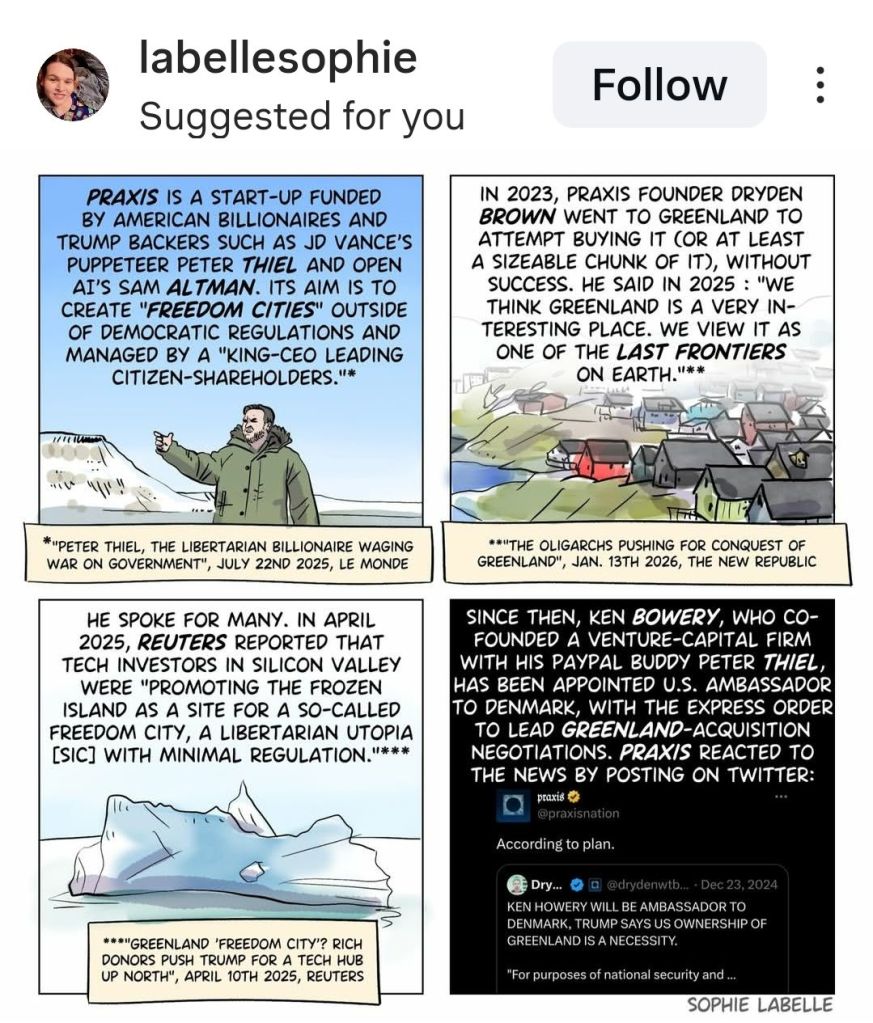
Praxis is a company founded by Dryden Brown and Charlie Callinan, with Howard Hughes Corporation founder David Weinreb as Vice Chairman. Praxis describes itself as an “internet-native nation”,[1] and has stated plans to create a 10,000 population city in the Mediterranean.[2][3] Brown has not determined the location of the city[2] and the company’s vision has been called unrealistic.[4]
Trump announces tariffs on NATO allies over Greenland response
Story by Isabella Murray, Ivan Pereira
• 9h
President Donald Trump said on Saturday that the NATO countries who have sent small contingents of troops to Greenland amid the White House’s push to acquire the island will be charged a 10% tariff on all goods sent to the United States starting on Feb. 1.
Sir Keir Starmer and European leaders united in condemnation of Donald Trump’s plan to apply tariffs on several NATO allies until a deal is reached for the US to acquire Greenland from Denmark
NewsPaige Ingram, Dave Clark Helen Corbett and Sam Hall and Press Association02:08, 18 Jan 2026Updated 02:10, 18 Jan 2026
The ultimate insult’: Trump downplaying NATO’s Afghanistan involvement causes distress in UK
More than 150,000 British troops served in Afghanistan in the years after the U.S.-led 2001 invasion, the largest contingent after the American one.
Relatives of British Army Private Douglas Halliday, of the 1st Battalion The Mercian Regiment, one of the seven British soldiers killed in Afghanistan, line a street as his coffin is driven through the town of Wootton Bassett, England, following repatriation, Tuesday, June 29, 2010. AP
The DEA Once Touted Body Cameras for Their “Enhanced Transparency.” Now the Agency Is Abandoning Them.
An internal email obtained by ProPublica said the agency made the change to be “consistent” with a Trump executive order. But at least two other federal law enforcement agencies are still requiring body cameras.
ProPublica is a nonprofit newsroom that investigates abuses of power. Sign up to receive our biggest stories as soon as they’re published.
The Drug Enforcement Administration has quietly ended its body camera program barely four years after it began, according to an internal email obtained by ProPublica.
On April 2, DEA headquarters emailed employees announcing that the program had been terminated effective the day before. The DEA has not publicly announced the policy change, but by early April, links to pages about body camera policies on the DEA’s website were broken.
The email said the agency made the change to be “consistent” with a Trump executive order rescinding the 2022 requirement that all federal law enforcement agents use body cameras.
But at least two other federal law enforcement agencies within the Justice Department — the U.S. Marshals Service and the Bureau of Alcohol, Tobacco, Firearms and Explosives — are still requiring body cameras, according to their spokespeople. The FBI referred questions about its body camera policy to the Justice Department, which declined to comment.
Renee Nicole Good calmly said everything was “fine” and “I’m not mad at you” seconds before an on-duty Immigration Customs Enforcement agent fatally shot her in Minneapolis as she drove away, according to a cellphone video shared on Friday by Donald Trump’s White House.
Four top prosecutors in the Justice Department’s Civil Rights Division resigned last night in protest. The chief, principal deputy chief, deputy chief, and acting deputy chief all walked out after Harmeet Dhillon refused to investigate the ICE agent who killed Renee Good. This is the same unit that prosecuted the officers who murdered George Floyd and Tyre Nichols. For decades, this office has been America’s last line of accountability when federal agents kill. Dhillon—who retweeted posts justifying Good’s killing before any investigation—has now made clear: there will be none. The FBI isn’t investigating Agent Jonathan Ross. They’re investigating Good—looking for ties to “activist groups.” The message to every federal agent is unmistakable: shoot first, the DOJ has your back. Minnesota prosecutors say they can’t file state charges without evidence the FBI is now hoarding. This isn’t a cover-up. It’s the end of civil rights enforcement.
Nev Shalev reports on Substack:
MASS RESIGNATIONS AT DOJ
Six federal prosecutors in Minnesota resigned today over the Justice Department’s handling of the Renee Good shooting, bringing the total to ten after four Civil Rights Division prosecutors walked out yesterday. The biggest name is Joseph Thompson, the acting U.S. Attorney for Minnesota and the prosecutor leading the sprawling fraud investigation Trump used to justify the Minneapolis crackdown. Thompson says the Justice Department demanded he open a criminal investigation into Becca Good, Renee’s widow, over her “activist ties” — and he refused. The DOJ also blocked cooperation with the Minnesota Bureau of Criminal Apprehension and refused to investigate whether the shooting itself was lawful. “What these ten prosecutors are saying by leaving their jobs is the DOJ is no longer going to protect the American citizen against anything ICE does,” Zev explained. “ICE can do whatever they want, and the DOJ is not going to be there to defend Americans. The rule of law no longer applies.”
And he adds:
SOMALIA TPS TERMINATED
The Department of Homeland Security announced the termination of Temporary Protected Status for Somalia, ordering 2,471 Somali nationals to leave by March 17. The announcement came with a Truth Social post featuring Trump’s face and the quote “I am the captain now” — appropriating a line from a Somali pirate in Captain Phillips. This targets the same Minneapolis community where Renee Good was killed, where 4,000 ICE agents are now deployed, and where checkpoints have been established across the city. “This is either designed to punish Minneapolis for daring to confront Trump, or it’s ethnic cleansing,” Zev observed. “Maybe both.”
14th Jan 2026:
On the one-week anniversary of Renee Good’s death, Governor Walz addressed Minnesotans as thousands of federal agents remain in the state.
Earlier this month, the U.S. Department of Homeland Security (DHS) sent thousands more agents to the Twin Cities for immigration enforcement and fraud investigations.
The governor alleged agents are going door-to-door to homes around the state and asking residents to point out where their non-white neighbors live.
“Just plain grabbing Minnesotans and shoving them into unmarked vans,” Walz said, adding that agents are “Kidnapping innocent people with no warning and no due process.”
“It’s a campaign of organized brutality against the people of Minnesota by our own federal government,” he said.
Walz also addressed President Trump’s remarks on social media that “the day of retribution and reckoning is coming” for Minnesotans.
“That is a direct threat against the people of this state, who dared to vote against him three times, and who continue to stand up for freedom with courage and empathy and profound grace,” Walz said.
Walz added that Trump wants chaos, confusion and violence on the streets of Minnesota, saying, “We cannot give him what he wants.”
The governor also reminded Minnesotans that it is their right to peacefully film ICE agents, encouraging residents to use their phones to film suspected federal law enforcement activity whenever safely able
Minneapolis — January 15, 2026 — A federal law-enforcement officer discharged his firearm Wednesday evening in north Minneapolis and struck a person who authorities were attempting to arrest. That much is confirmed by multiple local news outlets reporting directly from the scene.
Presently the only detailed account available is a lengthy statement issued by Department of Homeland Security. The statement is unusual in the amount of detail it offers, and in other ways as well. Here is the full DHS statement: Because the rather unusual “narrative control” DHS statement itself is now part of the story — not merely a source of isolated facts — we are reproducing it here in full so readers can see how the narrative is being defined before investigation. Following is the DHS statement:
At 6:50 PM CT, federal law enforcement officers were conducting a targeted traffic stop in Minneapolis of an illegal alien from Venezuela who was released into the country by Joe Biden in 2022.
In an attempt to evade arrest, the subject fled the scene in his vehicle and crashed into a parked car. The subject then fled on foot.
The law enforcement officer caught up to the subject on foot and attempted to apprehend him when the subject began to resist and violently assault the officer. While the subject and law enforcement were in a struggle on the ground, two subjects came out of a nearby apartment and also attacked the law enforcement officer with a snow shovel and broom handle.
As the officer was being ambushed and attacked by the two individuals, the original subject got loose and began striking the officer with a shovel or broom stick.
Fearing for his life and safety as he was being ambushed by three individuals, the officer fired defensive shots to defend his life. The initial subject was hit in the leg.
All three subjects ran back into the apartment and barricaded themselves inside.
The attacked officer and subject are both in the hospital. Both attackers are in custody.
This attack on another brave member of law enforcement took place while Minnesota’s top leaders, Governor Walz and Mayor Frey, are actively encouraging an organized resistance to ICE and federal law enforcement officers.
Their hateful rhetoric and resistance against men and women who are simply trying to do their jobs must end. Federal law enforcement officers are facing a 1,300% increase in assaults against them as they put their lives on the line to arrest criminals and lawbreakers.
No Independent Information Available
At this point, no independent body-camera footage, local police report, or civilian eyewitness account has been publicly released that verifies the detailed account offered by the Department of Homeland Security (DHS). Instead, the narrative circulating in most media reports draws almost entirely from the DHS statement issued shortly after the incident — a statement that goes far beyond what is independently established and aggressively frames what happened and why
And Terrence Goggin on Substack comments:
We are living through such an historic period of tumult and emerging warfare. It will have a name. “TRUMP’S WAR AGAINST THE STATES” is as good as any for that is what it has become. With that in mind, we should think about it in those historic terms.
It is a war; it has no precedent in American History, just as The Civil War had no precedent in American History. And we must look to heroes of our past who encountered similar difficulties. Abraham Lincoln quickly comes to mind. Speaking to Congress after a full year of war in December of 1862, with recruitment and financial difficulties abounding, he said:
“The occasion is piled high with difficulty and we must rise with the occasion. As out case is new, we must act and think anew. We must disenthrall ourselves, and then we shall save our country.”
It’s good advice. We better take it.
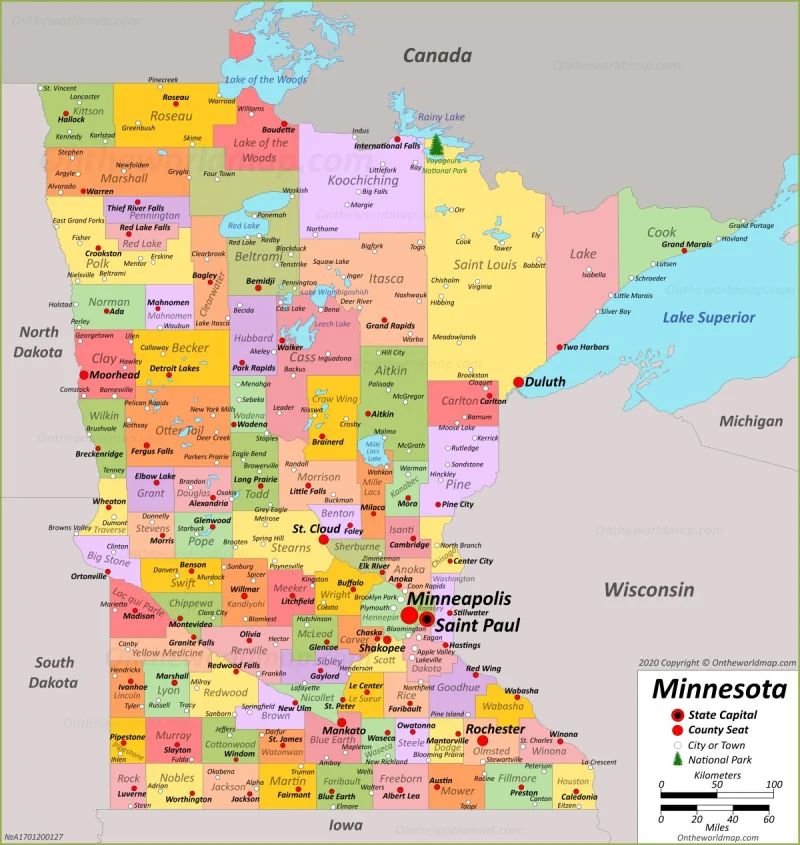
Map of Minneapolis:
22nd January, 2026
Court testimony shows that Jonathan Ross, the ICE agent identified as the shooter in the murder of Renee Good, was a veteran deportation officer, firearms instructor, and Special Response Team member who led multi-agency federal teams. Ross testified in December that he had participated in hundreds of vehicle encounters and was trained in use of force tactics, contradicting claims that the shooting resulted from inexperience or split-second error.
Why It Matters: That the ICE agent who murdered Renee Good was a veteran firearms instructor and response team member undercuts the regime’s claim that the shooting was an unavoidable error. When a highly trained federal officer fires into a moving vehicle (three times) despite longstanding policing norms against it, it reveals an escalation in ICE’s policies.Source:WIRED
And
Trump moved to cut funding for ICE body cameras and reduced oversight
Administration opposed efforts last year to expand use of cameras by immigration agents and cut oversight staffing
Cameras worn by officers have long been central to police reform efforts for this reason. The Trump administration, however, moved last year to slow-walk a pilot program to give Immigration and Customs Enforcement (ICE) officers body cameras, urging Congress in June to cut the funding by 75% and bucking a nationwide trend of cameras for law enforcement. Officials in 2025 also placed on paid leave nearly all staffers working for three internal watchdogs conducting oversight of immigration agencies, undermining their capacity to investigate abuses.
Darius Reeves, who was the director of ICE’s Baltimore field office until August, said a body-camera pilot program rollout had been slow in 2024 under the presidency of Joe Biden, a Democrat, and “died on the vine” under Trump, a Republican.
Sarah Ferguson is alleged to have stayed at apartments linked to Jeffrey Epstein several years after she publicly declared she had cut ties with the convicted paedophile. The former Duchess of York announced in 2011 that she had severed all contact with Epstein.
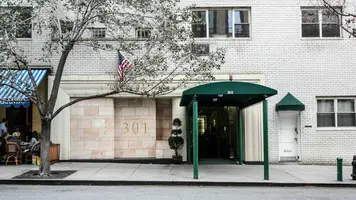
Sarah Ferguson used apartments in 301 66th Street.
301 East 66th Street
Condo located in Lenox Hill, between Second Avenue & First AvenueMap/Street View
Description of 301 East 66th Street
301 East 66th Street is an 18-story white-brick apartment building constructed in 1956, featuring 200 units that were converted to condo ownership in 1990. The building benefits from its strategic location adjacent to Manhattan House, whose substantial setback provides enhanced light and air exposure for residents.The property has undergone a comprehensive multi-million dollar renovation program while maintaining its classic mid-century attributes, including generously proportioned rooms characteristic of its era of construction. Building amenities include 24-hour doorman service, a live-in superintendent, furnished roof deck, and on-site garage. Many apartments feature balconies, and select units offer terraces with city views.Apartments typically showcase renovated interiors with modern finishes, including updated kitchens with stainless steel appliances and stone countertops, renovated bathrooms, and hardwood floors. Many units feature large windows, some with double exposures, and numerous apartments have been configured to accommodate in-unit washer/dryers. The building’s location between First and Second Avenues provides convenient access to multiple transportation options, including the 6 and Q trains, various bus routes, and the FDR Drive.
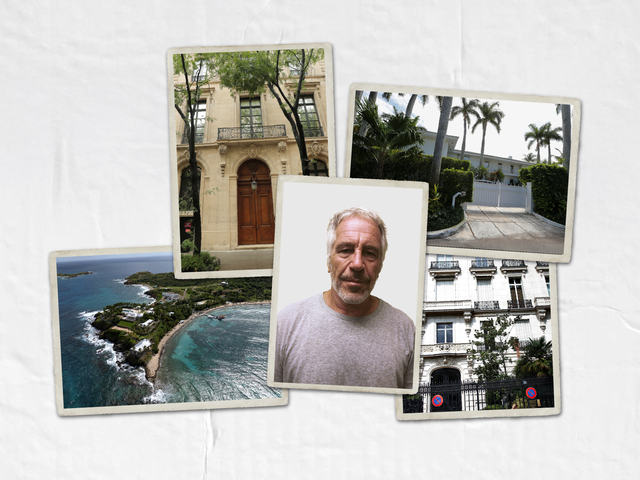
Disgraced financier and convicted sex offender Jeffrey Epstein used expensive properties in New York, South Florida, the Virgin Islands and Paris to coerce minor girls into sex, according to multiple court filings.
Epstein, who faced up to 45 years in prison, died by suicide in the Metropolitan Correctional Center in Lower Manhattan in 2019 while awaiting trial. His associate Ghislaine Maxwell was found guilty on five of six federal charges related to sex trafficking and conspiracy in December 2021. She was sentenced to 20 years in prison in June 2022.
Epstein’s properties included locations in Manhattan, Palm Beach and Paris, in addition to his own privately held islands among the Virgin Islands in the Caribbean. The Virgin Islands are a U.S. territory.
Charges filed in three locations
9 East 71st Street, New York: Epstein owned a seven-story, 21,000-square-foot townhouse on the Upper East Side of Manhattan, in which he entertained celebrities, politicians and others. He was charged with sexually exploiting and abusing minor girls at the townhouse and in Florida.
358 El Brillo Way, Palm Beach, Florida: After a two-year investigation by Palm Beach police and the FBI, Epstein pleaded guilty to two state charges of prostitution in June 2008 and served 13 months in prison. The guilty plea was part of a nonprosecution agreement that gave Epstein and coconspirators immunity from federal prosecution.
Little St. James Island and Great James Island (Virgin Islands): The Virgin Islands’ attorney general filed a civil action against the Epstein estate in January 2020 for a “practice of human trafficking, sexual abuse and forced labor of young women and female children” on the island. The suit was settled for $105 million in November 2022.
Allegations made, no criminal charges filed
22 Avenue Foch, Paris: Epstein owned a 2,600-square-foot luxury apartment at the building in the 16th arrondissement. French police searched the apartment in September 2019 after allegations that Epstein and others had trafficked underage girls for sex, according to the Guardian. Criminal charges were never filed.
301 East 66th St., New York: Epstein had girlfriends, associates and others stay in a 200-unit residential building owned by his brother Mark Epstein at East 66th St. Business activities were conducted there, but underage models also had apartments, according to Business Insider. Teresa Helm, one of Epstein’s accusers, said in a lawsuit that the 66th Street property was “where Epstein housed many of the models and young women he was abusing.” Criminal charges were never filed against Epstein.
5025 East Dublin Granville Rd. and 7558 King George Dr., New Albany, Ohio: Epstein owned two properties in New Albany, Ohio, and had a business relationship with billionaire Les Wexner, according to the Columbus Dispatch. Artist Maria Farmer said in an affidavit in April 2019 that Epstein and Maxwell molested her in the summer of 1996. No charges against Epstein were filed.
Zorro Ranch, Sante Fe County, New Mexico: Epstein’s 7,500-acre Zorro Ranch has been noted in several accusations of abuse. State authorities opened two investigations into the allegations, but criminal charges were never filed.
London: Metropolitan police dropped its investigation in October 2021 into accusations by Virginia Giuffre, who alleged abuse by Epstein, Maxwell and Prince Andrew in 2001. Police were investigating the accusation, in which Giuffre said she was sexually abused by Andrew at Maxwell’s house at 44 Kinnerton St., Belgravia, London. No charges were filed against Epstein or Maxwell.
Ellie Leonard, (‘The Panicked’ Substack) researching this aspect through scouring released Epstein emails and other material found:
301 East 66th would be used to house an unknown number of underage girls and their billionaire aggressors for many years, and the property is still owned by Mark Epstein to this day.
She is mainly pursuing the Les Wexner link in today’s findings. But this extract she found reveals the money grabbing, soulless actions of Jeffrey Epstein:
At one point Wexner put Epstein on as a trustee to the Wexner Family Foundation, replacing his own mother, Bella, who had been ill. When she surprised everyone and got better, she wanted her place back. Epstein sued the woman, and she died a few years later
On the subject of Real Estate, the history timeline of the aquiring and building of Trump Tower, Manhattan, is a fascinating read:
Extract:
1992: Journalist Wayne Barrett’s book
In 1992, journalist Wayne Barrett concluded in a book that Trump did business with mobbed-up concrete companies and met with Anthony Salerno.
And
2008: ICBC opens bank branch
From 2008, the Industrial and Commercial Bank of China (ICBC) operated a bank branch in Trump Tower.
And
2008: Qatar Airways rents space
Since at least 2008, Qatar Airways has rented commercial space in Trump Tower.
And
2012: ICBC rent
In 2012, Industrial and Commercial Bank of China (ICBC) paid $95.48 per square foot in rent.
And
2013: Condo prices decline
From 2013 to early 2024, the average per-square-foot cost of a condominium at Trump Tower nearly halved.
And
2014: Trump admits to working with mobbed up concrete guys
In 2014, Trump admitted that he had “no choice” but to work with “concrete guys who are mobbed up.”
And
2016: Building valuation drop
In 2016, Trump Tower’s value dropped from $630 million to $471 million due to reduced operating income and a decline in real estate value.
And
January 2017: 2020 campaign rent begins
From its launch in January 2017 until the end of 2018, the Donald Trump 2020 presidential campaign paid more than $890,000 in rent for its Trump Tower headquarters.
And
2017: Forbes estimates ICBC rent
Forbes estimated that Industrial and Commercial Bank of China (ICBC) paid about $3.9 million in rent in 2017 and 2018.
And
2017: Removal of unauthorized kiosks
In 2017, New York City ordered the removal of two unauthorized kiosks in Trump Tower that were selling Trump’s merchandise.
And
May 2019: Failure to meet carbon emission standards
In May 2019, it was reported that Trump Tower, along with seven other Trump buildings in New York City, failed to meet the city’s 2030 carbon emission standards, which were implemented as part of the city’s “Green New Deal”.
Valeria and Renee were both killed by immigration agents placing themselves in front of their cars to escalate the violence.
My hope is that America never forgets Renee Good. She was a mom, a college graduate, a poet, a wife, a daughter, a volunteer, a supporter of her community, a United States citizen. Only thirty-seven years young, her life was taken by ICE agent Jonathan Ross on January 7, 2026. She leaves behind three children, a wife, an ex-husband and countless others who loved her.
On the southern border, in San Diego, we cannot forget Valeria Tachiquin. She was a mom, a high school graduate, a wife, a daughter, a United States citizen. Only thirty-two years young, her life was taken by Border Patrol Agent Justin Tackett on September 28, 2012. She left behind five children, a husband, a father and countless others who loved her.
Within hours, before Renee’s body was cold, Department of Homeland Security set the narrative, “she was stalking agents all day long, impeding our law enforcement.” The President of the United States stated, “The woman screaming was, obviously, a professional agitator, and the woman driving the car was very disorderly, obstructing and resisting, who then violently, willfully, and viciously ran over the ICE officer, who seems to have shot her in self-defense.”
Within hours, before Valeria’s body was cold, then San Diego Border Patrol Chief Rodney Scott ran down to the scene, stood with her body laying in the street behind him to do an interview setting the narrative, “The agent actually was impacted, was hit by the vehicle and was carried several hundred yards on the hood before fearing for his life and did discharge his weapon to get the vehicle to stop.”
When Renee was killed, ICE claimed they were doing “targeted enforcement.” That is they were looking for specific people with criminal records. They have shown no proof of this claim.
When Valeria was killed, Border Patrol claimed they had a criminal arrest warrant. Years later in courtroom testimony, it was discovered that they lied.
We do not yet know what Agent Ross’ background is other than a claim made by Vice-President J.D. Vance that he suffers from trauma of being hit and dragged by a vehicle six months ago.
Border Patrol Agent Tackett was allowed to resign from the Imperial County Sheriff’s Office before being terminated. Then Imperial County Sheriff Chief Sharon Housouer, wrote that then Deputy Tackett could not be “trusted with a badge or a gun.” Yet, a recommendation letter from former Congressman Duncan Hunter got him a position with the U.S. Border Patrol.
In Renee’s killing, ICE whisked Agent Ross away from the scene. He will not have to speak with investigators for seventy-two hours as a common courtesy offered to officers involved in shootings.
In Valeria’s killing, Border Patrol whisked Agent Tackett away refusing to allow Chula Vista Police or any other investigators to interview him for seventy-two hours. Tackett spent this time coordinating his story with other agents and his union attorneys.
Agent Ross was reportedly taken to the hospital and labeled the victim though he had no injuries. Officials claim he was “rammed” and “run over” by Renee though evidence shows Ross placed himself in front of her vehicle as agents shouted a variety of contradictory orders at her. Placing oneself in front of a vehicle is a direct violation of training and policy. As a firearms instructor, Agent Ross is fully aware of this.
Agent Tackett was labeled the victim after putting ten bullets in Valeria’s body though he had injuries. Officials claimed Valeria “rammed” and tried to “run over” Agent Tackett although evidence showed he placed himself in front of her car to block her exit.
Valeria’s killing was why The Police Executive Research Forum (PERF) wrote a report in 2013 condemning federal immigration enforcement agencies for not training agents the forty year standard of not putting themselves in front of people’s cars as it causes violence to escalate.
Agent Ross and others were in civilian clothes and not in uniform. Agent Ross is only wearing a vest that with “POLICE Federal Agent” written on it without a badge visible. This vest and generic “POLICE Federal Agent” can be bought by anyone online.
Agent Tackett was also in civilian clothing and not in his Border Patrol uniform. In this official picture taken by the Border Patrol’s illegal coverup teams known as Critical Incident Teams, Tackett is shown with his badge clearly visible. However, court documents and even Tackett’s own testimony proved his badge was not visible and was in his pocket.
The contradictory orders to “get out of here” and “get out of the car” combined with Agent Ross drawing his gun and aiming at Renee caused fear as she tried to obey the order to leave.
Agent Tackett’s order to his partner, Border Patrol Agent Roozen to shatter her window created fear in Valeria causing her to try and escape.
Department of Homeland Security and ICE have refused to allow local and state investigators with legal jurisdiction to conduct investigations into Good’s homicide. Federal officials flat out refuse to cooperate and make witnesses and evidence available.
Department of Homeland Security and Border Patrol refused to allow local and state investigators with legal jurisdiction to conduct investigations into Valeria’s homicide. When former Chief Rodney Scott discovered his coverup team was unavailable that day, he ordered the San Diego Sector Intelligence Unit (many who were trained by the illegal coverup team) to act as the coverup team. They then proceeded to try and keep witnesses from the investigators.
Agent Tackett was transferred to another sector and continued on with his Border Patrol career. Agent Ross will likely continue on with his because these cover up systems still exist within ICE, CBP and the Border Patrol.
Former Chief Rodney Scott is now Commissioner of Customs and Border Protection (CBP). And although the illegal coverup teams were technically disbanded by former President Biden, he allowed the agents involved to resign and the teams were simply moved into CBP’s Office of professional Responsibility. Meaning, Commissioner Scott now runs the teams he used to use as a Border Patrol chief to coverup his agents crimes. Commissioner Scott and his Border Patrol agents have been placed in charge of ICE and CBP. What we are seeing is the Border Patrol-ification of all law enforcement.
The more things change, the more they stay the same.
To learn more about the teams and see more of my work, please watch HBO’s Critical Incident: Death at the Border. This film is currently streaming on HBO and Amazon Prime.
Borderland Talk with Jenn Budd is a reader-supported publication. Your paid subscriptions enable me to purchase the court records needed for this research. Thank you! To receive new posts and support my work, consider becoming a free or paid subscriber.
In addition to the above, I thought I would look for a link to the situation of the Southern Border Patrol under Obama, I found this:
The Obama administration was widely criticized for the “Fast and Furious” operation, in which U.S. federal agents allowed criminals to buy firearms with the intention of tracking them to criminal organizations. But the U.S. Bureau of Alcohol, Tobacco, Firearms and Explosives lost track of most of the guns, including two found at scene of Terry’s death.
On Tuesday, November 2, 2010, U.S. voters dramatically changed the landscape in Washington. Republicans gained control of the House and, although the Democrats retained control of the Senate their margin in that body has been reduced to 53-47. As this column is being written, just a few days after the election, what we have can best be described as a 535-piece puzzle with only the borders in place.
Clearly the most dramatic change will be in the House with new Republican committee and subcommittee chairs taking over. Traditionally, the committee ratios come close to mirroring the overall percentage of seats each party controls in that body. Based on the latest projections it appears that the Republicans will hold a 243 to 192 advantage or approximately 56 percent of the seats in the House.
The post-election period is critical as the jockeying for assignments to prime committees, and the selection of subcommittee chairs and ranking members, takes place within each party’s caucuses. Who fills these slots has a great bearing on what will take place in the next two years. There is some sentiment being expressed among Republicans in the House that committees have become unwieldy because of their size. Also, the number of subcommittees on key panels may be reduced. A Republican transition team is currently studying these issues and will be making reform recommendations to the leadership before the 112th Congress convenes in January.
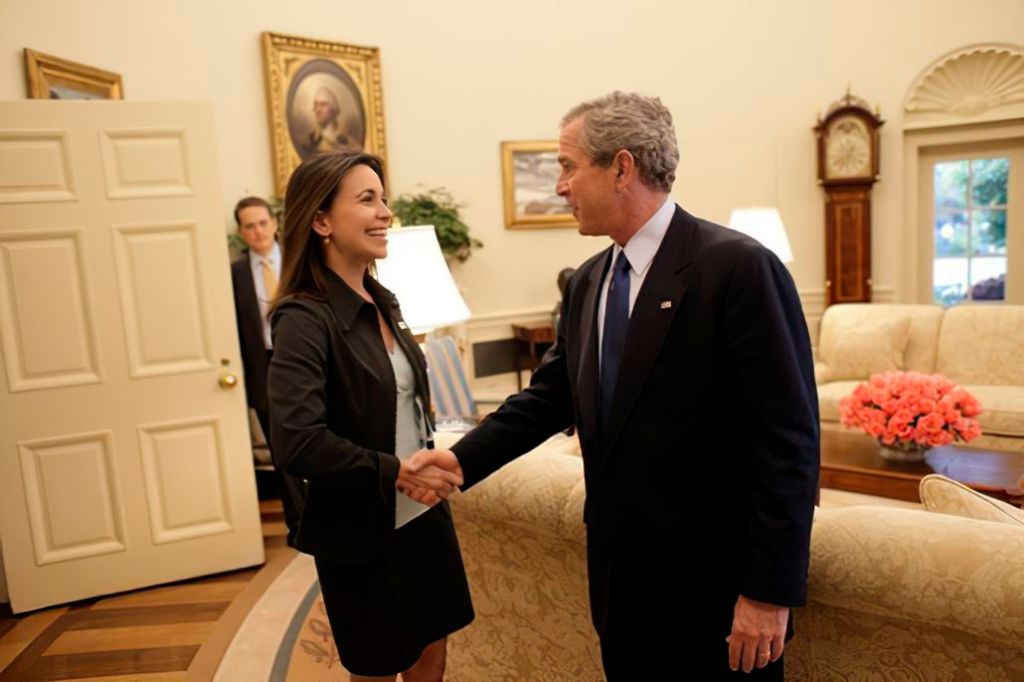
President George W. Bush welcomes María Corina Machado, the founder and executive director of Súmate, an “independent democratic civil society group” (directly funded by the U.S government) in Venezuela, to the Oval Office Tuesday
Years Exxon was extracting oil in Venezuela:
Regarding its relationship with Venezuela, ExxonMobil operated in the country from the 1940s until 2007, when the Venezuelan government, led by Hugo Chávez, nationalized the company’s assets. In 2014, an international tribunal ordered Venezuela to pay ExxonMobil $1.6 billion in compensation for the expropriation of its assets.
And reported elsewhere:
“The ICC only awarded Exxon ten per cent of what they wanted,” Chavez said recently. “You can make your own conclusions.”
Petroleos de Venezuela (PDVSA), the state oil company, said on January 2 it would pay Exxon Mobile $255m, after accounting for money frozen in a New York bank account and outstanding debts.
“Exxon has been granted the value of its [initial] investment, but not the value of the project today,” Chris Nelder, an independent energy analyst, told Al Jazeera. The company had demanded as much as $12bn, citing potential lost future profits and other concerns, after the nationalisation of its Venezuelan heavy oil assets in the Orinoco belt in 2007.
“This is a victory against a corporation that tried to abuse Venezuelan law,” said Eva Golinger, a lawyer and author of The Chavez Code: Cracking US Intervention in Venezuela. “The Venezuelan government had originally offered $1bn for the nationalisation and now they end up only having to pay $255m.”
President Donald J. Trump today accepted the Nobel Peace Prize in a small ceremony at the White House during the visit of Venezuelan opposition leader María Corina Machado. Machado, who received the same prize from the Norwegian Nobel Committee in Oslo last year, presented her medal to Trump as a sign of appreciation and shared commitment to democratic ideals and peace efforts abroad. Trump graciously accepted, and is now in possession of the prize.
Trump accepted the medal with warm words for Machado:
“I am deeply honored to receive this Nobel Peace Prize medal,” Trump said.
“María is a wonderful woman who has been through so much, and this is a truly great moment for freedom and peace.”
It seems appropriate right now to try to clarify one of the most basic questions America is (or should be) struggling with: What does it mean to be a human being?
The confusion is mounting.
Three illustrations:
1. Corporations
Corporations are not human beings. That should be self-evident.
But in 2010, the Supreme Court ruled (in its Citizens Unitedcase) that corporations are the equivalent of “people” under the First Amendment to the Constitution, with rights to free speech.
This ruling has made it nearly impossible for the government to restrict the flow of money from giant corporations into politics. As a result, the political voices — and First Amendment rights — of most real human beings in America are being effectively drowned out.
But in coming years, states will have an opportunity to circumvent Citizens United by redefining what a “corporation” is in the first place.
Absent state charters that empower them to become “corporations,” business organizations are nothing more than collections of contracts — between investors and managers, managers and employees, and consumers and sellers.
In the 1819 Supreme Court case Trustees of Dartmouth College v. Woodward, Chief Justice John Marshall established that:
“A corporation is an artificial being, invisible, intangible [that] possesses only those properties which the charter of its creation confers upon it …. The objects for which a corporation is created are universally such as the government wishes to promote.”
Montana is now readying a proposition for its 2026 ballot that would empower organizations that sought to be corporations there to do many things — except to fund elections. (I’ve written more on this, here.)
And
Corporate political spending was growing before Citizens United, but the decision opened the floodgates to the unlimited super PAC spending and undisclosed dark money we suffer from today.
Between 2008 and 2024, reported “independent” expenditures by outside groups exploded by more than 28-fold — from $144 million to $4.21 billion. Unreported money also skyrocketed, with dark money groups spending millions influencing the 2024 election.
Some pushback:
Jayapal’s bill to overturn Citizens United targets Musk’s ‘shadow presidency’
As billionaires like Elon Musk reshape American democracy, a new amendment seeks to reverse the Supreme Court ruling that allowed corporate money to dominate politics.
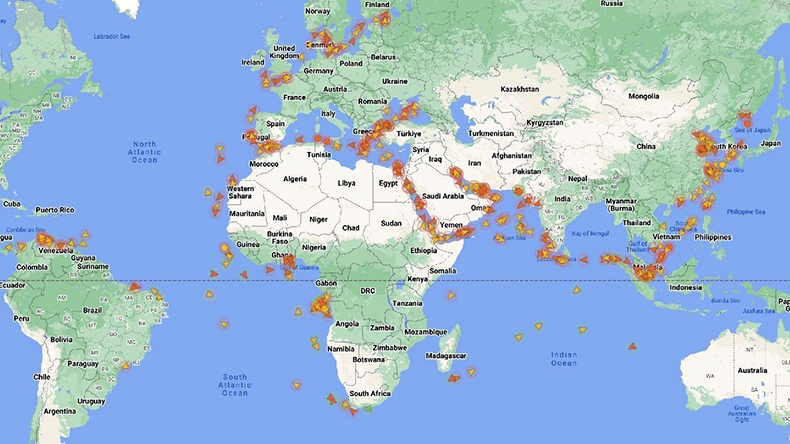
A shadow fleet, also referred to as a dark fleet, is a “ship or vessel that uses concealing tactics to smuggle sanctioned goods”. Shadow fleets are a direct response to international or unilateral economic sanctions Continued in Wikipedia
Shifty shades of grey: The different risk profiles of the dark fleet explained
Tankers no longer fit the catch-all definition of ‘dark fleet’ even if they share similarities and meet the established criteria
Silk Road, online black market known for providing a platform to buy and sell illegal drugs and for hosting other illicit activities. The site was founded by Ross Ulbricht in February 2011 and eventually shut down by law enforcement in 2013.
Ulbricht attempted to appeal, and in May 2017, the United States Court of Appeals for the Second Circuit denied his attempt. Also in 2017, Ulbricht appealed to the Supreme Court, with attorneys arguing that his case involves unresolved constitutional questions regarding the Fourth Amendment and the digital age. In June 2018, the court declined to hear Ross’s case.10
In late 2020, national media reported that former President Donald Trump was considering commuting Mr. Ulbricht’s sentence, but he did not at that time.11 Since Ulbricht’s incarceration, more than 570,000 have signed an online petition created by Lyn Ulbricht, Ross’ mother, to commute his double life sentence.12
On Jan. 21, 2025, President Donald Trump pardoned Ulbricht.13
Stephen Miller’s Dark Legacy: A Tale of Influence written by Jennifer Anderson September 14, 2025
Stephen Miller’s name has become synonymous with a polarizing era of policy-making during Donald Trump‘s presidency. Known for his hardline stances, particularly on immigration, Miller’s influence extended deep into the corridors of power. This article delves into the intricate fabric of Miller’s potent presence in the White House and the far-reaching effects of policies crafted under his guidance. Unveiling the dynamics of his “Reign of Terror,” both his admirers and adversaries provide a layered understanding of his political legacy.
Russia has accused Washington of violating maritime law after the US military seized a Russian-flagged, Venezuela-linked oil tanker in the Atlantic Ocean. The operation comes days after US forces abducted Venezuelan President Nicolas Maduro.
Russia had reportedly sent its navy to escort the tanker, which the US says violated sanctions. The US also says it has seized a second “stateless” oil tanker it accuses of operating as part of Venezuela’s “dark fleet”.
Why US seized Bella 1 and Sophia tankers and what it means for Venezuela
The United States has seized two oil tankers, the Bella 1 and the Sophia, in the North Atlantic and Caribbean for violating US sanctions against Venezuela
This undated handout photo released by the US European Command shows what it says is the seizure of the M/V Bella 1 oil tanker in the northern Atlantic Ocean | AFP
The United States’ European Command has seized two sanctioned Venezuela-linked oil tankers in the North Atlantic and the Caribbean, authorities said on Wednesday.
Secretary of Homeland Security Kristi Noem said that US forces have taken control of the tanker Sophia in the Caribbean. Earlier, US defence authorities announced they have seized the merchant vessel Bella 1 for violating US sanctions. According to Noem, both ships were either last docked in Venezuela or en route to it.
Ukrainians were the first to intercept the Russian tankers.
Ukraine Hit Russian Shadow Fleet Tankers, Undermining Moscow’s Sanctions-Evasion Fleet
ByDavid Kirichenko,Contributor. David Kirichenko is a journalist focusing on war and technology.Follow Author
Nov 30, 2025, 09:57pm ESTNov 30, 2025, 11:58pm EST
Ukrainian Sea Baby naval drones struck two Russian oil tankers operating in international waters off Turkey’s Black Sea coast on November 28, marking a significant expansion of Kyiv’s maritime drone campaign targeting the Kremlin’s oil revenue.
Venezuela live updates: Rubio says Venezuela is cooperating on oil seized from tanker
Some sanctions against Venezuela will be lifted.
7:25
US seizes Russian-flagged oil tanker in North Atlantic and 2nd tankerABC News’ Luis Martinez and contributor Steve Hill discuss the operations in the North Atlantic and Caribbean Sea.
Deposed Venezuelan President Nicolás Maduro and his wife appeared in a federal court in New York City on Monday, following their capture by U.S. forces over the weekend in a military operation in the Venezuelan capital of Caracas.
Following the operation, President Donald Trump said that the U.S. would “run” Venezuela for an unspecified “period of time.”
Venezuelan Vice President Delcy Rodriguez has been sworn in as interim leader to lead the country after what the Venezuelan Supreme Court described as Maduro’s “kidnapping.”
Extract from Ellie Leonard’s ‘Panicked’ Substack, as she continues to work through recently released Epstein related material:
1/10/2015 4:02 PM – 6:42 PM
The following email conversation, dated 1/10 – 1/11, was forwarded by Ghislaine Maxwell to Jeffrey Epstein.
GM: I am out of my depth to understanding defamation and other local hazards and don’t want to end up in a law suit aimed at me from anyone if I can help it. Apparently even saying [REDACTED but assumed is Virginia Giuffre] is a lier has hazard! I have never been in a suit criminal or civil and want it to stay that way. The U.S. lawyers for the Jane Does are filling additional discovery motions and if I speak I open my self to being part of discovery apparently. I am trying to stay out of litigation and not have to employ lawyers for years as I get lost in US legal nightmare. I stand no legal risk currently on these old charges and civil suits against Jeffrey We need to consult with US lawyers on any statement I make and the complaints too Perhaps we make a statement of the legal risk of saying anything for potential defamation or something that prevents a full and frank detailed rebuttal + the press not being the place for that? Regardless, Philip plse call Jeffrey lawyer and see what you can understand from him and pehaps craft something in conjunction with him? Either way I think you need to speak to him to understand my risk so you can help me understand it – too may cooks in the kitchen and I can’t make good decisions. Plse reach out to him today + I have already suffered such a terrible and painful loss over the last few days that I can’t even see what life after press he’ll even looks like – statements that don’t address all just lead to more questions..what is my relationship to Clinton ? Andrew on and on. Let’s rest till Monday. I need head space.
Philip Barden, Attorney: All I am back on line now. I see the statement didn’t go. Monday? Maybe tomorrow? I will speak to Jeffrey Epstein’s lawyer but JE has a conflict with you and will want your silence as whilst you are being attacked there is less heat on him. Either [REDACTED but assumed is Virginia Giuffre] IS LYING OR NOT. If we let her lie without challenge then the lies become the reality and that may lead you to facing investigation. These are serious allegations and In the UK prosecuting people who face allegations of sex abuse is now common place and a lot of resources are focused on this. We can’t sit back and let you be a conspirator by silence. Your are not guilty and must follow Dershowtiz line. He is a leading lawyer and he hasn’t followed the don’t say anything for fear of litigation. He has rightly called [REDACTED] bluff and shouted his innocence. You have to stand up and deny the allegations or be branded guilty by association and that may lead to other investigations and worse. I feel I am going around in circles. I know what is right to do and that is to shout your innocence. Try and get some rest. Call me tomorrow if you want anytime. Speak to Deshowitz. Don’t allay yourself to JE as that is not the way to go. Best Philip
Ross Gow, PR: Had Geordie on the phone half a dozen times today. He would have give us a better hearing than most I figure. Strongly believe saying nothing is the wrong thing – especially as Dershowitz has a big piece coming in The Times on Monday. Rest up and speak Monday. Best Ross
1/11/2015 5:27 AM
Philip Barden, Attorney: Saying nothing is reputational suicide. Even if [REDACTED] is discredited by [REDACTED] people will know JE paid her off and believe G was complicate absent and credible denial. Now it is reported that G engaged in direct abuse – as I feared would happen. Next reports to the authorities will be made. It is necessary from a litigation, investigatory and reputational reason to issue a cogent denial. I can see why JE doesn’t want this as it may not suit him but he is already toast.
1/21/2015 12:01 PM
The following is a statement written by Jeffrey Epstein for Ghislaine Maxwell, as noted in the second-to-last sentence, where he incorrectly says “you” instead of “I.”
JE: ”Since JE was charged in 2007 for solicitation of a prostitute I have been the target of outright lies, innuendo, slander, defamation and salacious gossip and harassment; headlines made up of quotes I have never given, statements I have never made, trips with people to places I have never been, holidays with people I have never met, false allegations of impropriety and offensive behavior that I abhor and have never been party to, witness to events that I have never seen, living off trust funds that i have never ever had, party to stories that have changed materially both in time and place and event depending on what paper you read, and the list goes on.
I have never been a party to any criminal action pertaining to JE
For the record: At the time of Jeffrey’s plea I was in a very long-term committed relationship with another man and no longer working with Jeffrey. Whilst I remained on friendly terms with him up until is plea, , I have had limited contact since
Every story in the press innuendo and comment has been taken from civil depositions against JE, which were settled many years ago. None of the depositions were ever subject to cross examination , not one. any standard of truth and were used for those who claimed they were victims to receive financial payment to be shared between them and their lawyers. One firm created and sold fake cases against Mr. Epstein — the firm subsequently imploded and the Rothstein, the owner of the firm was sent to jail for 50 years for his crime. The lawyer who is currently representing Virginia was his partner. need I say morel
These so called ‘new revelations’ stem from an alleged diary from VR that reads like the memoirs she is purporting to be selling. Also perhaps pertinent – in a previous complaint against others, her claims were rejected by police “due to.. VR ..lack of credibility
The new interest in this old settled case results from lawyers representing some of JE victims filed a suit against the US government not JE . They contend that the Us govt violated their rights.
The document and deal that JE negotiated with the government was given to the lawyers 6 years ago and is a public document.
I am not part of, nor did you have anything to do with, JE plea bargain.
I have never seen the proceedings nor any of the depositions.”
1/24/2015 1:22 PM
GM: I would appreciate it if shelley would come out and say she was your g’friend – I think she was from end 99 to 2002
2009 Rothstein ‘scandal’:
Rothstein, Epstein scandals converge with sex offender claiming he was used in swindle
Virginia Roberts Giuffre, seen here at a 2019 press conference after the suicide of Jeffrey Epstein has been the most vocal and litigious of all of Epstein’s alleged victims.AP
Why become a lawyer? ‘My uncle who lived in the Australian outback advised that I should get a professional qualification, just in case I did not make it in my punk band or as a footballer. How wise he was.’
Career high: ‘Representing Dennis Hutchings and many other military veterans who secured the peace in Northern Ireland and now suffer never-ending investigations and threats of prosecution. I hope this will be brought to an end by the passing of the Troubles Bill.’
Conman, convict, paedophile and a life terminated in circumstances of purported suicide. The list for Jeffrey E. Epstein, figure of cosmic social and political influence in the United States, is long. Trafficking in female flesh for his extensive client list, lubricated by his lover Ghislaine Maxwell, tends to be the crowning feature of most discussions about his sordid legacy. Another shrouded aspect has been neglected.
=========================
Of interest here is the correspondence between Epstein and Harvard law professor Alan M. Dershowitz, himself a devoted apologist for Israeli causes. During the first week of April 2006 Dershowitz, who also acted for Epstein in criminal matters, passed on several drafts of his article “Debunking the Newest – and Oldest – Jewish Conspiracy” to the financier. That tatty, travesty of a piece accused Walt and Mearsheimer of putting together “little more than a compilation of old, false, and authoritatively discredited charges dressed up in academic garb”, incarnating in modern form the conspiratorial tract The Protocols of the Elders of Zion.
After Epstein’s warm congratulations for the libellous effort, the question of how best to distribute the piece comes to the fore. To a query from Dershowitz’s email address sent by an assistant regarding progress on the matter, Epstein replies: “yes I’ve started.” Here, the vital entrails of the Lobby become clear: Epstein’s relationship with Harvard (donor of sums over $9 million between 1998 and 2008); Epstein as trustee and president of the family financial office of retail mogul and philanthropist Leslie Wexner, himself a donor of almost $20 million to the Kennedy School between 2000 and 2006 via a foundation bearing his name and responsible for a scholar program for visiting Israeli government officials to study a one-year Master’s degree.
Because while you’re being pulled into that distraction, behind the scenes the real work is happening — the scrubbing, the burying, the cover-up. The real crime isn’t what’s being talked about on TV. The real crime is what they don’t want you looking at: the Epstein files.
After speaking with several of my sources, I can tell you this plainly: Stephen Miller and the Project 2025 leadership are in full damage-control mode. The push right now is to shift the narrative at all costs — away from the Epstein files, away from accountability, and away from what is being scrubbed and buried behind closed doors. That is why you’re seeing coordinated theatrics not just in Venezuela, but escalating threats and noise around Cuba, Greenland, Canada, and beyond. This is not coincidence. It’s a flood-the-zone strategy — overwhelm the media, fracture attention, and keep the public chasing new crises while the real cover-up continues. My sources are clear: the urgency inside Trump’s orbit isn’t about policy or security — it’s about distraction, because the Epstein files are the one thing they cannot survive if fully exposed.
And while the world argues, while Americans are divided, while families, parties, and institutions are torn apart, Trump keeps moving. That division is not a side effect. It’s the strategy.
Which brings me to the most important point in this letter.
The most powerful weapon we have right now is the Epstein files.














![Government supporters participate in a women's march toward the office of interim President Delcy Rodriguez, January 6, 2026. [Leonardo Fernandez Viloria/Reuters]](https://www.aljazeera.com/wp-content/uploads/2026/01/2026-01-07T071240Z_2084582686_RC2VVIAIT38S_RTRMADP_3_USA-VENEZUELA-MARCH-1767795284.jpg?resize=730%2C410&quality=80)






You must be logged in to post a comment.