New World, New Food and Concepts of Western Supremacy

Cacique (tribe leader) – perhaps how the Taíno leader may have looked when meeting Columbus.See epicworldhistory

In 1492 the indigenous people who lived in the Caribbean and Florida were Taíno, a tribe of the Arawak Indians. At the time of European contact in the late 15th century, they were the principal inhabitants of most of Cuba, Jamaica, Hispaniola (the Dominican Republic and Haiti), and Puerto Rico.

(See also:

https://www.britannica.com/place/Curacao

Curacao, after the Spanish left, the Dutch East India company cleared and sold the Arawak indigenous people into slavery. Curacao still belongs to the Netherlands)

Unknown to the Taíno, 3 little ships would sail from over the nearby ocean from Spain and their lives would be cataclysmically impacted forever.

Indigenous people around the world who had not yet met explorers from Europe, had independently developed their communities over centuries. They had not heard of Christianity, especially in its fearsome form as was delivered to them by the Europeans. The Arawak/Taino were polytheists and their gods were called ZEMI. The zemi controlled various functions of the universe, very much like Greek gods did, or like later Haitian Voodoo lwa. However, they do not seem to have had particular personalities like the Greek and Haitian gods/spirits do.

Women served bread (a communion rite), first to zemi, then to their leader or cacique, followed by the other people. The sacred bread was a powerful protector. This was amazingly the one and only similarity with the Catholic practice of communion.

Cacique refers to an individual political headman, chief, or local lord, almost always male, while cacicazgo (kasee-KAZ-go) refers the political and social institution of rule by caciques. Most indigenous polities encountered by the Spanish in their explorations and conquests were governed by caciques. See http://epicworldhistory.blogspot.co.uk/2012/07/caciques-in-latin-america.html

A Genoese citizen, Christopher Columbus (who now researchers think may have been concealing he was a Jew to the Spanish monarchy, knowing Jews were persecuted by the Spanish) was funded by the King and Queen of Spain to find Asia, which he convinced them he would find. Along with many other educated men, he believed the earth was round and was confident in his own maps and calculations. He set off on August 3 1492. King Ferdinand and Queen Isabella, after the success of the Spanish conquest of the Moorish kingdom of Granada in January 1492, felt flush with victory, and agreed to support his voyage. They were also influenced by a noble and friar, Juan Pérez, who was keen to spread the Christian beliefs of the Roman Church.

The Roman Church dominated the western world between 590 and 1517. It controlled religion, philosophy, morals, politics, art and education. Many commentators have said this was the dark ages for true Christianity.

Columbus took three small ships, the Santa Maria, the Pinta, and the Nina. He set sail on August 3 1492.

Thinking he had found China, he went ashore actually at Watling Island, in the Bahamas on October 12th 1492. In December he sailed to Hispaniola (since named by the French as Haiti). Columbus thought it was Japan.

The Taíno tribe who met these visitors, no doubt with great wonderment and humility, certainly not with aggression, did not share the European language of course. They were unaware their visitors considered them ignorant heathens.

Their language was an Arawak variation. But nobody tried to learn it, and instead many were transported, along with gold, spices, food stuffs, as property, gifts to the monarchs of Spain.

The Arawak diet was totally new to their visitors, their local fish and wild fowl (turkey) added to regional crops included cacao (chocolate), maize, potato, squash, tomato, capsicum, peppers, cassava, pumpkins, and groundnuts (peanuts). Tropical fruits enhanced the native diet, such as pineapple, avocado, guava, and papaya. Most of these foods were new and unfamiliar to Columbus and his crew. The diet was enjoyed by the Europeans, but some found it harmful to their unaccustomed digestive system and those sailors died.

On consequent voyages, Columbus thoughtfully brought foods from Spain which were mixed with those of the New World and his crew adapted well without further problems. His second voyage carried wheat bread, as well as radishes, chickpeas, and melons. Livestock came from Europe, including horses, cattle, pigs, sheep, goats, and chickens.

In 1493 Columbus took sugar cane plants to grow in the Caribbean as the climate there was particularly suited to growth and that act is the origin of the sugar cane industry.

This same year Columbus was accompanied by his influential friend and friar Juan Pérez. Pérez is said to have celebrated the first Mass in the New World at Point Conception on 8 December 1493, in a temporary structure; that this was the first church in America; and that Pérez preserved the Blessed Sacrament there. He also became the guardian of the first friary which Columbus ordered to be erected in Santo Domingo.

Over time, new crops were introduced to the Americas, including wheat, rice, barley, oats, coffee, sugar cane, citrus fruits, melons and Kentucky bluegrass. The introduction of wheat was of particular significance. For thousands of years, bread had been a central part of the European diet. Wheat was not indigenous to the Americas, where maize was the native grain. In the first few decades of colonization, European settlers imported goods like bread, wine, olive oil and certain meats. Over time, wheat and other European foodstuffs were cultivated and grown in the Americas.

In Hispaniola, the first settlement in the New World, the native foods of the Taíno tribe became an important source of sustenance for Columbus as he and his men ventured further.

Columbus led a total of four expeditions to the New World, discovering various Caribbean islands, the Gulf of Mexico, and the South and Central American mainlands. He died in 1506, not realizing the significance of his finding the New World. His goal was to find Asia, and he died not knowing of the Pacific Ocean from where he would have found Asia.

As Europeans opened up the New World for others to follow, so did disease arrive, such as smallpox, to kill high numbers of indigenous people. But modern methods and new approaches are providing a clearer perspective on the nature and experiences of the indigenous people who lived in the Americas before Columbus arrived. I will write about this when I come back to the Columbus story and the sharing of more modern methods of analysis

By 1548, the Taíno population had declined to fewer than 500 from several millions. Some historians speak of the appalling genocide of the Taíno (see https://abagond.wordpress.com/2013/09/20/the-taino-genocide/) thanks to Columbus. This is grim reading.

Whilst we can certainly admire the dogged determination of Columbus and his teams of explorers, something so momentous happened when these lands became known to Europeans. And it hasn’t all been good.

Posted in anthropocene | Tagged , , , , , , , , , , , , , | 1 Comment

The media smothers the truth, that is its function


The Arawak Indians of South America. Once Christopher Colombus arrived with his men, the Arawak were no longer guardians of their territory.  This is when greed destroyed the peace and tranquility of this part of the world forever.

Posted in anthropocene | Leave a comment

Walls as symbols of control, even if there is none.

Hadrian’s Wall

Iain MacIvor, former Chief Inspector of Ancient Monuments for Historic Scotland, said:

The first military works to divide north from south Britain were made by the Romans, and for a long time there was a fanciful link between the famous wall from the Tyne to the Solway [Hadrian’s Wall] and the border between Scotland and England. The Scots were to find a lasting source of national pride in the notion that, whereas the southern parts of Brittania had been taken over without much difficulty by the mighty Roman army, their own ancestors had held out against the Roman Empire for centuries , and that this undaunted resistance forced the Romans to builds one word the wonders of Europe to protect their province of Britannia – Hadrian’s Wall. 

Around A.D. 79 the tribes causing most concern to the Roman army were the Votadini in the east with their capital Traprain Law in Lothian; the Novantae in the south-west (Dumfries and Galloway); and between them the Selgovae, dominating from Eskdale to the Cheviot Hills.

Beyond these three tribes were the Damnonii, around the Firth of Clyde. Those even further north, in the mountainous Highlands were collectively named by the Romans as Caledonii by the Roman historian Tacitus.

It was not economical for the Romans to pursue the Caledonians, though they tried from A.D 70 for a decade. There was also another effort to use a wall in A.D 142, which is known as the Antonine Wall which was a turf fortification connecting the Central Belt of Scotland, from the Firth of Forth to the Firth of Clyde. The Romans abandoned this wall in A.D 162, returning to the Hadrian Wall fortification.

In A.D 208 Emperor Septimus Severus had repairs carried out to Hadrian’s Wall, from this point it was renamed by some the Severan Wall. He re-established legions there.

The Romans may have left their mark through Christianity and education, but never subdued the Caledonians. Britain was free of the Roman Occupation by A.D 410. 

What the Romans learned over centuries was, rather than fight and annihilate, it made sense to form alliances with native rulers who were willing either to fight alongside them or at least provide logistical support. This tactic remains with us in modern global warfare as ‘coalition’ is a common term cropping up again and again in military language.

But alliances only occur if the military rules with superior skill. There were many historical examples in Scotland where battles were fought under one insignia emblazoned on the chest garment, but underneath was the insignia of the ‘enemy’ which could become ‘friend’ if alliances were switched due to who was winning the battle. Or a brother could fight with the English King, and his sibling fight with the Scottish King. The outcome would leave the family close to the winning King.

This is another recurring pattern which we witness in the 21st century in wars around the world.

Another conquering tactic was described by the historian Tacitus:

‘He [Agricola] wanted to accustom them [the Britons] to peace and leisure by providing delightful distractions. He gave personal encouragement and assistance to the building of temples, piazzas and town-houses, he gave the sons of the aristocracy a liberal education, they became eager to speak Latin effectively and the toga was everywhere to be seen.’

When native aristocrats adopted a Roman lifestyle , the rulers of the empire were delighted.

‘And so they were gradually led into the demoralising vices of porticoes, baths and grand dinner parties. The naïve Britons described these things as ‘civilisation’, when in fact they were simply part of their enslavement.’

To become a Roman citizen, Place of residence, language, religion, parentage – did not matter. But If you had standing in your own community and supported the Roman occupation, you would be groomed to become part of a dynasty of pro-Roman ‘client-kings’ . These were puppet rulers who referred all important decisions, especially regarding foreign policy, to Rome. 

This model of a superior ruling power grooming a replacement ‘puppet’ ruler has long been the strategy adopted by centuries of powerful military rulers.

Further down the hierarchy, influential merchants within the empire were eager to become Roman citizens – and there are plenty of archaeological discoveries which prove the process of striving and gaining such citizenship. Then a network of thriving merchants trade and develop their local community, under the secure umbrella of the Roman Empire.

History reveals military conquest and comings and goings of empires over the short existence of humans on this planet. The integration of military and trade partnerships has ensured each period of empire lasts until some event occurs which helps dismantle it. 

Nothing lasts for ever, certainly not empires.

Posted in anthropocene | Tagged , , , , , | Leave a comment

Adam Smith: Part XII

George Wade – an example of a loyal military man, wholly anti Catholic, particularly anti Jacobite. When Wade was commissioned the British monarch was Protestant Dutch William and Mary (of Orange). 

You get a feel for the kind of military experience a dedicated soldier would be proud of to climb the ranks as Wade did. It is apparent how appreciated he was in a climate of Protestant fever of superiority with a belief ‘God was on their side’.

Wade’s family were ‘Williamites’ who mostly lived in the north of Ireland but Wade’s family must have fled Ireland to England, since they lived in a predominantly Catholic area.

1690 He was commissioned into the Earl of Bath’s Regiment.

1692 served in Flanders, Battle of Steenkerke (during the Nine Years War)

1693 promoted to lieutenant

1694 Transferred to Sir Bevil Granville’s Regiment

1695 Promoted to Captain

1702 During the War of the Spanish Succession he first served under Marlborough, seeing action in Flanders at the Battle of Kaiserwerth in April 1702, the Battle of Venlo in September 1702, the Battle of Roermond in October 1702 and Battle of Liège also in October 1702. 

1703 He was promoted to major on 20 March 1703 and to lieutenant colonel in October 1703.

1704 he joined the staff of Henri de Massue, Earl of Galway as adjutant-general in Portugal, and distinguished himself as colonel of the Huntingdon’s Regiment during the Battle of Alcántara during which he was wounded in April 1706.

1707 He repelled a large force of cavalry at Vila Nova and then commanded the 3rd infantry brigade during the Battle of Almansa in April 1707.

1708 – 1714 He won promotion to brigadier general on 1 January 1708. He served as second-in-command to James Stanhope in Minorca in 1708, leading one of the storming parties on Fort St. Philip, before returning to Spain in 1710, where he fought at the Battle of Saragossa in August 1710. He was promoted to major-general on 3 October 1714 and became commander of the British forces in Ireland in November 1714.

1715 Wade returned home to join in the suppression of the Jacobite rising of 1715 and undertook security duties in Bath, where he unearthed a haul of Jacobite weapons. He entered politics as MP for Hindon in 1715. On 19 March 1717 he became colonel of the Earl of Plymouth’s Regiment of Horse.

1719 he served as second in command to Viscount Cobham during the War of the Quadruple Alliance when Cobham led a force of 4,000 troops on a raid on the Spanish coastline which captured Vigo and occupied it for ten days before withdrawing.

He became MP for Bath in 1722, retaining the seat for 25 years. His house there is now a Grade I listed building.

By now Wade (born 1690) was 32 years of age and Adam Smith was being born in Kircaldy, his father having died before he was born. Smith’s mother’s family were military people and they helped support Adam as he grew up.

Scotland

1724 The government of George I sent Wade to inspect Scotland . He recommended the construction of barracks, bridges and proper roads to assist in the control of the country. 

1725 he was appointed Commander in Chief of His Majesty’s forces, castles, forts and barracks in North Britain, tasked with carrying out his own recommendations. Over the next twelve years Wade directed the construction of some 240 miles (390 km) of roads, plus 30 bridges (including the Tay Bridge at Aberfeldy). General Wade’s military roads linked the garrisons at Ruthven, Fort George, Fort Augustus, and Fort William. This was the route (via boat up the linking lochs, which Columba had used to bring Christianity to the Picts in Northern Scotland).

The Military Roads were built to allow Government forces to deploy rapidly to key locations in the Highlands if there was a Jacobite uprising. More than 250 miles of these roads were built under the command of General Wade linking forts in the Great Glen between Fort William and Inverness and with the road network in the south of Scotland at Dunkeld and Crieff.

Wade also organised a militia named “Highland Watches”, calling on members of the landed gentry to sign up and raising the first six companies in 1725 (three of Campbellsand one each of Frasers, Grants, and Munros). Also in 1725, Wade put down an insurrection after the Government attempted to extend the “Malt tax” to Scotland and enraged citizens in Glasgow drove out the military and destroyed the home of their representative in parliament. He was promoted to lieutenant general on 15 April 1727.

1732 he became Governor of Berwick upon Tweed and on 19 June 1733 he became Governor of Fort William, Fort George and Fort Augustus. He was promoted to general of horse on 17 July 1739.

He raised four more “Highland Watch” companies in 1739; these were subsequently reorganized as the Black Watchregiment. He still had the time to sign his support to the Foundling Hospital which was established in 1739 in London.

1742 he was appointed Lieutenant-General of the Ordnance and on 24 June 1742 he was appointed a member of the Privy Council.

War of the Austrian Succession (see Part XI)

1743 he became a field marshal with his appointment to the joint command of the Anglo-Austrian force in Flanders against the French in the War of the Austrian Succession. Wade organised an advance towards Lille in July 1744 but the action became stalled in the face of logistical problems.He resigned from his command in March 1745, returning home to become Commander-in-Chief of the Forces.

Jacobite Rising

In October 1745 during the Jacobite rising Wade concentrated his troops in Newcastle upon Tyne on the east coast of England; however, the Jacobite forces advanced from Scotland down the west coast of England via Carlisle into Lancashire and the speed of their advance left Wade scrambling. In freezing conditions and with his men starving, he failed to counter their march into England or their subsequent retreat back from Derby to Scotland; Wade was replaced as Commander-in-Chief by Prince William, Duke of Cumberland who led the army to success at the Battle of Culloden in April 1746.

It was because of the difficulties Wade encountered marching his troops cross-country from Newcastle to Carlisle, that he built his Military Road west of Newcastle in 1746, entailing much destruction of Hadrian’s Wall. Wade helped plan the road, but had died before construction began in 1751. His Military Road is still in use today as the B6318; it should not be confused with the Military Way built by the Romans immediately south of Hadrian’s Wall.

Wade received mention in a verse sung as part of God Save the King around 1745:

Lord, grant that Marshal Wade
, 

May by thy mighty aid,
Victory bring.

May he sedition hush

And, like a torrent, rush

Rebellious Scots to crush.

God save the King.

3 years after the verse was written, on 14 March 1748 Wade died, unmarried. This verse gradually faded from use after his death. 

He is buried at Westminster Abbey where his life is recognised by a monument created by Louis-François Roubiliac.

Adam Smith was 35 when Wade died. Among other military achievements, Wade and his strategic road building finally symbolised victory over the Jacobites by the Protestant Monarchy. Wade had left his mark on Scotland by then. Adam Smith would be aware of the military roads north of the Central Belt, but there is no evidence he ever used those roads, rather turning south, out of Scotland more often than not. No doubt his upbringing would reinforce pride in men like Wade, he was unlikely to harbour romantic notions of Bonnie Prince Charlie.

Posted in anthropocene | Tagged , , , , , , , , , , , , , , , | Leave a comment

Adam Smith: Part XI

When Adam Smith was 17, Britain was at war against Spain, ostensibly due to an old grievance of a Captain Robert Jenkins. His merchant ship was boarded by Spanish coast guards and Jenkins had his ear sliced off by one of the coast guards.
Great Britain against Spain

December 1740 to 11th June 1742

This incident was used to justify war, but really it was about improving trade conditions coercing the Spanish to pressure Spain not to renege on the lucrative asiento contract, which gave British slavers permission to sell slaves in Spanish America.

Great Britain were again at war with France 

Summer 1745 to 16th April 1746

Jacobite Uprising (The Forty-Five)

Great Britain against Jacobites, France

July 1746 to 24th April 1748

French and Indian War (Became Part of the Seven Years War)

Great Britain against France

Summer 1756 to 10th February 1763

CARNATIC WARS

Great Britain against France, Mughal Empire (The Mughal empire extended over large parts of the Indian subcontinent and Afghanistan. The empire was the second largest to have existed in the Indian subcontinent, spanning 4 million square kilometres at its zenith, after the Maurya Empire, which spanned 5 million square kilometres.)  

The conflicts involved numerous nominally independent rulers and their vassals, struggles for succession and territory, and included a diplomatic and military struggle between the French East India Company and the British East India Company. They were mainly fought on the territories in India which were dominated by the Nizam of Hyderabad up to the Godavari delta. As a result of these military contests, the British East India Company established its dominance among the European trading companies within India. The French company was pushed to a corner and was confined primarily to Pondichéry. The East India company’s dominance eventually led to control by the British Company over most of India and eventually to the establishment of the British Raj.

First Carnatic War (In the 18th century, the coastal Carnatic region was a dependency of Hyderabad) 1746 – 1748

Second Carnatic War

Great Britain against France, Mughal Empire

Summer 1748 to 1754

Third Carnatic War

Great Britain against Mughal Empire

May 1754 to 10th February 1763


First Silesian War (Part of the War of Austrian Succession)

Hapsburg Empire against Prussia

1741 to 10th July 1747


Second Silesian War (Part of the War of Austrian Succession)

Hapsburg Empire against Prussia

May 1744 to 24th April 1748

The first two can be viewed in the context of the larger War of the Austrian Succession, while the “Third Silesian War” is better known as the Seven Years’ War. Silesia was strategically important to Prussia because “it significantly blunted the capacity of Prussia’s two chief foes—Austria and Russia—to meddle in Prussian affairs”.[1] Prussian victory (and possession of Silesia) foreshadowed a wider struggle for control over the German-speaking peoples that would culminate in the Austro-Prussian War of 1866.

Seven Years War (Third Silesian War)

Prussia, Hanover, Great Britain, Brunswick against France, Austria, Russia, Spain, Sweden, Saxony, Mughal Empire

Italian Campaigns (Part of the War of Austrian Succession)

Spain, Naples, France against Hapsburg Empire, Prussia

April 1744 to 25th December 1745


King George’s War (Part of the War of Austrian Succession)

Great Britain against France

Summer 1745 to 16th April 1746


Seven Years War (Third Silesian War)
Prussia, Hanover, Great Britain, Brunswick against France, Austria, Russia, Spain, Sweden, Saxony, Mughal Empire

17th September 1757 to 22nd May 1762


Pomeranian War (Part of the Seven Years War)

Prussia against Sweden

7th December 1758 to 10th February 1763


American Revolutionary War (American War of Independence)

United States, France, Spain against Great Britain

Spring 1787 to January 1792


French Revolution

French Royalists against French Republicans

17th April 1792 to October 1797


War of the First Coalition (French Revolutionary Wars) (Precursor to the Napoleonic Wars)

France against Austria, Prussia, Great Britain, France, Spain, Portugal, Sardinia, Naples, Sicily


Posted in anthropocene | Tagged , , , , , , , , , , , | Leave a comment

Adam Smith: Part X

My current Historic Scotland magazine made me aware of the Medieval torture practices which extended into the 1700s. It made me think that we can always, as humans, raise our intellectual understanding but never seem to leave go of the psychopathic power involved in extracting the most awful suffering from innocent victims for absolutely no value of “information sought”. Whilst an Enlightenment was happening in Britain, somewhere else depraved minds were relishing being given immunity and authority to commit heinous suffering to a victim in the name of ‘national security’. Nothing has changed in the 21st century. These miserable individuals still emerge, working happily for some vested authority in their activities around the world.

In 1597 an entry in the Records of the Parliament of Scotland states that ‘a confession extorted works and proves nothing against the confessor, much less against another person.’

Yet here is horrible torture against a man thought to be plotting against King Charles II.

When rivalries reached a peak and cruelty was unchecked in the 1570s after Mary Queen of Scots abdicated in 1567, awful torture was applied to put pressure on people for all sorts of reasons.

Gilbert, the 4th Earl of Cassillis ‘roasted’ the head of Crossraguel Abbey in order to extort lands from him.


Some methods of medieval torture  lasted into the 1700s.

The Torture Museum gives an indication of the kinds of sick minds who must have built and applied these instruments of torture. The website soberly  quotes Beccaria, Sartre,Tirukkural:

“Torture is a sure means to absolve robust villains and condemn weak innocent men”
”The law makes you suffer because you are guilty, you could be guilty, it wants you to be guilty” 
Cesare Beccaria

“He who surrenders in the course of interrogation, not only was forced to talk, but has forever been compelled to accept a status: that of being sub-human”
J.P. Sartre

“The king who punishes criminals by death resembles the man who pulls out weeds from a wheat field when it is still green”
Tirukkural, First century A.D.

Posted in anthropocene | Tagged , , , , , , , , , | Leave a comment

Adam Smith: Part IX

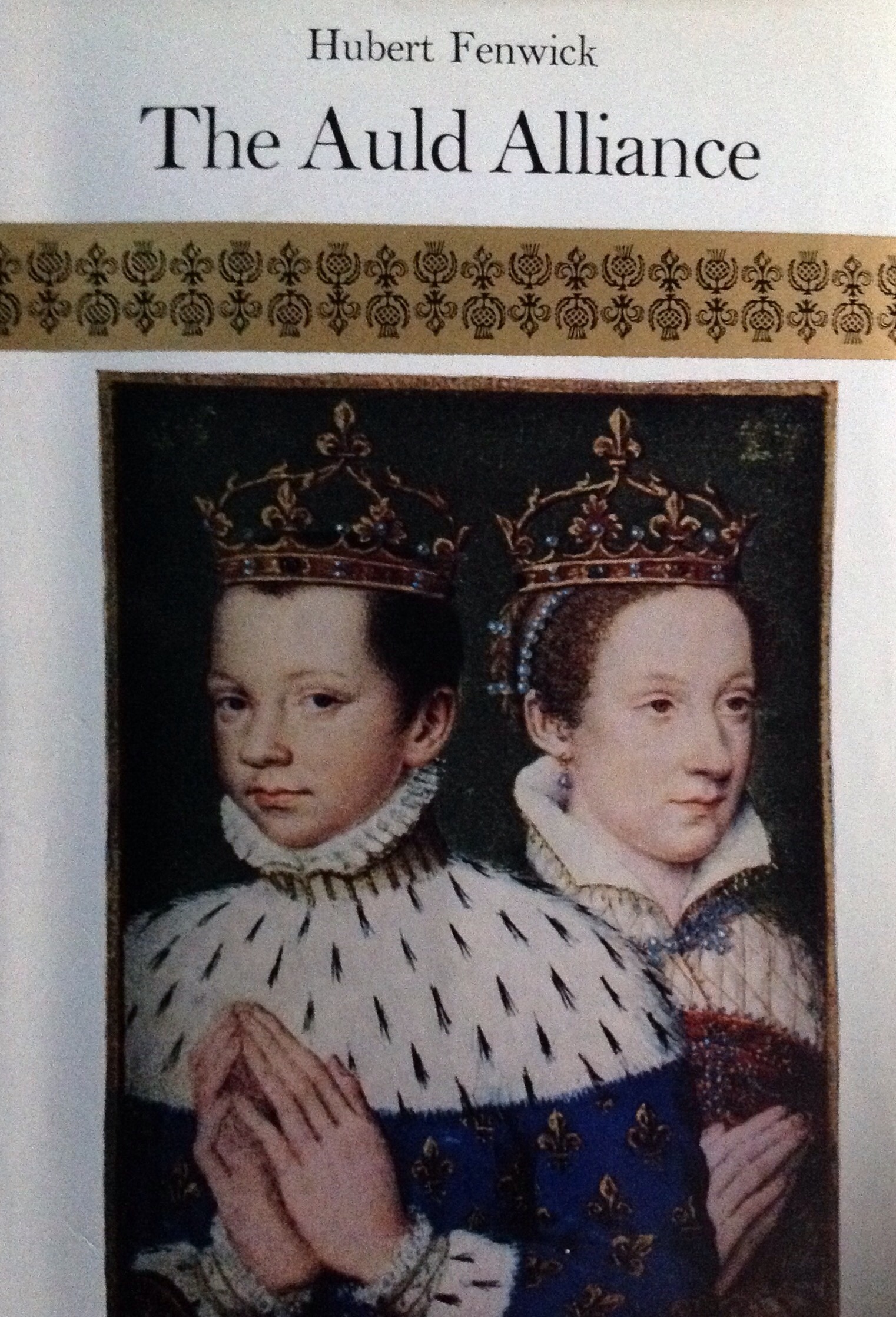
The Auld Alliance

Today we talk of the ‘special relationship’ between the US and UK. The special relationship which once existed between Scotland and France is just such a relationship. Today the Scottish Nationalist Party refer to it as the helpful bond with France  which has held strong with the European Union. Hubert Fenwick wrote, when Britain was considering joining the Common Market, that the spirit of the Auld Alliance would be kept alive by such a process.

I have been reading this excellent book by historian Hubert Fenwick, published 1971. It is the first attempt ever to trace the story of ‘The Auld Alliance’ in its entirety. I have dipped into it and quoted from it to illustrate the relevance to the 17th Century life of Adam Smith. The fact that the dual nationality afforded to French and Scots people lasted for centuries, is quite remarkable in itself.  I have transcribed some paragraphs from the book here.

The origins of the Auld Alliance are lost in the mists of time…….(p.xii) the first documentary evidence of a formal alliance is actually contained in the Treaty concluded between King John Baliol and Philippe le Bel, in 1295, which was ratified by King Robert the Bruce in 1326, and renewed by David II in 1359.

Succeeding monarchs of the Royal Stewart line renewed the Auld Alliance as each came to the throne, and in 1512, the year before Flodden, it was formally strengthened still further. James V added a French marriage to the political union, espousing Madeleine de Valois, daughter of François Premier; and when she died he wed Mary of Guise, whose work own daughter, Mary, Queen of Scots, subsequently became Dauphine and Queen of France. However, the Reformation soon put paid to the ever-increasing ovement towards a unitary state in Scotland and France, in in 1560, under the aegis of John Knox and his patroness, Queen Elizabeth, whose ships entered the Firth of Forth in a show of force, the official Alliance was dissolved. Yet Marie Stewart and François II remained as joint Sovereigns off France and Scotland and the purely cultural and commercial aspects of the association continued unabated.

(p.xiii) In 1513 Louis XII granted French nationality to the whole Scottish nation, ‘Pour route la nation d’Ecosse,’ as a document on display in the French Institute in Edinburgh in 1953 stated; and because of this and other generous gestures from France a visit to that country has special attractions for Scots. It not only emphasises sentimental attachments that linger on long after the severing of political ties, but also reminds one of artistic and intellectual gifts, not to mention gastronomic novelties, received from our oldest allies. We shared and won battles together too. In the Cathedral of Orléans, for example, may be seen a plaque upon which is recorded the service of an officer of the historic Garde Écossaise; while at Buzancy, near Soissons, the 1914-1918 village War Memorial is inscribed as follows:

‘Ici fleurira lr glorieux Chardon d’Écosse

Parmi les Roses de France.’

A gap of nearly six centuries divides these two tributes, but the bottle of friendship have clearly bridged the years undiminished.

(p.xiv) Throughout the seventeenth century adventurers and scholars, as well as professors and religious men kept up the two-way traffic between Scotland and France. Rabelais was first translated into English by a Scotsman, and John Law of Lauriston founded the first Banque Nationale de France (italics). Later, when the Stewart’s went into exile in St. Germain, there arose yet a third phase of collaboration in which French and Scots intellectuals participated. Hume and Rousseau were closely associated, and as the eighteenth century progressed scores of Scots who were neither supporters of the Stewart’s nor mere tourists went to Ferney to pay their respects to the author of Candide and to demonstrate their superior learning!

Posted in anthropocene | Leave a comment

Adam Smith: Part V

Friendships with well connected Scots must have helped the career of Adam Smith,  example here is Friendship Number 1:

Buccleuch Dynasty

Scots often visited Paris.  Adam Smith was no exception, but he could not have spent so long in France without meeting the young Duke of Buccleuch. He was able to go because he was tutor to Henry Scott, 3rd Duke of Buccleuch and Queensbury. They visited Europe together.  It was David Hume, Adam’s friend, who recommended him to the Buccleuch family.  Henry’s father had died of smallpox aged 29. Caroline, Henry’s mother,  wanted a suitable tutor for her precious son. She had married Charles Townshend, and he arranged for Henry to attend Eton College, and then funded Henry to travel abroad with Adam Smith as his tutor from 1764 to 1766. The Duke remained lifelong friends with Adam Smith.

Indeed, Henry generated more wealth for his family during his life time (1746 – 1812) than any other Buccleuch. No doubt he applied the instruction from Adam Smith enabling his success. Buccleuch was Governor of the Royal Bank of Scotland from 1777 to 1812. He was President of the Royal Society of Edinburgh from 1783 to 1812. He was Lord-Lieutenant of Haddington from 1794 to 1812, and Lord-Lieutenant of Midlothian from 1794 to 1812. In 1778, he raised successfully a regiment of Fencibles. He was appointed a deputy lieutenant of Northamptonshire on 9 May 1803.

The Buccleuch family are well known in the Scottish Borders:

Sir Walter Scott, Bart., was directly descended of the Lords of Buccleuch. His family history, fancifully interpreted, is the main subject of much of The Lay of the Last Minstrel.

The current Duke of Buccleuch, Richard Scott, the 10th Duke, is the largest private landowner in the United Kingdom and chairman of the Buccleuch Group, a holding company with interests in commercial property, rural affairs, food, and beverages. The title originally comes from a holding in the Scottish Borders, near Selkirk.

The family seats are Bowhill House, three miles outside Selkirk, representing the Scott line; Drumlanrig Castle in Dumfries and Galloway, representing the Douglas line; and Boughton House in Northamptonshire, England, representing the Montagu line. These three houses are still lived in by the family and are also open to the public. The family also owns Dalkeith Palace in Midlothian, which is let, and has owned several other country houses and castles in the past. Its historic London residence was Montagu House, Whitehall, now demolished.

Most of the Dukes of Buccleuch (the 3rd, 4th, 5th, 6th, 7th) are buried in the Buccleuch Memorial Chapel in St. Mary’s Episcopal Church, Dalkeith, Midlothian. The 2nd Duke (died 1751) is buried in Eton College Chapel. The most recent Dukes (the 8th and 9th) are buried among the ruins of Melrose Abbey in Melrose.

This was a new line of Buccleuch since a previous line ended with:

The Scotts of BUCCLEUCH, whose Dukedom dates from 1673, ended in Anne, who married James, Duke of Monmouth, natural son of Charles II, who was beheaded for rebelling against his uncle, James II. From this marriage comes the line of the later Dukes of Buccleuch and Queensberry.

Posted in anthropocene | Tagged , , , , , , , , , , | Leave a comment

Adam Smith (1723 – 1790)

I have used the timeline from the BBC Timeline of British history which provide a flavour of what was happening during the lifetime of Adam Smith.  His father (same name) was a Judge Advocate after qualifying as a solicitor (called Writers at the time). His mother was Margaret Douglas, only daughter of Robert Douglas (landed gentry, of Strathendry) and Susan Balfour. 

In the last  decade of the 17th century a gambling project, the Darien Scheme was persuasively sold to gullible aristocrats by William Paterson. It became an unsuccessful attempt by the Kingdom of Scotland to become a world trading nation by establishing a colony called “Caledonia” on the Isthmus of Panama on the Gulf of Darién in the late 1690s. The aim was for the colony to have an overland route that connected the Pacific and Atlantic oceans. From the beginning the undertaking was beset by poor planning and provisioning, divided leadership, lack of demand for trade goods, devastating epidemics of disease, and failure to anticipate the Spanish Empire’s military response. It was finally abandoned in March 1700 after a siege by Spanish forces, which also blockaded the harbour.

 As the Scottish Darien Company was backed by 25–50% of all the money circulating in Scotland, its failure left the entire Lowlands almost completely ruined and was an important factor in weakening their resistance to the Act of Union (completed in 1707). The land where the Darien colony was built is virtually uninhabited today.

It was likely a Scotsman, William Paterson, convinced many wealthy individuals to gamble on the South Sea Bubble also, The original suggestion for the South Sea scheme has sometimes been credited to Daniel Defoe, but it is more likely the idea originated with Paterson, one of the founders of the Bank of England and the Darien Scheme.

October – November 1720
‘South Sea Bubble’ bursts and triggers a financial panic

The South Sea Company was a financial and trading organisation mainly dealing with Spanish America. It received trading rights to the South Seas in return for financing the British government’s debt. Shares were issued and unrealistic expectations cultivated. A monopoly of the slave trade was envisaged. When it was discovered that the directors of the profitless company had sold out, it sparked a massive panic and a major financial crash occurred in the City of London. Huge fortunes were lost.

It seems Paterson never tired of gambling away the money of others. Perhaps Adam’s mother understood these foolish actions which had been detrimental to the nation.  Perhaps she told her son to beware of gambling.  There must be  a more certain way a nation can generate wealth?

It was 3 years before Adam Smith snr died and before his son was born, his father apparently dying before seeing his son.  
A Douglas archive states
‘Variously described as the ‘5th daughter’ and the ‘only daughter’.

As a widow and single mother, Margaret Douglas lived near her family of
 established landowning farmers and she had the emotional and advisory
 support of a circle of powerful local dignitaries, whom her prudent
 husband had arranged to act as his unborn son’s guardians. Their backgrounds indicate the patronage available to baby Adam if he survived
 (child mortality at the time was horrendous).
 His father, in addition to the provision he made for his 13-year-old son and heir, Hugh Smith, also made provision for ‘any child or children of my present marriage’.
 Among his guardians were James Oswald, former Kirkcaldy MP in both the Scottish and the UK parliaments, and five members of his parents’
families.”

I have not seen any further mention of a brother, Hugh.  I wonder if he died too.  It would seem Margaret bonded with Adam so closely that he never married and his mother lived with him in Edinburgh until she died in 1784 aged 90.  He died 6 years later aged 67.  For the last year of his life he was rector of Glasgow University for two terms.  He had been first a student there 1737 – 1740.

April 1721

Sir Robert Walpole becomes the first prime minister

In April 1721, Sir Robert Walpole became first lord of the treasury and chancellor of the exchequer, in the wake of the South Sea Bubble financial crash of 1720. He confirmed the Whig party’s allegiance to the Hanoverian monarchy. He never held the actual title of ‘prime minister’, but was given the powers that came to be associated with the office. George I also gave him 10 Downing Street, still the official residence of the prime minister.

Common land was always for local use. Cattle grazing, growing food for communities, fishing and trapping animals locally to feed hungry mouths.  New laws were put in place to throw people off the land and turn them into ‘vagrants’ .

1723

Poaching becomes a capital offence

Poaching disturbances in Windsor Forest and Park led to clashes between ‘blacks’ (gangs of bandits and poachers who blackened their faces) hoping to maintain common rights and wardens and gamekeepers. The government issued the Black Act to handle the situation. This made various poaching misdemeanours into capital crimes.


Part 2 to follow

Posted in anthropocene | Tagged , , , , | Leave a comment

Adam Smith: Part VI

Friendship with David Hume, friendship No.2

The Scottish Enlightenment was characterised by a thoroughgoing empiricism and practicality where the chief values were improvement, virtue, and practical benefit for the individual and society as a whole.

David Hume (1711 -1776) best friend to Adam Smith, played a major role in developing a positive belief that capitalism could spawn real friendships amongst those embracing new opportunities. New clubs were formed to meet and share ideas. Historian Jonathan Israel argues that by 1750 Scotland’s major cities had created an intellectual infrastructure of mutually supporting institutions, such as universities, reading societies, libraries, periodicals, museums and masonic lodges. The Scottish network was “predominantly liberal Calvinist, Newtonian, and ‘design’ oriented in character which played a major role in the further development of the transatlantic Enlightenment”. Bruce Lenman says their “central achievement was a new capacity to recognize and interpret social patterns.”

David Hume was a profound Scottish philosopher, he also wrote on economics, arguing, for example, against mercantilism and introducing specie-flow arguments. He was born on 26 April 1711 (Old Style) in a tenement on the north side of the Lawnmarket in Edinburgh. Hume’s father died when he was a child, just after the author’s second birthday, and he was raised by his mother, who never remarried. He changed the spelling of his name in 1734, because of the fact that his surname Home, pronounced Hume, was not known in England. Throughout his life Hume, who never married, spent time occasionally at his family home at Ninewells in Berwickshire, which had belonged to his family since the sixteenth century. His finances as a young man were very “slender”. His family was not rich and, as a younger son, he had little patrimony to live on. He was therefore forced to make a living somehow.

Katherine Falconer  Home realized that young David was “uncommonly wake-minded” — precocious, in her lowland dialect — so when his brother went up to Edinburgh University, David, not yet twelve, joined him. He read widely in history and literature, as well as ancient and modern philosophy, and also studied some mathematics and contemporary science.
…………. As an adult, he spent much time abroad, first in France:
He moved to France, where he could live frugally, and finally settled in La Flèche, a sleepy village in Anjou best known for its Jesuit college. Here, where Descartes and Mersenne studied a century before, Hume read French and other continental authors, especially Malebranche, Dubos, and Bayle; he occasionally baited the Jesuits with iconoclastic arguments; and, between 1734 and 1737, he drafted A Treatise of Human Nature.

1750 he met and became best of friends with Adam Smith. They both shared the sad fact they had been brought up by a single parent. Hume was highly influential in his criticisms of theology and subjects such as monarchy – he defended the conservative view that British governments are best run through a strong monarchy.

Whilst studying at Oxford, Adam Smith had been given a copy of Hume’s first book, ‘A Treatise of Human Nature’ given to him by one of his eminent Balliol lecturers, Francis Hutcheson. At Oxford the book was considered ‘evil’ and encouraging atheism. Smith went back to Scotland, and, Spurred on by his admiration of Hutcheson, who always gave his lectures in English (very popular to do so at the time) Smith was a popular public lecturer and made a financial profit, such that he was able to produce, in 1759, the much acclaimed book, ‘Theory of Moral Sentiments’. This book gained him admirers in France and Germany and so, when in France tutoring 18 year old Henry Scott, he was moving in circles where he met such intellectuals as Voltaire, economic theorists such as Quesnay and important French economic administrators like Turgot and Necker. Whilst in Toulouse, France, in the summer of 1764, Smith had enough spare time to commence work on his ultimate masterpiece, ‘An Inquiry into the Nature and Causes of the Wealth Nations.’

On returning to London, Smith met up with his old friend David Hume. He sought his advice, and those of other friends in London as he continued to try to finish his book. He also met Edmund Burke, Samuel Johnson and Edward Gibbon. He was so admired amongst these intellectuals that he was elected a member of the Royal Society in 1773.  The young Buccleuch was so satisfied with his tutoring that an annuity was given to Adam Smith so he could return to Edinburgh to live with his ageing mother and complete his major work with few distractions. The book was published in 1776, the year his dear friend, David Hume, died.

The brilliance of Hume’s work lives on in relevance.
Hume argued against ‘mercantilism’
Mercantilism was an economic theory and practice, dominant in modernized parts of Europe during the 16th to the 18th century, that promoted governmental regulation of a nation’s economy for the purpose of augmenting state power at the expense of rival national powers.

With the alternative being Price specie-flow

Price-specie flow mechanism

Adjustment mechanism under the classic gold standard allowing disturbances in the price level in one country to be wholly or partly offset by a countervailing flow of specie (gold coins) that would act to equalize prices across countries and automatically bring international payments into balance.

Copyright © 2012, Campbell R. Harvey. All Rights Reserved.

An argument David Hume made against those who argued that a favorable balance of trade is always good public policy. The price-specie flow mechanism states that under a gold standard, countries with positive trade balances are effectively importing gold (money) in exchange for their exports while those with negative trade balances are exporting gold in exchange for imports. The increase in gold in countries with positive trade balances causes inflation, which makes prices rise and in turn makes imports more competitive. Conversely, the decrease in gold in countries with negative trade balances causes deflation, which makes price fall and exports more competitive internationally. This cause the balance of trade to shift in both countries. Thus, Hume argued that a trade balance is relatively unimportant because it tends to balance itself out in the long term.

Farlex Financial Dictionary. © 2012 Farlex, Inc. All Rights Reserved

Hume  was a well travelled and a highly thought of intellect of the Scottish Enlightenment before and since he died in Edinburgh, 1776. Many nations refer to his work and to Adam Smith’s as they try to build a strong economy for their people, wrestling with modern day political economics which are possibly still more elegantly described by these two great thinkers.

Posted in anthropocene | Tagged , , , , , , , , , | Leave a comment