Adam Smith: Part VII

Friendship with James Oswald, friendship No.3

James Oswald (1715 – 24 March 1769)


The Oswald’s were a highly successful family and their wealth seems to have had three sources: trade, farming and coal. They also distinguished themselves in a number of other areas, particularly politics and military service.

Captain James Oswald was the grandfather of this James Oswald who was the friend of Adam Smith. Thanks to him the Oswald family were wealthy. He had been a successful master mariner (his father, in turn, had been a Kirkcaldy skipper) and merchant. He owned ships with the St.Clair family. He established something of a family tradition by being a politician and was a member of the last Scottish Parliament before its abolition in the Union with England in 1707. He voted against the Union in 1703. 

He purchased land which had been the Dunfermline Abbey run by Benedictine Monks in the 12th century. The Oswald land (named Dunnikier) was passed down through the family for 250 years.

Adam Smith knew James Oswald who was 8 years his senior at school. The school was established in 1582 as Kirkcaldy Burgh School, and seems to have been responsible for a quality education for those who attended. 

Aged 26, Oswald became a major force in Kircaldy politics who sat in the House of Commons from 1741 to 1768.
The Right Honourable James Oswald was also a scholar who made an important contribution to the Scottish Enlightenment by acting as an adviser to David Hume and to Adam Smith.

The Oswald family remained a dominant force in Kirkcaldy politics in the 18th century and Dysart, the second largest burgh was controlled by the St. Clair interest. The combined Oswald and St. Clair influence often decided who was to be elected. Oswald was elected Member of Parliament for Dysart Burghs in 1741[3] and was a Commissioner of the Navy in 1745, the year of the final Jacobite Rebellion.

In 1747 he exchanged the seat with James St Clair and was elected MP for Fife until 1754. In 1752 he was Commissioner for trade and plantations. Oswald exchanged seats with James St Clair again in 1754 and was elected MP for Dysart Burghs. Oswald was Lord Commissioner of the Treasury in 1760 and Vice Treasurer of Ireland in 1763. He retired in 1768 when his son James Townsend Oswald took over the seat.

Oswald died at the age of 52, greatly missed by his good friends.

Posted in anthropocene | Tagged , , , , , , , , , | Leave a comment

Adam Smith: Part VIII

16th to 18th century, the mood seemed to be that we were, as an island people, not going to be invaded ever again.
Those who had wealth wanted to become richer, thus more influential and more powerful.
Those with family wealth didn’t want to be the generation that lost it. 
There was evidence of cultures who had utilised the labour of slaves to create wealth. No-one wanted to be a slave – even Robbie Burns considered managing slaves on a plantation in Jamaica before he started to make money from his poetry.
Slavery refers to a condition in which individuals are owned by others, who control where they live and at what they work. Slavery had previously existed throughout history, in many times and most places. The ancient Greeks, the Romans, Incas and Aztecs all had slaves. 

Slaves could increase productivity and make one rich. They had to be harnessed. This was the way people thought then,  and still, tragically, many still do in the 21st century

With a strong navy and forceful army an elite could prosecute wars to destroy competitors and annihilate any other war machine against it and take goods and resources as ‘spoils of war’ to create wealth back home.

Britain had been invaded for centuries. Now Britain was going to take the initiative and become the ruler of the seas.

Creating an invincible war machine

Wealth had accumulated into the hands of certain people before Adam Smith’s time. The military played a large part, the development of the British Navy as a result of centuries of European conflict and ‘winner takes all’ aggressive tactics. Religious differences motivated the rhetoric to stir armies to believe they had ‘God on their side’. Applying brutality metered out to thousands of innocents as the Empire was gradually forged, and carrying diseases to other peoples through missionaries, militaries and even pioneering tourism, laid waste to previously isolated communities.

Creating the first corporation

Back when Elizabeth I justified piracy on the high seas, she realised she could use the skills of remarkable seamen like Francis Drake to acquire wealth through covert means. She had learned the Spanish conquistadores were returning from lands they had devastated with their ships heavily laden with gold, silver, jewels. Philip II of Spain, already an enemy as head of a Catholic country, was accumulating power and wealth, and Elizabeth thought their ships were easy pickings for her privateers (or pirates, as the Spanish called them).

Elizabeth I brought the East India Company into being and gave immunity to those who may have ‘killed innocents’ in the course of carrying out her wishes to raid the Spanish ships.

The organisation grew, it was amazingly successful.  Greed and the desire for power was its engine.

The British East India Company

The East India Company is, or rather was, an anomaly without a parallel in the history of the world. It originated from sub-scriptions, trifling in amount, of a few private individuals. It gradually became a commercial body with gigantic resources, and by the force of unforeseen circumstances assumed the form of a sovereign power, while those by whom its affairs were directed continued, in their individual capacities, to be without power or political influence. — Bentley’s Miscellany 43 (1858).

One of the strangest parts of the history of the British Empire involves that commercial venture generally known as the East India Company, though its original name when founded by royal charter on the very last day of 1600 was the Governor and Company of Merchants of London Trading into the East Indies. As its name suggests, the company was the enterprise of London businessmen who banded together to make money importing spices from South Asia. For centuries the valuable spice trade with the East Indies (as they were long known) relied on land routes across Asia and the Middle East, but by the sixteenth century, the superior navigational technology and skills of the Portuguese for the first time permitted Europeans to cut out intermediaries and hence make themselves far greater profits. The Spanish and Portuguese had a monopoly of the East Indies spice trade until destruction of the Spanish Armada in 1588, which permitted the British and Dutch to seek their share of this wealthy import business.

The company with the long name first entered the spice trade in the form of an old-fashioned or early capitalist venture, essentially conducting each voyage as a separate business venture with its own subsribers or stock-holders. This approach lasted for a dozen years, and then in 1612 the company switched to temporary joint stocks and finally to permanent joint stocks in 1657. Supposedly a monopoly, the company eventually faced competition from another group of English investors and merchants, and the two merged in 1708 as the United Company of Merchants of England Trading to the East Indies.

This was a year after the Act of Union. Those who were Mariners would already know more about opportunities of making wealth.

The Spanish had taken the lead, discovering new lands (targets) and coming home laden with their ‘spoils of war’ such that they exhausted the Caribbean Islands, for example, of a limited quantity of pearls and gold and eradicated the entire native population. Then the Spanish conquistadors assaulted the mainland.

In their wake, the islands of the Indies were left to be exploited by a colonial elite. Plantations were worked by brutalised slaves imported from Africa. The sugar crop was sold in European markets.

English colonies copied Spanish plantation-style agriculture, first in the Lesser Antilles and then in Virginia.

And Sir Francis Drake – one of Queen Elizabeth’s ‘privateers ‘ – he was motivated by a fanatical dislike of Catholics.

During the Roman Catholic uprising in 1549, Francis Drake was not granted legal right to his father’s farm. Aged 13, he fled to Kent he took to the sea on a cargo barque, becoming master of the ship at the age of twenty. At age 23, Drake took his first voyage to the New World under the sails of the Hawkins family of Plymouth, in company with his cousin, Sir John Hawkins. Together, Hawkins and Drake made the first English slave-trading expeditions.

Drake took an immediate dislike to the Spanish, at least in part due to their mistrust of non-Spaniards and their Catholicism. His hostility is said to have been increased by an incident at San Juan de Ulua in 1568, when Spanish forces executed a surprise attack — in violation of a truce agreed to a few days before — nearly costing Drake his life. From then on, he devoted his life to working against the Spanish Empire; the Spanish considered him an outlaw pirate, but to England he was simply a sailor and privateer. On his second such voyage, he fought a costly battle against Spanish forces, costing many English lives, but earning Drake the favour of Queen Elizabeth.

The most celebrated of Drake’s Caribbean adventures is his capture of the Spanish Silver Train at Nombre de Dios in March of 1573. With a crew including many French privateers and Cimaroons — African slaves who had escaped the Spanish — Drake raided the waters around Darien (in modern Panama) and tracked the Silver Train to the nearby port of Nombre de Dios. He made off with a fortune in gold, but had to leave behind another fortune in silver, because it was too heavy to carry back to England. It was during this expedition that he climbed a high tree in the central mountains of the Isthmus of Panama and thus became the first Englishman to see the Pacific Ocean.

When Drake returned to Plymouth on August 9, 1573, a mere thirty Englishmen returned with him, every one of them rich for life. However, Queen Elizabeth, who had up to this point sponsored and encouraged Drake’s raids, signed a temporary truce with King Philip II of Spain, and so was unable to officially acknowledge Drake’s accomplishment.

Scots and the Slave Trade

After the 1745 Rebellion many defeated Scots Jacobites fled the country to the West Indies to become slave masters on plantations. They were also attracted to the American South, where states such as Virginia, the Carolinas and Georgia were developing plantations.

Glasgow’s ‘Tobacco Lords’ and merchants profited from the slave trade…….

Not many years after Adam Smith died:

In 1796Scots owned nearly 30 per cent of the estates in Jamaica and by 1817, a staggering 32 per cent of the slaves………

At any given time there were only about 70 or 80 slaves in Scotland but the country reaped the fruits of their labour in the colonies in the sugar, cotton and tobacco plantations.

Many Scots masters were considered among the most brutal, with life expectancy on their plantations averaging a mere four years.

The importance of the Royal Navy grew during 1660 – 1815

Historic Periods

Britain was establishing itself as the dominant naval power, but maintaining this status was often a close run thing. After two wars against the Dutch with little success, a series of notable victories over the French marked these years. But France was far from defenceless inflicting a defeat an the Anglo-Dutch fleet at Beachy Head in 1690. The eighteenth century saw remarkable successess in the French Revolutionary and Napoleonic Wars. Nelson’s famous victory at Trafalgar effectively ended any further contest at sea.

Adam Smith will have been aware of the victory, in 1759 at the Battle of Quiberon Bay 

The Battle of Quiberon Bay (known as Bataille des Cardinaux in French), was a decisive naval engagement fought on 20 November 1759 during the Seven Years’ War between the Royal Navy and the French Navy. It was fought in Quiberon Bay, off the coast of France near St. Nazaire. The battle was the culmination of British efforts to eliminate French naval superiority, which could have given the French the ability to carry out their planned invasion of Great Britain. A British fleet of 24 ships of the line under Sir Edward Hawke tracked down and engaged a French fleet of 21 ships of the line under Marshal de Conflans. After hard fighting, the British fleet sank or ran aground six ships, captured one and scattered the rest, giving the Royal Navy one of its greatest victories, and ending the threat of French invasion for good.

The battle signalled the rise of the Royal Navy in becoming the world’s foremost naval power, and for the British was part of the Annus Mirabilis of 1759.

(The “Annus Mirabilis of 1759” is a term used to describe a string of notable British victories over French-led opponents during the Seven Years’ War. The term is taken from Latin, and is used to denote a “year of miracles” or “year of wonders”).

Athough the Auld Alliance remained strong between many Scots and the French, those who had already turned their back on the past when Scotland was Catholic and an enemy of the English, would move toward being a part of this ever strengthening British Empire building nation, and assimilate into the aspiring wealth which would surely come to those who embraced this outlook.

Posted in anthropocene | Tagged , , , , , , , , , | Leave a comment

Adam Smith: Part IV

The will of the people of Scotland was crushed so many times once they signed the Act of Union in 1707 due to the financial crash of the Darien debacle. Here is an important Act they designed to avoid being drawn into war without the consent of Parliament.

The Act anent Peace and War (Scots anent means about or concerning) was an act of the Parliament of Scotland passed in 1703.

The Act concerned foreign policy and the royal prerogative: it provided that following the death of Queen Anne without direct heirs, no future monarch of Scotland and England could take Scotland to war without the explicit consent of the parliament.[1]

It was a response to the English Act of Settlement which had made members of the House of Hanover heirs to the throne of England. The Scots, already unhappy with the War of the Spanish Succession, were concerned that rule by Hanoverians would lead to unwelcome Scottish involvement in German and continental wars.[2] Later the same parliament forced royal assent to the Act of Security. The English parliament retaliated with the Alien Act, removing Scottish trading privileges in England.

The conflict between the two parliaments was finally resolved by their merger under the terms of the Acts of Union 1707. The union made the Act anent Peace and War and the Act of Security void, and they were formally repealed in December 1707.[3]

1690s in Scotland saw a period of famine, and during the 1700s many landowning farmers were trying for to find new agricultural methods to improve the food supply.

Having been exposed to the improved quality of life the English enjoyed, gradually changes were made to farming practices, and often callous attitudes to tenants after the union with England in 1707. …..

The Agricultural Revolution

..…..there was a conscious attempt among the gentry and nobility to improve agriculture in Scotland. The Society of Improvers was founded in 1723, including in its 300 members dukes, earls, lairds and landlords.[5]In the first half of the century these changes were limited to tenanted farms in East Lothian and the estates of a few enthusiasts, such as John Cockburn and Archibald Grant. Not all were successful, with Cockburn driving himself into bankruptcy, but the ethos of improvement spread among the landed classes.[6]

Haymaking was introduced along with the English plough and foreign grasses, the sowing of rye grass and clover. Turnips and cabbages were introduced, lands enclosed and marshes drained, lime was put down, roads built and woods planted. Drilling and sowing and crop rotation were introduced. The introduction of the potato to Scotland in 1739 greatly improved the diet of the peasantry. Enclosures began to displace the runrig system and free pasture. There was increasing specialisation, with the Lothians became a major centre of grain, Ayrshire of cattle breading and the borders of sheep.[5]

Although some estate holders improved the quality of life of their displaced workers,[5] the Agricultural Revolution led directly to what is increasingly becoming known as the Lowland Clearances,[7] with hundreds of thousands of cottars and tenant farmers from central and southern Scotland emigrating from the farms and small holdings their families had occupied for hundreds of years, or adapting them to the Scottish Agricultural Revolution.[5]

Adam Smith, now in his twenties, having been educated at Balliol aged 16 to 19, succeeded in gaining a scholarship (then known as a Snell exhibition) to contribute to his costs at Oxford. He mounted his horse to leave Scotland and head to Oxford. He was shocked, once he crossed the border into England, and saw Carlisle, how much healthier people looked. They were not surviving on oatmeal as in Scotland, no – they were eating wheaten bread and a variety of other foods not grown in Scotland. When he arrived at Oxford, the meal put in front of him was the biggest steak he had ever seen. Although cattle were common in Scotland, they were not fattened on the grains available in England.

But the cost of living was higher in Oxford than in Scotland and Adam could not afford to eat well and needed family help simply to meet the fees of lecturers he thought were lazy and uninspiring. But he completed his course, despite the disdain in which all Scots were held, and the discrimination was depressing and erosive. Adam spent 6 years in Oxford, gaining his B.A. (though it was not listed by Oxford),  learning about the English way of life and the culture, but he was glad to return home to Scotland finally.

Posted in anthropocene | Tagged , , , , , , , , , | Leave a comment

Adam Smith: Part III

Living in Scotland, one is conscious of the Holyrood Parliament and its significance in this 21st century.  Devolution has been a long time coming.

For example:

Crown Estates, Scotland

Devolution

The Crown Estate is working closely with both the Scottish and UK Governments to enable the transfer of The Crown Estate’s management duties in Scotland to Scottish Government, as recommended by the Smith Commission and reflected in the Scotland Act 2016. We will work to inform the process to ensure a swift and smooth transfer. We have a clear commitment to protect the interests of our staff, tenants, customers and the communities with whom we work throughout the process.

 
But looking back at how laws were made in Britain since the Roman occupation, it certainly has been a top down process. I’ve picked out some key historical precedents which the population had placed upon them by those ‘who must be obeyed’. These laws were often allowed to be applied even long after their relevance should have consigned them to a historical waste basket.

Ref:
http://www.parliament.uk/about/living-heritage/evolutionofparliament/originsofparliament/birthofparliament/keydates/1215to1399


Magna Carta (1215) to Henry IV (1399)

1215 

King John agreed to Magna Carta which stated the right of the barons to consult with and advise the king in his Great Council


1236

Earliest use of the term Parliament, referring to the Great Council


1254 

Sheriffs were instructed to send elected representatives of the counties (knights of the shire) to consult with the king on taxation


1258 

At a Parliament at Oxford, the nobles drafted the “Provisions of Oxford” which calls for regular Parliaments with representatives from the counties


1265 

Simon de Montfort, in rebellion against Henry III, summoned a Parliament which included for the first time representatives of both the counties and towns


1278 

The Clerk of the Parliaments began to compile the Rolls of Parliament, the records of proceedings, particularly the petitions and acts passed


1295 

Model Parliament was made up of nobles and bishops, and two representatives for each county and for each town – the model for future Parliaments


1327 

From this date representatives of the counties (knights of the shire) and of the towns (burgesses) were always summoned together to Parliament


1332 

Knights of the shire and burgesses met together and were called the Commons


1341 

The Commons met separately from the Upper House for the first time


1352 

The Commons began to meet in the Chapter House of Westminster Abbey


1362 

A statute established that Parliament must approve of all taxation

1376 

In the Good Parliament the Commons, led for the first time by an elected Speaker, prosecuted, or impeached, before the lords some of the king’s advisors


1397 

Commons moved from Chapter House of Westminster Abbey to its Refectory


1399 

Parliament deposed Richard II and Henry IV’s reign started

To

Reformation Parliament

Henry VIII’s Reformation Parliament, which sat from 1529 to 1536, fundamentally changed the nature of Parliament and of English government. The King summoned it in order to settle what was called his ‘great matter’, his divorce from Catherine of Aragon, which the Papacy in Rome was blocking.

Power shift 

In only a few short years, Parliament – under the direction and impetus of the King – made laws affecting all aspects of national life, especially in religious practice and doctrine, which had previously been under the authority of the Church alone. With the ground-breaking statutes of the 1530s Parliament became omnicompetent, that is, no area involved in the government of the realm was outside its authority.

Pope to the English Crown

It passed laws which transferred religious authority from the Pope to the English Crown, gave the Crown control over the wealth and buildings of the old Church, settled official religious doctrine, altered the succession by declaring various of the King’s children illegitimate, and inaugurated a wider programme of social, religious and economic reform. Henry VIII’s successors all equally used Parliament to pass their own legislation changing the nature, doctrine and authority of the Church in England.

Constitutional change

The Reformation Parliament thus asserted the supreme authority, or sovereignty, of Parliament in making statute, or more precisely the sovereignty of Crown-in-Parliament, the royal authority embodied in law passed by the monarch, Lords and Commons. As Henry VIII himself told the Parliament: “We be informed by our judges that we at no time stand so highly in our estate royal as in the time of parliament”. He realised that royal power was at its strongest when it was expressed through parliamentary statute.

Crown and Parliament

Parliament still existed only by the monarch’s will, but Henry VIII and his immediate successors knew that they could best effect their will through the assent of Parliament in statute. A century later the country was thrown into turmoil when the co-operation between the King and the other two parts of Parliament catastrophically broke down.

To

Elizabethan Parliaments

There are several ways of approaching our understanding of Parliament during its development in the 16th century, and there have been many debates between historians, especially concerning the Parliaments of Elizabeth I.

Free discussions

Peter Wentworth became a famous Member of Parliament in the reign of Elizabeth I after he was arrested on three separate occasions for arguing that the Commons should have the freedom to discuss whatever it wished, especially on the controversial topic of religion, without fear of reprisal from the Queen.

Some historians have been fascinated by characters such as Wentworth and see in them an indication of a rise in importance of the House of Commons which was maturing, becoming more self-confident and developing an organised oppositional stance to the Crown.

Interpretations and debates

Other historians have detected in this view of the 16th century Parliament a tendency to read history backwards from the 17th century conflict between King and Parliament, an outcome already known but still with murky origins. These historians have looked more carefully at the daily business of Parliament and do not see it full of opposition, organisation or ideology. Parliament, even under Elizabeth I, was summoned by the monarch and was a branch of royal government, and it would have been failing in its duty if there were constant disagreement with the monarch.

The high road to civil war?

While it is certainly incorrect to ignore Wentworth and the oppositional voices he and others like him represented, it needs to be remembered that throughout the 16th century and for most of the following century, Members of Parliament saw themselves as the monarch’s servants and Parliament as a place to deal with local matters and to pass necessary legislation.

It was not primarily a debating chamber where great issues of politics and ideology were to be talked over. Nor were the 16th and early 17th century Parliaments on a “high road to Civil War”. That cataclysmic event had its own more immediate causes, largely depending on the character and actions of the King, Charles I, and on extreme religious elements among members.

 Press Gangs :  Navy and Army

Press gangs were well known for the physical force they used in recruiting men into the Royal Navy during the 17th and 18th centuries. It was, however, a practice which Parliament had first sanctioned several centuries earlier.  

In time of war impressment – as the practice was known – was also a tactic employed by the Army to acquire extra men, usually when the non-violent methods of the recruiting sergeants failed to enlist sufficient numbers.   

Naval impressment

The Crown claimed a permanent right to seize men of seafaring experience for the Royal Navy, and the practice was at various times given parliamentary authority. Impressment was vigorously enforced during the naval wars of the 18th century by Acts passed in 1703, 1705, 1740 and 1779.  

The men pressed into service were usually sailors in the merchant fleets, but might just as often be ordinary apprentices and labourers. During the wars with France from 1793 to 1815, an impress service operated in British coastal towns. 

Although further laws passed in 1835 upheld the power to impress, in practice it fell into disuse after 1815.  

Army recruiting

During the 18th century, public perception of standing armies as instruments of despotic government obliged Parliament to keep Britain’s peacetime forces as small as possible.  

There were times, however, when involvement in continental and colonial wars made it necessary for Parliament to legislate hastily for the speedy recruitment of vast additional forces. 

These extra men were raised either through voluntary enlistment or by compulsion. Recruiting Acts were passed annually during the periods 1703-11, 1743-44, 1756-57, 1778-79, and in 1783, while the British army was engaged in major wars in Europe and elsewhere.  

The Acts offered a financial bounty or reward to men who enlisted for limited periods – in 1757 the sum was £3. They also gave powers to magistrates to press unemployed, but otherwise able-bodied men.

 Taxes the 18th Century Way

Today income tax is a ‘direct’ tax paid by almost every working adult in the UK. There are also ‘indirect’ taxes on a wide range of commodities and consumables.

The Land Tax

In the 18th century, however, the structure of taxation was quite different. Direct tax was only paid by the owners of land or property according to the size of their landholdings.

This tax – the ‘Land Tax’ – was paid by the more prosperous sections of society, from the wealthiest duke to the owners of business premises such as tradesmen, shopkeepers and innkeepers. The rate of tax was set by Parliament each year in a ‘Land Tax Act’ and was usually between two and four shillings in the pound, based on the value of each individual’s land or property.

An unusual feature of the tax was that it was administered not by government officials, but by unpaid local ‘commissioners’, gentry who were nominated by Parliament and whose names were included in the annual Land Tax Acts. Those who collected the tax were usually local men of modest means, such as farmers or tradesmen.

Indirect tax

The commonest indirect taxes paid by most people in the 18th century were excise duties. These were levied by Parliament on basic commodities – household essentials such as salt, candles, leather, beer, soap, and starch.

Duties on ‘luxury’ items, such as wine, silks, gold and silver thread, silver plate, horses, coaches and hats were aimed at wealthier consumers. Parliament raised or lowered duties, as well as adding new items or dropping others, depending on the needs of the time. In practice, however, consumers were largely unaware of these impositions as it was the traders who actually paid.

There were also ‘Assessed Taxes’, of which the best known is the Window Duty. This was first levied by Parliament in 1696 in support of William III’s war with France. House owners paid two shillings on properties with up to ten windows, and four shillings for between 10 and 20 windows. From 1778 the rate was made a variable one depending on the value of the property.

16 years before Adam was born, The Acts of Union took effect in 1707, uniting the separate Parliaments and crowns of England and Scotland and forming the single Kingdom of Great Britain. Queen Anne (already Queen of both England and Scotland) became formally the first occupant of the unified British throne, with Scotland sending forty-five Members to join all existing Members from the parliament of England in the new House of Commons of Great Britain, as well as 16 representative peers to join all existing peers from the parliament of England in the new House of Lords.

The year Adam Smith was born, attempts were made to increase wealth through agricultural reform:

After the union with England in 1707, there was a conscious attempt among the gentry and nobility to improve agriculture in Scotland. The Society of Improvers was founded in 1723, including in its 300 members dukes, earls, lairds and landlords.[5]In the first half of the century these changes were limited to tenanted farms in East Lothian and the estates of a few enthusiasts, such as John Cockburn and Archibald Grant. Not all were successful, with Cockburn driving himself into bankruptcy, but the ethos of improvement spread among the landed classes.[6]

Scottish Education in the 18th Century

In the Scottish Highlands, popular education was challenged by problems of distance and physical isolation, as well as teachers’ and ministers’ limited knowledge of Scottish Gaelic, the primary local language. Here the Kirk’s parish schools were supplemented by those established from 1709 by the Scottish Society for Promoting Christian Knowledge. Its aim in the Highlands was to teach English language and end the attachment to Roman Catholicism associated with rebellious Jacobitism. Though the SSPCK schools eventually taught in Gaelic, the overall effect contributed to the erosion of Highland culture.[11] Literacy rates were lower in the Highlands than in comparable Lowland rural society, and despite these efforts illiteracy remained prevalent into the nineteenth century.[12]

In the eighteenth century Scotland’s universities went from being small and parochial institutions, largely for the training of clergy and lawyers, to major intellectual centres at the forefront of Scottish identity and life, seen as fundamental to democratic principles and the opportunity for social advancement for the talented.[16] Chairs of medicine were founded at Marsichial College (1700), Glasgow (1713), St. Andrews (1722) and a chair of chemistry and medicine at Edinburgh (1713). It was Edinburgh’s medical school, founded in 1732 that came to dominate. By the 1740s it had displaced Leiden as the major centre of medicine in Europe and was a leading centre in the Atlantic world.[17] The universities still had their difficulties. The economic down turn in the mid-century forced the closure of St Leonard’s College in St Andrews, whose properties and staff were merged into St Salvator’s College to form the United College of St Salvator and St Leonard.[18]

In the eighteenth century Scotland’s universities went from being small and parochial institutions, largely for the training of clergy and lawyers, to major intellectual centres at the forefront of Scottish identity and life, seen as fundamental to democratic principles and the opportunity for social advancement for the talented.[16] Chairs of medicine were founded at Marsichial College (1700), Glasgow (1713), St. Andrews (1722) and a chair of chemistry and medicine at Edinburgh (1713). It was Edinburgh’s medical school, founded in 1732 that came to dominate. By the 1740s it had displaced Leiden as the major centre of medicine in Europe and was a leading centre in the Atlantic world.[17] The universities still had their difficulties. The economic down turn in the mid-century forced the closure of St Leonard’s College in St Andrews, whose properties and staff were merged into St Salvator’s College to form the United College of St Salvator and St Leonard.[18]

Access

Access to Scottish universities was probably more open than in contemporary England, Germany or France. Attendance was less expensive and the student body more representative of society as a whole.[19] Humbler students were aided by a system of bursaries established to aid in the training of the clergy. In this period residence became divorced from the colleges and students were able to live much more cheaply and largely unsupervised, at home, with friends or in lodgings the university towns. The system was flexible and the curriculum became a modern philosophical and scientific one, in keeping with contemporary needs for improvement and progress.[16] Scotland reaped the intellectual benefits of this system in its contribution to the European Enlightenment.[20

Achievements

Hugh Blair, Professor of Rhetoric and Belles Lettres at the University of Edinburgh

Many of the key figures of the Scottish Enlightenment were university professors, who developed their ideas in university lectures.[16] The first major philosopher of the Scottish Enlightenment was Francis Hutcheson (1694–1746), who held the Chair of Philosophy at the University of Glasgowfrom 1729 to 1746. A moral philosopher who produced alternatives to the ideas of Thomas Hobbes, one of his major contributions to world thought was the utilitarian and consequentialistprinciple that virtue is that which provides, in his words, “the greatest happiness for the greatest numbers”. Much of what is incorporated in the scientific method (the nature of knowledge, evidence, experience, and causation) and some modern attitudes towards the relationship between science and religion were developed by his protégés David Hume (1711–76) and Adam Smith (1723–90).[21] Hugh Blair (1718–1800) was a minister of the Church of Scotland and held the Chair of Rhetoric and Belles Lettres at the University of Edinburgh. He produced an edition of the works of Shakespeare and is best known for Sermons (1777–1801), a five-volume endorsement of practical Christian morality, and Lectures on Rhetoric and Belles Lettres (1783), an essay on literary composition, which was to have a major impact on the work of Adam Smith. He was also one of the figures who first drew attention to the Ossian cycle of James Macpherson to public attention.[22]

Hume became a major figure in the sceptical philosophical and empiricist traditions of philosophy. His scepticism prevented him from obtaining chairs at Glasgow and Edinburgh. He and other Scottish Enlightenment thinkers developed what he called a ‘science of man’,[23] which was expressed historically in works by authors including James Burnett, Adam Ferguson, John Millar and William Robertson, all of whom merged a scientific study of how humans behave in ancient and primitive cultures with a strong awareness of the determining forces of modernity. Indeed, modern sociology largely originated from this movement.[24] Adam Smith’s The Wealth of Nations (1776) is considered to be the first work of modern economics. It had an immediate impact on British economic policy and still frames twenty-first century discussions on globalisation and tariffs.[25] The focus of the Scottish Enlightenment ranged from intellectual and economic matters to the specifically scientific as in the work of William Cullen, physician and chemist, James Anderson, an agronomist, Joseph Black, physicist and chemist, and James Hutton, the first modern geologist.[21][26]

Posted in anthropocene | Leave a comment

Adam Smith: Part II

In Part II I look at the history in the previous centuries before he was born and the couple of decades after his birth.  I have concluded, in so doing, that our lives are shaped by ancestral experience.  This first political economist, Adam Smith, was a product of a turbulent European history.  He thought very deeply about the need to generate income with a sure footing.  He cared about his own country of Scotland and it’s long suffering people’s. Very often, over time, other thinkers take up the baton and think they can apply the ideas of those who have gone before.  This can result in misapplication with often disastrous consequences.
Before Adam Smith was born in Kirkaldy, Fife, Scotland (Central Lowland area) huge turmoil had taken place in this predominantly Catholic country to bow to european influence and rid itself of Catholicism and the Gaelic language associated with it.

So let us set the scene. About 160 years before Adam was born, the Scottish Reformation had took placeand battles for the  of Britain had resulted in the last Catholic King being defeated by a Protestant, in Ireland, at the Battle of the Boyne, and his rule had huge consequences for Catholics in Ireland and Scotland.  

Many of us can trace our ancestors back 160 years, and may even know their religion and occupation.  In Fife, it was known some wealthy landowners plotted to assassinate the Catholic Cardinal at St Andrews. The conspirators were from Fife and may have been connected to Smith’s own wealthy landowning family, and military family members too.

Cardinal Beaton assassination

Relations became strained between James V and his uncle, Henry VIII of England, who sought to detach Scotland from its allegiance to the Holy See and bring it into subjection to himself. Henry sent two successive embassies to Scotland to urge James to follow his example in renouncing the authority of the Pope in his dominions. King James declined to be drawn into Henry’s plans and refused to leave his kingdom for a meeting with Henry. Hostilities broke out between the two kingdoms in 1542. The Cardinal was blamed by many for the war with England that led to the defeat at Solway Moss in November 1542……..

St. Andrews Castle

Plots against Cardinal Beaton had begun circulating as early as 1544. The conspirators were led by Norman Leslie, master of Rothes, and William Kirkcaldy of Grange. The Leslies had suffered from the expansion of Beaton’s interest in Fife. Kirkcaldy’s uncle, James Kirkcaldy of Grange, held Protestant sympathies and had been removed in 1543 as treasurer of the realm, through Beaton’s influence. They were joined by John Leslie of Parkhill, one of the Fife lairds angered at the execution of Wishart.[6] Leslie and Kirkcaldy managed to obtain admission to St Andrews Castle at daybreak of 29 May 1546, killing the porter in the process. They then murdered the Cardinal, mutilating the corpse and hanging it from a castle window.[7] At the time it was widely believed that his death was in the interests of Henry VIII of England, who regarded Beaton as the chief obstacle to his policy in Scotland; the Cardinal’s murder was certainly a significant point in the eventual triumph of Protestantism north of the Border.

At the time of his death, David Cardinal Beaton was Lord Chancellor of Scotland, Archbishop of St Andrews, and Cardinal Legate in Scotland.[8]

It was another complication that those who thought they should be monarch often thought the ‘Divine Right’ applied to their ruling of these lands. But even this  delusion was erased after the reign of James I of England and V of Scotland.

 From Brittanica:

Divine right of kings, political doctrine in defense of monarchical absolutism, which asserted that kings derived their authority from God and could not therefore be held accountable for their actions by any earthly authority such as a parliament. Originating in Europe, the divine-right theory can be traced to the medieval conception of God’s award of temporal power to the political ruler, paralleling the award of spiritual power to the church. By the 16th and 17th centuries, however, the new national monarchs were asserting their authority in matters of both church and state. King James I of England (reigned 1603–25) was the foremost exponent of the divine right of kings, but the doctrine virtually disappeared from English politics after the Glorious Revolution (1688–89).

Outlawing Catholicism

The Scottish Reformation

That Protestantism became Scotland’s main religion was in part due to committed preachers like George Wishart and John Knox, who actively recruited and enthused the most influential and powerful sections of Scottish society to the Protestant cause. It was also down to a failure of the Catholic Church to see the threat that Protestantism posed in Scotland, and to recognise its own shortcomings and internal problems. It was equally a political rebellion as much as a spiritual one, and the nobility who led the rebellion against Mary of Guise, Queen Mary’s mother and regent of Scotland in the late 1550s, were keen to move Scotland’s diplomatic axis away from Scotland’s age-old relationship with Catholic France. By the 1550s, this relationship was threatening to annex Scotland through the young queen (who was herself descended from the French aristocratic household of Guise-Lorraine and who was married to the Crown Prince of France, Francois) and move it towards Protestant England.That Protestantism became Scotland’s main religion was in part due to committed preachers like George Wishart and John Knox, who actively recruited and enthused the most influential and powerful sections of Scottish society to the Protestant cause. It was also down to a failure of the Catholic Church to see the threat that Protestantism posed in Scotland, and to recognise its own shortcomings and internal problems. It was equally a political rebellion as much as a spiritual one, and the nobility who led the rebellion against Mary of Guise, Queen Mary’s mother and regent of Scotland in the late 1550s, were keen to move Scotland’s diplomatic axis away from Scotland’s age-old relationship with Catholic France. By the 1550s, this relationship was threatening to annex Scotland through the young queen (who was herself descended from the French aristocratic household of Guise-Lorraine and who was married to the Crown Prince of France, Francois) and move it towards Protestant England.

After being firmly established in Scotland for nearly a millennium, Roman Catholicism was outlawed. Scotland retained a significant pre-Reformation Roman Catholic population, including parts of Banffshire, the Hebrides, and more northern parts of the Scottish Highlands.

In 1716, Scalan seminary was established in the Highlands and rebuilt in the 1760s by Bishop John Geddes, a well-known figure in the Edinburgh of the Enlightenment period. The Catholic religion is often found in ‘The Scottish Gaeldom’ referring to the Highlands and Islands of Scotland and especially the Scottish Gaelic-speaking culture of the area. See https://en.m.wikipedia.org/wiki/Catholic_Church_in_Scotland.

Outlawing the Gaelic language

Gaelic originally came to Scotland circa 500 A.D. as the northern Irish kingdom of Dalriada expanded into the western Highlands and Islands of Scotland, subsequently absorbing the Pictish kingdom in Northern Scotland, the British kingdom of Strathclyde in southwestern Scotland and part of Anglian Northumbria in the southeast, forming a largely Gaelic-speaking Scottish kingdom roughly coterminous with present-day Scotland by the 11th century. From the reign of Malcolm Canmore (1054-96), Gaelic lost its pre-eminence at court, then amongst the aristocracy to Norman French, and subsequently in the Lowlands through the establishment of English-speaking burghs in eastern and central Scotland, to Scots. The Lordship of the Isles was the political focus of Gaeldom throughout most of the ensuing Middle Ages, until its defeat at Harlaw in 1411.

By the 17th century Gaelic had retreated to the Highlands and Hebrides, which still retained much of their political independence, Celtic culture and social structure. These differences came to be seen as inimical to the interests of the Scottish and the subsequent British state, and from the late 15th century into the 18th a number of acts of the Scottish and British Parliaments aimed at promoting English-language education first amongst the aristocracy and subsequently amongst the general population, at outlawing the native learned orders, and finally on disarming and breaking the clans and outlawing highland dress and music, after the defeat of the Jacobites at Culloden.

Religion has been the narrative  which has driven rational people to madness since humans first tried to use it to gain power over the minds of others.  Adam Smith not only had the Scottish perspective, but the English education at Oxford to weigh against his Scottish roots.

Continued in Part III

Posted in anthropocene | Leave a comment

Eleventh hour, eleventh day of the eleventh month

Posted in anthropocene | Leave a comment

Blueberries for my delight

The health value of blueberries have been promoted and I eat them  with relish.  Anyone who lives in Scotland is acutely aware that eating such luxury items comes at a high cost.  The supply is currently sourced from Peru.  Previous supplies have been mainly Poland, but also Chile, from where I also know my prunes are sourced. A small amount of blueberries are grown in Scotland, but they are not as big as those grown in more appropriate climates.

Anytime meal treat !

Anytime meal treat !

I investigated online.  I looked at Produce Business UK.

It seems the UK love eating blueberries to the point of raising demand to such an extent the Peruvian growers hope to treble their output.  In the UK, 11.3 million households bought blueberries in 2014 compared with 4 million in 2006.  I suppose we have all become more educated about the harm processed foods have done to us and are seeking the detoxifying Super Foods to aid our recovery from lifelong poor eating habits.  The canny producers have noticed the luxury market in food supply by retailers such as Marks & Spencer.  They have wisely targeted the high end market.  

I have become vegan, and find what I don’t spend on processed foods leaves me more to spend on quality foods like blueberries.  Peru has managed to get their blueberries to us this month, filling the window left by other producers until Argentinean and particularly Chilean blueberries arrive. However, they enjoy ideal conditions for growing along the desert coastline and could continue supply into March or April. They cover the northern hemisphere supply in September /October  and then target the Southern Hemisphere in March/April.  Peru mostly targets the US and Asia-Pacific, but I am so pleased they have kept me happy during September!  If there is a shortage from competitors, they believe they could fill the gap.  They have a stable climate (except for years like 2016 when El Niño is active) as conditions are usually dry and no fungus is present.  Fungus is a massive problem in Scotland.  Peru is on course to export 17,000 tonnes of blueberries by 2020.  The main growers are Campusol – part of the United Nations Global Compact, and Tal SA.

The strong El Niño of 2015 to 2016 has declined, but it has been tough for the growers.  The warming of the ocean at the equator off the coast of Peru and Ecuador was strong enough to change ocean currents and weather patterns globally.  See Discovery Organics.  This was the strongest El Niño recorded with ocean temperatures at the peak of 3.4C above normal across a vast swath of the central Pacific. That amplified global warming during January and February.  These temps are now above the ‘tipping point for bad stuff to happen’.  So for how much longer can we expect to increase productivity, and escalate the carbon footprint for export to little me, here in Scotland.  The blueberries detoxify me, but the whole earth suffers at my demand for these pleasurable fruits.

Posted in anthropocene | Tagged , , , , , | Leave a comment

Margaret, ‘Pearl of Scotland’

I struggle with pyramid style societies. As Lenny Bruce once quipped,”If the Venusians aren’t scufflers we’re screwed.” Placing each other in hierarchies; identifying ourselves along a line from bottom to top; forming friendships, alliances with those ‘at our level’ – is this a controlling methodology or a natural behaviour ingrained from birth no matter what the century?

I’m in Scotland. The history of the chief, laird, noble, monarch has been written up by scribes of one sort or another because a narrative has to be passed on for future generations. These narratives usually justify The Pyramid style of rule over the existing population. We do this to the present day.  It is a form of history, and we know archaeologists often dig up material which might add to or change the narrative. Usually it was the religious scribe who wrote the narrative because the only people allowed to read and write scripts were selected religious orders.  This further encourages a hierarchy of who  puts history into the written word form.

Thus it was that Torgot of Durham wrote the story of Margaret (1045 a 1093). Torgot (or Thorgaut) lived 1050 – 1115.  He was therefore one of her contemporaries. He was Archbishop and Prior of Durham, England and Bishop of St.Andrews, Scotland. He became close to the Scottish court toward the end of his life and he wrote the life of Margaret at the request of her daughter, Matilda, wife of King Henry 1 of England.  It makes good reading, like a romantic novel, you can believe the story to have been true.  It would certainly have delighted those important folk at the top of the pyramid he was writing it to please. You can read it  St Margaret  The description of her devout actions so satisfied the Catholic Church that 150 years after her death she was canonised on 19 June 1250 by Pope Innocent IV. She is also venerated in the Anglican Church.

When Margaret married Malcolm III, he was forty and she was twenty. His kingdom did not include north and west Scotland.  He fought many wars against the kingdom of England.  He ruled for 35 years. He was constantly at war with England. In 1070 Malcolm and his army raided across the Pennines, wasting Teesdale and Cleveland, and returning loaded with loot. Malcolm had met Margaret, by chance, a couple of times in the past year or so.  By the end of 1070 he was married to Margaret, whose ship had carried her brother and sister to seek exile in Europe but had floundered in Wearmouth, due to bad weather, and, again by chance, she met Malcolm and he was smitten. She personified all that is pure and good to the illiterate warrior, Malcolm.  He adored her and so did her people of Southern Scotland. They lived together for 25 years.

Malcolm and one of their sons, Edward, were killed at the Battle of Alnwick 1093. She could not cope with their loss and died within 3 days of their deaths.

She was highly devout and lived an austere life through choice.  She followed the religious fasting practice, so had little strength to cope with the blow of such bad news.  Throughout her reign, she influenced the worship and practices of the Church of Scotland to become closely linked to the Church of Rome.  She did this through her sincerity and persuasion, so did not stir any violent protest to her reforms. It was the Scottish Reformation, led by John Knox in the 16th Century which outlawed  the Catholc faith.  It then became an underground faith, particularly amongst the gentry.  Lady Fernihurst in the Borders was an example of gentry making their homes places of safety for priests. Lairds targeted catholic families in the Clearances between 1770 – 1810, many herded onto ships and sent to Canada. But in the 19th century, many Roman Catholics arrived in Scotland from Ireland – and more arrived later from Italy, Poland and Lithuania.  

It seems to me religion has created narratives to influence the masses who respected those better educated than themselves. Yet the very education of the elite gave them a perspective of superiority where they might feel they should be devout and care for the poor, or despise the mass and exterminate them at every opportunity, gaining redemption from some religious practice.  

Now, as I read the news of world conflict, endless suffering and human misery, I watch the narrative which is the rhetoric for world leaders as they create more havoc through elitist beliefs about who should despise who. Yet even the ‘devout’ seem to have sinister motives.  The Pyramid is a strong structure. So strong it may contain the human race and implode, leaving the Planet to recover from the Anthropocene era of destruction.

Posted in anthropocene | Tagged , , , , , , , , | Leave a comment

Eco concerns

I’ve watched the House Martins arrive with the Swallows year after year. My neighbour will not tolerate their noise and mess in the eaves of his cottage and has netted the eaves to keep them out. Another building is now unavailable to these amazing travellers from Africa. Our swallows returned to our cottage and successfully reared 7 young  

Sadly it has been an awful year for butterflies, particularly the Small Tortoiseshell. As Autumn arrives we still hope to have some decent weather which might afford some of our favourite butterflies to get a chance at nectar to revive them. This year I have recorded sightings of mostly Green Veined White, some Ringlets, a few Red Admiral and a couple of day flying moths.
 I have been been told to use poisons to kill off weeds around our cottage. These are carcinogenic and despite claims they are safe, there is no research which convinces me. I will not be using Monsanto Roundup, nor any other weed killer.  I will try the bio degradable polythene instead- though seems I can’t avoid products made from oil.

 This land is our land, this land is your land. This land was made for you and me…….not.


Posted in anthropocene | Leave a comment

Playing God

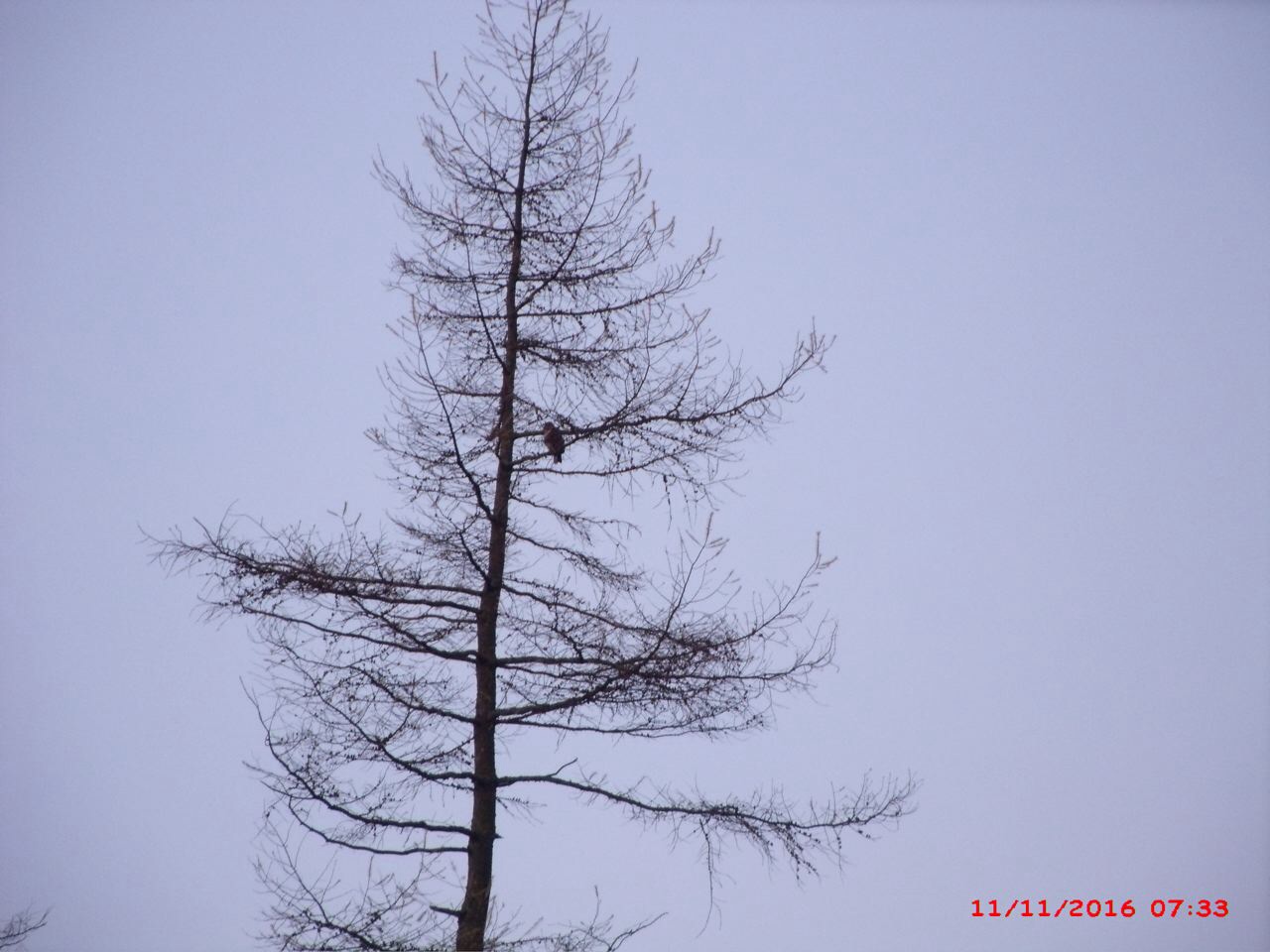
I have written about the pair of crows who reared their young, year after year in the same nest in the large ash tree by our garden.  They have been shot at and persecuted over the years, but, despite that, their courage combined with instinct to reproduce never fails them.  This year they began again. Courtship, mating, nest repair, feeding up the female, her body expanding with her eggs. She began to settle in their nest and he brought her food.  She would occasionally fly with him to chase the buzzard circling overhead.  One day, these conversational birds fell silent.  The nest was empty.  I used my binoculars to scrutinise the nest.  No sign of them. 

One morning I noticed a stranger drive up and park on the fell road, which is high on the horizon above our cottage. His vehicle was pulling a purpose built small square trailer.  My stomach tightened as I thought I knew what it contained.  He opened it up. Yes. I was right. It was a legal trap for catching crows. He carried it on to the farmer’s land, set the trap, came back to his car and drove off.  I realised it was he who had caught and killed our crows.  We successfully fought a pheasant rearer who tried to deploy cages near us.  He has since ceased his pheasant rearing hobby after we confronted him with evidence he was not using the traps humanely and had him investigated. We hoped such traps would not be used here again, but how naive we were.

To add to our cumulative woes, the farmer’s tenant, who lives a short distance from us, decided to fasten a net over the deep eaves to prevent the annual migration of house martins who come from Africa all the way to nest at that cottage. Each year I have had swarms of them overhead, happily working, breeding well and mostly their young surviving to set off south as summer draws to a close. 

Coincidentally, a car drove by our cottage and I could tell the driver was unauthorised.  I went out to meet the stranger to find out what his business was here (we often get deer hunters).  I was very pleased to find it was an 81 year old gentleman revisiting his birth place – the cottage south of ours, where he was born in 1935.  He and his father were ‘herders’ he said.  They were tenant shepherds and the same landowner owned the land to the west of us as well as the land on which we lived, (which has since changed hands twice since we came here). We knew our cottage was previously a bothy which was used by generations of shepherds.  It has an extensive, well built pen area next to it for treating sheep.  The field in front of the cottage also held sheep and had a sheep dip, using the water from the nearby burn to pump up and flush out as the ewes were treated with toxic pesticides. The man told me there were hens kept at the bothy too so the shepherd had something to eat when busy out here. I told him the owner who bought the estate east of the drover road, was an architect.  He was proud of this cottage as he had demolished the old bothy, put 5ft of insulation underneath the foundations, before constructing probably one of the best insulated stone cottages in the area.  I had landscaped the dip and field area, so now we have a mature garden to attract birds, bees and butterflies.

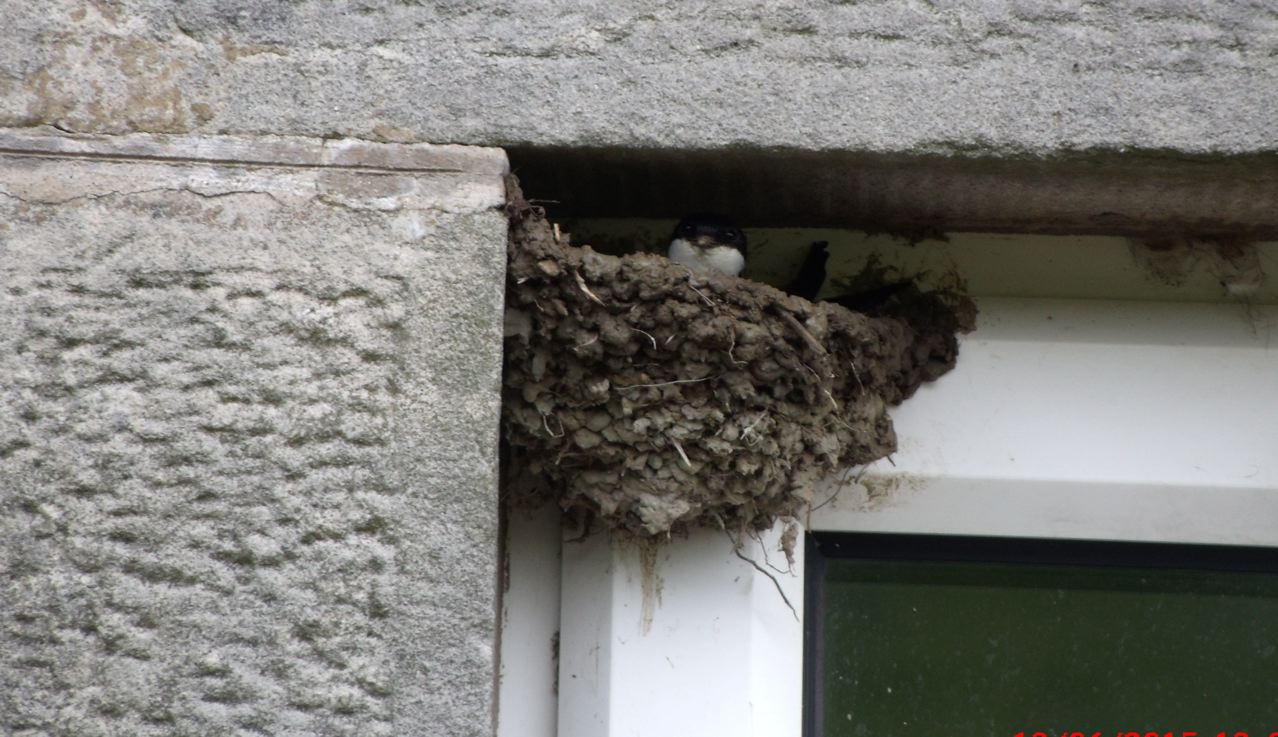
It was good to meet this friendly gentleman.  He agreed the house martins were a welcome sight all the years they came to his family home.  I am so sad about the loss of our pair of breeding crows and the sight of the massing house martins.  However, we are compensated by the sight of a pair of swallows deciding our cottage window was a good place to build their nest.  This is only about 10ft from the ground, and it does have me worried as we and our dogs unavoidably walk so near to it. They knew that as they built it, so they seem to trust their young will not fall out into the mouth of a dog.  They will create quite a mess as they defecate on the window, but I will try to clean up when I can without disturbing them too much.

image

image

image

Completed nest

Posted in anthropocene | Leave a comment