Oil and Me

The River Clyde is about 100 miles of driving from where I live, though much nearer ‘as the crow flies ‘. A recent announcement that drilling for oil may soon commence there has created a campaign by Greenpeace to stop drilling prospects for this fossil fuel. Back in the 1980s the former Defence Secretary, Michael Heseltine, blocked the oil boom off the West coast for fear drilling would interfere with the nuclear submarines travelling to and fro Faslane. The SNP have clearly stated they want Trident out – do they want the oil now instead? Scotland needs revenue and, having argued that revenue from North Sea oil was squandered by the Westminster based government, this might be an opportunity to secure any revenue entirely for the benefit of the Scottish population. But this is in contradiction to the renewables message the country has boasted after the SNP embraced wind farms which now cover thousands of hectares of Scotland’s once wild and untouched landscape.

The history of oil and its power implications is therefore of interest if not crucial.

Whilst 28 year old Prussian, Frederick the Great, was waging war on Austria during 1745, Empress Elizabeth of Russia was no doubt delighted that the first oil well and refinery were built in Ukhta by Fiodor Priadunov. The refinery produced a form of kerosene which was restricted to use in churches and monasteries. The same year oil sands were mined in Merkwiller-Pechelbronn, Alsace under Louis XV direction of a specially appointed Louis Pierre Ancillon de la Sabionniére. (The first modern refinery was built in Pechelbronn in 1857. This oil field was the birthplace of companies like Antar and Schlumberger. It was exhausted in 1970). Oil in tar form was found and used since ancient times, but the concept of drilling for it was what transformed its usefulness. This happened in Pennsylvania on 27th August 1859. A bi-product of oil was kerosene, which replaced whale oil for lighting lamps, and was so abundant it was much cheaper. This boom in oil changed the balance of power in the world to those who lead in how much a country can be said to produce.

In 2014 the Grangemouth Refinery, on the East coast of Scotland, owned by Ineos, was threatened with closure due to a dispute with unions over pay and conditions. This is the only refinery in Scotland.  It has used the vital North Sea gas in the process of refining the oil as it arrived onshore. As the gas ran low in supply, Ineos sought new supplies and purchased it from the results of fracking in the USA. This added to the expense of refining and it was running at a loss.  The only choice was to threaten to close the refinery, killing Scotland’s vital supply.  The First Minister held last minute talks with Ineos.  The next we heard was Ineos were going to invest millions in a new gas storage terminal and had obtained a license to secure gas through fracking on the land they owned around the refinery. This caused an uproar amongst anti fossil, particularly anti frackers, in Scotland.

I appreciate historically oil became the new gold.  All my life I have consumed food packaged in plastic protections, used and cast to waste thousands of plastic items, this keyboard on which I write is plastic as is the casing of the computer I am using. I am unable to imagine my life without plastic. Renewables such as solar panels and turbines, all use plastic to create their durable forms. Humans are dependent on oil, even the Bedouin Wahhabi,  who must use technology if wishing to network with other Wahhabi (as seems to be the case as war rages in the world today).

Oil products surround me, from the clothes I wear to the carpets I walk on to most items I use on a daily basis.  I am trapped by my dependence on products made from oil.  The Rockefeller family made their wealth from buying up failed leases from oil businesses.  By 1877 John D. Rockefeller owned some 90% of American oil businesses, his company became Standard Oil, which gave rise to Exxon, Amoco and Chevron. In 2014, his heirs to his vast fortune withdrew funds from fossil fuel investment as a symbolic gesture ahead of the United Nations summit on climate change, and 800 global investors followed suit. Now investment is directed at renewables. The Rockefeller Fund now aids those anti fracking groups and those fighting the destructive Keystone XL pipeline. They no longer fund tar sand oil extraction. But all that seems ironic to me.  Nothing has replaced oil with something which could then be said to be ecologically sound yet equally so incredible in its many applications. Unless something does replace it, we will continue to depend on it.  Our planet will become uninhabitable as a result, sooner rather than later.

Polymers such as acrylic, polystyrene, polyester – I thought them miracles of science as they developed over my lifetime.  Now we realise they are indestructible and end up in our oceans, ingested by ocean life which dies as a result, tipping the ecosystem into the end game. The plastics I have seen become pervasive over my 68 years have found their way into the oceans and we now see the heartbreaking results.  New plastics will degrade, but these older plastics may take 100 years to finally decompose through abrasion, oxidative degradation and other chemical and biochemical processes. If a mussel eats plastic it will be retained in its gut and is likely to be taken up in the food chain, the plastic then in the gut of another creature, which may have more than one plastic eating creature ingested.

Like many bits of plastic detritus they will be recycled into a new life as part of another product, but, like the recycled plastic which is used to make up the material that forms turbine blades for windmills, that is likely to be the last time they will be recycled.  Multiple plastics, combined to create a solid mass, become too complex to recycle again.  The end destined for many, such as turbine blades, is – horror of horrors – landfill.

TICK, TOCK

Posted in anthropocene | Leave a comment

Technology update and a new blog for 2015

Cold easterly wind today, but not the violent winds which blew in from the Atlantic recently, courtesy of the Jetstream.  As I write, the sun is trying to break through, but it is on its way to sinking in the west.

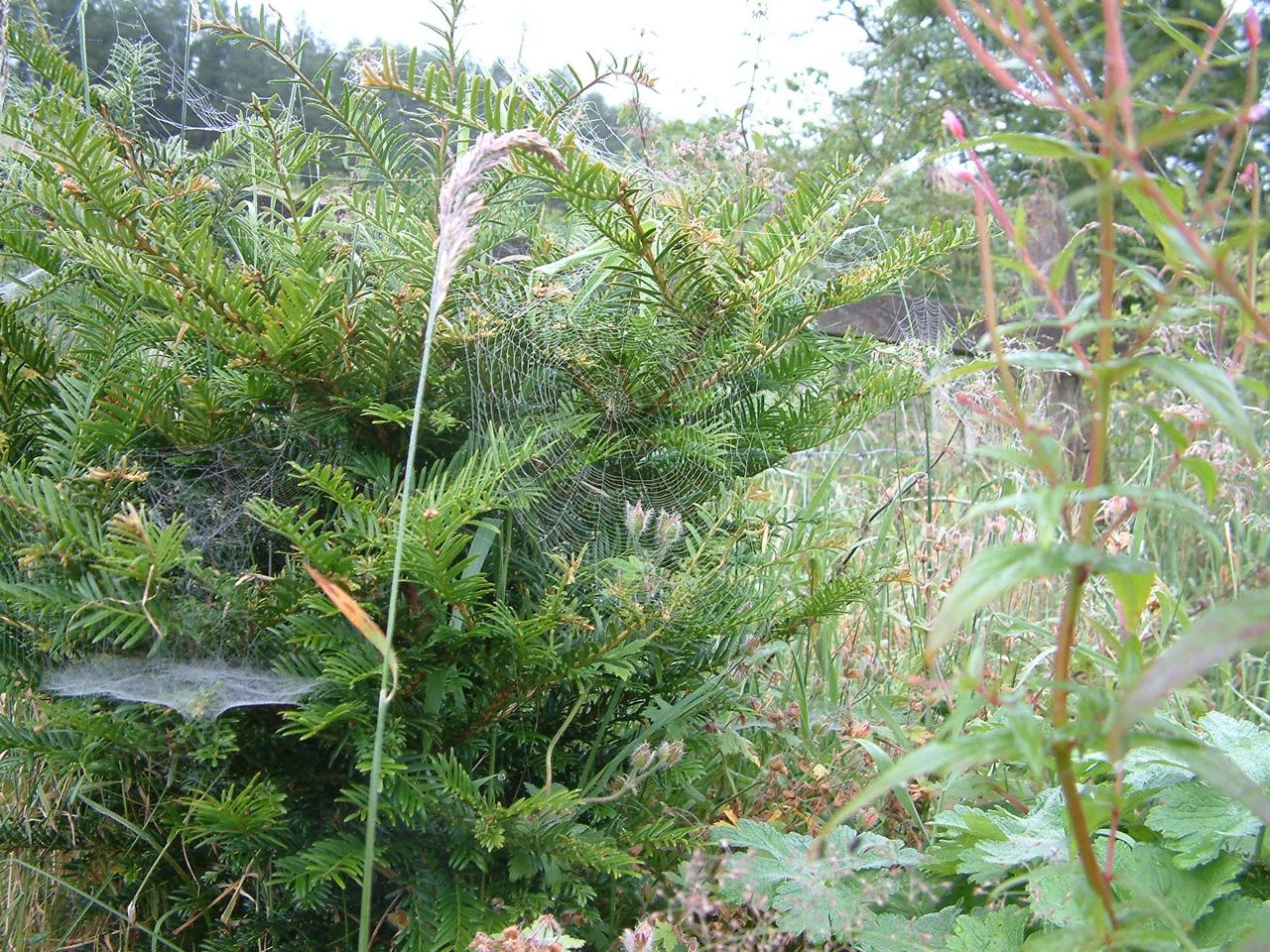
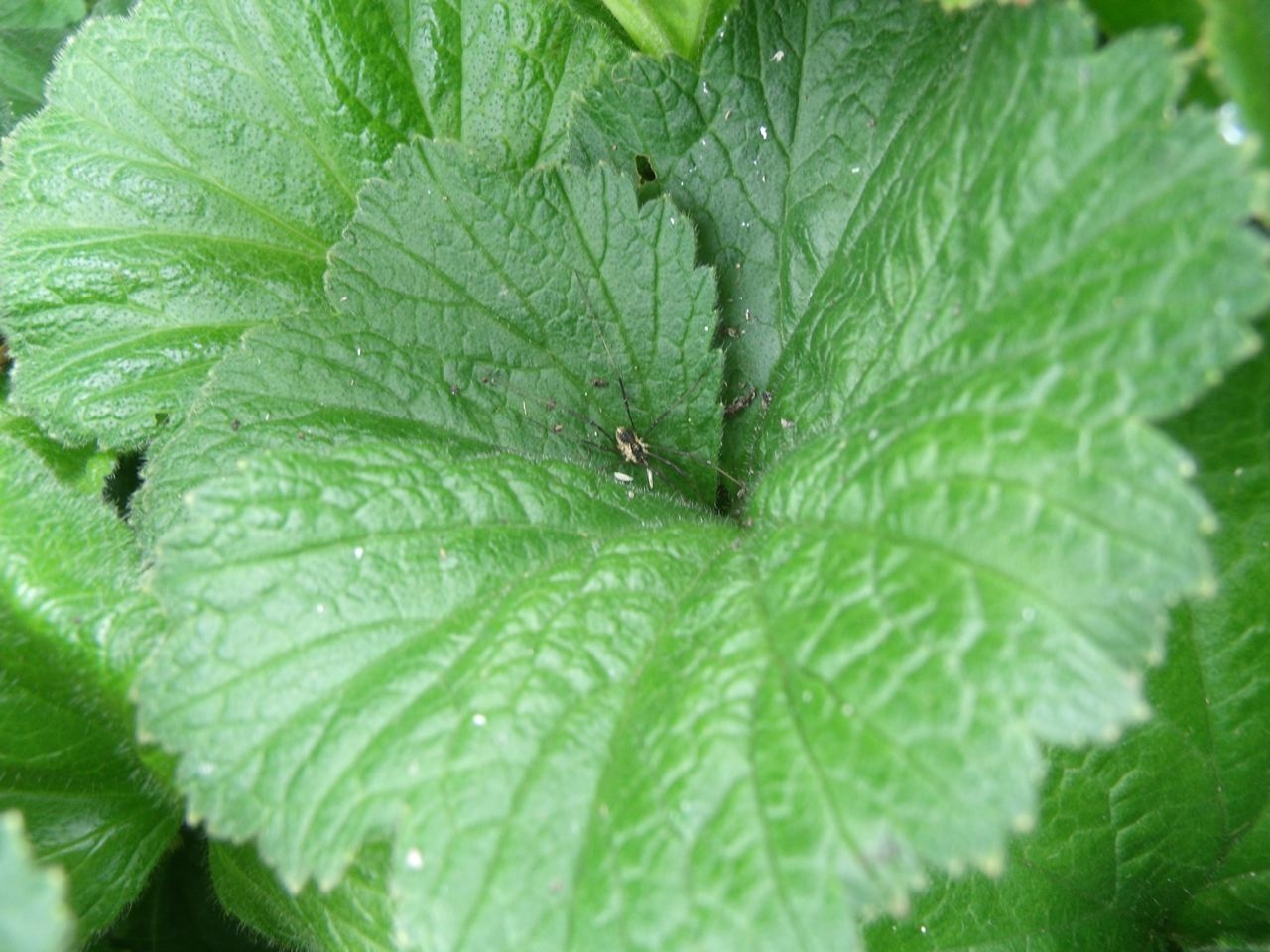
A male spider has climbed the wall in front of me, seeking a partner.

Frogspawn appeared in the ditch near our cottage exactly as it has year after year, on March 10th.

The Equinox will occur on the 20th March, but an amazing lining up of the earth, moon and sun will also take place and we may see the eclipse from our cottage.

The garden is now maturing after 6 years working hard to transform it from a muddy field used by sheep.  It is a joy to watch, season by season, as the variety of trees, shrubs, plants develop and spread themselves.

This short piece is for me to acquaint myself with the process of using a HUDL and a cheap keyboard to get my blog going again.

image

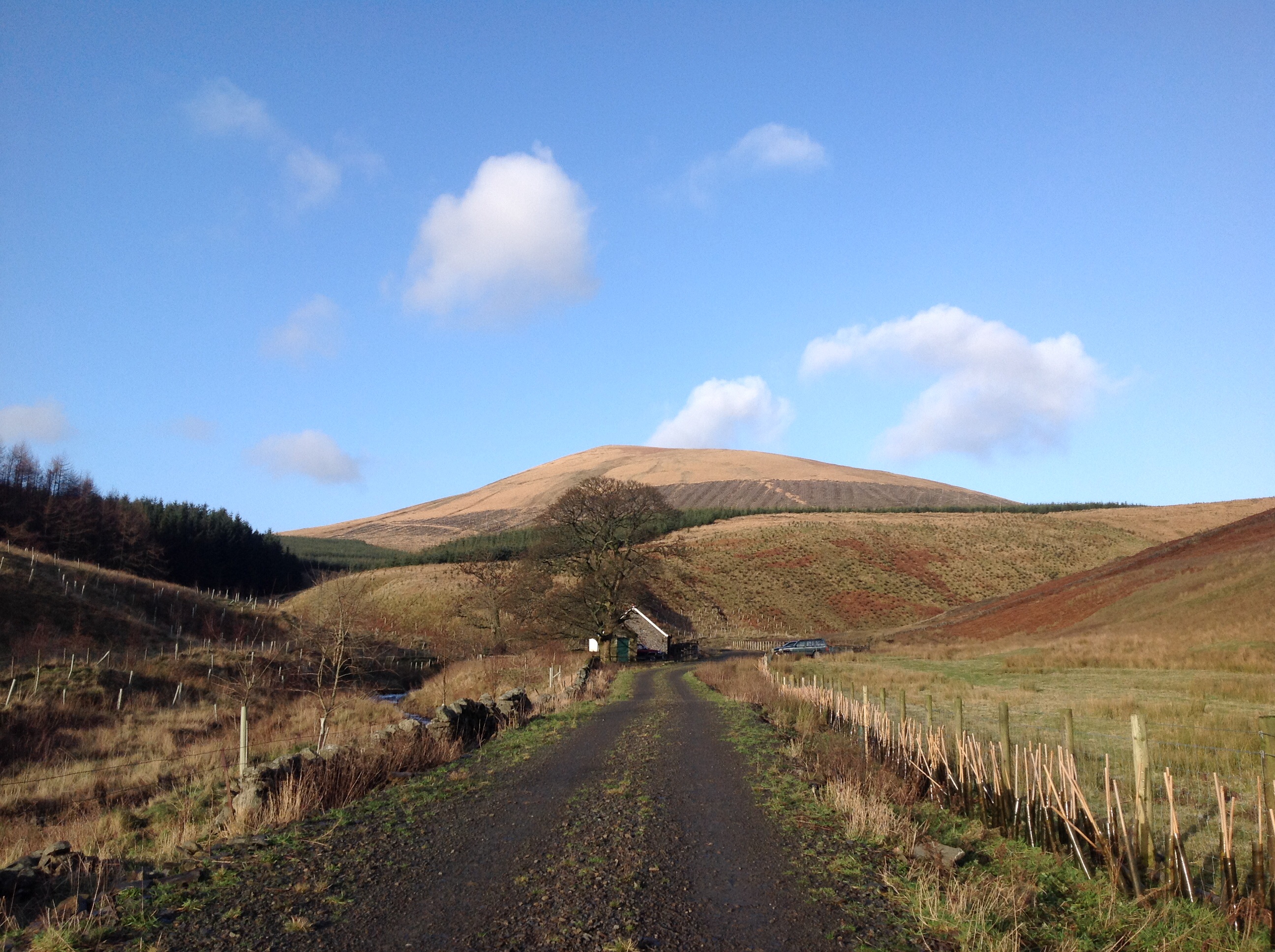
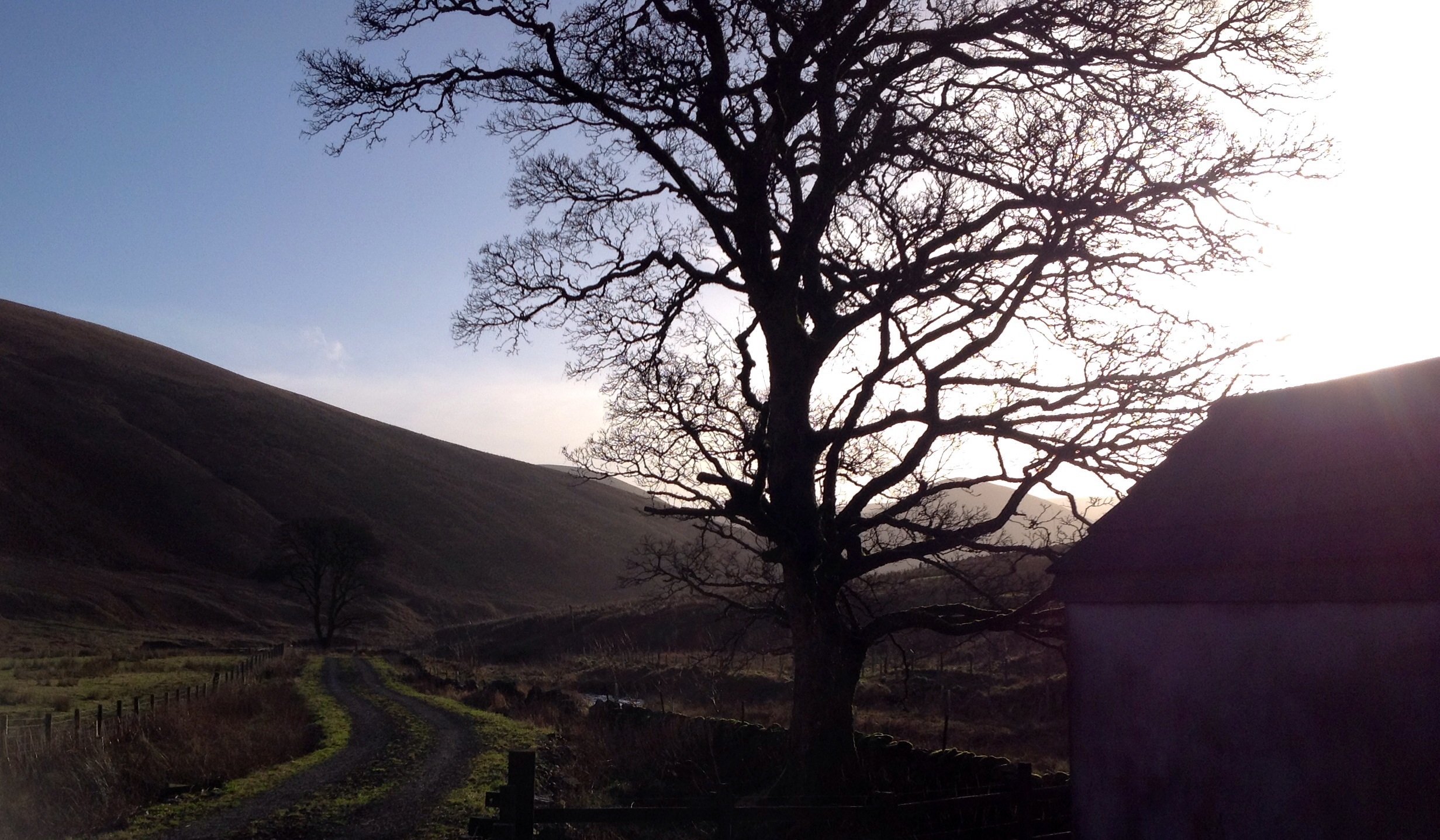
View from the cottage door

Posted in anthropocene | Leave a comment

December storms in the UK

imageCan’t think of many days when it was not raining, ravaging the UK with storm force gales and alternating rapidly between unseasonal warm temperatures and below freezing within hours. December was wild. It was last December, but we thought that was an exception. Think the Jet Stream may be permanently displaced and likely to cause havoc in the Northern Hemisphere for the years ahead.

image

I do have some peaceful days I recorded with my camera, but many days were so dark my camera was kept out of action. As it is the eve of yet another storm as I write this, I am attempting to load some photographs before the storm cuts off our satellite connection.

My old computer and Browser will no longer handle the uploading of photos it would seem, so these photos may arrive in this blog later in the month, as I must borrow another device to load them. It is Boxing Day as we await the storm. I hope to report how it went from our little cottage half way up a mountain in the Scottish Borders.

I am here to tell the tale. The wind was wicked but no damage in our glen. As we move toward New Year, December is set to end with wind and plenty of rain, causing more flooding.

The lichens and mosses have loved the wet conditions and have flourished.

Flourishing lichens and mosses

Flourishing lichens and mosses

The foxes have been chased and hunted by the rabid Boxing Day Hunt as expected.

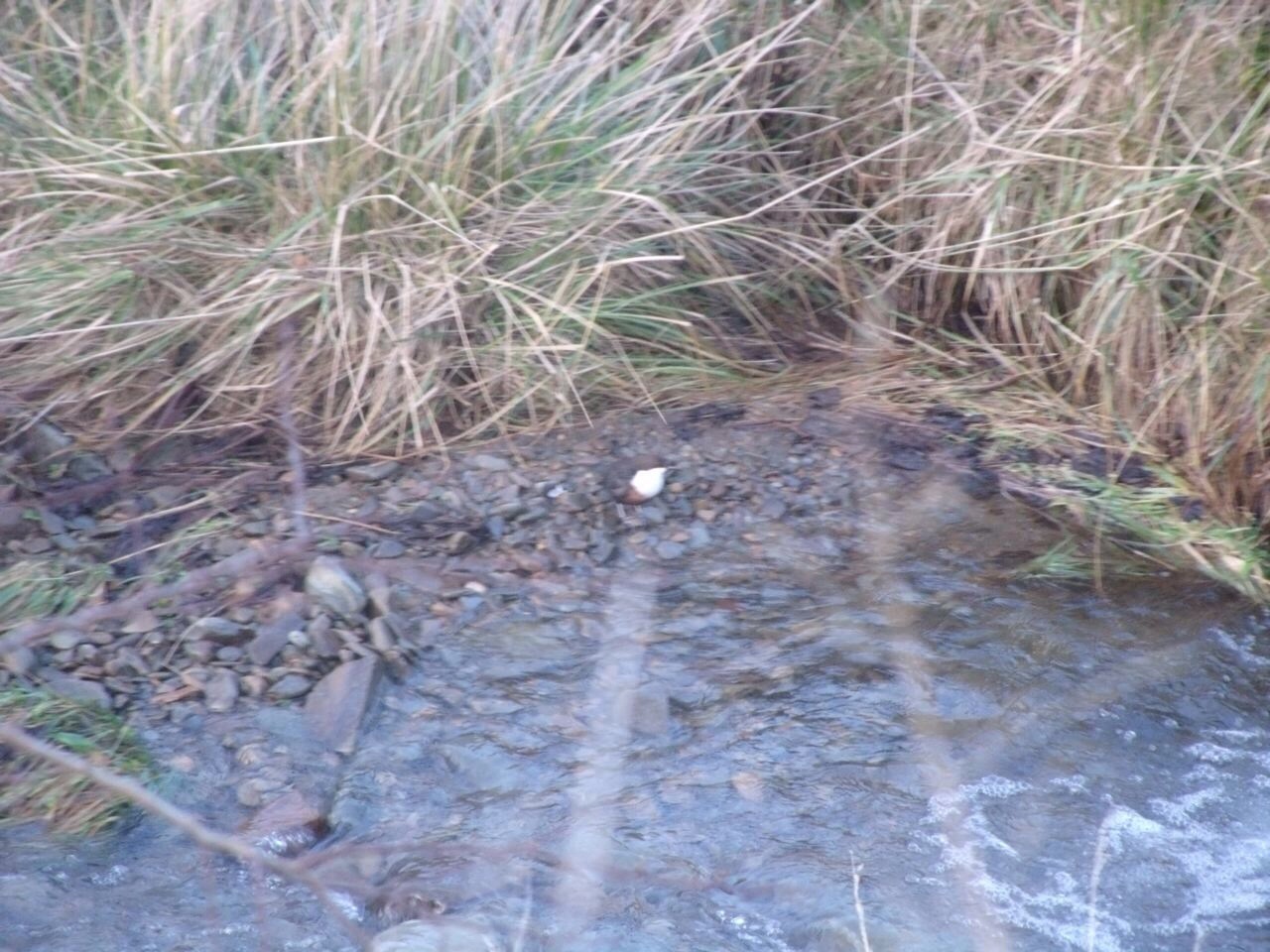
The dippers have paired up and are mating and producing new offspring during these winter months. They are so lovely to watch as they flit along the burn.

Two dippers were catching food at this spot

Two dippers were catching food at this spot

The sky is mostly overcast, heavy with rain or with clouds low on the fell causing fog. Can be depressing if the greyness lasts for days on end.

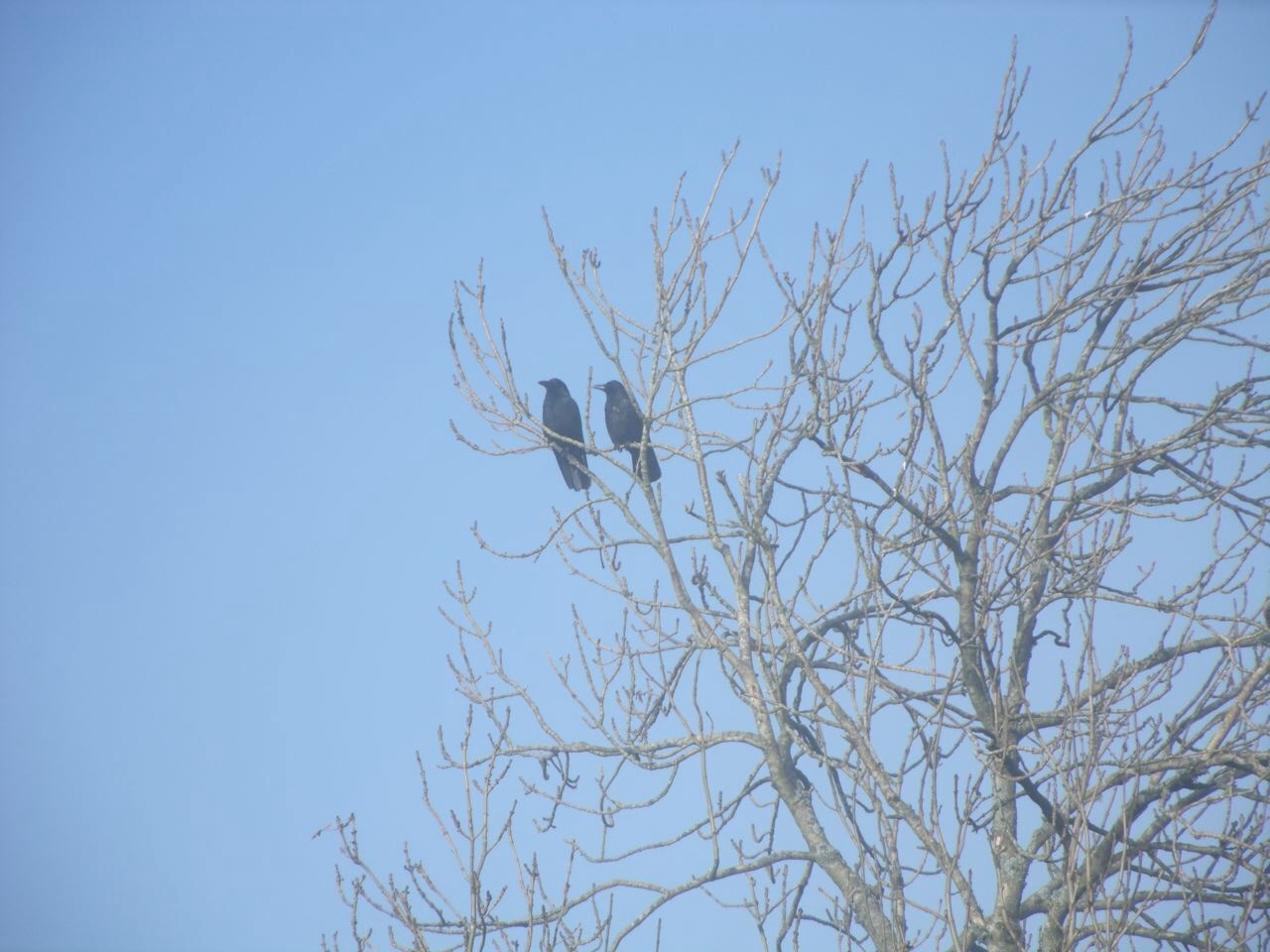
Our local pair of crows defend their territory as ever, chasing off any other pair who fancy this location. They also mob the young buzzard who may attempt to hunt in their chosen patch.

This tough couple have reared offspring for years, against all the odds

This tough couple have reared offspring for years, against all the odds

The tups are now ‘shagged out’ and the pregnant ewes will stoically carry their lambs to April/May to termination.

We see the occasional stoats clad in their white winter coats intended for camouflage. No snow yet so they are easily spotted moving over the fells at amazing speeds to catch prey.

Rabbits and water voles hide in our cottage walls when the weather is bad. We only know which animal it is if they utter a sound, the rabbit being so talkative.

Mice and bats burrow into the roof insulation between the tiles and rafters when the cold wind bites.

The garden soil holds all the larvae of insects, snails and slugs, safe with frogs, bees, butterflies and moths in the warm ground until a rodent comes along and finds a meal there.

Sunrise over the fells

Sunrise over the fells

Dusk on the fells

Dusk on the fells


Nature is doing its thing….I respect that and merely observe the importance of winter as part of the life cycle.

A new day

A new day

Posted in anthropocene | Tagged , , , , , , , , | Leave a comment

November, Mysteries of the Universe

Sun and Storms

As there really have been terrifying storms during November, I thought I would look at both subjects of Sun and Storms. November has been full of amazing and horrifying news.

Back in August 2013 scientists had been preparing us for the 11 year cycle of the sun ‘flipping’ polar magnetism occurring around now, the last weeks November. It obviously became my main research topic for the month.

3rd November 2013

A rare solar eclipse was seen across Africa, Europe and the US. For past and future details of these see http://eclipse.gsfc.nasa.gov/solar.html. Of this eclipse the website states:

“The final event of 2013 is the most interesting eclipse of the year. It is one of the rare hybrid or annular/total eclipses in which some sections of the path are annular while other parts are total. The duality comes about when the vertex of the Moon’s umbral shadow pierces Earth’s surface at some locations, but falls short of the planet along other sections of the path. The unusual geometry is due to the curvature of Earth’s surface that brings some geographic locations into the umbral while other positions are more distant and enter the antumbral rather than umbral shadow. In most cases, the central path begins annular, changes to total for the middle portion of the track, and reverts back to annular towards the end of the path. However, November 3 eclipse is even more unique because the central path begins annular and ends total. Because hybrid eclipses occur near the vertex of the Moon’s umbral/antumbral shadows, the central path is typically quite narrow.”

7th November 2013

An article in the Guardian http://www.theguardian.com/science/2013/nov/06/chelyabinsk-meteor-russia
followed up on the Chelyabinsk meteor which hit in February of this year:

An international team of researchers, led by Olga Popova at the Russian Academy of Sciences, visited Chelyabinsk and 50 nearby villages in the weeks after the event to map the extent of the destruction. The shockwave left a trail of damage 55 miles on either side of the rock’s trajectory, according to a report in the journal, Science.

“Our goal was to understand all circumstances that resulted in the damaging shockwave that sent over 1,200 people to hospitals in the Chelyabinsk blast area that day,” said Peter Jenniskens at Nasa’s Ames Research Centre in California.

The unforeseen arrival of the meteor and the violence of its impact were a wake-up call, according to Qing-Zhu Yin, an author on the study at the University of California, Davis. “If humanity does not want to go the way of the dinosaurs, we need to study an event like this in detail,” he said.

Further details of the Chelyabinsk strike appear in two reports in the journal Nature. The first, led by Jirí Borovicka at the Academy of Sciences of the Czech Republic, traces the orbit of the meteor back to another object, known as asteroid 86039. This asteroid has also orbited close to Earth and was probably once part of the same rock as the Chelyabinsk meteor.

The second Nature study, led by Peter Brown at the University of Western Ontario, calculated the energy of the Chelyabinsk airbust at 400 to 600 kilotonnes of TNT, but found that scientists’ models for estimating damage from airbursts were off the mark. The glitch in the models means that the number of space rocks with sizes of the order of tens of metres, which pose a threat, may be ten times greater than previously thought.

This was a report at the time:

The Chelyabinsk meteor was a Near-Earth asteroid that entered Earth’s atmosphere over Russia on 15 February 2013 at about 09:20 YEKT (03:20 UTC), with an estimated speed of 18.6 km/s (over 41,000 mph or 66,960 km/h), almost 60 times the speed of sound.[1] It quickly became a brilliant superbolide meteor over the southern Ural region. The light from the meteor was brighter than the sun. It was observed over a wide area of the region and in neighbouring republics. Eyewitnesses also felt intense heat from the fireball. (added from http://en.wikipedia.org/wiki/Chelyabinsk_meteor).

(The last time a six-mile-wide rock hit the planet was sixty-five million years ago, when it thundered into what is now the Yucatan Peninsula, creating a hundred-mile-wide crater. The climatological fallout contributed to the mass extinction of not just the dinosaurs but also some seventy-five per cent of all animal and plant life. If the smaller Chelyabinsk meteor had come in above a city like New York, it would have injured many more than the twelve hundred it did in Russia. Despite astronomers’ herculean efforts to detect and map all the potential threats—a catalogue of so-called Near Earth Objects now stands at just over ten thousand—astronomers are still unsure about the number of Chelyabinsk-sized bodies and how often they hit us.)

early November – 30th November 2013

Comet ISON stayed in our thoughts as it grazed the sun and then seemed to evaporate on 28th November, Thanksgiving in the USA. By 29th November speculation arose that something was still glowing after all, something seemed to survive the journey of the Comet. A video made by observing campaign member John Maclean shows the comet slicing toward the sun and then something — apparently ISON — emerging from the other side. Maclean is a fellow of the Royal Astronomical Society at Norman Lockyer Observatory Sidmouth in Devon, England.

The discovery stunned many in the comet-watching community and led some to nickname ISON the zombie comet.

Detected just over a year ago, by astronomers Vitali Nevski and Artyom Novichonok using a telescope near Kislovodsk, Russia. ISON is officially named C/2012 S1. The comet has passed through the inner solar system for the first time from outside it, the first time this has happened with so much technology monitoring its every move. Still fresh, this comet is thought to bear the pristine matter of the beginning of our solar system, a fossil relic of the solar system’s formation 4.5 billion years ago. It is believed to be straight from a haze of comets known as the Oort cloud on the fringes of the solar system, comets made from frozen balls of dust and gas in orbit around the sun. For whatever reason, ISON was propelled out of this cloud and drawn toward the heart of the solar system by the sun’s intense gravitational pull, taking 5.5 million-years to arrive at the sun. ISON swept about 730,000 miles over the sun’s surface Thursday about 2 p.m. ET.

Among NASA’s space telescopes taking a look: Swift, Hubble, Spitzer, Mars Reconnaissance Orbiter, Solar and Heliospheric Observatory or SOHO, Chandra, Mercury-orbiting Messenger, and the Stereo twin spacecraft. Thanks to the generous sharing of these images over the Internet, millions watched the approach to the sun. Witnessing something which had taken an inconceivable number of years to get to this point, it was an incredible honour to sit in my armchair and watch with others around the world.

Worth noting:

21st November 2013: Anniversary

Fifteen years ago the first module of the ISS (International Space Station) was launched on board a Russian rocket. Thanks to this innovation, the mysteries of space have been opened up to the world. During the past decade 15 countries have come together to design, assemble, occupy and conduct research inside and outside of the ISS, which is the largest and longest inhabited object to ever orbit the Earth.

http://news.nationalpost.com/2013/11/25/comet-ison-expected-to-zip-by-sun-at-a-mind-boggling-1-3-million-kmh-but-could-shatter-in-intense-heat/

It was on the 25th November when the Comet brightened suddenly, everyone became very excited.

Starting at 7 p.m. EST (0000 UTC) on Nov. 14, the comet’s outburst began, and its brightness quickly jumped to magnitude 5.9. By the following day, it had soared to magnitude 5.1 — a more than 13-fold increase in brightness in less than three-days. Nov. 20), ISON was positioned roughly between the bright star Spica and the planet Mercury. The comet was harder to see as it sped into the rising sun, and after Nov. 22 the comet was hidden by low altitude and the bright dawn twilight. 26th November,

http://newswatch.nationalgeographic.com/2013/11/26/comet-ison-cliffhanger/

Karl Battams, a comet scientist with the U.S. Naval Research Laboratory in Washington, D.C. who blogs on NASA’s Comet ISON Observing Campaign website put it this way on Monday, “Comet ISON is a dynamically new sungrazing comet, fresh in from the Oort Cloud, and the last time we saw an object like this was never! Furthermore, a sungrazing comet just three days from perihelion [closest approach to the sun] has never been studied in this kind of detail—we’re breaking new ground here! When we factor in your standard ‘comets are unpredictable’ disclaimer, what we have is a huge recipe for the unknown.”

Battams said. “Nonetheless, this has been one of the most extraordinary comets we have ever encountered, and just goes to reiterate how beautiful, dynamic and exciting our universe is.”

In January, it was travelling at about 64,000 kilometres per hour. and by November 21st it had accelerated to 240,000 km/h and on 28th November, when ISON comes in range of the sun, calculations are it is moving at an amazing1.3 million km/h.

As the 28th November arrived, all equipment that could be focused on the Comet was switched on beaming pictures and collecting vast amount of data. Although the Comet seemed to disappear as it grazed the sun, it has supplied an amazing amount of data since it has presented a unique event for researchers to analyse the data to further understand our universe.

The Sun has had two south poles for a year now. This amazing life source is forever absorbing human interest, and NASA leads the world with monitoring technology, leading scientists and massive data collection which it shares around the world.

I had to gain some basic understanding first before I read more about what the Sun is doing this month.

In the Ask.com Forum I gained a further understanding of how the Earth and Sun relate:

“The Sun is a magnetic variable star at the center of our solar system that drives the space environment of the planets, including the Earth. The distance of the Sun from the Earth is approximately 93 million miles. At this distance, light travels from the Sun to Earth in about 8 minutes and 19 seconds. The Sun has a diameter of about 865,000 miles, about 109 times that of Earth. Its mass, about 330,000 times that of Earth, accounts for about 99.86% of the total mass of the Solar System. About three quarters of the Sun’s mass consists of hydrogen, while the rest is mostly helium. Less than 2% consists of heavier elements, including oxygen, carbon, neon, iron, and others. The Sun is neither a solid nor a gas but is actually plasma. This plasma is tenuous and gaseous near the surface, but gets denser down towards the Sun’s fusion core…………..

,,,,,,,,,,,,,,Stars like our Sun shine for nine to ten billion years. The Sun is about 4.5 billion years old, judging by the age of moon rocks. Based on this information, current astrophysical theory predicts that the Sun will become a red giant in about five billion (5,000,000,000) years.”

on reading the Solar and Stellar Activity Research Ream’s interesting report at http://www.konkoly.hu/solstart/research.html, I understand from them “The driving force of the solar activity is the magnetic dynamo, whose signatures can be observed on magnetically active stars as well. The working of the solar dynamo shows cyclicities on several time scales, as the long-term monitoring of stars suggest similar behaviour.”

The Sun and its 11 year and 22 year Cycles

We are at the midpoint of Solar Cycle 24, which is the 11 year point when the Sun changes polarisation.

From NASA at http://www.nasa.gov/mission_pages/sunearth/spaceweather/ some further explanations:

“The sun’s magnetic field changes polarity approximately every 11 years. It happens at the peak of each solar cycle as the sun’s inner magnetic dynamo re-organizes itself. The coming reversal will mark the midpoint of Solar Cycle 24. Half of ‘Solar Max’ will be behind us, with half yet to come.

Stanford’s Wilcox Solar Observatory, one of the few observatories in the world that monitor the sun’s polar magnetic fields. have been tracking the sun’s polar magnetism since 1976, using Magnetograms. They are currently monitoring their fourth reversal of the sun’s magnetic field which occur every 11 years.”

However, this particular flip has puzzled some scientists because one magnetic pole of the Sun appeared to flip “too early” last year. For a year now the sun has had two south poles.

Back in 2000, during Cycle 23, the sun had two north poles!

http://science1.nasa.gov/science-news/science-at-nasa/2003/22apr_currentsheet/

“The south pole never really vanished,” notes Riley. It migrated north and, for a while, became a band of south magnetic flux smeared around the Sun’s equator. By May 2000 the south pole had returned to its usual spot near the Sun’s southern spin axis–but not for long. In 2001 the solar magnetic field completely flipped; the south and north poles swapped positions, which is how they remain now.

The page providing this information said:

A supercomputer on Earth. A spacecraft hundreds of millions of kilometers away. Working together they’re getting us ready for the next time the Sun sprouts an extra north pole … or something stranger yet.

Now they have two south poles to ponder.

A further helpful piece from http://sciencequestionswithchris.wordpress.com/2013/08/07/how-often-does-the-suns-magnetic-field-flip/:

“Unlike the earth, the sun is not a solid. The sun is a giant ball of bubbling, shifting, swirling gases. As a result, different parts of the sun can rotate at different speeds. In fact, parts of the sun near the equator rotate much faster than parts of the sun near the poles. Because rotation is what causes the magnetic field, the different rotation speeds cause the magnetic field to twist and knot. For the purpose of illustration, think of a magnetic field as a collection of magnetic field lines that act much likes ropes attached to the North and South poles. As the parts of the sun near the equator rotate faster and get ahead of the rest of the sun, they drag the magnetic field lines ahead, causing them to twist and knot.

Magnetic field lines tend to guide charged particles. The hydrogen ions of the sun are charged, so they are forced to travel somewhat along the magnetic field lines. A knot in the magnetic field lines on the surface of the sun therefore leads to a pocket of hot gas getting trapped on the surface which is unable to boil into space in the usual way. We see this region of trapped gas as a dark spot on the sun’s surface and call it a “sunspot”. Eventually, the knot in the magnetic field either relaxes and the sunspot disappears, or the knot becomes so twisted that the magnetic field lines snap. When the field lines snap, they can no longer keep the hot gas trapped. At this point, the hot gas has been building up pressure, so the snapped field lines causes a violent release of the hot gas. The glowing gas erupts into space, sending a strong fireball of light and matter out into the solar system. This fireball is known as a “solar flare”.

Sunspots and solar flares are therefore caused by a knot in the sun’s magnetic field. The more knots there are, the more sunspots and solar flares there are. Now, remember that the knotting is caused by the equator spinning too fast. As time progresses, the equator gets more and more ahead, the magnetic field lines get more and more knotted, and there are therefore more sun spots and solar flares. This process can not go on forever (the magnetic field cannot become infinitely knotted). Every eleven years the sun’s magnetic field gets so knotted that it all snaps at once. This snap is different than a single break that takes place on a sun spot. The magnetic field lines break all over the place. This colossal snapping every eleven years causes the magnetic field of the sun to flip so that the North Pole switches places with the South pole. This colossal snapping also causes the magnetic field lines to reset back to an unknotted state, leading to few sun spots and solar flares. The sun has been charging ahead on this 11-year cycle of being unknotted, somewhat knotted, very knotted, snapped, unknotted, somewhat knotted, etc. for millions of years. The number of sunspots per month, the number of solar flares, the amount of knotting, and even the brightness of the sun all follow this 11 year cycle.

This article reassures us all that :Solar flares have little direct effect on life on earth’s surface, thanks to the protective cover of earth’s atmosphere and magnetic field. The sun’s magnetic field has been flipping every eleven years for millions of years without any harm to life on earth. ……………..

At http://wattsupwiththat.com/2013/08/05/the-sun-is-about-to-have-a-flipping-magnetic-field-reversal/ they explain:

“When solar physicists talk about solar field reversals, their conversation often centers on the “current sheet.” The current sheet is a sprawling surface jutting outward from the sun’s equator where the sun’s slowly-rotating magnetic field induces an electrical current. The current itself is small, only one ten-billionth of an amp per square meter (0.0000000001 amps/m2), but there’s a lot of it: the amperage flows through a region 10,000 km thick and billions of kilometers wide. Electrically speaking, the entire heliosphere is organized around this enormous sheet.

During field reversals, the current sheet becomes very wavy. Scherrer likens the undulations to the seams on a baseball. As Earth orbits the sun, we dip in and out of the current sheet. Transitions from one side to another can stir up stormy space weather around our planet.

Cosmic rays are also affected. These are high-energy particles accelerated to nearly light speed by supernova explosions and other violent events in the galaxy. Cosmic rays are a danger to astronauts and space probes, and some researchers say they might affect the cloudiness and climate of Earth. The current sheet acts as a barrier to cosmic rays, deflecting them as they attempt to penetrate the inner solar system. A wavy, crinkly sheet acts as a better shield against these energetic particles from deep space.”

According to NASA, the intensity of geomagnetic storms during Solar Cycle 24 may be elevated in some areas where the Earth’s magnetic field is weaker than expected. This fact was discovered by the THEMIS spacecraft in 2008. A 20-fold increase in particle counts that penetrate the Earth’s magnetic field may be expected. Solar Cycle 24 is being studied for its potential effects on Earth. ”

Solar Cycles and Geomagnetic Storms

Geogmagnetic storms

These are temporary disturbances of the Earth’s magnetosphere caused by solar wind shock wave and/or cloud of magnetic field which strikes the Earth;s magnetic field 24 to 36 hours after the event. When Earth-directed, CMEs can cause a space weather phenomenon called a geomagnetic storm, which occurs when they successfully connect up with the outside of Earth’s magnetic envelope.

Alerts are provided at http://www.swpc.noaa.gov/alerts/archive/current_month.html, so on

19th November 2013 this was issued:

Potential Impacts: Area of impact centered on sub-solar point on the sunlit side of Earth. Extent of blackout of HF (high frequency) radio communication dependent upon current X-ray Flux intensity. For real-time information on affected area and expected duration

Those working with space projects know only too well of the dangers, for example the international space station must be ‘re-boosted’ every three months to prevent it from burning up in the atmosphere.

The Skylab station on July 11, 1979 reentered prematurely because of a solar storm event.

Solar Cycle 23 was studied and found many worrying impacts, see http://www.solarstorms.org/Scomputers.html

But an episode in the history of geomagnetic storms : August 28 – September 2, 1859 warned us of what was to come as we increased our technology and communication abilities.

American theoretical physicist, Michio Kaku, has been warning governments to protect their infrastructures from a possible solar storm which might be as extreme as that witnessed in 1859.

From http://www.solarstorms.org/SS1859.html it makes fascinating reading:

The Storm of 1859 was the first event recorded by humans from a truly global perspective, not to be repeated until the eruption of Krakatoa in 1883 turned the sunsets red and crimson the world-over. Newspapers such as the New York Times were active in running extensive stories about the 1859 solar storm, and collecting reports from other countries. The great geomagnetic storm of 1859 is really composed of two closely spaced massive worldwide auroral events. The first event began on August 28th and the second began on September 2nd. It is the storm on September 2nd that results from the Carrington-Hodgson white light flare that occurred on the sun September 1st.

Engineers are working on solutions: see http://www.theengineer.co.uk/in-depth/the-big-story/flare-path-protecting-infrastructure-from-space-weather/1007598.article

Stuart Nathan says, engineers are beginning to understand how space weather could affect today’s technology. Referring to the 1859 event, he says:

“The Northern Lights are normally confined to the highest latitudes within the Arctic Circle, but one day in 1859 the shimmering curtains of light descended far down the globe. Miners in the Rockies thought the bright light behind the mountains was the breaking dawn, clocks being harder to come by than alcohol. The display reached as far south as the Caribbean.”

…………..for telegraph workers in Europe and North America the night was terrifying. The systems went haywire. Operators recoiled from electric shocks. Pylons emitted showers of sparks. Telegraph paper spontaneously caught fire. Some telegraph systems seemed to send and receive messages even though they had been disconnected from their power supplies.

In London, an amateur astronomer called Robert Carrington saw the news of these occurrences and began to think. The previous day, while observing the sun, he had seen a bright flash seeming to erupt from the edge of the solar disc. Could this be connected with the aurora and the strange electrical disturbances?…………….

Carrington was the first to make the connection between the activity of the sun and geomagnetic storms, and the 1859 event, now known as the Carrington Superstorm, is the most powerful solar storm ever recorded.

There are gripping articles available to read from around the world, describing the amazing northern lights at http://www.solarstorms.org/SS1859.html

February 2013 and the launch of SDO

Earlier this year NASA’s Solar Dynamics Observatory satellite was launched. 3 days later, on Valentine’s Day, a solar storm was intense enough to momentarily overwhelm the detectors on NASA’s Solar Dynamics Observatory satellite.

but now the website http://science.nasa.gov/missions/sdo/ informs us of the mission of this amazing satellite. We can read that space weather is not just creating pretty auroras.

“Particles and ionizing radiation from these solar storm events propagate to Earth and enter at Earth’s poles. In some instances, aurora result. The increased particles and radiation produce space weather effects such as changing the ionizing radiation doses for passengers…….
I suggest you look at http://www.hko.gov.hk/education/dbcp/rad_health/eng/r2.htm%5D…….and electronics on polar aircraft flights, disabling satellites, causing power grid failures, and disrupting signals for the global positioning system, television, and telecommunications ………..see details of the impact back in 2002 see http://www.solarstorms.org/Scomputers.html……………..Understanding the science of space weather can lead to a capability to predict space weather.”

Thanks to this satellite, the most amazing images of the sun can be seen at http://sdo.gsfc.nasa.gov/ as the poles battle through their process of switching. Truly astonishing pictures. What a great time to have a career related to these studies of our galaxy. Great time for physicists. but, for amateurs like me, how lucky these images and explanations are sitting on the internet for me to educate myself from the comfort of my armchair. It is wondrous and yet unnerving to think solar storms are on the increase and our electronic world is so vulnerable to this phenomenon.

Is Climate Change also being impacted by the 11 year cycle?

As the Sun is a variable star, this means its magnetic activity and total irradiance vary on a timescale of approximately 11 years.

It is this total solar irradiance which NASA monitors to estimate any possible influence on climate change, Could this energy vary enough to change Earth’s climate?

NASA educates us with:

“Energy from sunlight is not spread evenly over Earth. One hemisphere is always dark, receiving no solar radiation at all. On the daylight side, only the point directly under the Sun receives full-intensity solar radiation. From the equator to the poles, the Sun’ rays meet Earth at smaller and smaller angles, and the light gets spread over larger and larger surface areas ”

The Sun’s magnetic field dominates the solar atmosphere, structures it, drives much of the atmospheric dynamics and produces all the observed energetic phenomena, like flares, jets, coronal mass ejections, etc. Magnetic field and associated solar activity reach all the way into the heliosphere, whose physical parameters, e.g. magnetic field strength and gas pressure follow the variability of solar magnetic activity.”…… and

“Averaged over the entire planet, the amount of sunlight arriving at the top of Earth’s atmosphere is only one-fourth of the total solar irradiance, or approximately 340 watts per square meter.

When the flow of incoming solar energy is balanced by an equal flow of heat to space, Earth is in radiative equilibrium, and global temperature is relatively stable. Anything that increases or decreases the amount of incoming or outgoing energy disturbs Earth’s radiative equilibrium; global temperatures must rise or fall in response.”

Whilst waiting to hear more about confirmation of the ‘flip’, around the world various disastrous weather systems impacted during early to mid November. With advances in technology there are emerging reports of developing tools to predict weather, such as:

Using historical data to understand weather patterns

http://www.sacbee.com/2013/11/18/5924481/nasa-identifies-rare-weather-pattern.html

“Bin Guan, an earth sciences researcher at the University of California, Los Angeles and NASA’s Jet Propulsion Laboratory. at NASA say they have identified a rare weather pattern that will help forecasters predict when California will experience periods of intense and potentially prolonged wet weather.

Guan’s study – a collaboration among scientists at UCLA and the National Oceanic and Atmospheric Administration – found a conclusive link between the alignment of two weather patterns in the Northern Hemisphere and the formation of an “atmospheric river” headed for California.

The results were gleaned in part from data provided by NASA’s 11-year-old Aqua weather satellite – one of more than 40 weather-related satellites that circle the globe.

Atmospheric rivers are narrow bands of wind, often a mile high, that can pack the punch of a hurricane. As they move over the ocean, they become laden with water vapor – and can carry with them as much water as the Mississippi River dumps into the Gulf of Mexico in an average week.

To arrive at his findings, Guan looked at 50 years of data, including information from the California Department of Water Resources for the winter of 2010-11, when 20 atmospheric river storms made landfall.

The two weather systems studied were the Arctic Oscillation* and Pacific/North American teleconnection*. These weather patterns rarely align in a certain way, but when they do the result is intense weather for California. Most troubling is that the weather events have the possibility of playing out over an extended period of time – such as the winter storms in 2010-11, said Guan.

The findings will allow scientists to identify the frequency of the wet weather events, said Duane Waliser, chief scientist in Earth Science and Technology at JPL.”

https://www2.ucar.edu/news/backgrounders/weather-maker-glossary

*Arctic Oscillation (AO)

(Also called the Northern Annular Mode, or NAM). In its positive phase, sea-level pressure is relatively low in the Arctic and high in the midlatitude region to the south. This is associated with a stronger and more northerly vortex encircling the pole and fewer intrusions of cold Arctic air into midlatitudes. The negative phase, with higher-than-usual pressure in the Arctic and lower-than-usual pressure in midlatitudes, features a weaker, more variable vortex and a greater risk of Arctic outbreaks of cold air into eastern North America and Europe. The AO is closely associated with the North Atlantic Oscillation.

The AO trended toward positive values from the 1960s until the early to mid-1990s, with more variability after that point. The winters of 2009–10 and 2010–11 experienced extreme negative values. Large ups and downs on shorter timescales may be in store, but the story looks different in the long run. Based on computer-model results and physical reasoning, scientists have expected the global increase in greenhouse gases to foster a slightly positive AO trend over the coming century. However, research continues on how factors such as melting sea ice might influence the AO’s future, and natural variations will remain important.

Pacific/North American Pattern (PNA)

A prominent teleconnection pattern of climate variability affecting North America, especially in winter. The PNA is shaped by the location of the polar jet stream as it flows from eastern Asia across the Pacific to North America. During the PNA’s positive phase, the jet stream flows more directly across the Pacific, increasing the odds of above-average temperatures across the U.S. West Coast and western Canada. This positive PNA pattern is more likely to occur when an El Niño* event is in progress, while a negative PNA pattern is more likely during La Niña* (see ENSO).

El Niño

The most dominant pattern responsible for interannual, or year-to-year, climate variability across the globe. During an El Niño event, warmer-than-normal sea-surface temperatures occur in the central and eastern equatorial Pacific, while cooler-than-normal temperatures are observed in the western part of the tropical Pacific. In addition, convection over the equatorial Pacific tends to be farther east than the climatological average, bringing more rain to the U.S. Pacific coast and drought to Australia, among other teleconnections. El Niño is the warm (or positive) phase of the El Niño–Southern Oscillation, or ENSO; its structural opposite is La Niña, the cool (negative) phase. Trade winds are weaker than usual during El Niño and stronger than usual during La Niña.

El Niño (Spanish for “The Baby Boy” of the Christmas story) was named more than 100 years ago by Peruvian fishers who noticed the warming water off their shores around Christmas time. El Niño events recur at intervals ranging from about two to seven years and typically last from one to three years. Researchers believe El Niño behavior could change with global warming, although the exact nature of this change remains uncertain.

La Niña

The cool phase of the El Niño–Southern Oscillation, or ENSO. During a La Niña event, cooler-than-normal sea-surface temperatures (SSTs) occur in the central and eastern equatorial Pacific and warmer-than-normal SSTS are measured in the western part of the tropical Pacific. During La Niña, convection over the western Pacific tends to be farther west than the climatological average, bringing heavier-than-usual and more persistent rains to Indonesia and northern Australia, among other teleconnections. Researchers named La Niña (“The Baby Girl” in Spanish) to indicate the opposite phase of El Niño (“The Baby Boy” of the Christmas story); an alternate name is El Viejo (“The Old Man.”). Like its brother, La Niña recurs at intervals ranging from about two to seven years, with events typically lasting from one to three years. Researchers believe La Niña behavior could change with global warming, although the exact nature of this change remains uncertain.

2013 Weather Events

The jet stream seems to be behaving unexpectedly in a series of weather events it has contributed to which have been most alarming. At http://www.natureworldnews.com/articles/4692/20131030/arctic-ice-melt-shift-jet-stream-south-cause-rainy-uk.htm they are considering ice melt might be part of the process which impacts on the jet stream behaviour.

“A new study published in the journal Environmental Research Letters suggests that a loss of Arctic sea ice caused the jet stream to shift further south, thus contributing to an extraordinary run of wet summers experienced by Britain and northwest Europe between 2007 and 2012…………

Typically the jet stream lies between Iceland and Scotland during the summer and weather systems pass north of Britain, but a southerly shift can bring unseasonably wet weather to Britain, which can be unwanted by local farmers and summer tourists in Britain……………

The research team reported that the average extent of Arctic sea ice is declining by about half a million square kilometers per decade, an area equivalent to almost twice the size of the UK.”

Here in the UK we had hurricane-force winds (apparently not a ‘hurricane’ which cannot happen unless the Atlantic sea becomes heated to around 26 degrees, which is thought unlikely in the vicinity of the UK).

The first 6 months of 2013 are nicely documented on
http://www.wri.org/blog/timeline-look-extreme-weather-and-climate-events-2013

We need more of this kind of work. We should work on

Then there are volcanoes. These also affect our weather:

26 – 27 August 1883

One only has to read about the eruption of Krakatoa to understand the impact worldwide.

The eruption of the volcano at Krakatoa, Indonesia in the Pacific Ocean and was a major disaster. The entire island of Krakatoa was simply blown apart, and the resulting tsunami killed tens of thousands of people on other islands in the vicinity.

The volcanic dust thrown into the atmosphere affected the weather around the world, and people as far away as Britain and the United States saw bizarre red sunsets caused by particles in the atmosphere. (see Turner paintings)

Krakatoa showed fresh eruptions in September 2012. http://www.volcano.si.edu/volcano.cfm?vn=262000. This month we have Sinabung (Sumatra, Indonesia): Ash emissions and explosions continue.

Weather implications:

http://volcano.oregonstate.edu/how-do-volcanoes-affect-atmosphere-and-climate

The main effect on weather right near a volcano is that there is often a lot of rain, lightning, and thunder during an eruption. This is because all the ash particles that are thrown up into the atmosphere are good at attracting/collecting water droplets. We don’t quite know exactly how the lightning is caused but it probably involves the particles moving through the air and separating positively and negatively charged particles.

World-wide affects of volcanic eruptions only happens when there are large explosive eruptions that throw material into the stratosphere. If it only gets into the troposphere it gets flushed out by rain

Volcanism produces about 3% of the total CO2 with the other 97% coming from anthropogenic sources.

Some weather events of 2013 around the world to end of November

January 2013

Monsoonal rains inundated parts of northeastern Peninsular Malaysia in late December 2012 and early January 2013. As much as 300 millimeters (12 inches) of precipitation fell over a two-week period.

Heavy monsoon rains impact more than 10 million residents in Jakarta, Indonesia. More than 40 people die, while more than 100,000 are left without homes. The heavy rainfall causes infrastructure problems, like a collapsed dike, that lead to a flooded central business district and train cancellations.

January becomes the hottest month ever experienced in Australia, breaking a record (for both mean and maximum temperatures) in the 103-year record-keeping period.

States throught the Northeast United States experience massive snowfall and blizzard conditions. The largest snowfall from a single storm is recorded in Portland, Maine (31.9 inches), while the sixth-largest snowstorm hits Boston. Hamden, Connecticut witnesses 40 inches of snowfall from the same storm system.

February 2013

Tropical storm Haruna starts in the Mozambique channel and makes its way to Madagascar by late February, leading to at least 26 deaths. Agriculture is heavily affected, exacerbating food security concerns. Emergency relief efforts are slow due to the weather.

Heavy winter storms hit the central United States, affecting the Texas pandhandle, western Oklahoma, and other areas. Wichita, Kansas sees record snowfall, receiving 21.2 inches of snow in February (the previous record was 20.5 inches). Amarillo, Texas is covered in snow drifts, some greater than 10 feet in height.

March 2013

Heavy rains across several parts of Africa result in flash floods and destroyed crops. More than 1,300 residents in the Mbale district of Uganda are displaced, while more than 220 homes suffer damages.

Extreme drought hits New Zealand – deemed the worst drought in 30 years – leading to an estimated loss in export revenue of $820 million USD. Outdoor water use bans and fire bands are implemented, while cattle and sheep are slaughtered due to lack of water and food.

March 2013 is China’s second-warmest March – after 2008 – since record keeping started more than half a century ago.

April 2013

Spain experiences its wettest March on record, with precipitation levels more than three times the 1971-2000 average.

Year-to-date rainfall is the driest on record, at 3.59 inches in California (9.49 inches below average).

In Vienna, Austria, the time period between the last ice day and the first day of summer (25 days) is the shortest since record-keeping began in 1872.

The Central United States experiences extensive flooding, causing rivers to reach record high levels in Illinois, Iowa and Michigan.

April 2013 ranks as Australia’s fifth-warmest average maximum temperature since recordkeeping began at the turn of the 20th century. Temperatures are 1.64°C (2.95°F) above the 1961–1990 average.

May 2013

2013 brings China the wettest May in the the last four decades. Rainfall is 23 percent above average.

In Eurasia, May snow cover extent is the lowest on record for the month. Record-keeping began roughly 45 years ago.

Tropical Cyclone Mahasan hits Bangladesh, affecting almost 1.3 million people. 1.1 million people evacuate to cyclone shelters, almost 50,000 homes are destroyed, and another 45,000 homes are badly damaged. More than a dozen people die.

In Moore, Oklahoma, a severe tornado destroys thousands of houses and businesses, leading to more than 20 deaths. Just 11 days later near El Reno, Oklahoma, another severe tornado hits. Its path is 2.6 miles wide, the widest tornado ever observed in the United States.

The third-warmest May (tied with 1998 and 2005) on record across global land and ocean surfaces occurs, with temperatures at 0.66°C (1.19°F) above the 20th century average.

June 2013

Snow cover in the Northern Hemisphere is the fourth-lowest since 1967, following the three years with the lowest recorded snow cover in 2012, 2010, and 2011, respectively.

Flash floods and landslides in northern India kill more than 1,000 people and leave thousands missing.

One of the most severe heat waves comes to North America. The hottest June temperature on Earth is recorded in Death Valley, California (129.2°F (54.0°C)).

19 firefighters lose their lives battling wildfires in Prescott, Arizona – the single deadliest incident for firefighters in the United States since 9/11.”

(July to Oct data located by me from the Internet)

Oct 28 2013

http://www.weather.com/news/st-jude-day-storms-hurricane-force-winds-batter-britain-uk-20131028

“A savage coastal storm powered by hurricane-force gusts slashed its way through Britain and western Europe on Monday, felling trees, flooding lowlands and snarling traffic in the air, at sea and on land. At least 13 people were reported killed.

It was one of the worst storms to hit the region in years. The deadly tempest had no formal name — and wasn’t officially classified as a hurricane due to a meteorological standard — but it was dubbed the St. Jude storm (after the patron saint of lost causes) and “stormageddon” on social networks.

Gusts of 99 miles per hour were reported on the Isle of Wight in southern England, while gusts up to 80 mph hit the British mainland. Later in the day, parts of Denmark saw record gusts up of to 120 mph and an autobahn in central Germany was shut down by gusts up to 62 mph.

“This was not just a British storm,” said weather.com meteorologist Nick Wiltgen. “The core of powerful winds marched relentlessly east, raking northern France and the Low Countries before slamming into northern Germany, Denmark, and southern Sweden. That latter phase in particular was exceptionally intense, with a 105-mph gust in extreme northern Germany and many many places gusting over 85 mph in the surrounding area.”

Wiltgen warned the high winds would sweep across the southern Baltic Sea and into the countries of Estonia, Latvia, and Lithuania Monday night.”

30th Oct 2013 (see Halloween storm of 1991), a mighty storm hit the the Mid-West and up into Canada on Halloween.

It was not as horrific as in 1991, but was bad – see http://www.weather.com/news/halloween-storm-reports-20131031

Dangerous storms marched east on Halloween night and into Friday morning, creating numerous reports of flooding and wind damage, some of which was caused by reported tornadoes.

“An area of low pressure intensified rapidly as it moved from the Midwest into eastern Canada Thursday into early Friday,” said weather.com meteorologist Chris Dolce. “This resulted in numerous reports of high winds, wind damage and a few tornadoes from the lower and middle Mississippi Valleys into the Ohio Valley and central Appalachians.”

According to The Weather Channel senior meteorologist Stu Ostro, the Halloween windstorm could be considered a “meteorological bomb”, which occurs when the central pressure within a mid-latitude cyclone — such as the one present during the Halloween severe weather — falls on average at least one millibar per hour for 24 hours………..Severe weather expert Dr. Greg Forbes states that at least 29 confirmed tornadoes in seven states from Texas to Ohio touched down on Thursday into the early morning hours of Friday. According to Dr. Forbes, this is a new record for the most confirmed tornadoes on any Halloween on record in the U.S. Most of these were rated EF0 and EF1, though an EF2 tornado touched down near Baker, Mo.

Drought in the US

A long lasting drought has been ongoing since April 2013 in about 34% of the US – see http://www.ncdc.noaa.gov/news/us-drought-monitor-update-november-5-2013

“U.S. Drought Monitor Update for November 5, 2013
Submitted by susan.osborne on Thu, 11/07/2013 – 12:04pm
November 5, 2013 U.S. Drought Monitor Map

According to the November 5, 2013 U.S. Drought Monitor, moderate to exceptional drought covers 32.2% of the contiguous United States, a decrease from last week’s 34.7%. However, the worst drought categories (extreme to exceptional drought) increased slightly from 2.8% last week to 2.9%. A frontal low pressure system dumped heavy rain across parts of the Southern Plains and Midwest, with cool dry air following behind it. The rain improved drought conditions in the Plains and Midwest, while coastal rain and mountain snow showers trimmed some drought areas in the West, but drought expanded in Hawaii.”

most of us are aware of the horrific Typhoon which hit the Philippines:

http://beforeitsnews.com/weather/2013/11/monsterous-typhoon-storm-surge-ravage-philippines-12000-dead-1-million-evac-predicted-2441896.html

NOV. 9, 2013: Super Typhoon Haiyan – Yolanda, as the storm is known in the Philippines – on Thursday, November 7, became the strongest typhoon or hurricane of 2013 and one of the strongest storms ever recorded. The storm plowed across the Philippine islands after making landfall on Samar, in the region of Eastern Visayas, with maximum sustained winds at 195 mph. That’s well above the Category 5 classification used for Atlantic and East Pacific hurricanes and just 6 mph shy of an EF-5 tornado.

This storm made Katrina look like a squall.

Then the Mid West of America:

17 Nov 2013 meteorologists for the National Weather Service have determined that at least 16 tornadoes struck Illinois and northwest Indiana

Midwest US Cleans up 2013’s Biggest Severe Weather Outbreak

Damage surveys continue in the Midwest U.S. after a stunning and violent late-season severe weather outbreak swept through on Sunday, killing at least eight people and leaving widespread significant damage.

Two violent EF-4 tornadoes and one strong EF-3 tornado hit Illinois, killing six, making Sunday Illinois’ deadliest November day for tornadoes in its history. The most widespread damage from Sunday’s outbreak occurred in the town of Washington (population 16,000), about 140 miles southwest of Chicago, where a violent EF-4 tornado destroyed or heavily damaged 250 – 500 homes and an apartment complex.

NOAA’s Storm Prediction Center logged 85 preliminary tornado reports from Sunday, along with 455 reports of high wind gusts and 32 reports of hail. Seventeen of the wind gusts were in excess of 74 mph (hurricane strength.) The grand total of 572 severe weather reports (filtered to remove duplicates) for the day were the most of any day of 2013, surpassing the 538 total reports from June 13. The 85 preliminary tornado reports is also the highest for any day of 2013, surpassing the 62 reports from January 29.

Sunday’s November tornado outbreak: how rare?

Sunday’s outbreak will probably rank as the second to fourth most prolific November tornado outbreak since 1950. But what was really remarkable about the outbreak was how far north it extended. With three confirmed tornadoes on Sunday, Michigan has increased its total number November tornadoes observed since 1950 by 50%, from six to nine. Prior to Sunday, Indiana had recorded 57 November tornadoes. That total increased by 26 on Sunday, which was the 3rd busiest day for tornadoes in Indiana history (the record: 37 tornadoes on June 2, 1990.) Seven confirmed tornadoes occurred in the 23-county region of Northeast Illinois and Northwest Indiana serviced by the Chicago NWS. Prior to Sunday’s tornado outbreak, there had been just twelve November tornadoes in this region since accurate tornado records began in 1950. The 101 tornado warnings issued in Illinois on Sunday represented 52% of all November tornado warnings issued in the state since 1986. The two EF-4 tornadoes that struck Illinois were the 2nd and 4th most northerly EF-4s ever recorded in the U.S. during the month of November, according to data from the Tornado History Project. Prior to Sunday, only twenty EF-4s had occurred in the U.S. in November dating back to 1950. Also notable is the fact that the intensity and areal extent of this severe weather outbreak resulted in widespread damage over a huge area, making it possible that this will be the first November severe weather outbreak in history to exceed $1 billion in damages. November severe weather outbreaks are rare enough and our database poor enough that we cannot make any definitive statements on how climate change may be affecting them, but one would expect to see cold-season severe weather events become increasingly common farther to the north in a warming climate.

November 19, 2013

Sardinia: Cyclone* Cleopatra was the worst storm in decades, rivers burst their banks, cars were swept away and bridges collapsed in the towns of Olbia and near Nuoro. Cleopatra dropped 450mm of rain in an hour and a half overnight.. People were vulnerable, many living in poor quality buildings, particularly in coastal areas. Cleopatra also given the name Ruven by the Free University of Berlin, was an extratropical cyclone in the western Mediterranean Basin in November 2013.The low pressure system developed slow-moving embedded thunderstorm complexes, as cold air flowing from the north entered the Mediterranean and interacted with warm moist air to the east.

*Cyclone:

In meteorology, a cyclone is an area of closed, circular fluid motion rotating in the same direction as the Earth. This is usually characterized by inward spiraling winds that rotate anti-clockwise in the Northern Hemisphere and clockwise in the Southern Hemisphere of the Earth.

Most large-scale cyclonic circulations are centered on areas of low atmospheric pressure. The largest low-pressure systems are cold-core polar cyclones and extratropical cyclones which lie on the synoptic scale.

According to National Hurricane Centre glossary,(http://www.nhc.noaa.gov/aboutgloss.shtml) warm-core cyclones such as tropical cyclones and subtropical cyclones also lie within synoptic scale.Mesocyclones, tornadoes and dust devils lie within the smaller mesoscale. Upper level cyclones can exist without the presence of a surface low, and can pinch off from the base of the Tropical Upper Tropospheric Trough during the summer months in the Northern Hemisphere.

Cyclones have also been seen on extraterrestrial planets, such as Mars and Neptune.Cyclogenesis describes the process of cyclone formation and intensification.Extratropical cyclones form as waves in large regions of enhanced mid-latitude temperature contrasts called baroclinic zones. These zones contract to form weather fronts as the cyclonic circulation closes and intensifies. Later in their life cycle, cyclones occlude as cold core systems. A cyclone’s track is guided over the course of its 2 to 6 day life cycle by the steering flow of the cancer or subtropical jet stream.

22 November 2013

Cyclone Helen has made landfall across the eastern coastline of India bringing along strong winds and heavy rain. 13 hectares of crops were destroyed by flooding.

24th November 2013

JAKARTA: Indonesia ordered the evacuation of 15,000 residents near an active volcano in the west of the vast archipelago on Sunday as authorities raised the alert for the emergency to the highest level.

Mount Sinabung on the island of Sumatra has become increasingly active in recent months, spewing columns of ash several km into the air.

Nov 26th 2013

Snapshot of Volcanic activity in the world

http://www.volcanodiscovery.com/volcano-activity/news/39449/Volcanic-activity-worldwide-26-Nov-2013-Merapi-Santa-Mara-Santiaguito-Pacaya-Fuego-Popocat.html

Volcanic activity worldwide 26 Nov 2013: Merapi, Santa María / Santiaguito, Pacaya, Fuego, Popocat
Tuesday Nov 26, 2013 18:57 PM |

Etna (Sicily, Italy): No changes in activity have occurred since yesterday. Very occasionally, glow from the summit vent at the NSEC and from a vent at its southern base is visible, suggesting ongoing sporadic deep-seated explosions inside the cone. Tremor is low at the moment.

Ulawun (New Britain, Papua New Guinea): Activity continues. Darwin VAAC reported a small gas and perhaps ash plume at 12,000 ft (3.6 km) altitude this morning.

Sinabung (Sumatra, Indonesia): Ash emissions and explosions continue. So far, about 18,000 people have been evacuated from the most endangered zones in a radius of 5 km around the volcano.

Merapi (Central Java): Particular vigilance should be maintained to monitor the volcano. A large crack, about 230 m long and 50 m wide, has appeared in the lava dome that had been emplaced in the summit crater at the end of the 2010 eruption. It increases the current risk of sudden collapse of the dome, resulting in rock avalanches and dangerous pyroclastic flows. Even a smaller phreatic explosion than the one from 18 Nov could trigger this.

Popocatépetl (Central Mexico): No significant changes in activity have occurred. Only 8 weak emissions / explosions were recorded by CENAPRED during the latest 24 hr observation interval.

Santa María / Santiaguito (Guatemala): The INSIVUMEH observatory reports weak to moderate explosions with ash plumes up to 700 m height and constant block avalanches from the rims of the Caliente lava dome, sign that effusive activity has increased somewhat.

Pacaya (Guatemala): Strombolian activity continues, but has been weak over the past days.

Fuego (Guatemala): The lava flow on the upper southern slope was no longer active this morning (while it was still 100 m long yesterday). The volcano is back to its typical mild explosive activity from the summit crater with strombolian bursts generating ash plumes up to about 600 m high, sometimes accompanied by loud shock waves.

Jebel Zubair (Red Sea): Satellite images show signs of ongoing activity (steam plume, discolored water) at the new island at least until 20 November. A satellite image from 24 November shows no such signs any more, suggesting that the activity has stopped or paused.

Nov 27, 2013

Suwanose-jima volcano (Japan): new eruptions reported

Explosive activity has resumed at the remote volcano in the Tokara Island chain. VAAC Tokyo reported explosions yesterday and this morning, with ash plumes rising to 4,000-6,000 ft (1.2-1.8 km) altitude.

“There was a modest fireball over southern Quebec just after 0047 (Universal Time = 7:47 p.m. EST),” writes Peter Brown, director of the Centre for Planetary Science and Exploration at the University of Western Ontario.

28th November 2013

Mount Etna

A new paroxysm has started at the New SE crater. Following weak strombolian activity during the past days, this afternoon, started to rise steeply this afternoon. At the time of this update, there are increasingly strong strombolian explosions or pulsating lava fountains at the New SE crater and an ash plume has started to rise. Bad weather inhibits good observations, but occasional views can be obtained especially from the NE side.

As November 30th arrives, I used http://www.historyorb.com/events/november/30 for events which happened relevant to this blog.

1954 – 1st meteorite known to strike a woman (Liz Hodges-Sylacauga Ala)

1988 – Cyclone lashes Bangladesh, Eastern India; 317 killed

And as November ends, we now have a new island south of Tokyo. A small island that was formed by a volcanic eruption last month. The eruption was the first reported in the area since the mid-1970s. Most volcanic activity there goes undetected, because it goes on deep below the surface on the seabed along the Izu-Ogasawara-Marianas Trench. About 660 feet in diameter, the new island is just off the coast of Nishinoshima in the Ogasawara chain, which is also known as the Bonin Islands. Maybe this volcanic activity killed the oarfish which were washed up on the California coast so dramatically on 18th and 22 October. One of the carcasses measured 4.3m (14ft) and the other 18ft. They can grow to 50ft long. They are the largest bony fish in the world. These were rare sightings since they live at the bottom of the oceans and when seen Japanese folklore believes them to be predictors of earthquakes.

http://www.nhc.noaa.gov/ tells us the neat news that:

Hurricane season in the Atlantic begins June 1st and ends November 30th. The Eastern Pacific hurricane season begins May 15th and also ends November 30th. So it’s a wrap. No more hurricanes for the Eastern Pacific for a while.

There are also no imminent Cyclone alerts.

Volcanoes continue to be monitored as above, but no sign of threats to the climate as with Krakatoa.

The jet stream continues to be a major factor as it sweeps south of where it should be,bringing wind and rain, but nothing too extreme.

And today, 30th November, a welcome headline on a topic run on earlier blogs:

“Gloucestershire badger cull to end as targets missed” Sanity prevails at long last after 708 badgers were killed in the county, 942 fewer than the target of 1,650. The idea went against scientific advice and the killers could not carry out what they promised. 708 badgers died needlessly and the problem of TB in cattle has likely been worsened.

Posted in anthropocene | Leave a comment

Life as we know it

Boron

Beginning of October I noted the Media covered the topic of Boron from different areas of scientific discovery. As a human being, I cannot help looking up at the wonderful display of stars over our cottage and wondering about the origins of life. All I can do is wonder, but I was excited to read about Boron in two different scientific areas, which reveals October 2013 as the month of amazing Boron related findings.

First:
4000 year old brains have been excavated from the Seyitömer excavation site,in Turkey’s western province of Kütahya this October.

Altinöz, one of the scientists at the site, said:

“four preserved brains and seven skeletons had been found at Seyitömer, and a fault line had also been found nearby along with traces suggesting the wood lying together with the skeletons had been burning. Building on these premises, Altinöz said they assumed that an earthquake had taken place during a fire, burying the bodies deep in the soil and boiling brains in their own juices, thus creating the necessary conditions to preserve the brains…….. it was not only the high temperatures and anoxia, but also the soil’s main elements that helped conserve the brains for 4,000 years…….

“We found hefty amounts of elements, all alkaline, within the soil that the skeletons and brains were buried in. These elements such as sodium, potassium, aluminum and manganese, both drain the water in the tissues and help the brain’s oil to saponify,” said Altžnöz. He added that the soil was full of the boron mineral, which is known for its high temperature resistance, and Turkey had the biggest reserves of this mineral in the world.

Besides building resistance against high temperatures, boron also has the effect of sending bugs away, as well as killing microbes and bacteria.

He went on to say “Due to boron’s characteristics, we have specified that this mineral is also a factor in the conservation of the brains, as we have found plenty of boron both in the skeletons and the soil” For more see:

http://www.hurriyetdailynews.com/bronze-age-boiled-brains-shake-science.aspx?pageID=238&nID=56024&NewsCatID=375

Secondly:

Whilst we have been absorbed with watching meteor showers in August, we now learn that meteors arriving from Mars contain boron.

http://Discoverynews.com reported that, at the NASA Astrobiology Institute at the University of Hawaii, biologist James Stephenson, understood how important boron could have been in the origins of life, stabilizing a part of RNA. In 2004, chemist Steven Benner, with the Foundation for Applied Molecular Evolution in Gainesville, Fla., proposed that ribose’s secret helper was boron.

And what is ribose ask I?

The article answers:

RNA is comprised of three basic components: phosphate, a ribose, which is a five-carbon sugar, and a nucleobase. Both phosphates and nucleobases have been found in meteorites previously. Ribose has never been found beyond Earth.

RNA is a biological molecule, which scientists believe was the stepping stone for life on Earth. It, like deoxyribonucleic acid, or DNA, which evolved later, can store and transmit information to cells.

Of the three parts that make RNA, the ribose is the tricky part. We haven’t been able to explain how it could form naturally,” Stephenson said.

“If one thinks that life originated with RNA that formed pre-biotically, we know of no other way of getting ribose in adequate amounts other than to use borate,” Benner wrote in an email to Discovery News.

“It’s the unique size of the boron which is able to stabilize the ribose ring structure. No other element has been shown to have that effect,” Stephenson added.

After reading Benner’s paper, Stephenson asked a geologist colleague if any of the Mars meteorites recovered on Earth had been analyzed for boron. They hadn’t, so Stephenson arranged a study.

The team hit the boron lottery in the final hours of their assigned time on a highly specialized ion microprobe at the University of Hawaii.

The scientists next plan to test if an Earth clay with the same amount and configuration of boron found in the meteorite can actually stabilize ribose.

Parts of the rock contain rich concentrations of boron, which biochemists suspect played a key role in the development of ribonucleic acid, or RNA.

Source:
http://news.discovery.com/space/asteroids-meteors-meteorites/mars-meteorite-
life-building-blocks-130617.htm

Look up Boron and you will find Turkey is sitting on an amazingly rich deposit which lends itself to so many uses, Turkey is likely to become suddenly very rich, like Mongolia with its massive resources of the precious rare earth neodymium. The world of electronics is devouring boron and neodymium, never mind all the other implications for boron.

Then the remarkably named ‘Fossil Fish Face’

Back in September it was reported widely in the media (for eg.
http://news.sky.com/story/1146869/fossil-fish-face-find-stuns-scientists)
that the finding of this fossilised fish (ostheichthyans – bony fish) did not independently acquire their bony skeletons, they simply inherited them from their ancestors.” And this is “the most exciting news in palaeontology since Archaeopteryx or Lucy,”
referring to two fossil discoveries crucial to our understanding of the evolution of birds and humans.

This might make us consider the skeleton of the fish we may be about to cook for our tea, and wonder at this possible descendant of the ancient armoured placoderms (prehistoric fish) now evidenced in this amazing find.

Near the southern Chinese town of Quijing a 20cm-long fossil, now named Entelognathus primordialis (meaning primordial complete jaw) was found. It has caused controversy as theories that modern vertebrates with bony skeletons evolved from a shark-like creature with a frame of cartilage may be disproved as a consequence. This prehistoric fish has a jaw and skull-like features similar to humans. The fish lived in the seas of China during the Late Silurian period around 420m years ago. Matt Friedman and Martin Brazeau said the implications were “stunning”.

Commenting on the find, palaeontologists “It will take time to fully digest the implications of such a remarkable fossil, but it is clear that a major reframing of our understanding of early jawed vertebrate evolution is now in full swing,” they wrote in Nature magazine.

Brian Choo from Beijing’s Institute of Vertebrate Palaeontology and
Palaeoanthropology said: “This astounding discovery does throw a spanner in the works of some long-held ideas about vertebrate evolution. The implications are clear: ostheichthyans (bony fish) did not independently acquire their bony skeletons, they simply inherited them from their ancestors.”

John Long, a professor of palaeontology at Flinders University in Australia said: “This finally solves an age-old problem about the origin of modern fishes. “We now know that ancient armoured placoderms (prehistoric fish) gave rise to the modern fish fauna as we know it.” Prof Long described the discovery as “the most exciting news in palaeontology since Archaeopteryx or Lucy,” referring to two fossil discoveries crucial to our understanding of the evolution of birds and humans.

Migrating Geese

Whilst geomagnetic storms interfered with GPS signals in parts of the world, the Barnacle and Pink Footed Geese crossed the North Sea . The entire population of the Norwegian Svalbard archipelago spend the winter along the Solway Firth, the majority within Dumfries and Galloway. They fly over our cottage, and without fail arrive on time, despite the space weather storms.

What must they think of the Aurora Borealis they must see as they sweep across the northern hemisphere? Hearing their calls, like screaming women having a night out, warns me they will soon be here, hundreds flying in their familiar ‘V’ across the grey sky (as it happened to be low cloud both days they came over).

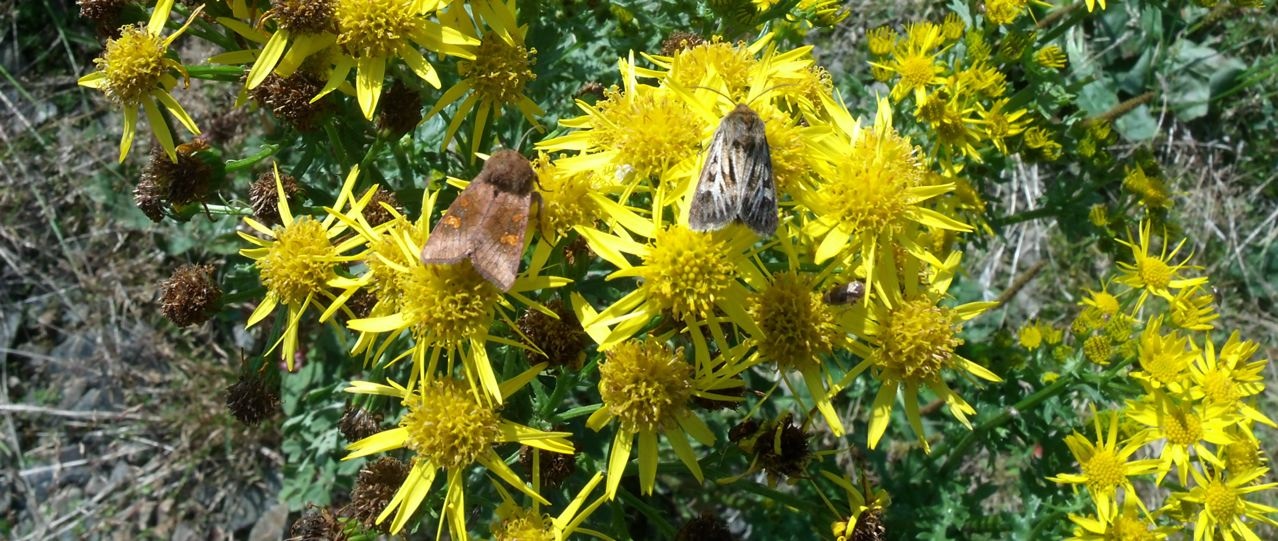
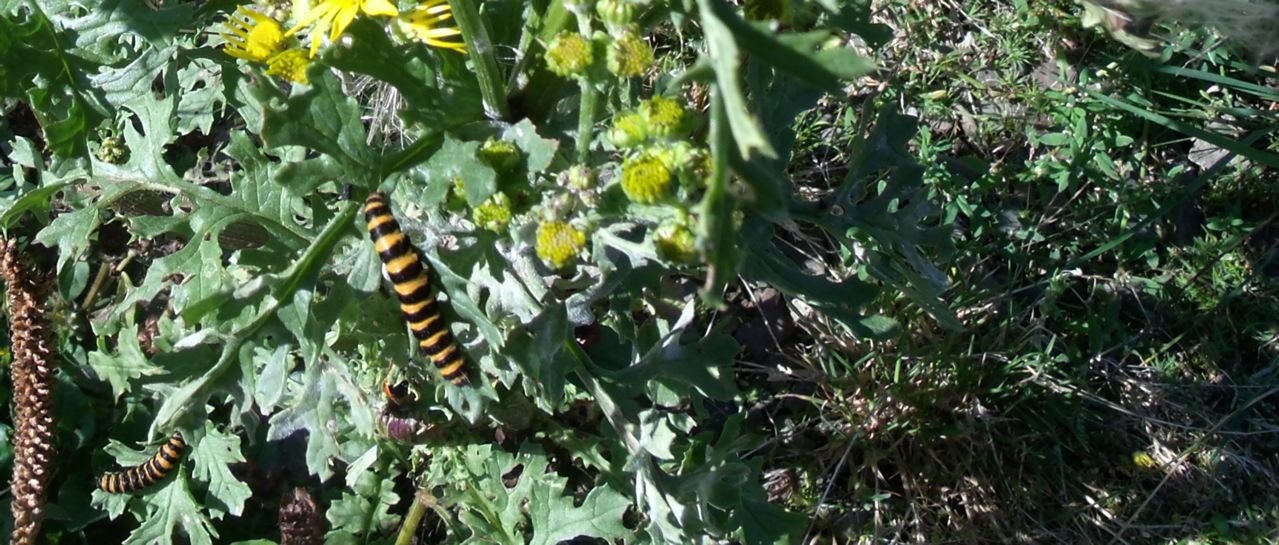
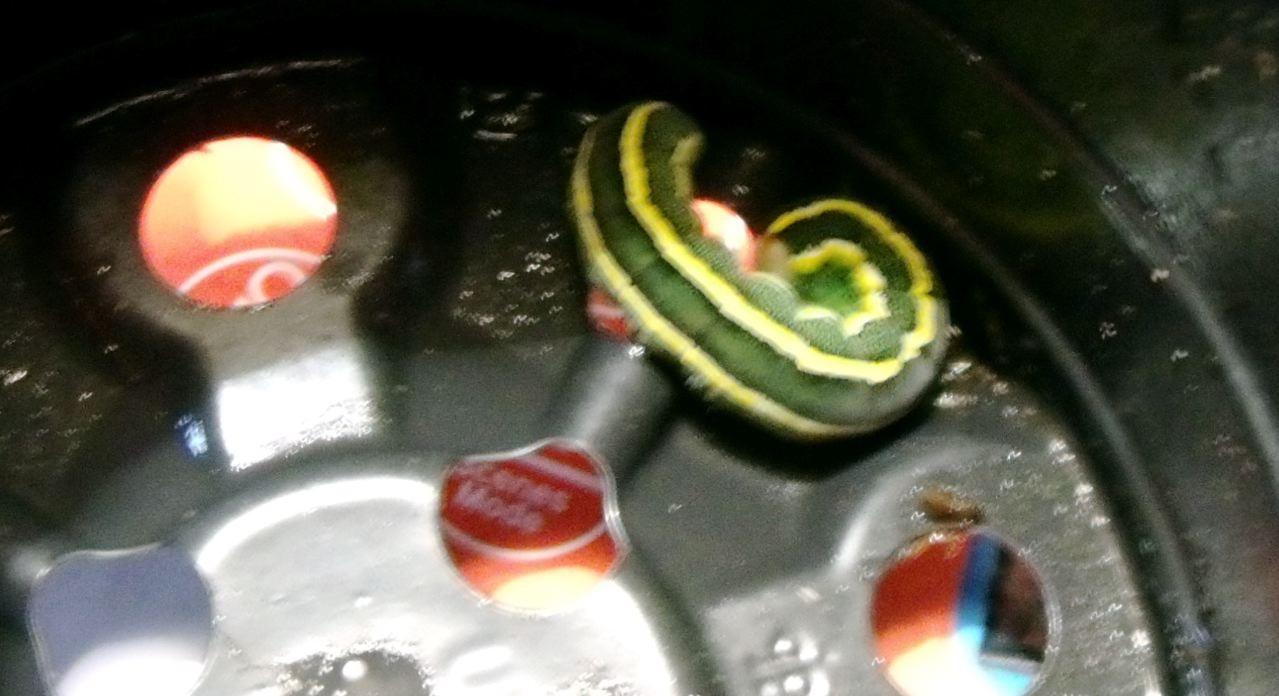
Broom Moth, Ruby Tiger moth

The Ruby Tiger Moth and Broom Moth Larvae used the warmer parts of the day to move purposefully across my path as I walked up the glen. I was careful to look for them, so many making their journey to safety for the winter, so instinctive their desire to complete that act, perhaps aware to be quick and be soon out of sight of predators.

The Hunting Calendar

The medieval custom of preserving the privileged class’s right to hunt is now under way. Archaic laws are updated to sound modern, using words like ‘conservation’ to defend the right of landowners to police their land against anyone who might ‘poach game’. They have powers of arrest of anyone they think are misbehaving on their land. Monarchy leads the way and their hobnobber’s create a network of ‘hunter by association’. They wear the mantle of royal protection to commit dreadful crimes against the wildlife which tries in vain to manage its own survival in areas targeted for hunting.

The Pheasant shooting began from the 1st October – 1st February. All rural locals look forward to earning a living as beaters, frightening the birds toward the guns, the guns being shot by those who pay for the ‘fun’ of it, thousands of birds dying in this man-created ‘sport’. This activity is part of the agricultural livestock industry and is defended by those who do it as a vital income generator, and a supplier of game birds to the food outlets in the area. When the guns are out, any animal is fair game, so hares, rabbits, badger, squirrel and anything moving may be caught up in the ‘excitement’. It pains me to think we continue to call this ‘sport’.

Fox hunting, (now a ‘pest control service’) began 4th August when the hounds came out and went on a killing spree of fox cubs, out in the early hours to locate them. As a ‘service’ the registered hound business near us sets off with the hounds in an animal wagon, to be taken to the landowner’s chosen spot for their early ‘recreation’. This continues to November when the adult foxes are hunted down until the season ends on 1st May and the farmers are caught up in lambing. This makes for a calendar of activities bringing in further income for tenant farmers, and attracting income to landowners offering their land for hunters to pay to take part. The 11 am start for
the adult fox is obviously more popular to those taking a holiday break at a lodge for the purpose, with maybe some fishing thrown in. more income generation for landowners. Sounds convincing, but like most businesses plans these so-called agricultural industries are founded on ruthless anticipation and do not take account of long term damage to the planet’s survival. As more wildlife becomes extinct, the food chain weakens and all of us suffer.

Worth bearing in mind the following long battle against lead poisoning of birds:

http://www.wwt.org.uk/issues/

Lead Poisoning

X-ray of a gizzard containing lead shot (Martin Brown/WWT)X-ray of a gizzard containing lead shot (Martin Brown/WWT)Lead is a highly toxic poison affecting almost all systems of the body. Wildlife is exposed to lead via sources such as fishing weights, leaded paint, mining and smelting activities, but by far the greatest exposure comes from spent ammunition, mainly spent gunshot. Waterfowl and terrestrial game birds mistakenly ingest spent cartridge shot in place of the grit needed to aid digestion of food within their muscular gizzard.

The disease negatively affects many body systems and is an important cause of mortality e.g. it has been estimated that 8.7% of the population of 17 species of wildfowl in Europe might die each year from lead poisoning during the winter season (November to February). Recent WWT research found a third of tested waterbirds had lead levels in their blood indicative of lead poisoning. Additionally, the disease was responsible for the deaths of 1 in 10 birds found dead over the last four decades, with no measurable changes following introduction of legislation.

WWT has monitored the disease and its impacts for decades and been
instrumental in pushing for national and international legislative changes to reduce risks to wildlife from lead. The UK is now committed under the African-Eurasian Waterbird Agreement (AEWA) to phasing out the use of lead shot over wetlands, with regulations restricting the use of lead shot being introduced in England, Wales, Scotland and Northern Ireland in 1999, 2002, 2004 and 2009, respectively.

http://www.wildlifeextra.com/go/news/lead-shot-uk.html#cr

Is lead shot poisoning the UK’s birds?

26/01/2013 10:08:58 Wildfowl & Wetlands Trust (WWT) has welcomed the Government’s announcement to review the progress of the Lead Ammunition Group

January 2013. The Lead Ammunition Group was set up in 2010 in response to urgent concerns about the toxic effects of ammunition made of lead, which is a poisonous substance to all forms of life. Most lead shot misses its target and falls to the ground where it can be ingested by several species of birds including swans, ducks and geese who mistake it for food or the grit they use to grind food.

8% of dead wild birds killed by lead poisoning

WWT research has found that 1 in 3 wild birds sampled suffer from lead poisoning, and that it was the cause of death for 1 in 12 dead wild birds sampled.

Environment Minister Lord De Mauley, answering a written question, told the House of Lords “the (Lead Ammunition) group has agreed to provide a report to Ministers in April 2013 and Defra will review the progress of the group at this stage”.

“Lead is a poison”

WWT Chief Executive Martin Spray said: “Lead is a poison, yet we still allow thousands of tons of it to be spread across our countryside. Thousands of birds suffer and die from ingesting lead shot left on the ground.

“The Lead Ammunition Group’s work is crucial in assessing the damage caused to wildlife and people by lead shot. It was set up in response to an urgent request in 2010 and there is a danger that, with still no sign of a final report, the group could be seen to be moving too slowly while wildlife continues to suffer and die. The group’s commitment to publishing an interim report in April sends a strong signal that it is getting on with the job, and I welcome the Government’s decision to review the group’s progress thereafter”.

Wildlife Extra wonders if birds would be better off if those wielding the guns were better shots?

So just as we begin to understand why Boron may have arrived from Mars in a meteor shower amd helped trigger life on earth, we find ourselves also poisoning our food chain and killing all of life in the name of ‘sport’.

Posted in anthropocene | Tagged , , | Leave a comment

Arachnids and Insecta

Continuing from my last blog, I have learned a little more about spiders. I have spent a fascinating couple of weeks photographing and trying to recognise the different types in home and garden.

The first lesson I have had to learn is that spiders are not insects. Spiders have 8 legs (Insecta have six) and their bodes have two segments (rather than three as in Insecta) and they do not have antennae like Insecta.

They are of the Class Arachnida, which includes scorpions, mites and ticks. Arachnids (spiders) take their name from the mythical maidens, Arachne, who challenged the goddess Athena to a weaving contest and were changed into spiders. Spiders have been found in Carboniferous rocks dating back 318 million years.

Researchers are investigating novel uses for spider venom, from an eco-friendly alternative to pesticides to treatments for Alzheimer’s disease, cardiac arrhythmia and strokes. In addition, spider silk has lots of engineering uses, from body armour to optical communications. Spiders help farmers by predating on other insects which could harm the crops. This can reduce the need for pesticides if farmers work with the arachnids.

It may be fear of spiders (arachnophobia) was born out of an era in the Middle Ages, when spiders were blamed for inexplicable epidemics of the time, like the plague. Alternatively, it seems to me a justifiable and rational fear that some spiders can kill humans, and if you can’t distinguish which spider can do that, then it is safer to be afraid of all spiders.

Whilst I know it is unlikely to have any spider which might be a threat to me in my home or garden, I do know non-indigenous insects arrive on our shores through cargo from foreign lands. It is always best to learn about the variety in nature, just as our hunter-gatherer ancestors knew so well what to eat, what to touch and most importantly, what to avoid. Similarly, spiders use their very sophisticated senses of touch and chemoreception (as we smell) and vibratory cues (as we hear) to recognize and choose different types of prey. In the case of web making spiders, the frequency emitted by a trapped fly in a web will be different to that of a bee and that in turn will be different to a moth. Once caught in a web, the spider will use touch and chemoreception to check out whether the prey is dangerous or not, noting how it tries to defend itself. When certain it is no threat the spider will apply its venom to the prey then wrap it in a silky sheath.

Metellina segmentata sp. spiral web (with hole in centre)

Metellina segmentata sp. spiral web (with hole in centre)

Metellina Spiders

Metellina with young on crocosnia

Metellina with young on crocosnia


The Orb Weaver spider type is very common and in my garden the metellina whose habit of stretching out along stems when disturbed, earns them the name of ‘stretch orb-weavers’ in some circles. They make the classic orb webs we see in fields, forests and gardens. They are of the family Araneidae. Their web is shaped in a spiral wheel. This is the time of year (late summer to early Autumn) when they are mating and producing young. I photographed them in my garden and experts have told me they are of the subgroup metellina segmentata sens.str. whose young mature early September.
Male and female metellina wrapping prey

Male and female metellina wrapping prey

Another group, metellina menge, mature earlier in June/July. People who monitor these arachnids require a dissected view under a microscope to be absolutely sure of the identification of these similar looking orb weaver types. To be sure of identifying males a close look at the second to last segment of front legs, from the side, with a lens (or a very accurately focused super-macro) would confirm species.

What they will see is

Stout angled spines, only very short perpendicular hairs => m.segmentata.

Stout angled spines with long perpendicular hairs => m.mengei.

The female is the larger of the two in my photos where two are sharing the web. I was photographing numerous males and females. The metellina vary in colour and ‘fatness’ but the pattern on the abdomen and the shape makes them recognisable. It is the broad white borders which are common in metellina.

For anyone wanting a handy reference when out and about, it would seem most keen spider watchers refer to “Spiders of Britain and Northern Europe” (Collins Field Guide) by Michael J. Roberts (Author)

Harvestmen, Harvest Spiders (Order Opiliones)

Harvestman  on water avens plant

Harvestman on water avens plant

Scientific name: phylum Arthropoda, class Arachnida, order Opiliones. From Latin "Opilio", shepherd. Their common name derives from the fact that most are mature in autumn, at the time of harvesting.

I have been advised that the near spider, Mitopus morio which is a species of harvestman, is caught here in my photograph. It can be found in North America, Europe and Asia. The reason it is not a 'true' spider as it has a different body type – this from http://wiki.britishspiders.org.uk/index.php5?title=Category:Opiliones

Unlike true spiders, the body of a Harvestman consists of a single part rather than two. Many have very long legs and suspend their body low near the ground with their legs bent above them, thus forming a capital 'M' shape with the body at the central V of the M. Long legs allow the animal to span large distances between leaves and twigs as it climbs about vegetation. Not all species are long-legged, certain secretive soil and litter species have much shorter legs. World-wide there are over 3,500 species, of which only a couple of dozen are found in Britain……..

The Harvestmen will clean up dead squashed slugs, bird dropping, jam, fruit and other plant remains, as well as live small invertebrates that they might catch

It has been observed to walk using its first, third, and fourth sets of legs, using the unusually long second pair of legs to feel in front of it and probe its environment.

The long-legged harvestmen may be confused with another group known as the "daddy-long-legs" – the cellar spiders (Pholcidae), which are light-brown spiders with very long legs and small body, commonly found in houses.

Daddy Long-legs Spider, Pholcus phalangioides

Enjoying the sun after heavy rain, a Daddy-long-legs

Enjoying the sun after heavy rain, a Daddy-long-legs

http://wiki.britishspiders.org.uk/index.php5?title=Pholcus_phalangioides

High up where the ceiling meets the wall, fine tangles of web are often the bane of the house-wife. Suspended upside down in these fine silken strands is a long-legged spider, Pholcus phalangioides, the Daddy Long-legs Spider. During the day they remain perfectly still and are usually ignored by people. If disturbed, however, they will rapidly vibrate up and down in the web. They are only found inside buildings, particularly in southern England. At night, males go in search of females. When a female is detected, the male gently vibrates her web and after some time approaches very slowly before attempting to mate.

Pholcus catches any unwary insect that gets caught in the web and quickly trusses it up in a bundle of silk. Pholcus will also feed on other spiders that come in range, including their own kind. Having long legs is an advantage when dealing with potentially dangerous prey because Pholcus can draw threads from her spinnerets and flick them at the intruder from a distance. At the same time, the spider keeps itself well away from any danger. Once they are bound up, Pholcus bites its victim. Females can be seen with their eggs held between their chelicerae (jaws). The spiderlings that hatch stay around their mother’s web. As they grow and moult they move further apart for, should one find another, it will eat its brother or sister.

The Wolf Spider

I managed to snap this female carrying her young on her back. The Wolf spider hunts its prey, jumping on them and devouring them. There are many in my garden.

Wolf spider (hunter) carrying young

Wolf spider (hunter) carrying young

And now, mid September, I am constantly walking into the wispy dragline of spiders, using the wind to launch themselves hundreds of miles, as the windy season gets under way, wild gales due this weekend. See

http://www.livescience.com/4142-spiders-fly-hundreds-miles.html for more details of research on the fascinating world of spiders.

Moths

I photographed two moths on ragwort at the end of August. They were in a secluded spot, rarely trodden by humans, high on the fells.

The Antler Moth (Cerapteryx graminis) is a moth of the family Noctuidae. It is a
common species throughout most of Europe.

Ear and antler moth on ragwort

Ear and antler moth on ragwort

From http://en.wikipedia.org/wiki/Antler_Moth

This species is unusual for a noctuid in that there is marked sexual dimorphism. The male has a wingspan of 27–32 mm but the female is much larger with a wingspan of 35–39 mm. The forewings are brown, speckled with black and marked with a bold white branched basal streak which gives the species its common name. The hindwings are dark brown with a white fringe. This moth often flies during the day, especially in warm weather, and is attracted to a range of flowers. It also flies at night and is attracted to light. The adults are on the wing from July to September.

see http://ukmoths.org.uk/show.php?bf=2360

Ear moth – Noctuidae – Amphipoea oculea

Ear Moth Amphipoea oculea

Occurring over much of Britain, this has a more widespread distribution than the other British ‘Ear’ moths.

It tends to favour damp habitats and flies in one generation, from July to September.

The larvae feed at the base of various grasses and low plants, on the stems and roots.

and my husband photographed a white ermine moth caterpillar, safe from birds because they are poisonous.

Crawling fast along the ground, the poisonous (to birds) White Ermine moth larvae

Crawling fast along the ground, the poisonous (to birds) White Ermine moth larvae


White Ermine Spilosoma lubricipeda
(Linnaeus, 1758)
Wingspan 34-48 mm.

Widely distributed and fairly common over much of Britain, there is considerable variation in the degree of black speckling, and in certain parts of Scotland, there are forms with a buffish ground colour.

It generally flies from May to July, sometimes later in the south.

The hairy larvae feed on a variety of herbaceous plants, such as Stinging nettle, Scotch broom, Alfalfa and the common dandelion.

Later in September I returned to the ragwort high on the fells and was delighted to find two Haworth’s Minor moths, they usually feed on cotton grass, and the larva of the most toxic moth in Britain, the Cinnabar Moth always living on Ragwort, the poisonous plant to animals such as horses. The only creature attracted and able to eat this poisonous moth is the cuckoo.

Cinnabar moth larvae on ragwort

Cinnabar moth larvae on ragwort


An interesting note from:

http://en.wikipedia.org/wiki/Cinnabar_moth

The larvae absorb toxic and bitter tasting alkaloid substances from the foodplants, and assimilate them, becoming unpalatable themselves. The bright colours of both the larvae and the moths act as warning signs, so they are seldom eaten by predators. An exception is among different species of Cuckoo which eat hairy and poisonous caterpillars including cinnabar moth larvae.

Haworth's Minor moth on ragwort

Haworth’s Minor moth on ragwort

On the 15th September I saw the Broom Moth Larva and caught it in an old
plant pot to take a picture. Not a good idea, poor resolution, but still,
you get the idea.

From UK Moths website:

Noctuidae » Hadeninae

Broom Moth Melanchra pisi
(Linnaeus, 1758)

Broom Moth Melanchra pisi

Larva

2163 Broom Moth Melanchra pisi
(Linnaeus, 1758)
Wingspan 32-37 mm.

A very variable species, with the ground colour varying between greyish
brown to a dark chestnut colour, and the intensity of the markings varying
too.

Inhabiting open woodland and heathland, it is quite common in most of Britain.

It flies between May and July, and is attracted to light.

The distinctive brown and yellow striped caterpillar feeds not only on broom
(Cytisus scoparius), but also on bracken (Pteridium aquilinum) and other trees and plants.

Broom moth larva

Broom moth larva


Despite the wonderful summer, I did not see any of the variety of moths I have recorded in recent years. Certainly none in my garden. It is possible the garden I have developed from a field of thistles to a wildflower garden, has attracted more predators who have eaten the pupae before they had a chance to emerge. The bitter cold May could have had an impact too. Whatever the reason, I had to trek some distance to find any moths at all.

Butterflies

Peacock butterfly arriving too late for thistle nectar

Peacock butterfly arriving too late for thistle nectar


After the emergence of the peacock amidst a small number of small tortoishell, all competing for the thistles which were going to seed, the only other butterfly in September to be seen most sunny days was the green-veined white. Since it survives well at high altitudes, that is no surprise. But the peacocks were gone before my autumn glory sedum flowered, so were the red admirals, and in previous years they swarm this high nectar plant. Sir David Attenborough is correct. There are fewer butterflies than at any time in his life (or mine), this year.

The day after writing this, I received word from Butterfly Conservation that this had been a ‘bonanza’ year for butterflies and moths. Great news, but somehow this neck of the woods has seen its worst year.

Posted in anthropocene | Tagged , , | Leave a comment

Disposable Males

This August we had two full moons in the same month, so another incidence of Blue Moon. I had thought the next one (see last August blog) was not due until 2015. My facts were not well enough researched it would seem, I was mis-informed, though I try to cross reference my findings.

Flying Ants

On a humid day, August 23rd to be exact, after having had heavy rain in the past 48 hours, I walked with my dogs up the glen from our cottage. As I crossed the wooden bridge over the burn, a cloud of flying ants enveloped me. It was Flying Ant Day! I had my camera with me so took a brief video of the action before me, hundreds of male ants busy trying to pursue a single virginal queen to fulfill their destiny to fertilise her before they die. This drama is played out annually, sometime in August when conditions are right. I sent my observation in to:

https://www.societyofbiology.org/get-involved/biologyweek/flying-ant-survey

I was talking to a friend on the phone a couple of days later. As she watched out the window she also observed a cloud of flying ants, but she did not know what it was, having never seen it before. She was alarmed. She hates all insects. I explained to her how queens and males from different colonies use the annual event to strengthen their colonies and thus avoid interbreeding. Each queen stores the various sperm in a special organ, known as a spermatheca, which is within her abdomen. She will store it for her lifetime. This can be as long as 20 years, during which time the sperm can be used to fertilize tens of millions of eggs.

After mating the female drops to the ground and loses her wings and attempts to start a new ant colony. She will nurse the first brood alone until the worker ants emerge, then she becomes an ‘egg-laying’ machine.

As for the flying males, they literally explode their internal genitalia into the genital chamber of the queen and then die. As my friend is not too keen on many of the male gender, she quite liked that idea, and I think she wished it had happened to her male partner.

House Spiders

Back in the house I am aware the house spiders are also busy mating at this time of year. The males will come in from the garden to find a female who will be within her web, spinning pheromone filled thread to attract the right male. The females overwinter with stored sperm which enable her to produce more than 10 egg sacs, each containing 40 to 60 eggs,

We have the word ‘spider’ in our lexicon from the Old English word ‘spithra’ which means ‘spinner’. The spiders web can be used to heal wounds and staunch blood flow, something worth knowing when nothing else is to hand.

The large, hairy male house spider, tegenaria-domestica (for an excellent picture see http://www.arkive.org/house-spider/tegenaria-domestica/?gclid=CMLzvpqqlrkCFSGWtAodLSYAWA) is often found stranded in the bath, causing shrieks and cries for help from silly people in the household. The male spider has usually fallen off the wall whilst seeking out a female. Once he finds his sweetheart, he stays with her for weeks, mating with her repeatedly until he dies of exhaustion and becomes a nourishing meal for mum.

Butterflies

It took until the 26th August to see the Peacock butterfly emerging in quantity around our cottage. The thistles were their main food source, but many had already gone to seed.

The Butterfly Conservation President, Sir David Attenborough, is concerned there are now fewer butterflies in the UK than at any point his lifetime. As this much admired naturalist is 87 years of age, that gives us an idea of how long it has taken for this catastrophe to take place.

I like to use the Butterfly Conservation free app to send in my observations to help them gather data as to the UK wide figures. This year has been particularly bleak. I have seen a small number of Small Tortoishells, Green Veined White, and a large number of the beautiful Peacock butterflies.

Badgers

I wrote last year about our local badger population. They used to be everywhere at night around our cottage. However, dramatic changes to the landscape to enable vehicles to access the fells has made them move to locations away from here.

My heart goes out to those who were being shot from the night of 26th August in a legal cull approved by the government and backed by the law, in Gloucestershire and Somerset. The cull will continue annually, between June and September, for 4 years. The goal is to kill 70% of the thousands which live in those farming areas where desperate farmers demand this method. Since the government is ignoring scientific advice this will worsen the spread of TB to cattle.

In October 2012, an extraordinary coalition of leading scientists called on the government to stop the badger cull. They stated: “As scientists with expertise in managing wildlife and wildlife diseases, we believe the complexities of tuberculosis transmission mean licensed culling risks increasing cattle TB rather than reducing it.” Lord Krebs, the eminent Oxford scientist who designed the Labour government’s badger cull trials, described this cull as “mindless”.

Labour’s badger culling trial – a £50m, 10-year study on whether culling badgers helps reduce bovine TB – concluded: “The reductions in cattle TB incidence achieved by repeated badger culling were not sustained in the long term after culling ended, and did not offset the financial costs of culling. These results … suggest that badger culling is unlikely to contribute effectively to the control of cattle TB in Britain.”

Mary Creagh, shadow Minister for Agriculture, said in an article in the Guardian:

“To bring this disease under control, we need stricter management of cattle movements and to prioritise badger and cattle vaccination. We should be building alliances in the EU to get restrictions on vaccinating cattle lifted.

The government should stop, listen to the scientific evidence and abandon the cull. Bovine TB is a terrible disease that must be stopped. This cull is not the way to do it.”

I signed the national petition against the cull which gathered more than 250,000 names but that has not prevented the government from siding with the frightened farmers who are at their wits end and taking their frustration out on the innocent badgers. These are grim times.

Posted in anthropocene | Tagged , , , , , , | 1 Comment

Heavens Above

As the heatwave began and developed during July, each day we, the population of the UK, cringed in fear that it would break and start to rain thereafter, as had happened so miserably in the previous year. But it went on, and on, and on. The met Office say it was the hottest July recorded in Scotland. And even after fierce thunderstorms hit at the end of the month, the heatwave continued in the South East of England with temperatures reaching 33 degrees celsius on 1st August.

We are not used to thunderstorms here in the Scottish Borders, certainly none so violent as hit much of the UK on the 19th/20th July. I have never taken an interest in such amazing events and how they happen. I have read explanations and still must go back to a glossary of definitions to make it meaningful to me. So I write this at a simple level such that I can look up at the sky and recognise the signs of an imminent storm.

As Mary Wollstenecraft Shelley brilliantly wrote ‘Frankenstein’ in 1818, she already foresaw the power of science and the power of Nature in thunderstorms. She also foresaw how the product of understanding Nature through scientific enquiry might lead to misuse and result in the destruction of society.

The relationship between physical phenomenon such as electricity, and magnetism has been theorised upon as far back as ancient Greek philosophical enquiry.

http://www.physicsclassroom.com/class/estatics/u8l1a.cfm

What is stuff composed of? What is the structure of material objects? Is there a basic unit from which all objects are made? As early as 400 B.C., some Greek philosophers proposed that matter is made of indivisible building blocks known as atomos. (Atomos in Greek means indivisible.) To these early Greeks, matter could not be continuously broken down and divided indefinitely. Rather, there was a basic unit or building block that was indivisible and foundational to its structure. This indivisible building block of which all matter was composed became known as the atom.

……….English scientist J.J. Thomson’s cathode ray experiments (end of the 19th century) led to the discovery of the negatively charged electron and the first ideas of the structure of these indivisible atoms. Thomson proposed the Plum Pudding Model, suggesting that an atom’s structure resembles the favorite English dessert – plum pudding. The raisins dispersed amidst the plum pudding are analogous to negatively charged electrons immersed in a sea of positive charge.

And as recently as 1991 http://en.wikipedia.org/wiki/Terrestrial_gamma-ray_flash
we are learning about Terestrial Gamma-ray Flashes

Terrestrial gamma-ray flashes were first discovered in 1991 by BATSE, or Burst and Transient Source Experiment, on the Compton Gamma-Ray Observatory, a NASA spacecraft.[3] A subsequent study from Stanford University in 1996 linked a TGF to an individual lightning strike occurring within a few ms of the TGF. BATSE detected only a small number of TGF events in nine years (76), due to its having been constructed to study gamma rays from outer space, which last much longer.

The newer RHESSI satellite has observed TGFs with much higher energies than those recorded by BATSE.[4] In addition, the new observations show that approximately 50 TGFs occur each day, more than previously thought but still only representing a very small fraction of the total lightning on Earth (3-4 million lightning events per day on average). However, the number may be much higher than that due to the possibility of flashes in the form of narrow beams that would be difficult to detect, or the possibility that a large number of TGFs may be generated at altitudes too low for the gamma rays to escape the atmosphere.

……The role of TGFs and their relationship to lightning remains a subject of ongoing scientific study.

In Japan, a group of researchers noted the rings of ancient cedar trees revealed a rare event around 774 or 775 A.D. There was evidence of a sharp rise in the amount of radioactive carbon-14 and beryllium-10 which can be created by incoming particles from space. Trying to work out what might have happened back then, two astronomers Valeri Hambaryan and Ralph Neuhauser of the Astrophysics Institute of the University of Jena in Germany, think it was a gamma-ray burst. These bursts can be caused when two compact objects, such as black holes or neutron stars, slam into each other and release a flood of high-energy gamma-ray radiation. The researchers calculated that a gamma-ray burst at a distance of 3,000 and 12,000 light-years from Earth best fits the data.

“If the gamma-ray burst had been much closer to the Earth it would have caused significant harm to the biosphere,” Neuhauser said in a statement. “But even thousands of light-years away, a similar event today could cause havoc with the sensitive electronic systems that advanced societies have come to depend on.”

My use of the ‘gamma ray’ was more from the literary world of Science Fiction. I remember The Incredible Hulk series which my children loved. It was dreamed up by comic book legend Stan Lee, where the kind hero turns into a massive, super strong and green giant, due to receiving a mega dose of the otherwise deadly gamma radiation.3.

So Thunderstorms still fascinate scientists and novelists alike. There is obviously much more to be learned from these powerful forces within the clouds above us.

As headlines such as:

UK Weather: Heatwave To End This Weekend With Thunderstorms And Heavy Rain

became the norm, I watched the The Boltek PCI StormTracker output on the Isle of Wight Storm Data website http://www.isleofwightweather.co.uk/live_storm_data.htm. At the time the storms were all over France and other parts of Europe, but moving in toward the isle of Wight. As they hit England, I watched the amazing number of lighning strikes as the storm tracked north. It took until the next evening to move to Scotland. The strike data was in the hundreds. It was a massive storm. Above the UK a giant cloud factory was moving over, a ‘cumulonimbus’ the weathermen name this phenomenon. The appearance can be that of an anvil, which all pilots of aircraft are warned to avoid. As the storms lasted for hours, we can assume there were numerous cumulonimbus present.

Electrons are the fundamental sub-atomic particles carrying a negative electric charge which move incredibly fast when lightning occurs as the path around them glows. An atom contains a Proton which has a positive charge, a Neutron which has no charge, and an Electron which has a negative charge. Electrons cling to the positively charged centre of the atom because they have a negative electrical charge. During a thunderstom, some of the atoms in the cloud lose their electrons and the others gain extra ones. Water droplets form inside a storm cloud. A strong updraught of wind within the cloud directs the water droplets upward where they turn into ice. This ice can be very small or can grow very large. The larger pieces fall back down colliding with the smaller ice moving upward; this causes a transfer of a negative charge of some electrons to the hail and ice The small particles which have lost electrons gain a positive charge and as they move upward the top of the cloud is given a positive charge. The heavier, negatively charged ice hangs in the lower part of the cloud. Positive and negative atoms create lightning when they are attracted in a path toward one another.

The negative charges in the base of the cloud repel the electrons near the ground’s surface, leaving a positive charge on the ground and objects thereon. Electrons shoot down from the cloud in a path spreading in different directions, called a stepped leader. The average speed of this branching path through the air is 270,000 miles per hour!

A friend living in London spoke of her fear as massive hailstones hit her loft apartment skylight. She was sure the glass must break, but thankfully it held.

In my case, one of my elderly dogs had an urgent need for the garden to do her toilet. The storm was directly overhead but I had to rush out with her, no time for putting on my wellingtons. As I stood in the rain helping her an almighty flash of lightning struck down around me and I must have been so close to being hit. Instead it struck our phone and rendered it useless. I had not disconnected it as we found out later we should have done. Then there was an ear splitting crack of thunder which was truly frightening, though thunder can’t hurt it can certainly frighten. Some young lad was trying to take a photo of the lightning with his mobile device, about 20 miles from us. His phone was struck and destroyed, and he suffered paralysis for 24 hours. The only reason he was not dead was that he, by chance, was standing on a rubber mat at the time!

By 10th to 12th August we were still gazing at the heavens for another reason, The magnificent annual occurrence of the Perseid Meteor Shower. Marvellous timelapse images were made available on the Internet, such as ‘Universe Today’ said this

We’re still swooning over the great images and videos coming in from this year’s Perseid Meteor Shower. Here are a couple of timelapse videos just in today: the first is from P-M Hedén showing 25 Perseid meteors, but you can also see Noctilucent clouds, a faint Aurora Borealis, airglow, satellites passing over and lightning. “It was a magic night!,” P-M said.

It was amazing to watch from here in the Scottish Borders as we have Dark Skies status. Monday, the 12th was the best night to see as many as 10 bursts in 4 seconds at times. To think this “Swift-Tuttle” named comet has supplied us with this display since it was first recorded in 36AD. It appears to radiate from the constellation Perseus, and indeed, time lapse images over a long period show a concentric image of bursts with the centre being Perseus. Lewis Swift and Horace Tuttle named the comet in 1862. Every August we can expect to see the debris as it comes close to the sun and leaves a trail, but this year it passed closer so that we got an exceptionally great display. It last did this in 1992 and will again in 2025. I do not remember seeing or hearing about it in 1992, but then we did not have an educative internet so fine tuned in those days. I also lived in a city where the thought of Dark Skies was unimaginable.

To me the most dramatic and favourite picture of mine is of the Lindisfarne Castle at Holy Island, taken by Peter Greig (http://www.flickr.com). It makes us realise how spiritually meaningful it must have seemed to those who saw this so many centuries ago. The fact it came around each year would have been used by the observant to warn of omens or derive some benefit for people to whom they ‘prophesised’ the coming of the event.

Whether we choose to be scientific or not, no-one can deny the uplifting sight of something so indescribably beautiful as the Milky Way above and the streaking, sudden unexpected balls of light hurtling at great speeds from so many directions which are the Perseid Meteor Shower. For all of you still around in 2025, be sure not to miss it and try to remember this night in 2013.

Posted in anthropocene | Leave a comment

A wind farm threatens our landscape

Application Ref : 13/00789/FUL

I am writing to object to the development of “Windy Edge Wind Farm”, a proposed development comprising of 17 wind turbines up to 121.5m high to tip AND associated infrastructure, on land North East and North West of Farmhouse Braidlie, (Windy Edge), very close to Hermitage Castle, near Hawick

The Council and the Scottish Government both acknowledge your “right to the peaceful enjoyment of your possessions” in their wind farm guidance. Well, this plan takes all that away from our isolated, remote landscape. It will no longer be a place for hikers to head for to enjoy the significant Watershed which runs into Windy Edge from Cauldcleuch Head.

In the Infinis Design and Environment Plan the land to be targeted for industrialization is described as:

“Remote, wild land character…….An empty landscape with few overt signs of human intervention…..”

It seems SBC in their Figure 14 of their Wind Energy Strategy have for some time discarded this landscape and deliberately encouraged wind farm developers into this remote area by identifying it as applying Minor and Moderate constraints. This is , in my opinion, stultifyingly insane to not apply their own policies to this magical, untouched area namely:

SBC Policy & Consolidated Structure Plan 2001-2018, most notably:
_ _Policy N9 – Maintaining Landscape Character – the integrity of the landscape character and enhancement of its quality must be maintained.
_ _Policy N14 – National Archaeological Sites: Development proposals which would destroy or adversely affect the appearance, fabric or setting of Scheduled Ancient Monuments
(who can ignore the jewel in the crown of Liddesdale, Hermitage Castle?) or other nationally important sites not scheduled, (The White Dyke is just one example), will not be permitted.
_ _Policy E22 – Protection and Tourism: Development proposals which are considered likely to have a significant and sustained impact on tourism will not be permitted.
(Newcastleton will become a ghost village at this rate).

A YouGov poll for the John Muir Trust on 26 June 2013 reveals overwhelming support for the proposal that “the 20 per cent of Scotland’s landscape identified as ‘core wild land’ – rugged, remote and free from modern visible human structures – should be given be special protection from inappropriate development including wind farms.”

3 OUT OF 4 SCOTS WANT WILD LAND PROTECTED FROM WIND FARMS

If you read “Ribbon of Wildness” by Peter Wright (http://www.ribbonofwildness.co.uk/), you will see in Chapter Two his description of climbing Peel Fell in England , then crossing to the start of the Scottish Watershed, describing the diversity of peat and peat bogs he names as a ‘living habitat’.

He travels from Hartshorn Pike, then Wheelrig Head. He notes the overgrown Wheel Causeway, the route between Jedburgh and Carlisle of medieval times. Just beyond Rushy Rig runs the B6357 road from Bonchester Bridge to Newcastleton known as ‘Note o’ the Gate’, thought to have that name from the journey Mary Queen of Scots took to visit her injured Bothwell at Hermitage Castle. When her horse stumbled she was advised to ‘tak note o’ the gate’, or watch the road.

Then Singdean Farm and the Watershed climbs to Wigg Knowe, next Fanna Swire. Back in the forest onto Laidlehope Head and Crow Knowe, then Kiln Knowe and a view of the broadleaved tress planted along the B6399 Hawick to Newcastleton Road. Then on to Whitrope Hass and Sandy Edge. At this point in the chapter, Peter Wright says “it is hoped that the energy, enthusiasm and interaction which volunteers bring to conservation and the environment can be unleashed in the forests, and especially on the regeneration of the wider wilder Watershed.”

From Sandy Edge is viewed the Whitrope Railway tunnel, hewn beneath the Watershed in 1860. Then the Watershed re-emerges just before Leap Hill and on to Greatmoor Hill with Wauchope Forest behind. He sees “ring ouzel, curlew, dunlin, redshank, hen harriers, buzzard, raven, merlin, peregrine falcon, black and red grouse……….a rich and varied picking for the ornithologically inclined”.

Then to Swire Knowe using an ancient crossing through a gap in the Watershed ridge, with, to the south the Queen’s Mire, where Mary Queen of Scots was said to have lost her timepiece when she fell from her horse returning to Jedburgh from Hermitage Castle. Then Windy Edge leading to Cauldcleuch Head, the highest hill in Roxburghshire at 619 metres.

This is a special place and why 3 OUT OF 4 SCOTS WANT WILD LAND PROTECTED FROM WIND FARMS

Wildlife:

“Remote, wild land character…….An empty landscape with few overt signs of human intervention…..”

This could be said of much of Scotland. It has not changed since it was formed. Here in the Scottish Borders we know the land was formed out of the bed of the Iapetus Ocean as it travelled over millions of years from the Southern Hemisphere to be locked into other land masses which form Scotland. The colliding of lands then pushed the ground up into these now famous rounded slopes of the Scottish Borders in which we happily live.

It is Nature in the raw. It must be retained by Nature for us to leave alone except for the occasional intrepid hiker. It is a refuge for wildlife from the most microscopic to larger wild goat, deer, mountain hare and the like. These cannot be measured and quantified. The ecology and biodiversity is extensive and would take researchers years to record any square mile of it. It must be left untouched; for the future of such places are, in my view, sacred. Anyone who uses the word ‘NEGLIGIBLE’ to describe the amount of harm which might be done to this area by planting turbines here is a person who is either ignorant or is accepting their 30 pieces of silver for saying so.

Reading the ornithology, flora and fauna, hydrology, peat disturbance reports, one would think these giant turbines were parachuted in and speared into the ground without any ecological damage whatsoever. Infinis describe drilling into the peat, building roads, batching cement, digging the infrastructure needed to connect to the grid, and burdening the ground with the weight of many tons of turbines over 20 months of building the farm as likely to result in NEGLIGIBLE damage. You don’t need to be a scientist to realize what damage can be done; a simple act of irresponsible gardening can destroy habitats and add to the extinction of bees and other insects.

Those who have desecrated the Scottish Landscape building windfarms will leave a legacy of ruin to the fragile ecology of this once beautiful land. This is eternally unforgivable.

500 wind turbines have been approved since February 2013 in the Scottish Borders. We understand the target is 1000, especially as the SNP government is putting pressure on our Scottish Borders Council to accelerate approvals. Each wind turbine, taken separately, like a car on the road, does not kill too many birds or bats. But cumulatively, with 6,000 turbines in Scotland to date and a plan to reach 10,000 before 2015. it does not take a genius to mentally calculate the damage. The RSPB and Bat Conservation Group are always asked about the impact on birds and bats per wind farm. They will always say it is not as great as road kill. But the road kill figures are national and the windfarm is not. Add up the cumulative figure nationally and you have a sizeable chunk of bird and bat deaths laid at the feet of the wind turbine industry.

Recent studies by bird protectors reveal how the giant blades chop up the air in brutal fashion. “Golden plovers avoid the wind turbines,” says Potsdam-based ornithologist Jörg Lippert. Swallows and storks, on the other hand, fly straight into them. The barbastelle bat’s lungs collapse as it flies by. A “terrible future” awaits the lesser spotted eagle and red kite, Lippert says.
Source: http://www.spiegel.de/international/germany/wind-energy-encounters-problems-and-resistance-in-germany-a-910816.html

The impact on this famously wild and beautiful land is tearing the heart out of Scotland. Developers de-populated Scotland during the time of the Clearances in the name of ‘Improvement’ and now you who make these decisions over land use, are allowing developers to destroy the very fabric of Scotland, exploiting its last resource, its wilderness.

Argument against land use for turbines:

According to the Royal Academy of Engineering, 1 gigawatt of a nuclear power station requires 30 acres, a gas-fired power station occupies 15 acres. Solar power requires 5 square miles of desert.

A typical nuclear power plant produces 1,000 megwatts of electricity per hour.

Wind energy requires 1,000 square miles onshore.. At 25 megawatts to 1500 acres for a wind farm of 60 to 70 turbines, you would need 60,000 acres and 2400 to 2800 wind turbines to equal 1,000 megawatts.

Wind turbines only produce their full power when the wind is blowing just right. That only happens about 25% of the time, so you really need four times as many wind turbines and four times as much space to produce, on average, 1,000 megawatts of electricity per hour. So that’s, 240,000 acres and 9,600 to 11,200 turbines. 240,000 acres is 375 square miles.

Wind and solar require fossil producing backup power stations when the wind does not blow. The attempt to develop clean burning of coal at Longannet coal-fired power station in Fife,has still not happened, but this pouring of C02 into the atmosphere must continue to at least 2025 to backup the wind turbines. This is the third largest coal powered station in Europe. Scottish Power is the only energy company in the UK working toward capturing carbon on a working coal-fired power station. But this nut is not cracked. The investment costs are enormous and that money is not yet available.

To quote James Lovelock, (The Vanishing Face of Gaia: A Final Warning” 2009) one of our greatest living scientists, “Europe’s massive use of wind as a supplement to base load electricity will probably be remembered as one of the great follies of the twenty-first century – an example of impressive engineering misused by ideology and as inappropriate as passenger transport by hydrogen-filled airships.”

Ruth Lea’s paper, ‘Electricity Costs: The Folly of Wind Power’, was published by Civitas in January 2012. So the concept of ‘Folly’ persists. An analysis of this paper concludes:

The disputed costs are presented as adjustments to the Mott MacDonald study, but the same case can be made without them. In the Mott MacDonald analysis, offshore wind remains an expensive large-scale generation option, whether projects start in 2009 or 2017. Onshore wind is more costly than gas or nuclear, depending on the start date. Adding £20/MWh of costs for the consumer takes its cost above both alternatives. Wind power certainly makes a contribution to reducing Britain’s carbon footprint, but it is far from being a cheap option.
Ref A Second Look at Wind-Related Electricity Costs Nigel Williams

The Northamptonshire Campaign to Protect Rural England paper, ‘Windfarms : Time to Change Direction’ clearly explains, amongst other important points, the problems the National Grid has to struggle with to cope with windfarm generation of electricity. Storage is the big technological problems which remains unsolved worldwide, so selling the excess energy abroad is the only option, and that is done at a loss.

If we had conquered electricity storage then built turbines, it might have made sense. But personally, I can’t imagine it ever making sense.

Denmark has led the way on onshore wind. It now has more than 6,000 wind turbines for a population of just over 5 million people. It’s national power company has stopped supporting new onshore wind turbines because they can’t store excess energy and have to sell it on to neighbouring countries at a loss.

The fact that our UK National Grid is ten years away from developing a system which can exploit windpower seems to put the cart before the horse. (see their explanation of a ten year plan on their website).

We have 5 million people in Scotland like Denmark, and already have 6,000 turbines date and a plan to reach 10,000 before 2015. But, as yet, there is no National Grid SMART technology to cope with the excess power generated, no clever storage idea is emerging, and the SMART digital control of systems envisaged will be vulnerable to Cyber attacks.

We know a back up supply of power was always needed for when the wind was not blowing but the UK is committed to closing old power stations under EU rules. To avoid imminent power cuts, the UK is going to have to break those rules and keep power stations running, so why not also break the EU target for 15% renewables by 2015?

We can’t tailor power stations to respond to the infrequent conditions which bring the right kind of wind to turn the turbine blades at the ideal speeds. You can’t switch a power station on and off to suit fluctuations from windpower, They are like furnaces, they are damaged if you power them up then down. What will happen, if forced to do this, is an increase of pollution and carbon dioxide output.

In the paper :

‘Calculating carbon budgets of wind farms on Scottish peatlands’ it is stressed that careful future management of the land on which the turbines are placed is vital. Here is part of a summary extract:

……..If , however, the good management practices are abandoned. The habitat is no longer improved, the site is not restored and the floating roads sink and require drainage, the model indicates that greenhouse gas emission from plants and soil will increase to 20% of the total CO2 emission savings. Of this increase, 4% is due to loss of habitat improvement, 11% to drainage of floating roads and 85% to loss of site restoration.

I cannot imagine a careful management plan running for quarter of a century, especially as once built, the maintenance would likely concentrate more on the turbines than on the environment. Short term investors will have made their kill and run off long before these environmental matters are considered part of the package. No-one will be answerable, no policing will be enforced, no court judgments will be made. It will become a horror story for post windfarm children to deal with, and they will blame us for the damage that has been done.

As Friends of the Earth champion ‘green renewables’, we do not have to look far to appreciate how very un-green wind turbine manufacture is:

We are all guilty of enjoying our smart phones, GPS systems, thanks to rare earth mining in Mongolian rare earth capital Baotou.

One blog online refers to a 2011 report:
http://toryaardvark.com/2011/01/31/china-pays-the-environmental-cost-of-chris-huhnes-wind-turbines/

Because the environmental damage is half a world away, safe behind the wall of silence that only a Communist regime can maintain, thus it does not exist.

This toxic lake poisons Chinese farmers, their children and their land. It is what’s left behind after making the magnets for Britain’s latest wind turbines… and, as a special Live investigation reveals, is merely one of a multitude of environmental sins committed in the name of our new green Jerusalem

On the outskirts of one of China’s most polluted cities, an old farmer stares despairingly out across an immense lake of bubbling toxic waste covered in black dust. He remembers it as fields of wheat and corn.

Yan Man Jia Hong is a dedicated Communist. At 74, he still believes in his revolutionary heroes, but he despises the young local officials and entrepreneurs who have let this happen.

‘Chairman Mao was a hero and saved us,’ he says. ‘But these people only care about money. They have destroyed our lives.’

Vast fortunes are being amassed here in Inner Mongolia; the region has more than 90 per cent of the world’s legal reserves of rare earth metals, and specifically neodymium, the element needed to make the magnets in the most striking of green energy producers, wind turbines.

Live has uncovered the distinctly dirty truth about the process used to extract neodymium: it has an appalling environmental impact that raises serious questions over the credibility of so-called green technology.

The reality is that, as Britain flaunts its environmental credentials by speckling its coastlines and unspoiled moors and mountains with thousands of wind turbines, it is contributing to a vast man-made lake of poison in northern China. This is the deadly and sinister side of the massively profitable rare-earths industry that the ‘green’ companies profiting from the demand for wind turbines would prefer you knew nothing about.

Hidden out of sight behind smoke-shrouded factory complexes in the city of Baotou, and patrolled by platoons of security guards, lies a five-mile wide ‘tailing’ lake. It has killed farmland for miles around, made thousands of people ill and put one of China’s key waterways in jeopardy.

Every single Green scheme is the same as all the others, a tissue of lies, half truths and suppressed truths, it really is Climate Religion, because science and viable it is not.

And the next source I offer is from:

http://min-eng.blogspot.co.uk/2013/02/the-real-cost-of-using-neodymium-in.html:

Although this is a very comprehensive report, they omit the life cycle analysis of a crucial component within the nacelle- the powerful direct-drive permanent magnet generator, which contains a critical rare earth element, neodymium. Neodymium is commonly used as part of a Neodymium-Iron-Boron alloy (Nd2Fe14B) which, thanks to its tetragonal crystal structure, is used to make the most powerful magnets in the world. It has been used in small quantities in common technologies for quite a long time – hi-fi speakers, hard drives and lasers, for example. But only with the rise of alternative energy solutions has it really come to prominence, for use in hybrid cars and wind turbines. A direct-drive permanent-magnet generator for a top capacity wind turbine would use around 2 tonnes of neodymium-based permanent magnet material.

Neodymium is found most often in monazite and bastnasite. Due to the fact that these minerals also contain lanthanides and other rare earth elements, it is difficult to isolate neodymium. The first isolation process involves extracting the lanthanides and metals out of the ores in their salt form. This step is carried out using sulphuric acid, hydrochloric acid, and sodium hydroxide. To further isolate the neodymium from other lanthanides and metals, procedures such as solvent extraction and ion exchange are used. Once neodymium has been reduced to its fluoride form using these processes, it can be reacted with pure calcium metal in a heated chamber to form pure neodymium and calcium fluoride. Some calcium contaminants remain in the neodymium, and vacuum processes are used to remove any of these contaminants. It is an expensive and potentially environmentally harmful process.

The report concludes that whenever we purchase products that contain rare earth metals, we are unknowingly taking part in massive environmental degradation and the destruction of communities. It is a real dilemma for environmentalists who want to see the growth of the renewables industry but we should recognise the environmental destruction that is being caused while making these wind turbines………

And now we can calculate what each turbine at Windy Edge may use if:

Each 3MW wind turbine contains more than two tonnes of rare earths magnets. This market segment is expected to account for approximately 30% of the total magnet growth from 2010 to 2020.

………..China currently supplies approximately 95% of the global Rare Earths market. More than 70% of the supply of light Rare Earths are supplied from one mine in China. Mt Weld, with its very high grade contains light Rare Earths and is also high in Europium, a heavy Rare Earth.

http://www.lynascorp.com/pages/Wind-turbines.aspx

Fuel Poverty:

So far, eye watering sums have been paid to investors when their turbines have had to be switched off because of gales to avoid overloading the grid due to lack of storage capacity.

When we really need the turbines to provide energy, such as when the UK experiences seriously cold weather, there is rarely any wind blowing during the cold spell. Without more power stations (some will have to be nuclear ) we risk having power cuts, as has recently been explained by ministers. Industry will suffer such as when furnaces producing bricks and construction equipment will have to power down and resulting damage to the furnaces will occur.

Wind energy costs about two and a half times the price of nuclear energy and twice the cost of traditional fuel sources. However, it is not just the fuel itself. There is also the cost of building the turbines. The costs of the raw materials for that are increasing, and as the demand for wind turbines increases, so does the cost of building them. Added to that, the horrific payments to developers to shut down their windfarms because the National Grid has no use for the electricity is insane and consumers foot the bill.

In 2013, 5 million UK households are in fuel poverty, and that is a disgrace for a 21st century society. The vast subsidies paid via consumer energy bills has led to great harm to vulnerable people excluded from their human right to be warm and to eat warm food.

Roads and Transport of Turbines:

Denholm and Hawick are already suffering from road threats as the new turbines, to be built at Langhope Rig, have their transport routes identified:

This was in the Hawick News:

A schedule will be confirmed to communities along the route within the next few weeks.

The turbines are expected to travel from the A68, through Denholm and Hawick town centre before travelling along the B711 past Roberton to the site entrance.

It is understood transporters will have to reverse into the junction at Martin’s House as they can’t get the transporter around the corner at Martins Bridge.

Railings at the Eastgate in Denholm and various road signs may also have to be taken away.

Councillor Zandra Elliot said: “It’s really going to upset an awful lot of communities and I don’t think it should be allowed.”

We, like numerous others in the area, depend on Asda for our essential food supplies. They come from Galashiels to Hawick to Newcastleton as their regular route, using the B6399 . But if, as the Infinis report suggests, the road is used for transporting the Windy Edge destined turbines, then Asda and other essential road users such as the Post Office will have problems reaching us. They may use the alternative A7 and C24 when weather permits, but they will still hit problems when trying to get to the B6399 to get to Newcastleton or back to Hawick.

We read of a building being threatened with demolition in Denholm which is on a corner of a winding narrow road to accommodate the transporting of turbines. We know the Martin’s Bridge has been altered from its picturesque build to a wider, stronger (uglier) bridge to take the weight of these big loads on their way to Langhope Rig windfarm.

I do not want the character of these isolated roads in our area to be transformed into urban landscape road structures.

Once, as Infinis describe, 16 HGV movements per day and an average of 38 car /light vehicle movements per day throughout the 20 month programme have taken place, then the character of the roads will have been transformed into ugly industrial standard routes.

Driving to this area from Hawick down the lifeline road B6399 will be a nightmare whilst large loads are brought down what will be remembered as a pretty, winding and undulating road.

Hermitage Castle Setting:

To read the Archaeology report one could be seduced into thinking the ‘setting’ was in the immediate vicinity of the Hermitage Castle. Those of us who have soaked up the atmosphere know it begins en route, as far out as Whitrope Waverley Line as you drive closer to the magnificent Castle.

When driving in from the signpost at Burnfoot farm off the A7 it is an even more enthralling approach. You only develop this ‘setting sensation’ through regularly driving to and from the Castle. For new visitors, the approach remains the sudden appearance as described by the company employed by Infinis to limit the ‘setting ‘ argument.

Once the tourists have visited, they come again and again and eventually experience, what we locals have developed, an instinct for the setting from further afield.

It is an approach to Hermitage Castle which adds to the mystery of the final approach, full of atmosphere and stirring the imagination.

To stand on Greystone Fell and view the Castle is a thrill. To argue with Historic Scotland, as SKM Enviros does, that this view would rarely be used by visitors is nonsense. Many people walk up there to take photographs. To see giant turbines in the vicinity will wreck the photographs of this view of the classic landscape around the Castle.

Health issues:

I am asthmatic, likely due, a doctor told me, to growing up in the thick soot which covered Leeds City. Since moving here my asthma has hardly been a problem as the air is so pure and clean.

Reading about the dust created by the batching plants fills me with fear. I read comments from people in Dunoon who lived near a batching plant:

“…..dust from the sites and mud on the road, which turns to dust, combined with debris from passing lorries has meant that the quality of life for local people has been greatly reduced.”

He continued: “We have had reports of people with sinus, chest and nose complaints – and it all adds up to a feeling that something’s not quite right.

Acoustic vibrations:

Where we live, so near Windy Edge, we have Dark Skies to see the stars and a beautiful experience of wildlife activity brought to our ears each night. The interminable ‘white noise emitted by turbines’ known to often intensify at night, will wreck the usual wildlife interactions. The fells will amplify the noise too. We will no longer be able to listen to the music of the night by the wildlife orchestra.

We live here to escape the noise of human-kind, you will bring it to our doorstep if this monstrous industrialization goes ahead.

Aviation:

I was not too happy to learn the MoD operate an electronic warfare air space over us known by them as LFA13. It includes Windy Edge. I would have liked to remain ignorant, but either Infinis and SBC are equally ignorant, or they believe they can mitigate the MoD out of existence in their chosen Windy Edge spot.

This is the only place in Britain to operate the Electronic Warfare Tactics Range, based in Spadeadam. It is supposed to be vital to the protection of the UK . As we live on the other side of Stob Fell close to Windy Edge we experience regular training flights which often dip down to 100 feet over our cottage. Until this Application was proposed, I was unaware of the critical role these exercises play, and have felt alarmed reading about the war games played out over our heads. However, if their training stops the windfarm development, I will cheer every time a jet flies over.

I have read the MoD objection to Humble Hill 100 turbine proposal (near Keilder)
Source: http://www.countryguardian.net/modradar.htm:

“.the Ministry of Defence objected to the original proposal on the grounds that the wind turbines would interfere with primary and secondary radar therefore impairing the effectiveness of the nearby Spadeadam Electronic Tactics Range (EWTR). In an effort to overcome the MOD’s objection the Company reduced the number of wind turbines and reconfigured their location on the site.

To this effect the Company submitted a variation to the application………the MOD maintained their original objection, that is, a windfarm operating in the vicinity of the ETWR would be unacceptable as the training facilities of the EWTR are unique and imperative for the front-line training of RAF crews. MOD believe that the proposed windfarm would interfere both with radar and also with low flying, creating an acute safety hazard to both to members of the public and RAF crews.

The MOD indicated that current studies have not conclusively proved that the rotating action of wind turbine blades has no effect on ground and airborne radar.

Therefore they rely on their own research which concludes that wind turbines cause interference to primary surveillance radar and also that detection and tracking of aircraft flying over a windfarm is extremely difficult since the responses between the aircraft and the turbine cannot be distinguished.MOD further indicated that the Spadeadam EWTR is a Tactical Training Area (TTA) where aircraft can be flown at 100ft above ground level, which is significantly lower than the 250ft height which applies to most of the rest of the UK low flying system.

Therefore for the safety of members of the public and aircrews it is imperative that any hazards to low flying aircraft are minimised, especially those hazards over 100ft high. The safety of low-level flying assumes increased importance in a high workload environment such as the EWTR and the associated TTA.

Notwithstanding the “terrain screening tactics” alluded to by the Company, pilots flying in this area are subject to simulated surface to air missile attacks and respond with sudden low level evasive manoeuvres. Whilst pilots are carrying out such manoeuvres it is an unacceptable flight safety hazard to place 107 wind turbines each of approximately 240ft high in the same area”.

Having read about the EWTC, how could a windfarm proposal get as far as this Application when the MoD has always objected to any turbines in this sensitive area? Are 17 turbines a suitable mitigation? Having seen the jets swoop down over our small cottage, I could imagine a single turbine would be a hazard, never mind 17.

Already I note NATS at Prestwick have objected. How can Infinis mitigate away the danger to training flights within LFA13? No doubt they will reply ‘the threat is NEGLIGIBLE’. That word so inflames me every time I read it I wish I could eradicate it from the English Dictionary since it has become associated with mealy mouthed, money grabbing investors who misrepresent what windpower can offer to make a quick kill and disappear with the takings.

“It’s all an enormous swindle,” says Besigheim-based auditor Walter Müller, whose job involves examining the books of wind farm companies. His verdict? A fabric of lies and deception. The experts commissioned by the operators of the wind farms sometimes describe areas with weak breezes as top “wind-intensive” sites to make them appear more attractive. “Small-scale investors are promised profits to attract them into closed funds for wind farms that do not generate enough energy,” he says. “Ultimately, all the capital is eaten up.”

July 12, 2013 by Matthias Schulz in Der Spiegel

None of those who set up these windfarms will be around in 25 years. They will be long gone. But the monstrous follies will still be around decaying and reminding our children of where their parents and grandparents money was extracted from them via energy bills until no one could afford to keep warm in the UK. They will look on a dead landscape, littered with the detritus of these industrialized sites and not know the beauty we have seen before they were built. This is the tragedy of turbine madness.

Posted in anthropocene | Tagged , , , , , | 2 Comments

Midsummer, Supermoon and Death

When the longest day fell on the 21st of June, it was dark and overcast and seemed like the shortest day. Thousands of years ago our ancestors would have been most put out to find their stone circles could not be used to align with the sunrise on this Midsummer Day. No doubt the fires would be lit high on the fells and mountains as this went on right up until the late 18th century. The Gregorian calendar replaced the Julian calendar in 1751, and that caused some confusion since Midsummer was 11 days later according to the Julian calendar. I imagine this led to disagreements as to when to light the fires, until the whole matter became tedious and died out.

St John’s Wort, thought to be imbued with the power of the sun, was gathered along with vervain, trefoil, rue and roses traditionally placed under a pillow in the hope of inducing significant dreams. Midsummer Eve was renamed St.John’s Eve, applying a Christian usage to replace the pagan, because they said it was the birthday of St John the Baptist.

On 22nd June, in a car park in Oregon with 55 picturesque Linden trees adorning the area, a landscaping company sprayed the blossoms with Safari, a neonicotinoid, to control for aphids. OregonLive reported:

Safari’s main ingredient is dinotefuran, a neonicotinoid. There are two main kinds of neonicotinoids, both of which are general use insecticides. Safari is a member of the nitro-group. Research published in 2012 shows these are generally more toxic to bees than the other type. The European Union issued a temporary ban on three other kinds of nitro-group neonicotinoids, which will go into effect this December. …………Meanwhile, other reports of bees dying around Wilsonville and surrounding towns have prompted Xerces to check whether similar pesticides were used elsewhere.

“My worry is that we’re going to lose sight of the real message,” said Mace Vaughan of Xerces. “I think we’re (using insecticides) all over the place, and people are doing it in their backyards without even knowing it.”

50,000 plus bees are known to have died, including other insects drawn to the blossoms on the trees.

From Friday night over to Sunday, 23rd June, it rained, at times heavily. No chance of seeing the Supermoon which is associated with disasters ( a mythical association). West Canada saw unprecedented floods in Calgary, Medicine Hat and parts of the Rockies. Northern India saw flash floods in the Himalayas, which wiped out villages and killed hundreds of people. All coincidences of course. As the moon aligned with the sun swung closer to Earth to within 222,000 miles it appeared as if close enough to touch, an optical illusion as it sits on the horizon with silhouettes of trees and buildings against it.

On Monday, 24th June, we learned imported Juniper saplings from South America have brought with them a killer fungus (Phytophthora austrocedrae) which is now causing havoc on tree plantations in the Lake District and Scotland. The gin makers are worried as Juniper berries are a vital ingredient, going back to the Middle Ages. They do mostly import the berries nowadays, but no-one wants to think we can no longer produce them in the UK. Some 45% of Scottish trees are likely to be destroyed by the fungus and the only solution is to grow saplings in Scotland and avoid imports. See my earlier blog on destruction of trees by various parasites. 19 pests and diseases are currently attacking UK trees, and 10 of these have reached epidemic proportions.

"Woolly  bear" - the now rare to see Garden Tiger Moth caterpillar.

“Woolly bear” – the now rare to see Garden Tiger Moth caterpillar.


I saw a Garden Tiger Moth caterpillar in my garden on the 24th June. Known as woolly bears, these used to be a common sight, making their way across open ground in search of a suitable place to pupate. Between 1968 and 2002 numbers of the Garden Tiger fell by an alarming 89%. Ideal conditions for these caterpillars is long frosty winters and not the mild wet winters and warmer springs of recent years. It would be terrible if these beauties were to become extinct because of climate change.

I saw many worms (annelids) whilst weeding out the buttercups which were strangling the other plants in my garden. In doing so I found numerous earth worms , so read up on their characteristics at http://www.wormdigest.org/.

There are four types I was probably locating:

Nightcrawlers: 8 to 10 inches long and the fisherman’s favourite.

Garden Worms: 5 to 7 inches long and found commonly in damp soils.

Manure Worms: 4 to 5 inches long and found in manure rich soils.

Red Worms: 3 to 4 inches long and the most commercially available.

Thanks to their efforts, the dry weather is not as dangerous to the water supply to the vegetation as one might imagine. The tunnelling of worms retains water in the soil and holds air to help bacteria break down organic matter within the soil. Their tiny excrement helps fertilize and is called called “castings” or “vermicompost” . Worms guarantee porosity and moisture retention and I can see by the sturdy health of my plants that this process has helped growth and fought off pests and diseases.

Charles Darwin , who studied the earthworm said of them: “The plow is one of the most ancient and most valuable of man’s inventions; but long before he existed, the land was in fact regularly plowed and still continues to be thus plowed by earthworms. It may be doubted whether there are many other animals which have played so important a part in the history of the world, as have these lowly organized creatures.”

Steve Jones’s book “Darwin’s Island” explains how worms can live longer than 2 years (if we don’t accidentally chop them with a spade). If they are cut in two they cannot become 2 worms as mythology has told us over my lifetime. That must have come from someone witnessing some types of worms who reproduce through simple fission: the back breaks off and forms a new worm…some break into several bits and each becomes a new individual.

Steve Jones tells us, “A worm has a central nervous system, with a distinct brain connected to a set of nerve cords”…..”The body is divided into segments….Each segment bears a simple kidney. A series of even simpler hearts is distributed along the animal’s length.” There’s more to a worm than meets the eye.

Nineteenth century gardeners mistakenly thought worms were pests and battered them to death at every opportunity, believing them some sort of tapeworm. Now we realise how vital they are, like bees, we could not live without their contribution. All the time we keep learning how blind we have been to the importance of small creatures which we may swat or kill with such ease. We are killing ourselves when we endanger them.

On the 25th June I learned that it has been 124 years since the RSPB was formed by a group of courageous women who fought the hunters of a variety of birds such as egrets, kittiwakes, birds of paradise to stop them killing their prey then making money out of selling their feathers for the hats of ladies. They asked all ladies to stop wearing hats with these feathers adorning them. They were originally known as the Plumage League. They had a massive trade to campaign against. In the first quarter of 1884, almost 7,000 birds of paradise were being imported to Britain, along with 0.4 million birds from West India and Brazil, and 0.36 million birds from East India. Emily Williamson used her house in Didsbury, Manchester to found the charity and that is now the Fletcher Moss Botanical Garden.

There will always be campaigns to fight against ignorant exploitation of this fragile world for financial gain. But few of us even appreciate we have a responsibility within our immediate environment to protect and learn about the natural world around us. It is more rewarding an interest than anything the man-made entertainment world can offer us.

Posted in anthropocene | Tagged , , , , , , , , , , , , , | Leave a comment