The Impact of Farming on land use: Britain

In the Neolithic Era, (name for New Stone Age which occurred around 4000 – 2000 BC) ancestral farmers of Britons, established farming here which has transformed land usage. When those farmers from southern Europe arrived here 6000 years ago, they must have felt very keen to begin settling in and exploring the landscapes.  

Since tribal humans began farming, they have expanded, often having to fight for territory, and if they lost against others or were victims of some environmental catastrophe, they had to move on in the nomadic style but hoping to find a new place to settle and build a community once more.

Eyeing new land which had not yet been settled has excited the heart of humans since they first understood the possibilities of building communities, then civilisations.

Farming was already advanced in Near Eastern countries and spread to Europe, with the domestication and breeding of animals. Keeping food to hand meant settled communities had food to hand in the form of fresh meat and cultivated crops.

When the first farmers arrived in what is now southern Britain, there were many forested areas. When farming began some trees were cleared to form plots of land to grow the seeds carried by the farmers from their previous homelands.

Fisher-hunter-gatherers had travelled from East to West for thousands of years. They moved along coastlines and major rivers, such as the Danube, along the Mediterranean to the Iberian (Spain and Portugal today) Peninsula and France.

These same routes were used by the Neolithic farmers who arrived in southern Britain around 6000 years ago, and their genetics have been traced back to the Aegean Neolithic peoples. Migrations of farmers were also arriving in the Danish and Swedish areas, having originated in Anatolia.

Since generations of farmers moved toward this land over 6000 years, farming had become increasingly more sophisticated with Europe populated increasingly by farmers who were culturally diversified, but often had language attributes in common. They had domesticated wild animals and bred them into dependent creatures, so they had cattle, pigs, goats ,sheep and poultry. They brought their domesticated animals with them to Britain. Sailing in well built boats enabled them to arrive here and utilise the land most suitable for agrarian activities.

These farmers carried seeds so they could plant crops once the land was cleared wherever they chose to settle. They knew what fertile land consisted of, and understood the importance of seasons, and chose areas close to fresh running rivers..

Creating dwellings to house themselves and their animals required skills honed over centuries, and they must have begun that work immediately along the coasts, rivers and streams.

As human brains grew, we acquired skills of alchemy and worked in Bronze (a combination of tin and copper). The Bell Beaker culture began at the very beginning of the European Bronze Age. Arising from around 2800 BC, these people had originated in the Eurasian Steppe. In their migration their popular culture lasted in Britain until as late as 1800 BC. They were known for creating bell shaped pots, but were also experts in metallurgy and the making of weapons. This was an early example of mass production with an obvious supply and demand ethos.
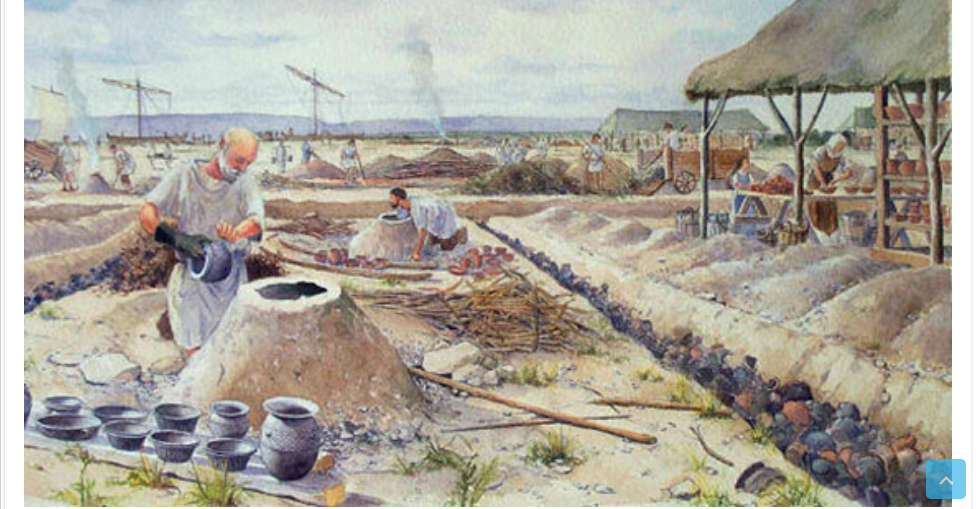
Bell Beaker pot making, artist’s impression

Farmers then became aware of iron ore and added it to strengthen tools in Iron. The Iron Age in Britain was from 800BC to the arrival of the Romans in 44AD. Just as the farming culture originated in the Mediterranean region, so did the Iron Age developing out of the Bronze Age. It began 400 years before it reached Britain.

The Roman Empire covered 1062 sq miles (275,056.73 hectares). It formed in the years before Christianity, then grew in strength, incorporating Christianity eventually as a useful uniting tool for trade and commerce. It was backed by military strength and Roman warfare became the pinnacle of power during its time conquering tribes of Europe. Successive Popes, when coffers were low, would call on Christians in its realm to fight, for example, the 9 Crusades, and accrued vast wealth in so doing. When the Empire collapsed, there was a void of leadership which caused turmoil throughout Europe. But Christianity continued to spread with the leader of the Church being the Pope in Rome. Most Christian Monarchs in Europe deferred to whoever was the Pope during their reign.

With the Romans gone, the population of Britain would undergo massive change.
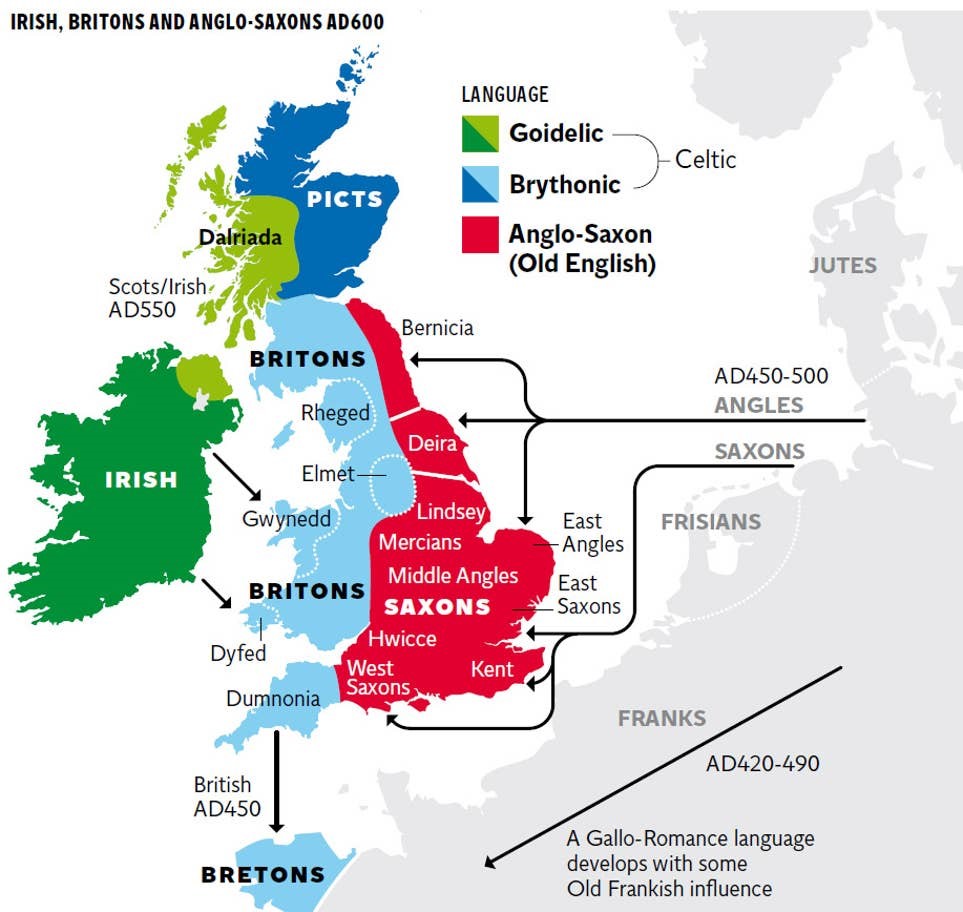
The Romans named the Pagan people in the very North of Scotland, The Picts. These people were converted to Christianity around the 6th century, but their Pagan symbols are found throughout Christian literature and icons. “Many of today’s customs used in the Church can be traced back to the 4th century, when Constantine permitted the process of converting the official religion of the Roman Empire from Paganism to Christianity.

Note the word ‘converting‘. Changing the sign on the door is a lot easier, quicker and cheaper than changing the whole building. Christianity was modelled on many customs that were familiar and acceptable to Jews and Pagans at that time, when religion and belief were intertwined with superstition.”

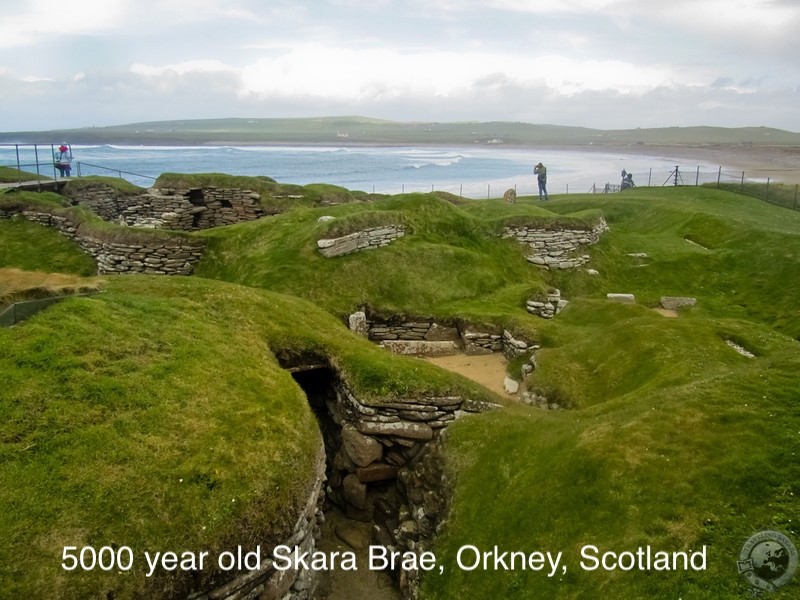
The Picts were descendants of the Iron Age people of northern Scotland, believed to have originated in Iberia as hunter-gatherers, they moved through lower Britain and entered Scotland around 7000BC. Recent DNA tests have proven the Picts were closely related to the Basques of northern Spain. The connections between northern Britain and Celtic Spain are supported by many myths and legends. The dolmens, standing stones and the trail of “cup and ring” designs carved on stones by the prehistoric people of Iberia make their way from Spain and Portugal and northern France to Ireland and Scotland and represent the earliest evidence of the movement of prehistoric man from Iberia to Britain.
Those fisher-hunter-gatherers travelling up the Atlantic coasts of the Iberian Peninsula then along the coast of France, and up the Atlantic coast of Britain, C.15000 to 7500 YA (see Book, The Origins of the British by Stephen Oppenheimer,, 2007) were setting the route for these migrating farmers c.6000 years ago.

Early Stone Age people also came across from the continent of Europe when Doggerland land bridge enabled good hunting until the sea levels rose (c.4000 BC). As long as 900,000 YA, in Happisburgh, Norfolk coast, there is evidence of stone tools and footprints of a Homo antecessor.

It is the genetic information which is now becoming more refined and definitive which is helping us link the New Stone Age era of humans to the beginnings of British ancestry.

It took the advanced Roman culture to record the conditions they found on these islands when they established fortification and control 43BC to 442 AD. Plantations were introduced over 400 to 650 acres, centred upon stone villas. The remaining farmers cultivated their own plots, but also, as serfs, thos of their lord. The rich farmlands bordering the Fens provided grain for the Roman legions stationed in the North. The waterways of the Fen’s were used to transport the grain, but also the innovative Romans built canals to add to transportation routes.

Under Roman occupation, farmers continued to live in their existing villages, hamlets and isolated homesteads. Population density was very low, with only 2 to 5 people per square kilometer. The main obstacles to food production was loss of soil fertility, pests, diseases of plants and animals. Roman influence taught that fields must not be over cultivated and must be allowed to lay fallow for one or more years in order to recover fertility. New tools designed by the Romans were introduced, such as the Sarculum (Roman hoe) and the Roman plough. Romans had perfected the State of the Art farming techniques which they enthusiastically taught and implemented in their newly conquered territories.

During the Roman occupation of Britannia (43 – 410 AD) some people from beyond these shores were already living here as subjects of Rome. Once the Romans went home to Rome, Europe was in turmoil and there was a massive movement of people which historians have called The Great Migration. The best farmland was known to be in Britain, already cultivated under Roman instruction. Thus the vulnerable population of these islands became the target of the Angles, Saxons and Jutes.

Bede, a Northumbrian monk (who documented much of this period), wrote that Anglo-Saxons belonged to the three largest tribes in Northern Germany, the Angles, the Saxons and the Jutes. Other smaller tribes include the Franks, Batavians and Frisians.

Anglo-Saxon Occupation of Britain

During the Anglo-Saxon occupation of Britain, the three invading tribes set about creating their own kingdoms. Pushing the earlier farmers found populating the islands further west into Wales, Cornwall and further north towards Scotland. These were the truly Celtic people from the Iberian Peninsula.

The Angles split up and founded the kingdoms of Northumbria, Mercia and East Anglia. They gave their name to Angle-land, which eventually be England.

The Saxons settled in Essex (East Saxons), Sussex (South Saxons), Middlesex (Middle Saxons) and Wessex (West Saxons) which today is roughly Hampshire and Wiltshire. The large Saxon presence in the areas around Wessex, gradually drove out the existing Jutes who had settled there.

The Jutes settled in Kent, Hampshire and the Isle of Wight. Although, probably because of the dominant presence of Saxons in the area, the Jutes did not remain long in Hampshire and the Isle of Wight.

The Saxons came from the northern Germanic coast line of Old Saxony. The Saxons not only invaded and settled in Britain, but also pushed north over the North Sea, and south west down to the Franks.

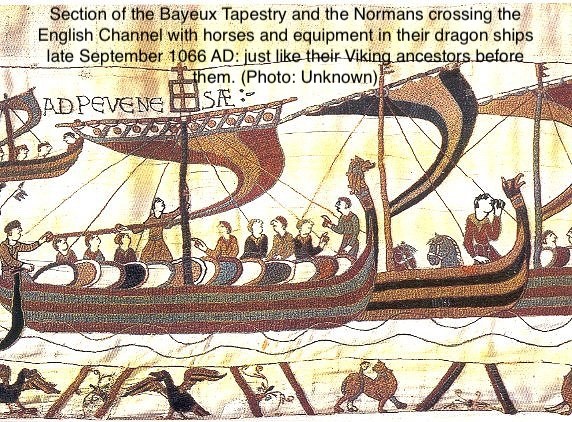
The farmers best known for their dramatic raids were the Vikings. Again, they were farmers with warrior attitude. They were not genetically unique to Scandinavia. They not only fought on Scottish and English soils, but also French soils. It was in France that they secured, under Rollo, the area which is now known as Normandy. Viking means North Men, so the land was named Normandy. They were the precursors of William the Conqueror who arrived on Saxon land a couple of centuries later.
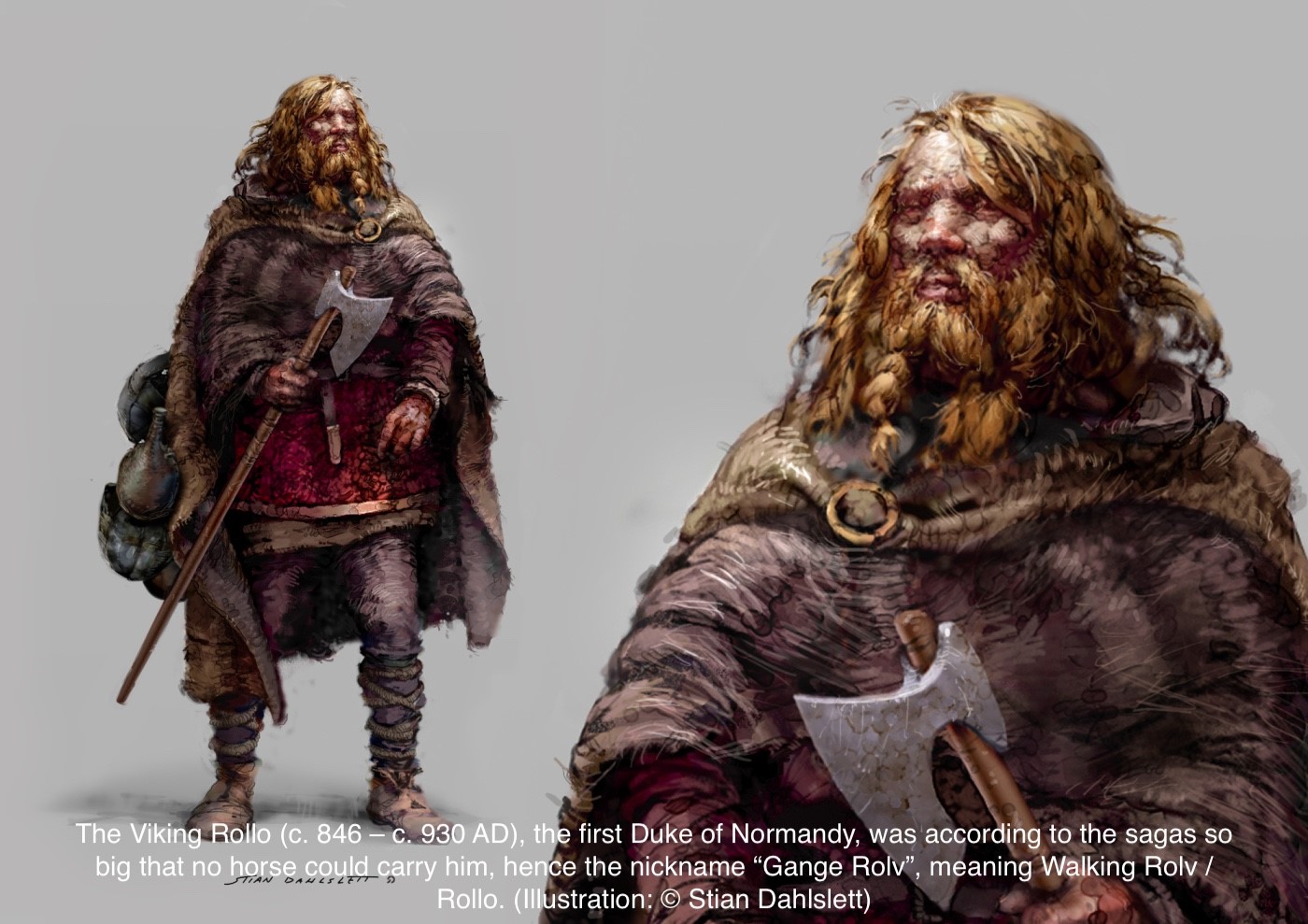
We do know that all of the groups of people who sailed from Scandinavia during the Viking Age descended from the people who lived there during the Iron Age (500 BCE to 800 CE). But the genetic data does suggest a few differences. For instance, Viking Age people from Sweden and Denmark have more ancestry in common with Neolithic farmers from Anatolia, who spread west across Europe around 6,000 years ago, than their predecessors did. That suggests the flow of people and their genes from the south and east, moving across the Baltic Sea and into Sweden and Denmark just before the Viking Age..

A couple of centuries later, another Normandy born person, namely William the Conqueror chose to take on the Anglo-Saxon King Harold at the Battle of Hastings in 1066. Harold was killed. William became King. But he had to deal with constant rebellions from northern forces. He chose to use religion to symbolically dominate the population, changing the structures of the existing wooden churches and replacing them with grand stone buildings and he used Norman priests to dominate the hierarchy.
The Normans built larger stone churches, and constructed basilicas in major towns, like London, Durham and York, which could hold hundreds of people worshipping at one time. One key feature of these large Norman basilicas was the rounded arch, and Norman churches would have been painted inside with religious art. This gave a clear message about the power of the church in people’s lives, and the leaders of the church were usually Norman.

William appointed Lanfranc to reorganise the Church after it had been under Anglo-Saxon rule.

Lanfranc was a very strict leader of the Church and introduced a lot of reforms in the English church. Two particular issues that he wanted to deal with were simony and celibacy.

As William’s new Archbishop, Lanfranc achievements included:

  • simony was challenged
  • stricter obedience from England’s priests to the rules of the Church
  • strong loyalty to both King William and to the Pope
  • substitution of most English bishops with Norman clergy
  • succession of William’s son, William Rufus, when the king died in 1087
  • supremacy of the Archbishop of Canterbury over York

Durham Castle and Cathedral

William the Conqueror, in 1086, ordered that all lands be surveyed in England and part of Wales, and every little detail of property be catalogued so as to assess the value of lands he oversaw as King. This survey became the ‘Domesday Book’. He died a year later, leaving his homeland of Normandy to his son Robert and England to William Rufus.

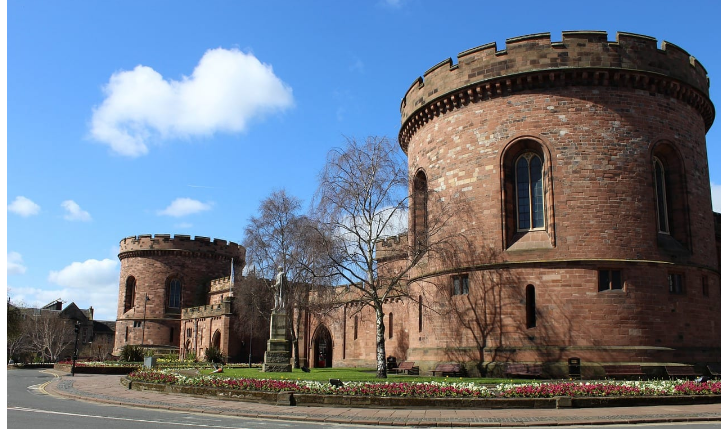
William used the ‘Domesday Book‘ to place taxes on all his subjects. Now he knew exactly who owned what. This changed the perspective of land and property forever in the country over which he rules, and for successive monarchs. He used these taxes to fund many successful battles against Scottish kings until his armies killed King Malcolm III of Scotland, and one of his sons, and took Cumberland and Westmorland off the Scots, building the Castle at Carlisle to defend against any further claims. Similarly he built castles in Wales to prevent further rebellion from the Welsh, all courtesy of the resented crippling taxes on the English population.

Farmers now worked their own family plot but also worked for the lord over them. All had to pay taxes and fight for the King whenever he bade them do so. Swearing allegiance to King and Country became the expected thing to do, and to also worship at the large churches which no longer took place in small communities, but attracted large numbers to be educated in the Norman Catholic belief system.

Posted in anthropocene | Tagged , , , , , , , , , , , , , , , , , , , , | 2 Comments

Covid and Capitalism

Around 80% of countries use the Capitalist system. In capitalist economic systems, the state doesn’t provide jobs. The private companies set the eligibility and pick the candidate most suited for them. But in times of recession, unemployment can reach very high levels.

Some countries take responsibility for full employment of their citizens, but operate within a capitalist framework. They may invest income from oil revenues in controversial projects abroad, such as mining, but use the profits to create what seems like an ideal society back home.

Democratic Socialism is a mix of communism and capitalism. Under Covid, the distinction has become interesting as Capitalist countries adopt predictably harsh approaches to those whose jobs have been scrapped, whilst Democratic Socialists support high employment at all times.

But employment of the many for the benefit of the few is a well tested model, whether it be under a communist or capitalist regime. Brainwashing the many to adhere to ‘the rules’ in which ‘the carrot’ dangled is to be able to stay in employment and thus achieve a roof over one’s head and food for the family. Individuals who do not abide by the rules are outcast.

Workers will identify with the trade they are employed in, to stay true and work hard, even if the work is soul destroying and difficult.

People under Capitalism right now are feeling ‘the stick’ as they lose their jobs and positions they have gained through their efforts. They feel like they have been made obsolete. Some want to blame someone, something, anything. They are angry and becoming, in many cases, unstable. Others have worked out how to redeploy transferable skills and have created enterprising employment for themselves.

Capitalism under threat

The Covid 19 pandemic has put the concept of Capitalism under threat. Globalisation may be a thing of the past. Dreams of one day becoming wealthy through the capitalist models of opportunity are being dashed.

Capitalism is built around winners and losers. Those of us who have only known a capitalist system accept we have a seat at the mostly global Casino. We have to play, even if we don’t want to. There is no choice.

Surveillance Capitalism

Stocks and shares rise and fall according to rumour and speculation. Fake news can destroy a business or a person charged with falsified evidence. No one is safe and secure under capitalism, particularly surveillance capitalism. (see The Age of Surveillance Capitalism, Shoshana Zuboff)

Climate Change and Human Migration

Around the world we have climate change disrupting the lives of millions of people, forcing them to trek thousands of miles to find food and shelter, and often finding there is no place they are welcome, as the likely nearest places already have problems feeding their populations.

Climate Change and Buried Microbes

Viruses emerge out of melting permafrost which have laid trapped and preserved for thousands of years. Methane flies into the atmosphere out of the ground which was frozen, at greater quantities than all the Anthropocene activities could ever have contributed. The Earth is warming at a much more rapid rate now and than ever before, because we did not respond responsibly to warnings decades ago.

We have a habit of being deliberately ‘slow on the uptake’ if it looks like Capitalism is getting shaky.

Lockdown in areas already suffering poverty

Under lockdown, in some richer countries, we have the dichotomy that people in poor communities already not eating well are not eating at all. Many have never been taught to cook, only re heat frozen foods of which they don’t even care to know what harmful ingredients they might be ingesting. A number have not been taught to cook from raw ingredients, and that lack of skill has gone on for generations since the rise of fast food outlets. During a pandemic this is adding to their misery, for no fast food is easily available to low income families and food banks give them foods which often do not match their usual diet. Even cooking rice or boiling a potato is a mystery to many finding themselves in this dire situation.

4 years ago this site devoted its attention to calculate what global land area would we need to feed the world. We all know we eat too much meat. 80% of arable land is used to grow meat. That is crazy. We must begin to reduce that percentage drastically.

Since poverty might also mean some do not have heating, gas or electricity due to being unable to pay their bills, cooking isn’t even possible were they to try. In freezing winters this dreadful situation is adding to the consequential death toll of the Covid pandemic. These communities have been run down over generations, many since the war damage hit their industries. They have no safety net. This is the result of the winners and losers construct.

Every person requires imaginative education to help them prepare nourishing food, to know where food comes from and which diets will sustain a human, even if the food is cold many simple foods can generate energy and warmth once eaten.

Rolling wars and Covid

In present day rolling war in countries where they have been starving pre Covid, it gets worse even when they thought it couldn’t. Foreign aid is drastically cut (the UK reduced its International commitment), thousands more are starving to death, and if still struggling to survive, they will be cut down by Covid too. These countries have lost their infrastructure through proxy wars.

John Pilger “describes the invisible weapon of past and current wars, and the threat of nuclear war, under cover of the Covid pandemic. This is propaganda, aided by censorship by omission.”

More losers, but those who perpetuate the wars are gambling on winning, and that is their goal, no matter what the human cost.

The mental damage of war, poverty and disease

We humans have been suffering untold levels of grief, sadness, anxiety, anger, and hopelessness as we play our part in the Big Casino. Such feelings can be manipulated by governments and cult leaders.

Algorithms on social media platforms

Social media is one tool which has increasingly played a role with allowing their simple algorithms to multiply negative and irrational thoughts. (Read The Arguments for Deleting your Social Media Accounts Right Now, by Jaron Lanier). Leaders of cults and political power bases can spend money on fake news and cause mayhem amongst the unsuspecting, addicted social media users. Now those users are more vulnerable and susceptible due to the Covid and Economic crises.

Many of us access online news to find out what is going on in the world around us, but many news outlets also trawl social media platforms to get stories for us to read or see on television. It has become an intense cycle of negativity.

Deception

But gullible humans can be easily deceived, and many wars have been fought through sending out false messages about ‘imminent threat’ and creating hatred for those perceived to be the enemy, but only after telling lies and providing false evidence about them. Thus, over the centuries, since warfaring peoples first worked out how to whip up hysteria using propaganda and often religious zeal, many have gone to war and/or committed genocide against innocents because they could no longer think for themselves.

Greed and avarice

Humans have evolved Capitalism through developing modes of trade since Jesus was said to have overturned the tables of the Pharisees. The story was told, a finger wagged, and we proceeded to ignore the warnings – and we evolved greed, avarice and sang the mantra ‘Profit before People’.

Once warned, we thumbed our noses and developed capitalism dependent on credit and ensuring debt, and developing elites who loan the funds. Covid has meant more debt incurred by individuals struggling to survive, they have had to borrow more, but whilst Covid rages, they are receiving demands for repayment and have to seek help as anxiety mounts.

Not just people within countries are convinced that debt is a good thing, but whole nations become indebted to richer nations, making them kneel at the feet of institutions like the IMF. 

Rescuing the hard hit sectors after Covid

The ILO offered analysis and suggestions for preparation for the likely fallout across sectors in the labour market, due to Covid:

The majority of job losses and declining
working hours will occur in hardest-hit sectors.
The ILO estimates that 1.25 billion workers,
representing almost 38 per cent of the global
workforce, are employed in sectors that are
now facing a severe decline in output and a high
risk of workforce displacement. Key sectors
include retail trade, accommodation and food
services, and manufacturing.
X Particularly in low- and middle-income
countries, hard-hit sectors have a high
proportion of workers in informal employment
and workers with limited access to health
services and social protection. Without
appropriate policy measures, workers face
a high risk of falling into poverty and will
experience greater challenges in regaining their
livelihoods during the recovery period.
X Those who continue to work in public spaces,
in particular health workers, are exposed
to significant health and economic risks.
In the health sector, this affects women
disproportionately.

The extract from the above report in 2020, having seemingly been ignored by policymakers, reveals in 2021 the global lack of preparation for the Covid impact. When a person tries to show enterprise and is prevented due to some bureaucratic nonsense, as we saw with the immolation of the young man in Tunisia whose death sparked the Arab Spring, we can see what happens if we do not encourage independent action and thought to generate income. If ever we needed global action to fund the initiative of currently hard hit sectors to regain employment in a Covid-safe fashion, now is the time.

Old hands who know the ropes for generating income:

The Vatican Bank has always relied on it’s believers to contribute generously to its coffers.

“The bank has been caught up in a number of scandals in the past, including the funding of priests caught up in sex abuse allegations and of money laundering for the Mafia and former Nazis.

This is why there are moves within parts of the church to make it more like a normal bank and open up its accounts for greater scrutiny. Protections for religious organisations mean it does not currently face the same transparency obligations as other financial institutions.

An investigation by the Economist estimated that the American Catholic church alone – which has the fourth largest follower base by country, behind Brazil, Mexico and the Philippines – spent $170bn in 2010 on things like healthcare, schools and parishes.

Money flows in from individual donations from Catholics, government grants, the church’s own investments and corporate donors.

According to Georgetown University, the average weekly donation of an American Catholic to the church is $10. There are 85 million in North America, meaning each week the Catholic Church pulls in $850m through donations from individual Catholics.”

Under Covid, the U.S. Roman Catholic Church received at least $1.4 billion in federal COVID-19 relief aid, making it one of the largest beneficiaries of federal assistance during the pandemic.

Because people cannot  call for a priest when dying of Covid, last year in Italy a headline read:

“Catholic Church ‘forgives’ sins of coronavirus patients

The Catholic Church has granted forgiveness — under certain conditions — for the sins of the faithful struck by the novel coronavirus.

A decree published by the Vatican also covers healthcare workers and those who pray for their wellbeing. Relatives who care for their sick family members are also forgiven.

The condition involves the sick saying a certain number of prayers.

Those who pray for the caregivers’ wellbeing must also read the Bible “for at least half an hour”.

The decree was issued one day after Italy overtook China for the highest number of deaths from the new illness.

The pandemic has killed more than 3,400 people in the Mediterranean country.

Vatican City itself has confirmed one infection.

Pope Francis was reported to have been tested for the virus as a precaution after coming down with a cold last month.

The Vatican has never confirmed or denied the report but has stressed repeatedly that the 83-year-old pontiff does not have Covid-19.”

And then we have career politicians:

People have developed ideas to attract money to themselves if they say they will ‘serve the people’ when really, they often end up merely serving themselves, but will tell of the great things they have achieved ‘for the people’. Even Eisenhower who warned of the dangers of ‘the military complex’ were honed by military service and, as such, had to be blinkered to many other aspects of human existence which required attention, for example, Civil Rights.

It is commonplace for politicians to get backing from donors in order to mount their campaign to become a representative of some party or a leader of some country. Nowadays, no individual can hope for a career in politics without massive backing from donors, who are likely to have vested interest anyway and be corporates as well as individuals. They expect a ‘quid pro quo’. Laws can be changed, policies can be adapted to suit, all to the advantage of the donors.

And the ever persistent requests for donations for charities:

Giving donations to charities often only sucks up the money to pay high salaries to those who run the charity rather than use the proceeds responsibly for the given purpose of the charity.

Manipulation of well meaning citizens:

People can be manipulated so easily that there is a disgust by those who do such things toward the easily led majority of well meaning citizens. The manipulators prey on the fears and anxiety which many rightly possess. Once they are led into believing a manipulated action will free them from their fear, they will become evangelistic about the belief and will take that action. Advertising methods use the same ploy. Advertising dominates social media and pays for it, and we use the ‘free’ apps to access the distorted truths.

When those who live in a hierarchical structure are manipulated out of their self development and dumbed down by fake news, they become unable to learn how to distinguish truth from fiction – and their children likewise. Capitalism has exploited that human vulnerability, with the help of religious zealots, and militias drawn from the ranks of those whose brains have been fogged by untruths.

The basic necessities of life for humans is food security and a safe place to live and work.

Covid is yet another challenge which exposes the weaknesses in the way we describe our existence to ourselves.

History reveals the tragedies and our ineptitude as we continue to wreak havoc on this beautiful planet, to cause extinctions of plants and animals and to help generate more diseases for our scientists to frantically try to conquer.

We have the ability and intelligence to rise above this mess and view calmly what needs to be done to rescue the planet first, and maybe we might just deserve to rescue ourselves in the process.

Posted in anthropocene | Tagged , , , , , , | Leave a comment

Covid 19 and food poverty, Britain

Back in 2014 a panel of people came together to put out a report on food poverty impacting on ill health in Britain.

This was an All-Party Parliamentary Group Inquiry on Hunger and Food.

Any country’s government group might have set these lines of investigation, but the history which contributed to the dire straits of a high percentage of their citizens might have been very different.

  1. To understand the extent and geographical spread of hunger and food poverty in this country.
  2. To investigate the underlying causes of hunger and food poverty in this country
  3. To identify the circumstances behind the rising number of people requiring emergency food assistance in this country
  4. To understand the extent, nature and organisation of emergency food assistance schemes in this country
  5. To discover the food choices and other forms of support available to clients when
    using emergency food assistance
  6. To investigate the source of emergency food assistance providers’ supplies –
    how much is supplied by consumers and institutions?
  7. To consider the effectiveness of emergency food assistance in meeting immediate and long-term needs, and the possibility of these schemes becoming permanent features of the welfare state
  8. To examine the effectiveness and sustainability of our food model in providing universal access to healthy, affordable food in this country
  9. To consider approaches to improving household food security in this country
  10. To make recommendations.

Unicef reported in 2017 that 19% of children under 15 in the UK live with adults who struggle to buy food. In January 2019, a group of cross party MPs called on government to appoint a Minister of Hunger! The BBC reported children were so food obsessed they were found rooting through bins at school to find discarded apple cores! Parents arrived with their children at school saying they could not afford to feed their children.

It took a footballer, Marcus Rashford, to fight for the undernourished children of Britain, to overturn MPs decision not to provide free school meals during periods when schools were closed. Rashford also helped build a food resource which would assist parents to feed their children in his local area.

In Britain, our government introduced a rule under Covid restrictions whereby one could only buy alcohol if a full meal was ordered. This led to people meeting their friends to sit down to a meal, ordering drinks, then leaving the food for it to be thrown in the waste. All they wanted was the alcohol. They did not even ask to take home the food to help family or friends, or even to hand it in to a local food bank or distributor of meals to local people in need. This despicable behaviour has caused outrage in Britain.

Many people who have family members who suffer addictions to drugs such as alcohol, cigarettes, opioids, shopping – will know how the addict will spend money on their addiction rather than on food for themselves and their family. In Britain, this adds to the spiral of debt and destruction of family life leading to domestic violence and acts of self harm. Covid restrictions have heightened these mental health problems dramatically. More families are living in great distress and lack of ready food on the table. The above report demonstrates how dire this stress was building up to be to be over many years before Covid struck Britain.

Recently the BBC filmed some of the misery in Burnley, Lancashire:

Today, the BBC highlighted another area in Northern Britain smitten by long term poverty, Gateshead, Tyneside. There are many northern towns in the UK which have never recovered from bombing of their towns and cities in the last war. Funds have always seemed more profitably spent by the Treasury to allocate to southern Britain if more gain was perceived improving roads, housing and generally boosting employment and education chances. The northern areas did not hold much attraction in this respect. However, in order to gain favour with the northern voters, the current government has promised funds will favour the north, but not before the highest number of over 70s people have died from Covid in the UK. These deaths were preventable had funds been made available to northern councils in time to set up a proper response to Covid in their communities. Instead, hungry children have lost their grandparents and the grief of loss is adding to the pain of hunger.

The answer to this problem is the responsibility of all of us, across the globe. We should all realise we have the answer as long as we provide the infrastructure and philosophy to eradicate poverty and stop the relentless punishment and stigma in many societies simply for being born into a life which holds no safety net..

Posted in anthropocene | Tagged , , | Leave a comment

Opium, Poverty, War and Covid

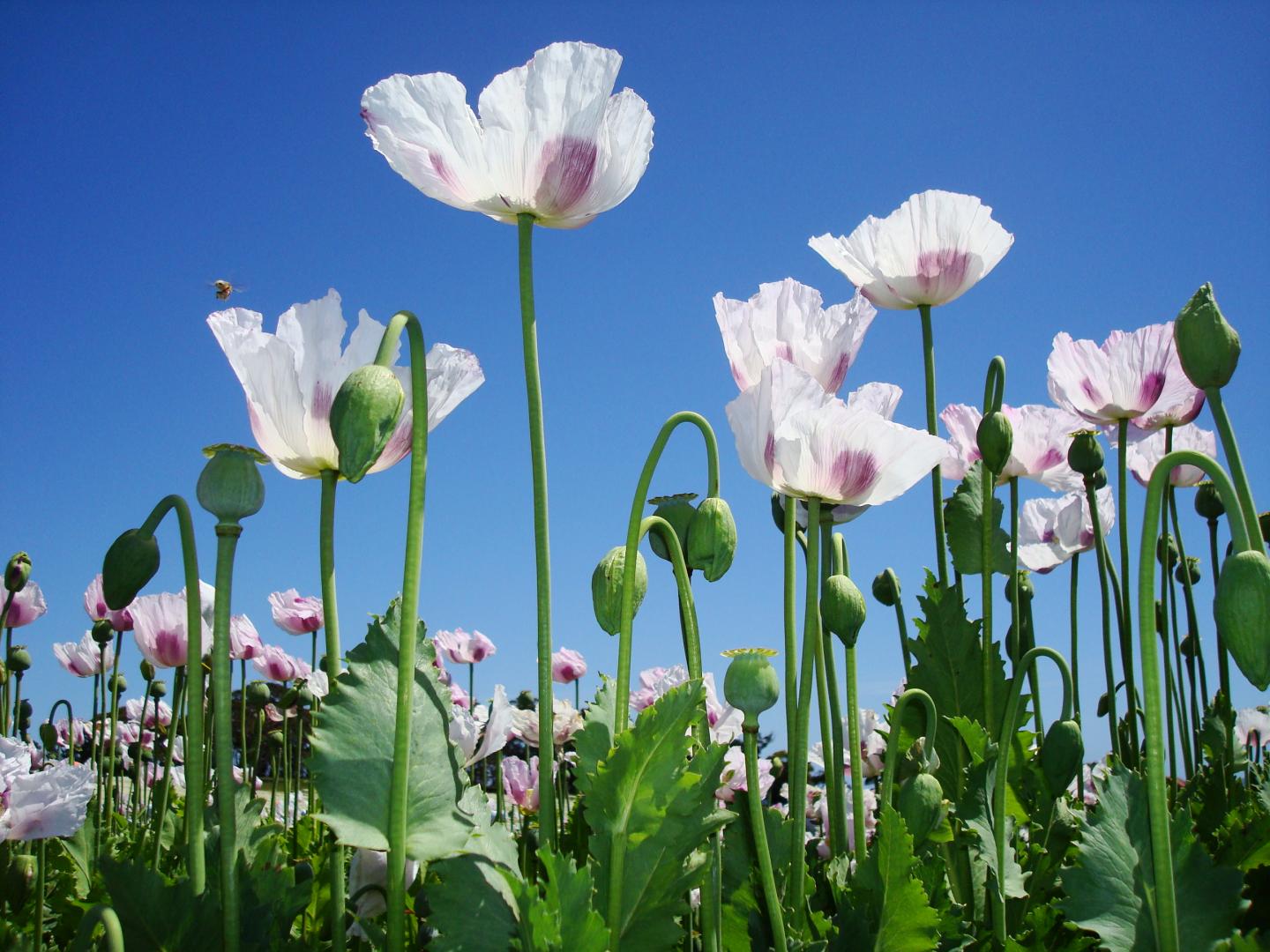
The poppy is a beautiful flower. No doubt early humans were drawn to its bright colour and, once picked, they used their curious minds to develop uses.

Early evidence of its consumption was found in a Neolithic burial site near Barcelona, where it appears it was used for its narcotic and analgesic effects. The ancient Greeks, who held the opium poppy sacred, claimed it was Demeter who discovered it, with figurines of Poppy goddesses found in Gazi, Crete.

The poppy seeds are used today for sprinkling on food; morphine for serious pain relief and as the addictive street drug, heroin.

Opium was one of many herbal remedies discovered and catalogued by Pedanius Dioscorides.

“He was born around 30 A.D. in the town of Anazarbius in Asia Minor, in present day Turkey.  He started work on De Materia Medica around 50 A.D. and published it in 70 A.D.  Although he wrote his herbal in Greek, it was quickly translated into Latin, and subsequently into Arabic and other languages.  Dioscorides died aroung 90 A.D.

Dioscorides’ great herbal is one of the most popular medical reference works in the history of mankind.  Unlike other medical works by classical authors, De Materia Medica wasn’t rediscovered in the Renaissance because it had never really left circulation.

In sheer scale and thoroughness, De Materia Medica vastly surpassed all previous herbals.  It discusses the medicinal properties of over one thousand natural medicinal substances; most of these are botanical in origin, but drugs of animal and mineral origin were also included.  To put things in perspective, the entire Hippocratic Corpus only mentions about 130 different medicinal substances.  Dioscorides listed over 4,740 different uses for the materia medica in his herbal, and lists over 360 varieties of medicinal actions.”

Today we are familiar with holistic medicine and those who still research and qualify in its study and application know this ancient work of Dioscorides. But Big Pharma recognises the value of this work too and many international modern medicine production facilities still refer to this ancient knowledge within modern settings Derived from opium is the synthetic opiates, opioids.

As various medicines are helping to manage the symptoms of Covid, a vaccine is also being developed at a rapid rate. The richer nations are purchasing millions of batches for their citizens. The aim is to reach all global citizens but the logistics and safe transport requirements will be complex.

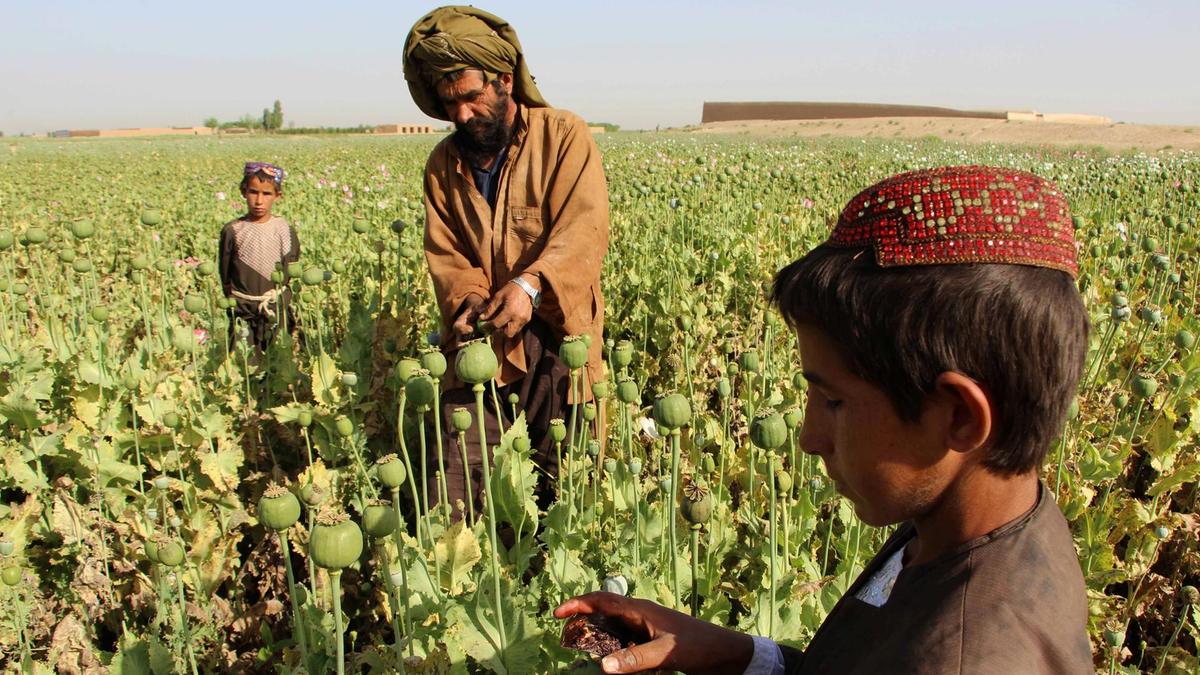
Some parts of the world do not have a local hospital, even small communities in the United States, and without even medicines to help them they are fighting against the tide of the virus. In Afghanistan, those areas whose farmers grow poppies are making the opium and using it as the only medication available.

The top countries which grow poppies to fulfill the demand for their use are found at Top Opium Poppy Producing Countries – WorldAtlas

The famous Golden Triangle and Golden Crescent

GOLDEN TRIANGLE –  It is an area of around 950,000 square kilometres (367,000 sq mi) that overlaps the mountains of three countries of Southeast Asia: Myanmar, Laos and Thailand.

The Golden Triangle designates the confluence of the Ruak River and the Mekong River, since the term has been appropriated by the Thai tourist industry to describe the nearby border tripoint of Thailand, Laos and Myanmar

GOLDEN CRESCENT is the name given to one of Asia’s two principal areas of illicit opium production (with the other being the Golden Triangle), located at the crossroads of Central, South, and Western Asia. This space overlaps three nations, Afghanistan, Iran, and Pakistan, whose mountainous peripheries define the crescent.

From <https://getorgot.blogspot.com/2016/04/golden-triangle-golden-crescent.html>

And here a piece of what life is like for most Afghans caught between warring factions, their opium they grow is all they can turn to to ease the pain and symptoms of Covid.

“The first item on everyone’s minds is food. Some fear that, as flour prices rise, the small, local bakeries will close. ‘It is better to die of the coronavirus rather than die of poverty,’ says Mohammada Jan, a shoemaker in Kabul. Jan Ali, a labourer, laments, ‘Hunger will kill us before we are killed by the coronavirus. We are stuck between two deaths.’

Even without the disruption caused by the pandemic, nearly 11 million face acute food insecurity, according to UN projections. For the thousands of street children and casual labourers in Afghanistan, no work means no bread. For the poor in urban areas, the main priority will be to feed their families, which means being out in the street, looking for work, money and supplies. People are likely to be more worried about starving to death than about dying from the coronavirus. ‘They are too busy trying to survive poverty and upheaval to worry about a new virus’

With prices of wheat flour, fresh fruit and nutritious food items rising fast and no government control of food prices, there is a real danger of famine. Border closures, intended to restrict the spread of the virus, mean international supply lines of oil and pulses, mostly from Pakistan, will be severely restricted. Even though many farmers are optimistic for this year’s harvest, after plentiful snows and rains this winter, the virus could hit them just as the harvest starts in May.

At the time of writing, there have been 1,019 confirmed corona virus cases and 36 reported deaths, although with limited testing and many not seeking health care when sick, the actual figure must be much higher. The provinces most affected are Herat, Kabul and Kandahar.

The heart of the outbreak is in Herat, the busy border town from which, normally, thousands of Afghans, mostly young men, cross into Iran in search of work. Following fatalities and lockdown in Iran, last week alone 140,000 Afghans recrossed the border into Herat. Some are escaping the coronavirus itself, others have lost their jobs because of the lockdown so they have nowhere to go.

In Herat, a three-hundred-bed hospital has just been built to cope with the new cases. Afghanistan has set up new testing centres, laboratories and hospital wards, even roadside hand washing stations. The World Bank has approved a donation of $100.4 million, to provide new hospitals, safety equipment, better testing and ongoing education about the virus. The first medical packs from China, of ventilators, protective suits and testing kits, arrived in Afghanistan last week.

Many Western NGOs, however, have had to stop work as their staff has been ordered home by their own countries and there is a shortage of doctors trained in the intubation procedures needed to help COVID-19 patients.

Afghanistan’s 1 million displaced people [IDPs] will be disproportionately affected by COVID-19. For those in camps, overcrowding means it is almost impossible to maintain social distancing. Poor sanitation, and scant resources, sometimes no running water or soap means basic hygiene is difficult. For migrant workers, a lock down means both their jobs and accommodation suddenly disappear; they have no choice but to return to their village, causing huge numbers of people to be on the move.

Commentators International Alert and Crisis Group analyse the fall out from COVID-19 pandemic. First of all western leaders, don’t have time to devote to conflict and peace processes, while focused on domestic issues. The UK prime minister has only recently recovered from the virus as I write.

It is thought the COVID-19 pandemic will ‘wreak havoc’ in fragile states, where civil society is not strong. While on one hand there is a sense that ‘we’re in this together’, as we know from our own situation in the UK the virus has also given rise to more surveillance and unusually heavy-handed policing. In a country where ethnic tensions turn into armed conflict, there is a danger that ‘othering’, in which particular groups, such as migrants for example, are blamed for spreading the virus, becomes violent and deadly.

Despite prisoner swaps between the Taliban and the Afghan government completed as a foundation for peace talks, and despite the Taliban joining in the campaign to educate citizens about the virus, attacks such as this one by ISIS, continue. The Bureau of Investigative Journalism reports 5 covert US air or drone strikes against the Taliban in March, resulting in between 30 and 65 deaths. A month ago, the UN Secretary-General called for ‘an immediate global ceasefire in all corners of the world’. Ongoing ceasefire and peace negotiations are vital for Afghanistan during the time of the COVID-19 pandemic.”

Voices for Creative Nonviolence-UK (http://vcnv.org.uk) is VCNV’s sister organization in the UK. When visiting Afghanistan its members are guests of the Afghan Peace Volunteers (www.ourjourneytosmile.com)

Rich countries also struggle with economies running into deeper debt trying to cover the costs incurred by the consequences of fighting the virus. No nation is escaping the enormous challenges. But humans are the most successful life form since the dinosaurs, yet we have been around for a tiny fraction of the time they endured.

We all may wonder if our ingenuity and stamina will overcome this threat amidst all the other crises such as climate change. Whilst each day unfolds, those of us who witness the human caring and hard work to save lives and not needlessly destroy them, gives us a glimmer of hope for this to be a turning point for the better for humanity.

>

Posted in anthropocene | Tagged , , , , , | Leave a comment

Poverty and Covid

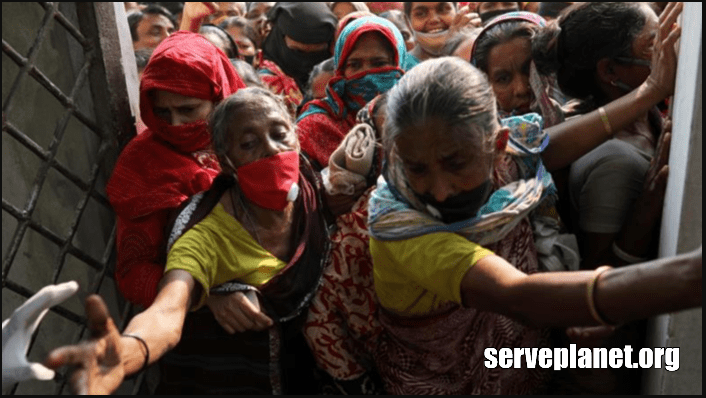
Worldometer today says today there are 846,886,647 and climbing, undernourished people in the world. But there are many more people who are overweight. Many thousands of dollars are spent in the US on weight loss programs, and very little is spent on feeding those who have found themselves without food today. You need a nourishing diet to protect your immune system, and Covid will seek out those with poor immune systems.

There are 796,928,478 who have no access to safe drinking water, but to fight Covid people must not only have safe drinking water, but a supply of clean water and soap to regularly wash their hands. This issue is being tackled, but not fast enough to save lives.

There is plenty of money in the world but we do not spend it where it is most needed. Covid will overwhelm us if we do not provide suitable living conditions for all members of the human race. Make this a priority and we will destroy this virus before it destroys us.

In parts of the world, it is necessary to shop in markets each day in order to purchase or barter for necessities to provide for each day of existence. These markets have not been redesigned to cater for Covid restrictions, and Covid multiplies in such environments.

Read more at https://www.theguardian.com/world/2020/may/17/coronavirus-latin-america-markets-mexico-brazil-peru

Posted in anthropocene | Tagged , , , , , , , | Leave a comment

Seems like a good idea to Track and Trace. Then dominate the virus.

Test everyone, then track and trace. Makes sense, but only a small number of the World’s population find themselves equipped to carry this out effectively. We will have unnecessary deaths as a result, and health workers will be overwhelmed. Trust in some systems is ebbing away, whilst others have risen to the challenge.

Take a look:

https://www.exemplars.health/emerging-topics/epidemic-preparedness-and-response/covid-19

Posted in anthropocene | Tagged , , | Leave a comment

Covid 19 and religion

Humans have adhered to religious beliefs for thousands of years. Many belief systems fly in the face of advice for self and other protection against the current contagious virus.

Here we have an example in the news this month:

Israeli Hasids

https://www.channelnewsasia.com/news/world/ukraine-hasidic-jews-belarus-border-pilgrimage-israel-plea-1312126

Christian worship:

https://www.dallasnews.com/news/faith/2020/09/24/to-exempt-or-not-to-exempt-covid-19-exemptions-continue-to-spark-debate-over-religious-liberty-public-health/

UK Statistical analysis related deaths by religion, May 2020

https://www.ons.gov.uk/peoplepopulationandcommunity/birthsdeathsandmarriages/deaths/articles/coronaviruscovid19relateddeathsbyreligiousgroupenglandandwales/2marchto15may2020

Muslim worship in UK, September 2020

India, Hindu advice:

https://www.thehindu.com/news/national/immense-self-discipline-caution-exercised-at-places-of-worship-during-covid-19-pandemic-mukhtar-abbas-naqvi/article32535471.ece#!

Israel advice on Covid and worship:

Buddhist in Thailand:

https://asialink.unimelb.edu.au/insights/covid-in-thailand-failed-and-foolhardy-predictions

Posted in anthropocene | Tagged , , , , , | Leave a comment

Covid 19 as many countries fight wildfires

As we continue to see the virus take its toll, watching the awful numbers at https://worldometer.pro, there is a background of other disasters for human to grapple with at the same time, such as the earth heating to unbelievable temperatures.

https://www.cbsnews.com/news/death-valley-records-highest-temperature-107-years-heat-wave/


Conditions are such that many people will have to find somewhere safer to live. This blog briefly illustrates the wildfire issues.

Trump gave his opinion in an interview, September 2020:

“President Trump doubled down on his denial of climate change yesterday by saying that scientists are wrong and claiming that the world will “start getting cooler.”

The remarks, delivered during a brief visit to California to discuss the state’s historic wildfires, run counter to mountains of research on global warming — including reports issued by his own administration (Climatewire, Nov. 23, 2018).

His comments ignored how climate change has contributed to natural disasters as the nation watches uncontrolled blazes spread across the West, causing catastrophic damage and killing more than 35 people.”

https://www.eenews.net/stories/1063713713

and NOAA has appointed “new deputy assistant secretary of commerce for observation and prediction. It’s not immediately clear what his specific responsibilities are or why he was hired, according to the news site.”  see: https://thehill.com/policy/energy-environment/516160-delaware-professor-who-has-questioned-climate-science-hired-at-noaa

C02 Coalition are funded to oppose environmentalists

https://neweconomics.org/2020/08/road-to-recovery&sa=D&ust=1598436506209000&usg=AFQjCNF-jBcJBbWOBkj7Y8dBPjHNqHX_og

Ramiro Gomez / Creative Commons

The above map was 2014

And in 2017 https://sciexaminer.com/news/science/nasas-scientists-insinuate-never-seen-connection-wildfire-famine-africa-946.html


As the earth heats due to climate change, this is 2020:

USA https://fsapps.nwcg.gov/afm/

South America https://www.pixalytics.com/heat-fire/samerica-fires-openstreetmap/

Australia https://www.commondreams.org/news/2019/12/21/everything-burnish g-australian-inferno-continues-choking-access-cities-across-country


Central Africa https://www.nytimes.com/2019/08/27/world/africa/congo-angola-rainforest-fires.html


Expect tens of millions of internal climate migrants by 2050, says World Bank


And wars displace people who flee to places where wildfires are commonplace. Only this time, some of the people have Covid.

Posted in anthropocene | Tagged , , , , , , , , , , , , , | Leave a comment

Covid 19 immigrants detained and placed in medical isolation


Reproduced from https://www.icij.org/investigations/solitary-voices/they-were-punishing-me-for-getting-sick/?utm_source=ICIJ&utm_campaign=1f8a56091a-0825_WeeklyEmail&utm_medium=email&utm_term=0_992ecfdbb2-1f8a56091a-82075869

“‘They were punishing me for getting sick’

Immigrant detention centers in the United States are locking detainees with COVID-19 in solitary confinement cells for days or weeks at a time, with little opportunity for medical treatment, according to detainees and immigrant advocates.

“In the end, what they did was psychologically torture me,” said Carlos Hernandez Corbacho, who said he spent more than a week in isolation cells at Arizona’s La Palma Correctional Center in June after showing symptoms of COVID-19. “That’s how I felt — like they were punishing me for getting sick.”

Quarantining people believed to have the coronavirus is crucial to slowing its spread. But solitary confinement cells that hold people detained by U.S. Immigration and Customs Enforcement, known as ICE, are a far cry from a hospital bed or a hotel room: cells are claustrophobic, sparsely furnished, and those confined are allowed limited social interaction. A stay can cause lasting trauma and trigger suicidal impulses.

Placing COVID-19 patients in solitary confinement, experts say, is inhumane and jeopardizes the overall population by deterring detainees from reporting symptoms.

“Resorting to solitary confinement to treat physically ill immigration detainees demonstrates ICE’s appalling inability to provide humane and truly civil detention,” said Ellen Gallagher, who works for the Department of Homeland Security’s Office of the Inspector General. Gallagher has been an outspoken critic of ICE’s use of solitary confinement, which she calls “barbaric.”

The United Nations special rapporteur on torture has said that solitary confinement should be banned except in “very exceptional circumstances.” In 2019, the International Consortium of Investigative Journalists’ Solitary Voices investigation found that ICE routinely isolates detainees that it sees as difficult to manage, including the sick, disabled and mentally ill, for extended periods of time in solitary confinement cells.

In an emailed statement, ICE said that its quarantine practices are not a punitive measure and are conducted in accordance with the Centers for Disease Prevention and Control guidelines. “Detainees who test positive for COVID-19 receive appropriate medical care to manage the disease,” ICE spokesperson Danielle Bennett told ICIJ in a statement.

ICE said that while it does medically isolate detainees, the experience is substantially different than punitive forms of solitary confinement. Quarantined detainees have access to recreation, telephone calls and libraries — subject to “restricted movement protocols” necessary to stop the spread of COVID-19, Bennett said. They can also communicate with lawyers and courts.

At any given time ICE holds tens of thousands of detainees awaiting immigration proceedings or deportation — processes that have slowed since the outbreak of the pandemic — at facilities dotted across the U.S. Conditions are similar to those in prisons: detainees live in close quarters and find it impossible to socially distance.

In recent months, ICE detention centers have seen surging coronavirus case numbers, with some facilities reporting exponential outbreaks. As of mid-August, nearly 5,000 detainees had tested positive for the coronavirus and ICE says five had died, although immigration advocates say this is an undercount. Activists and detainees around the country have pressed ICE to improve facility sanitation and to release vulnerable detainees.

ICIJ spoke with three current or former detainees directly — all held at La Palma — and reviewed detailed case notes provided by advocates and detainees describing an additional six instances. Each said they were put in solitary confinement after they were exposed to someone who had contracted the virus, after showing symptoms, or after testing positive.

CDC guidelines say that medical isolation should be “operationally distinct” from punitive solitary confinement, “both in name and in practice.” But in court documents and in interviews, detainees said their experience was effectively the same. They were locked alone in small cells and received little to no medical aid, they said.

Freedom For Immigrants, an advocacy group, has received more than a dozen reports of ICE detention centers in California, Louisiana, Texas, Alabama, Colorado and Arizona placing detainees who were suspected to have coronavirus into solitary confinement cells, including those typically reserved for segregating violent detainees from the general population.

In May, Choung Woong Ahn, who according to ICE had a history of mental illness and suicide attempts, hanged himself while quarantined in a solitary cell at the Mesa Verde ICE Processing Facility in California. The 74-year-old was undergoing a 14-day isolation period after returning from a stay at a hospital.

A memorial for Choung Woong Ahn was held San Francisco after his death. Image: Deborah SvobodaAnother detainee, Oscar Perez Aguirre at Colorado’s Aurora Contract Detention Facility, said he was hospitalized for COVID-19 symptoms, and returned to the facility so weak he couldn’t stand. He was put in a cold and dirty solitary confinement cell for more than two weeks, according to court documents.

In June, officials at Arizona’s Eloy Detention Center put at least 45 men in solitary confinement after they tested positive for COVID-19, Mother Jones reported.

At California’s Adelanto ICE Processing Center, and in Louisiana’s Pine Prairie Processing Center, detainees medically isolated in solitary cells reported being denied opportunities to shower and receive medical attention, according to Freedom for Immigrants.

Detainees at Adelanto and Alabama’s Etowah County Detention Center said they were reluctant to seek medical care due to fears of being placed in solitary confinement, the advocacy group reported.

“As the pandemic has progressed, we’ve documented a trend of people detained in ICE prisons not wanting to report symptoms out of fear they will be placed in medical solitary,” said Rebekah Entralgo, a spokesperson for Freedom for Immigrants.

Despite years of evidence to the contrary, CoreCivic — which contracts with ICE to run La Palma and a number of other detention centers — denies that their facilities use solitary confinement.

“The claim that solitary confinement is used in our facilities is patently false,” CoreCivic spokesperson Ryan Gustin said. “Like most public and private secure facilities during this pandemic, we use separate housing units within our facilities to mitigate the spread of COVID-19 when someone is confirmed positive for the virus.”

Gustin said that CoreCivic has rigorously followed “the guidance of local, state and federal health authorities, as well as our government partners,” including at La Palma.

‘A nightmare’: Stuck in solitary with COVID-19

Hernandez Corbacho thought he’d finally reached safety when he first arrived in the U.S. 10 months ago. He and his wife, Maydel Curbelo Perez, had fled Cuba, where police were monitoring them for their vocal criticism of the country’s dictatorship, she said.

Carlos Hernandez Corbacho and Maydel Curbelo Perez

Using the money they had saved up for their wedding, the couple boarded a plane to Nicaragua in May of 2019, crawling up through Central America by foot and in a combination of buses, taxis and planes until they reached Nogales, Mexico. There, on the border with Arizona, they presented themselves to U.S. Customs and Border Protection for political asylum.

But things didn’t go as planned. ICE separated the two in detention. Maydel won her political asylum case in March, but Hernandez Corbacho’s court dates were repeatedly canceled amid the pandemic, leaving him stranded in ICE custody for five more months before the judge finally granted him asylum August 19.

In June, Hernandez Corbacho felt the first tickle of a cough in his throat. Hernandez Corbacho had contracted a virus that has killed over 800,000 across the globe.

But he said he was afraid to say anything. He’d heard rumors of officials locking detainees with COVID-19 symptoms in solitary, and wanted to put it off as long as possible. By the third day, his symptoms had grown severe: he had headaches, chills, nausea, and had lost his sense of smell. An official took him to see the nurse, who, inexplicably, sent him back to his cell, he said.

After vomiting throughout the rest of the day, staff finally took him to the infirmary to be tested, at the insistence of his fellow detainees. He tested positive for COVID-19.

ICE officials put Hernandez Corbacho in what he describes as an isolation cell in the infirmary, which he said was filthy: full of dirt, dust and bugs that he had to clean away himself. It was furnished only with a bed. He had no books, or entertainment, other than a Bible. There were no windows. The frequent clanging of iron cell doors, opening and closing like a cargo train, and guard radio conversations made it impossible to sleep.

I cried. I thought, he’s going to die in there – Maydel Curbelo Perez

Alone in his cell, he still felt nauseous and ill. Officials gave him an aspirin, which felt lucky — he’d heard most sick detainees got nothing. As his symptoms abated, they were replaced by anxiety and restlessness.

Across the country in Miami, his wife was panicking. She knew her husband was sick. They talked on the phone daily. Suddenly she couldn’t get a hold of him. A friend released from La Palma told her he’d seen Hernandez Corbacho taken to the infirmary, but when she called, no ICE official would tell her where or how he was.

“I was so scared,” she said. “I cried. I thought, ‘he’s going to die in there.’”

After five days, guards moved him into a solitary confinement cell primarily used to punish detainees, he said. It was also filthy, and also sparsely furnished. Three days later he was released back into the general population, he recalls. He still felt sick.

“I never thought I’d experience in the United States the kind of abuse that occurs in my country,” he wrote in an open letter to human rights groups. “I lived a nightmare.”

After the first couple days in isolation, he was able to call his wife again. On the other end of the phone, she worried for his mental health. She encouraged him to read, to write — to find some way of occupying his mind.

“At the end, he was telling me, ‘I can’t take it anymore,’” she said. “It was making him desperate.”

Why solitary doesn’t work for medical isolation

Containing an outbreak in any kind of facility — from detention centers to prisons to nursing homes — has proven a challenge even in the best of situations. For detention centers, the simplest solution, experts say, is to release as many detainees as possible.

As soon as March, thousands were released early from U.S. prisons to lower the risk of the virus within facilities — including several high-profile, white-collar criminals like Paul Manafort and Michael Cohen. ICE detainees are held on civil, not criminal, charges.

There are measures detention centers can take to mitigate the spread, like extensive testing, contact tracing, social distancing, personal protective equipment and reliable communication, said Dr. Terry Kupers, a psychologist specializing in the effects of solitary confinement. But that approach has its limits.

“Correctional facilities have a very, very poor record of doing all of these things in the best of times, and they’re not intensifying their approach during the pandemic,” he said.

Detention centers simply aren’t outfitted with the facilities to control a virus at this scale, said David Cloud, director of research at University of San Francisco’s Amend, a team of academics advocating for criminal justice reform. Solitary confinement cells are used, in part, because there’s often nowhere else for sick or exposed detainees to go, he said.

In cramped detention facilities, medical isolation can still fail to contain the spread of infection. Shared ventilation, cross-contamination and the movement of guards can still spread the virus within the facility, Kupers said.

The effectiveness of medical isolation is even more inhibited if the distinction from punitive solitary confinement isn’t clearly communicated because it can deter the sick from coming forward, Cloud said.

That means officials should strive to make detainees as comfortable as possible in isolation, safely providing them with access to medical aid, recreational activities, entertainment and some social interaction, he said. Medical isolation that feels like a punishment dissuades detainees from reporting symptoms, which can continue to fuel an outbreak.

Entralgo agrees, adding that the pandemic has amplified some of the most difficult issues facing detainees.

“Covid-19 has really exacerbated some issues that already exist within the immigration detention system,” Entralgo said. “Poor medical treatment, lack of communication with the outside world — these things have existed in immigration detention for decades.”


                                                                                            *********************

In the meantime Trump continues to redirect funding from the US Coast Guard and other agencies to a detention system whose daily population has grown by more than 40% since he took office. And it’s only getting bigger.

Read also https://www.theguardian.com/us-news/2019/sep/24/detained-us-largest-immigrant-detention-trump

In memory of 74 yr old Korean immigrant, Choung Woong Ahn


“This tragedy was senseless and preventable,” said Eunice Cho, senior staff attorney with the ACLU National Prison Project. “Suicides in ICE detention have increased to disturbing highs under this administration — and that was before COVID-19. ICE is now detaining approximately 28,000 people; many have reported receiving almost no official information about the pandemic. Make no mistake: ICE and the administration are responsible for this death. No one should be held in civil detention during a pandemic.”


Posted in anthropocene | Tagged , , , , , , | Leave a comment

Covid-19-driven need

“With few exceptions, the richer the wealthy become, the more selfish they behave, from severely diminished contributions to charities to the failure to exert leadership to reverse the breakdown of society. Take all the failures of the election machinery from obstructing voters to simply counting the votes honestly with paper records. The U.S. Senate won’t vote to give the states the $4 billion needed for administering the coming elections despite the Covid-19-driven need for expanded voting by mail. The Silicon Valley, undertaxed, mega-billionaires could make a $4 billion patriotic donation to safeguard the voting process in November and not even feel it.

Rampant commercialism knowing no boundaries or restraints even to protect young children is running roughshod over civic values. Every major religion has warned about giving too much power to the merchant class going back over 2000 years. In our country, justice arrived after commercial greed was subordinated to humane priorities such as abolishing child labor and requiring crashworthy cars, cleaner air, water, and safer workplaces. Mercantile values produce predictable results, from excluding civic groups from congressional hearings and the mass media to letting corporations control what the people own such as the vast public lands and public airwaves.

Then there is the American Empire astride the globe, enabled by an AWOL Congress and propelled by the avaricious military-industrial complex. In his 1961 farewell address, President Dwight Eisenhower presciently forewarned that “[W]e must guard against the acquisition of unwarranted influence, whether sought or unsought, by the military-industrial complex. The potential for the disastrous rise of misplaced power exists and will persist.” All Empires devour themselves until they collapse on the countries of their origins. Over 55% of the federal government’s operating spending goes to the Pentagon and its associated budgets. The military-industrial complex increasingly leads to quagmires and creates adversaries abroad, as it starves the social safety net budgets in our country. Our country’s military spending with all its waste is surging and unaudited. The U.S. spent more than $732 billion on direct defense spending in 2019; this is more than the next ten countries with the largest military expenditures.

A society that requires its people to incur crushing debt to survive, while relying on casinos and other forms of gambling to produce jobs, is going backward into the future.” Ralph Nader, 2020


Posted in anthropocene | Tagged , , , , , , , , , | Leave a comment