Mali’s Defence Minister, General Sadio Camara has been killed in coordinated attacks on military sites nationwide, a government spokesperson has confirmed.
Camara was killed when assailants targeted his house, the spokesperson, Issa Ousmane Coulibaly, said in a statement on Sunday.
Camara’s residence in the garrison town of Kati came under assault on Saturday during simultaneous attacks by an al-Qaeda affiliate and Tuareg rebels.
Camara was a central figure in the military government that seized power after back-to-back coups in 2020 and 2021.
“He was one of the most influential figures within the ruling military leadership and had been seen by some as a possible future leader of Mali,” said Al Jazeera’s Nicolas Haque, who has reported extensively from Mali.
“His death is a major blow to the country’s armed forces.”
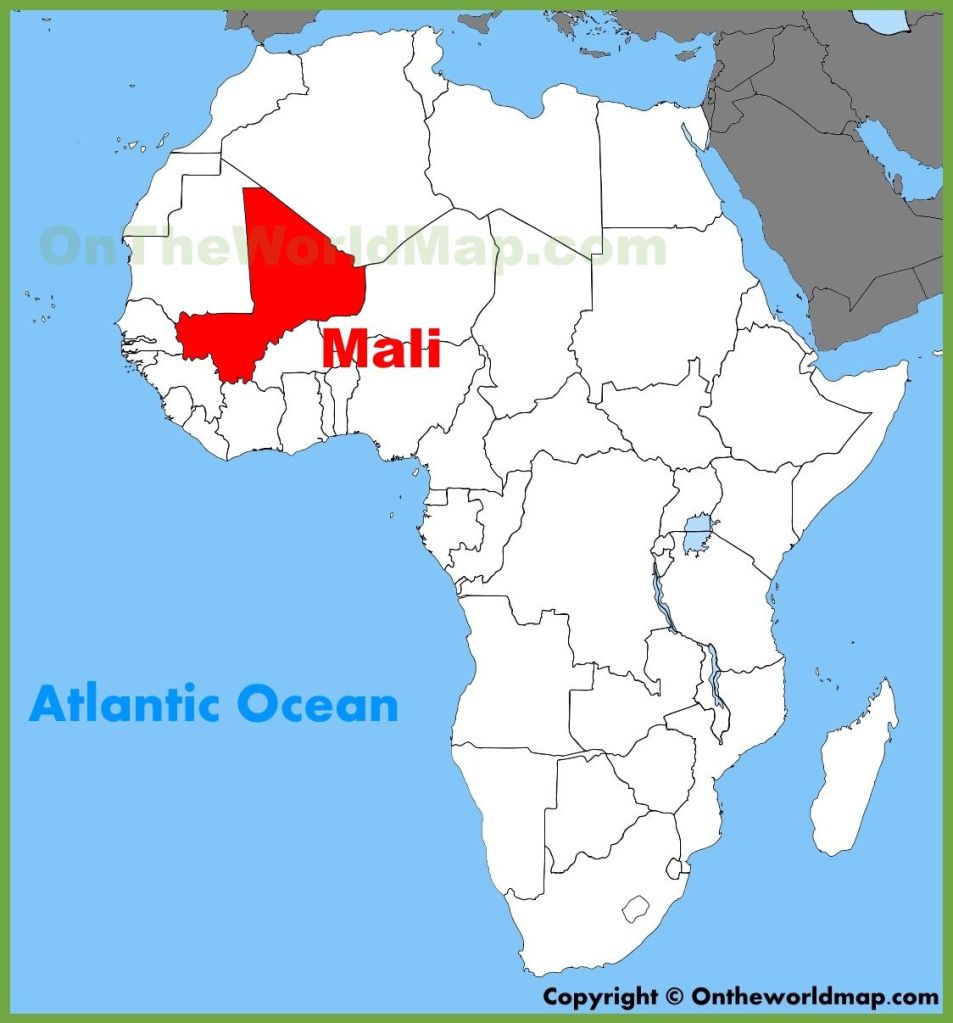
Haque said attackers carried out a suicide car bomb assault on Camara’s residence in Kati, a heavily fortified military town about 15km (9 miles) northwest of the capital, Bamako, where Interim President Assimi Goita also lives.
Camara’s second wife and two of his grandchildren were also killed in the attack on his home, the AFP news agency reported.
“Kati is considered one of the most secure locations in the country, yet fighters from the al-Qaeda-linked Jama’at Nusrat al-Islam wal-Muslimin (JNIM), along with Tuareg fighters from the Azawad Liberation Front (FLA), were able to launch the attack”.
Goita was “alive and well in a secure location”, Haque added.
Mali Attacks Deepen Investor Risk, Threaten Gold Output and Digital Expansion
Security shock compounds regulatory pressure as miners, telecom firms and lenders reassess exposure across the Sahel
A surge in militant attacks in Mali is sharpening concerns over the country’s investment outlook, with risks spreading from its gold sector to transport networks and the fast-growing digital economy.
The latest violence, which struck strategic sites including military and transport infrastructure, highlights the reach of insurgent groups into areas critical to commerce. For investors, it reinforces a deteriorating operating environment in a country already navigating sweeping policy changes in its mining industry.
Mali is among Africa’s top gold producers, making the sector central to exports, fiscal revenue and foreign exchange inflows. Any disruption to mining operations or supply chains threatens to ripple through the broader economy, raising the prospect of production losses, shipment delays and higher security costs for companies.
The attacks come as the military leadership continue to tighten control over the sector through revised mining rules aimed at boosting state participation. The combination of regulatory overhaul and escalating insecurity is creating a high-risk environment, where capital allocation decisions will be done more cautiously and, in some cases, delayed.
Transport and trade flows are also exposed. As a landlocked economy, Mali depends heavily on regional corridors to move goods. Disruptions linked to insecurity can quickly translate into higher logistics costs, delays at borders and pressure on import-dependent sectors.
London-listed Endeavour Mining (EDV.L) has announced, along with two other gold producers, their agreement to transition to Mali’s new mining code, according to government officials.
This code, which increases taxes and aims to transfer significant ownership of mining assets to the state, has led to intense conflicts with mining companies since its implementation in August 2023, contributing to a 23% decline in Mali’s gold production last year, totaling 51 metric tons.
On state television late Monday, Finance Minister Alousseni Sanou and the Minister of Mines revealed a new memorandum of understanding with Somika SA – an entity that is 80% owned by Endeavour and 20% by the Malian government – along with Faboula Gold and Bagama Mining.
The specifics of the agreements were not made public.
The three companies represent just a small portion of Mali’s gold production, with Faboula and Bagama commencing their output in 2021, each contributing 500 kg, while the Kalana project managed by Somika has yet to initiate production.
Since the adoption of the mining code, all three have been mostly inactive.
Somika’s director, Abdoul Aziz, stated that the construction of the mine “will commence six months following the agreement’s signing, with production expected to begin 18 months thereafter.”
“Somika is projected to operate for 10 years, generating an annual revenue of 135 billion CFA francs ($238.9 million).
In contrast, Bagama and Faboula are each anticipated to have five-year lifespans, with revenues of 50 billion and 75 billion CFA francs respectively,” Sanou mentioned, noting that each firm is likely to create approximately 2,000 jobs.
Endeavour Mining chose not to provide a comment. Attempts to reach Faboula Gold and Bagama Mining for their input were unsuccessful.
Mali’s largest gold producer, Barrick Mining (ABX.TO), has halted operations in the Loulo-Gounkoto complex since mid-January after the government obstructed its exports, detained several executives, and confiscated three tonnes of gold bullion.
The Canadian mining company is currently embroiled in a dispute with the government and has initiated arbitration proceedings at the World Bank’s International Centre for Settlement of Investment Disputes (ICSID).
Although Mali ranks among Africa’s leading gold producers, regulatory uncertainties have negatively impacted both investment and production.
Retired, living in the Scottish Borders after living most of my life in cities in England. I can now indulge my interest in all aspects of living close to nature in a wild landscape. I live on what was once the Iapetus Ocean which took millions of years to travel from the Southern Hemisphere to here in the Northern Hemisphere. That set me thinking and questioning and seeking answers.
In 1998 I co-wrote Millennium Countdown (US)/ A Business Guide to the Year 2000 (UK) see https://www.abebooks.co.uk/products/isbn/9780749427917




You must be logged in to post a comment.