TotalEnergies Drills Lebanon’s Qana Prospect Amid New Global Interest in EastMed Gas
Lebanon hopes to join the club of EastMed gas producers as TotalEnergies and its partners spud an appraisal well near Beirut’s maritime border with Israel where gas is already being produced.
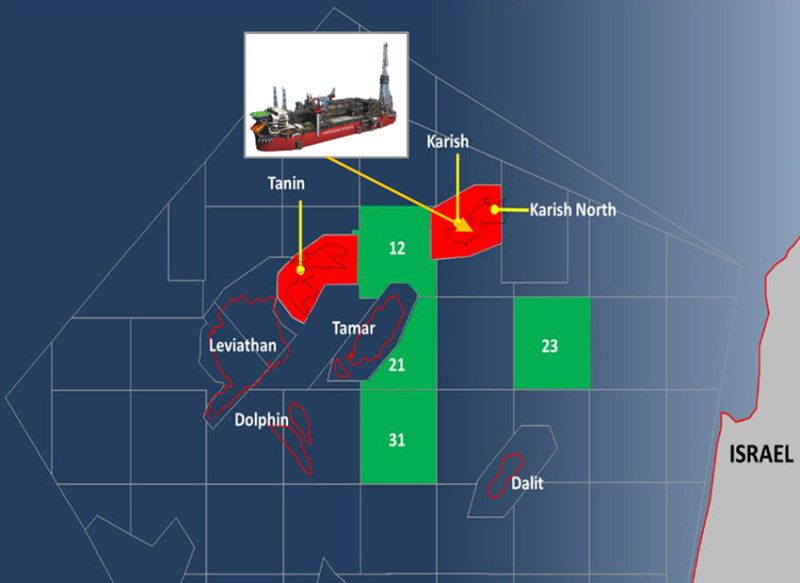
As of September, TotalEnergies together with partners Eni and QatarEnergy will have spud exploration well 31/1 on Block 9 of Lebanon’s Qana prospect. It is the consortium’s second attempt in 6 years to strike gas in the EastMed where upstream riches at the crossroads of markets east and west struggle against the fiercest of global geopolitical headwinds.
Lebanese media hailed the 16 August arrival of the Transocean Barents semisubmersible drilling platform at Block 9 with guarded optimism, reporting on the Barents journey from the North Sea like a sports play-by-play, detailing the landing of the first crew transport helicopter and the offloading of pipe and other equipment delivered by ship to the Port of Beirut.
The Lebanese Petroleum Administration busily dotted the i’s and crossed the t’s on the drilling license application that TotalEnergies EP Lebanon had submitted in June while MP Ibrahim Kanaan, head of the parliament’s finance and budget committee, announced creation of the Lebanese Sovereign Fund for Oil and Gas to protect future revenues from political interference.
“The rig will start working in Lebanon in September … before the end of the year we will know if there is a discovery,” Lebanon’s caretaker Energy Minister Walid Fayyad told Reuters at an event earlier this summer in Abu Dhabi.
Built to operate in harsh environments the Barents will drill in deep water, its crew hoping to hit the sweet spot that is the Tamar Sands Formation from which Israel, Cyprus, and Egypt are producing gas or developing fields for domestic needs and for export.
Assuming commercial gas reserves are confirmed in Qana, Lebanon will join the club of EastMed gas producers—a development that would ease Beirut’s seemingly endless energy crisis, give the financially bankrupt country a share of revenues for gas exported to Europe and Asia, and attract further global investment. The World Bank has described Lebanon’s economic collapse as possibly one of the top three most severe worldwide since the 1850s.
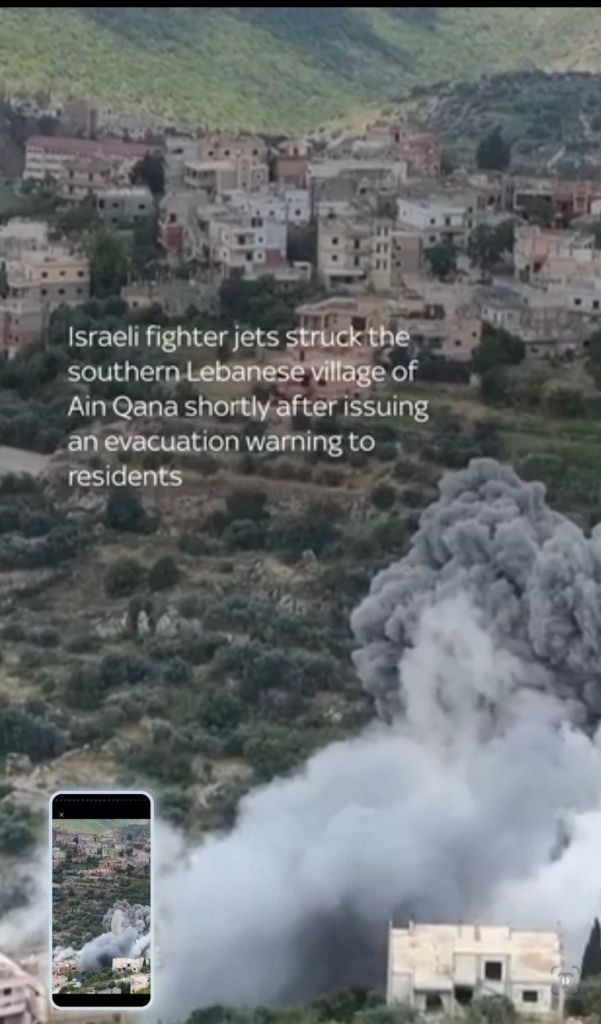
Ain Qana, also known as Ainqana, is a municipality in the Nabatieh Governorate, Southern Lebanon. The town is situated 680 meters above sea level, has an area of 630 hectares and a population of approximately 5585.
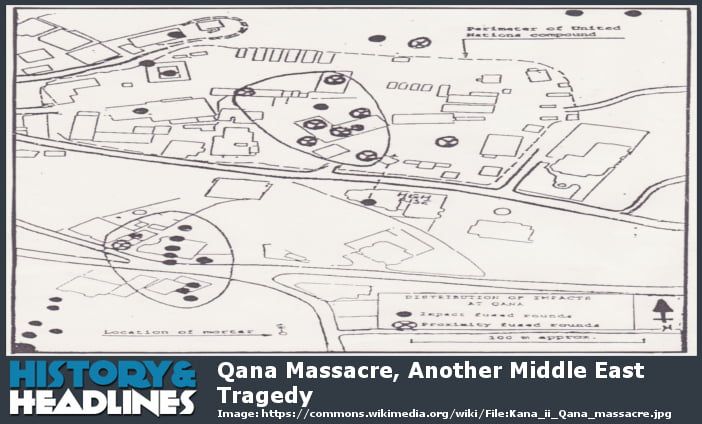
On April 18, 1996, the village of Qana in Southern Lebanon was shelled by artillery fire from the Israeli Defense Force, the official Israeli military organization. Unfortunately, Qana was the location of a United Nations compound manned by members of the Fijian United Nations Interim Force and had been providing haven to about 800 Lebanese civilian refugees. The attack left 4 of the Fijian soldiers wounded and killed 106 of the Lebanese civilians, injuring another 116 civilians. The bombardment was part of an Israeli offensive operation from April 11-April 27, 1996, known as Operation Grapes of Wrath, an operation to stop the Islamic terrorist faction known as Hezbollah, an Iranian backed group, from sending rockets into Israeli territory from havens in Lebanon.
3 days ago:
Why is Israel attacking Lebanon’s Nabatieh, the major southern city?
Smoke billows following an Israeli strike in Nabatieh, Lebanon May 26, 2026 [Stringer/Reuters]
Beirut, Lebanon – The Israeli military ordered the forced displacement of the population of Lebanon’s southern city of Nabatieh on Tuesday, amid an escalation of its campaign – ostensibly against Hezbollah targets – in Lebanon.
Israel hit towns on the outskirts of Nabatieh on Wednesday with “near continuous artillery shelling”, Al Jazeera’s Zeina Khodor reported, coming as Muslims in the country celebrated the religious holiday of Eid al-Adha.
Local media reported that Israel hit Nabatieh multiple times on Tuesday, including direct air strikes on a cemetery in the city limits. Israel also struck surrounding villages, with the village Yohmor al-Shaqif hit multiple times.
Retired, living in the Scottish Borders after living most of my life in cities in England. I can now indulge my interest in all aspects of living close to nature in a wild landscape. I live on what was once the Iapetus Ocean which took millions of years to travel from the Southern Hemisphere to here in the Northern Hemisphere. That set me thinking and questioning and seeking answers.
In 1998 I co-wrote Millennium Countdown (US)/ A Business Guide to the Year 2000 (UK) see https://www.abebooks.co.uk/products/isbn/9780749427917

![Smoke billows following an Israeli strike in Nabatieh, Lebanon May 26, 2026 [Stringer/Reuters]](https://img-s-msn-com.akamaized.net/tenant/amp/entityid/AA249WQY.img?w=768&h=512&m=6 "Smoke billows following an Israeli strike in Nabatieh, Lebanon May 26, 2026 [Stringer/Reuters]")


You must be logged in to post a comment.