In the wake of escalating tensions in the Middle East, the issue of Iran’s frozen financial assets has re-emerged as a focal point of geopolitical maneuvering. At the heart of this controversy is approximately $6 billion of Iranian oil revenues that were transferred to Qatar following a U.S.-brokered prisoner exchange agreement in September 2023. Originally intended for humanitarian purposes—such as food, medicine, and essential supplies—these funds were effectively placed under strict oversight to prevent misuse. However, following the October 7, 2023, Hamas-led massacre in Israel, the United States and Qatar reimposed restrictions, blocking Iran from accessing the funds due to mounting concerns that Tehran would redirect them to finance its vast terror network.
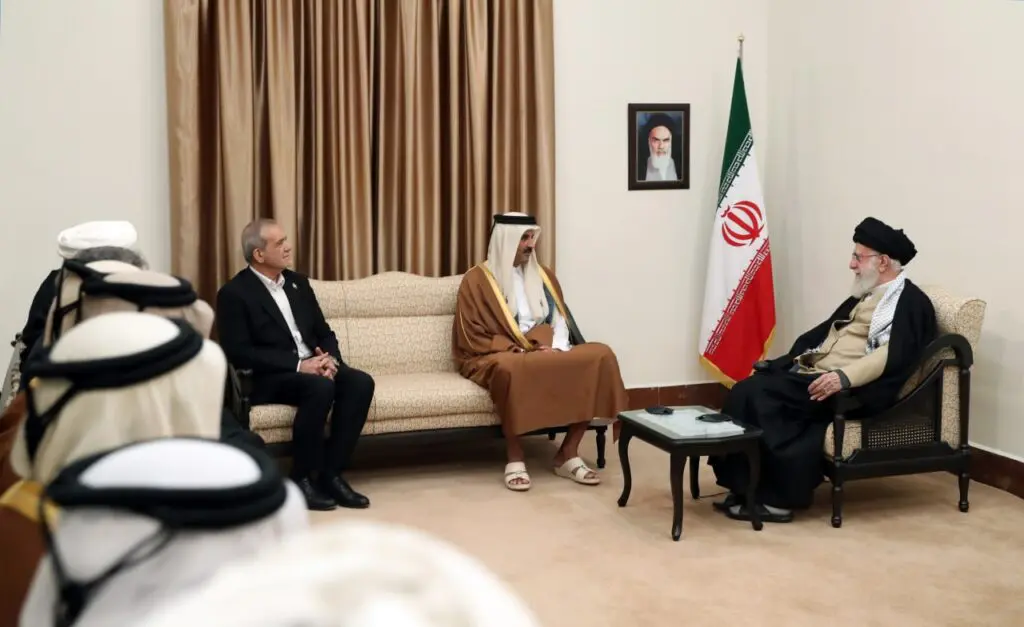
The recent meeting between Iran’s Supreme Leader Ali Khamenei and Qatar’s Emir, Sheikh Tamim bin Hamad Al Thani, underscores the high stakes of this financial impasse. Iran, desperate for economic relief amid intensifying sanctions and military defeats, is pressuring Qatar to release the money. This confrontation is not merely about frozen assets but is emblematic of a broader struggle between Iran’s regional ambitions and the Western-led efforts to contain its influence. The fate of these billions will likely have profound implications—not just for Tehran’s ability to sustain its terror operations but also for the security and stability of the Middle East at large.
Sanctions, Pressure, and the U.S. Withdrawal from the JCPOA
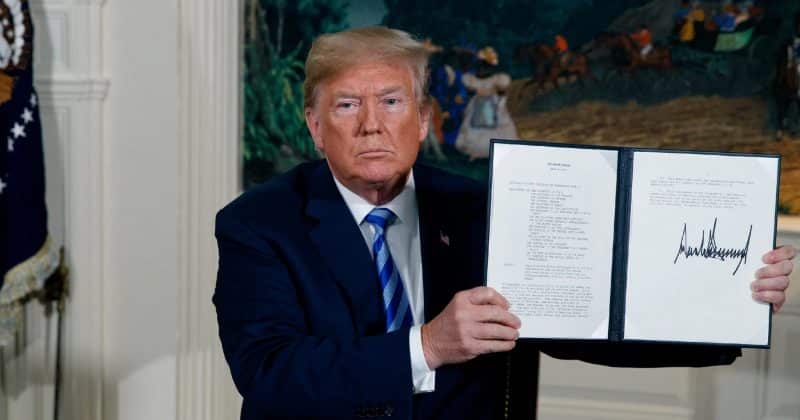
The origins of Iran’s financial predicament can be traced back to 2018, when the Trump administration withdrew from the Iran nuclear deal (JCPOA) and reinstated maximum pressure sanctions against Tehran. One of the most significant consequences of this policy was the freezing of Iranian oil revenues held in foreign banks—especially in South Korea, where roughly $6 billion in Iranian oil earnings became inaccessible to Tehran due to banking restrictions tied to U.S. sanctions. This move was part of Washington’s broader strategy to cripple Iran’s economy, limit its ability to fund terror groups, and force the regime back to the negotiating table on nuclear and regional security issues.
After the US-Israeli illegal war in Iran, Pakistan have worked toward brokering a cease fire. Now Qatar is taking up the final stage of the Memorandum of Understanding, helping Trump with an off-ramp process.
Look at the headlines for investors in crypto currencies:
Qatar mediates US-Iran agreement after weeks of negotiations, crypto markets react
The deal covers everything from the Strait of Hormuz to frozen Iranian assets, while US sanctions on Iran’s largest crypto exchange add a wrinkle for digital asset markets.
Qatar has brokered an agreement between the US and Iran after weeks of intensive diplomacy. The implications extend beyond traditional foreign policy, with crypto markets already pricing in the de-escalation.
Qatari mediators arrived in Tehran on June 14 for intensive negotiations aimed at bridging the remaining gaps between Washington and Tehran. The result is a proposed agreement that covers reopening the strategic Strait of Hormuz, addressing nuclear concerns, and facilitating the release of Iranian frozen assets estimated between $12 billion and $25 billion.
What’s in the deal
The Strait of Hormuz is one of the most important chokepoints in global energy markets. Roughly a fifth of the world’s petroleum passes through it on any given day.
Advertisement
The agreement also includes an extension of a ceasefire and provisions related to Iran’s nuclear program. Pakistan has joined Qatar in the mediation efforts, building on preliminary discussions that began in 2025.
A formal or electronic signing of the agreement is expected around June 2026, likely in Geneva.
Crypto markets are paying attention
Bitcoin climbed to around $64,000 to $65,000 as progress in the negotiations became public.
Even as diplomatic channels opened wider, Washington sanctioned Nobitex, Iran’s largest digital asset exchange. The US has also seized approximately $1 billion in Iranian-linked digital assets.
The sanctions angle matters more than you think
The seizure of $1 billion in Iranian-linked digital assets and the sanctions on Nobitex signal that even as broader geopolitical tensions ease, the US intends to maintain its grip on Iranian crypto infrastructure. Targeting a foreign exchange platform as part of a broader diplomatic strategy sets a precedent for how governments can weaponize crypto-specific sanctions as a negotiating tool rather than just a punitive measure.
Disclosure: This article was edited by Editorial Team. For more information on how we create and review content, see our Editorial Policy.
Trump asserts Iran accord prevents nuclear weapon development
The interim Iran accord may stabilize geopolitical tensions, impacting global markets and potentially reshaping future nuclear diplomacy dynamics.
President Donald Trump declared on June 15 that a newly signed interim agreement with Iran includes commitments from Tehran to refrain from developing nuclear weapons. The framework accord, which also reopens the Strait of Hormuz and lifts a US naval blockade, triggered an immediate rally across risk assets, with Bitcoin and Ethereum among the beneficiaries.
The deal was effectively signed by Trump, Vice President JD Vance, and Iranian Parliament Speaker Mohammad Bagher Ghalibaf. It establishes a 60-day negotiation window focused specifically on nuclear issues, meaning the hard details are still ahead.
What the deal actually says, and what it doesn’t
Iran has consistently maintained it does not seek nuclear weapons. The new framework essentially puts that claim in writing, which Trump is treating as a meaningful concession.
The previous major nuclear agreement, the Joint Comprehensive Plan of Action (JCPOA), was signed in 2015 and included detailed provisions on uranium enrichment limits, centrifuge operations, and international inspections. Trump pulled the US out of that deal in 2018, calling it “the worst deal ever.” The new interim framework has yet to approach that level of specificity.
The geopolitical backdrop
This announcement didn’t materialize from calm waters. The period spanning 2025 and early 2026 was marked by escalating tensions between the US and Iran, including military strikes and a series of temporary ceasefires that ultimately failed to hold.
The US naval blockade of the Strait of Hormuz, one of the world’s most critical oil chokepoints, had been a particularly aggressive lever. Roughly one-fifth of the world’s petroleum passes through that narrow waterway on any given day, so its closure had ripple effects well beyond the Middle East.
The 60-day negotiation clock starts now, meaning markets will be watching for progress, or lack thereof, through mid-August. That’s a tight timeline for what is essentially the most consequential arms control discussion since the JCPOA itself. The JCPOA negotiations spanned roughly two years of intensive diplomacy involving multiple world powers.
Why crypto markets are reacting
Bitcoin, Ethereum, XRP, and Dogecoin all posted gains in the immediate aftermath. When geopolitical uncertainty decreases, investors become more willing to move capital into higher-risk, higher-reward assets.
Disclosure: This article was edited by Editorial Team. For more information on how we create and review content, see our Editorial Policy.
Trump to send Iran deal to Congress as Bitcoin surges past $66K on peace optimism
The potential US-Iran peace deal could stabilize global markets, impacting oil prices and reshaping crypto regulations amid sanctions changes.
President Trump announced on Tuesday that he plans to submit the framework agreement aimed at ending the US-Iran war to Congress for approval. The move, disclosed during a bilateral meeting with UAE President Sheikh Mohamed bin Zayed Al Nahyan, sets the stage for what could be one of the most consequential geopolitical shifts in years, and crypto markets are reacting accordingly.
Bitcoin jumped over 3% to climb above $66,000 following the announcement. It wasn’t alone. XRP surged roughly 8.8%, Ethereum gained about 6.6%, and Solana rose approximately 7.5%, as traders rushed into risk assets on the expectation that a peace deal would stabilize one of the world’s most volatile regions.
What the deal actually looks like
The agreement centers on an immediate cessation of hostilities between the US and Iran, with nuclear discussions set to follow over a 60-day negotiation window. A signing ceremony for the Memorandum of Understanding is planned for June 19-20 in Geneva.
Trump’s decision to route the deal through Congress aligns with the Iran Nuclear Agreement Review Act, known as INARA, which mandates legislative oversight for any nuclear-related agreements with Tehran. When asked by a reporter whether he’d send it to Congress, Trump replied simply: “I wouldn’t mind.”
This isn’t a rehash of the 2015 Joint Comprehensive Plan of Action, the Obama-era nuclear deal that Trump withdrew from in 2018. That agreement traded sanctions relief for nuclear compliance. The current framework flips the priority order: stop the war first, then talk about enrichment. Core negotiations reportedly began after 2024 and accelerated amid conflicts earlier in 2026.
Why crypto cares about an Iran deal
The Strait of Hormuz is responsible for roughly a fifth of global oil transit. Oil prices reflected the announcement immediately. WTI crude dropped an estimated 4-5% on the news, as markets began pricing in the potential reopening of stable trade routes through the strait.
What this means for investors
Congressional approval is not a formality. INARA gives lawmakers a review window during which they can potentially block or modify the terms of any nuclear-related agreement. The 60-day nuclear discussion period that follows the MOU signing also introduces a long tail of uncertainty.
One underappreciated angle: the deal’s potential impact on sanctions infrastructure. Iran has been one of the most heavily sanctioned nations on earth, and its citizens have historically turned to crypto to move value across borders. Any loosening of the sanctions regime as part of nuclear discussions could reshape how regulators think about compliance requirements for exchanges and DeFi protocols that interact with Iranian wallets.
Disclosure: This article was edited by Editorial Team. For more information on how we create and review content, see our Editorial Policy.
And in September 2025, Saudi and Pakistan sign Defence Pact:
Saudi Arabia signs mutual defence pact with nuclear-armed Pakistan
Pact declares any attack on Saudi Arabia or Pakistan an attack on both, deepening shared security alliance.
Saudi Crown Prince Mohammed bin Salman and Pakistan Prime Minister Shehbaz Sharif embrace each other on the day they sign a defence agreement, in Riyadh, Saudi Arabia, September 17, 2025 [Saudi Press Agency/Handout via Reuters]
Saudi Arabia and nuclear-armed Pakistan have signed a formal mutual defence pact, state media from both countries said, in a move that significantly strengthens a decades-long security partnership.
“This agreement, which reflects the shared commitment of both nations to enhance their security and to achieving security and peace in the region and the world, aims to develop aspects of defense cooperation between the two countries and strengthen joint deterrence against any aggression. The agreement states that any aggression against either country shall be considered an aggression against both,” a joint statement published on Wednesday said, according to the Saudi Press Agency.
Retired, living in the Scottish Borders after living most of my life in cities in England. I can now indulge my interest in all aspects of living close to nature in a wild landscape. I live on what was once the Iapetus Ocean which took millions of years to travel from the Southern Hemisphere to here in the Northern Hemisphere. That set me thinking and questioning and seeking answers.
In 1998 I co-wrote Millennium Countdown (US)/ A Business Guide to the Year 2000 (UK) see https://www.abebooks.co.uk/products/isbn/9780749427917



You must be logged in to post a comment.