Urgent cuts to global greenhouse gas emissions needed to avoid worst sea-level rise flooding in the UK, study shows
Press release issued:21 July 2026
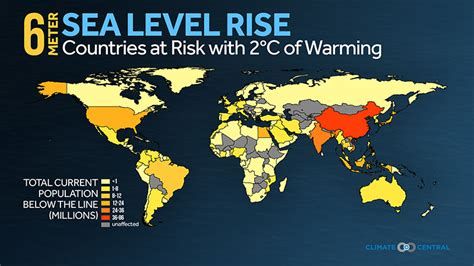
A pioneering study has revealed that by the turn of the next century at least half a million more people in the UK will be exposed to risk of coastal flooding – a 25% increase compared to now.
The research, led by the Met Office and the University of Bristol, quantifies for the first time the scale of the UK population at threat from coastal flooding under future sea-level rise projections.
Even if current global carbon emissions pledges are met, around 1.4 million more people in the UK look set to be affected by coastal flooding risk by 2200. This rises to 1.7 million by 2300, according to the study published in Nature Communications.
Study lead author Matt Palmer, Associate Professor of Climate Science at the University of Bristol Cabot Institute for the Environment and Met Office Science Fellow, said: “The oceans and ice-covered parts of the world respond very slowly to global warming, which makes sea-level rise the ‘sleeping giant’ of climate change. The result is that sea-level rise is ‘locked-in’ for centuries to come; our study quantifies the scale of the adaptation challenge and highlights how reducing greenhouse gas emissions can help avoid the worst outcomes.
“The findings highlight the importance of global action on emissions – as set out in the Paris Climate Agreement – to de-risk future sea level rise and the need to adapt to unavoidable sea-level rise in the coming decades.”
The research showed sea-levels are set to rise by between 0.4 and 0.6 metres across UK coastlines by 2100, resulting in a 13% increase in areas classified as at risk of coastal flooding. By 2300, these levels triple to between 1.2 and 1.8m, with coastal flood risk areas growing by more than half (56%).
Just two years later, the new study has found the slowdown in sea ice decline is now over.
Using the most recent satellite observations of sea ice coverage, the researchers found that the 2005 to 2024 slowdown was “temporary rather than sustained”.
Dr Duo Chan, lead author of the paper from the University of Southampton’s School of Ocean and Earth Science, said that what “looked like a pause in the early 2020s now appears to have just been a temporary slowdown within a longer-term decline”.
Sea ice area in September, when it reaches its annual minimum, has halved since 1979, when satellite measurements began.
The researchers found that between 2024 and 2025 Arctic sea ice declined by 5.8%. This is the largest year-to-year wintertime drop ever recorded.
Dr Alessandro Silvano, co-author of the paper at the University of Southampton, said this sharp drop in 2025 was unusual, but physically plausible under current Arctic warming.
Because the winter sea ice acts as an insulator between the relatively warm Arctic ocean and the much colder atmosphere, a reduction in ice will mean more ocean heat and moisture will enter the atmosphere.
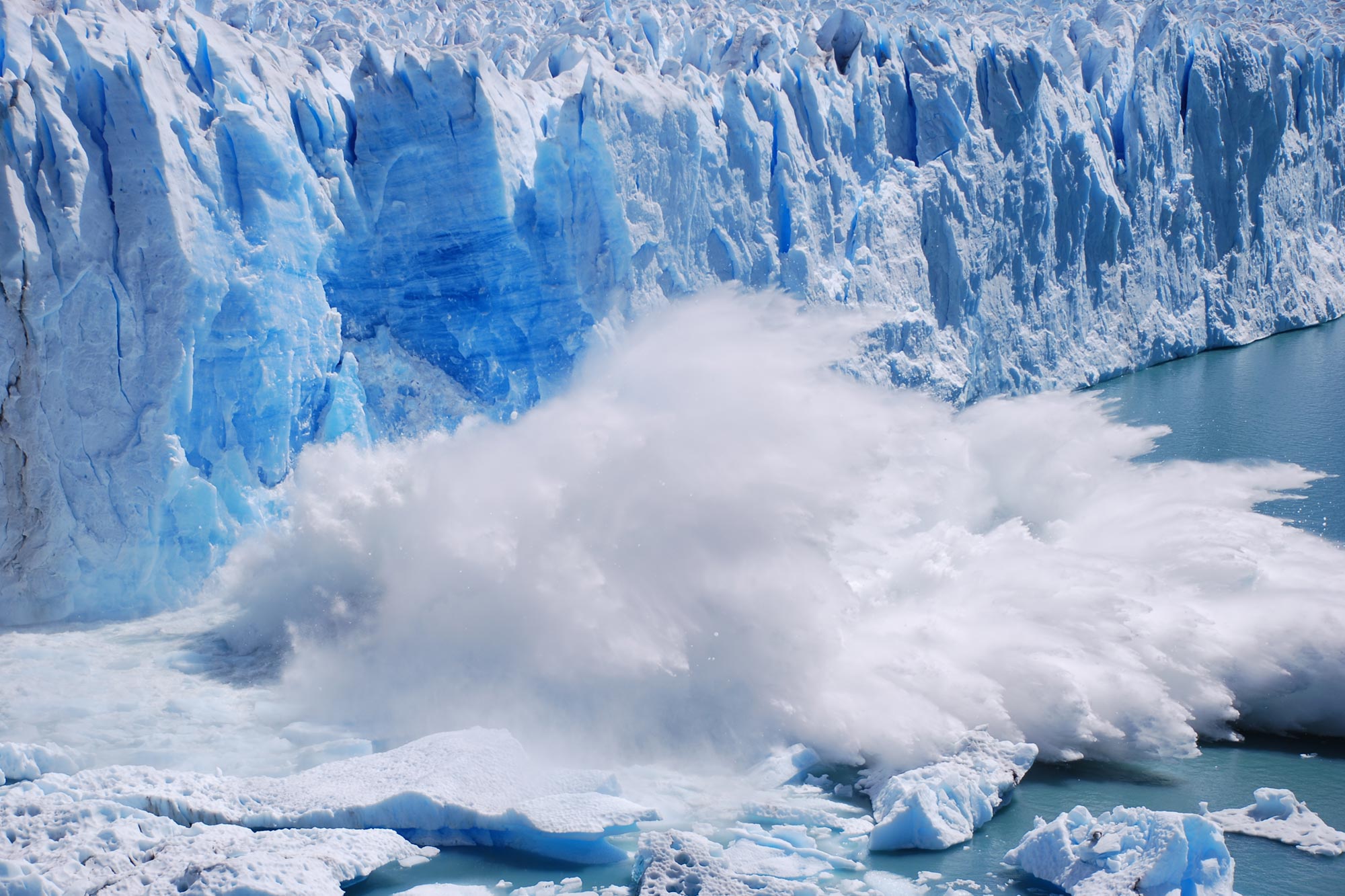
Researchers drilled deep into an East Antarctic glacier and uncovered direct evidence of a process that could accelerate ice loss as the climate warms. Credit: Shutterstock
A new study uses boreholes drilled deep beneath Antarctic ice to investigate why the continent’s glaciers are accelerating.
More than half a kilometer beneath an East Antarctic glacier, sensors detected water pressure high enough to support almost all the ice above. The measurements provide the first direct confirmation that meltwater from the surface can reach the base of an Antarctic glacier, reduce friction and accelerate its movement toward the ocean.
“The Antarctic ice sheet holds 90% of the world’s glacier ice. If it were to melt completely and drain into the ocean, sea levels would rise by about 60 meters,” says Professor Shin Sugiyama of Hokkaido University.
For the study, published in Nature Communications, Sugiyama and his colleagues drilled boreholes more than 550 meters into the Langhovde Glacier in East Antarctica. They lowered cameras and pressure sensors to the glacier bed, allowing them to observe conditions that satellites cannot see from above. “Using a hot-water jet, we could carefully and rapidly drill into the glacier and measure the water pressure right at its base,” explains Sugiyama.
Retired, living in the Scottish Borders after living most of my life in cities in England. I can now indulge my interest in all aspects of living close to nature in a wild landscape. I live on what was once the Iapetus Ocean which took millions of years to travel from the Southern Hemisphere to here in the Northern Hemisphere. That set me thinking and questioning and seeking answers.
In 1998 I co-wrote Millennium Countdown (US)/ A Business Guide to the Year 2000 (UK) see https://www.abebooks.co.uk/products/isbn/9780749427917



You must be logged in to post a comment.