S. Korea to move up deployment of Iron Dome-like interceptor against N. Korean threats to 2029
Button Label
ListenText Size
By Yonhap
Published Apr 3, 2026 3:17 pm KST
Updated Apr 3, 2026 4:13 pm KST
Hanhwa Systems’ Low-Altitude Missile Defense system multi-function radar / Courtesy of Hanhwa Systems
South Korea will advance the deployment of a homegrown interceptor system akin to Israel’s Iron Dome by two years to 2029 in a bid to better counter North Korea’s long-range artillery threats, the state arms procurement agency said Friday.
The country will seek to deploy a prototype of the Low-Altitude Missile Defense (LAMD) system designed to simultaneously intercept incoming artillery rounds by 2029, the Defense Acquisition Program Administration (DAPA) said.
The decision was approved at a meeting of a pan-government committee on defense project promotion.
The LAMD system, which consists of a radar, tactical communications component, launchers and interceptors, is designed to intercept simultaneous attacks from North Korea at low altitudes.
The government plans to invest 842 billion won ($558 million) in developing the LAMD system by 2030……………
……..Meanwhile, DAPA also plans to acquire Standard Missile-3 (SM-3) shipborne interceptors to be topped on an 8,200-ton Aegis destroyer of the Jeongjo the Great class via foreign military sales.
The move comes after the government decided to secure SM-3 shipborne missiles through overseas purchases in 2024. The arms procurement agency plans to ink the deal within this year, investing 753 billion won for the project.
United States Forces Korea (USFK) is a sub-unified command of United States Indo-Pacific Command (USINDOPACOM). Major USFK elements include Eighth U.S. Army (EUSA), U.S. Air Forces Korea (Seventh Air Force), U.S. Naval Forces in Korea (CNFK), U.S. Marine Forces Korea (MARFORK) and Special Operations Command Korea (SOCKOR). [Source: Wikipedia]
According to Reuters, there are about 28,500 American troops stationed in South Korea, the United States’ third-largest military presence outside its country after Japan and Germany, according to data from the U.S. Defense Manpower Data Center. USFK data showed it had about 19,500 Army soldiers, 7,800 airmen and women, 350 Navy sailors and 120 Marines stationed in South Korea. Camp Humphreys in Pyeongtaek, south of Seoul, is the largest U.S. overseas military base, housing the USFK headquarters and thousands of troops, civilian workers and their family members. Other major bases include Army Garrison Yongsan in central Seoul, Camp Walker in the southeastern city of Daegu, and two air bases in Osan and Gunsan, south of Seoul. [Source: Hyonhee Shin, Joyce Lee, Reuters, March 8, 2021]
House version of NDAA further limits US troop reductions in South Korea
By
Julie Masson
Stars and Stripes • July 28, 2026
Soldiers with the Theater Air Naval Ground Operations, or TANGO, security force fire from cover at the Rodriguez Live Fire Complex in Pocheon, South Korea, June 25, 2025. (Trevares Johnson/Stars and Stripes)
The $1.15 trillion defense policy bill passed by the House last week places further restrictions on the use of federal funds to reduce the number of U.S. service members stationed on the Korean Peninsula.
The House on July 22 approved its version of the National Defense Authorization Act for fiscal year 2027, which authorizes appropriations for the Pentagon, military construction and defense-related Department of Energy activities. The measure squeaked by, 216 to 212.
The bill’s provision on U.S. military posture in South Korea amends language from the current fiscal year’s version to further limit the use of federal funds to reduce the U.S. military presence on the peninsula.
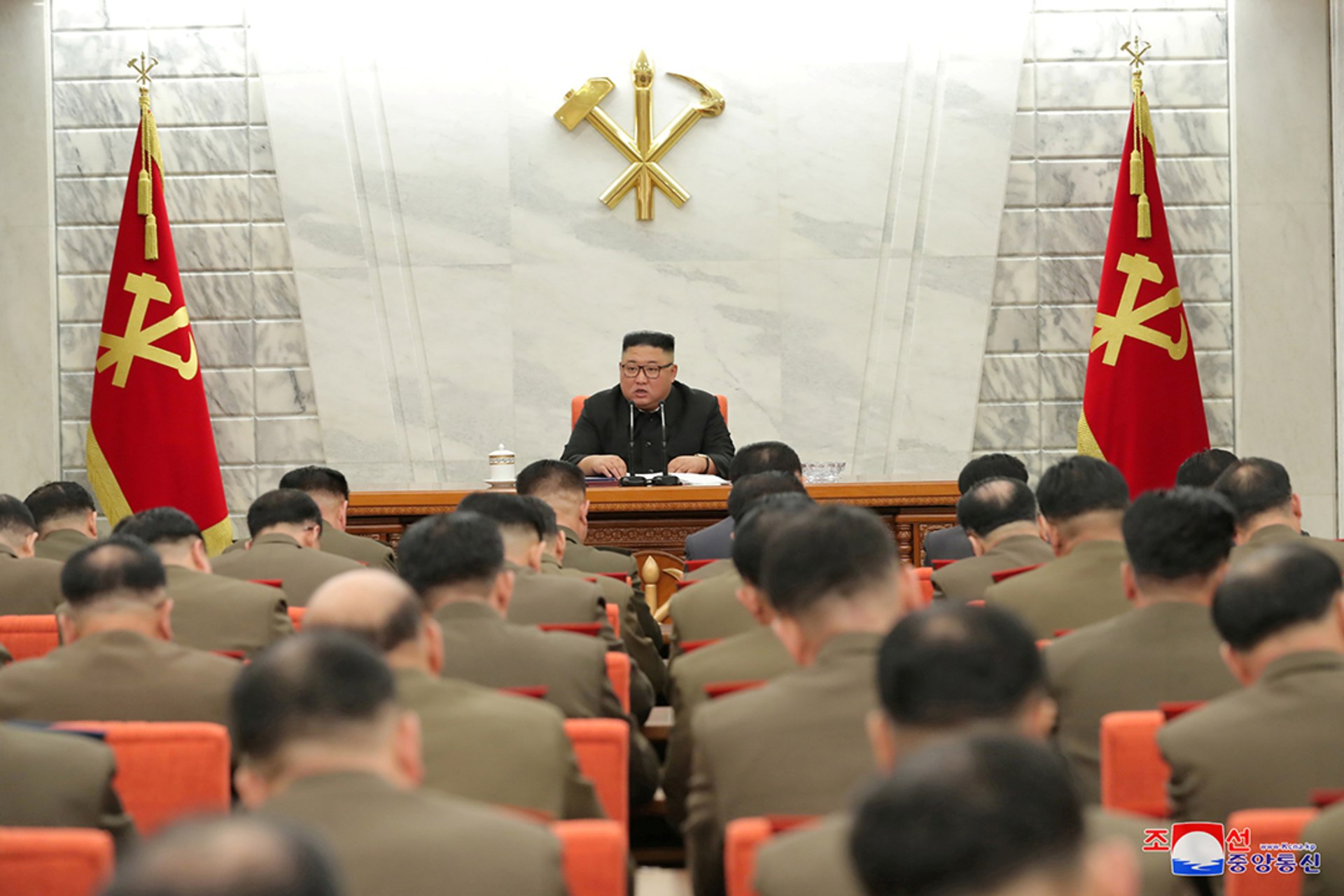
North Korean leader Kim Jong-un speaks during the first enlarged meeting of the 7th Central Military Commission of the Workers‘ Party of Korea (WPK) in this undated photo released on May 18, 2018. Korean Central News Agency via ReutersTYPE
Interstate
IMPACT ON U.S.Critical
STATUS Unchanging
North Korea
South Korea
Updated August 2, 2026
Overview
Under leader Kim Jong-un, North Korea has pursued nuclear weapons and ballistic missiles to guarantee regime survival, posing an acute threat to South Korea and Japan—both key U.S. allies. Kim has deepened ties with Russia, providing artillery and troops for the war in Ukraine, while silencing domestic opposition through mass detention and political purges.
Retired, living in the Scottish Borders after living most of my life in cities in England. I can now indulge my interest in all aspects of living close to nature in a wild landscape. I live on what was once the Iapetus Ocean which took millions of years to travel from the Southern Hemisphere to here in the Northern Hemisphere. That set me thinking and questioning and seeking answers.
In 1998 I co-wrote Millennium Countdown (US)/ A Business Guide to the Year 2000 (UK) see https://www.abebooks.co.uk/products/isbn/9780749427917