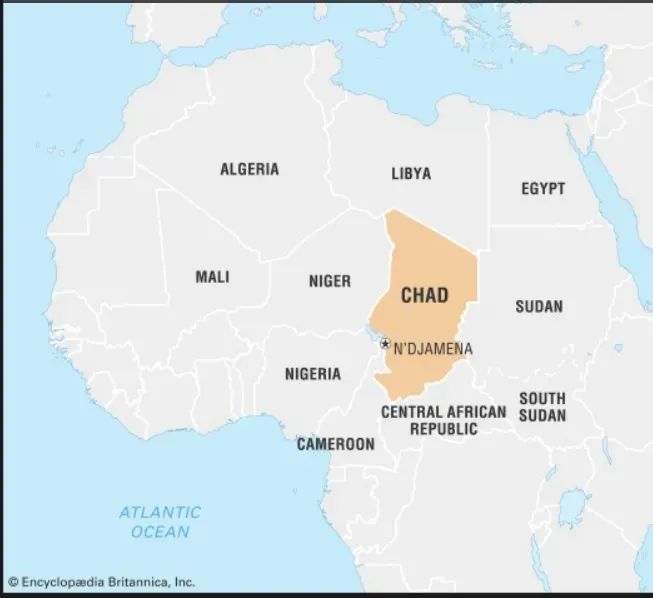
Chad is one of those African countries that fills out the “Africa Bingo Card”: Colonialism, Corruption, Civil Wars, Rebellions, Tribalism, Religious Tension, Autocracy, Western Puppeteering, & Famine. Chad, the 5th largest African country, is three times
Chad, Africa’s fifth-largest country by area, sits at a crossroads of civilizations where the Sahara Desert meets the tropical savanna and the vast inland waters of Lake Chad converge. Its history stretches back over nine thousand years to some of the earliest known African civilizations, encompasses powerful medieval empires that rivaled any in the world, and continues through a turbulent modern era marked by colonialism, civil conflict, and the transformative discovery of oil. The name Chad itself derives from the Kanuri word tsade, meaning “large body of water,” a reference to the great lake that has sustained human life in this region since time immemorial.
………………
Chad’s history is a testament to the endurance of human civilization in one of the planet’s most challenging environments. From the ancient Sao artisans who shaped terracotta by the shores of a great lake to the Kanem-Bornu emperors who built one of Africa’s most durable political systems, from the colonial cotton farmers who toiled under French exploitation to the modern Chadians navigating the complexities of oil wealth and democratic aspiration, this nation’s story is woven into the very fabric of African and world history. Understanding Chad means understanding the deep connections between environment, power, culture, and resilience that define the human experience in the heart of Africa.
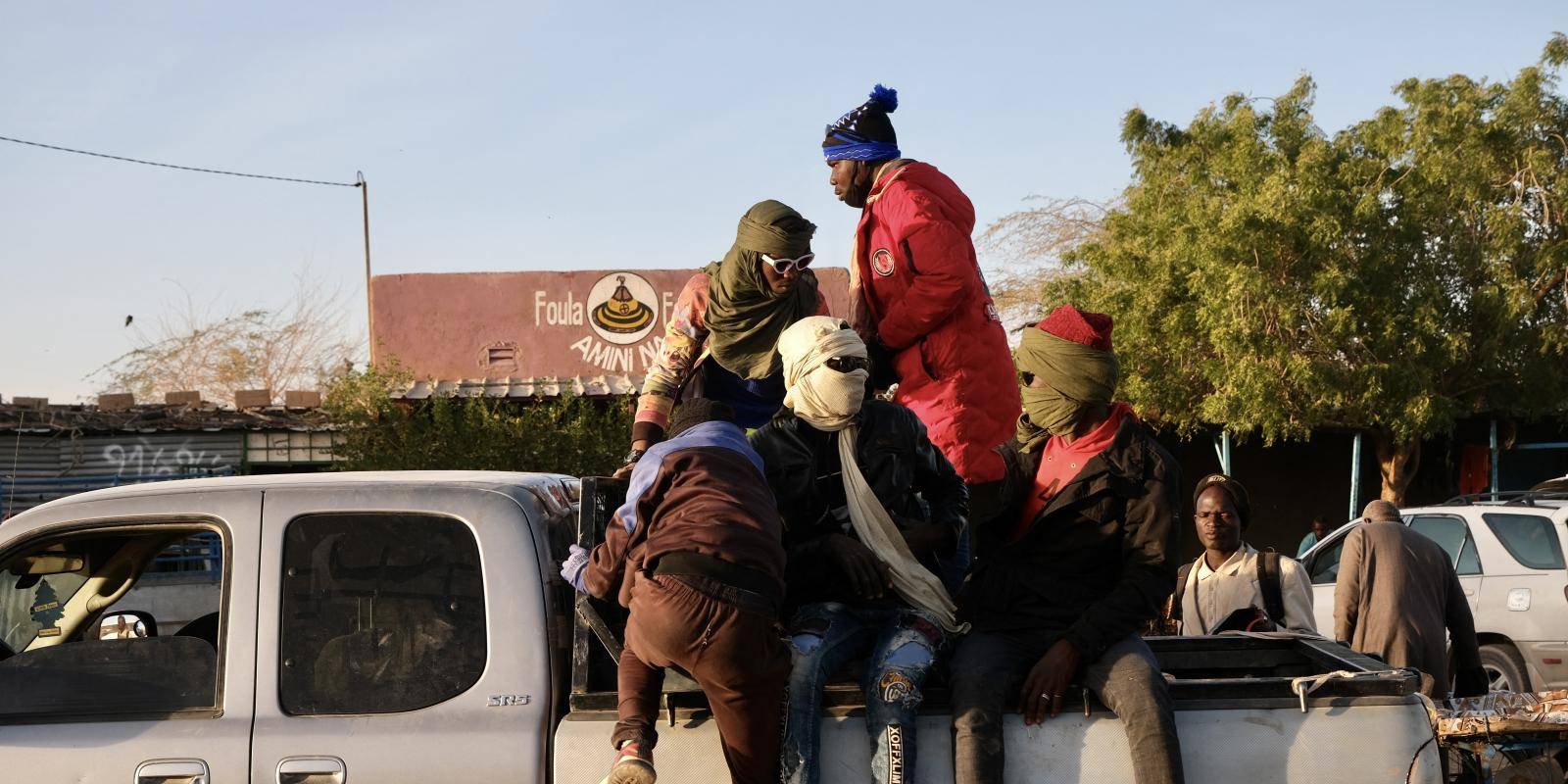
How conflict in Libya facilitated transnational expansion of migrant smuggling and trafficking
How the Libyan conflict transformed human trafficking routes in West Africa, and why Europe’s response has so far failed.
Explainer
Published 21 February 2025 —12 minute READ
Migrant smuggling and trafficking has flourished through Libya since its 2011 conflict. This article explains how this happened and why European policies aimed at addressing the issue are inadequate.
Migrant smuggling generally refers to the movement of people with their consent; while Trafficking in Persons (TIP) refers to the movement of people against their will – though the distinction is not clear cut and journeys often combine elements of the two. In particular, women have been disproportionately impacted by trafficking.
The three phases
In the first of three phases, the Libyan conflict led to the emergence of armed factions and an economy dominated by violence that has fostered migrant smuggling and trafficking. This led to a smuggling boom in Niger and Nigeria, supporting economic growth in Niger and worsening violence in Nigeria. Increased flows of refugees, migrants and asylum seekers through Libya further expanded the conflict economy
The mutually beneficial corruption arrangement between the rival Haftar and Dbeibah camps that has kept Libya from returning to civil war could be undone by a third force usually left out of political calculations: the citizens of Libya.
For nearly six years, Libya’s eastern and western power centers have preserved an uneasy equilibrium. Haftar’s family controls the east, much of the south, and the military forces surrounding much of the key oil infrastructure. Prime Minister Abdul Hamid Dbeibah and the armed groups aligned with his GNU control Tripoli and the western state apparatus. Neither side has been able to eliminate the other, but both have profited from a division that allows them to distribute government positions, contracts and oil revenues without submitting to a national election.
The Trump administration is now trying to convert that informal accommodation into a formal power-sharing structure. The deal would preserve Dbeibah’s control of the government but give Saddam Haftar (General Khalifa Haftar’s son) control over a new presidential body. Washington has also pushed the rival administrations toward a unified budget and closer military coordination while encouraging U.S. oil companies to expand their presence around Africa’s largest proven crude reserves. In theory, this would give ruling families what they want most: continued access to the state without an election that could remove either of them.
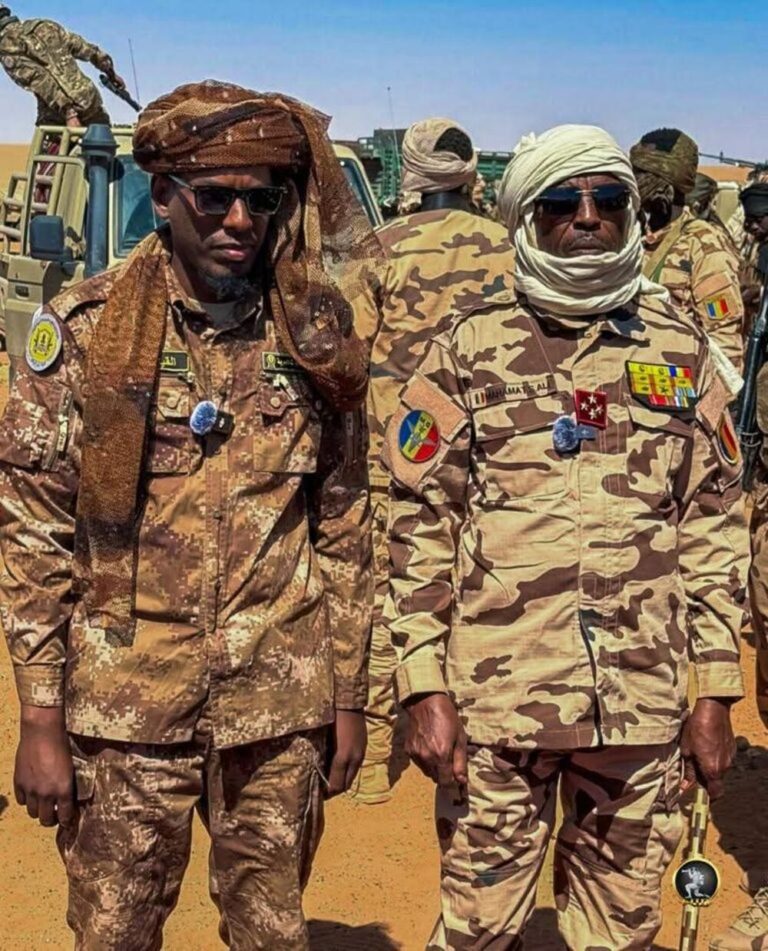
The Armed Forces of the General Command of Field Marshal Khalifa Haftar have announced the creation of a joint force with the Chadian Army to secure the border between the two countries.
The new structure will reportedly be placed under the supervision of the deputy commander of Eastern forces, Saddam Haftar, the same sources said.
According to reports, Saddam Haftar has instructed the Border Guards and Desert Patrols Administration, linked to the “Subul Al-Salam” battalion, to launch field operations within the framework of the joint mechanism. Haftar’s War Information Division confirmed that the initiative aims to strengthen security cooperation between Libya and Chad, targeting criminal groups, smuggling networks and armed gangs operating in desert areas.
The announcement comes amid major changes within the eastern Libyan military hierarchy. Major General Ahmed Al-Dressi has been appointed Chief of Staff of the Ground Forces, replacing Saddam Haftar, who has now been promoted to Deputy Commander-in-Chief.
According to media supportive of the Haftar camp, this internal reshuffle is part of an effort to consolidate the chain of command.
The creation of the joint force also coincides with a shift in the regional security landscape. Local sources report attempts by several Chadian rebel movements present in southern Libya to regroup, raising concerns in N’Djamena and eastern Libya. Chadian authorities regularly warn against the use of Libyan territory by armed factions seeking to reorganise.
This dynamic is unfolding against a backdrop of heightened instability in Sudan, where ongoing clashes between the regular army and the Rapid Support Forces continue to destabilise border regions.
This situation is pushing countries in the region to reinforce their security mechanisms and develop bilateral cooperation frameworks to contain the risk of spillover.
Khalifa Haftar was a key military figure during the Chadian–Libyan War in the 1980s, serving under Muammar Gaddafi. He commanded Libyan forces in Chad but was captured in 1987, leading to a significant embarrassment for Gaddafi. Majalla Wikipedia
Abu Dhabi’s military and political influence in Libya is starting to cause friction with major regional partners.
Egypt and Saudi Arabia have issued a stark warning to eastern Libyan commander Khalifa Haftar, signalling that his alleged role in facilitating Emirati military support to Sudan’s Rapid Support Forces (RSF) could trigger a major rupture with Cairo, as reported by Middle East Eye and agencies on January 22.
The pressure campaign is part of a coordinated Egyptian-Saudi effort to choke off supply lines that are sustaining the RSF. These routes, some of which pass through eastern Libya, have become a focal point for Cairo and Riyadh.
The message was delivered earlier in January during a visit to Cairo by Saddam Haftar, Khalifa Haftar’s son and deputy commander-in-chief of the Libyan National Army. While Libyan and Egyptian media described the meetings as routine military talks, Egyptian officials privately presented evidence that fuel, weapons and equipment had been transferred from Libya to RSF forces, allegedly with Emirati backing.
And let us not forget how Haftar invited notorious Russian Wagner mercenaries into Libya, and they provided weapons for the RSF slaughters in Sudan:
Russian army officials in Libya after Haftar invite
Russian military officials including the country’s deputy defence minister arrived in eastern Libya after being invited by warlord Khalifa Haftar, who has received support from Wagner mercenaries.
Russian military officials including Moscow’s deputy defence minister arrived in Libya on Tuesday after receiving an invitation from pro-Moscow warlord Khalifa Haftar.
Haftar, who backs the country’s eastern administration, is close to Russia’s private Wagner mercenary group, whose troops guard military and oil infrastructure in the divided country.
Libya is split between the United Nations-supported government of Prime Minister Abdelhamid Dbeibah in Tripoli, and a Haftar-backed administration in the east.
A UN report in 2020 said up to 1,200 Wagner fighters were backing Haftar, who at the time was trying to seize Tripoli. His offensive lasted more than a year but was unsuccessful.
Experts say hundreds of Wagner fighters remain in the north African country.
Tuesday’s visit came alongside a renewed focus on Russian activities in Africa, after Wagner chief Yevgeny Prigozhin announced in a video published Monday that his group was making Africa “freer” and suggested he was on the continent.
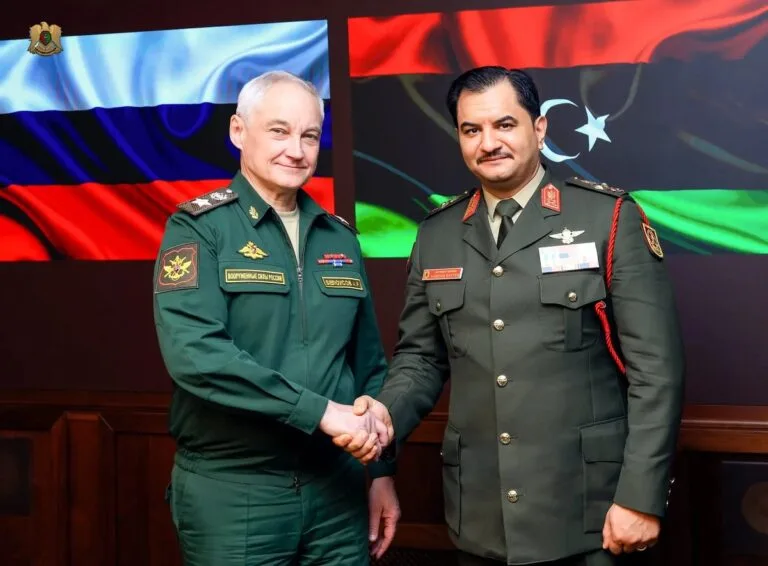
Clashes between Haftar and the Russian Defense Minister (Photo/Archive)
Moscow, Russia – Saddam Khalifa Haftar held talks with the Russian Defense Minister on ways to strengthen military and security relations between Libya and Russia. They also discussed the latest developments in Libya and the region. The talks focused on developing coordination channels between the two sides and exchanging expertise on defense and security matters. In addition, a number of issues of mutual interest were reviewed.
Retired, living in the Scottish Borders after living most of my life in cities in England. I can now indulge my interest in all aspects of living close to nature in a wild landscape. I live on what was once the Iapetus Ocean which took millions of years to travel from the Southern Hemisphere to here in the Northern Hemisphere. That set me thinking and questioning and seeking answers.
In 1998 I co-wrote Millennium Countdown (US)/ A Business Guide to the Year 2000 (UK) see https://www.abebooks.co.uk/products/isbn/9780749427917



You must be logged in to post a comment.