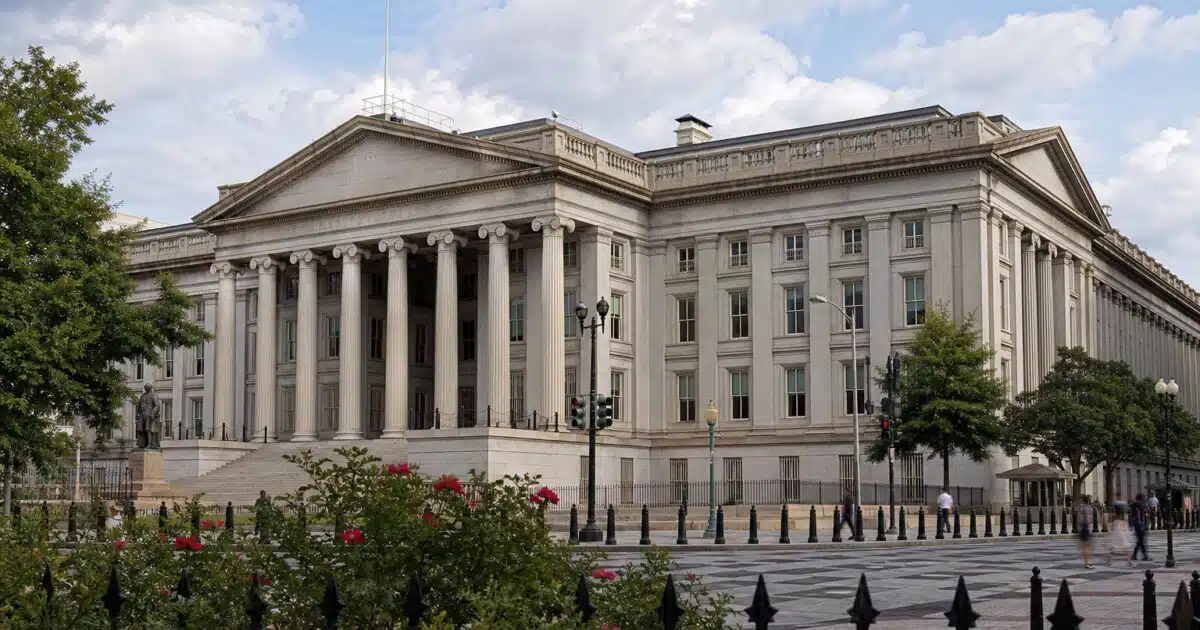
US Treasury Sold Euros to Back the Yen — and the ECB Found Out After the Fact
Sydney TheCMO·
August 7, 2026
The US Treasury sold euros last week to prop up the Japanese yen. Not dollars. Euros. And the European Central Bank didn’t hear about it until it was already done.
The New York Federal Reserve carried out the transaction before ECB officials — including Christine Lagarde — got any kind of briefing. Scott Bessent called them a day later. By that point, the trade had cleared, the yen had moved, and European policymakers were left processing a decision they had no part in. That’s a pretty significant break from how things have worked since World War II, when Western central banks basically treated major currency interventions as a team effort — pre-planned, coordinated, communicated in advance.
Not this time.
Why Euros, Not Dollars
The logic, per the Treasury, was straightforward enough. Selling dollars to buy yen would’ve looked like a retreat from Bessent’s strong-dollar policy — a signal no one in Washington wanted to send. By offloading euros instead, the US could move the yen without touching its own dollar reserves. Analysts watching the carry trade space had already flagged that traditional yen support mechanisms were under pressure, which probably pushed the Treasury toward this kind of workaround.
The yen had slid from roughly ¥163 to below ¥158 against the dollar by late July. After the intervention, it stabilized near ¥158.40 by August 7. That’s a meaningful move — not a dramatic reversal, but enough to ease some of the pressure that had been building. Japanese stock markets, for their part, posted only slight losses. So the immediate market damage was limited.
A US Treasury spokesperson defended the whole thing by pointing to the Exchange Stabilization Fund’s decision-making process, which weighs market liquidity and valuations before acting. A senior Trump administration official added that the US keeps its conversations with foreign counterparts confidential — a pointed contrast to the ECB going public with its frustration at being left out.
Europe Wasn’t Happy About It
Senior ECB officials didn’t hide their reaction. They called it a break from long-standing cooperative practices. That’s diplomatic language for: we were blindsided and we’re not thrilled about it.
And it’s hard to argue with the underlying complaint. Currency interventions among major Western economies have, for decades, followed a certain protocol. You talk first. You align. You act together or at least in parallel. The US skipping that step — and then defending the skip — is the kind of thing that makes European central bankers nervous about what comes next.
The bigger question now is whether this was a one-off or a preview. European policymakers are apparently asking exactly that: was this singular, or is it a sign of how the Trump administration plans to handle currency relations with allies going forward? No clear answer yet. Unclear if Washington even wants to give one.
Japan’s Next Move and the Rate Hike Question
Traders are now pricing in a 44% probability that the Bank of Japan raises interest rates in September. Governor Kazuo Ueda has pointed to growing inflation risks as a key factor — and the yen’s recent volatility doesn’t make that calculation any simpler.
There’s also the Treasury question hanging over everything. Some economists have raised the possibility that Japan could respond by selling US Treasuries. That would be a much bigger deal — the kind of move that ripples through global bond markets fast. No one’s confirmed that’s on the table, but the speculation alone says something about how tense the situation feels right now.
The choice to use euros rather than dollars wasn’t just tactical. It was a signal about how the Treasury sees its own reserves — dollar holdings as a strategic asset to protect, not a tool to deploy casually. Euros, by contrast, were apparently expendable enough for this kind of operation. That framing will probably sit uncomfortably with Frankfurt for a while.
And the communication gap — the fact that Lagarde and her colleagues found out after the trade, not before — it’s the kind of thing that doesn’t just fade. It gets remembered. It changes how institutions trust each other, or don’t. Central bank relationships run on that trust, and it takes a long time to rebuild once it’s been shaken.
Traders are watching the Bank of Japan closely now. A September rate hike, if it comes, would add another layer to an already complicated picture — one where the US is defending a strong dollar, the yen is stabilizing but fragile, and European officials are quietly reassessing what coordination with Washington actually means anymore.
The world’s biggest carry trader begins to exit its position
Share
Illustration: Fortunate Joaquin
Aug 13th 2026|5 min read
AMERICA’S TREASURY secretary, Scott Bessent, is used to making audacious bets against central banks. He once worked for Soros Fund Management, the hedge fund famous for “breaking” the Bank of England during the sterling crisis of 1992. But in late July Mr Bessent bet the other way, lining up alongside a central bank in defence of its currency. He dipped into America’s foreign-exchange reserves to help the Bank of Japan (BoJ) buy yen, which had weakened past ¥163 to the dollar for the first time since 1986.
Many sites covering this loss of confidence in US dollar:
………September onward.
Yields have climbed rapidly since the Takaichi administration took office.
Investors fear that its fiscal policy, which the administration dubs “responsible, expansionary,” could bloat public debt. They also fear that persistent inflation could be exacerbated by the situation in the Middle East, which flared up in February.
These fears crystallized in late June when a draft of the administration’s key economic policy framework hinted at future bond issuance.
The resulting spike in yields above 2.8 percent forced the government to soften the document’s language.
EYES ON UEDA
The market now believes that U.S. Treasury Secretary Scott Bessent, who cooperated in a recent coordinated intervention to reverse the yen’s slide, desires an early BOJ rate hike.
This view is fueling the rise in the policy-sensitive 2-year yield, amid speculation the BOJ will be forced to act in September.
As of the afternoon of Aug. 17, markets were pricing in an 80 percent probability of a 25-basis-point rate hike at the BOJ’s meeting on Sept. 17-18, Totan Research Co. said.
A September move would follow a hike just three months prior in June, signaling a major acceleration from the BOJ’s recent pace of roughly one hike every six months.
Indeed, minutes from the July meeting, when rates were held, revealed that some board members called for accelerated adjustments to monetary easing, citing risks that inflation could overshoot the bank’s forecasts.
If the pace of hikes quickens, the policy rate’s terminal point – currently expected to be around 1 percent – could also push higher.
“The terminal rate had been projected in the 1 percent range, but 2 percent is now coming into view,” Sera said.
Kenta Inoue of Mitsubishi UFJ Morgan Stanley Securities Co. noted, “The market’s focus has already shifted to what comes next.”
He warned that if BOJ Governor Kazuo Ueda adopts a dovish tone after the September meeting, “the market could interpret it as the central bank falling behind the curve, stoking fears of upward price pressure and triggering a further spike in long-term yields.”
(This article was compiled from stories by Tomoya Fujita, Ken Sakakibara and Ryoko Takahashi.)
Retired, living in the Scottish Borders after living most of my life in cities in England. I can now indulge my interest in all aspects of living close to nature in a wild landscape. I live on what was once the Iapetus Ocean which took millions of years to travel from the Southern Hemisphere to here in the Northern Hemisphere. That set me thinking and questioning and seeking answers.
In 1998 I co-wrote Millennium Countdown (US)/ A Business Guide to the Year 2000 (UK) see https://www.abebooks.co.uk/products/isbn/9780749427917