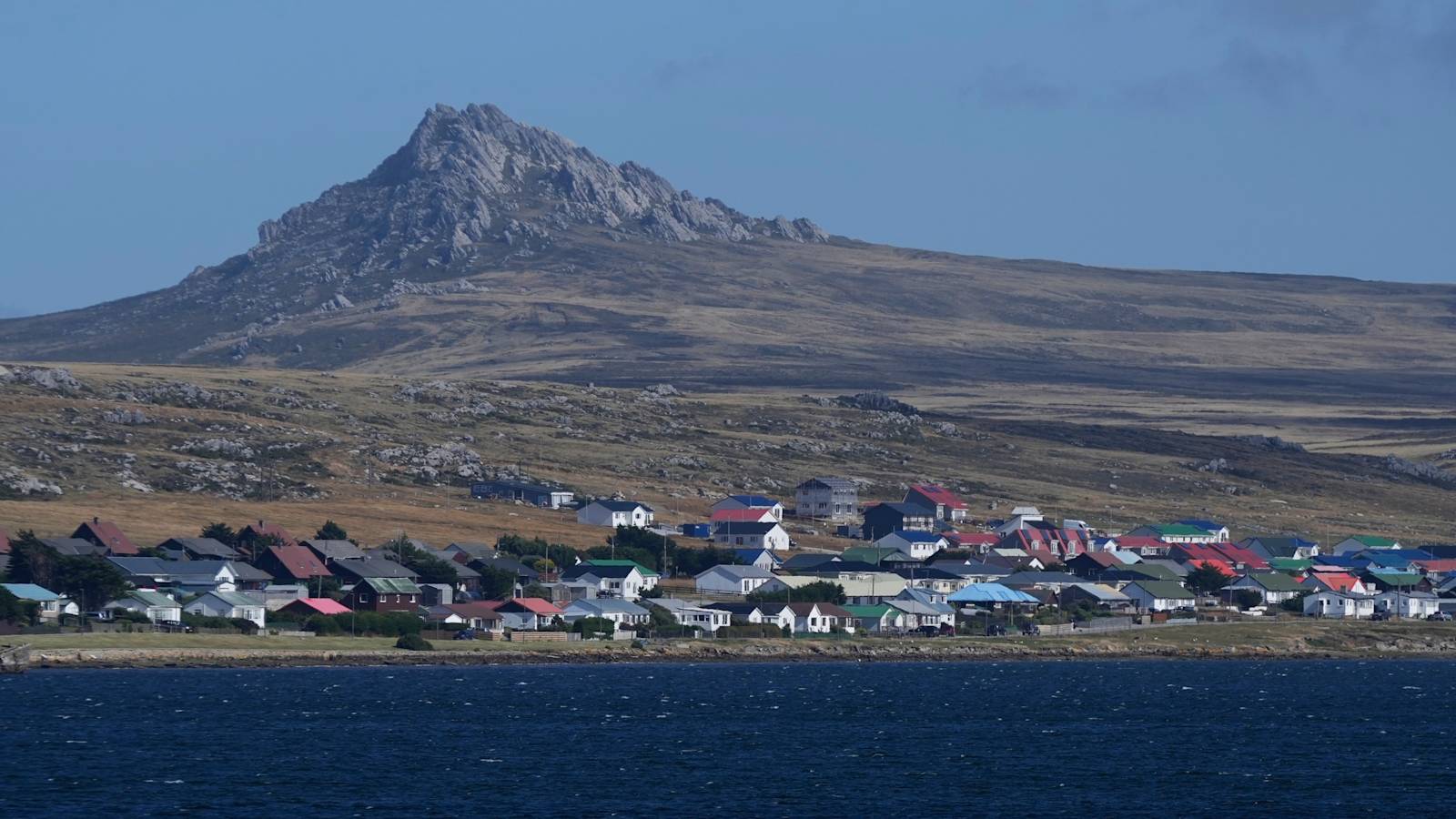
Roughly 3,700 people live on the Falkland Islands, a windswept British Overseas Territory in the South Atlantic best known for its sheep, squid fisheries, and a brief but fierce war in 1982. By 2028, those same 3,700 people will begin receiving a cut of one of the largest deepwater oil developments outside Brazil, the Sea Lion field, holding an estimated 917 million barrels of recoverable oil. The project is expected to generate around £4 billion in revenue over 35 years. Yet beyond the headline numbers, the story of who owns the oil, who pays for its protection, and who ultimately benefits from Falkland Islands oil is far more surprising than most realise.
The Scale of the Sea Lion Field
The Sea Lion field sits approximately 220 kilometres north of the Falkland Islands, beneath roughly 450 metres of water in the North Falkland Basin. Discovered in 2010 by a small British company called Rockhopper Exploration, the field languished for over a decade. The post-2014 oil price slump and the reluctance of major oil companies to invest in a remote, politically sensitive frontier project kept Sea Lion frozen until an unlikely player arrived.
In December 2025, the partners took a final investment decision (FID), unlocking the project for full-scale execution. Phase 1 targets 170 million barrels, with 11 subsea wells tied back to a redeployed floating production, storage, and offloading (FPSO) vessel. Peak production is expected to reach approximately 50,000 barrels per day, with first oil planned for March 2028.
The project has followed a long and uncertain path to reach this point:YearMilestone2010Rockhopper Exploration discovers the Sea Lion field2012Premier Oil acquires 60% stake in $1 billion farm-in deal2014–2019Oil price slump; project frozen; production timelines repeatedly pushed back2020Navitas Petroleum enters as minority investor, reviving the project2022Harbour Energy exits; Navitas becomes majority owner (65%) and operatorNov 2025Environmental Impact Statement approved by Falkland Islands GovernmentDec 2025Final Investment Decision (FID), unlocking the project formally sanctionedMar 2028First oil targeted
Phase 2, expected within three years of first oil, will add 12 more wells. Across all five planned development phases, the project envisions 64 wells and multiple FPSOs extending production over several decades.
Total funding from FID to first oil stands at $1.8 billion, rising to $2.1 billion for project completion, financed through $1 billion in senior secured debt alongside project equity. And in early 2026, Navitas executed a farm-in for the adjacent PL001 license, which covers an estimated 3.1 billion barrels of prospective recoverable resources, suggesting the North Falkland Basin may hold far more than Sea Lion alone
Who Owns the Oil? Not Who You Would Expect
Ask most people to name the company drilling for Falklands oil, and they might guess Shell, BP, or ExxonMobil. The reality is altogether different and more revealing.
The Sea Lion project is a two-player partnership. Navitas Petroleum, through its UK-registered subsidiary Navitas Petroleum Development and Production Ltd (NPDP), holds a 65% working interest and serves as operator. Rockhopper Exploration, the original discoverer, holds the remaining 35%. This split represents the companies’ working interest, their share of project costs and post-tax profits, and does not include the Falkland Islands Government, which collects its revenue separately through a 9% royalty on production and a 26% corporation tax on oil company profits, among other levies. In effect, the government takes its cut before the companies divide what remains.
Argentina President Javier Milei says his country needs to ‘recover’ the Falklands Islands – but Defence Secretary Wes Streeting says Britain’s commitment remains ‘absolute and unshakeable’
Argentina’s President Javier Milei reiterated his claim to the Falklands overnight
The UK Government has issued a response after Argentina President Javier Milei announced new punitive measures to be imposed on the Falklands Islands.
Defence Secretary Wes Streeting said Britain’s commitment to the Falkland Islands is “absolute and unshakeable” after Milei said his country needs to “recover these islands”.
The Falklands War was a brief conflict between Argentina and the United Kingdom that occurred from April 2 to June 14, 1982, over the disputed sovereignty of the Falkland Islands. The war resulted in a British victory, with significant casualties on both sides, including approximately 649 Argentine and 255 British military personnel killed. helpforheroes.org.uk Wikipedia
Retired, living in the Scottish Borders after living most of my life in cities in England. I can now indulge my interest in all aspects of living close to nature in a wild landscape. I live on what was once the Iapetus Ocean which took millions of years to travel from the Southern Hemisphere to here in the Northern Hemisphere. That set me thinking and questioning and seeking answers.
In 1998 I co-wrote Millennium Countdown (US)/ A Business Guide to the Year 2000 (UK) see https://www.abebooks.co.uk/products/isbn/9780749427917