Theoretically, the article builds upon the recent use of interactionist approaches to explain the emergence of violence during protests and other forms of contention (Bramsen, 2018; Nassauer, 2018, 2019, 2021; Tiratelli, 2018). Grounded in Collins’ (2008) micro-sociological work on violence, such research focuses on the emotional dynamics of situational encounters and how specific patterns of interaction enable actors to overcome the tension and fear that otherwise inhibits the onset or persistence of violence. It has highlighted that situational encounters can acquire their own violence-favouring logics, distinct from the wider struggles of which they are a part (Nassauer, 2018, 2022), and proved effective at predicting the occurrence of violence (Nassauer, 2019).
This article also addresses questions that interactionist approaches address less well, however, about: (a) how such violence-favouring situations arise, (b) what can inhibit their emergence, and (c) why some violence-favouring situations do not give rise to violence. To do this, the article brings situational analysis into dialogue with three intersecting strands of political violence research: on the relational dynamics of conflict escalation and de-escalation (Alimi, 2024; Alimi et al., 2015), on processual approaches to conflict (Malthaner, 2017), and on the restraints on violence within radical milieus (Busher & Bjørgo, 2020). This approach follows calls to explore how we can augment interactionist approaches by integrating “upstream” structural and contextual factors (Nassauer, 2022; Tiratelli, 2018; Unverdorben, 2023; Whitehead et al., 2018) and reflects a long tradition of research on political violence and civil unrest that emphasises the value of integrating macro-, meso-, and micro-level analyses (Della Porta, 1995; Waddington et al., 1989). It also reflects a practical intent: our aim is to enhance the ability of state and civil society actors not just to manage far-right violence as it unfolds, but to anticipate and inhibit its emergence.
Our focus on far-right protest reflects the recognition that assertive far-right protests across the Global North and beyond represent a social issue that warrants attention. Such protest is also of particular theoretical interest. It remains relatively under-studied in comparison with other forms of protest (Gattinara & Pirro, 2019); is imbued with a deep logic of violence against perceived out-groups (Karapin, 2002), making variance in violence use particularly interesting; and is often characterised by the co-presence of counter-protestors.
Hundreds of thousands are protesting in France against the high cost of living and poor schools. Violent groups are looting stores and attacking public buildings. Riots also broke out in Milan over two days. Seven answers about the weekend.
S. Ziegler, F. Berner, N. Agostini
Today at 09:18•Today at 09:27
Here’s what it’s all about
In France, more than half a million people demonstrated on Saturday, mostly peacefully.
At the same time, serious riots broke out—including in Italy. In Milan on Sunday, more than 200 young people were taken to police stations, about 80 percent of whom were minors.
Behind the protests are a variety of causes and groups.
Summary created with
Smashed storefronts in Paris, a burned-out city hall in Limoges, and looted stores in Milan: Social protests over the weekend were marred by serious riots.
But who is protesting, and why? And who is using the rallies as an opportunity to commit acts of violence and theft? blue News provides the key questions and answers about the weekend.
The unrest has sharpened the political confrontation between the radical Left and the nationalists. Marine Le Pen accused Jean-Luc Melenchon’s movement of having “legitimised the violence” and said sh…
One of child-rapist Jeffrey Epstein’s many roles was as a powerbroker and connector of far-right and fascist individuals globally. Messages now show how former Trump advisor Steve Bannon sought the sex-trafficker and paedophile’s help to support the European far-right.
The messages mostly date from 2018 and 2019, when Bannon, after being sacked by Trump, regularly visited Europe in his quest to forge a movement in the European Parliament uniting ultra-right wing and Eurosceptic forces from several countries including Italy, Germany, France, Hungary, Poland, Sweden and Austria.
Italy’s Matteo Salvini and France’s Marine Le Pen, both leaders of far-right and fascist-adjacent political parties, were among those Bannon wanted to see flourish:
Bannon especially set his sights on Matteo Salvini, the Italian deputy prime minister and leader of the far-right League party, who at the time was at the height of his political power.
Opposition parties in Italy have called for investigations:
to clarify whether Epstein influenced the rise of the League after Salvini’s name was cited several times in messages exchanged between Bannon and Epstein.
Then, at around 1:30 p.m. Eastern, No Kings’ Instagram account was taken offline. It left the organization without its biggest megaphone during the height of the protests.
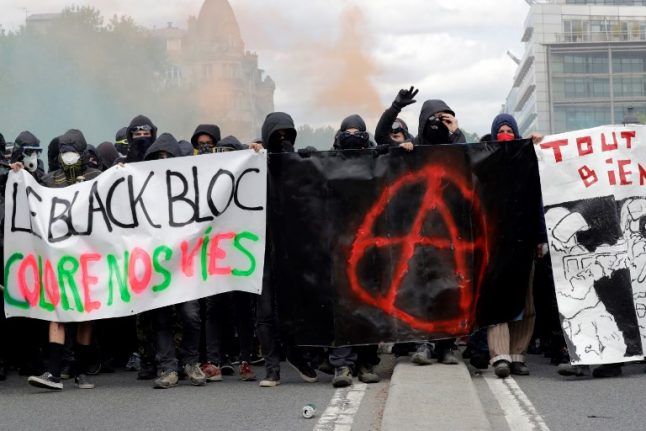
Look back to emergence of ‘black clad rioters’ on May 1st 2018 in Paris:
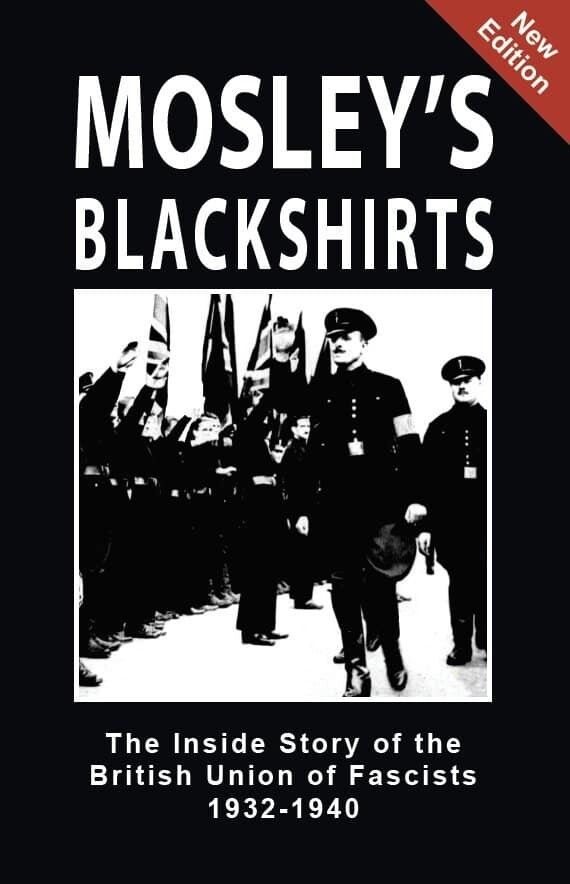
Politics Fascism. pic: April 1934. Sir Oswald Mosley walks down an avenue of saluting Blackshirts as he arrives at the Albert Hall for a meeting. Sir Oswald Mosley, (1896-1980), was founder and leader of the British Union of Fascists in the 1930’s. Politics, Fascism, pic: April 1934, Sir Oswald Mosley walks down an avenue of saluting Blackshirts as he arrives at the Albert Hall for a meeting, Sir Oswald Mosley, (1896-1980), was founder and leader of the British Union of Fascists in the 1930’s (Photo by Bentley Archive/Popperfoto via Getty Images/Gett
Retired, living in the Scottish Borders after living most of my life in cities in England. I can now indulge my interest in all aspects of living close to nature in a wild landscape. I live on what was once the Iapetus Ocean which took millions of years to travel from the Southern Hemisphere to here in the Northern Hemisphere. That set me thinking and questioning and seeking answers.
In 1998 I co-wrote Millennium Countdown (US)/ A Business Guide to the Year 2000 (UK) see https://www.abebooks.co.uk/products/isbn/9780749427917






You must be logged in to post a comment.