Blood Avocados: The Dark Truth Behind the World’s Favourite Superfruit
8 mins
From cartel-controlled orchards and deadly extortion to deforested hillsides and disappearing rivers, the avocado industry is hiding a brutal truth beneath its glossy green surface
by Anthea AyacheNovember 16, 2025
The sun had barely risen over the hills of Michoacán when cartel gunmen stormed the village of Ixtaro. They came not for drugs or money, but for avocados, the region’s ‘green gold.’ Willie, a local farmer who had resisted paying protection fees, was executed in front of his family. His 11-year-old son, now orphaned, was later adopted by relatives in California.
This is not an isolated incident. In towns like Ario de Rosales, farmers have discovered mutilated bodies on their land, warnings from cartels taking control of the lucrative avocado trade. The violence has escalated to the point where communities have started arming themselves to protect their livelihoods.
As the global demand for avocados soars, so does the bloodshed in regions like Michoacán. Behind every creamy slice lies a story of extortion, deforestation, and human suffering, in stark contrast to the fruit’s western wholesome image.
The fruit that feeds a billion-dollar global craving has earned a chilling nickname: green gold. And just like any precious resource, it comes with blood on its peel
In the wellness cafés of London and Los Angeles, avocados are smashed and sculpted into Instagrammable dishes. But in Michoacán, Mexico, they’re feared. The fruit that feeds a billion-dollar global craving has earned the chilling nickname Green Gold. And just like any precious resource, it comes with blood on its peel.
Behind every creamy slice lies a story of extortion, deforestation, and human suffering
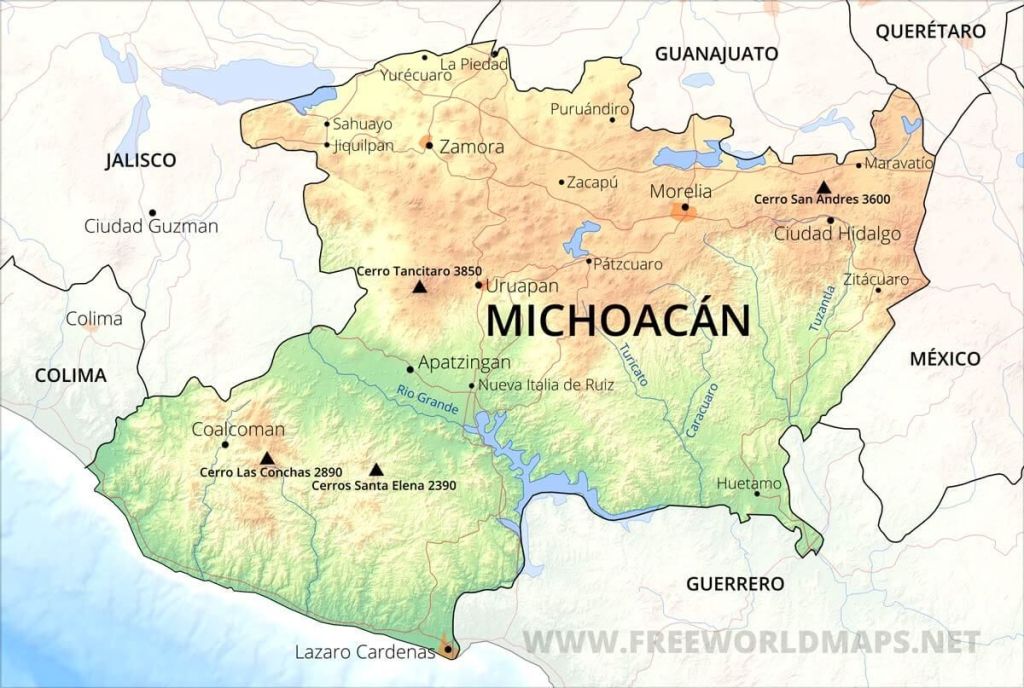
Mexico exports more avocados than any other country, over 2.4 million tons a year. The vast majority come from Michoacán, a region so rich with avocado money that cartels have dropped drug routes for supply chains and swapped cocaine fields for avocado groves.
If you refuse to pay, the consequences are brutal: orchards set alight, family members abducted, farmers executed on their land. What was once farming has become extortion at scale.
Criminal groups like the Jalisco New Generation Cartel now dominate the trade, demanding ‘protection money’ from everyone in the chain. Farmers, packers, even the drivers who transport the fruit are targets. If they refuse to pay, the consequences are brutal: orchards set alight, family members abducted, farmers executed. What was once farming has become extortion at scale. For many locals, the avocado boom was meant to be a blessing. Instead, it’s turned into a battleground.
Avocado goldrush links U.S. companies with Mexico’s deforestation disaster
Michoacán Produce Exports to the US: Avocados, Berries, Exporters and Crossings, Jan-Aug 2026
Michoacán produce exports, Jan-Aug 2026: $2,456.2M (25.0% of Mexico’s value), 47,792 truckloads; avocados 73.9%. Exporters, importers, crossings.
From January to August 2026, exporters based in Michoacán shipped 1,010.7 million kg of fresh produce to the US by truck: 47,792 truckloads, 14.6% of the 326,695 truckloads of Mexican produce in the same months (47,792 ÷ 326,695), with a declared value of $2,456.2M. That value is 25.0% of the $9,834.4M declared for all Mexican produce, more than any other state; Jalisco follows with $1,923.6M (19.6%). By truckloads Michoacán ranks third, behind Sinaloa (56,665) and Sonora (52,484). A kilogram from Michoacán was declared at $2.43, against $1.42 for Mexico as a whole.
Avocados are most of it: 35,325 of Michoacán’s 47,792 truckloads (35,325 ÷ 47,792 = 73.9%), and 90.2% of every Mexican avocado truckload that crossed in the window (35,325 ÷ 39,176). Berries add 5,193 truckloads. The largest exporter is Mission de Mexico SA de CV (4,919 truckloads), and the largest US importer named on Michoacán shipments is Del Monte Fresh Produce N.A. Inc (1,730).
Most shipments do not name a US buyer: 30,091 of those 47,792 truckloads (30,091 ÷ 47,792 = 63.0%) name no US importer in the record, against 38.9% for all Mexican produce (127,114 ÷ 326,695). The importer figures below cover the 17,701 truckloads that do. Every truckload names its Mexican exporter. Exporters registered to private individuals keep their place in the rankings as “Individual grower”, without a name or link.
Data window and definition: January 1 to August 31, 2026, Mexico to US truck crossings. A shipment counts as Michoacán’s when the exporter’s address on the record names Michoacán as its last Mexican state. The customs office is never used as the origin: almost all Michoacán produce clears customs in Tamaulipas or Nuevo León. Five exporters in other states whose street address includes a “Calle Michoacán” or similar (234 produce lines) are left out. Produce means the 25 commodity groups of our commodity pages, assigned by tariff line. Only the USDA FOB prices use another date, the latest report, stated where they appear.
What Michoacán Exports: Top 10 Commodities (Mexico to US, Jan-Aug 2026)
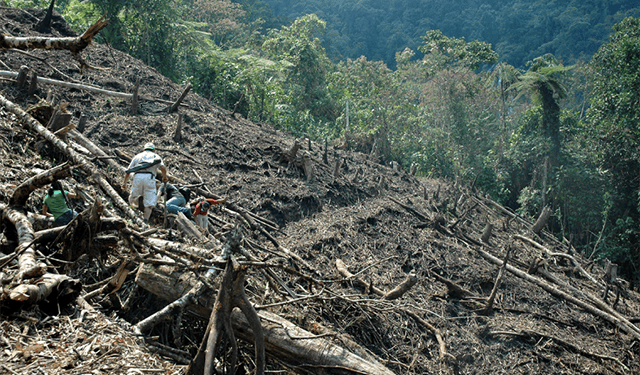
U.S. demand for Mexican avocados is linked to deforestation in Michoacán, Mexico’s largest avocado-producing region, where forests have been cleared for orchards and water use has added pressure in drought-prone areas. Satellite-based certification programs now screen avocado suppliers for deforestation and other environmental harms, covering more than 90% of Mexican avocado exports to the United States.
In 2020, Michoacán had 3.2 Mha of natural forest, extending over 55% of its land area. In 2025, it lost 6.9 kha of natural forest, equivalent to 2.8 Mt of CO₂ emissions.
Michoacán has been a focus of U.S.–Mexico security cooperation, including a 2021 plan deploying over 17,000 National Guard troops to combat cartel violence and stabilize the state. In August 2026, the U.S. resumed full consular and commercial activities in Michoacán after a temporary halt due to security concerns, though it maintained its highest travel alert for U.S. citizens. ground.news mexiconewsdaily.com
And in August 2026:
Why Mexican avocado exports to the US have been stopped again
MEXICO CITY (AP) — Mexico began sending 1,500 more troops to the western state of Michoacan on Thursday, a day after the U.S. announced the suspension of government operations in that region — including halting avocado inspections required for their export — because of a non-specific threat to U.S. interests.
Mexican President Claudia Sheinbaum announced the increase of security in avocado production areas to spur the resumption of the exports as soon as possible and to prevent any serious impact on Mexico’s economy or U.S. supply.
The United States is a major consumer of Mexican avocados: More than 80% of the avocados consumed come from its southern neighbor, amounting to $3.7 billion in sales for Mexico in 2025.
But before export, U.S. Department of Agriculture inspectors verify the quality on-site to prevent pests from entering the country. Without inspections, imports stop and prices in the U.S. may increase.
These agricultural inspections were suspended on Wednesday for security reasons in Michoacan, the main avocado producer and an area with high cartel activity.
It’s not the first time the exports have been halted — a pause in early 2022 on the eve of the Super Bowl lasted a week, though it didn’t impact game day guacamole consumption because those avocados had already been shipped.
Here’s a look at what’s driving the shutdown:
Why exports are paused from time to time
Numerous cartels operate in Michoacan, which is the main state exporting avocados to the United States and one of just two states authorized to do so. In Michoacan, the cartels produce and traffic drugs and engage in violence and extortion across multiple industries, including the avocado industry where payments to the cartels can impact prices of the fruit.
US inspectors in Michoacán have faced threats and attacks while overseeing avocado and mango shipments, leading to temporary suspension of inspections in 2024 after two APHIS employees were detained during an inspection. The Independent mexiconewsdaily.com
At the height of its power, the Familia Michoacana’s brutal tactics, strong base of operations and pseudo-religious ideology made it a formidable operation and a point of fascination for outsiders. However, the group has suffered a series of heavy blows, most notably that of leader Nazario Moreno Gonzalez, alias “El Chayo,” who was falsely reported killed in 2010 and was later confirmed dead in a shootout in March 2014. The Familia was then largely supplanted by a splinter group known as the Caballeros Templarios (Knights Templar), which has also been seriously weakened in recent years.
However, the criminal group is very much still active today. Fragmented cells of the Familia Michoacana are still partaking in drug trafficking, kidnapping and extortion activities in parts of Guerrero state while largely being driven out of Michoacán by remnants of the Knights Templar and other groups. A group known locally as the Nueva Familia Michoacana is also reportedly active in parts of Guerrero and Michoacán, even extorting avocado producers along with other criminal groups trying to take advantage of a key source of illicit profits in the area.
Retired, living in the Scottish Borders after living most of my life in cities in England. I can now indulge my interest in all aspects of living close to nature in a wild landscape. I live on what was once the Iapetus Ocean which took millions of years to travel from the Southern Hemisphere to here in the Northern Hemisphere. That set me thinking and questioning and seeking answers.
In 1998 I co-wrote Millennium Countdown (US)/ A Business Guide to the Year 2000 (UK) see https://www.abebooks.co.uk/products/isbn/9780749427917




You must be logged in to post a comment.