For the last 35 years, Lorenzo Salgado Araujo’s day began the same way: He woke up at 5 a.m., kissed his wife goodbye, loaded his work van and drove off to pick up his construction crew for work in Houston, his family said.
But on Tuesday, Salgado Araujo’s day would not end as it always did. He would not come home to eat a hearty dinner prepared by his wife, then spend the rest of the evening on the porch listening to music in the house he had built for his family.
Around 7 a.m., as the 52-year-old father of three picked up the last of his crew in Houston’s East End area before heading north to finish construction on several houses, an Immigration and Customs Enforcement agent in an unmarked car fatally shot the Mexican man inside his van, Salgado Araujo’s oldest son recounted Wednesday.
ICE said Salgado Araujo attempted to evade arrest as agents tried to conduct a traffic stop as part of a “targeted operation.” He rammed into a law enforcement vehicle and refused to follow several verbal commands before an ICE agent fired his weapon in self-defense, the agency told CNN in a statement Tuesday.
Salgado Araujo had been living in the US without legal authorization, ICE said, without specifying whether the agents had been looking for him. He did not appear to have a criminal record, according to the Harris County District Attorney’s Office.
Disputing the government’s account, Salgado Araujo’s family says they believe the man who’d been seeking a work permit would have stopped and complied with federal agents if he had known the car following him belonged to ICE or other law enforcement.
The three men who watched an ICE officer kill Lorenzo Salgado Araujo say the government’s account is false at every load-bearing point. Interviewed separately in immigration detention by attorney Hugo Balderas-Ibarra — accounts the Washington Post published overnight — Jose Trinidad Rojas, Daniel Tirado Pantoja and Victor Salgado, the victim’s brother, each described the same scene: no officer ever stood in front of the van DHS claims was “weaponized” to run one down. “That is a lie,” Rojas wrote by hand from detention.
Their account, per the Post: the four men left for a construction job around 6:30 AM Tuesday when an unmarked car cut off their van and brake-checked it. Salgado Araujo U-turned; only then did lights come on. Crawling through road construction at roughly 5 mph, the van was rammed and boxed in by ICE vehicles on both sides — and an officer ran at the passenger side, yelled “Stop!”, and shot Salgado Araujo, 52, in the abdomen. The men say the firing continued after he braked and put the van in park. Agents cuffed his wrists and feet as he bled; his brother recalls one asking, in a mocking tone, “You wanted to escape, right?” Salgado Araujo reached Ben Taub Hospital as a John Doe and died there.
ICE’s own admissions already corroborate the edges. The acting director told Rep. Sylvia Garcia on Thursday that the agents wore no body cameras and no dash cameras — and that the administrative warrant named neither Salgado Araujo nor his brother. The New York Times reports the actual targets were two Guatemalan men; everyone in the van was Mexican, undocumented, decades in the country, no criminal records.
Federal immigration officers fatally shot Lorenzo Salgado Araujo during an ICE operation in Houston, but the three migrants who were traveling with him dispute the government’s account of the incident. They told their attorney that officers opened fire almost immediately after exiting their vehicles and insisted Salgado Araujo never attempted to run over an officer. Their testimony directly contradicts the Department of Homeland Security’s claim that he “weaponized” his work van by trying to ram ICE personnel. The witnesses, interviewed separately while in immigration detention, all gave consistent accounts of the shooting.
After the shooting, witnesses said Lorenzo Salgado Araujo remained conscious and repeatedly called for help as he bled from his gunshot wounds. They alleged that ICE agents pulled him from the driver’s seat, threw him to the ground, and restrained the other passengers while he continued pleading for assistance. According to the passengers, medical aid was not immediately prioritized as they watched him deteriorate. Salgado Araujo was eventually transported to Ben Taub Hospital without any identification, where he was initially admitted as a “John Doe.” He later died from his injuries at the hospital.
The passengers also described what they considered degrading treatment immediately after the shooting. Victor Salgado, the victim’s brother, recalled an ICE agent mockingly asking him in Spanish, “Se querían escapar, verdad?” (”You wanted to escape, right?”) while Lorenzo lay gravely wounded nearby. He said the remark was made as the agents had already restrained the occupants and his brother was bleeding on the ground. The witnesses viewed the comment as callous given the severity of Lorenzo’s condition. Their attorney said all three men independently recounted similar details about the encounter.
The circumstances surrounding Salgado Araujo’s treatment after the shooting have become a central point of controversy in the case. His family, attorney, and supporters argue that the reported lack of urgency in providing aid, combined with the alleged mocking remark, raises serious questions about the officers’ conduct. They contend these actions conflict with DHS’s portrayal of officers acting solely in self-defense during a dangerous encounter. The attorney has called for an independent investigation, emphasizing that the witnesses’ accounts remained consistent despite being interviewed separately in detention. The case has intensified public scrutiny of ICE’s enforcement practices and the agency’s handling of officer-involved shootings.
Houston Mayor John Whitmire: For the Salgado family, life will never be the same. At no fault of theirs, Mr. Salgado was chased by a unmarked vehicles. Before he could identify himself and speak as a Houstonian, he was shot and killed. We will use all of our resources to pursue an independent and transparent investigation.
Responding to questions about the fatal ICE shooting in Texas, border czar Tom Homan argued that public distrust of ICE is driven by inaccurate media coverage and criticism from some members of Congress. He said many news outlets spread false information about the agency and echoed comparisons of ICE to a “secret police” force. Homan maintained that ICE is countering those narratives by releasing what he described as the facts about its operations. He concluded by claiming the agency is regaining public support because it is “putting the truth out there.”
If you’re like me, you don’t want to think about anything Trump is doing that you don’t have to think about. The horrific domestic police called ICE, for example, appears to have quieted down. So we can erase it from our minds, right?
Wrong. ICE has not quieted down. It’s even worse. It’s just become less visible.
ICE has quietly doubled its immigrant arrest quota. It’s now arresting 2,000 people per day.
But you’re not hearing about it because the new head of the Department of Homeland Security, Markwayne Mullin, has decided to quietly spread ICE agents around the country instead of targeting one Democratic-controlled city at a time.
Rather than fueling media spectacles, lawsuits, and community backlash, ICE is now going about its ruthless business in more hushed tones.
But every day, more of our neighbors — and more people who are in the United States legally — are being swept up at immigration check-ins, traffic stops, workplaces, and public spaces. Raids have intensified in Los Angeles, San Diego, Houston, Dallas, McAllen, Brownsville, New York City, Newark, Passaic, Plainfield, Milwaukee, Waukesha, Nashville, Charlotte, Chicago, and even in Minneapolis.
Local media continue to report what’s happening, but the national media seem to have lost interest. Among raids reported by local media are:
The mass arrest of more than 30 workers at the Scholar Crafts plant in Birmingham, Alabama.
The arrest of at least three people during immigration check-ins at New York City courthouses last week in violation of federal court orders explicitly barring such arrests.And so on.
Refugee communities are bracing for additional ICE raids in the wake of the Supreme Court’s decision revoking Temporary Protected Status of asylum seekers from Haiti and Syria, which could affect at least 356,000 people. (Haitian asylum seekers in Springfield, Ohio, are expecting “the mother of all ICE raids” after Stephen Miller voiced enthusiastic support for “finally removing all those Haitian illegal immigrants.”)
Community groups in Texas expect increased crackdowns after the conviction of eight activists on domestic terrorism charges following an incident last year in which a police officer was shot during an anti-ICE protest outside the Prairieland Detention Center. A ninth defendant in that case, Ines Soto, was sentenced last week to 50 years in prison for “providing material support to terrorists” because he had transported political pamphlets in his car.
Fifteen Minnesota protesters also pled not guilty last week to conspiracy charges stemming from protests in January. Activist and healthcare worker Isaac Sant, one of the accused, said the trial was “a naked attempt to silence our voices, to squash dissent and to have a chilling effect on organizing here in the Twin Cities,” which, he noted, “is not going to work.”
Meanwhile, ICE’s budget has tripled. The House narrowly voted in June to direct roughly $70 billion to the Department of Homeland Security for ICE and Border Patrol — more than three times its last annual budget. The money comes with few stipulations on how and when it should be spent. It includes:
$38 billion for ICE to hire, pay, train, and equip its officers and agents. That includes $7 billion for Homeland Security Investigations and $31 billion for immigration enforcement work like hiring more attorneys, supporting local law enforcement who coordinate with ICE, and technology like body cameras;
$22 billion for Border Patrol to pay, train, recruit, and equip agents and personnel. That includes $13 billion specifically for immigration enforcement work;
$5 billion for border security technology and screening, including artificial intelligence.
ICE is now using facial recognition technology and has already scanned thousands of immigrants’ and protesters’ faces. This kind of street-level surveillance raises profound legal questions about what are in effect warrantless searches.
The Department of Homeland Security appears to be creating a vast database of people who merely object to its actions.
How else to explain how federal agents tracked down Rochester resident David Streever last month when he was visiting New York City with his daughter? They gave Streever a warning notice alleging that he had potentially violated the law when he wrote a three-paragraph email to Todd Lyons, former head of ICE, criticizing ICE’s mass deportation program and comparing Lyons to a Nazi.
Similarly, during New York State’s primaries in June, ICE agents arrived at a polling site in Syracuse to question Paigelynne Gonyea, a poll worker. Gonyea, an American citizen, says the agents were concerned about an Instagram post she supposedly made in January identifying Jonathan Ross as the ICE agent who shot and killed Renee Good during the federal incursion in Minneapolis this winter.
Well, I’m criticizing ICE for these violations of the First Amendment rights of Americans. Come arrest me for my public criticism!
The Trump regime continues to open new detention centers, including a 528-bed holding facility for migrant families and unaccompanied children next to an airport hub in Alexandria, Louisiana, to speed up deportations. ICE is calling the facility a “staging area,” not a detention center, and says people would only be there a few days at most. But immigration advocates worry that children could be held at the new facility for weeks or months.
ICE is bigger and worse than ever, although the major media have stopped reporting on it. Not only is ICE’s reign of terror intimidating many undocumented immigrants and their families — preventing them from seeking the healthcare they need or attending school or going to court — but ICE is also sweeping into its maw many American citizens who are protesting Trump’s police state
Coverage:
Trump’s war on immigrants is ramping back up and it’s flying under the radar
The plan wasn’t working. Less than a year into President Donald Trump’s second term, his administration’s signature initiative — facilitating the mass deportation of “millions and millions” of immigrants, as he once put it — had become a political liability. A surge of federal agents to Minnesota proved to be the apex of a flashy, combative strategy that tried to steamroll any opposition — and failed.
But now, according to The New York Times, the seeming lull in arrests that followed the winter’s chaos has given way to a renewed effort to round up as many immigrants for deportation as possible — without drawing the same level of attention. The shift shows both the limits that the administration has faced in its deportation spree and its determination to continue apace despite the president’s approval ratings on immigration tanking. Without the same amount of spotlight-seeking from immigration officials, however, the White House hopes to deny opponents the clear targets to organize against that last year’s deportation campaigns provided.
Extract from Wajeeh Lion analysis on Substack pertaining to the West Bank:
Data compiled by the Israeli human rights organization Yesh Din reveals that the 2026 Iran War provided cover for a massive surge in extremist settler violence. In just the first 30 days of the conflict (overlapping with the March and April Passover holiday), 305 separate incidents of settler violence were documented. This violence was not random; it occurred across 139 different Palestinian villages and towns, demonstrating wide-scale organizational coordination rather than isolated friction. The tactics used included the systematic uprooting of olive trees in Sha’ab al Butum, the destruction of vital water infrastructure, physical assaults on herders using sticks and stones, armed home invasions, and the firing of live ammunition in the presence of Israel Defense Forces (IDF) soldiers, as witnessed in Qaryut. Amnesty International and Human Rights Watch have labeled this violence a state-sanctioned ethnic cleansing campaign aimed at forcing the displacement of Bedouin and herding communities in Area C, specifically in villages like Zanuta and Masafer Yatta.
This violence operates alongside bureaucratic mechanisms. Approximately 41,000 dunams (roughly 10,000 acres) of privately titled Palestinian land were frozen and declared “state land.” The legal reality in the West Bank facilitates this: settlers are subject to Israeli civil law, while Palestinians live under military law. Consequently, there is a staggering 94% impunity rate for police-recorded cases of settler violence over a 20-year period, meaning the vast majority of perpetrators never face trial. B’Tselem reports corroborate this, stating IDF personnel systematically fail to protect Palestinians and frequently provide armed escorts for the perpetrators.
Strategically, this unchecked expansion and state-backed violence are highly counterproductive for Israel. It alienates essential European allies, provides diplomatic ammunition to adversaries at the UN Security Council, and forces U.S. diplomats to expend finite political capital defending West Bank policies rather than focusing on the primary threat from Tehran.
Media coverage:
Israel’s Smotrich declares ‘revolution’ in West Bank settlement expansion
Story by Al Jazeera Staff
• 1d
Israel’s Finance Minister Bezalel Smotrich speaks to reporters about settlements expansion that would split East Jerusalem from the occupied West Bank [File: Ronen Zvulun/Reuters]
Israeli Finance Minister Bezalel Smotrich has declared that Israel has launched a “revolution in settlement” expansion, which he says will see illegal outposts extended beyond the occupied West Bank into the Negev and Galilee.
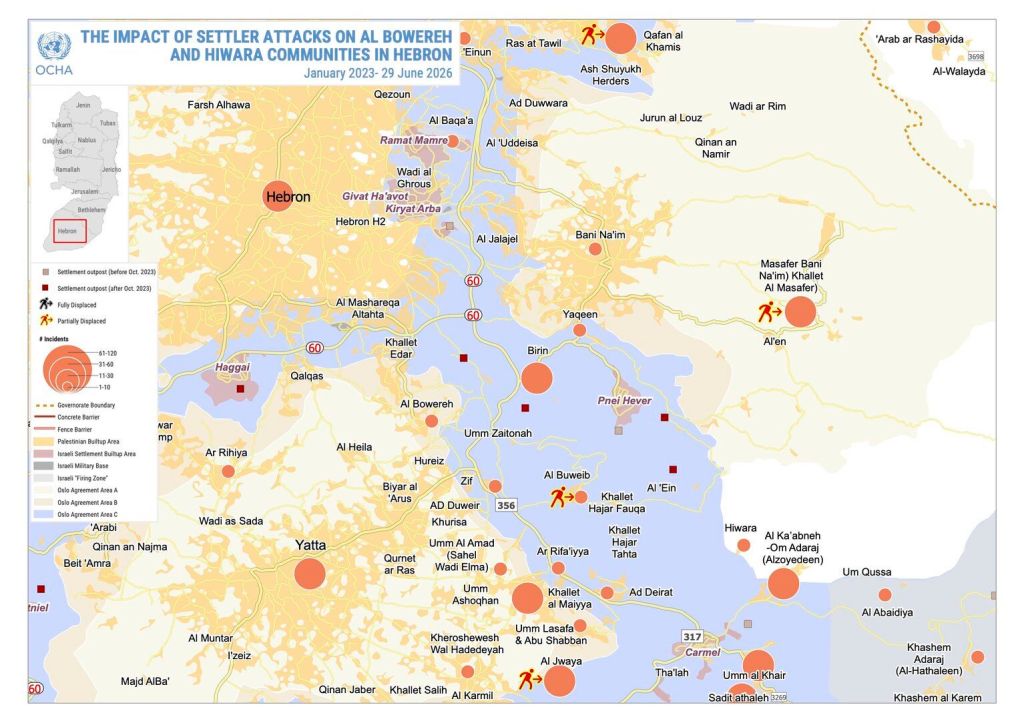
Since the establishment of outposts, at least six settler attacks affecting Al Bowereh and 11 affecting Hiwara, resulting in casualties, property damage or both, were documented compared with two attacks in Al Bowereh and no attacks in Hiwara recorded between 2020 and the establishment of the outposts. In both communities, residents reported increasing limitations on access to agricultural land and grazing areas, repeated damage to homes and livelihood assets, obstruction of the only access routes, and greater difficulties in accessing emergency medical care.
The assessments highlighted mounting protection concerns, particularly for children and women. Community members reported that repeated exposure to violence, intimidation and insecurity has contributed to heightened fear, anxiety and psychosocial distress among children, who also face unsafe journeys to school and limited access to recreational and child-focused services. Families also reported increasing difficulties in accessing emergency health care during settler attacks due to movement restrictions that have delayed ambulance access, while limited legal assistance and barriers to seeking accountability have compounded protection risks.
Humanitarian partners continue to respond by providing mental health and psychosocial support, child-friendly activities, shelter rehabilitation, hygiene and WASH assistance, including water trucking and household water storage, fodder assistance and other support to herding and agricultural livelihoods, as well as support for women’s livelihoods. Partners also continue to support an elementary school in Hiwara to improve children’s access to education. However, they report mounting operational difficulties in reaching both communities due to recurrent settler attacks and movement restrictions, limiting the delivery of assistance and essential services.
The deterioration in the humanitarian situation has also undermined livelihoods and access to basic services. In Al Bowereh, farmers reported significant losses following repeated damage to vineyards, trees and other agricultural assets, while additional agricultural land has been affected by the widening of Road 60. In Hiwara, herding families reported shrinking grazing areas, repeated attacks on livestock and increasing pressure on traditional livelihoods. Both communities also face chronic water shortages and rely on water trucking during the summer months, further compounding humanitarian needs.
Just found this coverage of a recent report which I have reproduced here:
Nabaa-Al-Sudan Investigation: UAE Created Front Airlines to Supply RSF with Weapons
Exclusive | Nabaa-Al-Sudan Platform
A recent investigative report conducted by the “Nabaa-Al-Sudan” platform revealed the involvement of the United Arab Emirates in establishing a network of suspicious airline companies to be used as logistical fronts for transporting military supplies in support of the Rapid Support Forces (RSF) in Sudan.
The investigation explained that these companies were not in use at the beginning of the outbreak of the war, but were later established to ensure the continuation of supply lines away from oversight, taking “Invicta Air Cargo” as a model for tracking this network.
African Cover and Geographic Camouflage
The report stated that Invicta Air Cargo first appeared in early 2026, registering two Ilyushin Il-76 cargo aircraft—bearing registrations TL-ATB and TL-ATD—in the Central African Republic under a company of the same name, in what appears to be a deliberate attempt at camouflage to conceal the operation’s true origin.
Digital Trail Leads to Abu Dhabi
However, the digital tracking conducted by the Nabaa team verified a direct link between the company and Abu Dhabi; technical analysis revealed that the website of the company registered in the Central African Republic was designed through “9YARDS,” one of the companies wholly owned by the UAE-based “Ghiyath Holding Group.”
The investigation noted that “Ghiyath Holding Group” is owned by the state and several individuals, and is directly linked to “Ethmar Holding Group,” one of the largest economic groups chaired by Sheikh Hamdan bin Mohammed bin Zayed Al Nahyan, the brother of the President of the United Arab Emirates.
For further confirmation, the report tracked the flight records of the company’s fleet, finding that one of “Invicta’s” current aircraft, an Airbus A300 registered as TL-AIT, had been registered in late 2024 in the name of the UAE company “Ghiyath Aviation.”
Deleted Archive and Secret Military Contracts
In a major surprise, the investigation team was able, through internet archives, to recover a deleted page from the official website of “Invicta,” which carried the title “GHQ & MOD” (General Headquarters and Ministry of Defence).
The deleted page showed a list of the company’s clients and contracts, which indicated that the company does not carry out commercial aviation activity, but instead performs tasks of a purely military nature. The list of clients included: • EDGE Group, the UAE state-owned defence company specializing in weapons systems and armored vehicles manufacturing). • The UAE Presidential Guard. • GSS Security Company, a company linked to the transportation of mercenaries and weapons.
Logistical Capabilities and Medical Equipment
The leaked documents revealed that “Invicta” operated charter flights using giant cargo aircraft of the Boeing 747 and Antonov An-124 types. The investigation further stated that the company contracted to equip its aircraft with SLS stretchers for medical evacuation missions associated with the General Headquarters, and entered partnerships with foreign cargo companies such as National Air Cargo linked to the U.S. military, which confirms the use of these fronts to serve complex military and logistical objectives in the region.
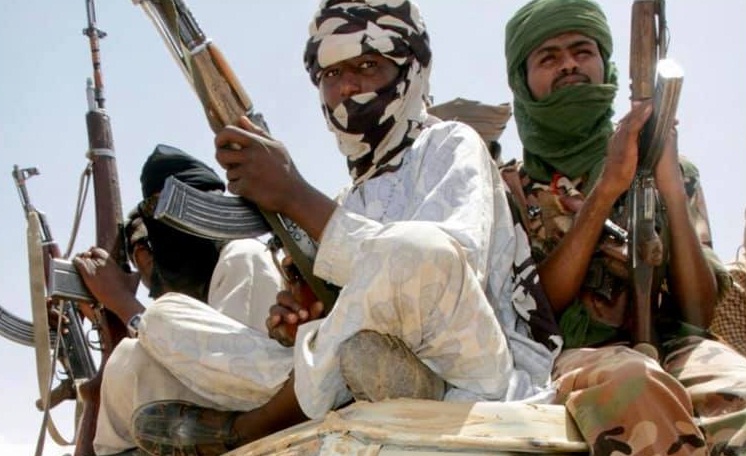
Rapid Support Forces (RSF), Darfur-based paramilitary group in Sudan. The RSF was established in 2013 by the government to fight Sudanese rebels. After defeating those forces, the group grew into such a powerful and integral component of Sudan’s defenses that it came to challenge Sudan’s official military, the Sudanese Armed Forces (SAF). The RSF and the SAF have been engaged in a war for supremacy since April 15, 2023, devastating the country.
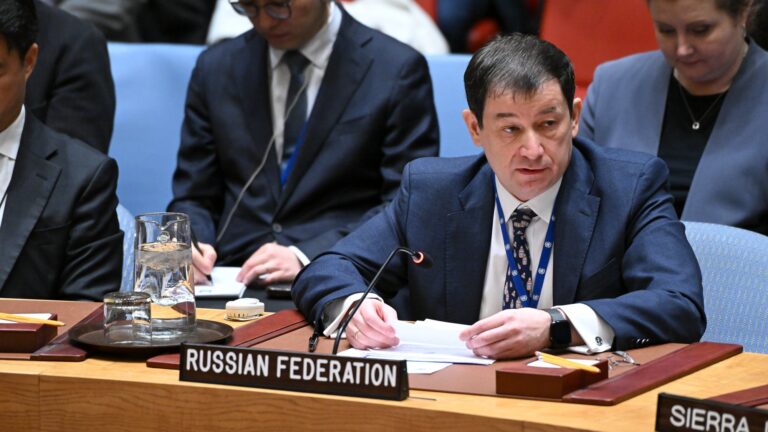
Russia vetoed a United Nation resolution on Sudan calling for an immediate cease-fire between Sudan’s warring parties and the delivery of humanitarian aid to millions of Sudanese. Russia was the only Security Council member that voted against the cease-fire resolution.
China, Russia’s ally, supported the resolution, drafted by the United Kingdom and Sierra Leone.
Russian Deputy U.N. Ambassador Dmitry Polyanskiy told the council that Moscow vetoed the resolution because Sudan’s government should be “solely” responsible for what happens in Sudan.
U.S. Ambassador Linda Thomas-Greenfield said, “It is shocking that Russia has vetoed an effort to save lives, though perhaps it shouldn’t be.”
She added, “For months, Russia has obstructed and obfuscated, standing in the way of council action to address the catastrophic situation in Sudan and playing … both sides of the conflict, to advance its own political objectives at the expense of Sudanese lives.”
And Russia may support both sides in the conflict:
Russia’s allegiance may be shifting in Sudan
It may appear that Russia and its proxy, the Wagner Group, have been courting both sides of the conflict to remain in the good graces of whoever comes out on top, while Sudan’s rival generals fight to become the country’s chief military power.
Sudan: ‘Hallmarks of genocide’ found in El Fasher, UN investigators detail mass killings and ethnic targeting
UNAMID/Mohamad Almahady Tens of thousands have been killed and many more displaced in Darfur, Sudan, since fighting erupted between the Sudanese Armed Forces and the Rapid Support Forces in April 2023. (file photo)
The Rapid Support Forces (RSF) carried out ethnically targeted killings, widespread sexual violence and enforced disappearances during their late-October takeover of El Fasher in Sudan’s Darfur region — acts that a UN fact-finding mission said show “hallmarks of genocide” against the Zaghawa and Fur communities and signal an ongoing risk of further atrocities.
In a report released on Thursday, the Independent International Fact-Finding Mission for the Sudan said the evidence establishes that at least three underlying acts of genocide were committed: “killing members of a protected ethnic group; causing serious bodily and mental harm; and deliberately inflicting conditions of life calculated to bring about the group’s physical destruction in whole or in part.”
“The scale, coordination, and public endorsement of the operation by senior RSF leadership demonstrate that the crimes committed in and around El Fasher were not random excesses of war,” said Mohamed Chande Othman, Chair of the mission.
“They formed part of a planned and organized operation that bears the defining characteristics of genocide.”
Why is this happening? Maybe people are in the way of grabbing their wealth in natural resources?
FAQs
What are the main natural resources of Sudan?
Sudan is rich in natural resources, including petroleum, gold, iron ore, copper, zinc, silver, chrome, and uranium. It also has significant agricultural resources, such as cotton, sorghum, millet, wheat, and livestock.
Where are the petroleum reserves located in Sudan?
The majority of Sudan’s petroleum reserves are located in the southern part of the country, particularly in the regions of South Kordofan, Blue Nile, and Unity State.
Where are the gold reserves located in Sudan?
Sudan’s gold reserves are primarily located in the Red Sea Hills, the Nuba Mountains, and the Blue Nile region. The country has significant potential for gold mining.
Where are the agricultural resources located in Sudan?
Sudan’s agricultural resources are spread throughout the country, with fertile land for crops and grazing areas for livestock. The major agricultural regions include the Gezira Scheme, the Blue Nile region, and the White Nile region.
Where are the iron ore and copper reserves located in Sudan?
Sudan’s iron ore and copper reserves are mainly located in the Red Sea Hills, the Nuba Mountains, and the Blue Nile region. These areas have significant potential for mining and extraction of these resources.
Where are the uranium and other mineral reserves located in Sudan?
Sudan has potential uranium reserves in the Red Sea Hills and the Nuba Mountains. Other mineral reserves, such as chrome and silver, are also found in various regions across the country.
To Fund the War: Militias Expand in Cultivation and Trade of Drugs
Sudan EventsJanuary 29, 2025
274 3 minutes read
Sudan Events – Agencies
The Rapid Support Forces militia has expanded its cultivation of bango (cannabis) in the Darfur region, along with the distribution and marketing within the cities under their control.
Police sources, previously involved in anti-drug operations, told Darfur 24 that drug dealers joined the RSF after the war broke out, now operating under the protection of their weapons. Former police officers have also turned into dealers, cultivating and promoting bango. Drug dealers and users now conduct their activities openly in Nyala and El-Obeid.
Source of Funding:
Sources confirmed that drug trafficking occurs in areas controlled by the RSF in Khartoum and the Gezira region, with the militia attempting to smuggle bango into military-controlled areas through vulnerable individuals.
The militia turned to cultivating and trading bango over large areas to expand their war funding resources.
A police officer specializing in drug control confirmed that the areas planted with bango in the Redoum region of South Darfur have doubled over the last twenty months. The officer, requesting anonymity, explained that the area under cultivation had expanded after new farmers joined the cultivation and promotion of the drug following the withdrawal of anti-drug police forces.
In 2022, the South Darfur police estimated that the area cultivated with bango in Redoum was around 20,000 acres, mostly in a rugged region along the borders with South Sudan and the Central African Republic.
Cheongung-II (KM-SAM Block II) Destroys 29 of 30 Iranian Missiles in UAE Combat Debut, Triggering Global Rush for South Korea’s Air-Defense System
South Korea’s Cheongung II (KM-SAM Block II) achieved a 96 percent interception rate during Iranian missile and drone attacks on the UAE, immediately reshaping Middle Eastern force posture and global missile-defense competition.
The Saudi veto was not an act of malice, but a rational response to a severe security dilemma. Five weeks prior, on March 27, 2026, an Iranian ballistic missile and drone strike hit PSAB directly. The attack injured 10 to 12 US service members, damaged several KC-135s, and destroyed a $500 million E-3G Sentry AWACS. Saudi officials explicitly warned the US that Project Freedom was poorly conceived because it would undoubtedly trigger more strikes on the exact bases hosting US forces.
The crisis established a new baseline rule for the Middle East: the United States can no longer use Gulf infrastructure for offensive operations without the absolute, explicit veto power of the host nations.
This vulnerability is compounded by a severe deficit in Saudi Arabia’s air defenses. Sustained Iranian missile campaigns depleted 86% of the Saudi Patriot PAC-3 interceptor inventory, dropping their stockpile from 2,800 interceptors down to just 400. Even if Lockheed Martin allocated its absolute maximum production of 620 interceptors per year solely to Saudi Arabia—an impossibility given global demands—it would take nearly four years to restock the Kingdom’s defenses.
Because of this deficit, Saudi Arabia remains heavily dependent on US troops at PSAB, who operate as essential maintenance crews and system operators for the radar data feeds. In the diplomatic fallout following the Saudi veto, Washington threatened to withdraw 2,300 troops and freeze PAC-3 resupplies. This coercive threat highly incentivized Riyadh to seek non-Western defense alternatives.
Source: Wajeeh Lion, Substack
July 7th, Zelensky asks NATO:
‘Please help us’: Zelenskyy presses NATO for air defense aid
Ukraine’s president said Patriot production is not enough and urged Europe to build mass-produced anti-ballistic systems “today, not years from now.”
NATO Secretary-General Mark Rutte speaks with Ukrainian President Volodymyr Zelenskyy during the NATO summit in Ankara on July 7, 2026. | Serdar Ozsoy/Getty Images
ANKARA — Ukrainian President Volodymyr Zelenskyy urged allies Tuesday to make helping with air defense one of the key outcomes of NATO’s Ankara summit, warning that Ukraine still lacks the means to stop Russian ballistic missiles.
The appeal comes as Ukraine faces a growing shortage of Patriot interceptors, the U.S.-made missiles Kyiv relies on to shoot down Russian ballistic missiles.
“Please help us get more air defense missiles. This is our top priority right now,” Zelenskyy told the NATO Defense Industry Forum. “We are capable of doing everything else ourselves. But when it comes to air defense, we need our partners’ determination.”
White Nationalists surround school girl on their way to march in Washington DC
Sport and the regime:
“Do the players see themselves on a plantation? I think they do, in that all of the owners are white. That creates the dynamic: The owners are white, the coaches work for the white owners, and the industry is run by white commissioners. Anyone who exercises power over them is white, and they feel or believe that the owners are taking more value out of them than what the owners are putting in.”
Quote from book ‘Forty million dollar slaves’ by William C. Rhodes
President Donald Trump is defending his controversial phone call to FIFA President Gianni Infantino after the governing body overturned Folarin Balogun’s World Cup suspension. The decision sparked outrage, with Belgium reportedly filing a last-minute appeal and fans accusing Trump of interfering in the tournament. Here’s everything Trump said, why FIFA reversed the red card, and why the World Cup controversy is exploding online.
Note: Peter Thiel calls Greta Thunberg the anti Christ.
Peter Thiel warns the Antichrist and apocalypse are linked to the ‘end of modernity’ currently happening—and cites Greta Thunberg as a driving example
By Nick LichtenbergBusiness EditorFebruary 4, 2026, 3:12 PM ET
Haitian Revolution, series of conflicts between 1791 and 1804 between Haitianslaves, colonists, the armies of the British and French colonizers, and a number of other parties. Through the struggle, the Haitian people ultimately won independence from France and thereby became the first country to be founded by former slaves.
The TPS clock Haitian and Syrian families are watching — and why Venezuela may be next
Story by LatinTimes Staff Reporter
• 12h
A tailor on Nostrand Avenue in Brooklyn’s Little Haiti — a stretch of Kreyòl signage and Konpa music serving a Haitian community estimated at 185,000 in New York alone — has spent decades building his trade beside neighbors who arrived the same way he did. His name is Chilly Bonny. More than a thousand miles south in Miramar, Florida, Farah Larrieux has run a communications firm serving Haitian and Caribbean businesses since 2005. Both hold Temporary Protected Status. Both are now watching the same clock.
You might now have some idea of the basic principles.
Clusters of supercomputers now reside in datacenters. Artificial Intelligence applications have the potential to ensure quality of life for all living things through scientific breakthroughs in medicine and science.
But now the focus is more on applications which place power in the hands of those with a leading edge in development, such as China and the US.
Sovereign supercomputers are national computing systems developed by countries to ensure control over data and AI technologies, enhancing security and innovation. Countries like France, the UK, and Canada are investing heavily in these systems to maintain strategic autonomy and protect sensitive information. raisesummit.com nexgencloud.com
Exponential global building of datacenters in an attempt to retain sovereignty:
AI supercomputers are not ordinary data centers. They contain thousands — sometimes hundreds of thousands — of specialized processors working together to perform enormous calculations. These systems are designed to train advanced AI models that can analyze massive datasets, generate realistic content, optimize logistics, conduct scientific research, and power autonomous systems.
The race to build sovereign AI infrastructure has intensified because governments fear dependence on foreign technology companies. Countries want domestic control over AI computing capacity to ensure they can compete economically and strategically in the coming decades.
The United States currently leads the AI infrastructure race due to its dominance in semiconductor design, cloud computing, and AI research. American technology giants operate some of the most powerful AI supercomputers in the world. However, governments outside the United States increasingly worry that relying on foreign cloud providers could create vulnerabilities in areas like defense, intelligence, healthcare, and finance.
…………
Ultimately, the race to build AI supercomputers is about far more than technology. It represents a global struggle for economic power, scientific leadership, and strategic independence. While much of the public focuses on consumer AI tools, governments are quietly building the infrastructure that may define the balance of global power for decades to come.
Source: TVGLOBAL
And recent developments highlight military focus in recent AI developments:
Britain cut off from advanced AI after Trump bans foreign users
‘Disaster for the UK’ as president stops Anthropic from letting latest systems be run by non-US citizens
By Patrick Galbraith ENVIRONMENT CORRESPONDENT
14 Jun 2026
DONALD TRUMP has shocked the world by banning the use of the most advanced AI by foreigners, including Britons, over national security fears.
The Trump administration has ordered that Anthropic’s latest systems, Fable 5 and Mythos 5, be cut off from non-Americans, including those based in the US. The systems are theoretically capable of conducting large-scale hacking attacks and developing bioweapons.
Anthropic said the only way to comply with the ban was to universally block access to its most advanced models, including for US citizens. Its popular Claude AI remains available.
Tom Tugendhat, the former Conservative security minister, warned that the ban exposed the UK’s lack of sovereign control over cutting-edge AI. Writing on X, he said the ban was “the inevitable result of technology shaping warfare so that sovereignty is more about code than cannons”.
And as Palantir spreads its wings globally, its owner does too:
Peter Thiel, Argentina, and the rise of the billionaire ‘Plan B’
Story by Melissa Vera
• 1w
As the world’s wealthiest pursue “sovereign diversification”, CS Global Partners CEO Micha-Rose Emmett explains why a second home is not the same as a second citizenship.
As the world’s wealthiest pursue “sovereign diversification”, CS Global Partners CEO Micha-Rose Emmett explains why a second home is not the same as a second citizenship.
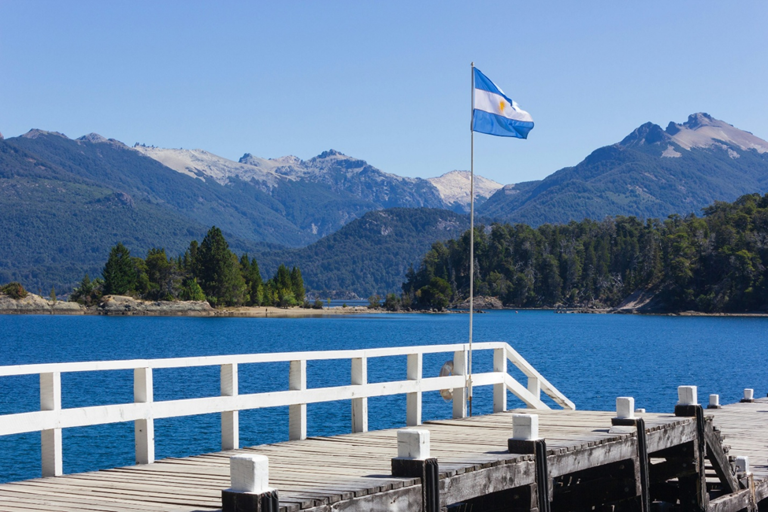
Peter Thiel, the billionaire co-founder of PayPal and Palantir, is reportedly spending more time in Argentina, adding to a growing trend among wealthy Americans looking for a backup plan outside the United States.
But access to the files reveals Russian operatives, Jeffrey Epstein, Peter Thiel, Jeff Giesea, Mark Zuckerberg, Steve Bannon, Mike Flynn, Tom Barrack, Erik Prince, Paul Manafort, Roger Stone, Donald Trump, Donald Trump Jr., and others—all conspiring together in the lead-up to the 2016 election.
From ‘It will hold’ Substack
Argentina, where Mengele lived out his life as a monstrous inhumane Nazi.
Bombshell declassified docs reveal Nazi ‘Angel of Death’ was allowed to live carefree life after Auschwitz horrors: docs
Argentina’s tumultuous journey from a diverse Afro-Argentine enclave to its current status as one of the whitest nations on the continent is a haunting tale of genocide and calculated devastation. This transformation exposes a past of strategic Afro-Argentine suppression through government policies and historical amnesia.
“Blacks Do Not Exist”
Today, many Argentinians hold the erroneous belief that Argentina neither participated in the slave trade nor witnessed the presence of Afro-Argentinians, as if they had left the country “naturally.” Such misconceptions persist despite historical evidence. Former Argentine President Carlos Menem once shockingly declared, “In Argentina, Blacks do not exist, that is a Brazilian problem.”
The prevalent perception within and beyond Argentina is that of a predominantly white European society. Buenos Aires, the nation’s capital, often earns the moniker “Paris of Latin America” in popular culture. However, this image is a product of the ugly racism that systematically erased Afro-Argentinians from the nation’s fabric.
At AWS, the goal is to use just enough liquid to keep servers from overheating, with minimal additional energy (Credit: AWS)
Data centre operators are reducing water waste and energy consumption with closed-loop systems that promise sustainability without sacrificing density
The data centre industry is undergoing a fundamental shift in how it approaches thermal management, driven by the dual pressures of AI-driven density requirements and mounting concerns over resource consumption.
Closed-loop cooling systems, once considered a specialised solution, are rapidly becoming the standard architecture for operators seeking to balance performance with environmental responsibility.
At the heart of this transformation is a simple principle: circulating coolant through sealed systems that eliminate the need for constant water replenishment.
Unlike traditional evaporative cooling, which loses millions of gallons annually through tower operations, closed-loop architectures recirculate fluid continuously, removing dependency on freshwater resources whilst simultaneously enabling far higher rack densities.
The waterless target for data centres
Edged US has positioned waterless cooling at the centre of its expansion strategy. In 2025, the company broke ground on its second Aurora, Illinois facility, a high-density AI data centre designed to save more than 277 million gallons of water annually compared to conventional evaporative approaches. The site has been designed to deploy closed-loop, waterless cooling capable of supporting densities up to 200kW per rack using its ThermalWorks liquid-to-chip system.
air to remove heat indirectly, these architectures capture heat closer to the processor itself, improving thermal transfer efficiency while reducing dependence on high-power airflow systems. Lenovo’s Neptune liquid cooling architecture demonstrates how higher-temperature water loops can support dense AI workloads while reducing overall facility energy consumption. (Source: Lenovo Neptune Liquid Cooling Architecture)
…………
Beyond efficiency, heat itself is starting to gain infrastructure value. Some hyperscale and HPC environments are exploring ways to redirect recovered thermal energy into district heating systems, campus thermal loops, and nearby industrial processes rather than rejecting it entirely
Wind turbines may serve another purpose in modern-day society other than generating power.
As the green energy transition gains momentum around the world, the wind power subsector has seen tremendous growth. However, the recent innovations in wind turbine technology have seen some companies aiming to develop a new purpose for the wind-powered industry.
How has the wind energy sector influenced your life?
How wind power has blown through modern-day society
As the wind energy sector gained traction over the past few decades, the impact it has had on our society has been profound.
Modern offshore wind turbines have become huge structures that are taller than most iconic landmarks. Some wind turbines now reach as high as 918 ft, which is almost as tall as the Eiffel Tower.
The components of wind turbines are getting bigger, too.
The latest wind turbines have blades that can be longer than a football field. And we now know that a single rotation from these massive blades can produce enough energy to power a family of three for a whole week.
But one recent innovation has seen wind turbines performing another crucial purpose as our tech becomes more complex.
The economic and social impact of the renewable energy market is substantial
The vast majority of nations have committed to a clean energy transition away from fossil fuel-based energy production towards a more climate-friendly sector.
The wind power market has become a significant global employer. Recent data has revealed that at the current rate of progression, the wind power sector alone could support roughly 4 million jobs across the world.
But, as we know, the ever-volatile energy market is influenced by a wide range of factors, and the latest impact has come from the need to cool the many AI data centers that big tech companies are building across the world.
So, how can the wind energy subsector play a role in the AI-driven progression currently taking place across the big tech ecosystem? An emblematic tech company has given us a surprising answer to this question.
The AI market will be transformed thanks to Aikido Technologies
Aikido Technologies has recently outlined its plan to construct a floating offshore AI data center that is entirely powered by wind turbines.
This innovative development aims to address the significant issues around the land needed for AI data centers, as well as how to power and cool these remarkably huge and hot data collection centers popping up around the world.
But this innovation aims to harness the energy from wind to power and, more importantly, cool the AI data centers that have become a necessity in the modern world.
How will this new wind turbine impact the AI market
Each system combines a 15-18 MW wind turbine with a standard battery storage system, as well as a 10-12 MW computing system specifically designed to serve the AI sector in one single unit.
The data center makes use of a passive cooling system that transfers the heat generated into the seawater around it. Aikido Technologies has identified several offshore sites that could use the innovation. The first proof-of-concept unit is already working in Norway.
Controversial global enthusiasm for building datacenters raises justifiable fears after watching the trillionaire, Elon Musk, ignore responsibilities of duty of care toward local communities.
In fact, this will be a joint enterprise, Musk tweeted back shortly after, “To be precise, Dell is assembling half of the racks that are going into the supercomputer that xAI is building.”
From other announcements, we know that Dell and Supermicro will build the Grok supercomputer cluster using Nvidia’s latest Blackwell GPU platform, announced in March.
The image accompanying Dell’s tweet showed lines of rack-bound Nvidia servers still in their plastic-wrapped shipping state, which underlines that the project to build the dedicated facility in an unconfirmed location is still in its early stages.
A US regulator ruled on Thursday that Elon Musk’s artificial intelligence company had acted illegally by using dozens of methane gas turbines to power huge datacenters in Tennessee.
xAI has been fighting for a year and a half over truck-sized gas turbines the company had parked near its Colossus 1 and 2 facilities, arguing to local authorities that the electricity-generating turbines were exempt from requirements for air quality permits.
The Environmental Protection Agency (EPA) declared on Thursday that the generators were not exempt. In its ruling, the agency revised the policies around gas turbines, saying that operating the machines still requires air permits even if they are used on a portable or temporary basis, as had been the case.
When xAI first installed the portable turbines at Colossus 1, it took advantage of a local county loophole allowing the operation of generators without permits so long as the machines did not sit in one place for more than 364 days. At one point, up to 35 of these generators were powering Colossus 1. xAI eventually received permits for 15 turbines at Colossus 1 and is now operating 12 permitted machines at the site.
Under the EPA’s new ruling, the permitting for these turbines would fall under federal law. It is unclear how or whether the government will penalize companies who are not in compliance. The EPA spokesperson did not respond to the Guardian’s questions about enforcement.
The ruling is a win for community activists in Memphis who have been battling xAI’s use of the portable turbines as long as the generators have been in use. They say the datacenter, which sits a few miles from historically Black neighborhoods, has been adding extra pollution to already overburdened communities.
“Our communities, air, water and land are not playgrounds for billionaires chasing another buck,” said Abre’ Conner, the director of environmental and climate justice for the NAACP, which initiated a lawsuit against xAI last July saying the unpermitted turbines were violating the Clean Air Act.
,Methane gas turbines pump harmful nitrogen oxides into the air, which are known to cause cancer, asthma and other upper respiratory diseases.
The UK-US pharmaceuticals trade deal could divert up to £45bn from other NHS care to fund higher spending on new medicines, according to a new analysis published in The BMJ.
The paper, by researchers from the University of York, the University of Liverpool and New Zealand’s Christchurch Hospital, estimates preventable deaths in England could reach 229,000 by 2036 without additional NHS funding.
Including the indirect effect on adult social care, that figure rises to 291,000, a toll the authors say would exceed the 137,000 excess deaths recorded in England during the peak of the COVID-19 pandemic.
Here is an extract detailing concerns from the BMJ:
Samuel Cross, Karl Claxton, and Andrew Hill argue that diversion of billions of NHS funding to pay more for new drugs under the UK-US trade deal will harm public health and result in thousands of excess deaths
Health systems worldwide are facing growing pressure from rising pharmaceutical expenditure, ageing populations, and constrained public finances. In publicly funded systems with finite budgets, higher spending in one area inevitably takes away the opportunity to spend elsewhere. This makes decisions about medicine pricing fundamentally decisions about how healthcare resources are allocated, and who the shortfall in funding affects most. This, in health economics is what is known as opportunity cost.
On 1 December 2025, the government announced the UK-US pharmaceuticals deal as a “landmark” to “safeguard medicines access and drive vital investment for UK patients and businesses.”1 The agreement, which secures a 0% tariff on UK pharmaceutical and medical device exports to the US for the next three years, formed part of broader UK-US trade and economic negotiations focused on strengthening bilateral cooperation in strategically important sectors, including life sciences and pharmaceuticals.2
However, it also committed the NHS to substantially higher expenditure on branded medicines over the coming decade through changes to drug pricing arrangements and health technology assessment. Without a corresponding increase in available NHS resources, this will create substantial opportunity costs elsewhere, having a direct effect on population health.
Effect on UK drug pricing
The National Institute for Health and Care Excellence (NICE) evaluates whether new medicines provide sufficient health benefit relative to their cost. NICE generally assesses this using quality adjusted life years (QALYs), which combine gains in survival and quality of life into a single measure. Historically, NICE has operated with cost effectiveness thresholds of around £20 000-£30 000 per QALY gained. This means that the NHS has generally been willing to pay within this range for one additional year of life in full health, although this threshold can be – and often is – breached in exceptional circumstances, such as drugs to treat cancer.3 These thresholds exist because of opportunity cost and represent an attempt to balance the health gains garnered by new medicines against the health likely to be lost elsewhere in the system when resources are displaced.
In March 2026 ministers took powers to instruct NICE to increase the thresholds they use to judge cost effectiveness.4 From April 2026, instead of paying £20 000-£30 000 for every additional QALY gained by using a new medicine, the NHS will now pay £25 000-£35 000 for the same health benefits. The agreement also changes the way health benefits are measured, meaning NICE’s assessment of the QALY benefits offered by new medicines will be higher for the same actual benefit.5
Another mechanism by which NHS drug expenditure is controlled is the voluntary scheme for branded medicines pricing, access, and growth (VPAG). This agreement between the pharmaceutical industry and the UK government is designed to limit growth in NHS expenditure on branded medicines through industry rebate payments when spending exceeds agreed targets. The rate of increase in the prices of new medicines is linked to the amount repaid to the NHS by drug companies, discouraging price inflation. In 2025 the rebate rate was 23%; under the new agreement this has been cut to 14.5%.6
These changes, alongside the government’s commitment to increase expenditure on new medicines from 0.3% to at least 0.6% of gross domestic product (GDP) in 2036 without corresponding increases in available NHS expenditure, raise serious concerns over the population health costs.7 The impact assessment undertaken by the Department of Health and Social Care (DHSC) to assess these costs has not been made public, despite requests.8 Nonetheless, it is now possible to make an accurate but conservative assessment of the additional costs of this deal to the NHS and the population cost NHS patients will face.
Estimating the financial costs of the deal
This deal commits government to increasing expenditure on new medicines from 0.3% to at least 0.6% of GDP in 2036, with interim targets for expenditure of 0.35% of GDP in 2028 and 0.4% of GDP in 2030.7 Assuming these targets are met and using the Office for Budgetary Responsibility’s (OBRs) long term forecast of real GDP growth (1.5%), the additional annual costs to the English NHS will be at least £1.3bn in 2028 (£25m per week), and £8.8bn in 2036 (£170m per week).9Figure 1 shows the estimated additional annual costs over the 11 years of the deal. The cumulative additional cost will be £2.6bn by the end of 2028 and £44.7bn by the end of 2036. Costs are even higher if the impact on publicly funded adult social care is also considered – modelling of English local authority data indicates that every £1bn the NHS must find to fund this deal will increase the costs of adult social care by £118m because of increases in morbidity and mortality.10








![Israel's Finance Minister Bezalel Smotrich speaks to reporters about settlements expansion that would split East Jerusalem from the occupied West Bank [File: Ronen Zvulun/Reuters]](https://img-s-msn-com.akamaized.net/tenant/amp/entityid/AA27k047.img?w=768&h=512&m=6&x=445&y=128&s=220&d=220 "Israel's Finance Minister Bezalel Smotrich speaks to reporters about settlements expansion that would split East Jerusalem from the occupied West Bank [File: Ronen Zvulun/Reuters]")












You must be logged in to post a comment.