The End Game? End for whom?

Last night, Russia bombarded Ukraine. Each night, since so called Peace Talks, Russia exceeds the intensity.

Lev Parnas reports:

Putin unleashed a record onslaught across Ukraine — here’s what happened.:

  • 614 aerial assets launched:
    • 574 Shahed drones & decoys
    • 4 Kinzhal missiles
    • 2 Iskander ballistic missiles
    • 19 Kh-101 cruise missiles
    • 14 Kalibr cruise missiles
    • 1 unidentified missile from Crimea
  • Ukraine’s air defense destroyed or suppressed 577 targets—an incredible feat, but still not enough to prevent devastation. Impacts were recorded in 11 locations, including:
  • Zakarpattia (Mukachevo): missile strike on an enterprise, 12 injured.
  • Lviv: missiles and drones set homes, cars, and buildings ablaze. At least 1 killed, 3 injured.
  • Zaporizhzhia: industrial sites damaged, shockwaves shattering windows.
  • Dnipropetrovsk region: 18 drones and 2 missiles intercepted, but local infrastructure destroyed, civilians injured.

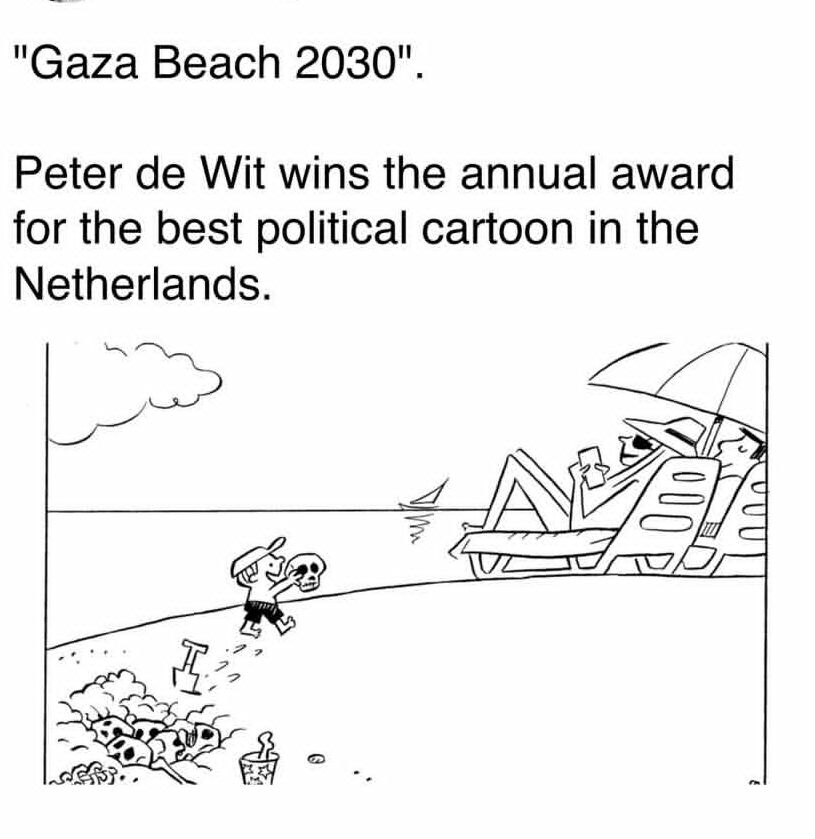
No outcry from the Trump administration, and in Gaza, the same silence as the IDF move into Gaza City, where exhausted and starving Gazans have no energy or ideas where to flee when told to evacuate.

News|Israel-Palestine conflict

Israel pounds Gaza, killing 81, as it begins assault to seize Gaza City

Attacks come as Israeli-induced famine grips the besieged Strip amid calls for Israel to accept a mediated truce.

Gaza
Palestinians rush for cover as smoke billows after an Israeli strike on a building in Jabalia in the northern Gaza Strip [Bashar Taleb/AFP]

Published On 20 Aug 202520 Aug 2025

At least 81 Palestinians have been killed in Gaza by Israeli attacks and forced starvation since dawn as the Israeli military said it had begun the first stages of its planned assault to seize the enclave’s largest urban centre, Gaza City, where close to a million people remain in perilous conditions.

Three other Palestinians starved to death in the besieged enclave on Wednesday, bringing the total count of hunger-related deaths to 269, including 112 children.

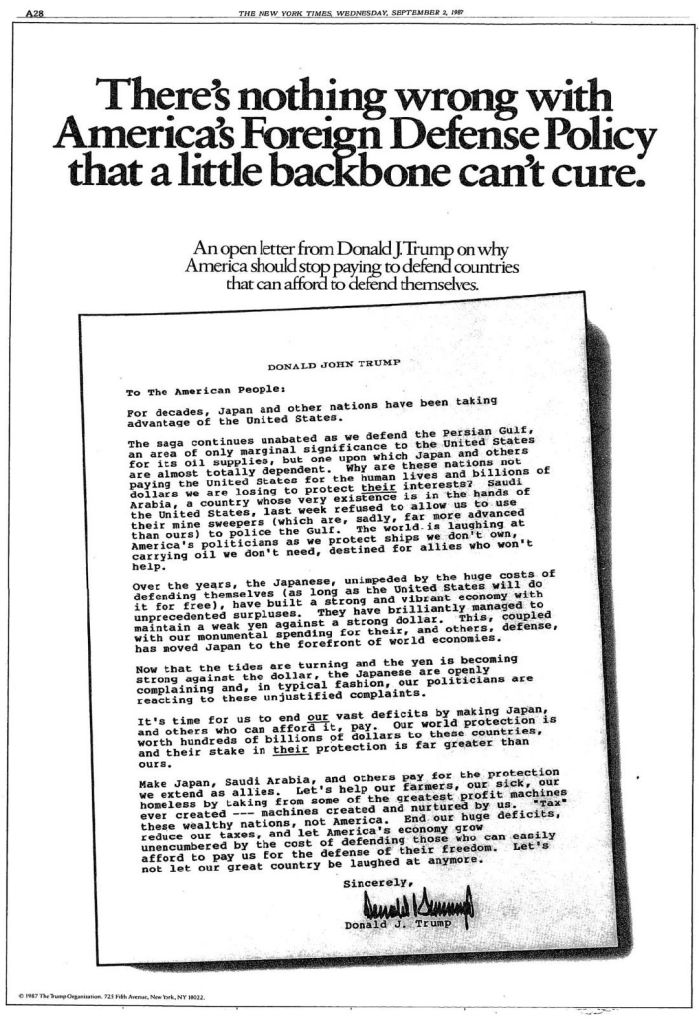
How many decades do we need to go back to find influential Jewish Americans guiding Netanyahu to his fulfillment of a carefully constructed plan? Maybe this is one clue?

A Clean Break: A New Strategy for Securing the Realm explained

A Clean Break: A New Strategy for Securing the Realm (commonly known as the “Clean Break” report) is a policy document that was prepared in 1996 by a study group led by Richard Perle for Benjamin Netanyahu, the then Prime Minister of Israel.[1] The report explained a new approach to solving Israel‘s security problems in the Middle East with an emphasis on “Western values.” It has since been criticized for advocating an aggressive new policy including the removal of Saddam Hussein from power in Iraq and the containment of Syria by engaging in proxy warfare and highlighting its possession of “weapons of mass destruction”. Certain parts of the policies set forth in the paper were rejected by Netanyahu.[2] [3]

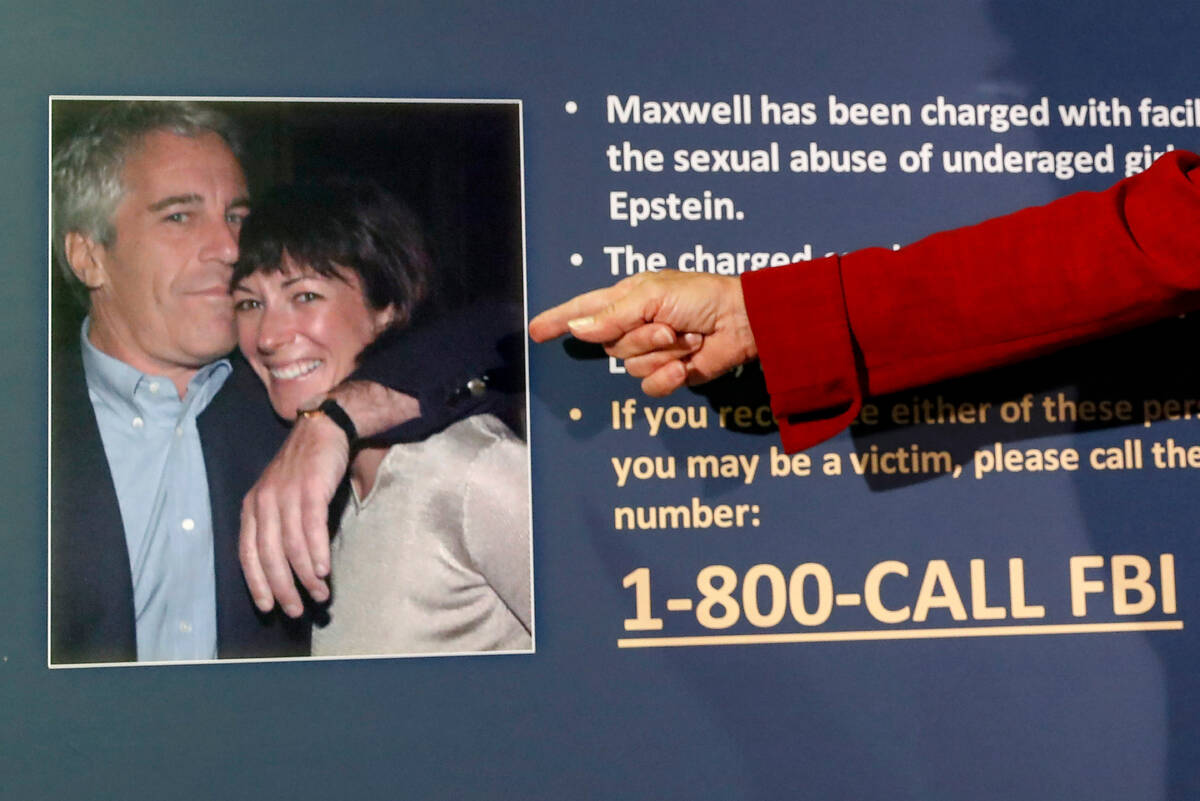
And the Putin and Trump close ties may also go back to when Trump also had a close friendship with Jeffery Epstein.

A Russian asset: Trump’s policy behavior confirms evidence he was groomed by the Kremlin since the 1980s

Posted by Insights | Mar 8, 2025

The “Kyiv Independent” published an explosive interview on February 26 that torched any lingering doubt about President Donald Trump’s deep ties to Russian intelligence.

Veteran journalist Craig Unger has tracked Trump’s relationships with Moscow for years He laid out evidence that Trump was carefully groomed as a Russian asset beginning in the 1980s. Less than a week after the bombshell report, Trump used his platform at the United Nations to dismiss Ukraine’s pleas and embrace Vladimir Putin’s narrative on Eastern Europe.

His statements cemented the idea that a decades-long foreign plot had successfully infiltrated the Oval Office, transforming the United States into a vessel for Moscow’s ambitions

https://www.milwaukeeindependent.com/explainers/russian-asset-trumps-policy-behavior-confirms-evidence-groomed-kremlin-since-1980s/

And in the 1990s:

In 1992, Florida businessman George Houraney organized a special event at Trump’s exclusive Mar-a-Lago resort, flying in 28 “calendar girl” contestants for a pre-competition VIP party. Houraney had partnered with Trump to host events at some of the casinos owned and operated by Trump, and expected a full guest list of elite partiers. However, to his dismay, Trump had only invited Epstein to attend the event alongside him.

https://lawandcrime.com/high-profile/top-5-takeaways-from-latest-look-at-the-donald-trump-jeffrey-epstein-connection/

Posted in anthropocene | Tagged , , , , , , , , , , , , , , , , , , , , | Leave a comment

Lawfare

I just found out about an Atlantic article, written in May of this year, by the great Judge Luttig, about the first 100 days of the Trump administration.

I am reproducing it here:

The End of Rule of Law in America

The 47th president seems to wish he were king—and he is willing to destroy what is precious about this country to get what he wants.By J. Michael Luttig

In a photo-illustration, Trump walks down stairs while the Capital building is scrambled up behind him.
Photo-illustration by Alma Haser. Source: Chip Somodevilla / Getty.

May 14, 2025

0:0040:29

Listen to more stories on the Noa app.

Updated at 10:45 a.m. ET on May 15, 2025

The president of the United States appears to have long ago forgotten that Americans fought the Revolutionary War not merely to secure their independence from the British monarchy but to establish a government of laws, not of men, so that they and future generations of Americans would never again be subject to the whims of a tyrannical king. As Thomas Paine wrote in Common Sense in 1776, “For as in absolute governments the king is law, so in free countries the law ought to be king; and there ought to be no other.”

Donald Trump seems also not to understand John Adams’s fundamental observation about the new nation that came into the world that same year. Just last month, an interviewer from Time magazine asked the president in the Oval Office, “Mr. President, you were showing us the new paintings you have behind us. You put all these new portraits. One of them includes John Adams. John Adams said we’re a government ruled by laws, not by men. Do you agree with that?” To which the president replied: “John Adams said that? Where was the painting?”

When the interviewer pointed to the portrait, Trump asked: “We’re a government ruled by laws, not by men? Well, I think we’re a government ruled by law, but you know, somebody has to administer the law. So therefore men, certainly, men and women, certainly play a role in it. I wouldn’t agree with it 100 percent. We are a government where men are involved in the process of law, and ideally, you’re going to have honest men like me.”

And earlier this month, a television journalist asked Trump the simple question “Don’t you need to uphold the Constitution of the United States as president?” Astonishingly, the president answered, “I don’t know.” The interviewer then asked, “Don’t you agree that every person in the United States is entitled to due process?” The president again replied, “I don’t know.”

This is not a man who respects the rule of law, nor one who seeks to understand it.

Thus far, Trump’s presidency has been a reign of lawless aggression by a tyrannical wannabe king, a rampage of presidential lawlessness in which Trump has proudly wielded the powers of the office and the federal government to persecute his enemies, while at the same time pardoning, glorifying, and favoring his political allies and friends—among them those who attacked the U.S. Capitol during the insurrection that Trump fomented on January 6, 2021. The president’s utter contempt for the Constitution and laws of the United States has been on spectacular display since Inauguration Day.

For the almost 250 years since the founding of this nation, America has been the beacon of freedom to the world because of its democracy and rule of law. Our system of checks and balances has been strained before, but democracy—government by the people—and the rule of law have always won the day. Until now, that is. America will never again be that same beacon to the world, because the president of the United States has subverted America’s democracy and corrupted its rule of law.

Until Trump exits public life altogether, it cannot be said either that America is a thriving democracy or that it has a government “of laws, not of men.”

History has already documented Trump’s subversion of America’s democracy through his attempt to overturn the results of the 2020 election, his emphatic and steadfast repudiation of the fact that he tried to steal the presidency from the American people, and his perverted denial that January 6 was one of the darkest days in American history.

Now, in the first few months of his second administration, Trump has proved himself an existential threat to the rule of law in America.

When Trump again assumed the presidency in January, he—like every American president before him—swore an oath to faithfully execute the laws of this nation, as commanded by the Constitution. In the short time since, Trump hasn’t just refused to faithfully execute the laws; he has angrily defied the Constitution and laws of the United States. In America, where no man is above the law, Trump has shown the nation that he believes he is the law, even proclaiming on social media soon after assuming office that “He who saves his Country does not violate any Law.”

From the moment he entered the White House on January 20, 2025, Trump has waged war against the rule of law. He not only instigated a worldwide economic crisis with his hotheaded, unlawful tariffs leveled against our global trading partners and our enemies alike; he deliberately provoked a constitutional crisis with his frontal assault on the federal judiciary, the third and co-equal branch of government and guardian of the rule of law—grabbing more and more power for nothing but power’s sake.

On his first day back, foreshadowing his all-out assault on the rule of law, Trump pardoned or commuted the sentences of 1,200 January 6 rioters. Soon, he began to persecute his political enemies—of whom there are now countless numbers—and to fire the prosecutors for the United States who attempted to hold him accountable for the grave crimes against the Constitution that he committed after losing the 2020 election.

Also within those first 100 days, the FBI arrested the Wisconsin state judge Hannah Dugan in her Milwaukee courthouse on federal criminal charges that she was “obstructing or impeding a proceeding before a department or agency of the United States” and “concealing an individual to prevent his discovery and arrest,” because she invited an undocumented immigrant appearing before her on misdemeanor charges to exit her courtroom by way of the jury door rather than the front door of the courtroom. The evidence, at least as revealed so far, does not come close to supporting these charges.

The arrest and prosecution of judges on such specious charges is where rule by law ends and tyranny begins. The independent judiciary is the only constraint of law on a president. It is the last obstacle to a president with designs on tyrannical rule.

Appearing on Fox News, the attorney general of the United States, Pam Bondi, defended the evidently unlawful arrest: “What has happened to our judiciary is beyond me,” she said. The judges “are deranged, is all I can think of. I think some of these judges think that they are beyond and above the law. They are not, and we are sending a very strong message today if you are harboring a fugitive … we will come after you and we will prosecute you. We will find you.”

No, Ms. Bondi, our judges do not think they are above the law, and no, judges are not deranged. They are simply upholding their oath to support and defend the Constitution of the United States—the same oath you took.

It is now entirely foreseeable that arrests of judges will occur in the federal courts across the country as well. To read the criminal complaint and related FBI affidavit that led to Judge Dugan’s arrest is to understand at once that neither the state courts nor the federal courts could ever hope to administer justice if the spectacle that took place in Judge Dugan’s courthouse on April 18 was to occur in state and federal courthouses across the country.

It’s impossible to imagine that the federal government could ever prove the charges against Judge Dugan. But that was not the point of the FBI’s arrest.

Only hours after Dugan’s arrest, the public learned that the Trump administration had deported a 2-year-old American and the child’s mother and sister to Honduras, as the child’s father frantically tried to stop the unlawful deportation. The detention and deportation of the child “is without any basis in law and violates her fundamental due process rights,” a petition filed on her behalf said. Federal Judge Terry A. Doughty, who was appointed by Trump, ruled that “it is illegal and unconstitutional to deport” a U.S. citizen, and set a hearing for May 16 because of his “strong suspicion that the government just deported a U.S. citizen with no meaningful process.”

The rule-of-law casualties of these presidentially provoked national crises are mounting by the day. America cannot withstand three-and-a-half more years of this president if his first few months are a harbinger of what lies ahead.

Trump has spoiled for this war against the federal judiciary, the Constitution, and the rule of law since January 6, 2021. He has repeatedly vowed to exact retribution against America’s justice system for what he falsely maintains was the partisan “weaponization” of the federal government against him.

No one other than Trump and his most sycophantic supporters believes that the government’s attempts to hold him and others accountable for their actions that day amount to “weaponization.” With the world as witness, Trump attempted to thwart the peaceful transfer of power—committing perhaps the gravest constitutional crime that a president could ever commit. The United States had no choice but to prosecute him for those crimes, lest he be allowed to make a mockery of the Constitution of the United States.

It is Trump who is actually weaponizing the federal government against both his political enemies and countless other American citizens today.

Consider his attempts to ruin Chris Krebs, the former Cybersecurity and Infrastructure Security Agency chief who in November 2020 refused to endorse the president’s lies that the election had been rigged against him. Trump has now directed the Department of Justice to investigate Krebs—for what, who knows?

Trump is supremely confident, though deludedly so, that he can win this war against the judiciary and the rule of law, just as he was deludedly confident that he could win the war he instigated against America’s democracy after the 2020 election.

The Declaration of Independence, referencing King George III of Britain, reads, “A prince, whose character is thus marked by every act which may define a tyrant, is unfit to be the ruler of a free people.” Order after order issued by this tyrannical president has been blatantly unconstitutional or otherwise illegal. Trump has provoked a global economic crisis with his usurious tariffs, for which he does not have authority under the Constitution and laws of the United States, and he has provoked a constitutional crisis with his defiance of a direct order from the Supreme Court—to return Kilmar Abrego Garcia to America—and orders from other lower federal courts that he is bound by the Constitution to follow and enforce. He has viciously attacked judges, putting their safety and that of their families at risk, and he has already called for the impeachment of a federal judge who ruled against him and his administration, drawing rebuke from the chief justice of the United States (Trump’s sidekick, Elon Musk, has called for the impeachment of many more).

Tying the nation’s judiciary up in Gordian knots, Trump has gleefully stymied the federal courts with the sheer volume of his unlawful actions. To date, more than 200 legal challenges have been filed against the administration since he returned to the White House, most of which have already been preliminarily, if not finally, successful.

As Trump continues to ravage and usurp the constitutional powers of the Congress of the United States, his adoring Republican Congress has predictably been conspicuously absent.

Only the Supreme Court is left now to rein in this president’s lawlessness, and although the Court is making some limited efforts in that direction, it is already apparent that not even that institution can stop Donald Trump. He will ignore even the Supreme Court whenever he wants.

As Trump turns the federal government of the United States against Americans and America itself, the bill of particulars against him is already longer than the Declaration of Independence’s bill of particulars against King George III and the British empire.

Donald Trump holds up an executive order

Anna Moneymaker / Getty

For not one of his signature initiatives during his first 100 days in office does Trump have the authority under the Constitution and laws of the United States that he claims. Not for the crippling global tariffs he ordered unilaterally; not for his unlawful deportations of hundreds of immigrants to the Terrorism Confinement Center (CECOT), El Salvador’s squalid maximum-security prison; not for his deportation of U.S. citizens to Honduras; not for his defiantly corrupt order from the Great Hall of the Department of Justice to weaponize the department against his political enemies; not for his evil executive orders against the nation’s law firms for their representation of his political enemies and clients of whom he personally disapproves; not for his corrupt executive orders against honorable American citizens and former officials of his own administration, Chris Krebs and Miles Taylor, a former Homeland Security chief of staff who dared to criticize Trump anonymously during his first term; not for his unlawful bludgeoning of the nation’s colleges and universities with unconstitutional demands that they surrender their governance and curricula to his wholly owned federal government; not for his threatened revocation of Harvard University’s tax-exempt status; not for his impoundment of billions of dollars of congressionally approved funds or his politically motivated threats to revoke tax exemptions; not for his attempt to alter the rules for federal elections; not for his direct assault on the Fourteenth Amendment’s birthright-citizenship guarantee; not for his mass firings of federal employees; not for his empowerment of Musk and DOGE to ravage the federal government; not for his threats to fire Federal Reserve Board Chairman Jerome Powell; not for his unconstitutional attacks on press freedoms; and finally, not for his appalling arrest of Judge Dugan.

Amid the ocean of unconstitutional orders, Donald Trump’s executive orders targeting some of the most prestigious law firms in the country because these firms represented or employed Trump’s personal enemies in the past are the most sinister and corrupt, which is saying something.

Some of the firms—Paul WeissLatham & WatkinsSkadden, Arps, Slate, Meagher & FlomKirkland & Ellis; and Simpson Thacher & Bartlett—cut “deals” to avoid the president’s persecution. In doing so, they shamefully sold out their own lawyers, clients, and the entire legal profession, including the handful of courageous law firms—such as WilmerHale, Perkins Coie, Jenner & Block, and Susman Godfrey—that rightly and righteously decided to fight the president instead. It is the sworn duty of all American lawyers to denounce the president’s lawlessness, not to ingratiate themselves to him.

The utter unconstitutionality of these executive orders is perfectly captured by the following remarkable paragraph from Perkins Coie’s brief filed against the Trump administration by the legendary Washington law firm Williams & Connolly. I would venture to say there has never been a paragraph like this written in a brief before a federal court in the 235 years of the federal courts’ existence, every word of the paragraph indisputably correct.

Because the Order in effect adjudicates and punishes alleged misconduct by Perkins Coie, it is an unconstitutional violation of the separation of powers. Because it does so without notice and an opportunity to be heard, and because it punishes the entire firm for the purported misconduct of a handful of lawyers who are not employees of the firm, it is an unconstitutional violation of procedural due process and of the substantive due process right to practice one’s professional livelihood. Because the Order singles out Perkins Coie, it denies the firm the equal protection of the laws guaranteed by the due process clause of the Fifth Amendment. Because the Order punishes the firm for the clients with which it has been associated and the legal positions it has taken on matters of election law, the Order constitutes retaliatory viewpoint discrimination and, therefore, violates the First Amendment rights of free expression and association, and the right to petition the government for redress. Because the Order compels disclosure of confidential information revealing the firm’s relationships with its clients, it violates the First Amendment. Because the Order retaliates against Perkins Coie for its diversity-related speech, it violates the First Amendment. Because the Order is vague in proscribing what is prohibited “diversity, equity and inclusion,” it violates the Due Process Clause of the Fifth Amendment. Because the Order works to brand Perkins Coie as persona non grata and bar it from federal buildings, deny it the ability to communicate with federal employees, and terminate the government contracts of its clients, the Order violates the right to counsel afforded by the Fifth and Sixth Amendments.

And the same can be said for all of Trump’s executive orders targeting the nation’s law firms, lawyers, and legal profession. They are manifestly unconstitutional, and every single federal court to consider them has immediately stayed their implementation over the defiant, contemptuous arguments made by Department of Justice lawyers.

Last month, a federal judge blocked Trump from punishing Susman Godfrey, calling the retribution campaign Trump has waged from the White House against the nation’s top law firms “a shocking abuse of power.” The judge said the order was nothing but a “personal vendetta.” Other federal judges have blocked Trump’s executive orders targeting Jenner & Block and WilmerHale.

The federal judge who initially heard the challenge to the Perkins Coie executive order said at the time that Trump’s order sent “chills down my spine.” Earlier this month, the judge finally ruled that the order is unconstitutional and permanently enjoined its enforcement, admonishing Trump and reminding the country that “eliminating lawyers as the guardians of the rule of law removes a major impediment to the path to more power” for the president. The judge praised Perkins Coie and the other firms that have challenged Trump’s corrupt abuse of power: “If the founding history of this country is any guide, those who stood up in court to vindicate constitutional rights and, by so doing, served to promote the rule of law, will be the models lauded when this period of American history is written.” In blistering criticism for the firms that sold out to Trump rather than fight him, she wrote, quoting an amicus brief from the case, that when lawyers “are apprehensive about retribution simply for filing a brief adverse to the government, there is no other choice but to do so.”

No court in the land will ever uphold any of these executive orders, and Trump knows that. He knows he need not win any of these cases in court to achieve what he wants. He will ruin the lives and livelihoods of lawyers and other American citizens and upend these institutions long before the courts render their final decisions on these orders. That’s his whole point.

The president has provoked a constitutional crisis by defying orders of the federal courts in his efforts to send undocumented immigrants overseas.

To justify his mass deportations, the president has invoked the Alien Enemies Act. But he does not have the authority under that law to deport immigrants. He has done so nonetheless, and without even a thought of providing the deportees the due process to which they are constitutionally entitled. We already know that some of the immigrants were deported unlawfully.

Originally part of the Alien and Sedition Acts of 1798, the Alien Enemies Act authorizes a president to deport foreign nationals from countries with which the United States is at war or that have invaded (or threatened to invade) the United States. The president claims that the U.S. has been “invaded” by undocumented immigrants, justifying their immediate deportation without due process of law.

Nearly every lower federal court to address this wartime law’s applicability has rejected Trump’s reliance on this law for his illegal deportations. Recently, a federal court in Texas roundly rejected Trump’s argument that alleged members of the Venezuelan gang Tren de Aragua could be deported on the authority of the Alien Enemies Act, finding that the “plain, ordinary meaning” of the law’s requirement of an “invasion” of or a “predatory incursion” into the United States refers to an invasion or incursion by military forces. Tren de Aragua is obviously not a military power or force, the court said.

Earlier this month, two other federal courts, in Colorado and New York, also stopped the administration from deporting immigrants under the Alien Enemies Act. The federal court in Colorado said there was no foreign nation or government invasion or predatory incursion to justify the administration’s deportations. “Respondents’ arguments are threadbare costumes for their core contention: ‘As for whether the Act’s preconditions are satisfied, that is the President’s call alone; the federal courts do not have a role to play.’” Said the judge, “This sentence staggers. It is wrong as a matter of law and attempts to read” Article III “out of the Constitution.”

The Supreme Court was highly unlikely ever to uphold Trump’s deportations under the Alien Enemies Act, even before the White House Deputy Chief of Staff Stephen Miller last Friday announced in a blatantly anti-constitutional statement that Trump is “actively looking at” suspending the Constitution’s writ of habeas corpus.

The very purpose of the “privilege” of the writ of habeas corpus is to provide these deportees and detainees the right to challenge their deportations and detentions. Trump doesn’t have the power to suspend habeas corpus. Article I of the Constitution provides that the writ of habeas corpus “shall not be suspended, unless … in Cases of Rebellion or Invasion.” Illegal immigration to the U.S. is not even arguably an “invasion” that would justify suspension of the writ of habeas corpus. The Supreme Court is now on clear notice of Trump’s definition of rebellions and invasions—and will have to take this into account when he uses the same logic to justify his patently unconstitutional deportations.

The case of Kilmar Abrego Garcia illustrates perfectly why Trump’s deportations run afoul of the Constitution. In March, Abrego Garcia was arrested, mistakenly deported to El Salvador, and imprisoned. He remains imprisoned in El Salvador to this day, despite a direct order from the Supreme Court that Trump “facilitate” his release and return him to the United States. As a Maryland federal judge, Paula Xinis, put it five days after the Court’s ruling, “To date, what the record shows is that nothing has been done. Nothing.”

Late last month, in an interview with ABC News, the president acknowledged that he “could” get Abrego Garcia back. He just refuses to do so. Abrego Garcia could well spend the remainder of his life unconstitutionally imprisoned in El Salvador because of Trump’s defiance of the Supreme Court and the Constitution.

Trump continues to lambaste the federal courts for enforcing the Constitution, pronouncing that he should be able to deport all undocumented immigrants without any trial to determine whether their deportation would be in violation of the Constitution. “I hope we get cooperation from the courts, because you know we have thousands of people that are ready to go out, and you can’t have a trial for all of these people,” Trump told reporters in the Oval Office. “It wasn’t meant. The system wasn’t meant. And we don’t think there’s anything that says that.”

“We’re getting them out, and a judge can’t say, ‘No, you have to have a trial. The trial is going to take two years,’” Trump went on. “We’re going to have a very dangerous country if we’re not allowed to do what we’re entitled to do.”

He couldn’t be more wrong. The system actually was “meant” to provide due process, and it is of course the Constitution of the United States that says so. It is for that reason that judges can indeed say, “You have to have a trial,” and presidents are supposed to listen. That’s what rule by law, not by men, means.

A person holds up a small copy of the Constitution of the United States

Samuel Corum / Getty

Trump’s unilateral ordering of massive tariffs on our global trade allies and enemies alike has been his most stupendous initiative and his most colossal failure.

By presidential edict on April 2, the president declared that foreign trade and economic practices have created a national emergency, and he imposed tariffs ostensibly under the authority of the International Emergency Economic Powers Act of 1977. No previous president has ever invoked this national-emergency law to order tariffs, let alone the kind of massive, sweeping global tariffs of unlimited duration that Trump has attempted.

His unconscionable tariffs immediately roiled the markets of the world, slowing growth and hastening inflation and recession domestically and around the globe. The United States is now weeks into a global trade war with no end in sight as the world’s economies languish.

The Constitution grants Congress the sole authority to regulate foreign commerce and levy taxes, including import tariffs. Congress has delegated to the president the power to impose limited tariffs unilaterally and adjust them in limited instances when such tariffs are urgently necessary to protect the nation’s security. But the present circumstances do not even arguably qualify as an “emergency” under the IEEPA.

As the Stanford law professor and former U.S. Court of Appeals Judge Michael McConnell has said, “No statute expressly authorizes the president to impose tariffs for the nonemergency purposes of raising revenue, improving our long-term balance of trade or winning unrelated concessions on miscellaneous issues.”

The president is already facing a plethora of lawsuits from states, businesses, and conservative political groups challenging his sweeping tariffs, correctly arguing that the president has usurped Congress’s power to levy taxes and tariffs. These lawsuits will almost certainly prevail, if for no other reason than the Supreme Court recently held that, as to “major questions,” a law must explicitly authorize a president’s actions. The IEEPA, which never mentions the word tariff, does not even begin to explicitly authorize the president’s tariffs.

When Powell, the Federal Reserve chair, predicted that Trump’s unlawful tariffs would cause “higher inflation and slower growth,” Trump needed a scapegoat as always and threatened to fire him. Trump knows he is forbidden by statute and by the Supreme Court’s 1935 decision in Humprey’s Executor from firing Powell except for cause.

“Powell’s termination cannot come fast enough!” Trump posted on Truth Social. Later that day, he repeated his view from the Oval Office. “If I want him out, he’ll be out of there real fast, believe me,” the president said.

On the heels of this presidential outburst, White House Deputy Chief of Staff Stephen Miller’s America First Legal Foundation was even so brazen as to sue Chief Justice John Roberts, the Judicial Conference of the United States, and the Administrative Office of the United States Courts in a shocking attempt to seize control of the coordinate branch of government. America First Legal Foundation is arguing that the Judicial Conference and the Administrative Office are executive-branch agencies that “must be overseen by the President, not the courts.”

The Judicial Conference is the policy-making arm of the federal judiciary, and the Administrative Office runs the federal court system. Neither executes anything nor supports any executive function. Neither is even arguably an executive-branch agency controllable by the president. This lawsuit, like so many actions taken by this president, is just one more reprehensible attempt to threaten and intimidate the federal judiciary.

The Framers of the Constitution of the United States may never have foreseen the multitudinous independent agencies and departments of today’s federal government, let alone the Judicial Conference or the Administrative Office, but I am certain of this: If they had, they would have forbidden that any of these governmental organizations, and especially the Federal Reserve, the Judicial Conference, and the Administrative Office of the Courts, would ever come under the control of any president as irresponsible as this one.

Knowingly or not, Trump has staked much of his presidency on the so-called unitary executive theory, which would give him absolute control over these institutions and the entire federal government, including the independent departments and agencies, a stake that is entirely dependent upon the Supreme Court overruling Humphrey’s Executor. By insisting that he has the power to fire Powell and in his reckless threats to do so, and through Miller’s threatening lawsuit, Trump has already made the most compelling argument possible that the Supreme Court should never overrule Humphrey’s Executor.

Other priority initiatives of this administration—Trump’s attacks on existing federal programs, federal elections, colleges and universities, birthright citizenship, and press freedoms—are just as unlawful.

On January 20, the president signed executive orders freezing foreign aid and funding for energy programs. Since then, he has prevented billions of dollars of congressionally appropriated funds from being disbursed in violation of the Impoundment Control Act of 1974, which limits the president’s power to hold back (that is, impound) appropriated funds. The president once called the Impoundment Control Act “clearly unconstitutional” and “a blatant violation of the separation of powers” but has now impounded billions upon billions of dollars in appropriated funds on the authority of that law.

Presidents can’t just declare laws unconstitutional and refuse to enforce them. It is Trump’s impoundment of these appropriated funds that is clearly unconstitutional, not the Impoundment Control Act. It is his impoundments that are a blatant violation of the separation of powers.

Trump’s DOGE wrecking ball suffers from the same constitutional infirmities. As Alan Charles Raul, a former White House associate counsel for President Ronald Reagan, wrote in The Washington Post, “Congress has not authorized this radical overhaul, and the protocols of the Constitution do not permit statutorily mandated agencies and programs to be transformed—or reorganized out of existence—without congressional authorization.” He went on, “The DOGE process, if that is what it is, mocks two basic tenets of our government: that we are a nation of laws, not men, and that it is Congress which controls spending and passes legislation. The president must faithfully execute Congress’s laws and manage the executive agencies consistent with the Constitution and lawmakers’ appropriations—not by any divine right or absolute power.”

Nothing else need be said.

Consonant with this understanding that Trump’s executive order gutting much of the federal government is unconstitutional and otherwise in circumvention of the laws preventing a president from unilaterally reorganizing the federal government, last Friday a federal court ruled that Trump may broadly restructure the federal government in the way he wishes only if Congress authorizes him to do so.

The judge quoted from the earlier landmark case, Youngstown Sheet & Tube Company v. Sawyer: “In the framework of our Constitution, the President’s power to see that the laws are faithfully executed refutes the idea that he is to be a lawmaker. The Constitution limits his functions in the lawmaking process to the recommending of laws he thinks wise and the vetoing of laws he thinks bad. And the Constitution is neither silent nor equivocal about who shall make laws which the President is to execute.”

The court said that the plaintiffs challenging Trump’s executive order and the Office of Management and Budget and DOGE’s implementation of that order are likely to succeed on their claims that Trump’s executive order is beyond his powers and authority, as he “has neither constitutional nor, at this time, statutory authority to reorganize the executive branch,” and temporarily blocked implementation of Trump’s order until further proceedings.

Perhaps most worrying of all is Trump’s unlawful assertion of power over federal elections, power that is constitutionally committed to the states in the first instance and reserved to Congress in the second. Where he has no authority at all, Trump has claimed extraordinary unilateral authority to regulate federal elections, usurping the powers of not only the 50 states but also Congress. Trump’s March 25 executive order flips the constitutional structure on its head.

The federal courts will never allow this unconstitutional power grab. To give the president any power over federal elections would allow a president to change election rules to serve his self-interest and his party. Indeed, the very first federal court to address the matter temporarily blocked key parts of the order in an opinion that is destined to be upheld on appeal. “Our Constitution entrusts Congress and the States—not the President—with the authority to regulate federal elections,” the federal judge Colleen Kollar-Kotelly wrote.

Trump’s attacks on colleges and universities, the free press, and the Fourteenth Amendment’s birthright-citizenship guarantee all likewise contradict the Constitution and laws of the land.

Trump has mercilessly and unlawfully bludgeoned the nation’s colleges, universities, and law schools with lawless order after lawless order. His federal government cannot commandeer higher education’s governance and dictate the viewpoints that are taught at the country’s colleges and universities. The First Amendment zealously guards such decisions from the federal government.

The Constitution categorically forbids the president from wielding the power of the purse (which is not even his to wield) to punish the nation’s institutions of higher education for exercising their First Amendment rights.

When Harvard University called Trump’s hand on his blatantly unconstitutional attack on the nation’s oldest institute of higher education, Trump characteristically doubled down on his lawlessness, withholding billions of dollars more in federal funding from Harvard. Incensed by Harvard’s refusal to submit to his unconstitutional attack, Trump later said the government was going to take away Harvard’s tax-exempt status. “It’s what they deserve!,” he announced on Truth Social.

A federal statute forbids the president from “directly or indirectly” requesting the IRS to “conduct or terminate an audit or other investigation of any particular taxpayer.” Violation of the statute is a crime punishable by fine and imprisonment.

No other president would ever have launched the broadside on the plain command of the Fourteenth Amendment’s birthright-citizenship right that Trump relished launching on his first day in office. Contradicting the clear language of the Fourteenth Amendment, controlling federal statute, and Supreme Court precedent, the president’s order does not simply deny citizenship to children of undocumented immigrants; it denies citizenship to children whose parents are legally present in the United States if they don’t have permanent status when their children are born.

There is not a chance in the world that the Supreme Court will agree with Trump’s assault on the Fourteenth Amendment. Only through a constitutional amendment could the president’s invidious aim be wrought.

Finally, for years now, Trump has pronounced the free press in America “the enemy of the people.” So it was no surprise that the media would be among the first he would target with his unconstitutional edicts. As he has crushed every institution, organization, and U.S. citizen on his road to absolute power, the president’s onslaught against the First Amendment–protected free press has been particularly vile. But as with most else, the federal courts have slapped down Trump in every free-press challenge that has made its way to them. Trump’s vindictive response was to have his Department of Justice announce that it would not hesitate in the future to subpoena reporters’ telephone records and compel their testimony to ferret out and prosecute the leakers in the administration, which unsurprisingly is already leaking like a sieve.

The 47th president of the United States may wish he were a king. But in America, the law is king, not the president.

Donald Trump may wish he could dictate his unconscionable global tariffs; dispense with due process and deport whomever he pleases, citizen and not; and vanish away huge swaths of the federal government without check or rebuke. He may wish he did not have to contend with the First and Fourteenth Amendments, the free press, or the Constitution’s birthright-citizenship guarantee. He may wish he could ignore the Constitution’s elections clauses and run America’s elections from the White House. And he may wish he could intimidate the nation’s lawyers and law firms from challenging his abuse of power and commandeer them to do his personal bidding.

But it is these constitutional obstacles to a tyrannical president that have made America the greatest nation on Earth for almost 250 years, not the fallen America that Trump delusionally thinks he’s going to make great again tomorrow.

After these first three tyrannical, lawless months of this presidency, surely Americans can understand now that Donald Trump is going to continue to decimate America for the next three-plus years. He will continue his assault on America, its democracy, and rule of law until the American people finally rise up and say, “No more.”

From across the ages, Frederick Douglass is crying out that we Americans never forget: “The limits of tyrants are prescribed by the endurance of those whom they oppress.”


This piece has been updated to clarify the attribution of a quote from the Perkins Coie ruling.

About the Author

J. Michael Luttig

J. Michael Luttig is a former federal judge on the U.S. Court of Appeals for the Fourth Circuit.

Posted in anthropocene | Tagged , , , , , , , , , , , , | Leave a comment

9 years after Panama Papers: offshore holdings

I am reproducing an April 2025 update on progress of countries who acted on ICIJ diligent research:

Protesters in Iceland rallied for multiple days in a row in April 2016, holding up red cards for their prime minister who ultimately resigned following revelations of his offshore holdings in the Panama Papers.

Nine years later, the groundbreaking Panama Papers investigation continues to inspire governments around the world to chase badly needed revenue lost offshore to tax evasion schemes.

In recent years, governments have recouped hundreds of millions of dollars more in back taxes and penalties, records show, as a result of the cross-border journalism collaboration led by the International Consortium of Investigative Journalists, along with 100 media partners from five continents, published in April 2016.

The Panama Papers, a trove of more than 11.5 million confidential documents from the Panamanian law firm Mossack Fonseca, were obtained by the German newspaper Süddeutsche Zeitung and shared with ICIJ in a landmark project that put tax evasion on the global public agenda. The confidential files exposed an international web of offshore shell companies created for wealthy clients, including star athletes, top business executives and, most consequentially, heads of state.

The official investigations have yielded a variety of outcomes. Last year, Panama’s courts acquitted 28 people, including Mossack Fonseca co-founder Jürgen Mossack, of money laundering over their alleged role in setting up shell companies used in scandals in Brazil and Germany.

ICIJ’s current tally based on information received from various governments — which included updated amounts and, in some cases, lower amounts as authorities corrected their own figures — stands at $1.3 billion. This recovery figure almost certainly understates the investigation’s true financial impact, as many governments declined to share recent information with ICIJ and its media partners. In some cases, tax authorities disclosed only how many taxpayer audits had been conducted and the money audited, but the governments have not been able to track how much money was actually recouped and whether any payments were for back taxes or fines.

Responding to public information requests filed by the Indian Express, Indian authorities disclosed they had collected more than $17.4 million in tax revenue after examining more than $1.6 billion in previously undisclosed assets in connection with the Panama Papers. Further, Indian tax authorities said they filed 46 criminal prosecution complaints and had conducted searches, seizures and surveys as part of 84 Panama Papers-related cases.

Other countries said they had made additional collections since 2021 when ICIJ published a previous tally of taxes recouped as a result of information published in the Panama Papers. In Sweden, the money recovered exceeded $237 million by mid-2024 — up from just $19.3 million a few years prior. New Zealand had recouped just $410,400 in 2021 and now claims more than $8 million.

Belgium saw the amount it recouped more than double in the last four years from $18.5 million to nearly $42.2 million, while the Netherlands posted an increase of $16.4 million to about $30.6 million. France had added more than $66 million to its total by the end of 2022, which then sat at over $208 million, and Spain has recouped $175.3 million overall.

In some countries, authorities stopped updating such figures or declined to provide them to ICIJ or its media partners. U.S. authorities never shared information.

Lawyer and one of the main defendants in the Panama Paper case, Jürgen Mossack, speaks to reporters upon his arrival at the court of justice in Panama City on April 8, 2024. Image: Martin Bernetti/AFP

Lack of money identification

While several countries set up task forces or commissions in the wake of the Panama Papers, tallying the money recouped can be difficult. Countries’ internal reporting systems don’t always identify specific journalistic investigations as the source for the settlements or fines.

Israel’s Internal Revenue Service reported that “dozens of tax assessments were issued in amounts between hundred thousand and millions of NIS [Israeli shekels] per assessment,” but those cases “were not ‘painted’” to specific investigations, a spokesperson told Shomrim.

In Finland, authorities told ICIJ media partner Yle that a “few million euros” were recovered following ICIJ’s investigations but didn’t provide specific amounts. Last August, Finland’s Nordea Bank agreed to pay $35 million to New York State authorities as part of a money laundering case partly built on Panama Papers findings, according to the New York State Department of Financial Services. Panama Papers reporting revealed the bank had helped hundreds of customers create offshore companies in tax havens.

Accountability

Panama’s new president labels Panama Papers a ‘hoax’ as experts voice concerns about money laundering acquittals

Jul 03, 2024


PRESS FREEDOM

‘It is still dangerous to be a journalist’: Daphne Caruana Galizia’s son reflects on her life and legacy

Jan 12, 2024


In El Salvador, the Attorney General’s Office responded that a record of money the country had gathered as part of criminal complaints related to ICIJ investigations “is not within the scope of competence” of the office. The National Tax Agency of South Korea gave a similar answer to ICIJ partner Newstapa: it does not have any numbers or documents that account for the annual amount of tax collected as a result of journalistic investigations.

Canada provided information on how much money authorities expect to be collected from Panama Papers tax audits (nearly $92 million) — a third of which belongs to the province of Quebec. In total, Quebec tax authorities told La Presse they expected to recover about $42.5 million thanks to the Panama Papers, Paradise Papers and Pandora Papers; they have collected nearly $34.5 million so far.

Other countries do label money recovered as a result of journalistic investigations but don’t differentiate among projects. Italy has recovered $66.4 million tied to ICIJ projects, authorities told L’Espresso. And Ireland collected more than $2.4 million as a result of both the Panama Papers and Paradise Papers.

Tens of thousands turned out to protest in London following the Panama Papers. Image: Kristian Buus/In Pictures via Getty Images Images

Money recovered from other projects

The Panama Papers and the publication of once-secret corporate ownership information in the Offshore Leaks Database rocked governments and tax systems worldwide. The newly available data led some administrations to open money laundering probes. Sweden investigated around 400 individuals and companies linked to the investigation. Australia opened 540 audits and reviews, authorities told the Australian Broadcasting Corporation, while in Canada, over 900 taxpayers were associated with the Panama Papers.

Tax authorities told ICIJ’s media partners in Belgium, France, the Netherlands, Australia, Canada, Chile and Spain they had recouped at least $76.4 million from taxpayers following the publication of the Paradise Papers in 2017 and Pandora Papers in 2021. Several countries told ICIJ partners that cases are ongoing, so this amount may increase as a result of administrative and judicial processes.

Two-thirds of the $76.4 million recouped comes from Spain, where more than $50 million were recovered after authorities in the country investigated 38 taxpayers linked to both ICIJ investigations, El País learned. France has recouped $16.3 million from Paradise Papers, according to Le Monde, while Belgium has collected more than $6.2 million from the Pandora Papers, although the country expects to recover more than $8 million, according to figures collected by Knack.

https://www.icij.org/investigations/panama-papers/hundreds-of-millions-more-dollars-recouped-by-governments-after-icij-investigations/

Note the paragraph re US:

In some countries, authorities stopped updating such figures or declined to provide them to ICIJ or its media partners. U.S. authorities never shared information.

Posted in anthropocene | Tagged , , , , , , , , , , , , , , , , , , , , , , | Leave a comment

Being born after World War Two: friends and foes

On February 9, 1942 crowds gathered at New York City’s pier 88 to witness a spectacle. The largest ocean liner in the world was on fire. Fire fighting efforts successfully contained the fire after five and a half hours of effort, but the effort was in vain. Five hours after the flames were out the stricken vessel rolled onto its side and settled on the bottom of the Hudson.

https://www.newyorkalmanack.com/2014/09/the-sinking-of-the-s-s-normandie-at-nycs-pier-88/

This event had a positive influence on the life of mobster, Lucky Luciano. He had been imprisoned in 1936.

After six years, Luciano’s dark tide began to turn in his favor. It began in February 1942 when the French ocean liner Normandie caught fire and sank in New York harbor while being retrofitted for naval use. Although the cause of the fire ultimately was a welder’s torch, investigators initially suspected enemy sabotage. The course of events that followed led to an unprecedented relationship between law and outlaw.

…………..

How did it all start? Presumably, fear of Nazi sabotage on U.S. shores led to a clandestine collaboration, through intermediaries, between the Navy and New York’s organized crime network.

According to author Thomas Hunt, here is how it started:

“Understanding organized crime’s control of dock unions, ONI (Office of Naval Intelligence) Captain Roscoe C. MacFall, Commander Charles Radcliffe Haffenden and Lieutenant James O’Malley Jr. sought underworld assistance. They approached Frank Hogan, Manhattan district attorney, and Murray I. Gurfein, assistant D.A. in charge of the Rackets Bureau, seeking an introduction to the Mafia.”

…………..

Following the introduction of military and Mob, meetings were held at the Dannemora prison that included Luciano, Meyer Lansky and other visiting parties. Under the pretense of making these meetings more feasible, and by order of New York State Corrections Commissioner John A. Lyons, Luciano was moved to Great Meadow on May 12, 1942. There, Luciano continued to receive visitors such as Frank Costello, Benjamin “Bugsy” Siegel and attorney Moses Polakoff.

………..

In May 1945, citing “invaluable service” provided by his client to the military, particularly in regard to the Allied invasion of Sicily, attorney Moses Polakoff filed an application on behalf of Luciano to the state parole board in Albany. The board’s favorable report made its way to the desk of former prosecutor and now Governor Dewey. On January 3, 1946, the governor signed off on the parole. Luciano had served nine and a half years of a steep 30- to 50-year sentence.

https://themobmuseum.org/blog/the-mystery-of-lucky-lucianos-invaluable-service-to-the-country/

I then read this blog:

https://visupview.blogspot.com/2017/10/goodfellas-hidden-history-of-resorts.html?m=1

He talked about New York mafia activities and the history of Resorts International and Donald Trump and the Taj Mahal casino.

The comments to the author of the blog are interesting. One mentions Semion Mogilevich, who now apparently lives in Moscow in his old age. Supposedly the ‘boss of bosses’. Recently Trump called Putin ‘the boss’

Donald Trump referred to Vladimir Putin as “THE BOSS” in a social media post while discussing nuclear weapons and tensions in the Middle East. This comment was part of a broader discussion about international conflicts and Trump’s views on Putin’s actions. Yahoo Wikipedia

The Red Mafia

Why Russian Crime Lord Semion Mogilevich Lives Up To His Title As ‘The World’s Most Powerful Mobster’

By Marco Margaritoff | Edited By Leah Silverman

Published July 31, 2020

Updated July 30, 2021

He’s been accused of everything from buying an entire airline just for trafficking heroin to selling nuclear weapons, yet somehow Semion Yudkovich Mogilevich lives free.

Semion Mogilevich had been a colossal — and elusive — figure in the international criminal underworld since the 1990s. As the ruthless leader of the so-called Red Mafia of Russia, he has been described as “the world’s most powerful gangster” — and for good reason.

Mogilevich has reportedly had his hands in extortion, large-scale drug trafficking, prostitution, and even nuclear weapons trading. He was at one point considered an existential threat to Israel and Eastern Europe.

Even though he is known as the “Brainy Don” for his bachelor’s degree in economics and financial acumen, Mogilevich did not shy away from violence. He is said to have employed trained Afghanistan war veterans as his enforcers — and they mutilated enemies and associates so severely that other Russian crime groups quietly dissipated.

Born on June 30 or July 6, 1946, in Kiev in the Ukrainian Soviet Union, Semion Yudkovich Mogilevich was raised in the Podol neighborhood by Jewish parents. The ambitious young criminal launched his career in the 1980s by scamming fellow Russian Jews who simply sought to emigrate to Israel or America.

https://allthatsinteresting.com/semion-mogilevich

Mogilevich is still one of 10 Most Wanted criminals:

Fraud by Wire; RICO Conspiracy; Mail Fraud; Money Laundering Conspiracy; Money Laundering; Aiding and Abetting; Securities Fraud; Filing False Registration With the SEC; False Filings With the SEC; Falsification of Books and Records

https://www.fbi.gov/wanted/cei/semion-mogilevich

And Craig Ungar writes about his links to Trump:

As I wrote in House of Trump, House of Putin, U.S. diplomat Scott Kilner described one Raiffeisen affiliate as a front to provide legitimacy to the gas company [Mogilevich] controls, RosUkrEnergo.” And that meant that most of the financing of Trump Toronto likely came from the Mogilevich–Firtash pipeline

I have mentioned him before in previous blogs.

So his life spans 1946 to the present day. He was born when Ukraine was still part of the USSR.

President Trump is a similar age, born born June 14, 1946. Harry S. Truman was President.

Donald Trump’s father was a builder, even building a small apartment only 2 years after leaving school. Donald Trump followed in his father’s footsteps and his name became famous when he developed the Taj Mahal Casino, linked to Resorts International history at the time.

https://www.independent.co.uk/news/world/americas/us-politics/fred-trump-tax-dodge-donald-inheritance-us-president-new-york-real-estate-queens-kkk-a8566421.html

I am also a ‘baby boomer’ like Donald Trump and Migolovich. We were born after the turmoil of World War Two, and maybe World War Three is the bookend to our lives.

After the war:

Many Americans feared that the end of World War II and the subsequent drop in military spending might bring back the hard times of the Great Depression. But instead, pent-up consumer demand fueled exceptionally strong economic growth in the post-war period. The automobile industry successfully converted back to producing cars, and new industries such as aviation and electronics grew by leaps and bounds.

A housing boom, stimulated in part by easily affordable mortgages for returning members of the military, added to the expansion. The nation’s gross national product rose from about $200,000 million in 1940 to $300,000 million in 1950 and to more than $500,000 million in 1960. At the same time, the jump in post-war births, known as the “baby boom,” increased the number of consumers. More and more Americans joined the middle class.

The Military Industrial Complex

The need to produce war supplies had given rise to a huge military-industrial complex (a term coined by Dwight D. Eisenhower, who served as the U.S. president from 1953 through 1961). It did not disappear with the war’s end. As the Iron Curtain descended across Europe and the United States found itself embroiled in a ​Cold War with the Soviet Union, the government maintained substantial fighting capacity and invested in sophisticated weapons such as the hydrogen bomb.

Economic aid flowed to war-ravaged European countries under the Marshall Plan, which also helped maintain markets for numerous U.S. goods. And the government itself recognized its central role in economic affairs. The Employment Act of 1946 stated as government policy “to promote maximum employment, production, and purchasing power.”

The United States also recognized during the post-war period the need to restructure international monetary arrangements, spearheading the creation of the International Monetary Fund and the World Bank — institutions designed to ensure an open, capitalist international economy.

Business, meanwhile, entered a period marked by consolidation. Firms merged to create huge, diversified conglomerates. International Telephone and Telegraph, for instance, bought Sheraton Hotels, Continental Banking, Hartford Fire Insurance, Avis Rent-a-Car, and other companies.

https://www.thoughtco.com/the-post-war-us-economy-1945-to-1960-1148153

………..

Here are a few items related to Resorts International, still a functioning company today after a chequered history.

………million-dollar campaign which led New Jersey voters to change their minds on the subject. In 1974 a referendum to legalize state-operated gambling casinos had been roundly rebuffed by the local citizenry. Two years later, however, a new referendum, providing for privately owned casinos ‘in Atlantic City only,’ was in the works. And the man who brought it to the attention of Resorts, strangely enough, was David Probinsky (formally of the Bahamas and one of Pindling’s disappointed supporters). Probinsky convinced Crosby that the new referendum would pass if Resorts got behind it. When Resorts did, acquiring huge (and moldering) Chalfonte-Haddon Hall Hotel on the Boardwalk, as well as the fifty-six acre tract that had been cleared for ‘urban renewal.’ Resorts told its stockholders that ‘the tract would be developed under an urban renewal plan with hotel, housing and other facilities.’ It didn’t say what those other facilities would be, but it wasn’t hard to guess.”

(Spooks, Jim Hougan, pgs. 410-411)

Resorts Casino Hotel, Atlantic City’s first gambling establishment

The opening of Atlantic City for legalized gambling proved to be a boon for both Resorts International and one of the future owners. He was a rising New York real estate baron who went by the name of Donald J. Trump.

Once Trump dipped his toes into the troubled waters of the gambling industry he would rapidly emerge as one of the premier tycoons of the 1980s. It is not a stretch to say that Atlantic City made Trump a household name –quite literally via his first casino, the Trump Plaza Hotel and Casino, which he built on behalf of Holiday Inn. Trump bought them out in 1984 and there was no looking back from there.


What is of great interest to us here is Trump’s third Atlantic City casino: the Taj Mahal. While now widely associated with Trump, thanks in no small part to it leading to his first bankruptcy, it was not in fact Trump who started the casino. That dubious distinction lies with Resorts International.

The company had begun construction on the Taj Mahal in 1983, but had run into persistent difficulties in finishing construction in the following years. Then, in April 1986, James Crosby died suddenly. This left Resorts in turmoil (allegedly) and Trump stepped in. Trump bought a controlling stake in the company in 1987 and was promptly named its chairman of the board.

Let that sink in for a moment: Donald J. Trump, the current President of the United States, was briefly the chairman of a corporation long suspected of being a CIA front, that had decades-spanning involvement with the Syndicate, numerous “rogue” financiers, various drug and arms traffickers and which owned a vast private intelligence

This is from Company Records:

Public Company
Incorporated: 1958 as Mary Carter Paint Company
Employees: 7,200
Sales: $436.9 million
SICs: 7011 Hotels & Motels; 6719 Holding Companies, Not Elsewhere Classified

And

The company that evolved into Resorts started in 1958 as the Mary Carter Paint Company, which was itself the successor of a company founded in 1908. Initially, Mary Carter Paint grew by acquiring other paint companies, such as the Victor Paint Company, purchased in 1962, and the Atlantic Paint Company, purchased in 1963.

That year, Mary Carter Paint made another acquisition that would have a more significant impact on its future: Bahamas Developers Ltd. To this new interest in properties the company soon added property on the resort of Paradise Island. In December 1967, Mary Carter Paint completed construction of the Paradise Island Hotel and Villas, which would be operated by the Loews Corporation until 1981, and also opened the Paradise Island Casino. Clearly, this property development sideline soon became the company’s main focus, and, accordingly, in May 1968, Mary Carter Paint sold its paint division to Delafield Industries for just over $10 million. As part of the purchase price, Delafield gained the right to the Mary Carter name. Thus, on June 24, 1968, what had been the Mary Carter Paint Company became Resorts International, Inc., a corporation engaged in developing property, as well as owning and operating casinos and resorts.

Another website about Roy Cohn and Donald Trump says this about Resorts International:

By 1986, Resorts founder Jim Crosby was dead, the company had racked up $700 million in debt and construction was just getting started on what, upon completion, would be the largest casino in the world, the Taj Mahal.

Resorts’ new lead executive Jack Davis was hunting for new ownership when Trump appeared on his radar screen.

Resorts International was initially the Mary Carter Paint Company. Over the course of its history, it had been funded by, and employed individuals linked to, the Meyer Lanksy syndicate, which had established Las Vegas’ first resort casino and controlled illegal gambling operations across the US.

Lansky, described as the “financial genius of organized crime,” had relocated his international operations to The Bahamas after the Cuban Revolution forced him out of Havana.

Resorts International established casinos in The Bahamas, at the time one of the earliest examples of an offshore banking secrecy jurisdiction.

The head of Resorts, James Crosby, was friends with Richard Nixon and his close associate and banker, Charles “Bebe” Rebozo. The casino at Paradise Island had been suspected by Congressional Watergate investigators of being used to launder money that was then routed to Nixon’s Committee to Re-Elect the President (CREEP).

Lansky associates, including Moe Dalitz, who had invested with Roy Cohn in Sunrise Hospital, sat on the board of The Bahama’s based Bank of World Commerce (BWC), which IRS officials believed was used to launder criminal proceeds from the United States offshore to Switzerland.[3]

An offshore bank called Castle Bank shared numerous connections to Resorts International. Castle was co-owned by Paul Helliwell, an OSS veteran who served as the paymaster for the CIA’s Cuba operations, and Burton Kanter, an attorney closely associated with the Outfit, the Chicago organized crime syndicate.

[NOTE: This article was edited on 2/12/2025. In the original, it was noted that Resorts International has been alleged to be a CIA front. Despite Resorts’ employment via its subsidiary Intertel of individuals with significant links to law enforcement and intelligence, there is no evidence that Resorts was a CIA front.

This does not mean that Resorts was not involved with elements of the intelligence netherworld, only that direct attribution to the CIA as an institution has never been substantiated.

The original article also indicated that Castle Bank was linked to the CIA. While one of its founders, Paul Helliwell, had previously worked for both OSS and CIA, Castle Bank appears to have functioned as a criminal enterprise. There is no evidence that it was formed by, or was acting under the auspices of, the CIA.

Furthermore, Castle co-founder Burton Kanter appears to have deliberately spread the rumor of the CIA’s involvement in Castle in order to cover up high-level corruption within the Justice Department and to provide a false explanation as to why the conspirators behind Castle weren’t fully investigated. There is no evidence that the CIA killed the investigation.]

https://medium.com/@petergrant_14485/the-death-of-roy-cohn-resorts-international-and-donald-trumps-financial-downfall-8058ddf860ca

As Jim Acosta offered Jeffrey Epstein a ‘sweetheart deal’ after conviction, he was asked why he did that. His reply had been ‘because he is working for intelligence’. Strange how the CIA keep cropping up when investigations reveal likely criminal activity. I wonder why that is…..

Trump and the Taj Mahal:

The assets assigned to the Litigation Trust were claims originally held by the debtor, Resorts International, Inc., against Donald J. Trump and affiliated entities, arising from Trump’s 1988 leveraged buyout of the Taj Mahal Resort.   Upon formation of the Litigation Trust, the litigation claims were assigned to the Trustee. The Plan authorized the Trustee to prosecute the claims against the Trump entities.   The Plan and Litigation Trust Agreement also required the debtor to provide an irrevocable letter of credit in the amount of $5,000,000 to the Litigation Trust to enable it to pursue the litigation claims.

On May 28, 1991, the Trustee entered into an agreement with Trump and his affiliates and the debtor settling the litigation claims on behalf of the Trust’s Unitholders in the amount of $12,000,000, subject to approval by the Unitholders.   Approval was solicited and received by July 15, 1991.   The Settlement Agreement proceeds became assets of the Litigation Trust.

https://caselaw.findlaw.com/court/us-3rd-circuit/1378260.html

Casino.org

And so, back to the importance of the Mafia in the construction industry:

Casinos: A Mafia Playground

When gambling was legalized in Atlantic City in the 1970s, the Mafia didn’t see it as a business opportunity—they saw it as their business. Crime families flooded the industry, using casinos as both cash cows and money-laundering machines. Resorts International, one of the first major casino operators in Atlantic City, had rumored mob ties, with connections to known figures in the Genovese and Gambino families.

Nicky Scarfo, the ruthless boss of the Philadelphia Mafia, practically ruled Atlantic City in the ‘80s. He controlled labor unions, demanded kickbacks from construction firms, and ensured that no casino operated without his blessing. While crackdowns in the ‘90s cleaned up much of this direct control, whispers of organized crime’s lingering hand in Atlantic City’s economy remain even today.

Garbage, Cement, and the “Invisible Tax”

One of the most lucrative rackets for New Jersey’s Mafia families was waste management. If you wanted garbage picked up in North Jersey, chances were you were paying an extra “invisible tax” straight to the mob. The Lucchese family ran one of the most sophisticated operations, controlling garbage collection and landfills through an elaborate system of bribery and threats.

Similarly, the cement industry—integral to the explosion of New Jersey’s urban development—was essentially under Mafia rule for decades. Mob-backed companies won bids for major construction projects, often by intimidating competition or making deals under the table. The result? Everything from high-rises to shopping malls in New Jersey was, in some way, built on the foundation of Mafia influence.

Does the Mafia’s Influence Remain Today?

While law enforcement cracked down hard on organized crime in the late 20th century, completely erasing the Mafia’s impact is nearly impossible. New Jersey still bears the economic and structural remnants of an era when mobsters shaped its landscape.

1. Atlantic City’s Casino Industry – Though cleaned up compared to its past, Atlantic City still has deep ties to the era of mob influence. Some casino land was originally developed through deals brokered by Mafia-backed unions and contractors. Even today, organized crime occasionally resurfaces in money laundering investigations related to gambling.

https://thedigestonline.com/new-jersey/how-mafia-money-built-new-jersey-and-where-you-can-still-see-its-influence/

Posted in anthropocene | Tagged , , , , , , , , , , , , , , , , , , , , , | Leave a comment

Alaska

From Christopher Armitage List of Actions of Trump administration since Jan 2025:

  1. USDA rescinded 2001 Roadless Area Conservation Rule on June 23, 2025, opening 58 million acres across 39 states to logging and road construction, including 9 million acres of Alaska’s Tongass rainforest, 28 million acres in high wildfire risk areas, and land that provides drinking water for 60 million Americans.
  2. Interior Department finalized plan on October 24, 2025 opening entire 1.5-million-acre coastal plain of Arctic National Wildlife Refuge to oil and gas leasing.
  3. Arctic Refuge plan mandates four lease sales over 10 years on sacred Gwich’in Indigenous lands.
  4. Arctic Refuge drilling threatens Porcupine caribou herd birthing grounds in region experiencing Arctic warming 3-5 times faster than global average.
  5. Interior Department proposed on June 2, 2025 eliminating safeguards for 13 million acres of “special areas” in National Petroleum Reserve-Alaska.

See Christopher Armitage, Substack

Trump and Putin chose to meet in Alaska, Aug 15th 2025

Looking up the history now as Trump sometimes made it sound like Putin was inviting him to Alaska.

Looking back

Alaska’s modern history is very short; it was not discovered by the developed world until halfway through the 18th century. However, the indigenous peoples of Alaska have been here for quite some time.
The history of Alaska dates back to the Upper Paleolithic period (around 14,000 BC), when Siberian groups crossed the Bering land bridge into what is now western Alaska. At the time of European contact by the Russian explorers, the area was populated by Alaska Native groups. The name “Alaska”derives from the Aleut word Alaxsxaq (also spelled Alyeska), meaning “mainland” (literally, “the object toward which the action of the sea is directed”)

https://www.ereferencedesk.com/resources/state-history-timeline/alaska.html

And

Following decades of exploration, Russia claimed Alaska in 1741. It then founded its first North American settlement there on Aug. 3, 1784. This was established by the Shelikhov-Golikov Co., one of several fur-trading organizations that operated in the area — ostensibly on the empire’s behalf. In 1799, Czar Paul I merged several of these into the Russian-American Co. (RAC). A powerful conglomerate, the RAC was given a trade monopoly on Alaskan resources. It was also tasked with creating new settlements and expanding Russia’s New World presence.

To this end, company manager Alexander Baranov had his men venture all the way down to northern California, where they set up an outpost called Fort Ross on Feb. 2, 1812. The RAC’s grand vision was for this establishment to serve as an agricultural hub, one whose crops would sustain its own settlers and those up in Alaska. With their food supply guaranteed, the colonists in both locations would have an easier time harvesting the Pacific’s most profitable commodity: sea otter pelts. Several times more valuable than the coveted beaver and fur seal pelts, these were the lifeblood of the Russian-American economy.

Unfortunately, Fort Ross’ farming output was grossly inadequate. And to make matters worse, the Russian fur trappers overhunted those sea otters so badly that the animals nearly vanished from the North Pacific. The Russians therefore gave up on Fort Ross, which was sold to an American frontiersman in 1844.

https://history.howstuffworks.com/american-history/why-didnt-russia-sell-alaska-to-canada.htm

Then:

Purchase from Russia

1867 – Financial struggles force Russia to sell Russian-America to the United States. Negotiated by US Secretary of State William Seward, the treaty buys what is now Alaska for $7.2 million, or about 2 cents an acre. Alaska’s value was not appreciated by the American masses at the time, calling it “Seward’s folly.” ; Pribilof Islands placed under jurisdiction of Secretary of Treasury. Fur seal population, stabilized under Russian rule, declines rapidly.

1868 – Alaska designated as the Department of Alaska under Brevet Major General Jeff C. Davis, US Army

Currently, climate change continues to melt major glacier above the capital city, Juneau, of Alaska:

Threat over after Alaska’s capital sees record glacier-related flooding as river tops 16.6 feet

https://www.cbsnews.com/news/juneau-alaska-flooding-mendenhall-glacier-suicide-basin-evacuation-warnings-intensify/

And here is a perspective on the goals likely being secured by Putin in these future meetings, from Lev Parnas, Substack:

Pay attention to who’s coming to Alaska from the Kremlin side. This isn’t a random diplomatic team — it’s Putin’s most loyal, most trusted inner circle. These are not people flying in to negotiate peace. Every single one of them has made it clear, even in the past few days, that Russia’s territorial claims are non-negotiable. Foreign Minister Sergei Lavrov has repeated that “Russia’s borders are defined by the constitution.” Dmitry Kirillov has doubled down on the narrative that occupied regions are “forever Russian.” They are here because this meeting was designed to pull Russia back from isolation, restore its global market access, and solidify Putin’s leverage over Europe’s energy supply — with Ukraine as the ultimate prize

Some people think the Putin in Alaska was a double, here are two photos to compare:

And a comment from the post- “summit” from Jim Acosta, Substack:

If Trump hates being called a Russian asset, he should stop acting like one. His so-called summit with Vladimir Putin, which was obviously intended as a distraction from the Epstein scandal, magnified another malignant issue for Trump – his subservience to the Russian dictator.

A summary of news:

Although Trump rated the summit at “a 10,” the reviews weren’t exactly glowing: The New York Times headline was: “At Trump’s Summit, No Deal on Ukraine, and No Consequence for Putin.” A Fox News reporter said, “It did not seem like things went well. And it seemed like Putin came in and steamrolled, got right into what he wanted to say and got his photo next to the president and then left.”

Here is a comment from Richard Haas:

Last, the most revealing moment of the summit may well have taken place before it started when Foreign Minister Sergei Lavrov walked into the hotel wearing a sweatshirt with “CCCP,” as in “USSR,” across the chest. The informality I took as a sign of contempt for the proceedings; the reference to the Soviet Union a message recalling the Cold War and signaling the United States and Russia were again equals and rivals. It was a hint of what was to come for anyone watching.

And what did Alaskans have to say about this ‘summit’ which excluded Ukraine’s Volodymyr Zelenskyy?

Posted in anthropocene | Tagged , , , , , , , , , , , , , , , , , , , , | Leave a comment

Religious Mafia

I am reproducing a Substack piece by Chris Hedges:


 When Religious Mafia & Rightwing Extremists Take Over (w/ Rollo Romig) | The Chris Hedges Report

The 2017 murder of Gauri Lankesh, an Indian journalist and activist, is indicative of the expanding tide of authoritarianism worldwide that is now infecting the United States.

Chris Hedges

Aug 14

This interview is also available on podcast platforms and Rumble.

One of the most stark examples of the expanding tide of authoritarianism worldwide was the 2017 murder of Gauri Lankesh, an Indian journalist and activist, allegedly assassinated by a far-right religious group in India for her fearless journalism.

Joining host Chris Hedges on this episode of The Chris Hedges Report is Rollo Romig, a journalist whose Pulitzer Prize-finalist book, I Am On the Hit List: A Journalist’s Murder and the Ruse of Autocracy in India, examines the historic and political context of Lankesh’s murder.

Romig chronicles the rise of Hindu nationalist extremism in India, linking it to India’s current authoritarian policies under Narendra Modi and his Bharatiya Janata Party (BJP). The group accused of Lankesh’s assassination, Sanatan Sanstha, operates on the vision “of making India an officially Hindu country and, equally importantly, relegating all non-Hindus to second-class citizenship and ostracizing, particularly, Muslims from Hindu society,” according to Romig.

Much like in the United States, Romig and Hedges argue that such fringe groups serve a strategic purpose of mainstreaming extremist ideologies that ultimately benefit the ruling class. Gauri’s work represented a threat to far-right political movements in India and she was often subjected to fierce intimidation campaigns, including, as the title of Romig’s book suggests, being placed on murder hit lists.

Buy my new book “A Genocide Foretold”

The Chris Hedges Report is a reader-supported publication. To receive new posts and support my work, consider becoming a free or paid subscriber.

Host

Chris Hedges

Producer:

Max Jones

Intro:

Diego Ramos

Crew:

Diego Ramos, Sofia Menemenlis and Thomas Hedges

Transcript:

Diego Ramos

Thanks for reading The Chris Hedges Report! This post is public so feel free to share it.

Share

Transcript

Chris Hedges

The rise of authoritarian regimes has made the work of journalists, or at least those journalists who still believe it is our job to hold the powerful to account, deadlier and deadlier. One of the journalistic legends we lost is Gauri Lankesh, the editor and publisher of a Bangalore weekly, The Gauri Lankesh Patrike. She was a fierce and uncompromising critic of Prime Minister Narendra Modi and his ruling BJP party (Bharatiya Janata Party). Her defiance, although her publication did not have a wide audience and was written in the local dialect, saw her assassinated in September 2017 outside her home.

These regimes seek to stamp out the truth, even when it smolders on the far edges of the media landscape. Those who will not be cowed and intimidated are silenced, either by prison or assassination.

India is one of the world’s most dangerous countries to be a reporter. Two to three journalists a year are killed. Journalists are smeared in well-orchestrated campaigns of character assassination by state-controlled media as traitors and enemies of Hinduism. The government regularly shuts down social media, television stations, and newspapers, especially in places like Kashmir. Reporters’ phones are tapped. They are harassed in big and small ways, including being denied hotel rooms, hit with lawsuits and receiving constant death threats.

The ruling BJP is allied with some 30 far-right Hindu groups who subscribe to the virulent brand of Hindu nationalism. These groups carry out lynchings, bombings, mob attacks, rape, dismemberment, incarceration, and hanging to silence opponents and terrorize Muslims.

According to the 2024 Press Freedom Index compiled by Reporters Without Borders, India ranked 151st out of 180 countries. The United States is ranked 57th.

Gauri’s assassination ignited protests and vigils throughout India. Posters and giant, colorful puppets proclaimed “I am Gauri.” None of these tactics are confined, however, to India. They are the familiar methods employed by all authoritarian regimes, including the emergent authoritarianism in the United States.

Joining me to discuss the life and work of Gauri Lankesh and its ramification for India, and for us, is Rollo Romig. He manages the Solutions Insights Lab at Solutions Journalism Network. His book on Gauri, I Am On the Hit List: A Journalist’s Murder and the Ruse of Autocracy in India, was a finalist for the Pulitzer Prize, General Nonfiction, in 2025.

So this story is, which I think the power of the book is that you just peel back every layer of the onion to get to all of the internal mechanisms that go into the reconfiguring of Indian democracy into an authoritarian or an ethno-nationalist Hindu state. And boy, it just resonates with everything that’s happening in the United States.

Let’s just lay out who Gauri was, what made her so unique aside from her deep integrity and courage and what she was up against. There was one point in the book where you were talking about or you were quoting her and she talked about her love of multiculturalism and pluralism, all of the things that go to create a functioning society, open society, all of which of course we are now seeing taken from us.

But just, for those who haven’t read the book, talk about her and talk about what she did and why she was so unique.

Rollo Romig

Yeah, thanks Chris. I really felt she was an extraordinary person. It was a privilege to be able to spend so much time immersed in her life. And it’s interesting because as you noted, her platform was actually pretty small. Her newspaper had a small circulation. She was really struggling by the end of her life. Journalists everywhere are struggling to keep their publications afloat. And even in the weeks right before she was killed, she thought she was probably going to have to close her paper permanently.

So that was immediately a really interesting question to me, that there was such an incredible outpouring, especially in Bangalore, her home city, in response to her murder, even though the thing that she was most noted for, doing journalism, had become increasingly a struggle for her to even continue doing.

And one thing I really realized as I looked into it wasn’t just that tens of thousands of people came out in the streets of Bangalore after she was murdered. It was the incredible variety of people who came out. People from every religious group, people from every walk of life, from street sweepers to students to trans people. And she seemed to have touched all these different groups. It was, to a degree, a surprise to even her closest friends and family. And that was really interesting to me.

And what I eventually learned about her was I think such an important lesson for extraordinary people in general that often we misidentify their talents or what’s most significant about them. And of course since her job title was journalist, there’s this assumption especially in the international coverage of her murder that what was most notable about her was that she was a journalist and that she was maybe one of India’s biggest journalists.

Of course her role as a journalist was incredibly important, but that was just one thing. First of all, she increasingly saw herself as a journalist activist. Or even at the end of her life, she kind of flipped the equation. She described herself as an activist journalist. And she increasingly saw her journalism as in service to her activism, primarily on a number of issues, but especially as you note this idea of defending a pluralist India. It’s an incredibly diverse country, not least religiously, and the erosion of this pluralism, the attacks on this pluralism really unnerved her and worried her.

And so she really focused on that by the end of her life as an activist and a journalist. It was a real shift for her because she started her career as a much more conventional journalist, working for big national English language papers. Doing solid work but in a pretty like you know traditional approach striving for neutrality keeping her political opinions to herself.

She really came to a band in that position completely by the end of her life and we’re really radicalized her was, maybe more than anything, was that she shifted to writing in her local language, Kannada, which really put her… You know, I’ve heard Indian journalists say before when you’re writing in English, you don’t know who your audience is. It could be anyone around the world. It’s this amorphous audience.

When you’re writing in a specific local language in India, you know exactly who your audience is, and you’re directly in conversation with them, and they’re directly in conversation with you in return. That makes you especially dangerous, though. And it’s no accident that nearly all of the journalists, the many journalists who’ve been killed in India over the decades, have been journalists writing in languages other than English.

Chris Hedges

I just want to interrupt you there because I found that a fascinating point because we have to remember that the BJP controls all of the major media platforms, including, of course, the electronic media. So they saturate the media landscape. And I mean, I didn’t know this until I read your book. And yet the people they obviously fear the most are these figures like Gauri. Why?

Rollo Romig

Well, you’re right that they have enormous control over the national media and they exert pressure in every way that you can imagine. And you give a long list of the ways that they mention that’s not even, it goes on, you know, tax raids on newsrooms who go against the ruling party line, terrorism charges against specific journalists, especially if they’re Muslim.

I mean, even Arundhati Roy, one of India’s most internationally famous novelists, has a terrorism case against her for something she said in a speech over ten years ago. No one seriously believes that Arundhati Roy is guilty of terrorism. The illogic of it is part of the point, you know? But yeah, so they have enormous control, enormous sway over the big national publications, particularly in Hindi, which is the biggest language in India, but not even a majority language in India. There’s so many big languages in India.

But they can’t control everyone. It’s too big, it’s too diverse, there’s too much dissent, you know? So it’s impossible for them to keep everyone down. And then these local journalists are in much more direct contact with not just their readers, but with the local problems that are happening on the ground and actually have a chance… I mean, this is just a lesson for all of us everywhere. It’s the local journalists that have a lot more of an ability to affect change actually in an immediate way. We all, in these big countries, India and the U.S,. we all tend to be so much more focused on national politics, national media, national news stories. But where do things actually make a difference?

So often this engagement of things on, this obsession with things on a national level leaves us feeling completely impotent. When actually the areas in which we can actually affect change and where we can see change happen is in our local level. And that’s where, I mean, you know, I’ll tell you for myself personally, just getting more engaged in local politics is just giving me life right now.

It’s saving me from despair of just my complete impotence in the face of all these horrors that we’re seeing on the national level. And that’s where you keep the flame alive is in these local struggles. So they recognize this.

Chris Hedges

But it’s interesting that these monolithic forces will target people within the media landscape, and as you said, her paper was, I mean, she didn’t have much reach. She was writing in a fairly obscure dialect. And yet they were terrified of her.

Rollo Romig

Yeah. And it’s interesting because there’s this whole… So the people who seem to have killed her, the trial’s ongoing because the trial actually started three years ago, but the Indian justice system is incredibly slow. And the lawyers for the defense have been using every tactic possible to slow things down. If you’re determined to slow a trial down, it’s actually very easy to do so in India. There are many ways of doing it.

Chris Hedges

I think in the book you quote somebody who says a good lawyer can keep this going for 10, 15 years, the trial.

Rollo Romig

Exactly. So we’ll see how long it takes. I mean the murder happened in 2017. The police arrested so far a total of 17 men for conspiring to kill Gauri, mostly in 2018. That’s seven years ago. This trial is trying to get through hundreds of witnesses. In this, over seven years, many have forgotten what they knew. Many have turned hostile under pressure.

But all these men who have been accused of conspiring to kill Gauri were associated in one way or another with this fringe religious group called Sanatan Sanstha. They’re based in Goa, this ashram out of Goa. They’re led by this guru who’s very reclusive, hasn’t been seen publicly in decades.

And they’re not officially a part of the government but they are very politically aligned with the government. They’ve got the same political program as the BJP government, which is this program, as you mentioned, Hindutva, and specifically this question of a Hindu Rashtra, which just means Hindu nation. This idea, basically, of making India an officially Hindu country and, equally importantly, relegating all non-Hindus to second-class citizenship and ostracizing, particularly, Muslims from Hindu society.

And they’re very much in line with the BJP in this program. The BJP has actually made a lot of progress with that agenda. And it’s one of these things, we see this same dynamic here in the U.S. with so-called fringe groups in relation to the kind of Republican establishment and its whole constellation of organizations, think tanks, et cetera. These fringe groups say outrageous things, they do outrageous things but they’re pushing the window of what’s acceptable to say.

And then the kind of conventional parties are able to embrace them or distance themselves from these fringe groups depending on how the wind is blowing politically. Narendra Modi, this group, Sanatan Sanstha, that’s been associated with not just this murder, but a series of murders, a series of four murders of writers, as well as a long series of terrorist bombings particularly of movies and plays that they disagreed with that they found offensive for one way or another.

Narendra Modi actually sent a letter of congratulation to their yearly convention about 10 years ago and his regrets that he couldn’t make it in his support for their cause. So we see that here with all these groups. You see [Donald] Trump’s whole dance with these white supremacists, embracing them, distancing himself from them. It’s all part of the program.

Chris Hedges

You raise a really important point. You talk at one point in the book about the traditional mafia in India and how they were much easier to break until the mafia became religious, which is of course what you’re describing and what we are experiencing here, because it’s not just the rhetoric they push, but it’s acts of violence.

And you know, I don’t want to draw too many parallels to the early years of Nazism, but that’s the role of the Brownshirts. So if you look closely, Hitler, when he was chancellor, kept distancing himself and even at a certain point condemning actions of the Brownshirts, but the Brownshirts, the Nazi militia which had three million members, was doing precisely what you just said.

They kept pushing the boundaries, pushing the boundaries in the service of this radical agenda that was embraced by the fascists or is embraced by Modi. So let’s just talk a little bit about that transformation of the underworld because these people come out of the underworld. That’s the interesting thing. And I covered Al-Qaeda for the New York Times. And the traditional profile of an Al-Qaeda member was that they were a criminal.

They came out of the criminal class. They didn’t come out of religious households. They weren’t raised in strict Muslim households.

Rollo Romig

They’re largely ignorant of religion.

Chris Hedges

They’re largely ignorant of religion. And having written a book on the Christian right, American Fascists: The Christian Right and the War On America, and being a divinity school graduate, the same is true here and the same is true in India, which is the point that you make in the book.So talk about that.

Rollo Romig

Yeah, that’s exactly right. So there’s a strong religious motivation among these men who conspired to assassinate Gauri. But these are men who are hungry for instruction in religion and hungry for instruction in life. These guys weren’t scholars. They were waiting to be told by people who supposedly knew better what the scriptures say and importantly how to interpret the scriptures.

So, this guru who I referred to, Jayant Balaji, who’s this reclusive guru of this group, he… and by the way, he’s completely been untouched by this. You know, he’s been investigated pretty lackadaisically a few times over the years. Never been charged with anything.

Chris Hedges

Let me just interrupt you because wasn’t there, I think I have this right, there was like a flood or a rainstorm. And in the neighboring field, they found like thousands of used condoms that had washed down out of his compound.

Rollo Romig

That’s right. Exactly. And then there was another time that, I’m glad they’re enjoying themselves, but it kind of, it indicates…

Chris Hedges

Well, probably at the expense of a lot of women.

Rollo Romig

Well right and it indicates this kind of cult-like environment in this place, they’ve often been described as a cult. I’m no expert on cults but the Sanatan Sanstha actually fits a lot of the hallmarks. And one of the few times that the ashram was actually raided after one of these bombings that they were associated with, they found enormous quantities of psychotropic drugs on the premises.

Many people have noted that before he became a guru, he was a trained hypnotherapist. So you could use your imagination there on how that works. And they’re often, when people join the group, and especially when they join the ashram, they’re strongly encouraged to distance themselves from their families.

Chris Hedges

That’s true with all cults. And the Christian right does the same thing, by the way.

Rollo Romig

That’s true, all those hallmarks. Sorry, I forget where I was going with that, with the initial question.

Chris Hedges

Well, we were talking about the religious, you know, these people who essentially present themselves as religious jihadists. Actually, they tend not to come out of a strong religious tradition. They tend to come out of the criminal class. And then you were talking about how they are essentially indoctrinated.

And just to make the correlation with the Christian right having spent a lot of time with them as soon as they knew I was a divinity school graduate, they never wanted to speak about the Bible, and I think this is the point you make in your book, because they don’t know the Bible. They know those particular passages or lines that they have been fed to bolster their ideological orientation but it’s a very selective kind of literacy and I think that’s the point you’re making too.

Rollo Romig

Yeah, absolutely. And so that was part of the program too, in this ashram. One of the members who got out of the ashram, and one of few people who’s actually spoken publicly about getting out of that situation, said that they were actually strongly discouraged from reading Hindu scriptures at all. And you can see why. That they were only supposed to read the guru’s interpretations of the scriptures.

And he actually wrote a book that several of the conspirators were found in possession of, that is… It’s an outrageous book. It’s actually written in English, so there’s no loss in translation. I’ve read the book. And it is a manual for murder in the name of murder. It’s as direct as you possibly could imagine. It’s a program for identifying suspects to kill and how to go about shooting them. And he repeatedly says things like, you may think I’m speaking metaphorically here. I’m not. I’m talking about literally killing people. And yet he still remains untouched.

So this is how he’s interpreting the scriptures. So yeah, and this is interpreting things like the Mahabharata, which is one of the great Hindu epics, one of the great works of literature from human history. And it’s, of course, about a war. And most Hindu teachers are going to tell you that this is metaphorical, you know. It’s not about literally killing people. It’s about internal struggles and so on.

But of course his interpretation is always about literal violence in defense of the religion. And it’s interesting, like what you say about the kind of ignorance of the religion among a lot of these people who are even willing to go so far as to kill in the name of their religion, that one of the things that seems to agitate this group the most is when they perceived blasphemy on the part of various speakers, including Gauri.

Like, it seemed like really motivated them to kill Gauri was the sense that she had blasphemed Hinduism. There’s actually no concept of blasphemy in Hinduism until incredibly recently. Have any Hindus talked about blasphemy? It’s a concept from the Abrahamic tradition. And so you see this thing also where, like, Hindutva’s greatest enemy is Islam.

But in their, I don’t know what it is, in their obsession with Islam, they’re increasingly mimicking what they see in Islam and borrowing concepts from Islam and codifying their religion into a more Abrahamic and in many ways more Islamic form.

Chris Hedges

Yeah and she held up these multicultural events where nuns were doing, it’s in your book, Hindu dances. And at one point she said she wants to go visit friends and get a good plate of beef, which, of course, Hindus are not supposed to eat beef.

Rollo Romig

Right. Although there’s a lot of disagreement even among Hindus on that point, you know?

Chris Hedges

Yes, there you go. But I want to talk about social media. So you have these assassins who come out of this kind of fringe group that, of course, is tolerated and sanctioned by the BJP for the reasons we talked about. But social media plays a big role in demonizing her and demonizing those who are seen as opponents of Hindu nationalism.

Rollo Romig

Absolutely. So there are very targeted, very ugly social media campaigns against any critics of the government. And you mentioned how Indian journalists are often targeted very directly in kind of like state-controlled media. Another thing that happens is they actually have a troll army employed by the government, they euphemistically refer to it as the IT cell.

Chris Hedges

That’s what the Israelis do, by the way.

Rollo Romig

Yeah, so they have a whole bureau that’s devoted to trolling critics on the internet and on social media in the ugliest terms imaginable. And of course they’re particularly ugly in the way that they go after women journalists with rape threats. Some of these things we don’t know the origin of them, but you know Muslim women journalists come in for just unbelievably ugly… Trolling isn’t even the word for it. I mean they’re having their faces pasted by AI [artificial intelligence] onto pornography clips and circulated. They’re holding mock auctions for their right to rape Muslim women journalists.

It’s just as ugly as you can possibly imagine, and many of this is actually orchestrated directly by the government. And Gauri was, of course, a constant subject of these kinds of attacks on social media. Nonetheless, she was a devoted social media user. She was such a true believer, even as she despaired of the fascist direction that her country had gone in, and knew better than anyone how ugly and violent things had gotten, she was still a true believer in that just dialogue could get through to people.

So she would actually respond to her trolls and invite them out for coffee, you know, to have a conversation. They never took her up on it, but this kind of spoke to just her belief that she wouldn’t hold a grudge even against someone who’d kind of verbally assaulted her.

Chris Hedges

She was Hindu. I mean, and one of the things I learned covering war is that the first people who are assassinated, this is certainly true in the war in Bosnia, by for instance the Serbs, or in this case the Croats, were not the Muslims on the other side of town because they wanted to essentially create a kind of parallel radicalism or fanaticism. It was those within their own community, like Gauri, who insisted on building bridges with demonized communities. Those were the first people to be killed.

Rollo Romig

That’s 100% correct. And so when these guys were putting together a hit list, and by the way the title of the book is I Am On The Hit List, this is actually a quote from Gauri. This was a joke that she would make. She and her friends figured there was an assassination list because there were writers being assassinated by similar patterns. And they would kind of calculate with gallows humor who might be next and she would jokingly say I am on the hit list.

Unfortunately she was correct both that she was on the list and that there was, there were these literal lists. But when they were putting together these lists, the police found that different members of the conspiracy would propose possible targets. And the leaders said, no, don’t include Muslims, don’t include communists. What we’re after is Hindus. We’re after Hindu traitors is our first target for exactly the reasons that you’re saying.

It’s interesting though, the question of whether Gauri was a Hindu is kind of an open question. She would have said no. She was an atheist, first of all. But she came out of this tradition, just because of how complex India is, she was a Lingayat. Her family came from this Lingayat background, and the Lingayat community is very divided over whether they are Hindus or not.

This was a really hot political topic at the moment that she was killed, too. And she was agitating for the idea that Lingayats are not Hindus. Lingayats have a fascinating history of being one of the first prominent, adamantly anti-caste groups. I’m talking the 11th century, and many of them died for their overt opposition to caste in all its forms. They would orchestrate weddings between Brahmins and so-called untouchables, much to the outrage of many of their contemporaries.

And even today, their whole approach is very highly debated but they have an incredible millennium-long history of progressivism and also incredible poetry. They were all known as poets too. It’s really worth looking up Lingayat poetry. A.K. Ramanujan has a gorgeous book of Lingayat poetry in translation from the 11th century that was actually a huge influence on many American poets when it came out.

Chris Hedges

Well Gauri’s father was a poet, among other things.

Rollo Romig

Absolutely. Yeah, very prominent poet.

Chris Hedges

You should have written a book about him, you can do that next.

Rollo Romig

Yes, exactly. Fascinating guy.

Chris Hedges

He was great I mean you have a wonderful profile of him in there. I just want to read this passage I told you before that so many of the undercurrents, you know, the changing demographics, the alienation, the rise of IT with a money class that’s not rooted in the traditions of the city.

Pankaj Mishra does a wonderful job explaining all of this in his book, The Age of Anger. You write,

“The murder of Gauri Lankesh offers a key to India’s current crisis and its many facets. The dysfunction and capture of India’s entire judicial system, from policing to trial, the collapse of the press under the pressure of the ruling party, the increasing criminalization of all dissent, the dominance of an enormously popular demagogue, who leads an ultra-nationalist movement that seeks, among other things, to obliterate regional and religious variety in favor of homogenized Hindu Rashtra, or Hindu nation, in which hundreds of millions of non-Hindus are to be second-class citizens, and the real danger of genocide, as the forces of hate are further empowered and emboldened. The situation is, I fear, much worse than even many engaged observers realize. And Gauri’s story illustrates how it got there and where it’s going.”

Well, I mean, I read that and I wonder if you’re not writing about the United States. But let’s talk a little bit about what the BJP has done to Indian democracy, especially with Modi. And I mean, you do go into it in the book, but the roots of this, the RSS [Rashtriya Swayamsevak Sangh], the militia that fed the political party, overtly copied, in particular Benito Mussolini’s fascism, this wasn’t, this was the model.

Rollo Romig

Yeah, absolutely. So they’ve had this century-long program that they’ve been very methodically working towards. We can see the parallel there with the Republican Party here, how they’ve played a really long game. And that many of these ideas that, again, I always want to put the word fringe in quotes, these “fringe” ideas, they’re not fringe anymore.

Both there and here, you know, they’re mainstream ideas now. They’re outrageous ideas. They’re offensive ideas. But they’re not fringe anymore. But yeah, like you said, the BJP, whose parent organization is the RSS, this paramilitary group, that’s actually, I’ve heard that it’s the largest organization of any kind in the world.

It’s got untold members of Indians, and they’re paramilitary in that they conduct these military drills. That’s kind of what they’re most known for. It’s also like a show of force. They often do it in public squares, these quasi-military drills. There are many different groups who are associated with the RSS. The BJP is their political arm and they took direct inspiration from the fascist movement as it was happening when the organization was being built in the 1920s and 1930s.

And you made the allusion earlier to like Nazi comparisons in the U.S. and we all try to be a little careful by going too far with that. I’m feeling like a lot of us were scolded for making Nazi comparisons during the first Trump term. I think we should have listened to those a little more, because now we can see the truth of them a lot more clearly. There’s an extremely direct lineage with this stuff, and there’s a playbook with this stuff.

And Modi and Trump are taking cues from each other. They’re close allies. So the BJP had this program. They were not a popular political group. When they first came along, they looked like they were going nowhere, but slowly built support, often through violence.

Chris Hedges

Let me just interrupt you there. They also built support because the ruling Congress party, like the Democratic party, became disconnected from the rest of the Indian population and phenomenally corrupt. Again, those parallels struck me when I read your book.

Rollo Romig

Yeah, absolutely. I think the Congress Party and the Democratic Party have a lot in common. The Congress Party started off as being the party of the freedom movement. It was the party of [Mahatma] Gandhi and [Jawaharlal] Nehru. But like any party that actually won revolutionary freedom for a country, it’s only downhill from there. And so over the years, they’ve really embarrassed themselves. And now it’s really difficult to identify what they stand for.

The BJP vilifies them as the party that only cares about Muslims. Unfortunately, the Congress Party actually does very little for Muslims. They’re scared to actually stand up for Muslims by and large because they’re scared of that criticism. By the way, India has one of the very largest Muslim populations in the entire world.

It’s 200 million Muslims in India. It’s the largest minority of any kind in the world. And second only to Pakistan, and I’m sorry, second only to Indonesia, probably equal to Pakistan, maybe even a little more Muslims in India than Pakistan. And so the threat to Muslims there, it’s a threat to this incredibly large population, equal to two thirds of the United States that’s being vilified, ostracized, segregated in their own country with a playbook that very often resembles Jim Crow in the United States and all of its particulars, including the criminalization of intermarriage in many cases across religious lines.

So yeah, it’s been this long program. And you’re right, the Congress Party’s failings left an enormous opening for the BJP. A lot of people voted for the BJP at first and even now because they want to see reform. They just want to see something different from the Congress Party which dominated.

Chris Hedges

Well, that’s why people voted for Trump, a lot of them.

Rollo Romig

Yeah, exactly. And so a lot of these people aren’t dyed in the wool white supremacists, but they’re very unhappy with how things are going. I don’t want to downplay, though, the appeal that authoritarianism has to a lot of people. I mean, I think that liberals often underestimate that authoritarianism actually has a very enthusiastic constituency.

People who want the strong man who claims that he can fix everything. That there is actually a large constituent of people who don’t like democracy and who want an autocratic ruler.

Chris Hedges

Well, this goes back to the whole cult, because if you read Margaret Singer’s Cults in Our Midst, and if you think of Trump or Modi as a cult figure, then what they do makes sense, because in a cult, you want your cult leader to be omnipotent, completely all-powerful, because the cult leader, in your own sense of powerlessness, the cult leader becomes your ability to be empowered. It’s completely different from a political party.

That’s why I thought that your highlighting of the cult that spawned these assassins was so important. But the dynamics of a cult are such that, you’re right, that the attraction is less and less freedom, more and more control by the demagogue or the cult leader to compensate for your own sense of frustration, stagnation, powerless, and that’s what Singer, in her book on cults, writes.

Rollo Romig

Yeah, that’s right. And the fact that Trump so frequently says things that are nonsensical, outrageous, offensive, that’s actually part of the program. I mean I think he’s operating by instinct, by and large, but it’s kind of a test of how committed you are to the cult, if you’re able to integrate things that are absolutely indefensible. And yeah, a lot of people are passing that test, right now.

Chris Hedges

Let’s talk about what this did to India. I mean, one of the things that I didn’t know until I read your book was that newspapers are thriving in India. They’re not thriving anywhere else. How many are there? Like, what did you, there was some incredible number of…

Rollo Romig

Oh god, I don’t remember the number. It’s always, since it’s now the largest country in the world too by population, it’s always a little bit difficult to have perspective in those numbers. But even by any metric, even just by per capita, the number of newspapers, their variety in languages is just incredible. There’s no parallel anywhere in the world.

And yeah, there’s definitely been erosion of physical newspaper readership with the rise of smartphones. A lot slower than virtually anywhere else, though. And it’s an interesting paradox because we’ve been talking about how incredibly threatened Indian journalism is, and it’s absolutely true, and yet it’s still thriving in many ways as a profession. And so what accounts for that?

It’s an interesting question. Partly the press appears to be a lot more free than it is. There’s a lot more restriction on… it doesn’t look censored often, because a lot of the censorship happens very quietly and behind the scenes. There’s also still a lot of really remarkably brave journalists who are just persisting in this environment. I find it just astonishing, and it’s really what my whole book is built on, you know?

Like, I couldn’t have written a sentence of my book without the work of these hundreds of Indian journalists who my bibliography is devoted to. It’s all just built on their work, you know? Like, obviously, I did the shoe leather thing in India a lot. I covered a lot of ground talking to people, but it would have been nothing without building on these journalists who are doing what they do under incredible personal threat.

I have no, there’s no equivalent for me in terms of the personal threat. It’s easy for me to parachute in there and do my work. And so I really tried to see it as an opportunity to kind of leverage my privilege there to elevate what these really brave journalists who are doing what they’re doing under enormous price, to elevate and platform what they’re saying and the work they’re doing.

Chris Hedges

When you talked about the cult figure, I ran into this little passage in your book about,

“For the national stage, Modi expanded his use of holograms, broadcasting his image to a hundred locations at a time. His speaking style had become famous-macho, authoritative, sarcastic, sometimes almost scolding, always delivered as a direct address to common people. He likes to refer to himself in the third person. ‘Modi does not lose, does not die,’ and often boasts, especially about his tireless work ethic, but also about his mythic childhood and feats of daring. He has claimed that as a boy, he liked to swim in a lake full of crocodiles and that he’s able to survive the ingestion of any kind of poison like Trump and like Gauri, he had a penchant for assigning insulting nicknames to his opponents.”

I just wanted to pick up that passage. Probably the difference between Trump and Modi is I don’t sense that Modi is as stupid as Trump.

Rollo Romig

No, he’s much smarter.

Chris Hedges

It actually strikes me as pretty unfrighteningly intelligent like JD Vance. But again, I mean just to pick up on that sense of we have to stop looking at these figures as political leaders, but as cult leaders. And that passage sort of, I think, illustrates that. I mean, these assassinations, and it’s not just Gauri and others, they’re designed to send a message. I mean, they’re not just designed to silence a voice. And that message, I sense from your book, works.

Rollo Romig

Oh yeah, I mean it’s definitely had a chilling effect. How could it not? You know, I can’t blame people for being chilled by this. There’s so many people I spoke to who found out that they were on these lists, like after the police. And this is the thing, you know, so this is a large conspiracy where they charged 18 people, arrested 17. The 18th is still on the run.

But it came out in the interrogations that they’d actually trained dozens of young men in violent techniques in shooting, in bombing, to line them up for future attacks. And it was really unclear even after they’d kind of broken the conspiracy, like did this still have enough legs to keep going? Would the murders continue? These assassinations in this particular pattern have not continued. There were four in a row spread out over several years.

Chris Hedges

And can I just interrupt you, I got this from your book. The methods were all the same. It was a motorbike, it was a 7.62, what do you call them, ghost guns. Each one was a replica of the next.

Rollo Romig

Exactly, exact same MO [modus operandi], exactly right. And so it was pretty clear there was a pattern there. Weird thing was, no one took credit for these murders. Which is actually, India unfortunately has a long history of political assassination, much like the U.S. But what it used to be in the old days when there were major political assassinations, it would be usually very famous figures and the person who committed the assassination would usually surrender and then say why they did it, you know? I mean, that’s what happened with Gandhi’s assassin, Nathuram Godse.

Chris Hedges

Who, and I don’t want to keep interrupting you, who the BJP and the RSS hold up as a hero.

Rollo Romig

Absolutely. So that’s a big shift now. This is a big narrative change where now they malign Gandhi as much as possible. Are there reasons to criticize Gandhi? Sure, but those aren’t the points that they’re criticizing him on. They’re criticizing him as being, you know, they have this whole narrative that he’s submissive to Muslims and all this kind of stuff. So yeah, Godse is now, like they erect statues to Godse, they praise him as a patriot. This has become mainstream.

Chris Hedges

This is the assassin. This is Gandhi’s assassin.

Rollo Romig

This is Gandhi’s assassin. It’s become a mainstream position within the last decade to praise him as a hero. So when he, in court, he delivered actually quite eloquently, even though his reasons were horrific, he defended his position very straightforwardly. It was published as a book, you know, Godse’s defense.

Gauri’s killers, it was baffling until the police actually tracked it down. Why did they do this? And so it didn’t, there were all these theories on what the specific message that was being sent was. No one knew what the specific message was. But I think the point is, like you’re saying, the point wasn’t a specific message.

The point was to instill a more generalized fear and a more generalized chilling effect. And it became a thing where, to this day, journalists get, part of the trolling is to send messages to journalists and say what happened to Gauri Lankesh is going to happen to you.

Chris Hedges

Right. And is this coming to us?

Rollo Romig

Yeah, when I wrote that passage that you read earlier and pointed out that it sounds like I could have been describing what’s happening here now. Certainly didn’t imagine that at the time that I wrote it. I wrote it before Trump came back. The book was published before Trump came back. Now it feels like it’s frightening to me how much what I described in that book seems to be describing what happened here. In many ways it feels like we’re speed running this program.

Yeah, I can’t say what’s gonna happen next. What I can say is we have to watch out for this playbook and be ready for what’s next. Because they move fast and they do 20 different things at once. And it’s so easy for these things to happen and for them to barely register because they know how to not just dominate a news cycle, but completely overwhelm it.

So that some of the most outrageous things don’t even really make it to the news or penetrate the general consciousness of citizens. And so we have to think ahead, actually. We have to study these playbooks and how they’ve been pulled out, because they’re going through these things point by point.

Obviously, there was a program, Project 2025. It was often dismissed how much this would be a program, including by Trump. And now we can see that they’re working through it very systematically, just the way that the BJP has worked through this century-long program very systematically and very effectively.

And so it’s not enough for us to respond. It’s actually impossible at the speed in which they’re doing it because it’s so easy to break things if you have decided that you’re willing to do that. It’s not enough for us just to respond to things being broken. We have to think ahead, what is the next thing they’re going to target and shore up defenses around that thing.

Chris Hedges

Right. Thanks, Rollo. And I want to thank Diego [Ramos], Sofia [Menemenlis], Max [Jones], and Thomas [Hedges], who produced the show. You can find me at ChrisHedges.Substack.com.


Posted in anthropocene | Tagged , , , , , , , , , , , , , , , , | Leave a comment

Exception now, will America accept it as the rule?

I am reproducing Michael D Sellars Substack:

Trump’s D.C. Takeover Mirrors Authoritarian Capital City Takeovers in Russia, Turkey, El Salvador

Trump’s “Crime Emergency” in context — what has happened elsewhere?

Michael D. Sellers

Aug 12READ IN APP

On August 11, 2025, President Trump signed an executive order declaring a “crime emergency” in Washington, D.C., invoking §740 of the Home Rule Act to direct the D.C. Metropolitan Police Department (MPD) “for federal purposes,” and delegating operational control to the Attorney General. He also deployed roughly 800 National Guard troops. It’s the first time any president has used this provision. Meanwhile, Trump’s “crime emergency” is being declared at a time when violent crime in the nation’s capital at a 30 year low. The data say the District just posted its lowest violent-crime year in three decades, with declines continuing into 2025. That disconnect isn’t incidental—it’s the point. It’s easy to just shrug this off, exhausted, as another bit of Trumpian nonsense. But it’s a recognizable part of a pattern that’s part of “authoritarian capture.” That aspect of it is worth a deeper look.

What actually changed yesterday

The order says “special conditions of an emergency nature” require using MPD for federal purposes such as protecting federal buildings and “the orderly functioning” of government—language broad enough to cover almost any show-of-force posture downtown. The President delegated this power to the Attorney General, and the Mayor “shall provide” MPD services as deemed necessary. By statute, the White House must send Congress a written notice within 48 hours explaining the reason and how long the need is likely to continue; without a new law, the control sunsets after 30 days.

The numbers don’t match the narrative

Official figures undercut the “emergency” frame. DOJ’s U.S. Attorney in D.C. reported that 2024 violent crime fell 35% from 2023 to a 30-year low, based on MPD data; trendlines into 2025 remain downward across most violent categories. Independent analysts at the Council on Criminal Justice show mid-year 2025 declines in homicide and other violent offenses in D.C., mirroring national urban patterns. Fact-checks of Trump’s claims (e.g., that D.C. leads the world in homicide) found cherry-picked 2023 peaks and international comparisons that don’t hold.

Why autocrats fixate on the capital

Authoritarian (and would-be authoritarian) leaders often start by consolidating control over policing in the capital—because the capital is the TV set, the protest hub, and the seat of national legitimacy.

  • India (Delhi): The national government—not the elected city leader—controls Delhi Police. The 2023 “Services” law further tightened central control over postings and discipline, effectively outvoting the Chief Minister on key personnel. It’s a standing “capital exception.”
  • Russia (Moscow focus via Rosgvardiya): Putin created a National Guard in 2016 that reports directly to him, consolidating riot control and internal order across the country and especially the capital. It’s built for crowd control and regime security.
  • Turkey (Ankara/Istanbul under emergency rule, 2016-2018): A nationwide state of emergency enabled decree-rule and sweeping purges, including of judges and prosecutors—blunting institutional checks on security-force power in the capital and beyond.
  • El Salvador (San Salvador under a rolling “state of exception,” since 2022): Mass detentions produced headline crime drops alongside due-process collapse—an object lesson in how emergency policing becomes normalized.

D.C. is unusually vulnerable to this kind of move because of its constitutional status. Section 740 of the Home Rule Act gives a U.S. president a unique, temporary lever to commandeer local police for “federal purposes.” There’s no parallel statute for Chicago, New York, Los Angeles, or any state capital. Promises to “do this in other cities” are mostly about exporting the optics (federal task forces, Guard theatrics, mass “sweeps”), not duplicating the legal mechanism.

The playbook, step by step

  1. Declare a vague “emergency.” Use elastic wording to bypass normal process. In D.C., “special conditions of an emergency nature” is undefined, making the threshold whatever the White House says it is—despite falling crime.
  2. Centralize policing in the capital. Shift control from local democratic institutions to the executive (directly or via a loyal appointee). It’s the visible proof-of-concept.
  3. Measure ‘success’ in spectacle metrics. Troop counts, arrest tallies, encampment clearances—rather than durable, evidence-based safety outcomes. That’s straight from the global script.
  4. Normalize and expand. Keep renewing the “exception,” or copy its look elsewhere using different legal hooks. That’s how emergency powers become governance.Upgrade to paid

What to watch next in Washington

  • The 48-hour letter. It must say why §740 was invoked and estimate how long the need will continue. If it’s hand-wavy, expect immediate pushback in court and on the Hill.
  • The 30-day clock. Without a joint resolution passed by both chambers and signed into law, control ends 30 days from August 11—i.e., September 10, 2025. An August recess doesn’t stop the clock; only a sine-die adjournment would, and that’s not in play.
  • Replication to “other cities.” There is no §740 outside D.C. Expect federal-agent surges, politicized stats, and tough-talk pressers rather than a true police takeover. That matters for how local leaders and courts respond.

Bottom line

This isn’t about an ungovernable crime wave—it’s about who governs the capital and what claims Trump can make the public see on TV. Around the world, executives lock down the capital first, claim emergency necessity, and then measure success by spectacle. D.C.’s unique legal carve-out makes it the easiest place in America to run that play. The question now is whether Congress, the courts, and the city’s own data can force this “emergency” back to reality before the exception becomes the rule.

DEEPER LOOK is a reader-supported publication. Paid subscriptions allow me to allocate the time to do this, and keep it free without paywalls. Thank you for helping grow this.

Upgrade to paid

You’re currently a free subscriber to DEEPER LOOK with Michael Sellers. For the full experience, upgrade your subscription.

© 2025 Michael D. Sellers
3302 S Grand Ave, Los Angeles, CA 90007

Posted in anthropocene | Tagged , , , , , , | Leave a comment

Repurposing political leverage: beware the Ides of March

The US administration tried to pass a ruling through FEMA to withold Federal funding for aid following a disaster, if the state refused to back the US support for Israel’s Netanyahu policy on Gaza.

FEMA admitted this week that it had, until now, required state governments to pledge alignment with U.S. policy toward Israel in order to receive certain disaster aid. The requirement, buried in grant application language, effectively tied hurricane and wildfire relief to a geopolitical loyalty oath. After the policy surfaced publicly, backlash was swift — governors, aid groups, and civil rights organizations blasted it as discriminatory and dangerous. Within days, the administration announced the requirement was being scrapped. No more purity test. No more need to wave the foreign policy flag before the floodwaters recede. But the fact it existed at all is telling.

Officials insisted the requirement was a legacy measure linked to foreign aid compliance standards, not a deliberate political weapon. Critics weren’t convinced, pointing out that its survival into 2025 showed either calculated intent or stunning incompetence. In Trumpworld, those aren’t mutually exclusive. The episode underscored how quietly partisan filters can be baked into apolitical programs, surfacing only when someone bothers to read the fine print. And while this one was reversed, the precedent is troubling — if disaster aid can be politicized once, it can be politicized again, just with more subtlety next time.

For blue states, the rollback is a relief — for now. But the episode reinforced a core truth of the Trump era: no federal program is too essential, too humanitarian, or too obviously life-saving to be repurposed for political leverage. If the public hadn’t caught this one, states could still be navigating a foreign policy loyalty quiz before getting a single FEMA dollar. And the next test may not be so easy to spot.

Source: New York Times…

Terms and Conditions (the small print) now need more than a magnifying glass to read them; an astute mind is required.

Small print paraphrased: Support Netanyahu or FEMA will not support relief in your state.

The manipulation of benign to malevolent intent is upon us.

Whitney Webb would suggest malevolent intent has been with us for decades, she quotes Bruce Hemmings, from 1990, when he said:

If you let them, they will take over not only [the] CIA but the entire government and the world, cutting off dissent, free speech, a free media, and they will cut a deal with anyone, from [the] Mafia to Saddam Hussein, if it means more power and money. They stole $600 billion from the S & L’s and then diverted our attention to the Iraqis. They are ripping off America at a rate never before seen in history. They flooded our country with drugs from Central America during the 1980s, cut deals with Haro in Mexico, Noriega in Panama, and the Medillin and Cali cartels, and Castro, and recently the Red Mafia in the KGB. They ruin their detractors and they fear the truth. If they can, they will blackmail you. Sex, drugs, deals, whatever it takes.”

–Former CIA officer and Iran-Contra whistleblower Bruce Hemmings, circa 1990

From ‘One Nation Under Blackmail’

Take a moment to consider, if humanity is in the end days, why do we carry Hope-in-our-Hearts?

Havel wrote something that seems particularly relevant for us in these very dark times:

“The kind of hope I often think about (especially in situations that are particularly hopeless, such as prison) I understand above all as a state of mind, not a state of the world. Either we have hope within us or we don’t; it is a dimension of the soul; it’s not essentially dependent on some particular observation of the world or estimate of the situation.

Hope is a not prognostication. It is an orientation of the spirit, an orientation of the heart; it transcends the world that is immediately experienced, and is anchored somewhere beyond its horizons. Hope, in this deep and powerful sense, is not the same as joy that things are going well, or willingness to invest in enterprises that are obviously headed for early success, but, rather, an ability to work for something because it is good, not just because it stands a chance to succeed.”

Posted in anthropocene | Tagged , , , , , , , , , , , | Leave a comment

Ukraine ‘on the menu’ ?

From a Ukrainian viewpoint, Lev Parnas writes (on Substack);

BREAKING: Trump–Putin Alaska Summit — With Zelensky and Ukraine on the Menu

From Trump’s nuclear submarine show to Witkoff’s secret dealings with Putin — the inside story of how Alaska became the stage for a plan to carve up Ukraine.

Lev Parnas

Aug 9READ IN APP

Today was Donald Trump’s deadline for Vladimir Putin.

But let’s be clear — this “deadline” wasn’t about saving Ukraine. It was never about stopping the bombs. As I told you yesterday, it was about leverage — a manufactured pressure point meant to push India and China in Trump’s tariff games.

Share

And yesterday you saw the results — not an effort to punish Russia or stop its war machine, but Trump slapping 25% tariffs on India. These were billed as secondary tariffs that were supposed to target Moscow’s ability to wage war. Instead, they hit New Delhi while, behind the scenes, preparations were being made for a meeting in Alaska between Trump and Putin. This wasn’t strategy for peace — it was maneuvering for a deal.

Then today, as the so-called deadline came and went… Putin answered with a show of force.

The Night Ukraine Was Hit From Every Direction

At 8:30 p.m. on August 7, the assault began.

From Shatalovo, Kursk, Bryansk, and Primorsko-Akhtarsk in Russia — and from occupied Chauda in Crimea — Russia launched 108 aerial attacks on Ukraine:

  • 104 Shahed-type kamikaze drones
  • 4 high-speed, jet-powered UAVs
  • Multiple decoy drones

Ukraine’s defenders — the Air Force, air defense missile units, mobile fire groups, electronic warfare, and UAV units — fought back. As of 8 a.m. this morning, 82 enemy drones were destroyed or suppressed.

But 26 drones hit their targets in ten locations, with debris raining down in eight more.

This is what Trump is allowing — no, enabling — to happen. This is what delay looks like. And that delay is not random. It’s calculated.

According to my sources, this was all theatrics choreographed and set in motion by Vladimir Putin himself. With Russia’s economy breaking under pressure, Putin needed a way out that still kept all the territories he’s seized in the meantime.

My sources say Putin personally put together the deal, handed it to Witkoff, had Witkoff deliver it to Trump, and then had Trump send Witkoff to Ukraine — making it appear as if the deal was Trump’s own idea.

And here are some key points of that proposal:

  1. A temporary truce — not peace — freezing the front lines where they are now.
  2. Postponing the status of occupied territories for 49 to 99 years, leaving them under Russian control for decades.
  3. Gradual lifting of U.S. sanctions against Russia — the linchpin that makes the rest of the deal possible.
  4. Resumption of Russian energy imports to Europe over time — Nord Stream 1 & 2 suddenly back in the conversation.
  5. No commitments to halt NATO expansion — wasn’t this the whole reason why Putin went to war in the first place?
  6. No promises to stop military aid to Ukraine — because Trump has already shifted that burden onto Europe.

My sources tell me this entire sequence — from Trump and Medvedev’s WWIII scare theatrics, to the “urgent” deadline, to a sudden meeting with Putin on U.S. soil in Alaska — was choreographed.

In diplomacy, there’s an old saying: if you’re not at the table, you’re on the menu. With Trump and Putin meeting in Alaska and Zelensky nowhere in sight, Ukraine is the main course.

The goal? Corner Ukraine into a deal by letting Russia seize as much land as possible before talks. And that land isn’t just territory — it’s mineral-rich ground. Oil. Gas. Rare earth elements. Future leverage. This is about controlling the next century of energy and wealth.

If the EU helps broker such a ceasefire deal now, how could they later oppose Nord Stream’s reactivation? That’s the trap.

Even Rubio seemed out of the loop, telling reporters “we have to study and see.” Meanwhile, Trump was all smiles, saying “everything is moving fast” and Minutes later, Russian officials echoed his words. That’s not coincidence — that’s a direct Trump-Putin channel in action.

If this deal is real, Russia will get rewarded for their aggression and it will cement decades-long occupation and Economic Realignment: Reopening Russian energy flow, shifting the balance of global power.

It will be the most controversial peace overture yet — and it will put the Western alliance at a crossroads between ending the war at any cost and upholding the principles that bound them together.

Trump doesn’t want you to know this. They’re counting on backroom deals, manufactured deadlines, and a media distracted by circus headlines.

And I ask:

Is a newly broken America on the Putin menu too?

Posted in anthropocene | Tagged , , , , , , , , , | Leave a comment

Killing a country

I read this recently on a Substack:

This Is Not Who We Are

What happened to Maria doesn’t make us safer. It makes us smaller.

Democratic Wins Media

Aug 8READ IN APP

This week, Senator Mark Kelly visited the ICE detention facility in Eloy, Arizona. What he saw there is disturbing, and he shared one story in particular that stood out – because it so clearly reveals how deeply broken, and inhumane, our immigration system has become.

Sen. Mark Kelly, PRO Act Holdout, Served on Gig and Restaurant Company  Boards

Maria has lived in the U.S. for twenty years. She has no criminal history. Her son is a U.S. Marine, stationed in Yuma, Arizona. He’s married to another Marine. Together, they have a two-year-old – Maria’s grandson.

Maria was in Yuma to help her family. Her son was preparing to leave for training. Her daughter-in-law had just had hip surgery. So Maria stepped in, like any grandmother would, to help care for their young child.

Then, after a routine grocery run, she was detained. When she returned to base – again, the very base where her son serves – she was stopped, reported to Customs and Border Protection, and sent to ICE custody. That’s where she is now.

We want to be very clear about what this means. Maria was detained on a U.S. military base, while caring for her Marine son’s family. She is now being held in detention, separated from her grandson, for trying to be there for him.

This is not a story about border security. This is not about rule of law. This is about a system that has lost its way.

When Senator Kelly asked if she had been there when her son graduated from boot camp, Maria broke down in tears. She didn’t lash out. She didn’t demand anything. She just kept saying how proud she was of her son.

That’s what stuck with us.

We’re told that harsh immigration enforcement is about keeping us safe. But detaining a grandmother who is helping raise her Marine son’s child doesn’t make us safer. It makes us smaller. It trades compassion for cruelty and common sense for fear.

This country has always been at its best when we recognize the humanity in each other. That’s what binds us together – across difference, across generation, across immigration status. We say we value family. We say we support our troops. We say we welcome those who contribute to our communities.

But actions like this tell a different story.

Maria is not a threat. She is a mother. A grandmother. A proud parent of a Marine. She is exactly the kind of person any country should be proud to call its own.

So we have to ask: if we treat Maria this way, who are we? And more urgently: who are we becoming?

This is not who we are. Or, if we’re not careful, it soon will be.

Let’s choose better. Let’s fight for better. Because no one who loves this country – who sacrifices for it – should be treated like this.

The night before I read this, I had been watching the excellent TV series, Babylon Berlin:

Colognian commissioner Gereon Rath moves to Berlin, the epicenter of political and social changes in the Golden Twenties.

https://m.imdb.com/title/tt4378376/

I have reached the episode where the seething resentment toward Jews is taking shape and brown uniformed youths are threatening a wealthy elderly Jew who was trying to leave a train in the station. They heckle him, surrounding him, until he is so overwhelmed with fear he has a heart attack.

When I read the above piece, after watching what has been shown in the last few months on the news of ICE thugs surrounding innocent, helpless and harmless individuals and detaining them far from their families, I feel like I am still immersed in the horror and oppression of Babylon Berlin.

Posted in anthropocene | Tagged , , , , , , , , , , , | Leave a comment