NEW YORK (AP) — President Donald Trump denounced ABC News’ Mary Bruce as a “terrible reporter” Tuesday and threatened the network’s license to broadcast after she asked him three sharp questions at the White House.
And many Americans felt shame at cosiness displayed by their president toward this man who would be king. I am reproducing Michael D. Sellers Substack:
Yesterday the US President, Donald J. Trump welcomed to the White House Saudi Crown Prince Mohammed bin Salman, lavishing VIP treatment on the man who is credibly believed to have orchestrated the murder of U.S.-based journalist Jamal Khashoggi in 2018 inside the Saudi consulate in Istanbul, Turkey. Let’s recall, in some detail, what exactly happened to Khashoggi — and what evidence connects bin Salman to the killing. Some of what follows is disturbing. It’s worth a deeper look in order to understand the depths of the shame of today’s events at the White House.
What Happened to Jamal Khashoggi
The Dissident Who Walked Into a Consulate
Jamal Khashoggi wasn’t some fringe figure. He’d been part of the Saudi establishment for decades — adviser to the royal court, editor of major newspapers, a man who knew the system from the inside. Over time he drifted into dissent: criticizing the crown prince’s authoritarian turn, the Yemen war, and the crackdown on dissent. By 2017 he had left Saudi Arabia and was living in Virginia, writing columns for The Washington Post.
In 2018 he planned to marry his fiancée, Hatice Cengiz, a Turkish academic. For that, he needed paperwork from the Saudi consulate in Istanbul — proof that he was divorced.
September 28, 2018: Khashoggi goes to the consulate once; he’s told to come back on October 2 to pick up the finalized documents.
In the days between: Two private Gulfstream jets bring a rotating cast of Saudi officials and security officers to Istanbul. Turkish and Western media later identify them as a 15-man team including intelligence officers, royal guards, and a forensic doctor.
Whatever was going to happen was planned in that window.
The Trap Is Set
On the morning of October 2, 2018, members of the Saudi team arrive at the consulate and at the residence of the consul general, Mohammad al-Otaibi. Turkish staff are abruptly told to take the day off. Security cameras inside the consulate are later reported to have been disabled or their footage removed.
Around lunchtime:
CCTV captures several Saudi operatives entering the consulate.
Among them is Maher Mutreb, a close security aide who frequently traveled with Mohammed bin Salman and was photographed at his side on previous trips to the U.S. and Europe.
Shortly after 1 p.m., Khashoggi walks up to the consulate with Hatice Cengiz. The building looks ordinary: a flag, a steel gate, a guard. He leaves his two phones with her and walks in, expecting a brief appointment.
He never comes out.
Cengiz waits. Hours pass. The consulate closes. She calls friends and Turkish officials. A missing-person report is filed that evening. By then, whatever happened inside is over.
Inside the Consulate: The Killing
We don’t have video of the killing. What we have are:
Turkish intelligence audio recordings from bugs inside the consulate.
Forensic evidence from the crime-scene search.
The travel records and identities of the 15-man team.
Leaks to Turkish and Western media from officials who heard or read the transcripts.
Pieced together, they give a chilling narrative.
According to Turkish officials and multiple media reports based on the audio:
Khashoggi is brought to an office near the consul general’s.
He is told to return to Saudi Arabia. He refuses.
He is then overpowered, and a plastic bag or similar device is placed over his head. His reported last words: “I’m suffocating… take this bag off my head, I’m claustrophobic.”
He is strangled and dies within minutes.
The team had not come to negotiate. Turkish and UN investigators concluded this was a premeditated execution, not an interrogation gone wrong.
The Forensic Doctor and the Dismemberment
Among the 15 was Dr. Salah al-Tubaigy, a forensic pathologist associated with the Saudi Interior Ministry. Turkish leaks say he brought a bone saw. On the audio, he is reported to tell colleagues to put on headphones and listen to music while he dismembers the body.
This is not Hollywood horror; it’s bureaucracy meeting brutality:
A government doctor.
Specialized equipment.
A team flown in on government-controlled jets.
According to Istanbul’s chief prosecutor, Khashoggi was strangled immediately upon entering, and his body was then dismembered and “disposed of.” No remains have ever been found.
Turkish investigators later floated two main theories for disposal:
Acid – biological traces in the consulate garden suggested his body may have been dissolved in acid.
Cremation – a large, newly-built oven at the consul general’s residence may have been used for incineration.
Whichever is true, the intent was clear: erase the body, erase the crime.
The Cover-Up
While this was unfolding, Riyadh tried to run a classic disinformation play.
At first, Saudi officials insisted Khashoggi had left the consulate by a back door.
When Turkish authorities began leaking evidence, Saudi Arabia shifted to a story about a “rogue operation” that went bad during a botched attempt to return him to the kingdom.
Eventually they admitted he had been killed in a premeditated operation — but insisted the crown prince knew nothing about it.
Turkey, meanwhile, kept turning the screw with controlled leaks: snippets from the audio, details on the hit team, CCTV images, the flight plans.
International outrage followed:
The UN special rapporteur on extrajudicial executions, Agnès Callamard, concluded in 2019 that this was a “deliberate, premeditated execution” for which Saudi Arabia bore state responsibility.
An Istanbul court later tried 26 Saudi suspects in absentia, including senior officials close to bin Salman.
Saudi Arabia staged its own trial, behind closed doors, acquitting top aides and sentencing a handful of operatives. The proceedings were widely condemned as a whitewash.
How the Trail Leads to Mohammed bin Salman
The Saudi line has always been that Mohammed bin Salman (MBS) had no prior knowledge of the operation. The U.S. intelligence community — and most serious investigators — don’t buy that.
Here’s why.
1. The Hit Team’s Composition
Several members of the 15-man team belonged to elite units that effectively answer to MBS:
Royal Guard and close protection: Maher Mutreb, seen traveling with MBS and photographed next to him on foreign trips, is part of the crown prince’s inner security circle.
“Tiger Squad” link: Reporting by Middle East Eye and others identified some of the team as part of a clandestine unit allegedly used by MBS to silence dissidents.
The idea that such a unit would freelance a murder of this magnitude, involving a prominent Washington Post columnist, without higher authorization is at odds with how Saudi security services actually operate.
2. The Planes and the Chain of Command
The operatives flew on jets owned by Sky Prime Aviation, a company that had been transferred to Saudi Arabia’s sovereign wealth fund — the Public Investment Fund (PIF) — which is controlled by MBS.
This isn’t conclusive on its own, but it’s one more data point: state-controlled aircraft attached to funds overseen by the crown prince, used for a covert operation on foreign soil.
3. The Aide on the Skype Call
According to Turkish and Reuters reporting, Saud al-Qahtani — a powerful royal court adviser and one of MBS’s closest enforcers — was patched into the consulate via Skype as Khashoggi was being held. He allegedly ordered the team to “bring me the head of the dog.”
Qahtani doesn’t freelance. He is an extension of MBS’s will. The UN investigator later wrote that there was “credible evidence” warranting investigation of MBS and Qahtani for potential liability.
Qahtani was publicly fired after the killing, but there has never been a transparent accounting of his fate. By all accounts he remains protected.
4. Pattern: What Happened to Other Critics
Khashoggi’s murder didn’t come out of nowhere. It fit a pattern:
Mass arrests of businessmen, royals, and clerics in 2017’s Ritz-Carlton “anti-corruption” purge.
Abduction of Lebanese prime minister Saad Hariri in Riyadh.
Kidnapping and forced repatriation of Saudi dissidents abroad, including princes living in Europe.
The message was clear: MBS’s Saudi Arabia does not merely tolerate dissent; it hunts it.
5. The U.S. Intelligence Assessment
In February 2021, the U.S. Office of the Director of National Intelligence (ODNI) released a declassified assessment. Its key line:
“We assess that Saudi Arabia’s Crown Prince Muhammad bin Salman approved an operation in Istanbul, Turkey to capture or kill Saudi journalist Jamal Khashoggi.”
The assessment cited:
MBS’s “absolute control” over security and intelligence operations.
The direct involvement of his key aides and bodyguards.
The unlikelihood that such an operation could occur without his authorization.
The CIA had reportedly reached the same conclusion back in late 2018.
This is not speculative NGO rhetoric; it is the formal view of the U.S. intelligence community.
6. Saudi Arabia’s Own Admissions
Saudi Arabia has never admitted that MBS ordered the killing. But they have conceded:
The operation was “premeditated.”
Senior officials around the crown prince were involved.
The death occurred inside the consulate at the hands of Saudi agents.
MBS himself has said he bears “responsibility” because it happened “under my watch,” while denying he gave the order.
Why This Matters When Trump Rolls Out the Red Carpet
Against that backdrop, what happened at the White House yesterday is not just another diplomatic photo-op.
Trump didn’t merely host a controversial ally. He:
Praised Mohammed bin Salman’s leadership and downplayed Khashoggi’s murder, suggesting such things “happen.”
Announced or advanced major arms and investment deals — including prospective sales of F-35 stealth fighters and a new Strategic Defense Agreement.
Symbolically rehabilitated a man the U.S. intelligence community has publicly assessed as having approved an operation to kill a U.S.-based journalist.
Jamal Khashoggi walked into a consulate in Istanbul thinking he was handling a paperwork errand on the way to his wedding.
On the audio, his last words are a plea for air.
Yesterday, the man U.S. intelligence says approved that operation stood on the White House lawn, smiling for the cameras, as an American president celebrated him with a military flyover and a red carpet.
That’s the arc.
Thank you for your support. Your support though free and (especially) paid subscriptions makes Deeper Look possible. I will continue to monitor and report — and I thank you for being part of what I’m trying to do here. Many thanks.
So far this year 330 executions have taken place in Saudi Arabia, one of these was another journalist:
June 14, 2025 3:58 PM EDT
Share this
Washington, D.C., June 14, 2025 — Saudi Arabia’s Ministry of Interior announced the Saturday execution of prominent Saudi journalist Turki al-Jasser, who had been detained for seven years on charges of treason, foreign collaboration, funding terrorism, and endangering national security and unity.
Saudi authorities arrested al-Jasser in 2018 and seized his devices, believing that he was behind an X, then known as Twitter, account that documented allegations of corruption within the Saudi royal family. Saudi officials have been accused of spying on Saudi X users and journalists, including Washington Post columnist Jamal Khashoggi, who was murdered in the Saudi Consulate in Istanbul, Turkey, in October 2018.
“We are outraged by Saudi Arabia’s execution of prominent journalist Turki al-Jasser, who was detained for seven years because the regime believed he reported on allegations of corruption within the Saudi royal family,” said CPJ Chief Program Officer Carlos Martínez de la Serna. “The international community’s failure to deliver justice for Jamal Khashoggi did not just betray one journalist; it emboldened de facto ruler Crown Prince Mohammed bin Salman to continue his persecution of the press, and today, another Saudi journalist has paid the price.”
Al-Jasser was a prominent Saudi journalist who wrote on sensitive issues, including women’s rights, the Arab Spring, and corruption. He contributed to the now-shuttered Saudi newspaper Al-Taqrir and his personal blog between 2013 and 2015.
While detained, Al-Jasser was subjected to enforced disappearance, denied access to legal representation and his family, and allegedly endured multiple forms of physical and psychological torture.
In 2024, Saudi Arabiaexecuted 330 people — nearlydouble the 172 recorded the previous year and the highest in decades. So far in 2025, over100 executions have already taken place.
U.N. experts and rights groups have repeatedly called on the Saudi government to halt executions, raising serious concerns about due process.
CPJ’s email to the Saudi embassy in Washington, D.C., requesting comment about al-Jasser’s execution did not receive an immediate response
The revelation of the crown prince’s photograph inside Epstein’s mansion has sparked a storm of criticism on social media.
Many social media users expressed their lack of surprise, with one remarking on another photograph of Mohammed bin Salman with George Nader, another convicted criminal and serial paedophile.
“Whenever Mohammed Bonesaw isn’t orchestrating the murder of journalists (a reference to the Saudi journalist Jamal Khashoggi) and dissolving their remains in acid, he seems to enjoy posing for photos with pedophiles.”
Meanwhile, families of 9/11 victims—who have spent decades trying to hold the Saudi state accountable in court—reacted with fury that the de facto Saudi ruler was being feted in the Oval Office just as their lawsuit against the kingdom finally moves toward trial.
Hanan Elatr Khashoggi and Rep. Eugene Vindman (D-Va.) stand outside the US Capitol in Washington, DC on November 21, 2025 with a sign reading “RELEASE THE TRANSCRIPT” of President Donald Trump’s phone conversation with Saudi Crown Prince Mohammed bin Salman following the 2018 murder of journalist Jamal Khashoggi.
(Photo: Rep. Eugene Vindman/X)
Calls Grow to Release Transcript of ‘Highly Disturbing’ Trump-MBS Call After Khashoggi Murder
Rep. Eugene Vindman—who was a White House national security lawyer at the time of the 2019 call—said it “would shock people if they knew what was said.”
By 2007, New Labour had presided over the longest period of economic growth in the post-war period. It was the goldilocks economy with low inflation, low unemployment and an impressive rise in spending on the NHS and education. But, the devastating global credit crunch caused a deep recession and higher unemployment.
1999, Enter Prince Andrew, as described in the book by Lownie:
On the morning of 9 February 1999 a small group gathered at Teterboro Airport, just outside New York, ready to catch a Gulfstream jet to Saint Thomas, second largest of the US Virgin Islands. One of the three waiting passengers was the glamorous socialite Ghislaine Maxwell, who had fled to New York in 1991 from the UK on a hundred-thousand-dollar annual allowance to support her father Robert Maxwell’s business activities. Shortly afterwards, the media baron with longstanding connections to British, Russian and Israeli intelligence had met a sudden and mysterious death whether from suicide, an accident or as his youngest daughter believed, murder. Her personal assistant, Emmy Taylor, waited with her. The third and final member of the group was Prince Andrew.
Entitled, by Andrew Lownie
Larry Ellison, who had begun growing his database software system, Oracle, in the US in 2000, met Tony Blair in 2002 and developed a long friendship with Tony Blair whilst Blair was PM in the UK, but also had said the UK stood with the US after the 9/11 terror attack.
The pair at No10 in 2003 to announce Mr Ellison’s company Oracle will supply software to schools
2001 – 3, Mandelson always attracted to making big money:
The prime minister earlier summoned Mandelson to Downing Street to “establish the facts” of his involvement in the passport application of controversial Indian billionaire Srichand Hunduja.
Mandelson had come under increasing pressure over the issue since the weekend following claims he pulled strings to help Hinduja secure a UK passport after he pledged 1 million pounds (1. 47 million U.S. dollars) in sponsorship for the Millennium Dome, while Mandelson was in charge of the project.
Mandelson was first forced to quit the cabinet in 1998 after failing to disclose that he had secretly received a 373,000 pound loan from his then fellow minister Geoffrey Robinson to buy a house in London.
Epstein paid for Mandelson’s travel in 2003, documents show
Image caption,Lord Mandelson was sacked as the UK’s ambassador to the US on Thursday
By Olivia Davies
Published 12 September 2025
Jeffrey Epstein paid for Lord Mandelson’s travel on two separate occasions in 2003 totalling more than $7,400 (£5,400), according to documents released by the US House of Representatives Oversight Committee.
Mandelson was sacked as the UK’s ambassador to the US on Thursday over his links to the late convicted paedophile.
The government said the “depth and extent” of Mandelson’s relationship with the financier had not been known when he was appointed last year.
This is the first time financial evidence of Epstein paying for Mandelson’s travel has come to light. The BBC has contacted Mandelson for a response.
May 18, 2023, 11:09am EDTMay 18, 2023, 02:44pm EDTShareSave
This article is more than 2 years old.
Topline
Deutsche Bank has paid at least $225 million to settle cases over keeping more than 40 accounts for the late, disgraced financier Jeffrey Epstein, who allegedly used the accounts to fund a sex trafficking ring—a legal snarl that could also cost JPMorgan Chase.
Key Facts
The German-based bank on Monday paid $75 million to settle a class-action lawsuit brought by a woman identified in court documents as Jane Doe, who alleges Epstein sexually abused and trafficked her from 2003 to 2018 and says Deutsche Bank ignored warning signs, including payments from the Deutsche accounts to multiple young women.
Doe claims Deutsche Bank played an “essential role” and “knowingly participated” in Epstein’s abuse of underage women by enabling him to pay the women from 2013 to 2018.
Epstein was a member of Deutsche Bank’s Key Client Partners group and kept an account at Deutsche for his nonprofit charity foundation, Gratitude America, which was used to accrue tax benefits and divert funds, and did not donate to all the charities it said it did, the Wall Street Journal found.
The bank was “laundering money for wealthy Russians and people connected to Putin and the Kremlin in a variety of ways for almost the exact time period that they were doing business with Donald Trump,” Enrich said. “And all of that money through Deutsche Bank was being channeled through the same exact legal entity in the U.S. that was handling the Donald Trump relationship in the U.S. And so there are a lot of coincidences here.”
Blair and Bush – Coalition attack on Iraq after ‘dodgy dossier’accepted as fact, yet it was a group of Saudis who hijacked the planes for the terrorist act
.
leftvoice.org
Concept of ‘crusades’ revisited:
The Crusades were a series of military campaigns launched by the papacy between 1095 and 1291 against Muslim rulers for the recovery and defence of the Holy Land, encouraged by promises of spiritual reward. The First Crusade was proclaimed by Pope Urban II at the Council of Clermont on 27 November 1095 in response to a Byzantine appeal for aid against the advancing Seljuk Turks Continued in Wikipedia)
When we look back:
The Iraq Invasion 20 Years Later: It Was Indeed a Big Lie That Launched the Catastrophic War
Bush and Cheney were not misled by flawed intelligence; they were promoting false information.
2003, Making money out of inflicting death on innocents (Iraq population). Remembering this sad time by veteran Independent journalist, Donald MacIntyre:
Once the war was underway, of course, it was given daily extensive coverage. When I arrived in Baghdad in May 2003, I saw for myself how far US forces were from fulfilling President Bush’s February 2003 promise of building an “inspiring” Iraq when the hot war was over.
Much like in the case of the current caliph, the identity of the overarching leader of the General Directorate of Provinces remains unknown. Nevertheless, as of the time of writing, UN sources have named Abdallah Makki Mosleh al-Rafi’i (alias Abu Khadija al-Iraqi), an Iraqi national born in 1991 and one of the main known leaders of the Islamic State, as the possible Head of the Directorate and the Delegated Committee. His listing as a Specially Designated Global Terrorist was announced by the US State Department on 8 June 2023.
Israel’s enemies were to be picked off by North African countries destruction by the ‘Christians vs Muslims’ in Iraq and Libya. Tony Blair converted to Catholicism in 2010, saying his wife persuaded him.
The former Prime Minister, who now runs The Tony Blair Faith Foundation, switched from the Church of England to Roman Catholicism two years ago
The 2007 implosion of two Bear Stearns hedge funds that invested in risky mortgage bonds led to the wider crash of the financial system, and as it turns out years later, a fairly sizable and eyebrow raising settlement paid by mega bank JPMorgan to the convicted pedophile financier Jeffrey Epstein.
The hedge funds went belly-up in the summer of 2007, the first public casualty of the smoldering financial crisis that would take down Bear, then Lehman Brothers, and were it not for a government bailout, the entire financial system in 2008.
After Bear’s collapse, JPMorgan CEO Jamie Dimon, at the insistence of the government, took over the firm, its assets and many of its liabilities, including claims by investors that they were misled about the financial condition of the hedge funds before their collapse.
Epstein invested over $57 million of his cash into something called the “Bear Stearns High-Grade Structured Credit Strategies Enhanced Leverage hedge fund,” On the Money has learned.
Blair accused of taking blood money over £1m job with US bank profiting from Iraq war
13 April 2012
Tony Blair has taken a lucrative job with an American bank
JPMorgan is expected to pay him £1million a year as a part-time adviser.
It is the first of a series of posts that could see the former prime minister rake in a staggering £40million.
The move brought fierce criticism last night. Reg Keys, whose soldier son Tom was killed in Iraq in 2003, said it was “almost akin to taking blood money”.
Documents obtained by i and Liberty Investigates show Palantir Technologies has partnered with police forces in the East of England to establish a “real-time data-sharing network” that includes the personal details of vulnerable victims, children and witnesses alongside suspects.
Trade union membership, sexual orientation and race are among the other types of personal information being processed.
The project has sparked alarm from campaigners who fear it will trample over Britons’ human rights and “facilitate dystopian predictive policing” and indiscriminate mass surveillance.
Numerous police forces have previously refused to confirm or deny their links with Palantir, citing risks to law enforcement and national security. However, forces in Bedfordshire and Leicestershire have recently confirmed working with the firm
Larry Ellison, as I have written in a previous blog, runs Oracle, a portal to Palantir
Jeffrey Epstein had a long-standing relationship with JPMorgan Chase, where he was a client from 1998 to 2013. The bank has faced scrutiny and legal challenges over allegations that it facilitated Epstein’s sex trafficking activities, leading to significant settlements, including a $75 million payment to the U.S. Virgin Islands. Axios BBC
Tony Blair and Israel:
Blair patron of charity that shows Gaza and West Bank as part of Israel
Jewish National Fund’s UK branch also includes Golan Heights in map of Israel on website
Former British prime minister Tony Blair speaks during a ceremony marking one year since the death of the late Israeli President Shimon Peres on September 14, 2017 at the Mt. Herzel cemetery in Jerusalem (Gali Tibbon / AFP)
Published date: 22 November 2024 16:16 GMT|Last update: 12 months 2 hours ago
A British charity associated with former prime minister Tony Blair displays a map on its website including the occupied Golan Heights, West Bank and Gaza Strip as part of Israel.
Now the British organisation, which has charitable status, risks being drawn into a fresh scandal over a map on its official website.
As of 3pm on Friday, the website, viewed by Middle East Eye, displays a donation campaign for JNF UK’s activities in the Negev, a desert region in southern Israel.
The website reads: “Israel’s centre is prosperous but crowded. Its peripheries have enough space for millions of new homes, but the infrastructure is lacking.”
Israel moved to seize about 450 acres of the historic Sebastia site in the West Bank while settlers established a new unauthorized outpost, amid rising settler violence, the detention of a Palestinian activist, and a Human Rights Watch report accusing Israel of committing war crimes through mass expulsions from refugee camps.
Aaron Parnas, Substack
And no official body is preventing this theft of Palestinian land. Attacking Iraq gave us ISIS, when the Ba’ath Sunnis fled to Syria, and ISIS has grown as a violent militia, often becoming mercenaries to fight Hamas, funded even by Israel to do that.
Ruslana Korshunova, a Kazakh-Russian supermodel who rose at fifteen through IMG and had flown on Epstein’s jet, plunged from a New York high-rise in 2008, ruled a suicide despite a diary describing entrapment and manipulation.
IMG:
IMG Models was founded as a division of the International Management Group (IMG) by Mark McCormack in 1987. The agency has since become a leading modeling agency, representing a diverse range of talent globally. Wikipedia
Victims of 2008 sub prime mortgage crash, plus other notorious crashes, will be interested in this research put together by Zev Shalev. He has produced a carefully researched timeline of events around Epstein et al plus New York and international locations which hosted their corrupt money theft activities:
Here is a snippet:
Meanwhile, Ben-Menashe revealed the staggering scale of the slush funds Maxwell controlled. To fund Iran-Contra, Israel and the United States each contributed $600 million in off-the-books money—$1.2 billion in secret funds that Americans would never be able to trace. When Maxwell died in 1991, control of these funds passed to his network, including his daughter Ghislaine and her partner Jeffrey Epstein. Did Epstein inherit the CIA’s $600 Million?
See Zev Shalev Substack.
Remember John Paulson?
The Man Who Turned $147 Million Into $15 Billion by Betting Against the American Dream?
It is interesting that in recent days John Paulson’s name has been connected to Epstein. Did he become known to Epstein before or after he became a billionaire?
Major NYU donor and Stern board member John Paulson was named “one of the billionaires” in Jeffrey Epstein’s contact list last week by Kentucky Rep. Thomas Massie, who is spearheading a bill to release all files related to the convicted sex offender.
Paulson’s name was also publicly listed in the first “black book,” published by former blog site Gawker in 2015 and containing 1,748 other names dating back to 2004. Being listed in the books does not directly indicate criminal activity.
“If John Paulson is in Epstein’s black book, it’s news to him. He never shared a meal or even a drink with Epstein,” a spokesperson for Paulson’s investment firm Paulson & Co. told Newsweek in a statement. “This is a weak attempt to imply a relationship with Epstein that never existed at any level or of any kind.”
The billionaire hedge fund manager graduated from NYU’s Stern School of Business in 1978 and has been one of the university’s most prominent donors since 2009. As of 2023, Paulson gifted at least $146,000,200 to NYU — with more than a decade of yearly donations ranging from $100,000 to $20,200,200. The $1.2 billion John A. Paulson Center opened in 2023 with funds from Paulson’s $100 million gift to the university in 2012 — “among the largest NYU has ever received at its Washington Square Campus.”
An NYU spokesperson did not respond to request for comment.
Contact Amanda Chen at achen@nyunews.com.
Watching shorts:
Carson Block’s Muddy Waters is now Wall Street’s best known activist short seller, having taken down a number of high-profile frauds. Block began his short selling career by focusing on Chinese companies with a listing in the US and Canada, with his hedge fund’s name derived from a Chinese proverb: “muddy waters make it easy to catch fish”. His big break came in 2011 when he released a scathing report alleging fraud at Chinese forest plantation company Sino-Forest, which later collapsed into bankruptcy. The report caused about $460mn in losses for funds managed by US billionaire John Paulson and established Block as a short to watch on Wall Street
And a summary of the beneficiaries of the 2008 crash:
The main beneficiaries of the 2008 financial crisis included large financial institutions that received government bailouts, such as banks and insurance companies, which were propped up by programs like the Troubled Asset Relief Program (TARP). Additionally, some banking executives with political connections made significant gains during this period due to insider knowledge related to the bailouts. Wikipedia imperial.ac.uk
Update from Zev Shalev Dec 2025:
Zev revealed new details from The Greatest Heist showing how Epstein triggered the 2008 financial crisis. Using 57 million dollars from Leslie Wexner’s Financial Trust Company, Epstein invested heavily in Bear Stearns mortgage-backed securities in 2006. In 2007, Epstein demanded full redemption. That 57 million represented a billion dollars of value, Zev explained, he knew that as he was telling them to redeem, he’d be starting the collapse of the American economy. Within weeks the funds collapsed, then Bear Stearns fell, triggering the broader market collapse. The timing placed the economic crisis at the doorstep of the incoming Obama administration.
The images of wealth and the benefits flowing to Jeffrey Epstein:
In 1991, Les Wexner began building his New Albany home:
The Wexner mansion is located in New Albany, a suburb of Columbus, Ohio, and it is spread over 336 acres of land. The mansion is located in the middle of the estate, surrounded by lush greenery, private lakes, and exquisite gardens. Leslie Wexner bought the land for $3 million in 1990, and construction of the mansion was completed in 1991. The mansion has been the residence of Leslie Wexner and his family ever since.
COLUMBUS, Ohio (WCMH) — Documents unsealed Tuesday from cases tied to Jeffrey Epstein, who died while facing federal sex trafficking charges, have named Ohio’s richest person as one of those involved with his victims.
The documents from the 17th Judicial Circuit Court of Florida, tied to a Jan. 16, 2016, deposition of Virginia Roberts Giuffre, show quotes where she directly names L Brands creator Leslie Wexner as one of the “powerful business executives” she was sexually trafficked to.
1995:
Donald Trump fed his daughter into the model world machine when she was just 14:
Ivanka’s modeling career started at the age of 14.
Trump and the Elite Modeling Scandal: How Power Seduced and Silenced Teenage Dreams
The untold story of Trump’s presence among predators exploiting underage girls at the world’s biggest modeling contest — and the culture that enabled it.
Two yacht parties in September 1991 and 1992 became defining moments of discomfort and coercion. Shawna Lee, age 14 in 1992, was pressured to descend stairs and “dance” before Trump and Casablancas despite her objections, The Guardian reported. Another 15-year-old contestant said she was warned that refusing would jeopardize her standing in the competition. Witnesses described underage drinking and inappropriate touching during these events. Trump denies any knowledge of or participation in such behavior and stated he was unaware of misconduct by others.
Note the founder of Elite Models had a fondness for underage girls:
Elite Model Management was founded in 1972 by John Casablancas and Alain Kittler in Paris, France. Casablancas is particularly noted for his role in creating the supermodel phenomenon. Wikipedia WWD
divorced in 1983,[13] as he was having a public relationship with Look of the Year contest finalist Stephanie Seymour, 16 years old at the time. Casablancas was frank about his preference for girls of barely legal age.[14]
In 1993,[15] the 50-year-old Casablancas married his third wife, 17-year-old Aline Mendonça de Carvalho Wermelinger, winner of Elite Model Look 1992 in Brazil. Wermelinger was close in age to Casablancas’s children, who were 22 and 14 at the time. The couple had three children: John Jr., Fernando Augusto, and Nina.[1][16]
A resident of Miami, Florida, Casablancas died on July 20, 2013, in Rio de Janeiro, where he had been receiving treatment for cancer. He was 70 years old.[1]
Donald Trump bought Mar-a-Lago in 1985:
Mar-a-Lago was placed on the U.S. National Register of Historic Places in 1972 and was designated a national historic landmark in 1980. Upon Post’s death in 1973, it was bequeathed to the federal government with the intention that it would be used as a presidential and diplomatic retreat. In 1983 it was conferred back to the Post Foundation because of its high maintenance costs.
Real estate mogul Donald Trump purchased the property in 1985 and used it as a private residence until 1995, when it opened to the public as the Mar-a-Lago Club. Amenities offered to the club’s guests and members include a full-size croquet lawn, a beach club, a spa and fitness center, and a 20,000-square-foot ballroom with imitation Louis XIV gold and crystal finish, completed in 2005. Nearby in West Palm Beach is tshe Trump International Golf Club, which has hosted professional golf tournaments.
When did Epstein buy the property and what did the house look like?
The front exterior of the Palm Beach home of late financier and sex offender Jeffrey Epstein as it appeared shortly before demolition of the property … Show more
DAMON HIGGINS/PALM BEACH DAILY NEWS
The residence had stood since 1952 on three-quarters of an acre facing 170 feet on the Intracoastal Waterway at the end of a quiet dead-end street in Palm Beach’s Estate Section. With a total of 14,223 square feet, the compound included the main house, a cabana building by the swimming pool and a separate building used by household staff.
With Bermuda-style architecture, the house had been designed originally by society architect John L. Volk but had been extensively remodeled. The house had a white-stucco exterior, a gray roof, simple balcony railings and an exterior spiral staircase leading to and from the pool deck.
Epstein had paid $2.5 million in 1990 for the house, which at the time carried the address of 358 El Brillo Way. In 2011, he transferred its ownership from his name to an entity named Laurel Inc., a company registered in the U.S. Virgin Islands
1990s and 2000s: Background of Trump and Epstein’s connection
Epstein and Trump reportedly met in 1990 when Epstein bought a mansion 2 miles from Trump’s Mar-a-Lago club and estate.
Over the next decade or so, the two would party and socialize together between Florida and New York, where they also at one point lived within miles of each other.
Trump famously called Epstein a “terrific guy” for a 2002 article in New York magazine.
“He’s a lot of fun to be with,” Trump told the magazine. “It is even said that he likes beautiful women as much as I do, and many of them are on the younger side.”
Jeffrey Epstein was one of the only people I knew, back when Donald Trump was still, at best, a novelty candidate, to believe that Trump would become president. He was also, from the first, terrified of this outcome. Both views came from the same place: he understood that Trump was uniquely ruthless, with a preternatural, or as he put it “sociopathic,” focus on getting what he wanted.
They had spent more than ten years side-by-side in pursuit of fashion models (age of little consequence), in a post-playboy climate of permissibility, and access to capital, as markets and opportunities were geometrically expanding. At some point these two quests became, for both men, finely intertwined—money, power, permission, entitlement. But by the time Trump was running for president in 2015, their friendship had broken up with great enmity and promises from each man that they would be the agent of the personal destruction of the other. Epstein believed that if Trump became the president of the United States, he would not be safe from his former friend.
Michael Wolff, Substack, 13th Nov 2025
The Modeling agency That Helped Build Trump’s Empire. He Secretly Closed It Down In 2017 So He Could Run For President
According to a report in the Miami Herald, Epstein associate Jean Luc Brunel’s model agency sent a busload of paid models, some underage, to a Mar-a-Lago party, at which former model Zoe Brock says she was given a spiked drink.
Shortly after publishing her Weinstein article on Medium in October 2017, Brock wrote another article detailing her sexual harassment in 1992 at the hands of her French modelling agent [11]Jean-Luc Brunel. Brunel is accused of sex-trafficking underage girls to Jeffrey Epstein and of exploiting, raping and drugging young models since he was first exposed by a CBS 60 Minutes episode that aired in 1988.
Multiple women and[12] some men have come forward to try to help French and US police locate Brunel.
Who brought the internationally trafficked girls to New York? The answer has been on the Internet for many years:
He didn’t start as a mogul.
He started as a teenage scout.
At nineteen, in Milan, Zampolli was already studying the equation that shaped the rest of his life:
beauty + poverty + powerful men = leverage.
He wasn’t running an agency — he was learning how the game works.
By the mid-1990s, in his late twenties and living in the U.S. on a student visa, Zampolli launched ID Model Management. The structure was exactly what you’d expect from someone trained in the Casablancas–Brunel ecosystem:
The real machine came in New York.
See:
Annotated Source List (for publication)
1. Vanity Fair (2001)
Profile of Zampolli confirming ID Model Management launched mid-1990s and describing its operations and culture.
2. Associated Press investigation (2016)
Confirmed Melania Trump performed paid modeling work while on a tourist visa that did not permit employment.
3. PBS NewsHour (2016)
Detailed timeline of Melania’s visa status and work history.
4. CBS News interview (2016)
Former modeling agent confirmed Zampolli’s involvement in Melania’s visa pathway.
5. Trump White House Archives (Dec. 22, 2020)
Official release naming Paolo Zampolli to the Board of Trustees of the Kennedy Center.
6. Kennedy Center “Board of Trustees” official page
Public listing confirming Zampolli’s position.
7. Paolo Zampolli biography pages (multiple)
Confirming his roles as Director of International Development for the Trump Organization and Special Envoy for Global Partnerships.
8. Industry testimonies, lawsuits, and public reporting (1990s–2010s)
Documenting the model-import visa pipeline used by Elite, MC2, Brunel, and Zampolli.
‘We brought a saw’: FBI found diamonds, cash, passports, CDs and hard drives after cracking open safe in 2019 raid on Epstein’s Upper East Side townhouse
Dozens of CDs and hard drives found in 2019 FBI raid on Epstein’s 19,000sqft Manhattan townhouse, Bevan Hurley writes
Wednesday 08 December 2021 14:37 GMT
A safe found in Jeffrey Epstein’s 5th floor dressing room contained large amount of cash, diamonds, foreign passports and CDs and hard drives (US District Attorney’s Office)
…………Ghislaine…….
On Monday, FBI special agent Kelly Maguire testified in Ms Maxwell’s trial at the Manhattan federal court
She led the team that searched the 40-room, 19,000 square foot property at 9 East 71st Street on 6 and 7 July 2019 and walked the jury through what the photos depicted.
Yet, in the same article:
Ms Maguire, from the child exploitation and human trafficking task force, said they arrived at Epstein’s property at around 5.30pm on 6 July after obtaining a search warrant for the property, and forced their way into the building when no one had answered the door bell.
After conducting a sweep to ensure no one was home, they methodically searched the 40 rooms, finding CDs and hard drives stashed in plastic bins and draws throughout the home.
She said they found the safe in a closet in a fifth floor dressing room and pulled it into the middle of the room.
Internment camp being constructed in Utah, the home of Mormons:
Last month, Utah’s homeless services agreed to buy nearly 16 acres of land northwest of Salt Lake City. There, they plan to build a first-of-its-kind facility with 1,300 beds. Officials call it a “services-based homeless campus.” Yet critics fear it will feel like an internment camp, where people live under strict rules and forced work.
Key Dates: 1954: Wackenhut Corporation is founded in Miami as Special Agent Investigators, Inc. by George R. Wackenhut, a former special agent of the Federal Bureau of Investigations (FBI), and three other former FBI agents. 1958: George Wackenhut buys out his partners and incorporates the company as The Wackenhut Corporation, moving the company to Coral Gables, Florida. 1962: The acquisition of General Plant Protection Company allows Wackenhut to expand its operations beyond Florida, into California and Hawaii. 1964: Wholly owned subsidiary Wackenhut Services, Inc. (WSI) is formed specifically to handle the company’s government contract business 1966: Wackenhut goes public, listing shares on the American Stock Exchange; company opens its first international office in Venezuela. 1985: Company begins first Job Corps Centers operations. 1987: Wackenhut enters the growing private correctional facilities business, forming Wackenhut Corrections Corporation (WCC) as a wholly owned subsidiary. 1994: WCC goes public, selling approximately 26 percent of its stock, with the remainder under Wackenhut Corp.’s control. 1997: Wackenhut Corporation launches Oasis Outsourcing, a professional employer organization (PEO). 2002: Wackenhut Corporation becomes a subsidiary of Group 4 Falck, a Danish security firm.
And read about the corporation who run ICE from their HQ in Palm Beach, Florida:
Links to History of ICE activities in Venezuela, article by then BBC reporter Greg Palast:
In 2004, Maduro, the future president, was sent by Chavez to meet with me at my office in New York to review the evidence that Wackenhut Corporation (now called GEO, a major operator of ICE detention centers) had planned to assassinate Chavez.
Watch: The Assassination of Hugo Chavez on YouTube
Denmark has adopted increasingly restrictive rules in order to deal with migration over the last few years.
In Denmark, most asylum or refugee statuses are temporary. Residency can be revoked once a country is deemed safe.
In order to achieve settlement, asylum seekers are required to be in full-time employment, and the length of time it takes to acquire those rights has been extended.
Denmark also has tougher rules on family reunification – both the sponsor and their partner are required to be at least 24 years old, which the Danish government says is designed to prevent forced marriages.
The sponsor must also not have claimed welfare for three years and must provide a financial guarantee for their partner. Both must also pass a Danish language test.
In 2018, Denmark introduced what it called a ghetto package, a controversial plan to radically alter some residential areas, including by demolishing social housing. Areas with over 1,000 residents were defined as ghettos if more than 50% were “immigrants and their descendants from non-Western countries”.
In 2021, the left of centre government passed a law that allowed refugees arriving on Danish soil to be moved to asylum centres in a partner country – and subsequently agreed with Rwanda to explore setting up a program, although that has been put on hold.
Sky News, 8th Nov 2025
History of wrongful detention:
After Pearl Harbour:
Japanese American internment, the forced relocation by the U.S. government of thousands of Japanese Americans to detention camps during World War II. That action was the culmination of the federal government’s long history of racist and discriminatory treatment of Asian immigrants and their descendants that had begun with restrictive immigration policies in the late 1800s.
Petition against Inverness barracks becoming migrant centre gets over 1,500 signatures in just hours
The Home Office’s decision to house 300 male asylum seekers in Inverness has went down badly with local people, with public safety and community cohesion fears raised
Perpetuating abject misery for millions is punishing the wrong people.
We must stop this process where we use old, tattered playbooks.
Applying misery to those already miserable is a sociopath’s delight. The sociopath is mentally sick and it is time we prevented such damaged people from gaining power.
Humans evolved with difficulty. It is not easy being human as we possess many flaws, and we recognise the proverb as it so clearly speaks to who we are:
It is clearly a literal fact that a chain is only as strong as its weakest link. The conversion of that notion into a figurative phrase was established in the language by the 18th century. Thomas Reid’s Essays on the Intellectual Powers of Man, 1786, included this line:
“In every chain of reasoning, the evidence of the last conclusion can be no greater than that of the weakest link of the chain, whatever may be the strength of the rest.”
If the chain has many weak links, it will break all the sooner.
When our world population sees mass poverty and displacement in the 21st century, there has been a failure of global governance.
If people are homeless for no fault of their own and seek shelter and protection, first we should value each person and follow Maslow’s hierarchy.
There are many causes of homelessness. Examples in British history are when thousands were thrown off the land they had lived and worked on for generations: The Clearances in the north of Scotland, which began in the 18th century after The Enclosures in England, which began in the 12th century:
1750-1780: Agricultural change and ‘Improvement’ in a British context
Although often associated with resistance to change or ‘progress’, the Scottish Highlands had experienced revolutionary change in the eighteenth century. After the convulsions of the Jacobite rising and Culloden (1745-6), a new ethos of agricultural, economic and social ‘Improvement’ spread across the region, led by a handful of prominent improving landowners (Sir John Sinclair of Ulster, for example), professional surveyors and writers. Examples of estate improvement were set by the Forfeited Estates, the 11 estates forfeited and administered by the government as punishment for prominent landowners who had taken up the Jacobite cause. Drainage, enclosure, consolidation of larger farms, the introduction of new stock (sheep over black cattle, principally) and crop rotation became widespread. Essentially, Highland estates were being re-drawn along commercial lines, with increasing rents the target for owners and managers. This process had been in place from the seventeenth century, but the pace of change accelerated after 1746; the scene was set for a grander re-organisation, this time, of the population.
Enclosures in England refer to the process of consolidating common lands into individually owned plots, which began in the 12th century and accelerated between the 15th and 19th centuries. This practice often deprived commoners of their traditional rights to use these lands, leading to significant social unrest and contributing to the Agricultural Revolution. Lumen Learning
There are 380,000 homeless in the UK, and 8,000,000 in Pakistan.
Pakistan’s history dates back to ancient civilizations, including the Indus Valley Civilization around 3300 BC. The modern state was established in 1947 following the partition of British India, aimed at creating a separate homeland for Muslims in the region. Wikipedia BBC
Forced removal of people off their land was well practiced by the British:
I have read many articles from English speaking news outlets, but the only one which fits the situation for me is this one, which I am reposting, from Just Security:
The $550 Billion Shadow Budget: Trump’s Japan Deal and the Disappearing Appropriations Clause
This article is part of Just Security‘s “When Guardrails Erode,” an anti-corruption Series.
In September 2025, Japan agreed to provide $550 billion for U.S. investments that President Trump will personally direct in exchange for a partial rollback of the steep tariffs he had imposed on Japanese goods. The deal, formalized in a memorandum of understanding, operates outside the congressional appropriations process. To grasp the scale of the agreement, this $550 billion slush fund would amount to eight percent of federal spending in FY2024, or more than the GDP of 34 states and all but 26 countries.
Earlier this week, the U.S. and Japan held a signing ceremony touting up to $490 billion in projects under the September deal and framing them as evidence that the program is already delivering results. But Japan’s own announcement tells a different story: the same companies have merely expressed interest in possible projects, no binding contracts have been signed, and the proposals remain under review by the administration. The episode makes clear that the September deal is moving forward, even as the administration offers little transparency about its legal basis and has secured no congressional approval.
Under the agreement, for each project, the United States will establish a new corporate vehicle to receive funds, channel them into U.S. projects, and distribute any returns. In practical terms, the President would control a $550 billion pool of foreign capital through entities his administration creates and manages. That structure circumvents the U.S. Constitution’s Appropriations Clause and the fiscal safeguards Congress designed to enforce it, replacing the ordinary budget process with a system answerable only to the White House.
Overview of the Deal
In April 2025, President Trump invoked the International Emergency Economic Powers Act (IEEPA) to declare a national emergency, citing “large and persistent” trade deficits. He then imposed a 10 percent “reciprocal tariff” on imports from major trading partners, including Japan, later raising Japan’s tariff to 25 percent. The escalation prompted negotiations that produced a frameworkagreement in July 2025 and a final memorandum and executive order in September 2025. Under that deal, Japan pledged to invest $550 billion in U.S. industries such as semiconductors, energy, and shipbuilding in exchange for partial tariff relief. The Federal Circuit has since ruled that the President lacked the authority to impose the tariffs under IEEPA, and the Supreme Court is scheduled to hear oral arguments on November 5.
The Japanese-U.S. Memorandum of Understanding gives President Trump near-total discretion over how those funds will be invested. Under the proposed structure, an investment committee chaired by the Commerce Secretary will recommend projects, but the final decisions rest with the President. All investments must be made before the end of his term. Once a project is selected, Japan has 45 business days to decide whether to fund it, with tariff increases or profit penalties if it declines. For each approved investment, the United States will form a special-purpose vehicle (SPV) to receive Japan’s money and manage the project, with the U.S. serving as general partner. Profits will be split evenly between the two countries until a set threshold, then 90–10 in America’s favor. The Department of Commerce will execute and oversee the program’s operations.
The deal gives the administration sweeping control over hundreds of billions of dollars in foreign capital through entities it creates and manages, without congressional authorization or oversight. Yet despite the agreement’s scale and the creation of a wholly new investment framework, the White House’s executive order only referenced the $550 billion investment without explaining how the deal will operate. And while Japan has publicly released the memorandum, the Trump administration has not—another omission.
The administration is already operationalizing the framework. In the October 28 fact sheet, the White House touted nearly $490 billion in what it described as new investments under the September memorandum and held a signing ceremony in Japan with about a dozen companies. The fact sheet groups the proposed funding into categories such as energy infrastructure, artificial-intelligence infrastructure, and critical-minerals manufacturing, naming a mix of U.S. and Japanese firms. Several projects, however, list no participating company at all. Commerce Secretary Howard Lutnick later posted a video on X explaining the September deal again, confirming that implementation is proceeding as originally agreed upon.
In contrast, Tokyo struck a far more cautious tone. Japan released its own fact sheet listing the same 15 companies (and six more) that had merely expressed interest in potential projects and made no binding commitments. It characterized the dollar figures as rough estimates, and Japan’s finance minister noted that it remains unclear how many of the projects will move forward or how much financing will ultimately be involved. The proposals will still need to undergo review by the Department of Commerce’s investment committee, which recommends projects for presidential approval, and no final decisions have been announced. Two companies issued press releases stating they had signed memoranda of understanding with the Department in support the new agreement, but no binding contracts or enforceable investment commitments have been disclosed.
How the Deal Breaks Federal Fiscal Law
The Japan deal builds a second budget outside the law. By directing foreign money through corporations it creates and controls, the administration has assumed powers that belong to Congress alone. The following sections explain how the arrangement breaches the Constitution’s Appropriations Clause and the fiscal statutes that enforce it: the Miscellaneous Receipts Act, the Anti-Deficiency Act, and the Government Corporation Control Act.
Violating the Appropriations Clause
The Constitution gives Congress alone the power of the purse, prohibiting the executive from spending or directing funds without legislative approval. The Appropriations Clause provides:
“No Money shall be drawn from the Treasury, but in Consequence of Appropriations made by Law.” That safeguard ensures that Congress—not the president—decides which programs to fund and how much to allocate. Members exercise oversight through hearings, audits, and constituent engagement, ensuring that major development projects reflect both national priorities and local needs. If the Japan deal continues to proceed outside the standard processes, members of Congress will have no voice in how the executive branch funds massive investment projects that could reshape industries and employment in their own states and districts.
By longstanding practice, significant trade agreements are submitted to Congress for approval under procedures established by statute, reflecting its constitutional authority “to regulate Commerce with foreign Nations.” The Supreme Court has rejected the notion that foreign affairs place the executive beyond Congress’s reach. As the Court explained in Zivotofsky v. Kerry (2015), “the President is not free from the ordinary controls and checks of Congress merely because foreign affairs are at issue.” That principle applies with particular force here: directing and spending money are among Congress’s most fundamental checks, not exceptions to them.
The Japan deal bypasses Congress by excluding it from both consideration of a major trade agreement and control over the hundreds of billions of dollars the agreement directs. Negotiated as a “non-binding” memorandum and executed solely by the executive branch, it proceeds without any statutory or legislative approval, thereby exercising powers that belong to Congress and eroding the safeguards that protect its control of the purse.
Violating the Miscellaneous Receipts Act
The Miscellaneous Receipts Act (MRA) provides that “an official or agent of the Government receiving money for the Government from any source shall deposit the money in the Treasury.” Once deposited, those funds cannot be withdrawn without an appropriation from Congress. Enacted in the 19th century to enforce the Appropriations Clause, the MRA prevents the executive from financing itself through outside sources—foreign, private, or otherwise.
The Government Accountability Office (GAO), the Justice Department’s Office of Legal Counsel (OLC), and the courts have long recognized that agencies cannot evade the MRA simply by structuring a transaction so that no federal official ever handles the money. GAO reads the MRA broadly, emphasizing that what matters is not form but the degree of control the government exercises over the funds. OLC has taken a narrower view, focusing on whether the government retains authority over the funds once a transaction is complete. But the Japan deal violates the MRA under either interpretation.
In defense of the deal, the administration may point to OLC’s 2006 Softwood Lumber opinion, which concluded that the United States did not violate the MRA when it settled trade litigation with Canada. Under that settlement, Canada agreed to provide $450 million to a private foundation that would distribute the funds to pre-designated causes in the United States. OLC reasoned that the funds were never received “for the Government” because the United States retained no control over them once the settlement was executed. The money passed directly from Canada to the foundation, and the United States had no continuing authority to manage or redirect it.
The Japan deal is fundamentally different. Here, the President will personally decide which projects receive funding, direct the flow of Japan’s money through entities the United States forms and governs, and oversee the investments—all after the memorandum’s execution. In Softwood Lumber, the United States never controlled the funds; in this case, they remain under presidential control from start to finish.
The SPV structure does not cure the problem. These SPV entities will be “form[ed],” “managed,” and “governed” by the United States. Once Japan’s funds enter an SPV, they are received by an “agent of the Government” and must be deposited in the Treasury. Even if Japan transferred the money directly to U.S. companies rather than through an SPV, the payments would still violate the MRA because the President is deciding which companies receive them.
The same applies to the investment proceeds. Any returns flowing back through the SPVs are federal receipts that must be deposited in the Treasury. Instead, the memorandum directs that investment returns flow into the SPVs and then to the United States and Japan. The portion flowing to Japan violates the MRA outright; the American share does too if it is retained or spent outside the Treasury.
Violating the Anti-Deficiency Act
The same structure that allows the President to direct foreign funds instead of depositing them in the Treasury also violates the Anti-Deficiency Act (ADA)—one of Congress’s core fiscal safeguards. The Act makes it illegal for federal officials to spend money that Congress has not appropriated. Here, the United States will receive billions of dollars outside the Treasury and use them to make loans, loan guarantees, and investments. Because Congress has appropriated no money for this purpose, every dollar spent will exceed the amounts legally available for expenditure. The source of the funds does not matter; what matters is that they are public funds spent without congressional authorization. That is a direct violation of the Act.
The problem does not end there. Under the memorandum, the United States will also share profits from those investments with Japan. Because the memorandum creates no enforceable rights, any decision to transfer proceeds to Japan will rest entirely with the executive’s discretion. Each time the administration chooses to make such a payment, it will be spending public money that Congress has never approved or appropriated—another ADA violation.
Violating the Government Corporation Control Act
The Japan deal does not just place public money outside the Treasury; it also channels it through new corporate vehicles that Congress never approved. If the MRA is the money problem, the Government Corporation Control Act (GCCA) is the machinery problem.
Congress passed the GCCA in 1945 in response to the growth of government-created corporations performing federal functions with little oversight. The law barred any agency from “establish[ing] or acquir[ing] a corporation to act as an agency” without specific statutory authorization, and it imposed requirements for management, budgeting, and fiscal accountability on those corporations that remained. The goal was simple: restore Congress’s control over the machinery of government. As theGAO and theOLC have long recognized, if the United States needs a corporation, Congress must authorize it.
The Japan memorandum does precisely what the Act forbids: it directs the Department of Commerce to create and manage government-run corporations to invest foreign funds and distribute profits—each one, in substance, a government corporation performing federal functions without congressional authorization. Commerce has no independent statutory authority to create or manage such entities. Even the Trump administration’s own OLC recently reaffirmed, in a separate context, that the department lacks authority to create corporations without explicit congressional authorization.
While the new corporations would still be subject to some cross-cutting laws governing agency operations, they would slip past others, like the Federal Financial Management Improvement Act, which requires agencies to follow federal accounting standards. GAO’s authority to audit them may be contested as well, further weakening oversight. Without those safeguards, tracking the money may become guesswork, with potentially fragmented records and oversight left largely to executive discretion.
Why Companies and Japan Should Worry
A deal that unlawfully bypasses Congress cannot yield lasting promises. A future administration acting lawfully would have no choice but to unwind those arrangements unless Congress ratifies them. That reality creates serious exposure not just for participating companies but for Japan itself—risks far beyond ordinary commercial uncertainty.
Companies that accept investments, loans, or guarantees through the Japan program face significant legal and financial risk. MRA violations require that unauthorized funds be recovered and deposited in the Treasury. Contracts or obligations made without lawful authority—including those that would violate the ADA—are generally unenforceable, and any payments made without statutory authorization must likewise be recovered, even from recipients who acted in good faith. Federal agencies are required to “aggressively” pursue such collections, and a future administration would have no choice but to do so. Agreements could be repudiated, loan guarantees invalidated, and projects frozen midstream.
The fate of the SPVs is especially uncertain: a GCCA violation would potentially require the government to sever its relationship with them—dissolving the entities, allowing them to operate independently as private vehicles without federal control, or seeking explicit congressional authorization. Until that occurs, their legal status, obligations, and ability to distribute funds would remain in doubt.
Japan faces even greater danger. If the program collapses, its investments would likely be among the first casualties: loans could be accelerated, projects defaulted, and repayments suspended as the SPVs and their counterparties unravel. Beyond ordinary credit risk, however, Japan’s exposure is legal. If a future administration or Congress concludes that the program violated fiscal law, the United States would likely need to halt spending and deposit any remaining funds and proceeds in the Treasury. Even a cooperative administration might be unable to repay Japan without new legislation, potentially leaving hundreds of billions of dollars in legal limbo.
In short, Japan could lose its entire investment, and companies could find themselves holding worthless contracts. They are effectively betting that future leaders and Congress will accept as lawful what the Constitution and federal fiscal laws clearly forbid.
A Prototype for Future Deals
Since the deal was first announced, commentatorshave suggested that the Japan deal could serve as a prototype for deals with other countries, and the precedent may already be spreading. South Korea has been negotiating its own version and has reportedly reached an agreement with the United States this week, with President Trump announcing that a deal has been “pretty much finalized.” According to reports, the framework calls for up to $200 billion in cash installments for U.S. projects in exchange for tariff relief, with the Commerce Secretary chairing a joint investment committee and profits split evenly between the countries. Although final terms remain subject to approval by South Korea’s Seoul’s legislature and work remains ongoing, the structure closely tracks the Japanese framework, consistent with South Korea’s finance minister’s September remark that “because we know the outcome of Japan’s negotiations, we can negotiate with the U.S. based on it.” The two arrangements together would give the Trump administration control of roughly $750 billion in foreign capital without a congressional appropriation—approaching the scale of the Defense Department’s entire annual budget.
Restoring Congressional Control
The danger is not just that this arrangement could be abused, but that it could become normal. Congress should fulfill its constitutional responsibilities and protect the power of the purse from unlawful encroachment. Whatever one thinks of the underlying trade dispute, Congress should not set a precedent that future presidents can personally direct hundreds of billions of dollars in foreign-financed spending outside the appropriations process.
Beyond constitutional principle, members of Congress have a practical stake in reclaiming control over where investment flows. Hundreds of billions of dollars in projects could be placed in their states and districts without any input from their congressional representatives. It must act now either to terminate the deal or bring it under lawful control.
For this deal to comply with existing laws, Congress would need to pass a statute authorizing and governing the program’s structure and oversight. A proper framework would establish a clear governance structure for any investment vehicles receiving funds from Japan. It would also require transparent and public criteria for project selection and mandate competitive solicitations. Funding decisions would rest on objective standards, not unfettered executive discretion.
Congress would also have to require that all receipts and returns be deposited in the Treasury and that spending occur only as specifically authorized. This would preserve the profit-sharing terms with Japan while bringing the program into compliance with federal fiscal law.
Congress could also impose rigorous transparency and auditing requirements. Each vehicle should be subject to GAO audit, federal accounting requirements, and annual reporting to the appropriations committees.
Likewise, Congress could strengthen its oversight of future executive actions under the GCCA by requiring agencies to provide advance notice and a legal justification before forming any new government corporation. This safeguard would allow Congress to object before an unauthorized entity comes into existence and prevent similar end-runs around the appropriations process.
At a minimum, Congress should request a GAO opinion on whether the memorandum complies with the MRA, ADA, and GCCA. Although ADA violations have never been criminally prosecuted, a formal GAO finding that the arrangement violates the Act would put administration officials on notice. Congress could also seek information on how the administration plans to select investments and avoid conflicts of interest, or use a House resolution of inquiry to force a public discussion in committee.
***
If Congress allows this arrangement to stand unchallenged, it will erode not only its power of the purse but its constitutional standing. The Framers gave Congress control over public funds to ensure no president could spend money without the consent of the people’s representatives. Whether Congress chooses to unwind the deal or to regulate it, the choice must be its own. What Congress cannot do is look away while the executive builds a government beyond the budget and a presidency beyond the law.
FEATURED IMAGE: Softbank CEO Masayoshi Son and U.S. President Donald Trump shake hands after the signing of memorandums of understanding during a meeting with business leaders at the U.S. Ambassador’s Residence on October 28, 2025 in Tokyo, Japan. (Photo by Andrew Harnik/Getty Images)
Scott Levy (Bluesky – LinkedIn – X) served as the General Counsel for the White House Office of Pandemic Preparedness and Response Policy in the Biden-Harris Administration.
DON’T MISS A THING. Stay up to date with Just Security curated newsletters:Early EditionToday on Just SecuritySubscribe
Support
Just Security provides expert analysis and informational resources on the issues that matter most—without paywalls, subscriptions, or ads. Just Security is an editorially independent, non-partisan, daily digital law and policy journal housed in the Reiss Center on Law and Security at the New York University School of Law. Support Just Security in shaping a more informed, just, and secure world by making a tax-deductible donation of any size through the NYU giving page, or becoming a sustaining supporter.
World Liberty burns 47M tokens in bid to pump price as slide continues
World Liberty Financial has turned to burning tokens in an attempt to stem a price drawdown its cryptocurrency has seen since it started trading publicly on Monday
Eric and Don Jr., along with their younger brother Barron—yes, Barron Trump is listed as a co-founder of World Liberty Financial—have been selling governance tokens that offer buyers almost nothing beyond limited voting rights on a platform that doesn’t actually exist yet. The promised peer-to-peer lending system remains vaporware. The WLFI token trades at 14 cents, down 65% from its brief September peak
And 2 days ago, this from Reuters:
How Reuters tallied the Trump Organization’s crypto income
October 28, 202510:00 AM GMTUpdated October 28, 2025
Most of U.S. President Donald J. Trump’s business empire is privately held, with few reporting requirements and little transparency, so calculating a reliable estimate of the Trump Organization’s earnings from crypto and other sources for the first half of 2025 required some sleuthing.
The process entailed reviewing the president’s official disclosures, property records, financial records released in court cases, crypto trade information and other publicly available sources. Where the family’s share of revenue from certain ventures could not be determined, Reuters made estimates that were vetted by four finance professors, two certified public accountants and an accounting professor, all of whom have taught courses or advised clients on crypto. They all agreed that Reuters’ approach was sound.
Ultimately, Reuters calculated that the Trump Organization earned $802 million from the family’s crypto ventures during the first half of 2025, overwhelming income from its traditional businesses like real estate, licensing deals and golf clubs, which together generated $62 million during the period.
Reuters shared a summary and an extensive spreadsheet of its calculations with the White House, Trump family members and the Trump Organization, and executives of the crypto businesses and requested comment. None of them responded.
And Shalev points out how Guren Zhou and Justin Sun are helpful in building World Financial.
Dubai this May, Eric Trump sat down with Guren “Bobby” Zhou, a Chinese businessman under investigation in Britain for money laundering. Chinese courts in three separate cases found Zhou and a family member failed to repay loans totaling $2.4 million. Weeks after that Dubai meeting, an entity Zhou is connected to announced a $100 million purchase of World Liberty tokens—sending roughly $75 million to the Trump family under the company’s distribution agreement.
Hong Kong crypto billionaire Justin Sun bought $75 million in tokens after the SEC charged him in 2023 with fraud and selling unregistered securities. The commission paused Sun’s case in February, weeks after he announced his massive token purchase. Last week, Trump pardoned him entirely. Sun’s response on social media: he would “do everything we can to help make America the Capital of Crypto.”
The Financial Times looked into the UK’s ‘Guren “Bobby”Zhou entrepeneurial efforts after seeing the Reuters investigation:
On June 26, an obscure entity called Aqua1 Foundation, which said it was based in the United Arab Emirates, announced it was buying $100 million of cryptocurrency tokens from World Liberty. It was the single largest known purchase of the so-called WLFI tokens at the time. The Chinese businessman who met with Eric Trump in Dubai was Guren “Bobby” Zhou, who has executive roles in multiple businesses and who is under investigation in Britain for money laundering, according to that nation’s National Crime Agency and a document filed in an immigration case at London’s Royal Courts of Justice.
So we also know about the Trump pardon for Justin Sun:
Sun, who was born in China but now a citizen of Saint Kitts and Nevis, is facing civil charges in the United States for fraud and market manipulation, but his SEC lawsuit was paused earlier this year when the Trump administration dropped virtually all of its lawsuits and investigations against alleged crypto violators.
No doubt we will all follow the ups and downs of World Financial.
My Past Lives theme may follow on from the following news which emerged yesterday, thanks to Bloomberg, regarding the investigation into money laundering activities of those in Jeffrey Epstein’s criminal network, prior to the ‘sweetheart deal’ which stopped further investigation:
The following is from another site commenting on the Bloomberg article:
October 31st, 2025
Internal emails, reported by Bloomberg, now show they were also tracing his finances, questioning whether his empire was being used to fund or conceal criminal activity.
The evidence points to a broader, more complex inquiry that reached into Epstein’s six businesses, major banks, and one of his wealthiest clients, Les Wexner.
The investigation, however, stopped short when a plea deal was struck, ending a probe that could have exposed much more.
Many conversations about this administration devolve into arguments about interpretation, intent, or whether things are really as bad as they seem. This is not that conversation.
This is documentation of policies implemented between January 20 and October 29, 2025 that caused measurable harm to Americans’ health, safety, economic security, or civil rights. Not proposals. Not threats. Not speculation about what might happen. Implemented policies with specific dates, dollar amounts, affected populations, and citations to government sources, major news outlets, and peer-reviewed research.
The list includes $1.5 trillion cut from healthcare, 300,000 federal workers terminated, $90 billion in grants and foreign aid cancelled, and 360,000 deaths attributed to foreign aid cuts by July 2025. It documents the systematic elimination of oversight capacity across every federal agency, then the harmful policies implemented after that oversight disappeared, then the destruction of the systems that might have documented the harm.
The Existentialist Republic is a reader-supported publication. To receive new posts and support my work, consider becoming a free or paid subscriber.
Here are the specific things that happened. Here is what they did.
The value of this document is its completeness and its specificity. Each item can be verified independently. Each source can be checked. The accumulation of facts does the argumentative work. By item 30, you should understand the scale. By item 60, you will understand the pattern. By the end, you understand how much has truly been burned and razed.
HHS announced restructuring on March 27, 2025 cutting 20,000 full-time employees from 82,000 to 62,000, including 3,500 FDA jobs, 2,400 CDC jobs, 1,200 NIH jobs, and 300 CMS jobs
CDC eliminated entire divisions in March 2025: all 300 Environmental Health Science and Practice employees, all 150 tobacco and smoking cessation staff, all 50 first-year Epidemic Intelligence Service officers who investigate disease outbreaks, 180 HIV Prevection employees (half the division), and the entire human resources department.
CDC lost 600 additional employees through September 2025 reduction-in-force, decimating the National Health and Nutrition Examination Survey that had operated continuously since the 1960s, eliminating critical data on lead exposure, obesity, and chronic disease.
NOAA laid off 880 employees on February 27, 2025, including meteorologists, climate scientists, radar specialists, and Hurricane Hunters crew, degrading weather forecast accuracy during hurricane season.
Interior Department fired more than 2,000 staff in the administration’s first month, including 1,000 National Park Service employees.
State Department fired 1,353 employees on July 11, 2025, including 1,107 civil servants and 246 foreign service officers working on counterterrorism, drug trafficking, energy diplomacy, and consular services.
DOJ Civil Rights Division lost 250 attorneys, representing 70 percent of its staff, eliminating federal capacity to investigate voting rights violations, police misconduct, and discrimination cases.
Communications freeze on January 21-22, 2025 prevented CDC from issuing health advisories during bird flu and measles outbreaks.
HHS, FDA, and CDC faced communications restrictions preventing them from warning the public about active health threats in January 2025.
DOGE eliminated or dramatically reduced FOIA staff at CDC, FDA, NIH, Education Department, USAID, and Consumer Financial Protection Bureau in April 2025.
CNN FOIA request to Office of Personnel Management in April 2025 received response “Good luck with that” because entire FOIA staff had been fired.
Trump fired Hampton Dellinger, head of Office of Special Counsel, on February 7, 2025 without required “for cause” showing while Dellinger was investigating Trump’s mass firing of probationary employees.
Seventeen inspectors general were illegally fired in violation of statutory protections requiring 30-day congressional notice.
90 percent of Consumer Financial Protection Bureau staff (1,500 positions) were targeted for elimination in proposed FY2026 budget.
Education Department staff reduction of 50 percent was proposed in FY2026 budget.
Veterans Affairs targeting 80,000 employee reductions in proposed cuts.
HHS issued 10,000 layoff notices for additional cuts beyond the initial 20,000.
Agriculture Department saw 15,182 employees accept resignation offers.
More than 300,000 federal workers departed across all agencies between January and October 2025.
One Big Beautiful Bill Act signed July 4, 2025 cut nearly $1 trillion from Medicaid over 10 years, including 15 percent reduction in federal spending.
Congressional Budget Office estimates OBBB Act will cause 10 million Americans to lose health insurance by 2034.
OBBB Act imposes 80-hour monthly work requirements for Medicaid enrollees in 40 expansion states, with research showing coverage loss occurs through paperwork burdens rather than employment status.
OBBB Act triggered $536 billion in automatic Medicare cuts over nine years (fiscal years 2026-2034) under Statutory Pay-As-You-Go Act by adding $3.4 trillion to the deficit.
Medicare cuts start at $45 billion in 2026 and grow to $76 billion by 2034, representing 4 percent sequestration of Medicare payments.
OBBB Act allowed enhanced premium subsidies for ACA marketplace plans to expire at end of 2025.
Congressional Budget Office estimates ACA premium increases will average 75 percent after subsidy expiration.
Congressional Budget Office estimates 4.2 million additional people will become uninsured when enhanced ACA premium subsidies expire December 31, 2025, bringing total 2025-2034 coverage losses to 14 million.
CMS finalized rule on June 25, 2025 shortening ACA open enrollment by one month (ending December 15 instead of January 15), ending monthly special enrollment for people below 150 percent of poverty level, requiring advance income verification, and eliminating automatic re-enrollment, affecting 725,000 to 1.8 million people.
OBBB Act rescinded Biden-era rule easing Medicaid enrollment for seniors and people with disabilities for premium assistance, dental, vision, and long-term care.
Congressional Budget Office estimates 1.4 million seniors and people with disabilities will lose Medicaid benefits from rescission.
CBO estimates the Medicaid dual coverage change alone reduces costs by $66 billion over 10 years by eliminating coverage.
OBBB Act phases down Medicaid provider taxes and state-directed payments that states use to fund their share of program costs.
Researchers at Cecil G. Sheps Center for Health Services Research concluded more than 300 rural hospitals in Kentucky, Louisiana, California, and Oklahoma could face service reductions or closure.
$50 billion rural hospital fund in OBBB Act was deemed insufficient by researchers to prevent widespread closures.
Executive Order 14182 signed January 24, 2025 revoked Biden orders protecting reproductive healthcare access.
Department of Defense rescinded policy providing travel allowances and leave for servicemembers seeking abortion care off-base.
Veterans Affairs hospitals stopped providing abortions in January 2025.
Reinstated expanded Mexico City Policy and broader foreign aid cuts will cause 47.6 million people globally to lose access to reproductive healthcare, according to Guttmacher Institute projections.
Guttmacher Institute projects foreign aid cuts will result in 17.1 million more unintended pregnancies and 34,000 maternal deaths globally.
Executive order on January 20, 2025 immediately withdrew United States from Paris Agreement for the second time.
Executive order on January 20, 2025 revoked U.S. International Climate Finance Plan.
U.S. joins only Libya, Yemen, and Iran as non-participants in Paris Agreement while being responsible for 20 percent of all CO2 emissions since 1850.
EPA froze then terminated $20 billion in grants for National Clean Investment Fund and Clean Communities Investment Accelerator in February-March 2025.
Climate United Fund became unable to make payroll after EPA grant termination.
Projects for tribal lands, affordable housing, and disadvantaged communities were cancelled after clean energy grant termination.
EPA announced 31 deregulatory actions on March 12, 2025 in what officials called “biggest deregulatory action in U.S. history.”
EPA moved to dismantle Biden rule limiting vehicle pollution on March 12, 2025, eliminating standards that could save drivers up to $6,000 in fuel and maintenance costs over vehicle lifetime.
Vehicle emissions standards rollback eliminates $2.1 trillion in net benefits over 30 years according to NRDC analysis.
EPA announced intention on March 12, 2025 to dismantle Biden rule requiring coal and natural gas plants to cut or capture 90 percent of climate pollution by 2032.
Presidential proclamation on April 8, 2025 exempted 148 electric-generating units at 68+ coal plants from updated mercury limits for two years.
EPA proposed full repeal of mercury standards on June 17, 2025.
Mercury standards could have prevented 11,000 premature deaths, 4,700 heart attacks, 2,800 cases of chronic bronchitis, and 130,000 asthma attacks annually according to EPA’s own analysis.
EPA announced intent on March 12, 2025 to reconsider 2009 endangerment finding that defines six climate pollutants as air pollution under Clean Air Act.
EPA formally proposed eliminating endangerment finding on July 29, 2025, which would invalidate legal basis for all federal climate change regulations.
USDA rescinded 2001 Roadless Area Conservation Rule on June 23, 2025, opening 58 million acres across 39 states to logging and road construction, including 9 million acres of Alaska’s Tongass rainforest, 28 million acres in high wildfire risk areas, and land that provides drinking water for 60 million Americans.
Interior Department finalized plan on October 24, 2025 opening entire 1.5-million-acre coastal plain of Arctic National Wildlife Refuge to oil and gas leasing.
Arctic Refuge plan mandates four lease sales over 10 years on sacred Gwich’in Indigenous lands.
Arctic Refuge drilling threatens Porcupine caribou herd birthing grounds in region experiencing Arctic warming 3-5 times faster than global average.
Interior Department proposed on June 2, 2025 eliminating safeguards for 13 million acres of “special areas” in National Petroleum Reserve-Alaska.
Transportation Department memo on February 6, 2025 suspended National Electric Vehicle Infrastructure Formula Program, freezing $5 billion for EV charging stations across all 50 states.
Interior Secretary ordered review in February-June 2025 to potentially reduce Bears Ears National Monument (1.35 million acres) and Grand Staircase-Escalante National Monument (1.87 million acres), with DOJ opinion on June 11, 2025 claiming president can abolish national monuments.
OSHA enforcement effectively suspended when Occupational Safety and Health Review Commission lost quorum; last commissioner’s term expired April 2025 with no contested citations able to be adjudicated.
More than 1 million federal workers lost collective bargaining rights through executive actions in first 100 days.
4 million workers lost expanded overtime eligibility when Trump administration declined to defend Biden overtime rule in court.
Trump administration gutted Consumer Financial Protection Bureau in February 2025, shutting down an agency that had obtained $21 billion in consumer restitution since 2011 and abandoning pending enforcement cases including Capital One’s $2 billion potential recovery.
$5 billion in annual consumer losses resulted from overdraft fee cap repeal in March 2025.
Trump administration imposed tariffs causing $1,300-$2,000 per household in additional costs according to economic analyses.
FDA fired probationary employees on February 15-17, 2025, including staff reviewing food additive safety, medical devices, and tobacco products.
SAVE Act, which passed House 220-208 on April 10, 2025 and remains pending in Senate, would disenfranchise 21.3 million Americans who lack ready access to citizenship documents required to register to vote.
20-23 people died in ICE custody in 2025.
ICE detention facilities held 46,000 people in March 2025, rising to approximately 60,000 by September-October 2025, operating at 50 percent over capacity.
7.5 million students with disabilities lost federal oversight protections when Education Department civil rights enforcement was gutted.
Day one executive order on January 20, 2025 reinstated Schedule F, stripping civil service protections from estimated 50,000 federal employees.
Schedule F makes tens of thousands of career federal employees “at-will” and fireable for political reasons, eliminating merit-based hiring system in place since 1883 Pendleton Act.
Day one executive order on January 20, 2025 rescinded Biden’s ethics requirements including ban on accepting gifts from lobbyists, ban on working on issues appointees lobbied on in prior two years, and two-year ban on lobbying after leaving government; Trump has not issued replacement ethics pledge.
At least 8 Trump nominees would have been banned or limited under previous ethics rules.
On April 4, 2025, President Trump fired NSA Director Gen. Timothy Haugh and Deputy Director Wendy Noble without advance notice to military leadership, disrupting leadership of both National Security Agency and U.S. Cyber Command during what former NSA officials called an “alarming” situation exposing the country to “new risk.”
CIA eliminated 1,200 positions (5.5% of its 22,000 workforce) on May 2, 2025, during critical hiring surge intended to expand collection capabilities against China, Russia, Iran, and terrorist groups.
NSA announced cuts of thousands of positions including approximately 2,000 civilian roles on May 2, 2025, with former NSA cybersecurity director warning the cuts “will destroy a pipeline of top talent.”
On July 20, 2025, Director of National Intelligence Tulsi Gabbard ordered all intelligence related to Russia-Ukraine peace talks compartmentalized as “NOFORN” (no foreign dissemination), cutting America’s closest intelligence partners out of information sharing that had operated seamlessly for decades, leading Western officials to conclude of the Five Eyes alliance: “I don’t think that’s reliable anymore.”
On January 20, 2025, Trump signed executive order granting immediate interim Top Secret/Sensitive Compartmented Information clearances to select White House personnel without FBI background investigations, giving highest-level clearances to individuals who “never had access to classified information before,” with former clearance officials calling the decision “unprecedented,” “dangerous,” and “stupid.”
In March 2025, U.S. Coast Guard Counterintelligence Service and Naval Criminal Investigative Service distributed intelligence assessments warning with “high confidence” that China, Russia, and other countries were actively recruiting fired and at-risk U.S. government employees with security clearances through LinkedIn, TikTok, Reddit, and fake company profiles.
Defense Department implemented workforce reductions targeting 50,000-60,000 civilian positions who perform mission-critical tasks spanning logistics, equipment maintenance, aircraft repair, and information security, with more than 20,000 employees placed on administrative leave by March 18.
Beginning in January 2025, approximately 16,000 healthcare providers on the East Coast were not paid for months due to TRICARE contractor transition issues, leading providers to drop patients, reduce hours, and consider clinic closures, with one 16-year service member considering early separation because his son’s autism therapy provider threatened to terminate services.
On October 29, 2025, the U.S. Army announced the 2nd Infantry Brigade Combat Team of the 101st Airborne Division would return from Romania with no replacement, reducing U.S. troops in Romania by 700 (from 1,700 to 1,000), marking the first announced drawdown from NATO’s eastern flank.
In March 2025, the U.S. notified NATO allies it would not participate in military exercises in Europe beyond those already scheduled for 2025, forcing NATO countries to plan future exercises without the alliance’s largest military.
In summer 2025, Trump declined to approve more than $400 million in military aid to Taiwan including munitions and autonomous drones during negotiations for a trade deal with Chinese leader Xi Jinping.
Trump administration’s FY2026 budget proposal eliminated all funding for the Baltic Security Initiative, which had provided over $1 billion to Estonia, Latvia, and Lithuania between 2021-2025 for training, exercises, equipment transfers, and cyber defense.
FBI reassigned 2,840 special agents (20% of approximately 13,800 agents) to immigration enforcement beginning in February 2025, abandoning 764 domestic terrorism cases investigating violent child predators as public corruption, complex fraud, and malign foreign influence investigations were deprioritized.
Justice Department’s FY2026 budget proposed eliminating 1,500 FBI positions and cutting $545 million from FBI operations, with 5,800 total FBI employees slated for downsizing (approximately 15% of the 37,000-person workforce).
FY2026 budget proposal cut ATF’s workforce 29% from 5,136 positions to 3,671 employees (reduction of 1,465 positions), with DOJ analysis concluding the cuts would result in “40% reduction in ability to regulate firearms and explosives industries” and threatening crime gun tracing capacity that only ATF possesses.
Cybersecurity and Infrastructure Security Agency lost approximately 1,000 employees (one-third of workforce) through voluntary buyouts, early retirement, and layoffs between January and October 2025, with entire 95-person Stakeholder Engagement Division eliminated in mid-October, ending support for all 16 critical infrastructure sectors.
CISA eliminated its Election Security Program in March 2025, cutting 14 positions and $39.6 million in funding, leaving thousands of state and local governments without federal election security support.
On September 29, 2025, Justice Department eliminated all 56 positions at the Community Relations Service, closing the office created by the Civil Rights Act of 1964 and known as “America’s Peacemaker” that deployed after high-profile killings to prevent racial tensions from escalating.
SEC reduced total staffing by 15% between February and May 2025, from 5,000 employees and 2,000 contractors to 4,200 employees and 1,700 contractors, with enforcement actions dropping 47% from 127 in February-July 2024 to just 67 in February-July 2025.
FDIC announced plans on April 21 to eliminate 1,250 positions (20% reduction), with Office of Inspector General warning it “may be difficult for the FDIC to complete statutorily required examinations by the end of the year” with fewer examiners.
On February 17, 2025, FAA fired approximately 400 employees including 132 Professional Aviation Safety Specialists, eliminating maintenance mechanics at 18 air traffic control facilities and 26 aviation safety assistants who each typically support 10 safety inspectors, while only 2 of 313 airports met FAA staffing targets with 3,833 controller shortfall.
Between February and October 2025, FEMA lost 2,450 employees (9.5% of total workforce), including approximately 1,000 permanent employees (20% of permanent workforce) who accepted voluntary buyouts in April 2025, losing one-third of its permanent workforce during active hurricane season.
On April 4, 2025, FEMA canceled the Building Resilient Infrastructure and Communities program, eliminating $750 million planned for FY2025 and stopping funding for previously approved hazard mitigation projects including tornado safe rooms, flood control, and wildfire prevention.
On July 4-5, 2025, catastrophic flash flooding in Central Texas killed approximately 120 people with 160+ missing as FEMA response failures directly attributable to workforce cuts and new bureaucratic requirements prevented deployment of urban search and rescue teams for more than 72 hours after flooding began.
Between July 6-10, 2025, approximately 55,000 calls came in from Texas flood survivors but only 15,000 were answered (27% answer rate versus normal 99.9%) because FEMA’s disaster call center staffing contract funding lapsed on July 5, the day after flooding began, with Acting Administrator Richardson not requesting approval to restore funding until July 10.
Kash Patel ordered firing of FBI agents who worked on Trump investigations in August 2025; Acting FBI Director Brian Driscoll, Assistant Director in Charge Steven Jensen, and Special Agent in Charge Spencer Evans were fired August 6-8, 2025.TheExistentialistRepublic.com
Patel told Driscoll “all FBI employees who they identified who had worked on the cases against President Trump would be removed from their jobs.”
In March 2025, NSF terminated approximately 1,040 grants worth $739 million for research projects already underway, followed by termination of 344 additional grants on May 2, paralyzing research labs and forcing students to lose funding.
On October 2, 2025, Department of Energy terminated 223 energy projects totaling $7.6 billion in funding, with 33 universities losing $620 million in research funding, forcing research positions to be eliminated and university labs to lay off staff.
NASA lost approximately 3,870 employees (19% reduction) through two waves of deferred resignation programs closing July 25, 2025, reducing workforce from 17,391 to approximately 14,000, with Goddard Space Flight Center projecting 18% federal staff losses over two years.
NOAA lost approximately 11% of total staff in early 2025, with National Weather Service specifically losing 600 employees (17% of headcount), while Office of Oceanic and Atmospheric Research was cut $100 million (14% reduction) and climate research specifically cut from $219 million to $165 million (25% cut).
Executive order froze all foreign aid on January 20, 2025; by February 26, 2025, 92 percent of USAID programs (9,800+ grants) were terminated, eliminating $60 billion in foreign aid assistance, with study in The Lancet projecting 8-19 million preventable deaths (including 4.5 million children) by 2030 if USAID cuts are permanent, and 360,000 deaths attributed to foreign aid funding cuts by July 2025.
Between January 20 and October 29, 2025, these documented policies eliminated $1.5 trillion in healthcare funding, terminated employment for more than 300,000 federal workers, froze or canceled more than $90 billion in grants and foreign aid, stripped civil service protections from 50,000 employees, and eliminated oversight capacity across every major federal agency. By July 2025, 360,000 people had died from foreign aid cuts. At least 120 people died in a single preventable disaster when FEMA could not answer calls or deploy rescue teams because its workforce had been gutted and bureaucratic approval requirements prevented response. Intelligence partnerships with America’s closest allies suffered their worst degradation in 80 years. The FBI abandoned 764 investigations into violent child predators to chase immigration cases. Federal air traffic control operates with a 3,833 controller shortfall while safety specialists who supported them were fired. The nation’s ability to examine banks, investigate financial crimes, trace crime guns, respond to cyberattacks, monitor elections, mediate civil rights conflicts, forecast weather, research climate change, develop new energy technologies, and conduct scientific research was materially degraded in ways that will take decades to rebuild.
Brennan Center for Justice. (2025). SAVE Act would undermine voter registration for all Americans. New York University School of Law. https://www.brennancenter.org/
Campaign Legal Center. (2025). Analysis of Trump nominees under ethics rules. https://campaignlegal.org/
Cecil G. Sheps Center for Health Services Research. (2025, June). Analysis of rural hospitals at risk. University of North Carolina at Chapel Hill. https://www.shepscenter.unc.edu/
Center for American Progress. (2025). Analysis of Medicaid cuts and federal worker collective bargaining. https://www.americanprogress.org/
Congressional Budget Office. (2025). Estimates of coverage losses and Medicare cuts under PAYGO. https://www.cbo.gov/
National Resources Defense Council. (2025). Analysis of vehicle pollution standards rollback impacts. https://www.nrdc.org/
Transactional Records Access Clearinghouse. (2025). ICE contractual capacity and overcrowding analysis. Syracuse University. https://trac.syr.edu/
U.S. Centers for Disease Control and Prevention. (2025). Agency restructuring announcements and health impact analyses. https://www.cdc.gov/
U.S. Centers for Medicare & Medicaid Services. (2025, June 20). Marketplace integrity and affordability final rule. https://www.cms.gov/
U.S. Congressional Budget Office. (2025). Letter to Senator Whitehouse on Medicare sequestration under PAYGO Act. https://www.cbo.gov/
U.S. Department of Agriculture, Food Safety and Inspection Service. (2025, April 24). Withdrawal of Salmonella Framework. Federal Register. https://www.fsis.usda.gov/
U.S. Department of Energy. (2025, October 2). Termination notices for 223 energy projects. https://www.energy.gov/
U.S. Department of Health and Human Services. (2025, March 27). Announcement of workforce restructuring. https://www.hhs.gov/
U.S. Department of State. (2025, August 29). Press release on Impoundment Control Act rescissions. https://www.state.gov/
U.S. Environmental Protection Agency. (2025, March 12). Announcement of 31 deregulatory actions. https://www.epa.gov/
U.S. Environmental Protection Agency. (2025, June 17). Proposed repeal of Mercury and Air Toxics Standards amendments. Federal Register. https://www.epa.gov/
U.S. Federal Bureau of Investigation. (2025). Workforce reassignments and budget proposals. https://www.fbi.gov/
U.S. Federal Emergency Management Agency. (2025). Workforce reductions and disaster response documentation. https://www.fema.gov/
U.S. Government Accountability Office. (2025, September 12). Review of rescission special message (Report B-337805). https://www.gao.gov/
U.S. National Aeronautics and Space Administration. (2025). Workforce reduction programs and office closures. https://www.nasa.gov/
U.S. National Oceanic and Atmospheric Administration. (2025). Workforce reduction information and climate research funding. https://www.noaa.gov/
U.S. National Science Foundation. (2025). Grant termination notices and construction funding cancellations. https://www.nsf.gov/
U.S. Securities and Exchange Commission. (2025). Enforcement action statistics and workforce reductions. https://www.sec.gov/
Urban Institute. (2025). Analysis of Medicaid work requirements and coverage impacts. https://www.urban.org/
Executive Order 14155. 90 Fed. Reg. (January 20, 2025). Withdrawing the United States from the World Health Organization. https://www.federalregister.gov/
Executive Order 14162. 90 Fed. Reg. (January 20, 2025). Putting America first in international environmental agreements. https://www.federalregister.gov/
Executive Order 14169. 90 Fed. Reg. 8619 (January 30, 2025). Reevaluating and realigning United States foreign aid. https://www.federalregister.gov/
As a frightening storm Melissa pounds Jamaica and moves agonisingly slowly toward poverty stricken Cuba, we know we are all responsible for the cause of these increasingly more common nightmare scenarios:
Why Hurricane Melissa is one of the strongest Atlantic storms ever
The monster hurricane pummelling Jamaica is powered by abnormal sea surface temperatures in the Caribbean, which were made at least 500 times more likely by global warming
Figure 1: Top: Daily sea surface temperatures averaged for the global ocean between 1991-2020 using ESA’s Climate Change Initiative (gray shades), and between 2021-2025 (colored shades). Bottom: Jan to Jun 2025 Mean SST Anomaly relative to a 30-year climatology (1993-2022), calculated using daily data from Mercator Ocean International’s GLO12 analysis for 2024 and from GLORYS12 reanalysis for the climatological mean.
Weakening Gulf Stream System Could Unleash Global Chaos
By Potsdam Institute for Climate Impact Research (PIK)September 13, 2025
The AMOC, Earth’s ocean “conveyor belt,” may collapse after 2100 under high-emission scenarios, according to new simulations. Triggered by failing deep convection in the North Atlantic, the breakdown would lock in feedback loops that lead to extreme European winters and global weather disruption.
As of June 30, 2025, Amazon employs approximately 1,546,000 people. This number reflects a slight decrease from the previous year, indicating ongoing adjustments in their workforce. stockanalysis.com GeekWire
It will now employ 30,000 less:
Exclusive: Amazon targets as many as 30,000 corporate job cuts, sources say
Historical automation of the automotive industry hit employment dramatically:
The automation of car plants in the U.S. began in earnest in the early 1960s, with the introduction of the first industrial robot system, Unimate, at a General Motors assembly line in 1961. This marked the start of significant advancements in robotics and automation within the automotive industry. junair-spraybooths.co.uk automate.org
See also:
A short history of jobs and automation
Sep 3, 2020
Robotics and automation have come to play in a part in many aspects of modern life. Image: REUTERS/Christian Charisius
One-third of all jobs could be at risk of automation in the next decade.
People with low educational attainment are most at risk.
Previous waves of mechanization have caused difficulty and anxiety too.
Technology could create millions more jobs than it displaces.
Millions of people across the globe have lost their jobs to the COVID-19 crisis. In major economies like the US, some of those jobs have already been recovered, although “there is a long road ahead,” as Bank of America economist Michelle Meyer told The New York Times.
But for many people, the job they used to do might not be coming back. And increasingly, as employers battle with the challenges of the pandemic, this could be due to automation.
Summary: AI is transforming the workforce, eliminating various jobs while creating new ones. Jobs in customer service, programming and writing are at risk, but AI is also spurring demand for roles like machine learning engineers and AI specialists. Experts suggest upskilling for the evolving job market.
Back in 2023, journalists were warned of the AI threat to their jobs:
AI and journalism: What’s next?
Expert David Caswell on why generative AI may transform the news ecosystem and how journalists and news companies should adapt
Illustration generated by the Midjourney 5.2 text-to-image model, using the prompt “An abstract image representing the uncertain future of digital journalism in the age of artificial intelligence.”


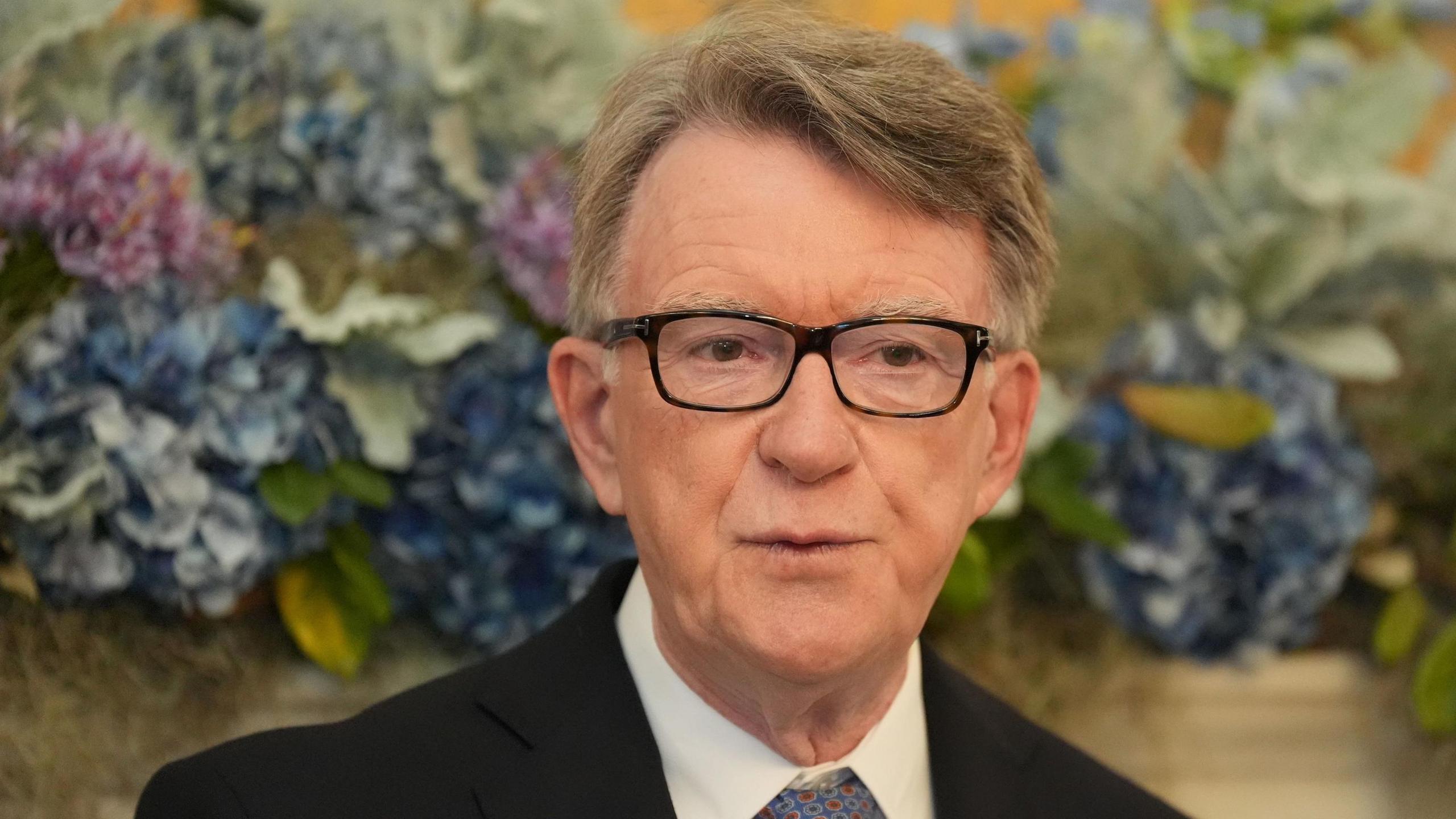



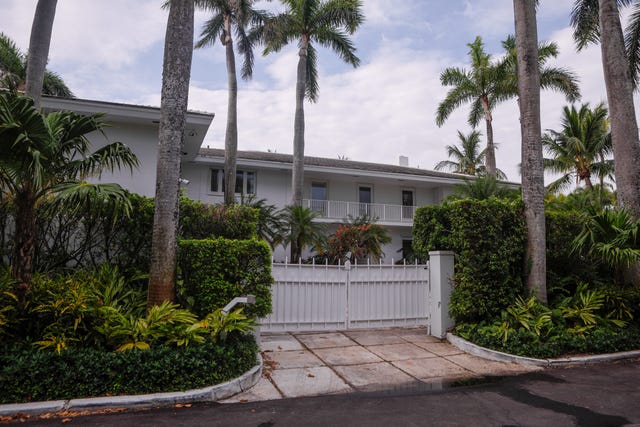




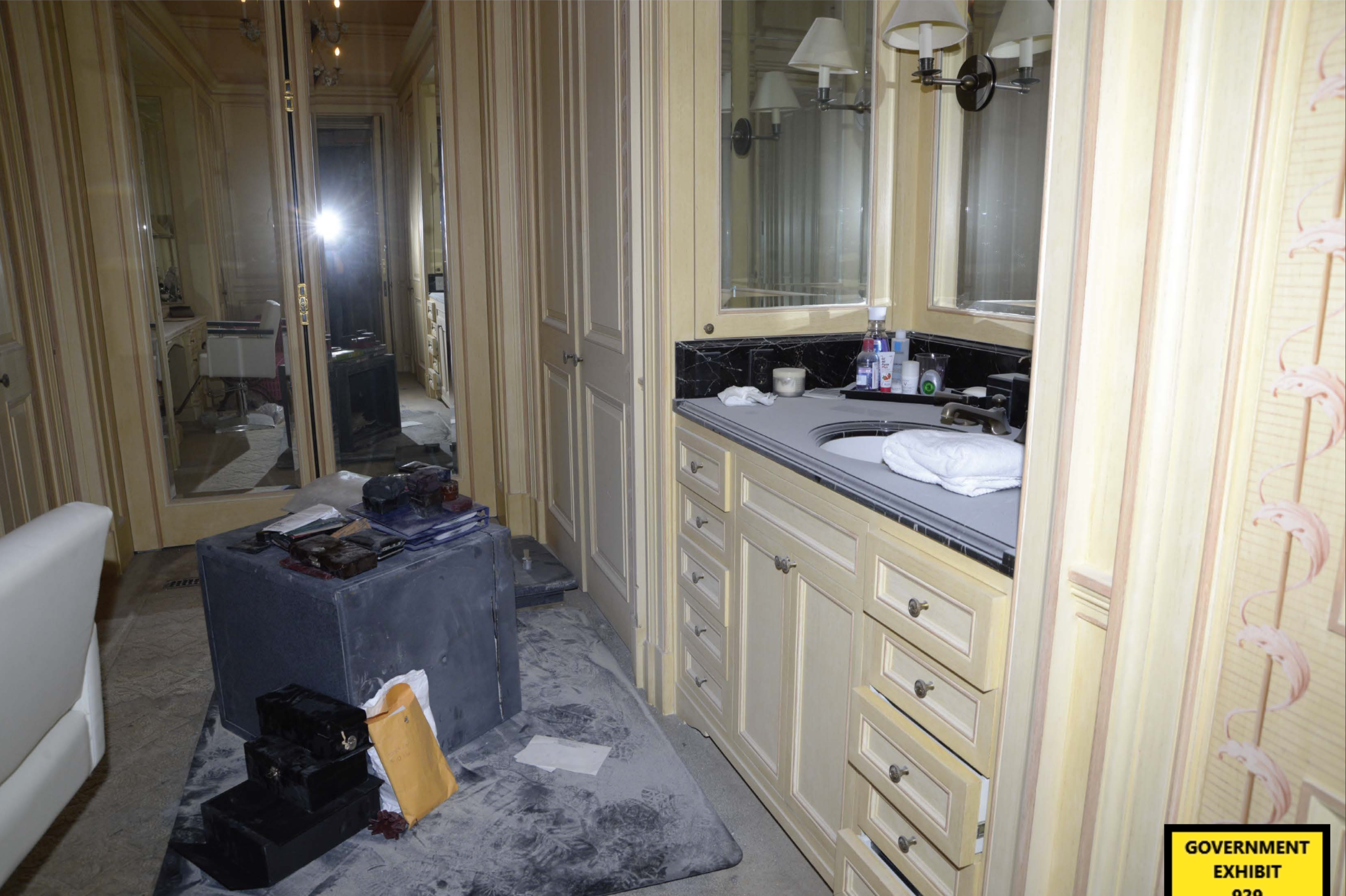

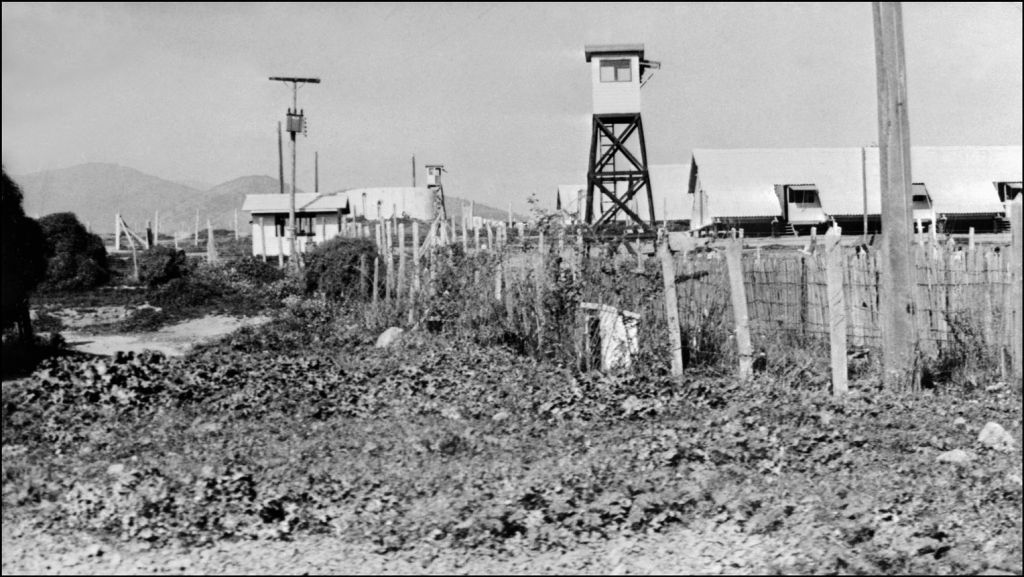





 borderslynn
You must be logged in to post a comment.