For centuries, Royal Mail has been a cornerstone of British society, reliably connecting people and businesses across the nation.
But at one point, everything changed. A major decision reshaped the future of the UK’s postal service, sparking debates that continue to this day.
Supporters hailed it as a move toward innovation and efficiency, while critics warned of rising costs and service declines. Was this transformation truly necessary, and who stands to gain or lose from it?
In this blog, we unravel when Royal Mail privatised, the reasons it happened, and what it means for the future of Royal Mail.
Royal Mail’s privatisation was driven by a combination of financial struggles, market competition, and government policy changes. The UK government saw privatisation as a way to modernise operations and attract investment.
The choice of flawed Horizon software supplied by Fujitsu resulted in IT ignorant managers and denial of faults in the Horizon software used by UK post offices. In turn, that led to a hideous debacle where the flawed software left a shortfall at the end of the working day at post offices and their postmaster and postmistresses took the fall for the corporate cowardice. They have suffered a 25 year ordeal of incompetent police investigations where ‘guilty’ was the judgement and the concept of innocence was never considered. The suffering of these defamed and honorable employees of Royal Mail is beyond belief.
The Rt Hon Lord Cameron Conservative 2010 to 2016 David Cameron served as Prime Minister from 2010 to 2016, leading Britain’s first coalition government in nearly 70 years and, at the 2015 General Election, forming the first majority Conservative government in the UK for almost two decades.
Royal Mail was privatised by a coalition government, dominated by Conservatives, in October 2013.
In 1999, the Post Office’s single shareholder, the UK government, began automating accounting processes at about 14,000 Post Office branches. This saw the introduction of a centralised computer system from supplier Fujitsu, which all branches were connected to. This system replaced traditional paper-based accounting practices.
Computer Weekly cover from May 2009 when it first reported on the problems subpostmasters were having with the Horizon IT system
And now, in 2025, the sacrificial lambs, 900 sub-postmasters, are still testifying to countless inquiries and still, many are waiting (not all remain alive) for compensation which reflects their cruel suffering through no fault of their own.
July 8, 2025
Extract:
Public inquiry chair Wyn Williams said he was satisfied that Post Office executives knew, or at least should have known, that the IT system supplied by Fujitsu was capable of error but they maintained the fiction that it was accurate.
He called for urgent action to ensure full compensation in the first volume of his report.
Williams said it was impossible to ascertain exactly how many people had been impacted, but he said there were about 10,000 eligible claimants across four compensation schemes.
Detailing 17 first-hand accounts, Williams said suffering ranged from those held liable for small amounts of money to those who were wrongly imprisoned, fell seriously ill or were driven to despair and suicide.
Fujitsu bought LCL, the authors of the legacy Horizon Software in 1998.
First part of the UK Horizon IT Inquiry Report points finger at Post Office and Fujitsu managers who “should have known that Legacy Horizon was capable of error.”
At some point, however, this stopped being the case, the report said. The implication is that managers at Fujitsu and the Post Office knew that Horizon was generating imaginary shortfalls and decided to cover that up to protect themselves and their institutions.
This week’s findings are part one of the inquiry, and focus primarily on the human effects of the Horizon IT scandal. A second report is expected later in 2025 or in 2026 which will examine the specific flaws in the Horizon’s system in more detail. It will also assess any wrongdoing by managers………….
For the wider IT sector, the effects of the Horizon IT scandal could continue to linger. Large IT projects from the 1990s already have a poor reputation in the UK, with several going over budget or failing to deliver their expected returns. Horizon – now a watchword for incompetence and moral failure – has only amplified this widely held view.
Postmaster and postmistresses were obliged to accept the computer calculations although they complained that the system seemed to have a fault, their concerns were deliberately, and knowingly ignored.
Horizon
The scandal related to the wrongful prosecution of former sub-postmasters (people who run independent Post Office branches on behalf of Post Office Limited) for theft, fraud and false accounting between 1999 and 2015.
The IT system used in both independent and Crown Post Offices was called Horizon, operated by Fujitsu on behalf of Post Office. Horizon was piloted in some branches from 1996 and was rolled out across the network of branches from 1999.
By recording transactions, Horizon calculated how much cash and stock should be in an individual branch. The sub-postmaster was expected to count the cash held at their branch each day and enter a daily cash declaration onto Horizon.
If at the end of the relevant trading period (approximately each month) there was a discrepancy between the cash on hand and the figures generated by Horizon, the sub-postmaster was required by their contract to make up the difference.
This could be done either by settling in-branch by putting their own money in to balance the accounts or by settling centrally by asking for the money to be deducted from their monthly renumeration.
There was no option on Horizon to dispute the figures so a sub-postmaster was obliged to accept the figure generated by Horizon before rolling over to the next trading period.
The Financial Times reported another bad decision to buy, what turned out to be, slow and clunky replacement software, is now a £600m loss, equipment growing out of date, stacked in a warehouse.
A comprehensive article in iNews provides an insight into the bug-ridden Horizon software:
As early as 2001, Mr McDonnell and his team identified “hundreds” of bugs.
Even when trials ran before Horizon’s launch in 1999, “severe difficulties being experienced by subpostmasters” were recorded, according to the House of Commons inquiry.
………..
The Dalmellington Bug
While a full list of bugs has yet to be published, a number have been singled out, including the Dalmellington Bug – named after the Scottish village where a Post Office operator first fell victim to the issue.
The Dalmellington Bug meant computer screens would freeze every time operators would try to confirm the receipt of cash.
The user would then often repeatedly hit the “Enter” key on the frozen screen. Each time the key was pressed, though, the system would acknowledge the receipt again.
On one occasion, when a user was continually trying to submit a payment of £8,000 in cash, they pressed the “Enter” key four times. The postmaster was then made liable for a £24,000 discrepancy, created by the Horizon bug
Examples of what happened at the Point of Sale computer when bugs caused frustrating problems when customers were waiting in the Post Office, are listed here:
And a Czech billionaire has purchased the ailing Royal Mail now:
Czech Sphinx’ billionaire to become chairman of Royal Mail which led to:
Royal Mail’s boss has quit weeks after the postal service fell into foreign hands for the first time in its 509-year history.
In a move that caught the business world by surprise, Emma Gilthorpe left having been appointed chief executive a little over a year ago…….
updated 08:39, 27 Jun 2025
Investors approved EP Group’s £3.6bn takeover of owner IDS this month
Czech billionaire Daniel Kretinsky will become chairman of Royal Mail following confirmation of the postal service’s controversial takeover last month.
Kretinsky, an energy tycoon nicknamed the ‘Czech Sphinx’ for his inscrutable approach to his business decisions, swooped on Royal Mail’s parent company International Distribution Services with a £3.6billion offer last year
The group also revealed the UK Government has been allotted and issued a ‘golden share’ worth £1.
The golden share has no economic or voting rights but Royal Mail’s new owners require the prior written consent of the Government for some decisions.
It should ensure Royal Mail keeps its UK headquarters and continues to pay taxes in the country.
Flash Flood warning systems. If you don’t have one, the odds are this could happen:
This was no way to celebrate July 4th, 2025
Catastrophic Flooding Along Guadalupe River Kills Multiple
Devastating July 4 flood in Texas Hill Country causes deaths, missing children, and widespread damage as emergency efforts intensify
On the morning of July 4, 2025, catastrophic flooding devastated communities along the Guadalupe River in Texas’ Hill Country, leading to multiple fatalities and widespread destruction. Heavy overnight rains unleashed a torrent that overwhelmed the river, pushing it to its second-highest level on record near Hunt, surpassing historic floods from 1987. The floodwaters swept through Kerr County and surrounding areas, forcing urgent evacuations, stranding residents, and causing severe damage to homes, roads, and local businesses.
However, watching CNN, I saw a family who had rescued 2 people and their dogs. They said the nature of the event was such that no warning of the severity could have been possible.
I think we have seen that people, who have for centuries, happily lived along a riverside, totally safely, now may have to relocate. This particular location is known as ‘flash flood valley’ according to meteorologist on the CNN programme of ‘breaking news’.
This catastrophe is being discussed widely, for example at:
What makes Hill Country so prone to flooding?
Texas as a whole leads the nation in flood deaths, and by a wide margin. A colleague and I analyzed data from 1959 to 2019 and found 1,069 people had died in flooding in Texas over those six decades. The next highest total was in Louisiana, with 693.
Many of those flood deaths have been in Hill County. It’s part of an area known as Flash Flood Alley, a crescent of land that curves from near Dallas down to San Antonio and then westward.
The hills are steep, and the water moves quickly when it floods. This is a semi-arid area with soils that don’t soak up much water, so the water sheets off quickly and the shallow creeks can rise fast.
The warnings of an increase in such catastrophic flooding have been around for years:
The latest U.N. report on climate change documented researchers’ efforts that have shown some measures of global warming are now unavoidable, and current research efforts are focusing on mitigation and adaptation strategies. The National Aeronautics and Space Administration describes this as a global problem, felt on local scales. Likewise, National Oceanic and Atmospheric Administration researchers are providing the data, tools and information to better understand and prepare for climate change. One of the effects being impacted by the warming climate is a change in the frequency of flash flooding events, as well as the locations in which they most often occur.
The National Weather Service did warn of the threat to South Kerr County. That was an opportunity for people to consider their safety, before the predicted storms arrived. It was too late when people had fallen asleep by the time the flash floods happened.
There is poor cell connection in this rural area. If a ‘watch’ is issued you should prepare and avoid river areas in the vicinity. Treat it the same as a hurricane watch. If you have TV, radio or some way of picking up weather warnings, you should have a resilience plan and know you should avoid driving through water as most lives are lost when people think they can drive to safety.
Here are a few safety tips to follow:
Move to higher ground
Do not attempt to drive through a flooded road
Do not drive around a barricade
Turn around and find another route
The weather warnings were on CNN before July 4th, aimed at holiday travellers in particular. I live in the UK, and I saw them. If I had lived in Dallas, for example, and had been planning to go to this location, if I had seen those warnings I would have changed my plans. It is a well known path of flash floods due to the geological makeup of the area. Dangerous levels of rain were forecast lasting for days.
Globally, we are all feeling the impact of these threatening weather patterns and need all the help we can get from these technologically advanced warning systems and knowledge base which has accumulated over decades.
July 2025
Astonishingly, in US, a ‘stop work’ notice has been issued to not further install, and actually remove, flood alert systems:
On the eve of January 6, 2021, Judge Michael Luttig received an urgent message from Vice President Mike Pence’s office: Could he please make public his confidential advice to Pence that the vice president had no legal authority to overturn the 2020 election? Pence was under enormous pressure from Donald Trump to reverse the results, and he hoped that the analysis from Luttig, one of the most respected voices in American law, could thwart the effort. Luttig tweeted out his views, and Pence cited the Tweets in his letter to the nation as he left the White House for the U.S. Capitol as evidence that he couldn’t block certification of the election.
In 2021, during his first extensive public interview of his career—over three hours!— Luttig told me the incredible story of the Tweets that helped stop the coup of the 2020 presidential election. The story has been told many times since then, including during Luttig’s widely acclaimed testimony before the January 6th Committee, but one humorous detail often gets left out: Luttig didn’t know how to use Twitter. So before he could send what became some of the most important Tweets in history, Luttig had to call his son for tech support to walk him through the process.
Today, America finds itself at another historic moment—another crisis—and Judge Luttig is once again the country’s most indispensable public scholar explaining the law to an American public bewildered by the actions of a lawless president. And once again, Judge Luttig is embracing a new medium to share his views with a wider audience. With some nudging from me, I’m pleased to report that Luttig is turning to Substack as a platform for his writing, which has never been more important.
His first foray on Substack is the extraordinary piece below that marks Independence Day 2025. It is not an essay or op-ed or polemic of any kind. Rather, it is a statement of truths that we Americans hold to be self-evident on this July 4—the eve of America’s founding and the celebration of its 250th anniversary—and it’s a jarring exposition of how closely the modern-day truths parallel the American Colonists’ original list of self-evident truths of freedom and of tyranny.
This is not a piece that should be skimmed or scanned.Luttig is writing for the ages.I recommend you take some time away from the crush of news, find a quiet place without distractions, and read this piece carefully. That’s when the power of what Luttig has written will hit you. I believe Luttig’s piece will be of historic significance, and Telos News is enormously proud to publish it. Please share it widely.
— Ryan LizzaSubscribe
When in the Course of human events, it becomes necessary for one people to dissolve the political bands which have connected them with another . . . a decent respect to the opinions of mankind requires that they should declare the causes which impel them to the separation.
The history of the present King of Great Britain is a history of repeated injuries and usurpations, all having in direct object the establishment of an absolute Tyranny over these States. To prove this, let Facts be submitted to a candid world.
We, therefore, the Representatives of the united States of America, in General Congress, do solemnly publish and declare, That these United Colonies are, and of Right ought to be Free and Independent States; that they are Absolved from all Allegiance to the British Crown.
For the support of this Declaration, with a firm reliance on the protection of divine Providence, we mutually pledge to each other our Lives, our Fortunes and our sacred Honor.
— Declaration of Independence
On July 4, 1776, our fellow Americans declared their independence from the British empire and its ruling monarchy. Thus began the American Revolutionary War against Great Britain to secure America’s independence from the tyrannical rule of King George III. On that first Independence Day almost two hundred and fifty years ago, America freed itself forever from the bondage and oppression of tyrannical rule by monarchs and kings. There would never be another king in the United States of America.
Eleven years later, on September 17, 1787, the Constitution of the United States was signed by the delegates to the Constitutional Convention convened in Philadelphia, and in 1789, thirteen years after the American Colonists declared their independence from the British empire, the Constitution became the charter of government of the United States and the guarantor of our rights, liberties, and freedoms. The Bill of Rights, the first ten amendments to the Great Charter, became part of the Constitution in 1791.
Today, the United States of America is the beacon of freedom to the world and the Constitution of the United States the envy of the world.
The genius of the American experiment in self-governance is that “We the People,” not the government, possess all power and we govern ourselves by representational democracy. We entrust our power to our government to exercise on our behalf in the interests of our nation. To ensure that our government faithfully exercises the power we entrust it with, we the American people ordained and established government by law, instead of by kings.
In America, the rule of law is king.
Let a day be solemnly set apart for proclaiming the charter; let it be brought forth placed on the divine law, the word of God; let a crown be placed thereon, by which the world may know, that so far as we approve of monarchy, that in America the law is king. For as in absolute governments the king is law, so in free countries the law ought to be king; and there ought to be no other. But lest any ill use should afterwards arise, let the crown at the conclusion of the ceremony be demolished, and scattered among the people whose right it is.
— Thomas Paine, 1776
When the tyrannical reign of King George III became destructive of the ends of government by law under which all persons are equal and endowed with certain unalienable rights, the American Colonists declared their independence from the British King, chronicling 27 grievances of self-evident truths about tyranny as reasons for their declaration of independence.
On this July 4, 2025, the eve of the two hundred and fiftieth anniversary of America’s declaration of independence and the founding of this Nation, “We the People” hold to be self-evident these 27 truths about freedom—and about tyranny.
— All persons are endowed with certain rights, liberties, and freedoms that are unalienable and that are the bulwark against tyranny by government.
For, “We hold these truths to be self-evident, that all men are created equal, that they are endowed by their Creator with certain unalienable Rights, that among these are Life, Liberty, and the pursuit of Happiness.”
— Government should secure, protect, and preserve our unalienable rights, liberties, and freedoms.
For, the King “has abdicated Government here, by declaring us out of his Protection.”
— Government is instituted and its powers derived from the consent of we, the governed, in order that government will secure, protect, and preserve our rights, liberties, and freedoms.
For, “To secure these rights, Governments are instituted among Men, deriving their just powers from the consent of the governed” and “whenever any Form of Government becomes destructive of these ends, it is the Right of the People to alter or to abolish it” and “to institute new Government . . . laying its foundation on such principles and organizing its powers in such form, as to them shall seem most likely to effect their Safety and Happiness.”
— Government power is limited, and government is obligated to conform its every act to the requirements of law, which acknowledges our creation as equals and enshrines our equal and unalienable rights, liberties, and freedoms.
For, the King gave “his Assent to their Acts of pretended Legislation taking away our Charters, abolishing our most valuable Laws, and altering fundamentally the Forms of our Governments.”
— Every person’s rights, liberties, and freedoms—as well as the rights of the majority and minority—are best secured and safeguarded by separation of the respective powers of the Legislature, the Executive, and the Judiciary. By separation of the powers of each of the branches of government from the powers of the others, the powers of each of the three coequal branches of government are limited and checked and balanced by the powers of the others.
For, the King “has called together legislative bodies at places unusual, uncomfortable, and distant from the depository of their public Records, for the sole purpose of fatiguing them into compliance with his measures,” he “has erected a multitude of New Offices, and sent hither swarms of Officers to harrass our people, and eat out their substance,” and he “has obstructed the Administration of Justice, by refusing his Assent to Laws for establishing Judiciary powers.”
— Each, the Legislature, the Executive, and the Judiciary should exercise only the powers respectively enumerated and conferred upon it by the Constitution or otherwise by law, thereby both avoiding and guarding against encroachment upon the powers of the other two branches of government.
For, the King “has dissolved Representative Houses repeatedly, for opposing with manly firmness his invasions on the rights of the people. He has refused for a long time, after such dissolutions, to cause others to be elected; whereby the Legislative powers, incapable of Annihilation, have returned to the People at large for their exercise; the State remaining in the mean time exposed to all the dangers of invasion from without, and convulsions within.” He also “has kept among us, in times of peace, Standing Armies without the Consent of our legislatures.” The King “obstructed the Administration of Justice, by refusing his Assent to Laws for establishing Judiciary powers” and “he has made Judges dependent on his Will alone, for the tenure of their offices, and the amount and payment of their salaries.”
— Government should provide for the common defense, protect the homeland, support our allies abroad, and prevent foreign interference in the affairs of the nation.
For, the King “abolished the free System of English Laws in a neighbouring Province, establishing therein an Arbitrary government, and enlarging its Boundaries so as to render it at once an example and fit instrument for introducing the same absolute rule into these Colonies.”
— Government should wage war against foreign enemies only when authorized by the Congress of the United States in a Declaration of War.
For, the King “has kept among us, in times of peace, Standing Armies without the Consent of our legislatures.”
— Government should only wage war against foreign enemies, not misperceived domestic enemies. The people are not the enemy of the government. Rather, the government that regards the people as its enemy is itself the enemy of the people.
For, the King “has excited domestic insurrections amongst us” and “has abdicated Government here . . . by waging War against us.”The King “is at this time transporting large Armies of foreign Mercenaries to compleat the works of death, desolation and tyranny, already begun with circumstances of Cruelty & perfidy scarcely paralleled in the most barbarous ages, and totally unworthy the Head of a civilized nation.”
— Government should respect the need for the separation of military from civil authority and the need to limit military to military purpose and not to civil purpose.
For, the King “has affected to render the Military independent of and superior to the Civil power.”
— Government should respect that America is a nation of immigrants from foreign lands.
For, “We have reminded them of the circumstances of our emigration and settlement here” yetthe King “endeavoured to prevent the population of these States; for that purpose obstructing the Laws for Naturalization of Foreigners; refusing to pass others to encourage their migrations hither and raising the conditions of new Appropriations of Lands.”
— Government should respect the need for free and open trade with the world.
For, the King has “given his Assent to their Acts of pretended Legislation: For cutting off our Trade with all parts of the world.”
— Every person should have the right to petition government and petition the government for redress of oppressions without government answer of injury.
“For, in every stage of these Oppressions We have Petitioned the King for Redress in the most humble terms: Our repeated Petitions have been answered only by repeated injury. A Prince, whose character is thus marked by every act which may define a Tyrant, is unfit to be the ruler of a free people.”
— Every person should have the right to dissent from government and to protest government peacefully.
For, where tyranny and despotism demand allegiance to tyrant and to uniformity, democracy and freedom from tyranny demand the opposite – allegiance to country and to differences of people and opinion. “When a long train of abuses and usurpations, pursuing invariably the same Object evinces a design to reduce a People under absolute Despotism, it is their right, it is their duty, to throw off such Government, and to provide new Guards for their future security.”
— Every person should have the right to speak freely and to associate freely with others without fear that government will punish them for the exercise of their right to speak and associate freely.
— No person should be deprived of life, liberty, or property without due process of law, the promise and guarantee against arbitrary government by tyrants, monarchs, and kings.
For, the King “abolished the free System of English Laws . . . and established therein an Arbitrary government.”
— Every person is equal under law, enjoys the same privileges and protections of law, and is subject to the same constraints and penalties of law.
For, “all men are created equal [and] are endowed by their Creator with certain unalienable Rights.”
— No person is above the law. The law applies equally to all persons elected or appointed to serve the American people in their government as it does to all other persons, and all elected or appointed representatives of the people are accountable under law for their offenses against the people as every other person is accountable for their offenses.
“For as in absolute governments the king is law, so in free countries the law ought to be king; and there ought to be no other . . . Let a crown be placed thereon. . . . But lest any ill use should afterwards arise, let the crown at the conclusion of the ceremony be demolished, and scattered among the people whose right it is.”
— No person elected or appointed to represent the people enjoys the royal prerogatives of a king. America was impelled to seek its separation and independence from the tyranny of a king.
For, the King “has combined with others to subject us to a jurisdiction foreign to our constitution, and unacknowledged by our laws; giving his Assent to their Acts of pretended Legislation: For suspending our own Legislatures, and declaring themselves invested with power to legislate for us in all cases whatsoever.” The King “has abolished the free System of English Laws in a neighbouring Province, establishing therein an Arbitrary government, and enlarging its Boundaries so as to render it at once an example and fit instrument for introducing the same absolute rule into these Colonies.”
— Every person should be equally franchised as provided by the Constitution and able to vote freely for their representatives to government in free and fair elections.
For, the King “has forbidden his Governors to pass Laws of immediate and pressing importance” and “he has refused to pass other Laws . . . unless those people would relinquish the right of Representation in the Legislature, a right inestimable to them and formidable to tyrants only.”
— Every candidate for elected public office should pledge to the American people that they will accept, respect, and honor, the will of the people expressed in the results of the people’s free and fair elections and that they will honor the peaceful transfer of power from one office holder to the next.
For, we the people hold all power and “Governments are instituted among Men, deriving their just powers from the consent of the governed.” We the people established government by law, instead of by men, in order that our representatives could not, like the king, subjugate us to their will. Our representatives are subjugated to our will by Constitution and Law. “Lest any ill use should afterwards arise, let the crown at the conclusion of the ceremony be demolished, and scattered among the people whose right it is.”
— All persons should have access to independent courts of law to vindicate their rights and interests, and the courts of law should be neither political nor beholden to either the Legislature or Executive.
For, the King “obstructed the Administration of Justice, by refusing his Assent to Laws for establishing Judiciary powers” and he made Judges dependent on his Will alone, for the tenure of their offices, and the amount and payment of their salaries.”
— All persons suspected and accused of criminal offense should be protected from government abuse by the Constitution’s limitations on searches and seizures, due process, equal protection, the privilege against self-incrimination and by the prohibitions on selective and vindictive prosecutions, double jeopardy, and cruel and unusual punishments.
— No person should be tried for criminal offense except by jury of peers.
For, the King “deprived us in many cases, of the benefits of Trial by Jury.”
— No person should be investigated or investigated and prosecuted for offenses against the nation except in accordance with law.
— No person should be investigated by the Executive on pretext or investigated and prosecuted by the Executive on pretext in revenge and retaliation for different opinion or politics from the Executive or for personal offense taken by the Executive.
For, the King “transported us beyond Seas to be tried for pretended offences” and “quartered large bodies of armed troops among us and protected them, by a mock Trial, from punishment for any Murders which they should commit on the Inhabitants of these States.”
— All persons should have the right to counsel who is independent of the government and uninfluenced and uninfluenceable by the government, and whose highest responsibility in the representation of their client is to preserve, protect, and defend the Constitution against abuse by the government.
For, the King “tried us for pretended offences” and “protected . . . murderers by a mock Trial, from punishment.”
On this Independence Day, July 4, 2025, these self-evident truths of freedom—and of tyranny—are solemnly declared and published.Subscribe
I was watching an old, rare archive piece of film, introduced by Christopher Hitchens, which appeared to show Saddam Hussein asserting his control over the Ba’ath Party, sorting loyalists from covert opposition at a conference.
Hitchens was referring to a book by Samir al Khalil (a pseudonym for his later to be known name of Kanan Makiya). The book is Republic of Fear, and it told us Saddam, on that day, had instructed the opposition members to be shot by the loyalists left in the conference hall.
I have found a section in Wikipedia about this author, which is truly enlightening.
It would seem Makiya’s persuasive perspective of his recollection of events helped steer the US and UK into the disastrous decision to remove Saddam Hussein using ‘shock and awe’ military force.
Kanan Makiya (born 1949) is an Iraqi-American[1][2] academic and professor of Islamic and Middle Eastern Studies at Brandeis University. He gained international attention with Republic of Fear (1989), which became a best-selling book after Saddam Hussein’s invasion of Kuwait, and with Cruelty and Silence (1991), a critique of the Arab intelligentsia. In 2003, Makiya lobbied the U.S. government to invade Iraq and oust Hussein.[3]
Makiya was born in Baghdad and left Iraq to study architecture at the Massachusetts Institute of Technology, later working for his father’s architectural firm, Makiya & Associates which had branch offices in London and across the Middle East. As a former exile, he was a prominent member of the Iraqi opposition, a “close friend” of Ahmed Chalabi, and an influential proponent of the Iraq War (2003–2011) effort.[4][5] He subsequently admitted that effort “went wrong”.[6]
Critics of Makiya:
Said, a professor of English at Columbia University, was a vocal critic of Makiya.[15] Said contended that Makiya was a Trotskyist in the late 1960s and early 1970s, but that he later “switched sides,” profiting by designing buildings for Saddam Hussein.
Said also asserted that Makiya mistranslated Arab intellectuals (including himself) so he could condemn them for not speaking out against the crimes of Arab rulers. Makiya had criticised Said for encouraging a sense of Muslim victimhood and offering inadequate censure to those in the Middle East who were themselves guilty of atrocities.[16] Similar criticism about mistranslations was voiced by Michael W. Suleiman when reviewing Republic of Fear.[17]
George Packer wrote in his book The Assassin’s Gate that it was Makiya’s father who worked for Saddam, but Makiya himself used those profits to fund his book Republic of Fear.[18] Packer also noted Makiya’s drift from radical to liberal to sudden alliance with American neoconservatives: “Look behind Kanan Makiya and you found Richard Perle, Paul Wolfowitz, Donald Rumsfeld.”
Packer and many others have faulted him for his enthusiastic support for Ahmad Chalabi, “the most controversial exile of them all” and convicted felon.[19] He championed Chalabi to the exclusion of a wider opposition network, resulting in the marginalizing of experienced figures like Feisal al-Istrabadi who supported a wider net.
Concluded journalist Christopher Lydon in 2007: “My friend Kanan Makiya was the most influential Iraqi advocate in America of the war to “liberate” his country five years ago. Today he is the most articulate casualty of his own fantasy.” Lydon goes on to call Makiya “an idealist who stands for me as a warning about the dangerous misfit of idealism and military power. He’s an example, I’m afraid, of what the French call the trahison des clercs; the treason of the intellectuals. He is a caution to us intellectuals and wannabes against the poison of very bad ideas — like the notion of transformation by conquest and humiliation.”[20]
In a 2016 interview with NPR to promote his new novel, Makiya explores aloud what went wrong in Iraq and who is to blame: “I want to understand that it went wrong, and who I hold responsible for why it went wrong — including myself.”[21]
When George Bush went to war in Iraq in 1990 and clips from Iraq started showing on TV, I called my father to ask if it is possible that this depressingly bleak place was their paradise. My father was surprised: “What did you expect? This is one big desert with two rivers.” I guess I did know, but it wasn’t what I imagined about this country. This imagination was a fantasy based upon their stories, which seemed so ideal: the swimming and boating in the Tigris River, picnics on its bank in fruit gardens (bustan). The true picture is in the middle between what was shown on TV and my imagination. (I know that cameras that are aimed at filming war do not show the pleasant places.) The feeling of paradise is not the picture portrayed in history books, but indeed the Jews in Iraq maintained their community for many centuries, without any extremely traumatic incidents and in a relatively safe environment. What stands out is the great co-existence they had with their neighbors, the Muslim Arabs. This coexistence can be exemplified by customs of reciprocity during holidays. Iraqi Jews remember that Muslim neighbors used to bring hot tea to Jews returning from the synagogue at the end of Yom Kippur, and trays with bread and cheese at the conclusion of Passover. In Basra, where a significant number of Jews lived, there was no Jewish quarter; Jews lived in mixed neighborhoods.
and
My father’s family lived in Baghdad and apparently was from a somewhat lower middle class. My grandfather, Shkuri Ta’ufik, was a self-made person. When he was 13-years old, his father died and he had to leave school and work to support his mother and siblings. He worked for a while as an apprentice of the shochet – the Jewish butcher. His breakthrough came thanks to a punishment by the British. Failing to register to the British authorities, he was sent on a British Navy ship to India, where he stayed for a year, learning English while abroad. Upon returning he started working in the Jewish owned Zilkha Bank in Baghdad. This was one of the most important banks in Iraq – and the first chain banking in the Arab world, with branches in Beirut, Damascus, Cairo and Alexandria, and the Iraqi government was invested in it.[8] My grandfather made his way up and became the treasurer of the Zilkha Bank. He bought a big house outside of the Jewish quarter, in a mixed neighborhood, and was able to house a few relatives in it as well. (When he moved to Israel he was much better off than most, as he was able to transfer some money in advance to Israel, and to buy a house and a store there.) His children attended the prestigious Anglo-Jewish school Shamash, which was the only Jewish school outside of the crowded Jewish neighborhood.[9] At that period, it was allowed to teach reading Hebrew, but the newly independent Iraqi government (since 1932) banned the teaching of the Bible and Jewish history. My father studied the Hebrew Bible only in Israel.
Slideshare.com
Read the history of British control over Iraq, here is an extract:
Merging the three provinces of Mosul, Baghdad, and Basra into one political entity and creating a nation out of the diverse religious and ethnic elements inhabiting these lands were accomplished after World War I. Action undertaken by the British military authorities during the war and the upsurge of nationalism afterward helped determine the shape of the new Iraqi state and the course of events during the postwar years until Iraq finally emerged as an independent political entity in 1932.
I was looking through my bookshelves and picked out Trading with the Enemy published in 1983, updated 1995.
This massively researched book, based on trawling through documents obtained thanks to the Freedom of Information Act, has resulted in an exposure of those who see opportunity, not threats, during war. The more fierce and hideous the war, the more money is to be made. It is a sickening read for those of us who still hold dear to us the memory of those who fought for their country believing God was on their side ‘to rid the world of the Nazi scourge’.
All along, there were those behind the facade, rubbing their hands with glee that their corporations could maximise profits by trading with the enemy.
Charles Higham’s work can be found on the Internet with extracts from his book. He died in 2002 aged 81, but thankfully we can all read pieces from Trading with the Enemy: The Nazi-American Money Plot 1933 – 1949.
admired Hitler from the beginning, when the future Fuhrer was a struggling and obscure fanatic. He shared with Hitler a fanatical hatred of Jews. He first announced his anti-Semitism in 1919, in the New York World, when he expressed a pure fascist philosophy. He said, “International financiers are behind all war. They are what is called the international Jew: German-Jews, French-Jews, EnglishJews, American-Jews . . . the Jew is a threat.”
Henry Ford
Ford produced a weekly newspaper which constantly denigrated the Jews:
The first anti-Semitic issue on May 22 carried the headline THE INTERNATIONAL JEW: THE WORLD S PROBLEM. The leading article opened with the words “There is a race, a part of humanity, which has never been received as a welcome part . . .” and continued in the same vein to the end. A frequent contributor was a fanatical White Russian, Boris Brasol, who boasted in one piece: ”I have done the Jews more injury than would have been done to them by ten pogroms.”
Brasol was successively an agent of the Czar and of the U.S. Army Intelligence; later he became a Nazi spy.
Ford’s book The International Jew was issued in 1927. A virulent anti-Semitic tract, it was still being widely distributed in Latin America and the Arab countries as late as 1945.
Ford is remembered by Americans in this way:
Table of Contents
Henry Ford: American Industrialist and Founder of Ford Motor Company
Henry Ford was an American inventor and business magnate and the founder of Ford Motor Co. He invented several vehicles, most famously the Model T automobile, and changed the auto industry forever by introducing the moving assembly line to car production.
His industrial innovations were so economically impactful that the term “Fordism” came to refer to the mass production and consumption that they enabled, which then more broadly characterized the pace and nature of the postwar era’s capitalist economy.
Ford died 2 years after the war. Before he died he was threatened with libel and so apologised for his anti-semitic rants.
Edsel Ford had a great deal to do with the European companies. He was different in character from his father. He was a nervous, high-strung man who tried to work off his extreme tensions and guilts over inherited wealth in a furious addiction to tennis and other sports. Darkly handsome, with a whipcord physique, he was miserable at heart. He could not relate to his father, who despised him, and his inner distress caused him severe stomach ulcers that developed into gastric cancer by the early 1940s. Nevertheless, he and his father had one thing in common. True figures of The Fraternity, they believed in Business as Usual in time of war.
Edsel was on the board of American I.G. and General Aniline and Film throughout the 1930s. He and his father, following their meetings with Gerhardt Westrick at Dearborn in 1940, refused to build aircraft engines for England and instead built supplies of the 5-ton military trucks that were the backbone of German army transportation. They arranged to ship tires to Germany despite the shortages; 30 percent of the shipments went to Nazi-controlled territories abroad. German Ford employee publications included such editorial statements as, “At the beginning of this year we vowed to give our best and utmost for final victory, in unshakable faithfulness to our Fuehrer.” Invariably, Ford remembered Hitler’s birthday and sent him 50,000 Reichsmarks a year. His Ford chief in Germany was responsible for selling military documents to Hitler. Westrick’s partner Dr. Albert continued to work in Hitler’s cause when that chief came to the United States to continue his espionage. In 1941, Henry Ford delivered a bitter attack on the Jews to The Manchester Guardian (February 16, 1941) saying inter alia, that the United States should make England and Germany fight until they both collapsed and that after that there would be a coalition of the powers.
Ford replaced his son as a consultant with Charles Lindbergh, another person openly anti-semitic.
Charles Lindbergh
Lindbergh told a group of American Firsters:
There is only one danger in the world-that is the yellow danger. China and Japan are really bound together against the white race. There could only have been one efficient weapon against this alliance…. Germany…. the ideal setup would have been to have had Germany take over Poland and Russia, in collaboration with the British, as a bloc against the yellow people and Bolshevism. But instead, the British and the fools in Washington had to interfere. The British envied the Germans and wanted to rule the world forever. Britain is the real cause of all the trouble in the world today.
Management of the Ford interests was in the hands of the impressively handsome and elegant Paris financier Maurice Dollfus, who had useful contacts with the Worms Bank* and the Bank for International Settlements. Although he had little knowledge of manufacturing processes, Dollfus supplied much of the financing for the new sixty-acre Ford automobile factory at Poissy, eleven miles from Paris in the Occupied Zone. Under Dollfus the Poissy plant began making airplane engines in 1940, supplying them to the German government. It also built trucks for the German army, as well as automobiles. Carl Krauch and Hermann Schmitz were in charge of the operation from their headquarters in Berlin along with Edsel Ford at Dearborn.
The Banque Worms was a merchant bank founded by Hypolite Worms in 1928 as a division of Worms & Cie. The banking services division provided financing services to other branches of Worms & Cie, which were involved in ship building, shipping and the coal trade. During World War II (1939–45), Worms & Cie was placed under German supervision, and was subject to intense scrutiny after the war on suspicions of collaboration. The banking services division was spun off as the independent Banque Worms et Cie in 1964. The bank was nationalized in 1982 by the socialist government of François Mitterrand. The bank engaged in risky real estate investments, and lost most of its value. After being re-privatized, it was owned in turn by two insurance groups, then was acquired by Deutsche Bank. The bank was wound down in 2004.
Ford was building trucks and armoured cars for Rommel’s campaign in Africa, at the Poissy plant, (see above).
Slideshare
Airplanes were also being built for German use, and the RAF bombed the Ford factory 4 times.
The bombed Ford plant, Poissy
The Royal Air Force, apparently not briefed on the world connections of The Fraternity, had just bombed the Poissy plant. Ford wrote on May 15 that photographs of the plant on fire were published in our newspapers here but fortunately no reference was made to the Ford Motor Company. In other words, Edsel was relieved that it was not made clear to the American public that he was operating the plant for the Nazis.
On February 11, 1942, Dollfus wrote again-that the results of the year up to December 31, 1941, showed a net profit for Ford’s French branch of 58 million francs including payment for dealings with the Nazis.
And who were the Fraternity:
The Fraternity were ITT, General Motors, Ford, Standard Oil of New Jersey, Texaco, SKF and German corporations like I.G. Farben, Krupp and others. These corporations were so supportive of the Nazis that they built many of their weapons and supplied them with oil, while the American people suffered from oil rationing during World War 2. Individual capitalists belonging to The Fraternity were the Rockefellers, Fords, DuPonts, Morgans and the Bush family through Prescott Bush and George Herbert Walker being on the board of Brown Brothers Harriman, which invested heavily in Nazi Germany.
Prescott Bush
Then Higham goes on to say:
One of the American subsidiaries of I.G. Farben called General Aniline and Film did extensive spying operations for the Nazis in the US and was very successful at it. General Aniline itself produced the khaki and blue dyes for army, air force and navy uniforms, giving its salesmen access to many US military bases. In addition, General Aniline owned Agfa and Ansco films and Ozalid, a blueprint corporation. Its salesmen persuaded the US military to use their film and have it developed in their laboratories. Consequently, photos of secret US military installations went straight into Nazi hands, as did the blueprints of American military plans through the Ozalid company.
Rockefeller’s Standard Oil of New Jersey was so flagrant in violating the Trading with the Enemy Act that it was called before two Senate committees, the Truman Committee and the Bone Committee. Standard Oil of New Jersey was in partnership with I.G. Farben, the company which used slave labor at Auschwitz, and supplied the Germans with synthetic rubber and tetraethyl lead for aviation gasoline. Standard Oil was also guilty of using German crews on its tankers and refueling Nazi submarines at Teneriffe in the Canary Islands, as well as shipping oil to Nazi Germany through Spain and Switzerland. Nothing came of these Senate hearings as Standard Oil essentially blackmailed the US government by stating that they could stop US oil shipments in a time of war.
The German and American capitalists of The Fraternity liked fascism, but they didn’t like Hitler after they discovered the deranged nature of his mind. What they wanted was a united front of fascist countries aligned against the common foe, the Soviet Union. In other words, they would have liked to depose President Roosevelt and convert the US to a fascist power and likewise bring fascism to England. The DuPonts and Morgans actually approached Major General Smedley Butler through an intermediary to determine if a military coup could be organized to oust Roosevelt. Major General Butler was deeply offended and reported the plot to Roosevelt. Irenee du Pont was very fascistic and organized both the American Liberty League and the Black Legion. The American Liberty League taught hatred of blacks, Jews, Roosevelt and communism. The Black Legion was a group of antiunion thugs, who would go through DuPont’s General Motors plants and terrorize workers and disrupt union organizing. The Fords and DuPonts also made use of the expertise of another member of The Fraternity, Charles Bedaux. He was a so-called efficiency expert, whose thoughts revolved around extracting the maximum amount of labor out of a worker in the minimum amount of time. This resulted in speedups on the assembly lines of Ford and General Motors and more accidents among workers.
Included in the following extract are some details of The Fraternity corporations and some of their activities when assisting the Nazi war machine:
UNITED STATES/UNITED KINGDOM. Britain, standing alone against the Nazis, armed and fueled by Standard Oil (Exxon-Mobil), General Motors, Texaco, Dupont, Alcoa, Ford, IT&T and all the rest, appeals to Franklin Roosevelt for armaments. In return, Winston Churchill offers the secrets to some of the most important scientific developments of the twentieth century including radar, sonar, antibiotics, the jet engine and much of the original research on atomic power and the atomic bomb.
When the Lend-Lease Bill is introduced in Congress, it encounters considerable opposition. Outside Congress, bootlegger and former U.S. Ambassador to the U.K., Joseph Kennedy, and Third Reich award recipient Charles Lindbergh are among the most vocal opponents of supplying arms to Britain. Ultimately, the U.S. will transfer some $21 billion worth of war materials to Britain. In addition to giving the U.S. the scientific secrets, which had incalculable value, Britain will repay the entire cost of the arms over the following sixty five years, making the final payment in 2006.
1941-45: UNITED STATES. Using research provided by Britain and a host of European physicists, the U.S. launches the Manhattan Project to build an atomic bomb. Interestingly, one of the major corporate contributors to the Manhattan Project is none other than Nazi financier, Jew hater and eugenics proponent Irenee Dupont’s Dupont Chemical. Dupont’s partner in crime, IG Farben, is meanwhile busily at work in Germany working on the Nazi atomic bomb.
1941: UNITED STATES. Even after they have converted their military vehicle plant in Russelsheim, Germany to engine production for Nazi bombers, General Motors executives tell dissenting shareholders in the U.S. that it is impossible to convert GM assembly lines in the U.S. in order to manufacture airplane engines for the U.S. and Britain.
1941: UNITED STATES. Twenty four members of the United States Congress are discovered to have sold their free Congressional mailing privileges to the Nazi-front America First group financed by Vick Chemical Company owner H. Smith Richardson and headed by the chairman of Sears Roebuck, General Robert E. Wood.
1941: NICARAGUA. The U.S. Legation in Managua reports that the Rockefellers’ Standard Oil subsidaries are distributing Epoca, a pro-Nazi propaganda publication, in Nicaragua. The U.S. Consulate investigates and finds that Standard is, in fact, distributing pro-Nazi propaganda worldwide.
1941: UNITED STATES. Orson Welles creates the movie “Citizen Kane”, transparently based on the life and manipulations of media mogul, propagandist, warmonger and Nazi mouthpiece William Randolph Hearst. Hearst uses the full weight of his media empire in an attempt to make the movie disappear and even enlists transvestite blackmailer cum FBI head J. Edgar Hoover who institutes an FBI investigation which obediently labels Welles a “threat to the nation’s internal security”.
1941: JAPAN. On July 26, the U.S. freezes all Japanese assets in the U.S. On July 28, all Japanese assets in the Dutch East Indies are frozen and oil deals cancelled. The moves bring 75% of Japan’s foreign trade to a standstill and cut off ninety percent of its oil supply leaving the Japanese with little choice but to go to war with the U.S.
1941: UNITED STATES. Third Reich award recipient Charles Lindbergh tells an audience of 7,500 in Des Moines, Iowa, that Jews are seeking to force America into the war.
America has led the world in car production, and the present administration wants that greatness to be reborn. The American Dream grew out of this history.
Each day we see rhetoric to restore manufacturing to its past greatness. Just exactly what are we seeing restored?
The meaning of ‘anti semitic’ has changed to mean, ‘don’t criticise the right wing factions in Israel’.
As Palestinians lose their land, international companies make profits from their loss. Today, Chris Hedges has pointed out (on his Substack) there is a Report out exposing a list of such opportunists.
War is a business. So is genocide. The latest report submitted by Francesca Albanese, Special Rapporteur on the Occupied Palestinian Territories, lists 48 corporations and institutions, including Palantir Technologies Inc., Lockheed Martin, Alphabet Inc., Amazon, International Business Machine Corporation (IBM), Caterpillar Inc., Microsoft Corporation and Massachusetts Institue of Technology (MIT), along with banks and financial firms such as Blackrock, insurers, real estate firms and charities, which in violation of international law are making billions from the occupation and the genocide of Palestinians.
The report, which includes a database of over 1,000 corporate entities that collaborate with Israel, demands these firms and institutions sever ties with Israel or be held accountable for complicity in war crimes. It describes “Israel’s “forever-occupation” as “the ideal testing ground for arms manufacturers and Big Tech – providing significant supply and demand, little oversight, and zero accountability – while investors and private and public institutions profit freely.”
Corporates still unite to change the world order to their liking. Much of their language and actions are cruel, sadistic and deliberately threatening. They seem to still utilise the ‘othering’ of those who are poor, non white, and ‘unfit’ who are destined to be ‘no longer a burden to the economy’, thanks to their actions.
Perhaps we can go to a famous piece of literary work to finish this blog:
The Moving Finger writes; and, having writ, Moves on: nor all thy Piety nor Wit Shall lure it back to cancel half a Line, Nor all thy Tears wash out a Word of it.
I am reproducing a Ukrainian essay which I found highly moving but also a lesson of how war can push you to your God, rather than push your belief away.
This is A Glimpse of Hope, a weekly letter where I try to bring something gentle to your weekend. Small moments that refuse to vanish, fragments of grace found in the middle of collapse. Today, a story about how I’ve come to understand survival, faith, and what it means to stay human in Ukraine.
THERE’S A STRANGE INTIMACY between war and God.
You wouldn’t expect that. You’d think war would push God away. And many times, it really feels like it does.
But for me, the opposite happened.
I never prayed so much until the first missiles fell.
I wasn’t raised in a religious home. My grandmother used to sing, that was her prayer. My parents never took me to church except for funerals.
God wasn’t absent, He just… wasn’t part of our lives.
The Soviet Union did everything they could to take God out of our hearts.
Life had its logic. Science, effort, routine. If something hurt, you worked through it. If something felt wrong, you rationalized it.
33 years of independence from the USSR wasn’t enough to clean every single trace of communist life out of us.
I read once that a prayer was found on the wall of a Nazi concentration camp. It said:
I believe in the sun even when it is not shining.
I believe in love even when there’s no one there.
And I believe in God even when He is silent.
That’s how faith looks like in wartime.
Not certainty. Not peace. But persistence.
Not answers, but presence.
I’m not telling you this to convert you. I’m saying it because I met Him here.
In the darkness. In the ash. In the stubborn choice to believe that love matters even now.
Ukraine didn’t bring me to God.
It showed me He was never far.
🇺🇦
🔖 If you believe in supporting Ukraine’s fight and my words matter to you, please consider a paid subscription. Your support doesn’t just keep this work alive. It keeps the truth from fading. It ensures the world still listens.
🔖 Please take a look and join (if you liked, of course) my second journal I just launched recently in honor of our common fight:
a day ago · 174 likes · 33 comments · Viktor Kravchuk
📖 “The Divine Comedian: Ukraine’s Journey Through Hell, Purgatory, and Paradise” is my first book: about Ukraine, seen from inside the fire, and the hope that refuses to die. Download it for free (PDF & Kindle).
This was the ceremonial and spiritual capital of a vast empire, built by Cyrus, Darius, and Xerxes, titans whose names still echo through history. Giant statues of winged bulls guard the Gate of All Nations, through which princes from vassal states passed once each year to pay homage to their Persian masters. The great Apadana, or Hall of Audience, where these princes knelt together before their dead sovereign, was the length of three football fields. Its roof was supported by thirty-six towering columns, some of which still stand. Two monumental staircases leading up to the hall are decorated with intricately detailed carvings depicting the annual ritual of obedience, which was held on the day of the vernal equinox. Today they offer a vivid picture of how completely Persian emperors once dominated the richest lands on earth.
The carvings show rulers of subject states filing past their supreme leader, each bearing gifts symbolizing the wealth of his province. Archaeologists have managed to identify most of them, and the very names of their cultures evoke the richness of antiquity. The warlike Elamites, who lived east of the Tigris River, bring a lion to symbolize their ferocity. Arachosians from Central Asia offer camels and rich furs, Armenians a horse and a delicately crafted vase, Ethiopians a giraffe and an elephant’s tusk, Somalis an antelope and a chariot, Thracians shields and spears, and Ionians bolts of cloth and ceramic plates. Arabs lead a camel, Assyrians a bull, Indians a donkey laden with woven baskets. All these tributes were laid before the King of Kings, a monarch whose reign spread Persian power to the edges of the known world.
Many countries in the Middle East are artificial creations. European colonialists drew their national borders in the nineteenth or twentieth century, often with little regard for local history and tradition, and their leaders have had to concoct outlandish myths in order to give citizens a sense of nationhood. Just the opposite is true of Iran. This is one of the world’s oldest nations, heir to a tradition that reaches back thousands of years, to periods when great conquerors extended their rule across continents, poets and artists created works of exquisite beauty, and one of the world’s most extraordinary religious traditions took root and flowered. Even in modern times, which have been marked by long periods of anarchy, repression, and suffering, Iranians are passionately inspired by their heritage.
Great themes run through Iranian history and shape it to this day. One is the continuing and often frustrating effort to find a synthesis between Islam, which was imposed on the country by Arab conquerors, and the rich heritage of pre-Islamic times. Another, fueled by the Shiite Muslim tradition to which most Iranians now belong, is the thirst for just leadership, of which they have enjoyed precious little. A third, also sharpened by Shiite beliefs, is a tragic view of life rooted in a sense of martyrdom and communal pain. Finally, Iran has since time immemorial been a target of foreign invaders, victim of a geography that places it astride some of the world’s most important trading routes and atop an ocean of oil, and it has struggled to find a way to live with powerful outsiders. All these strains combined in the middle of the twentieth century to produce and then destroy the towering figure of Mohammad Mossadegh.
The Safavid Empire stands as one of the most transformative dynasties in Persian history, ruling Iran from 1501 to 1736 and fundamentally reshaping the religious, cultural, and political landscape of the region. This Turkmen dynasty not only reunified Persia after centuries of fragmentation but also established Twelver Shi’a Islam as the state religion, creating a distinct Iranian identity that persists to this day.
…..
The Safavid dynasty emerged from a Sufi religious order founded by Safi-ad-din Ardabili in the 13th century in northwestern Iran. Initially a Sunni mystical brotherhood, the order gradually evolved into a powerful political and military force under the leadership of Safi-ad-din’s descendants. The transformation from a religious order to an imperial dynasty culminated with Ismail I, who proclaimed himself Shah of Iran in 1501 at the age of fourteen.
In the 1920’s, Great Britain was negotiating on an oil deal which Winston Churchill called “a prize from fairyland beyond our wildest dreams.”
Since the early years of the twentieth century a British company, owned mainly by the British government, had enjoyed a fantastically lucrative monopoly on the production and sale of Iranian oil. The wealth that flowed from beneath Iran’s soil played a decisive role in maintaining Britain at the pinnacle of world power while most Iranians lived in poverty. Iranians chafed bitterly under this injustice. Finally, in 1951, they turned to Mossadegh, who more than any other political leader personified their anger at the Anglo-Iranian Oil Company (AIOC). He pledged to throw the company out of Iran, reclaim the country’s vast petroleum reserves, and free Iran from subjection to foreign power.
From Kinzer, All the Shah’s Men
APOC oil wagon (Flickr)
William Knox D’Arcy seen here when involved in oil exploration in Iran:
See the detailed negotiation coverage from an Iranian historian, but here is an extract from it:
Oil in Iran between the Two World Wars By: Dr. Mohammad Malek
It was on May 28th, 1901 that Mozafar’od – Din Shah (of Qajar) granted the British subject William K. D’Arcy a 60-year oil concession on all areas of the country except the five northern provinces bordering Russia. The concession provided its holder the exclusive privilege to explore, exploit and export petroleum. Article 2 (of the concession) granted the holder the sole right of transportation of oil the area of the concession. Article 10 stipulated a royalty of 16% of the net profits on all operations to the Iranian government.
Oil was discovered in commercial quantities in the southwest of the country in late May 1908. The Anglo – Persian Oil Company (Anglo- Iranian Oil Company from 1935) was formed in London in April 1909. It was formed with an initial capital of 2 million pounds to assume all the D’Arcy’s rights and responsibilities. The first royalty in 1913.
On 20 May 1914, an agreement was signed between the British government and the APOC by which the British government became the major shareholder of APOC owning 51% of the shares. The agreement gave the British government the right to appoint two directors on the Board who would have the power of veto on any questions relating to British national interests. Also on the same day, a contract was signed between APOC and the British Admiralty by which APOC guaranteed the supply of oil to the Admiralty for 30 years at fixed prices.[1] The contract would really affect the relations between Tehran and APOC in so far as the royalties were concerned. Tehran did not protest until August 25th, 1920 when it ordered its financial advisor (Sydney Armitage-Smith) to negotiate with APOC on royalties.[2] Talks started in London and an agreement was signed on 22 December 1920 as result of which APOC paid one million pounds in settlement of Iran’s claims on royalties.
The Pahlavi dynasty replaced the Qajar dynasty in late 1925 and started talks on the revision of the concession in London in late July 1928. But before the talks started, the new regime strongly attacked the legality of the 1920 agreement on the basis that it had never passed the Majles.[3] In London, the Court Minister Abdol-Hoseyn Teymurtash told Sir John Cadman (the APOC’s chairman) that the Iranian government would grant APOC a new 60- year concession if, in return, APOC would agree -to reduce the area of the concession, -with a complete cancellation of the exclusive right of transportaion, -to give the Iranian government a substantial block of the shares,[4] -to register itself in Tehran as well London, -to be exempted from tax by both governments.[5]
The talks continued in Lausanne in August 1928. In Lausanne, Teymurtash made it clear that his government should be given 25% of the APOC’s total shares. “If this had been a new concession, the Persian Government would have insisted not on 25% but on a 50-50 basis”, he said.[6] He also demanded a minimum guaranteed interest of 12.5% on dividends out of the shares plus 2s for per ton of oil produced. Also he specified that 50 to 60% of the existing area should be relinquished at the time of the ratification of the new concession, and 60% of the remaining area should be reduced in three years. Cadman viewed Teymurtash’s demands as extravagant but promised that he would examine them with his company’s major shareholder, the British government.
In order to consolidate his position in any further talks with the British, Teymurtash took action soon after he returned to Tehran. He decided that Iran needed to demonstrate that it was in absolute control over the southwest where the APOC’s operations and installations had been centered. He also decided that the shah, Prime Minister and the press should criticise D’Arcy concession. So he took the shah, all Cabinet Ministers, along with the Majles deputies accompanied by hundreds of other civil servants, high ranking military officials and journalists to inaugurate the newly constructed road to the southwest and to visit oilfields and the APOC’s installations. In Ahwaz, the capital of the southwest province of Khuzestan, the shah showed his anger towards APOC and the concession by refusing to make a visit to the installations and by sending the following message to Cadman in London:
“the authorities of the company must know that neither the Iranian government nor the Iranian people agree with the D’Arcy concession. … Now, I explicitly notify the authorities of the company that they must rectify the matter and if they do not give it due attention, they will be responsible for any action which might result. No more can Iran tolerate the enormous profits from its oil going into pockets of foreigners while at the same time being dispossessed of its oil wealth”.[7]
Teymurtash himself threatened that if by the following spring he found his demands made in London and Lausanne had not been met, he would then turn against APOC and fight it.[8]
In its meeting of 20 November 1928, the British Cabinet agreed with 20% of the shares for Iran. Cadman, who had attended this meeting, was told of the following principles as the basis for any further talks with Teymurtash. -Under a new prolonged concession, an extension of the contract between APOC and the British Admiralty should be guaranteed. -The controlling position of the British government in the shares should be maintained. -Shares to the Iranian government should be inalienable.
Cadman arrived in Tehran on 18 February 1929. To Teymurtash, Cadman specified that APOC would agree with 20% of the shares only. Furthermore, he stated that APOC would not guarantee the interest on the shares being exempted from taxation in London.[9] Having had realised that the British would never agree to his demand for 25% of the shares, Teymurtash stated that in a new 60-year concession, both Iran and APOC should have the right to cancel the concession at the expiry date of the D’Arcy concession. Cadman left Tehran empty-handed with no agreement whatsoever.
From the talks in London, Lausanne and Tehran, it is well understood that Teymurtash had been planning to push APOC to the southwest of the country making it possible for his government to develop any possible oilfields outside southwest by non-British. Also, he had been planning to limit the influence of the British government over APOC as much as possible.
In 1930, Teymurtash adopted a policy to extract more money from APOC, this by levying it on its operation inside Iran. Nothing had been worded in the concession to prevent him from doing so. He submitted a bill to the Majles by which APOC would pay a tax of 4% on its profits earned in Iran, as from 22 March 1930. The bill passed the Majles on the same day, i.e. April 1st, 1930. APOC offered a guaranteed consolidated payment of “145.000 pounds per annum” for 10 years, or “150.000 pounds” for 8 years” in return for immunity from any tax.[10] Teymurtash did not agree. “The Company must show the amount of its profits earned in Persia”.[11]
Tehran was under extreme financial pressure in March 1931. The inflation rate had risen to nearly 45% and the shah needed a huge sum to go further with his railway and the army. In such a situation, APOC requested a new longer concession in return for a royalty of 4s per ton plus 10% of the net profits. Teymurtash was irreconcilable. He was entirely against the idea of a new longer concession. “The D’ Arcy concession is a law … it is a sacred document … [It] resembles an old and sick father who cannot be got rid of. We have to wait until he dies”, he said to Jacks.[12]
In 1953 the United States was still new to Iran. Many Iranians thought of Americans as friends, supporters of the fragile democracy they had spent half a century trying to build. It was Britain, not the United States, that they demonized as the colonialist oppressor that exploited them……..
From Kinzer, All the Shah’s Men
In 1953, Iran witnessed a moment that would reshape its future and reverberate through global politics. Mohammad Mosaddegh, a leader driven by ideals of independence and democracy, stood at the center of this turning point. His move to nationalize Iran’s oil industry threatened powerful foreign interests, setting the stage for a CIA-backed coup that removed him from power. Understanding the events surrounding Mohammad Mosaddegh and the 1953 Coup in Iran is key to grasping how external interference and internal struggles have shaped modern Iranian history. This story is as much about one man’s vision as it is about the forces determined to crush it.
Soon after President Eisenhower took office on January 20, 1953, John Foster Dulles and Allen Dulles told their British counterparts that they were ready to move against Mossadegh. Their coup would be code-named Operation Ajax, or, in CIA jargon, TPAJAX. To direct it, they chose a CIA officer with considerable experience in the Middle East, Kermit Roosevelt, a grandson of President Theodore Roosevelt.
From Kinzer, All the Shah’s Men
Once the deed was done, Winston Churchill received congratulations, and in 1954 a new oil agreement was made.
Winston Churchill and Shah
Read details of archived messages and deals after Mossadegh coup:
If the United States had not sent agents to depose Prime Minister Mohammad Mossadegh in 1953, Iran would probably have continued along its path toward full democracy. Over the decades that followed, it might have become the first democratic state in the Muslim Middle East, and perhaps even a model for other countries in the region and beyond. That would have profoundly changed the course of history—not simply Iranian or even Middle Eastern history, but the history of the United States and the world. From the perspective of today—the perspective of those who have lived through the September 11 attacks, the Iraq war, and all the attendant threats that have emerged to destabilize the modern world—the 1953 intervention in Iran may be seen as a decisive turning point in twentieth-century history. By placing Mohammad Reza Shah back on his Peacock Throne, the United States brought Iran’s long, slow progress toward democracy to a screeching halt. The Shah ruled with increasing repression for twenty-five years. His repression produced the explosion of the late 1970s, later known as the Islamic Revolution. That revolution brought to power a radical clique of fanatically anti-Western clerics who have worked relentlessly, and often violently, to undermine American interests around the world.
From 2008 book, All the Shah’s Men’ by Stephen Kinzer:
And Kinzer also notes:
That is especially true of the Bush administration, which is more closely allied with the oil industry than any other administration in American history. President Bush and those around him may have other reasons to feel tempted by the idea of invading Iran. Some believe, against all evidence, that the key to victory in Iraq is crushing the regime in Iran. Bush himself has said several times that he expects history to absolve him, an argument that can be used to justify even the craziest presidential decisions. Beneath these arguments lies another, more diffuse impulse.
Later, Kinzer points out how the Blair government seemed to have learned from historical mistakes, by emphasising diplomacy above force:
Now, with the Bush administration eager to find a scapegoat for its failures in Iraq, Lieberman is urging that the United States “take aggressive military action against the Iranians to stop them from killing Americans in Iraq.” This threatening rhetoric might intimidate countries that are small, poor, isolated, and insecure. When directed against a nation as proud as Iran, it has the opposite effect. It stiffens resistance and unites people who, like people everywhere, don’t like being ordered around by those they consider bullies.
Britain, which has been Iran’s enemy for considerably longer than the United States has, seems to have learned this lesson. In 1953, the British secret service worked with the CIA to depose Prime Minister Mossadegh, and over the course of the twentieth century, anti-British fervor has nearly always been more intense than anti-Americanism in Iran. Yet when an Iranian patrol captured nineteen British sailors and marines whom they said entered Iranian waters illegally in the spring of 2007, British leaders responded in a way that was startlingly different from the way American leaders would probably have responded if the captured soldiers had been from the U.S. Army. Prime Minister Tony Blair repeatedly insisted that he would pursue only diplomatic means to free the captives and categorically ruled out the use of force. The Iranian government, evidently impressed, soon released its captives. An incident that might have burgeoned into a long-running and highly destabilizing crisis was resolved through negotiation, without either side losing face.
Kinzer explains how Mossadegh, being a titanic figure in his brief moment in history to bring democracy to Iran, (even featured on the cover of Time magazine in 1951) was brought down by the CIA engineered coup ( President Dwight Eisenhower and Prime Minister Winston Churchill ordered the coup):
Operation Ajax, as the CIA coup against Mossadegh was code-named, was a great trauma for Iran, the Middle East, and the colonial world. This was the first time the CIA overthrew a foreign government. It set a pattern for years to come and shaped the way millions of people view the United States. This book tells a story that explains a great deal about the sources of violent currents now surging through the world. More than just a remarkable adventure story, it is a sobering message from the past and an object lesson for the future.
And in a current book by Chris Unger, you can read for yourself the minute details of the ‘interference’ orchestrated by the Republicans once Khomeini came to power after the Iranian Revolution in 1979.
As a journalist, one tends to move from one story on to the next. But this was different. I had started investigating it in 1991, and to be honest, I had been on and off it ever since. It became the background noise to my life as a journalist—something between a hobby and a part-time obsession. I’ve long thought that much of what we see on the news is merely spectacle and theater, and that we rarely get a glimpse of the unseen ways in which power really works. Behind the curtain. In that regard, the October Surprise was a master class. There were double agents, betrayals, covert operations, cutouts, illegal arms deals, and mysterious deaths. A hall of mirrors designed to obscure the truth, it was a case study in how to hijack American foreign policy, steal the presidency, and get away with it. All with no fingerprints.
The specific allegations dated back to the 1980 presidential election between the Republican ticket of Ronald Reagan and George H. W. Bush versus Jimmy Carter and Walter Mondale. At the time, Iran held fifty-two American hostages who had been incarcerated at the American embassy in Tehran during Iran’s Islamic Revolution. The fate of those hostages became a national obsession and arguably the most important issue of the 1980 election, a crisis unfolding in real time, the resolution of which would determine who held the most powerful office in the world.
Unger sets the scene:
If the hostages were released before the election, the thinking went, the ensuing patriotic fervor would give President Jimmy Carter such a big bounce in the polls that he would beat Reagan. But if the hostages were still incarcerated, voters would see Carter as a weak and impotent president who allowed America to be humiliated. As a result, Reagan-Bush campaign manager William Casey engineered a secret deal whereby Iran agreed to release the hostages, but only after the November elections had taken place.
When I first read about the accusation, the alleged crime was so over the top, it was literally unimaginable. Who could possibly believe that the Republicans—historically, the tough guys in American foreign policy, in the Cold War, in Vietnam, and now, rhetorically at least, in Iran—would secretly arm the Islamic fundamentalists chanting “Death to America!” in return for Khomeini’s people prolonging the incarceration of fifty-two Americans? If these charges were true, the entire Reagan-Bush era—indeed, modern conservatism in the United States—had been born out of a treasonous covert operation. That was the October Surprise.
These covert manoeuvres led to the US Republican win over the Democrats. This use of the situation in Iran to assist the Republican campaign is, and always will be, a shock tactic which helped build the ‘play book’ for Republican manipulation of international interference.
Where there is a country with huge oil reserves, such as Iran, Iraq and Venezuela, where the wealth derived might lift the population forward into a strong and prosperous sovereign state, history tells us the United States has ‘interfered’.
We must hold on to historical evidence in order to comprehend current events. As Truman once said:
There is nothing new in the world except the history you do not know.
Those of us who have only lived a life ‘in the West’ need to try, no matter how hard it may be, to imagine life ‘in the Middle East’ and to put ourselves ‘in their shoes’.
How might we feel about those who think they have a ‘God given right’ to wreck our dreams and plans for future generations?
This book will haunt you if you are already perplexed about the pain and suffering in the world. It is an honest realisation of a hopeful young person learning about capitalism, which he ultimately coins “extracted capitalism” and speaks of ‘growth by negation’.
Here is a short piece from his book:
What sticks with me most from those years covering the business world is a kind of shared delusion, this sense that all of this wasn’t just going to carry on forever, but continually improve. It is, of course, the delusion at the heart of capitalism, the existence of some essential, infinite wellspring of innovation and efficiency such as to make the prospect of equally infinite growth possible. But it’s one thing to contend with this sort of thing in the abstract, another to sit opposite the cofounder of what was one of the biggest technology companies on the planet and hear him tell you, with a conviction I have never once mustered for any issue or argument, that this new tablet is going to be an absolute sensation because, you see, it has a very slightly raised rubber edge that makes it possible to place it on the table upside down without damaging the screen. I came to see how cults take shape. Regardless of what the active component of economic growth may be—innovation, efficiency, a slightly raised rubber edge—so often on these assignments I was faced with the likelihood that what fueled the engine now was a kind of negation.
Interviewing one of Uber’s earliest executives, who demonstrated the company’s route-finding algorithms with the unbridled enthusiasm of a small child at Christmas, I couldn’t help but think what this company had really innovated was not some brilliant new solution to the traveling salesman problem, but the establishment of a new, lower norm of employee treatment. Success, growth, profit came from taking what might at one time have been decent, stable jobs and rebranding them as side hustles. The brilliant business idea was persuading people to expect less.
I recall the same sensation the day a business magazine I used to freelance for named its CEO of the year: an airline executive whose hallmark achievement was figuring out a way to offload his workers’ pension and health benefits, thereby doing something truly spectacular to the company’s financial fortunes. Whatever late capitalism is, it seems to be careening into this embrace of growth by negation. Through that prism, it’s hard not to see the advances in something like artificial intelligence less driven by technological breakthroughs as by a society that has, over years, over decades, become normalized to a greater and greater magnitude of both loneliness and theft, such that a sputtering algorithm badly trained on the stolen work of real human beings might be celebrated with a straight face as something approximating humanness. Under this ordering, it is not some corporation’s increasing capacity for better that drives the extractive world, but everyone else’s increasing tolerance for worse. Unconfronted, this kind of negation will not remain confined to widgets or labor or even the economic world. When the bigger wildfires come—as they already have—the industries whose callous disregard helped bring this about will depend on our ever-growing tolerance for calamity.
When climate change upends the lives of billions, our governments will depend on our ever-growing tolerance for violence against the hordes of nameless others to enact its cruelest, most violent fortressing. In time, negation becomes all there is. To walk away from this system is to speak the only language the system will ever understand. Otherwise, there will be nothing left under this way of living. In the end we will be asked to normalize not just unlimited extraction and unlimited suffering but total absence, a hollow that will look an awful lot like the one we were asked to overlay onto the minimum-wage workers and the climate refugees and the victims of endless colonial wars and, yes, even those dead Palestinian children who, had they been allowed to live, might have done something terrible. Just for a moment, cease to believe that this particular group of people are human.
It is hard not to weep as I turn the pages. For this young person ‘had seen through the glass darkly, but now, face to face.’
His work is almost prose. His pain and anguish pulsing through the veins of many disillusioned young people around the world.
We all wanted the best for our young people. We should have left them more humanity, not less. More healthy environments, not less. More love, not less.
A number of commenters have pointed out that my analysis so far has not included the issue Tripp Lite (Eaton) UPS issues, which has been identified by This Will Hold, Smart Elections, and others as a key vulnerability in the 2024 (and potentially future) elections. I’ve done a deep dive into this. Following is my report.
At issue is a device called Tripp Lite (Eaton) UPS, with UPS referring to Uninterrupted Power Sourse. In simple terms, a UPS is like a safety net for electronics, providing emergency power and surge protection so devices don’t crash or get fried by power spikes. In election settings, UPS units are used to keep voting equipment running smoothly even if the power goes out. For example, ballot scanners (tabulators) often connect to UPS devices so they won’t shut down mid-count or lose memory if there’s a power flicker. Electronic poll books (the tablets or laptops that check voters in) and central vote tally servers may also rely on UPS backups or built-in batteries to ensure voting can continue uninterrupted. These backup systems are a part of election infrastructure.
Lately, these battery boxes are drawing scrutiny because a UPS isn’t just a battery; modern units can also be “smart” devices that connect to networks. That’s great for IT managers who want to monitor battery health or get an alert if power fails. However, in a voting context it raises a big question: Could a “smart” UPS inadvertently connect voting machines to outside networks or actors? In other words, could the very device that’s meant to protectelection equipment also introduce a hidden way to access it?
Tripp Lite, Eaton, and the Hidden Player in Election Infrastructure
Tripp Lite is a Chicago-based manufacturer of power strips, surge protectors, and UPS units. Tripp Lite’s hardware has quietly become embedded in our voting systems. Certification documents from major election vendors show that for years Tripp Lite devices were recommended components: election machine manuals list specific models of Tripp Lite surge protectors and UPS units as preferred or required accessories. Starting around 2018, ES&S (which serves roughly 60% of U.S. voters) began advising counties to plug certain high-speed ballot scanners (the DS450 and DS850 models) into Tripp Lite’s “SpikeCube” surge protector. Dominion Voting Systems, in its 2019 and 2020 documentation, actually named a particular Tripp Lite UPS as the primary backup power unit for its election management server (with a few pricier brands as alternatives). By 2024, Dominion’s updated guidelines still listed the Tripp Lite UPS first among five options for any critical equipment. Election officials don’t always have to buy the first-listed brand, but many likely do – it’s a safe choice to match what the certification tested. The result: in hundreds of counties, the voting machines counting mail-in ballots, the servers aggregating results, and perhaps other devices were all plugged into Tripp Lite power units.
Why is this drawing attention? Because of who owned Tripp Lite. For over 50 years, Tripp Lite was a private company led by a single individual – Barre Seid, a secretive Chicago electronics magnate. In 2021, Seid made headlines for an unprecedented act: he donated 100% of Tripp Lite’s stock (worth around $1.6 billion) to a nonprofit controlled by Leonard Leo, a powerful conservative activist. Leo’s nonprofit quickly sold Tripp Lite to the Irish-American conglomerate Eaton Corporation for about $1.65 billion. Effectively, the proceeds of this sale became a massive political war chest for conservative causes (the largest single donation of its kind in U.S. history. In short, the UPS boxes guarding our election machines were until recently owned by a man who poured the windfall into an organization dedicated to reshaping courts and elections to conservative ends. That alone is a striking intersection of money, politics, and critical infrastructure.
Eaton, the new owner, is a Fortune-500 power management company not typically associated with election controversy. They now market Tripp Lite’s products under the name “Tripp Lite by Eaton.” Yet observers note that since acquiring Tripp Lite, Eaton has formed alliances with figures and companies tied to the 2024 election narrative. In May 2024, Eaton announced a partnership with Palantir Technologies – the data analytics firm co-founded by Peter Thiel – to integrate advanced AI into Eaton’s operations. Palantir’s software is used for everything from military intelligence to supply-chain management, and Thiel, a prominent tech billionaire, is known for his support of former President Trump. The Eaton-Palantir collaboration was about enterprise AI and resource planning on paper but it raised eyebrows among election integrity researchers. Why would a power equipment company need Palantir’s cutting-edge (and sometimes Orwellian) data technology? Some critics saw a red flag: a Thiel-linked company now had its foot inside a corporation whose hardware touches many voting systems. Eaton also struck a partnership with Elon Musk’s Tesla in late 2024 (focused on home energy storage and “smart” electrical panels). On its face, that was about solar power integration, not elections. But when Musk and Thiel – two billionaires often aligned politically – both turn up in the orbit of a company that, through Tripp Lite, quietly underpins parts of our election infrastructure, it’s hard not to ask what’s going on.
To be clear, none of this proves any wrongdoing. It could be coincidence or the natural consequence of Eaton trying to innovate via partnerships. What it does show is that the power management layer of our voting process, once an afterthought, is now entangled with partisan billionaires and high-tech firms. And that’s why the next part of this story – about potential digital vulnerabilities – has gained traction. The people and money behind these “dumb” power boxes warrant scrutiny, but so does the technology inside them.
DEEPER LOOK with Michael Sellers is a reader-supported publication. To receive new posts and support my work, consider becoming a free or paid subscriber.
Theory of the Case: Did “Smart” UPS Units Bridge the Air Gap?
One of the principles of election security is the “air gap” – keeping voting machines physically and digitally isolated from the internet or any external networks. Officials reassure the public that ballot scanners and tabulators are not online, cannot be hacked remotely, and therefore the count can’t be tampered with from afar. In the 2024 election, as claims of Starlink satellites and wi-fi hacks flew around social media, state and federal authorities repeatedly emphasized that voting machines simply weren’t connected to any network during voting. But what if an interloper found an indirect way in – not by plugging into the voting machine, but into something that’s plugged intothe voting machine?
This is where the Tripp Lite UPS devices come under the microscope. Many of these UPS models are not just batteries; they’re network-capable computers in their own right. Tripp Lite (now Eaton) sells optional add-in cards – essentially small circuit boards with a network port – that turn a UPS into a smart node on your network. For instance, the SNMPWEBCARD accessory allows administrators to connect a UPS to an Ethernet network and monitor or control it via web browser or SNMP (Simple Network Management Protocol). With a network card installed, a UPS can send alerts, log power events, perform self-tests, and even execute remote shutdowns or reboots of connected equipment. In an ordinary office, that’s a feature – you can ensure servers shut down safely or remotely restart a crashed device by power-cycling its outlet.
In a polling place or election office, however, a “smart” UPS could inadvertently act as a bridge between the supposedly isolated voting equipment and an outside network. How? Consider a typical setup: a ballot tabulator is connected to a UPS for power backup, often via a simple power cord and sometimes a USB cable (for power-status signaling). If that UPS also has an active network cable (for instance, to report its status to a central console or simply because it was left plugged into an IT network from testing), you now have a chain linking the voting machine to an external network. The voting machine trusts the UPS (it’s just supplying power, after all), and the UPS is talking to the wider world – that is the essence of an unintentional digital bridge across the air gap.
Such a bridge could be exploited in several ways. The most straightforward is through the network: a hacker who can reach the UPS’s network interface might manipulate it to affect the connected machine. For example, security researchers have shown it’s possible to hack power management devices – as far back as 2012, one team created a malicious power strip that covertly served as a network backdoor. UPS units themselves have had vulnerabilities (e.g., weak default SNMP credentials or outdated firmware) that attackers could use to gain a foothold. If an adversary took over a UPS, they might shut it off at a strategic moment, cutting power to a voting machine (causing chaos or data loss). More deviously, a compromised UPS with a data link to the machine (via a USB management cable) might attempt to alter data or install malware on that machine. This scenario is highly complex – it would likely require a tailor-made attack to jump from the UPS’s microcontroller to the voting machine’s system. But researchers note it’s not impossible, especially if insiders were involved in designing or tampering with the hardware in advance.
There’s also the realm of side-channel attacks – ways to send or receive data through unconventional means (like power signals). Astonishingly, studies have demonstrated that it’s possible to extract data from an “air-gapped” computer by analyzing minute fluctuations in its power consumption or grounding. In 2018, Israeli researchers showed they could exfiltrate data from a laptop through the power lines by injecting signals into the ground connection – essentially turning the power cable into a low-bandwidth data transmitter. In theory, a smart UPS or even a modified surge protector could facilitate such powerline communication. This is far from a plug-and-play hack – it borders on spycraft – but it’s publicly known to be feasible. And if it’s feasible, one has to consider whether a well-resourced adversary (say, hypothetically, an alliance of powerful interests with access to engineering talent) could have built a capability to siphon off vote data or inject false data using the very power infrastructure of the voting machines.
The core of this theory is admittedly complex and so far unproven. The idea that a UPS could serve as an election Trojan horse sounds like something out of a technothriller. However, it’s precisely the kind of multi-layered covert approach one might use to compromise a system that everyone assumes is offline and secure. It wouldn’t matter if the voting machines weren’t on the internet if someone found a different route in.
How Starlink’s Direct-to-Cell Satellites Could Widen the Backdoor
So where do Elon Musk’s satellites come into play? In Part II of this series, we explored how a new network of low-Earth-orbit satellites might have quietly set the stage for unprecedented connectivity in 2024. These aren’t the regular Starlink internet dishes that rural homes use, but rather Starlink’s “Direct to Cell” system – satellites that communicate directly with everyday mobile phones. Musk’s SpaceX began launching these specialized satellites (essentially “cell towers in space”) in 2023 and by the end of 2024 had deployed the first full shell of them.The goal is to eliminate mobile dead zones by allowing 4G phones to connect from anywhere via satellite. By late 2024, the Direct-to-Cell service was active (in beta) for simple text messaging in parts of the U.S., with hundreds of satellites able to relay signals where terrestrial cell service didn’t reach.
For our scenario, Starlink Direct-to-Cell could act as the ultimate getaway car for data – or the entry point for a remote attacker – bypassing traditional network infrastructure entirely. Suppose an attacker managed to compromise a UPS or surreptitiously install a tiny device alongside it (imagine a cellular modem no bigger than a flash drive, tucked inside a power strip or UPS casing). Normally, that cellular device might struggle to get signal out of a sealed voting center, or there might be no cell tower nearby. But with satellites overhead acting as cell towers, that device could beam out data from inside the building directly to the sky. It’s Bond-movie stuff, but the technology exists now, not in some distant future. In practical terms, this means that even if election officials did everything right – no Wi-Fi, no internet cables, strong physical security – a cleverly placed cellular-based exploit could still punch a hole in the air gap. Starlink’s system would just grease the wheels, ensuring that any such malicious device had connectivity anywhere on the planet, without relying on local telecom networks.
Consider an example: a compromised UPS unit could be quietly transmitting a trickle of information over its power connection or USB port, and an implanted module in it or attached to it could aggregate that data and send it via a satellite link. That could provide live updates of vote tallies before they’re officially reported, a potential boon to someone trying to get ahead of election results or even manipulate betting markets. (In fact, one theory has pointed to unusually prescient betting market movements on election night, suggesting that someone might have had early knowledge of precinct results – a tantalizing but unproven hint that data was leaking out.) Alternatively, the satellite link could allow an attacker to send commands into the UPS or connected system at just the right time – for instance, triggering those UPS units to reboot or alter power flow during the vote count, potentially causing errors.
It’s important to stress that Starlink’s Direct-to-Cell service was brand new in 2024 and limited in bandwidth. Early on it could handle texts and maybe low-speed data, not streaming video or massive files. But for something like transmitting vote totals (which are just numbers) or small packets of instructions, that bandwidth would be more than enough. Also, while SpaceX’s public aim was benevolent (texting from remote mountains, emergency response connectivity, etc.), any technology can be dual-use. If indeed an election manipulation operation was afoot, the convergence of Musk’s satellite network and Thiel-linked power devices in polling places is conspicuous. Starlink provided a possible covert communication channel that no county IT department would likely detect, since it operates outside the traditional internet and cell grid.
Again, we have to keep one foot on the ground: this is a hypothetical layering of vulnerabilities – if someone rigged some UPS units and managed to use Starlink to communicate, it could bridge an air gap that was assumed impenetrable. It’s a lot of “ifs.” But it’s also the kind of outside-the-box thinking that election security folks are paid to consider. And here we have the pieces on the chessboard: UPS devices in key positions, network-enabled and possibly overlooked, and a new satellite network blanket that can whisper to devices anywhere, courtesy of a billionaire who was openly rooting for a particular election outcome.
Thiel, Palantir, and Why Critics Are Concerned
Let’s circle back to Peter Thiel and Palantir’s connection to all this, because it speaks to motive and opportunity – the classic questions of any investigation. Peter Thiel is not just a tech investor; he’s a political actor. He supported Donald Trump in 2016 and has funded candidates and causes aligned with Trump’s agenda. Palantir, the firm Thiel co-founded, built its reputation on crunching big data for intelligence and defense – finding needles in haystacks of information. So when Eaton (the owner of Tripp Lite) deepened its partnership with Palantir in 2024, some observers did a double take. The partnership’s official purpose was to use Palantir’s Artificial Intelligence Platform (AIP) to streamline Eaton’s operations and data management. But skeptics wonder if there could be more to the story. Was Palantir’s software (and by extension Thiel) getting access to data about where Tripp Lite devices were deployed or how they were performing? Could Palantir’s vaunted analytics conceivably be turned toward analyzing election-related data flows if one were so inclined? These are speculative questions, and to be fair, there’s no public evidence Palantir had anything to do with elections in 2024. Eaton’s announcement didn’t mention voting at all, and Palantir’s work with them by all accounts stayed in the lane of logistics and enterprise AI.
Critics view Thiel’s proximity here as a possible red flag simply because of his track record. It might be guilt by association, but it’s an association worth noting. In the narrative laid out so far: Barre Seid (Tripp Lite’s owner) wanted to advance conservative causes, Leonard Leo (to whom Seid gave the company) is an architect of conservative power-building, Peter Thiel is a key funder of the new right wing, and Elon Musk was an increasingly vocal supporter of the Trump comeback effort. All of them, improbably, have connective tissue to this corner of technology that touches our election systems. From a purely factual standpoint: Seid’s donation is known. Leo’s sale to Eaton is known, Eaton-Palantir collaboration is known, and Musk’s Starlink D2C network went live in 2024. What’s speculative is the notion that these facts were coordinated parts of an election subversion plan. That remains unproven. Yet, given the stakes, critics argue we can’t afford to dismiss the overlap as mere coincidence without investigating further. The concern is less “smoking gun” and more “smoke in the room” – enough to justify a careful look.
Thiel’s Palantir, in particular, raises philosophical alarms for some because of what Palantir does best: integrate disparate data streams and uncover patterns. If one were trying to surreptitiously influence an election via tech means, having a Palantir-like capability to monitor networks, sift logs, or coordinate devices would be extremely powerful. There’s noevidence Palantir software was deployed in election systems in 2024, but the fact that Palantir was effectively on call with Eaton suggests a theoretical vector: maybe not direct manipulation, but perhaps assistance in covering tracks or optimizing an operation. Again – this is conjecture. We mention it to clarify why some analysts are uncomfortable seeing Thiel’s shadow near the election infrastructure space. The flipside is also true: if nothing nefarious happened, these connections could be entirely innocent business deals being misinterpreted by outsiders. Keeping an even hand, we must distinguish what we know from what we fear: we know a Tripp Lite sale funded Leo’s networkr; we knowEaton works with Palantir and Tesla; we know Musk and Thiel had clear preferences in 2024. We do not knowif any of them leveraged Tripp Lite devices or Starlink for illicit purposes.
Where the Investigation Stands
As of today, all of this – the UPS bridges, the satellite links, the Thiel connection – remains a theory of vulnerabilityrather than evidence of an actual attack. No conclusive proof has emerged that any Tripp Lite (Eaton) UPS units were exploited to tamper with votes in 2024. In fact, election officials and cybersecurity agencies have flatly denied that any such interference occurred. The Cybersecurity and Infrastructure Security Agency (CISA) stated after the election, “we have no evidence of any malicious activity that had a material impact on the security or integrity of our election infrastructure.”. Officials in key states went on record specifically to debunk the idea that Starlink or other outside networks could have altered vote totals.. In short, the known facts of the 2024 election outcome remain that Trump won through the certified vote counts, and no official body has found those counts were fraudulently changed.
The UPS theory, then, is essentially a set of unanswered questions and anomalies. We know these devices were widely used (by design) in the election. We know the people behind them had motives to favor one side. We know technical pathways could exist to exploit them. But we do not have an example of “here is a county where a UPS was hacked and votes were changed.” There is some circumstantial smoke – for instance, statistical oddities in vote reporting or the betting market clues mentioned earlier – but nothing that rises to the level of proof. If a sophisticated attack happened via this route, it was subtle enough to evade detection so far. It’s also possible that the vulnerability was real but wasn’t actually used – perhaps plans were made or access was prepared (the pieces put in place) but ultimately not deployed on Election Day.
Investigators (both official and independent) are in the early stages of looking at this. Some journalists and researchers have begun filing public records requests to counties, asking for inventories of their UPS devices, maintenance logs, or network configurations. A few counties have disclosed that they did use Starlink kits for emergency connectivity, but only for transmitting unofficial results after polls closed, and not connected to voting machines. Those disclosures align with normal contingency planning, not a hidden conspiracy. So far, nothing public has directly implicated Tripp Lite UPS units in any wrongdoing. The theory remains just that – a theory – albeit one built on plausible concerns.
It’s also worth noting that this entire line of inquiry sits at the intersection of cybersecurity and partisan intrigue, which means it’s very easy to get out over our skis. The goal here isn’t to declare that “the election was definitely hacked through the power supply” – it’s to examine whether we’ve overlooked a potential weak link. Experts generally agree that U.S. election systems have become more resilient since 2016, with paper ballot backups and rigorous audits. Any would-be attacker would have to navigate a gauntlet of safeguards. That doesn’t mean it’s impossible – just difficult. If an operation targeting UPS devices did occur, it would rank among the most complex cyber-physical feats in election history. At this point, the most responsible conclusion is that it’s an intriguing hypothesis that warrants further investigation, not an established fact. The burden of proof is high, as it should be when questioning the result of a democratic election.
What Can Be Done: Next Steps for Transparency and Security
Even as we await more evidence, there are concrete steps that can be taken to address the worries raised by this theory. In the spirit of ensuring our elections are secure (and feel secure to the electorate), here are some paths forward:
1. Full Inventory and Audit of Power Devices: Election jurisdictions should conduct and publish audits of all auxiliary equipment used in elections – not just the voting machines and software, but things like UPS units, surge protectors, networking gear, and routers. Knowing exactly which models were used where, and whether they had network capabilities enabled, is fundamental. For example, if a county used Tripp Lite Model XYZ UPS with an SNMP card on their central tally server, that should be documented. Investigators (or independent experts) can then examine those specific models for vulnerabilities. If any UPS firmware updates were applied around the election, that’s a potential red flag to scrutinize (was there a software patch that could have introduced a backdoor?). This kind of audit doesn’t imply guilt; it’s basic cyber hygiene. Some states already have robust asset tracking, but making that information public (or at least available to oversight bodies) would build confidence.
2. Freedom of Information Act (FOIA) Inquiries: Journalists and citizens can file FOIA or state public records requests for communications between election officials and vendors about UPS devices or Starlink. If, say, a county elections director had an email exchange with a vendor about installing a network card in a UPS, or troubleshooting a Starlink unit at a vote center, those communications could shed light on how these technologies were used. FOIA requests could also target any incident reports – for instance, did any precincts report strange errors with their UPS during voting? Was there any unexplained power event that almost went unnoticed? Such leads could be valuable. While FOIA can be slow, it’s a legal avenue to get answers and create an archive of facts.
3. Independent Forensic Reviews: In extreme cases, one might literally forensically examine a few of these UPS units – especially any that behaved oddly. This would involve pulling the device’s internal logs, checking the firmware for tampering, and maybe even performing a circuit analysis to ensure no extra components are present. It’s somewhat analogous to a voting machine forensic exam (which has been done in past controversies). Because a UPS is not typically considered sensitive election equipment, there may be less resistance to letting an independent technical team inspect one. If nothing else, it could either rule out certain attack vectors or, conversely, discover something like a covert cellular module in a device (however unlikely that may sound). Even just verifying that all network cards were properly configured (or ideally, absent) in election UPS units would be reassuring.
4. Vendor Transparency and Patches: Eaton (Tripp Lite’s parent) should be invited to participate in this conversation. If their equipment is being questioned, they have an interest in clearing the air. The company could proactively disclose any known vulnerabilities in their UPS firmware or SNMP cards and detail what security measures they have in place. They might, for example, clarify whether the UPS network cards can operate over cellular or if they strictly use wired ethernet. They could also assist counties in updating firmware or disabling any remote access features during elections. Ideally, vendors of all election-related tech (even indirectly related, like power systems) should adhere to higher transparency standards when their products are used in the voting process. This doesn’t mean giving away intellectual property – it means recognizing that democracy is a unique customer that requires unique assurances.
5. Policy and Procedural Changes: On the governmental side, this saga highlights that “air-gapped” needs a stricter definition in election regs. Officials might consider rules that any device connected to a voting machine (even if it’s “just a power supply”) must itself be free of network connectivity during the election. That could mean requiring UPS units with no network cards installed, or physically sealing those ports on Election Day. Procedures could be updated so that, for instance, if a UPS or power device fails, it’s reported and examined, not just swapped out. Another policy idea is mandating post-election audits not only of ballots but of equipment logs – checking if, say, any unexpected IP addresses contacted a piece of equipment. These steps can harden an already secure system by shoring up an obscure corner of it.
6. Ongoing Investigation and Open Minds: Finally, we as investigators (in the broad sense, including the concerned public) should follow the evidence wherever it leads – even if it debunks our worst fears. That means if forensic audits and FOIAs come back showing nothing but mundane explanations, we have to be ready to accept that. Conversely, if they uncover irregularities, we must pursue those rigorously but responsibly. The tone of this series has been to question, not to accuse. That must continue. The worst outcome would be to jump to conclusions or let partisans hijack these findings to spread baseless allegations. The best outcome is we either confirm a vulnerability and fix it or confidently rule it out and reassure the public.
In conclusion, the story of Tripp Lite UPS devices and Starlink satellites in the 2024 election is a reminder that election security is a constantly evolving challenge. Threats that sounded far-fetched yesterday can become very real tomorrow. Who would have thought a decade ago that satellites talking to voting machines would be a serious topic? Or that we’d be analyzing the politics of an unassuming power supply company? Yet here we are. The good news is that awareness is the first step toward resilience. By shining light on these shadowy corners – the backup batteries, the network cards, the satellite links – we empower election officials and the public to ask the right questions and demand solid answers. Our democracy’s strength lies not just in robust systems, but in the transparency and trust that come from scrutinizing those systems. If something did happen in 2024, it’s important to uncover the truth and deal with it. If it didn’t happen but could have happened, then it’s important to learn from that and apply the knowledge going forward, to restore voter trust going into 2026 and 2028. That’ a tall order, under the circumstances, but it’s essential to work toward that objective.
DEEPER LOOK with Michael Sellers is a reader-supported publication. This is a lot of work! 😉 Please support that work if you can!
Dot – Com began 1995. PSI-net went public. It was one of the first internet providers. Bill Schrader was co founder of PSI-net. By July of that year, he was worth $105 million. By 2001, PSINet had declared bankruptcy.
The entrepreneurs were many, their investors were throwing money at them, some were swallowed by bigger tech companies, many became history of the emerging technological age.
End of dot-com. Companies failed or were absorbed eg. 2002 Cogent Communications absorbed PSI-net
During the dot-com bubble, the technology-dominated Nasdaq Composite index (a representation of the total value of the outstanding shares of companies listed on the Nasdaq stock exchange) rose nearly sevenfold from 743 to 5,048, reflecting the early enthusiasm of investors in dot-com enterprises and the willingness of venture capitalists to finance the initial public offerings (IPOs) of Internet start-ups, many of whose share prices then skyrocketed.
This was an era of investor overconfidence. The cost of borrowing had to be increased to cool the enthusiasm.
Between March 2000 and October 2002, the Nasdaq fell from 5,048 to 1,139, erasing nearly all of its gains during the dot-com bubble. By the time the index bottomed out in October 2002, most publicly traded dot-com companies had failed.
Nowadays, investors seem to have succumbed to the hype of companies offering Artificial Intelligence applications, being the latest ‘transformational innovation’.
they account for as much as 35.4 per cent of the S&P 500’s market capitalisation, almost triple what they were ten years ago.
However, they are by no means immune from the whims of the market.
In January, the launch of China’s Deepseek AI – developed supposed for just $6million compared to the many hundreds of millions required for the development of Western large language models – proved just how fragile the foundations of the Magnificent Seven are.
Nvidia, the world’s second largest company, which is worth more than the GDP of most countries, saw some $600billion fall off its market value
Today, Amazon announced it will soon be introducing AI to replace, and thus reduce, its entry level white collar jobs.
(Note: Amazon once boasted we would all be getting our Amazon deliveries via drones, not couriers).
See the link below, this presentation suggests that hopes for companies revolutionising and profiting from integrating AI into their operations may be naive:

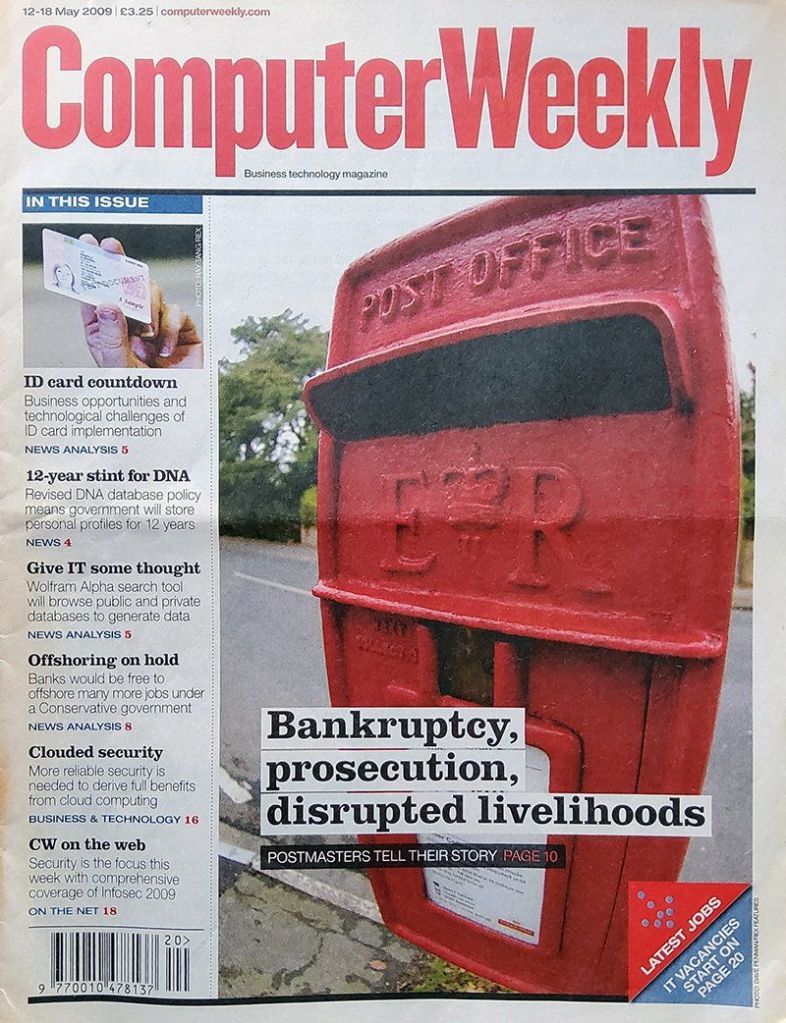
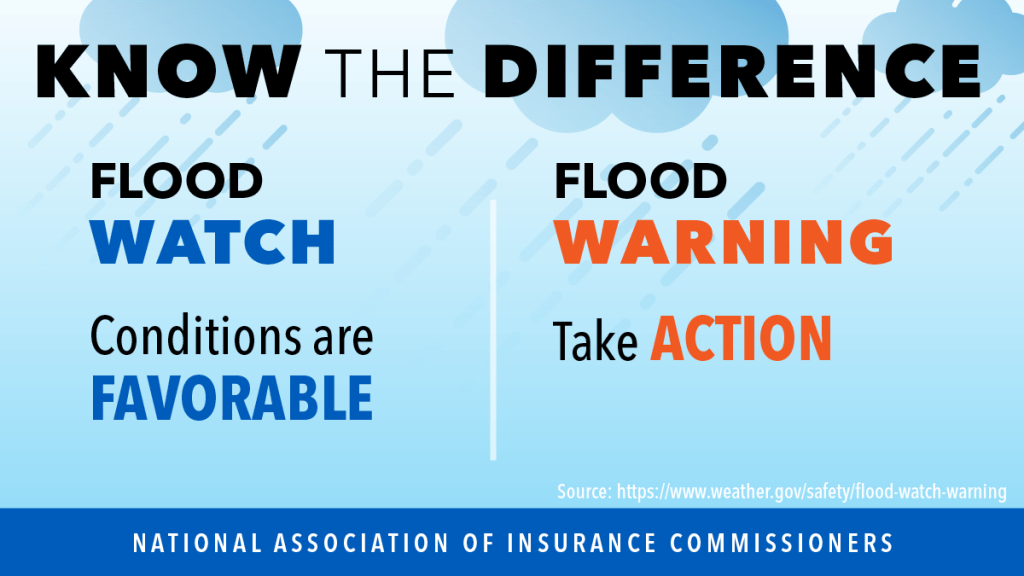


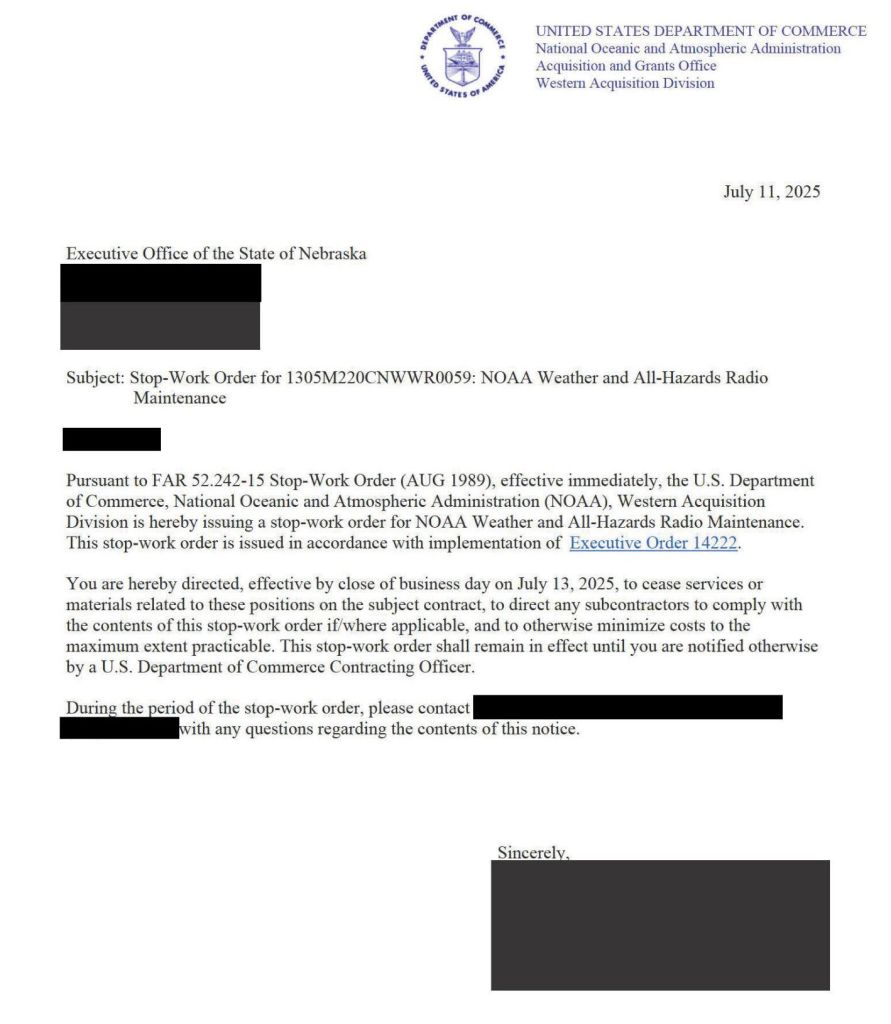


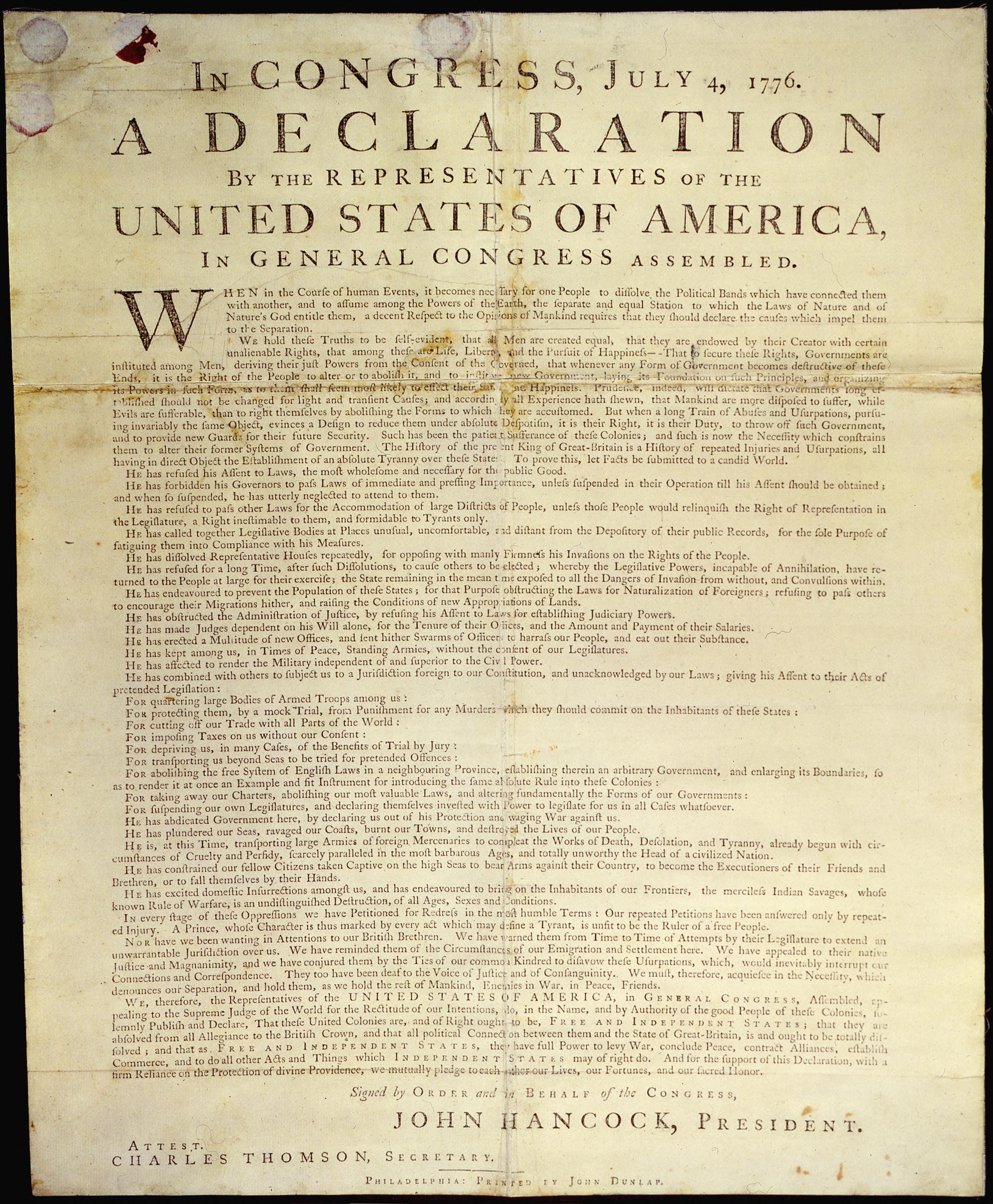
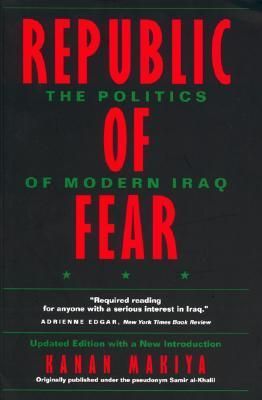
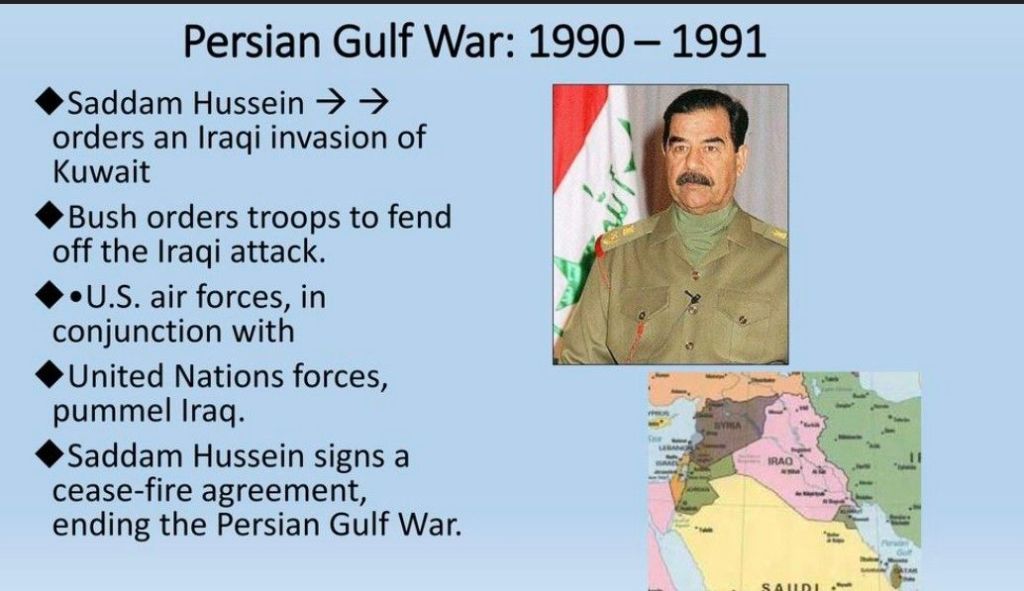


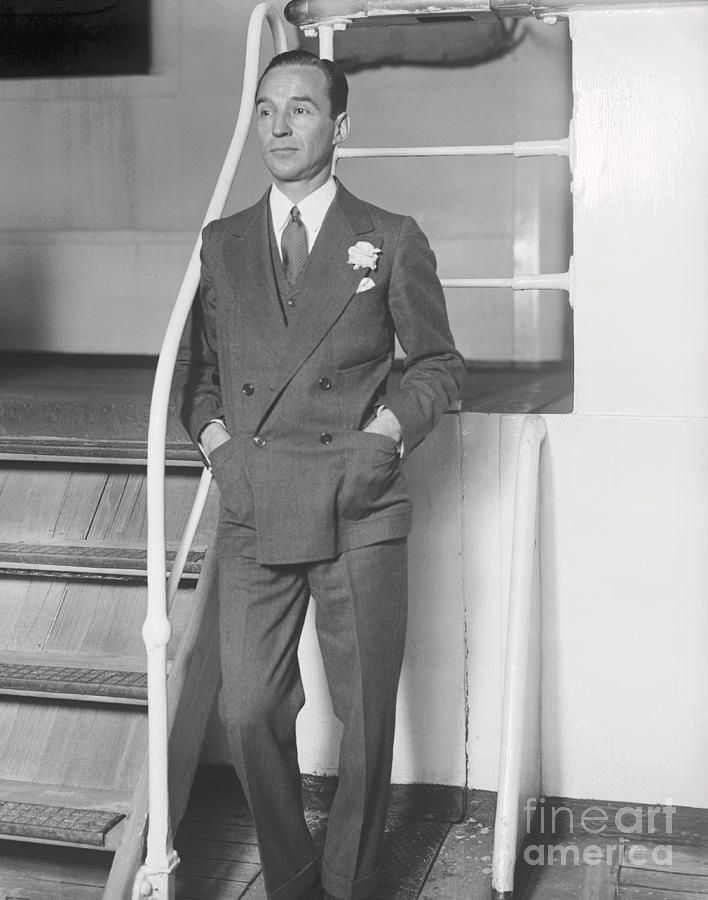

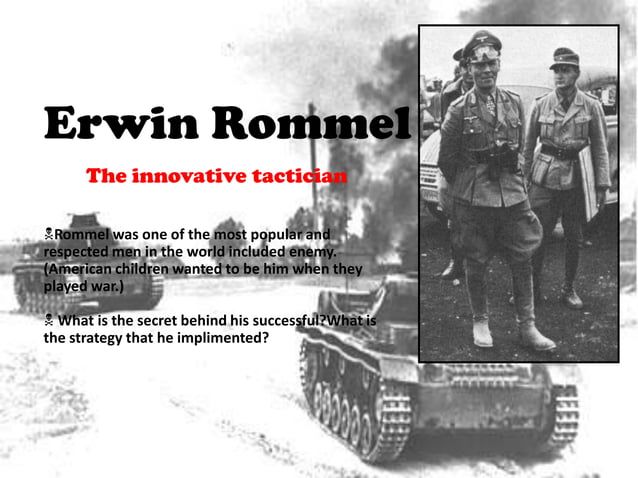
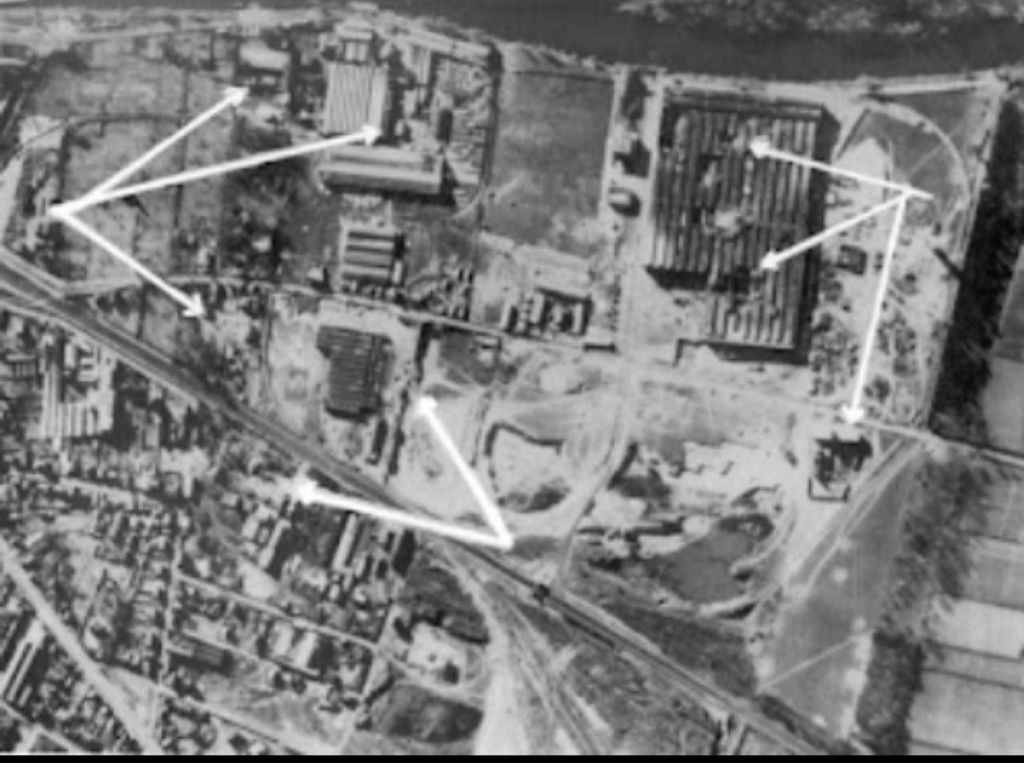


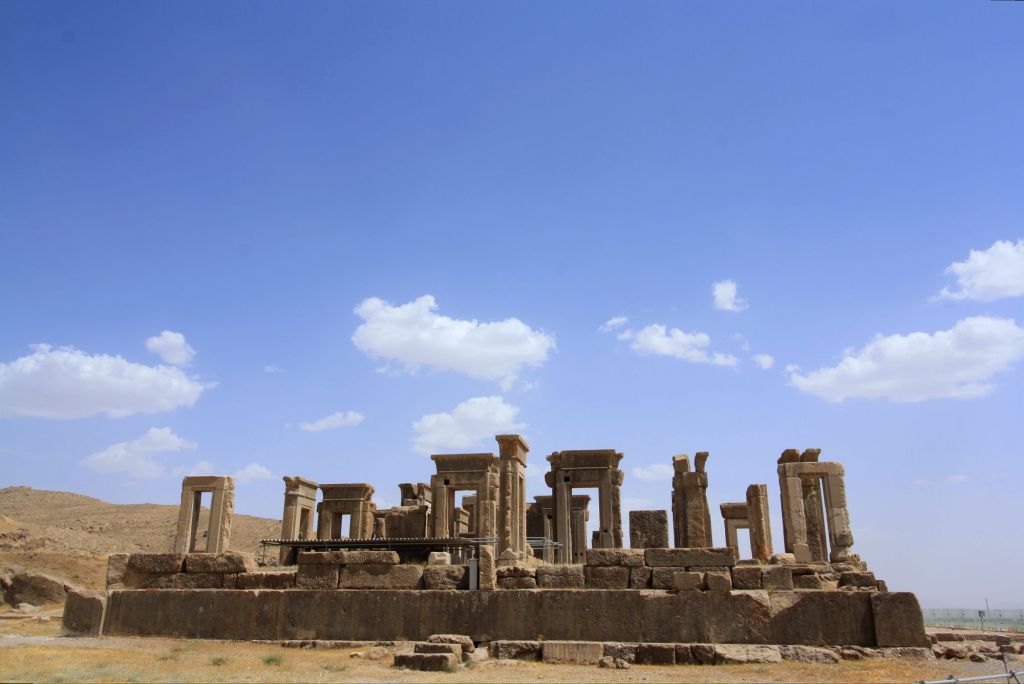
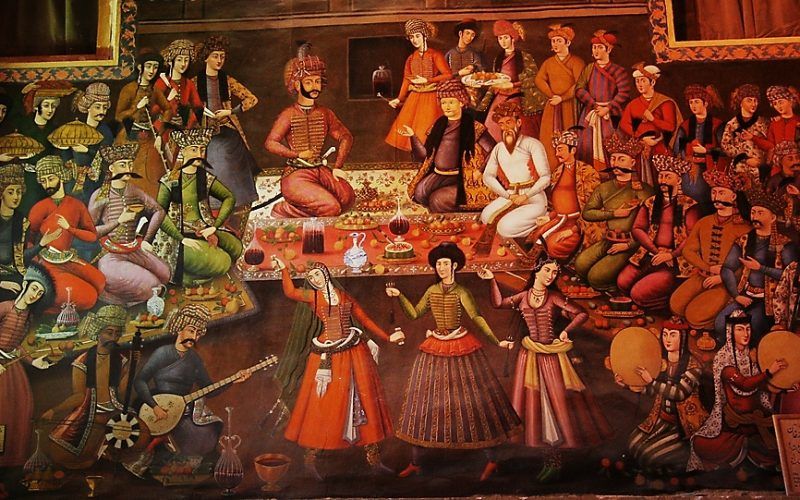

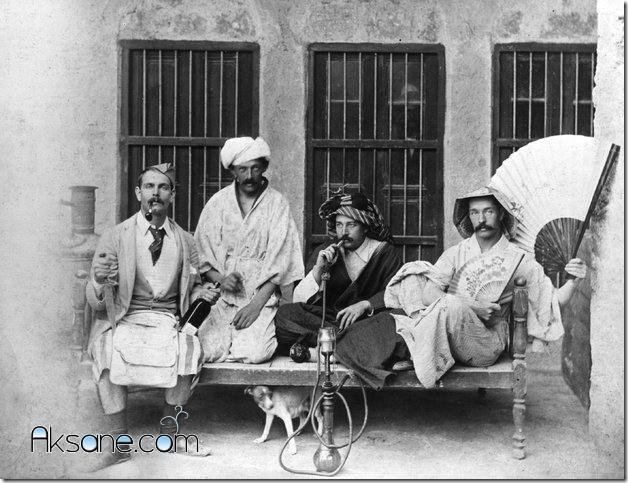


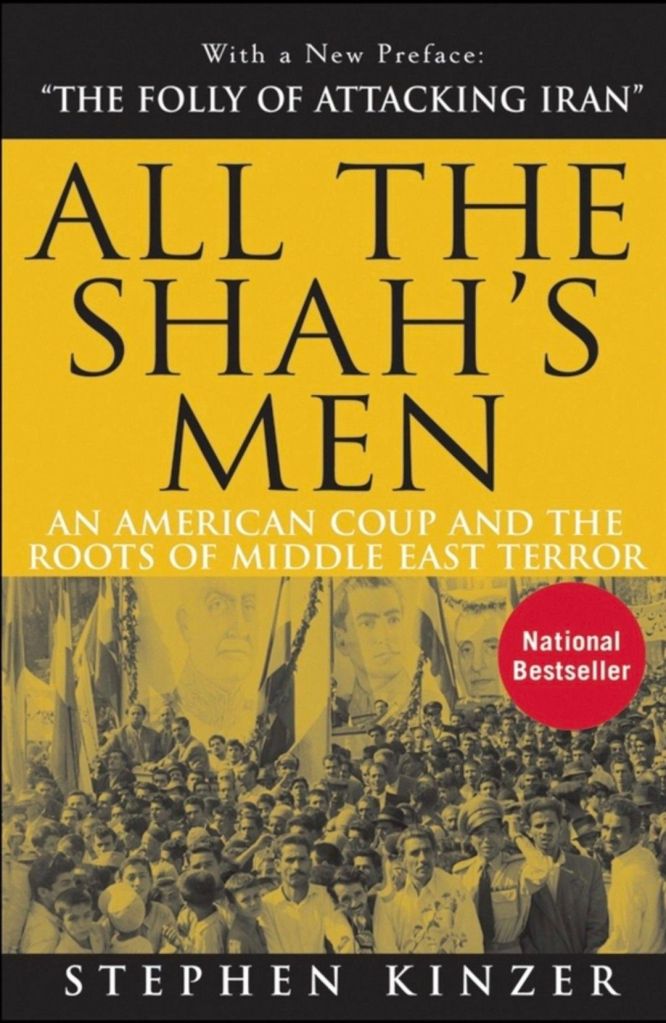




 borderslynn


You must be logged in to post a comment.