2026 Trafficking Report: PH maintains Tier 1 ranking with ban on offshore gaming operations, conviction
By GMA News
Published October 12, 2026 11:50pm Updated October 13, 2026 12:06am
The Philippines retained its Tier 1 ranking in the US State Department’s 2026 Trafficking in Persons (TIP) Report, taking note of the government ban on offshore gaming operations and the conviction of a former mayor in connection with a scam center.
“The government continued to demonstrate serious and sustained efforts during the reporting period; therefore, the Philippines remained on Tier 1,” according to the Report.
“These efforts included enacting legislation banning offshore gaming operations and prescribing criminal liability for traffickers who recruit workers for such operations and convicting a former mayor accused of trafficking in connection with a scam center,” it added.
The report also took note of other government efforts including, adopting a nationwide mandatory victim identification system and an enhanced NRM; increased the number of victims assisted; launch of a centralized interagency trafficking database; and expansion of the Inter-Agency Council Against Trafficking’s (IACAT) prosecutorial task forces and prevention budget.
Sexual exploitation tops Philippine trafficking cases
While the rise of technology has worsened the exploitation of children and facilitated labour trafficking through fake job offers, holding online platforms accountable remains a major challenge.
Jane Bautista
Philippine Daily Inquirer
Sex trafficking victims accounted for the majority at 545 (311 women and 167 girls, 46 men and 21 boys), followed by labor trafficking victims at 345 (158 women and 23 girls, 147 men and 17 boys). COMPOSITE PHOTO COURTESY OF PHILIPPINE DAILY INQUIRER
July 21, 2025
MANILA – Sexual exploitation remains the most common form of human trafficking in the Philippines, followed by labor trafficking and illegal adoption, according to the Department of Justice (DOJ).
“The most prevalent here in terms of cases and detection is really sex trafficking—especially online sexual abuse and exploitation of children (Osaec),” Justice Undersecretary Nicholas Felix Ty told the Inquirer in a recent interview.
Based on data from the Inter-Agency Council Against Trafficking (Iacat), a total of 153 individuals were found guilty and penalized for trafficking-related offenses in 2024.
Of the convictions, 110 were for sex trafficking—including 43 involving Osaec—while 38 others were for labor trafficking and five for illegal adoption.
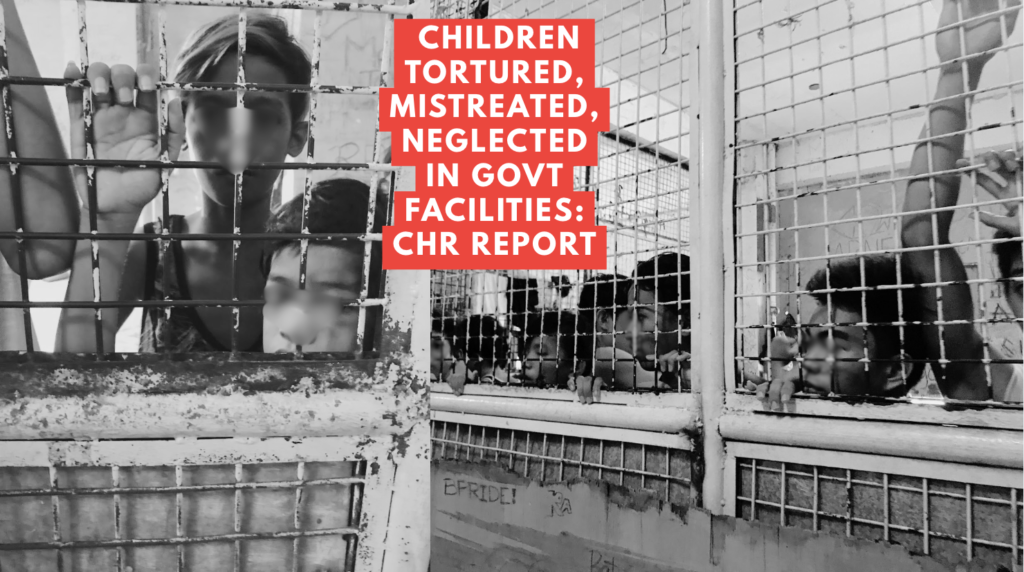
Damning CHR Report Exposes Torture, Mistreatment, Neglect of Children in Government Facilities
By Rights Report Philippines·April 9, 2026·14 min read·SHARE THIS
A report by the Commission on Human Rights accuses the Philippine government of violating laws meant to protect children. It documents a pattern of abuse against children in conflict with the law that begins at arrest, continues inside government facilities such as Bahay Pag-asa, and is sustained by a justice system too broken and too slow to protect them.
A CHILD in Mindanao was not just arrested. He was abducted, blindfolded, and tortured by police officers. While they worked on him, he told investigators later, he overheard them discussing whether to kill him and bury the body.
In Luzon. a boy recalled the moment a police officer punched him in the stomach during his apprehension. In another facility, children who complained of stomach pain, fever, or toothaches were given no medication. Instead, staff forced them to drink large amounts of water, a practice known inside the center as “water therapy.” When children repeatedly asked for actual medicine, they were told to drink more water.
Ukraine intends to continue striking Russian oil refineries despite Donald Trump’s efforts to secure increased diesel supplies from Moscow, exposing a sharp divergence between Washington’s energy priorities and Kyiv’s strategy of degrading the infrastructure sustaining Russia’s war economy.
The Times: EU increases Russian gas purchases despite promises to abandon it
Europe paid €7.88 billion for Russian LNG in the first nine months of the year alone. The bulk of the supplies are under long-term contracts that are still allowed
South Korea’s imports of Russian liquefied natural gas (LNG) in September reached their highest level in about five years.
On the 16th (local time), Russia’s state-run TASS news agency reported that an analysis of Korea Customs Service data showed South Korea imported a total of 3.56 million metric tons of LNG last month, worth approximately $3 billion.
Australia was the largest supplier, with 1.33 million metric tons, followed by the United States with 436,000 metric tons and Canada with 426,000 metric tons. South Korea imported 326,000 metric tons of Russian LNG, worth approximately $250 million, the agency reported. This was the largest volume of Russian LNG imports since November 2021.
The agency cited disruptions to Qatar’s supply as the reason for the increase in South Korea’s imports of Russian LNG. Qatar, one of South Korea’s major LNG suppliers, halted LNG production in early March following Iranian airstrikes. State-owned QatarEnergy subsequently declared force majeure on its LNG supply contracts, leaving supplies to South Korea suspended, the agency explained.
Meanwhile, the European Union (EU) and the United Kingdom plan to completely ban the provision of services related to the transport and insurance of Russian LNG starting in January 2027, as part of sanctions against Russia. However, Russian LNG imported by South Korea and Japan under existing long-term supply contracts will be exempt from the sanctions until March 2028.
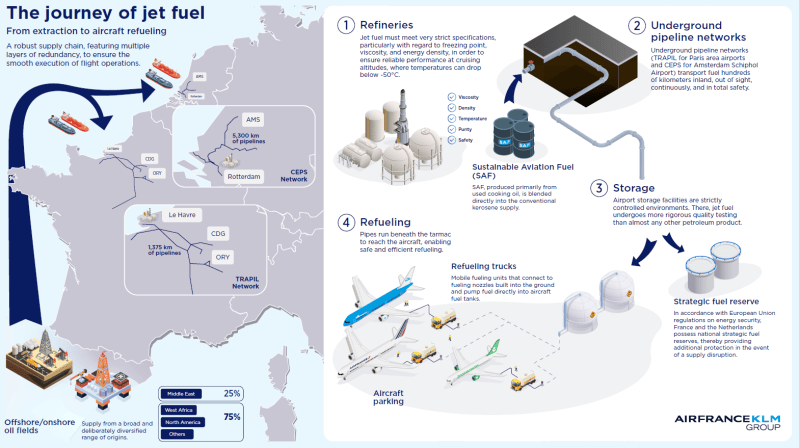
Jet fuel starts as crude oil, extracted from oilfields around the world. Unlike road fuels, Jet A-1 is produced to exceptionally tight specifications: it must meet strict requirements on flash point*, freezing point, viscosity, and energy density to perform reliably at cruising altitudes where temperatures can drop below -50°C.
European airports draw their supply from a broad and deliberately diversified range of origins. Domestic European refineries, including major facilities in France and the Netherlands, provide a significant share of the continent’s needs, supported by imports. Before the crisis, around 25% of jet fuel consumption in Europe was imported from the Middle East. New logistics routes, namely from North America and West Africa, are now in place to increase supply from these regions to Europe.
While recent tensions in the Middle East have put upward pressure on prices, the multitude of supply routes and the depth of storage infrastructure in Europe strengthen the resilience of Air France-KLM’s supply chain in the face of any regional disruptions.
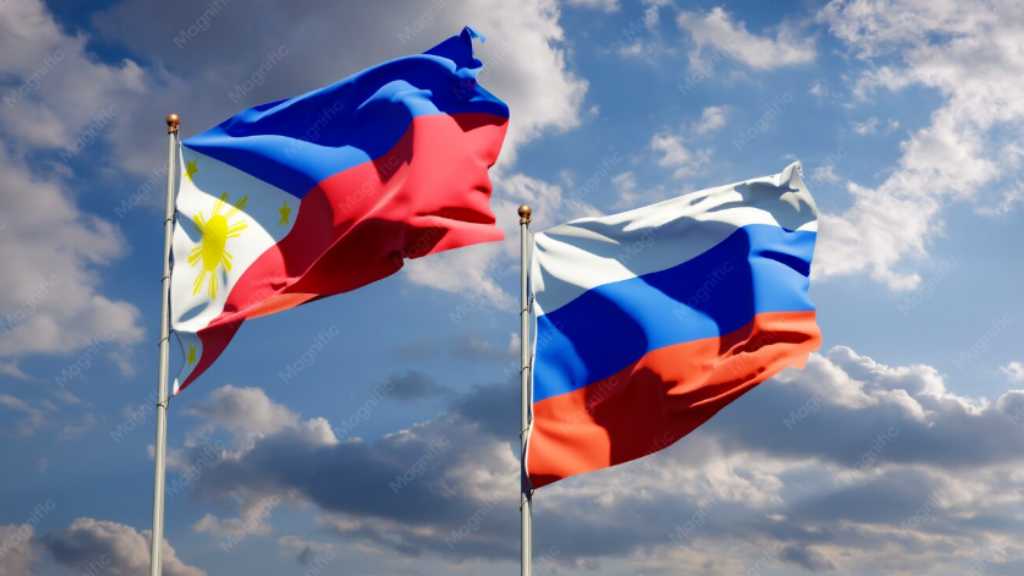
On May 27, Sergey Lavrov, Minister of Foreign Affairs of the Russian Federation, had a telephone conversation with Maria Teresa Lazaro, Minister of Foreign Affairs of the Republic of the Philippines.
On the eve of the 50th anniversary of Russian-Philippine diplomatic relations, celebrated on June 2, the parties expressed their intention to deepen constructive dialogue and practical cooperation between the two countries.
Compared to other Southeast Asian countries such as Vietnam or Thailand, Russia and the Philippines are only forming stable trade and logistics ties. The volume of bilateral trade between Russia and the Philippines remains modest: in January–July 2025, it amounted to $54 million. Exports from Russia to the Philippines totaled about $24 million, while imports from the Philippines to Russia totaled $30 million.
In recent years, bilateral relations between Russia and the Philippines have been undergoing an active renewal. Work is underway to improve the legal framework, expand trade, and launch joint projects in the energy sector, agro-industrial complex, pharmaceuticals, and digital technologies.
According to Artem Tsinamdzgvrishvili, Trade Representative of the Russian Federation in the Republic of the Philippines, energy, agriculture, pharmaceuticals, and digital technologies remain the priority areas of bilateral cooperation.
Energy industry
The Philippines is interested in Russian supplies of liquefied natural gas (LNG) and Rosatom’s small modular reactor (SMR) technologies. Russian LNG can help strengthen the energy security of the country’s island regions and smooth out seasonal load peaks. At the same time, Russian SMRs are seen as a competitive solution for decentralized energy systems, which opens up opportunities for long-term technological cooperation. The prospects for cooperation between the parties cover a wide range of areas, from renewable energy and nuclear energy to digital and infrastructural solutions that ensure the sustainable development of the energy sector.
Agricultural industry
In April of this year, an official Philippine delegation from several competent departments of the country visited Russia. It included Acting Director of the Bureau of Animal Husbandry of the Ministry of Agriculture of the country Christian Paduit Dakigan, Acting Executive Director of the National Meat Inspection Service Lontok Nuestro Fernando, and Director of the Philippine Meat Processors Association Cesar Buhai Ambalada. The Russian side was represented by Sergey Dankvert, head of the Rosselkhoznadzor, and Sergey Yushin, head of the National Meat Association. The parties outlined important vectors of cooperation in trade, the veterinary industry, and attracting new personnel.
One of the main topics of the meetings was the issue of Russian meat supplies to the Philippine market, in particular pork. According to Cesar Ambalada’s calculations, Russian exporters of this meat can become key suppliers of pork to the Philippine market and import about 100-120 thousand tons annually. Ambalada clarified that this is 10% of the total supplies to the Asian country. The head of the National Meat Association, Sergey Yushin, said that the Russian Federation could reach such volumes of supplies within 2-3 years. This year, he estimates shipments at no less than 30-40 thousand tons.
Sergey Dankvert recalled that the Philippines annually buys over 1.5 million tons of various types of meat. For its part, the Philippines proposed to use a systematic certification model to facilitate sales, that is, the accreditation of the entire product control system without inspection of each individual plant. As Cesar Ambalada explained, this will allow all Russian exporters to be accredited automatically.
In addition to meat products, the export of Russian wheat and other grains remains a promising area, which can strengthen the food security of the Philippines.
Pharmaceuticals
In recent years, the supply of Russian medical products and equipment to the Philippines has been actively growing. In 2022-2024, 13 Russian drugs were registered on the country’s market, mainly anticancer drugs and immunomodulators.
Interdepartmental consultations are underway between the Food and Drug Administration under the Ministry of Health of the Republic of the Philippines and the State Institute of Medicines and Medical Devices to accelerate the registration and mutual recognition of GMP standards. This will create conditions for expanding the presence of Russian manufacturers in the Philippine market, including the supply of radioactive pharmaceuticals for the diagnosis and treatment of cancer.
Digital technologies and innovations
A significant step in the development of technological cooperation between Russia and the Philippines was the signing on September 17, 2025, on the sidelines of the Intergovernmental Commission, of a Memorandum of Understanding between the Skolkovo Foundation and the National Development Corporation of the Republic of the Philippines (NDC).
The document became the first interstate agreement in the field of high technologies and laid the foundation for the formation of a permanent platform for interaction between the innovative ecosystems of the two countries.
The Philippine Innovation Hub, which is being created, will become a platform for Russian ICT companies to enter the Philippine market and promote solutions in the fields of fintech, logistics, education, agricultural technology, cybersecurity, and smart cities.
The 50th anniversary of the establishment of diplomatic relations between Russia and the Philippines coincides with the Philippines’ chairmanship in ASEAN, which creates unique opportunities for expanding economic dialogue and strengthening cooperation between the two countries.
Trump will participate in the summit in Manila on Nov. 16 before going to China for the Asia-Pacific Economic Cooperation summit in Shenzhen, which will take place from Nov. 17-19, the White House said.
Philippine President Ferdinand Marcos Jr. has been inviting Trump to visit his country for some time, a US official said.
Philippine President Ferdinand Marcos Jr., here with President Trump at the White House in July 2025, has extended an invite to the commander in chief to visit his country for some time.The Washington Post via Getty Images
US embassies across the entire Middle East issued identical security alerts on Monday, warning their citizens in Israel, Saudi Arabia, Iraq, Lebanon, Jordan, Qatar, Bahrain, Kuwait, Oman, the UAE, Yemen and Iran to exercise heightened vigilance.
The alerts warn all US citizens of potential flight cancellations, airspace closures and travel disruptions due to the risk of military escalation linked to Yemen’s Houthis and Iran.
The warning covering 12 countries states that “the hostilities have the potential to escalate rapidly beyond that immediate area” and to “develop contingency plans in advance.”
“Iran and groups supportive of Iran may target other US interests overseas or at locations associated with the United States and Americans throughout the world, including US businesses and other institutions,” the alert said.
In Saudi Arabia, the embassy warned of a “complex security environment,” as “Iranian-supported Houthis have engaged in hostilities against Saudi Arabia, including attacks on civilian airports and other critical infrastructure resulting in civilian casualties and severe travel disruptions.”
The alert also states that “Iran and groups supportive of Iran may target other U.S. interests overseas or at locations associated with the United States and Americans throughout the world, including US businesses and other institutions.”
In Qatar, the US embassy urged its citizens on Sunday to monitor official alerts and local media, avoid demonstrations and large gatherings, and follow instructions from local authorities.
Qatar Airways announced on Monday that it will suspend its Saudi-bound flights to and from Riyadh and Dammam until 24 October and reduce flights to Jeddah from seven to four per day.
Theoretically, the article builds upon the recent use of interactionist approaches to explain the emergence of violence during protests and other forms of contention (Bramsen, 2018; Nassauer, 2018, 2019, 2021; Tiratelli, 2018). Grounded in Collins’ (2008) micro-sociological work on violence, such research focuses on the emotional dynamics of situational encounters and how specific patterns of interaction enable actors to overcome the tension and fear that otherwise inhibits the onset or persistence of violence. It has highlighted that situational encounters can acquire their own violence-favouring logics, distinct from the wider struggles of which they are a part (Nassauer, 2018, 2022), and proved effective at predicting the occurrence of violence (Nassauer, 2019).
This article also addresses questions that interactionist approaches address less well, however, about: (a) how such violence-favouring situations arise, (b) what can inhibit their emergence, and (c) why some violence-favouring situations do not give rise to violence. To do this, the article brings situational analysis into dialogue with three intersecting strands of political violence research: on the relational dynamics of conflict escalation and de-escalation (Alimi, 2024; Alimi et al., 2015), on processual approaches to conflict (Malthaner, 2017), and on the restraints on violence within radical milieus (Busher & Bjørgo, 2020). This approach follows calls to explore how we can augment interactionist approaches by integrating “upstream” structural and contextual factors (Nassauer, 2022; Tiratelli, 2018; Unverdorben, 2023; Whitehead et al., 2018) and reflects a long tradition of research on political violence and civil unrest that emphasises the value of integrating macro-, meso-, and micro-level analyses (Della Porta, 1995; Waddington et al., 1989). It also reflects a practical intent: our aim is to enhance the ability of state and civil society actors not just to manage far-right violence as it unfolds, but to anticipate and inhibit its emergence.
Our focus on far-right protest reflects the recognition that assertive far-right protests across the Global North and beyond represent a social issue that warrants attention. Such protest is also of particular theoretical interest. It remains relatively under-studied in comparison with other forms of protest (Gattinara & Pirro, 2019); is imbued with a deep logic of violence against perceived out-groups (Karapin, 2002), making variance in violence use particularly interesting; and is often characterised by the co-presence of counter-protestors.
Hundreds of thousands are protesting in France against the high cost of living and poor schools. Violent groups are looting stores and attacking public buildings. Riots also broke out in Milan over two days. Seven answers about the weekend.
S. Ziegler, F. Berner, N. Agostini
Today at 09:18•Today at 09:27
Here’s what it’s all about
In France, more than half a million people demonstrated on Saturday, mostly peacefully.
At the same time, serious riots broke out—including in Italy. In Milan on Sunday, more than 200 young people were taken to police stations, about 80 percent of whom were minors.
Behind the protests are a variety of causes and groups.
Summary created with
Smashed storefronts in Paris, a burned-out city hall in Limoges, and looted stores in Milan: Social protests over the weekend were marred by serious riots.
But who is protesting, and why? And who is using the rallies as an opportunity to commit acts of violence and theft? blue News provides the key questions and answers about the weekend.
The unrest has sharpened the political confrontation between the radical Left and the nationalists. Marine Le Pen accused Jean-Luc Melenchon’s movement of having “legitimised the violence” and said sh…
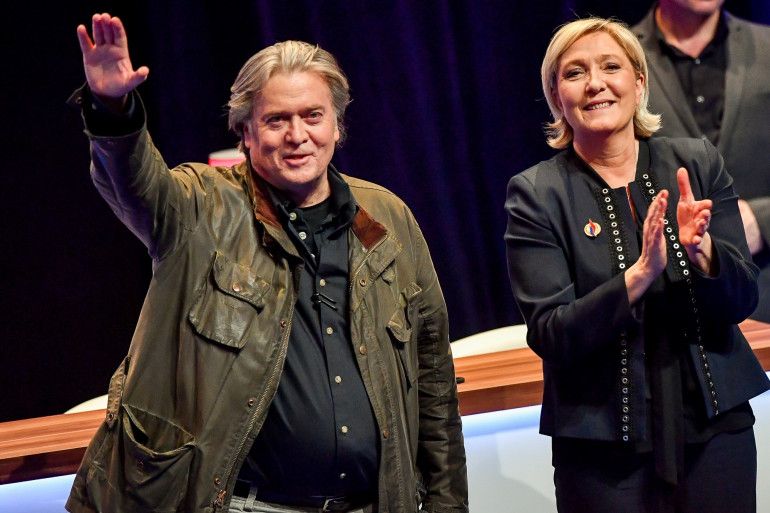
One of child-rapist Jeffrey Epstein’s many roles was as a powerbroker and connector of far-right and fascist individuals globally. Messages now show how former Trump advisor Steve Bannon sought the sex-trafficker and paedophile’s help to support the European far-right.
The messages mostly date from 2018 and 2019, when Bannon, after being sacked by Trump, regularly visited Europe in his quest to forge a movement in the European Parliament uniting ultra-right wing and Eurosceptic forces from several countries including Italy, Germany, France, Hungary, Poland, Sweden and Austria.
Italy’s Matteo Salvini and France’s Marine Le Pen, both leaders of far-right and fascist-adjacent political parties, were among those Bannon wanted to see flourish:
Bannon especially set his sights on Matteo Salvini, the Italian deputy prime minister and leader of the far-right League party, who at the time was at the height of his political power.
Opposition parties in Italy have called for investigations:
to clarify whether Epstein influenced the rise of the League after Salvini’s name was cited several times in messages exchanged between Bannon and Epstein.
Then, at around 1:30 p.m. Eastern, No Kings’ Instagram account was taken offline. It left the organization without its biggest megaphone during the height of the protests.
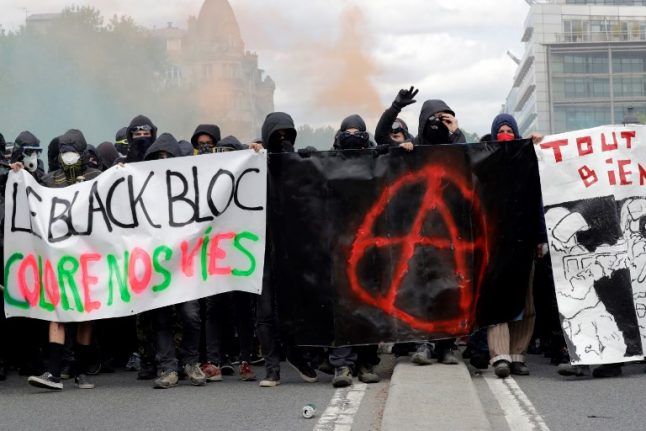
Look back to emergence of ‘black clad rioters’ on May 1st 2018 in Paris:
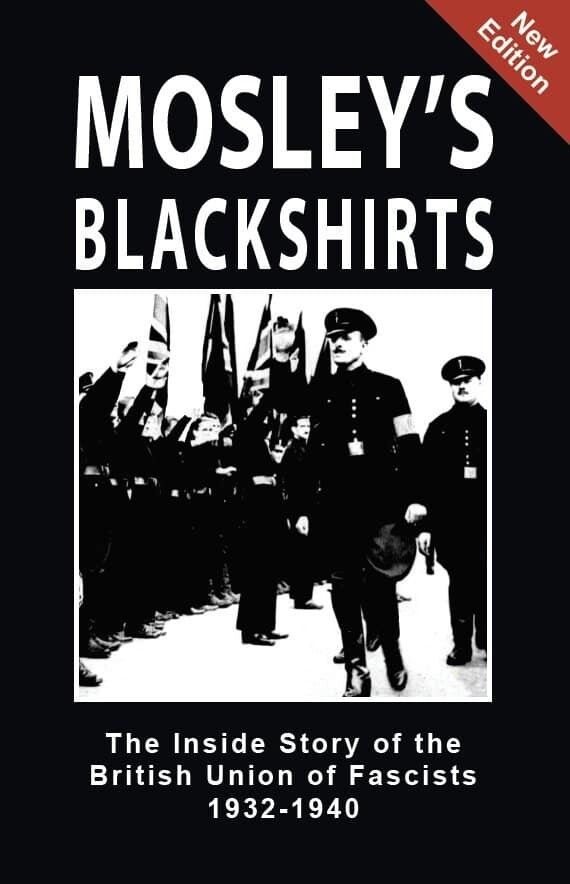
Politics Fascism. pic: April 1934. Sir Oswald Mosley walks down an avenue of saluting Blackshirts as he arrives at the Albert Hall for a meeting. Sir Oswald Mosley, (1896-1980), was founder and leader of the British Union of Fascists in the 1930’s. Politics, Fascism, pic: April 1934, Sir Oswald Mosley walks down an avenue of saluting Blackshirts as he arrives at the Albert Hall for a meeting, Sir Oswald Mosley, (1896-1980), was founder and leader of the British Union of Fascists in the 1930’s (Photo by Bentley Archive/Popperfoto via Getty Images/Gett
Frozen Russian Assets: Europe Rejects US Control Plan – FT
In brief: The Trump administration proposed placing part of Russia’s frozen sovereign assets in Europe under Washington’s oversight to help revive peace negotiations, according to the Financial Times. European representatives rejected the idea. US envoy Steve Witkoff and Jared Kushner raised the proposal during talks involving Ukrainian and European officials in Miami, where control of the funds became another point of disagreement.
A Russian national tricolor flag flies atop the Russian Central Bank headquarters in downtown Moscow on February 13, 2026. (Photo by HECTOR RETAMAL / AFP)
Report: Arab states poured nearly $15 billion into US universities
New data show Qatar, Saudi Arabia and the UAE have funneled billions into American higher education over five decades, much of it undisclosed, raising concerns of foreign influence
Daniel Edelson, New York | published: 09.05.25 | 08:51
Witkoff and Kushner keep their teams small when negotiating major business deals and approach the world stage in a similar way. One of the administration officials noted that real estate deals begin at the top with a select few who have a vision.
“Then after that comes constructive managers and coordinating with engineers and architects and so forth,” the first official continued. “So I just think that we’re very good at understanding what the complicating features of a deal are. We talk about it, we address it, then we figure out how we’re going to solve it.”
Global negotiations, like development deals, have “similar rhythms for transactions,” said the second administration official.
“Some of these conflicts, they all move the same way,” said the first administration official, noting that the “game plan” receives input from Trump, Secretary of State Marco Rubio, CIA Director John Ratcliffe and chief of staff Susie Wiles. There is also a working relationship with Vice President JD Vance, Secretary of Defense Pete Hegseth and Chairman of the Joint Chiefs Gen. Dan Caine.
“We’ve had people say, ‘How can you have such a small team?’ Well the beginning of the decision-making here on the game plan doesn’t require a big group,” the first administration official said.
Witkoff and Kushner’s one-size-fits-all approach was most evident last month in Geneva when the duo met with the Ukrainians, the Russians and the Iranians in one day, attempting to secure separate deals to end the four-year war in Ukraine and halt Iran’s nuclear capabilities.
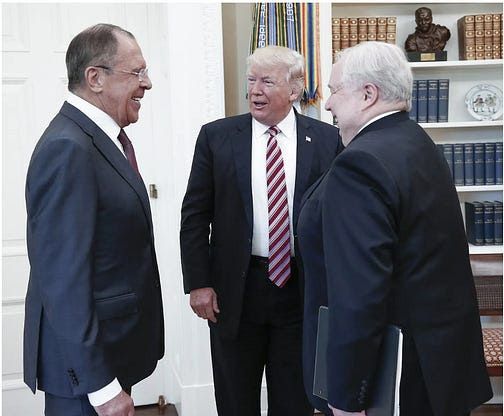
President Trump with Russian Foreign Minister Sergei Lavrov and Russian Ambassador to the U.S. Sergey Kislyak in the Oval Office, May 10, 2017. Alexander Shcherbak/TASS/via Getty Images.caption…
See Ruth Ben-Ghiat Substack, Oct 19th:
Just months after his inauguration, Trump hosted Russian Foreign Minister Sergey Lavrov and Russian Ambassador to the U.S. Sergei Kislyak in the Oval Office, with only a Russian state photographer from TASS present. This told the world that the White House would be a Russian-friendly space with Trump in power, with Kremlin views of politics and the world amplified by Washington.
And now, as the mid-terms approch;
Of course, Trump of all people should know that in fact his debt will never be repaid, that for autocrats loyalty is earned every hour of every day. The more autocrats fear losing power and influence, the more volatile they become, and while we know Trump is growing desperate to avoid the rout of the midterms, this essay reminds us that he is also under pressure from abroad. This is why he is escalating his assistance to Russia and his attempts to make America submit to his will, with much more to come before his time in power ends.
Taybeh , the West Bank ‘s fully Christian town and community
Church
Taybeh: West Bank Christian town under renewed settler incursion
Israeli settlers escalate their incursions into Taybeh, the West Bank’s last fully Christian town, raising concerns over further land appropriation. The parish priest, Father Bashar Fawadleh, appeals for international intervention, as residents face mounting restrictions and call for peace, justice, and protection.
Fear and attacks grip Taybeh, the last all-Christian town in the West Bank
Historic Taybeh, a Palestinian Christian town in the occupied West Bank, targeted by settlers in coordinated attacks.
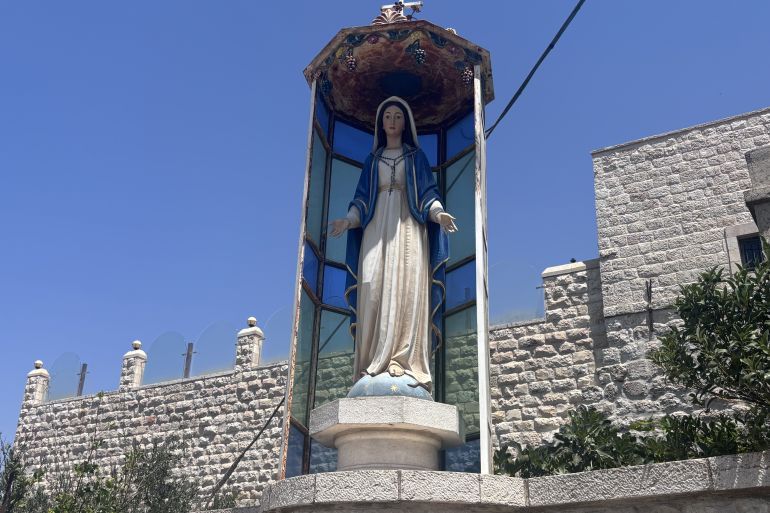
A statue of the Virgin Mary in Taybeh, occupied West Bank [Al Jazeera]
14 Aug 2026
Taybeh, occupied West Bank – Underneath a painting of Jesus and his disciples, Sandra Basir brought out what she and her husband, Roland, now keep to protect their home: a couple of fire extinguishers.
They keep them because the last time Israeli settlers set fire to a neighbour’s car outside their house, no one else came. “Civil defence – when did they even show up? After everything was already over,” Roland says.
The couple’s nightly routine in their Palestinian Christian town is now similar to the majority-Muslim rural Palestinian communities besieged by settler attacks and nighttime military raids for years. Sandra checks the doors more than once before bed. They got a dog to stay outside to alert them of any trespassers. Sandra is, by her own description, always half-awake – listening for whoever might be coming for her four small children while they sleep.
Their seven-year-old son has stopped playing outside, Sandra says, and for months, the little boy told his father not to go to work – scared he might not return. “That’s what our life has become,” says Sandra, who was on the verge of tears throughout the conversation. “A child that age should just be playing.”
For more than 20 years, Roland built up a stone quarry and concrete-block factory on the edge of town, investing an estimated $5m in the business. After employing 40 local Palestinians, he has found his life’s work snatched by marauding settlers, both armed adults and some barely teenagers.
In the past three years – and with the situation deteriorating even more severely this past year – he and his workers were frequently chased off by settlers at gunpoint, with his quarry’s heavy-machinery equipment set on fire. The most brazen attack came in March, when Roland says some 30 to 40 settlers stormed the quarry site in a coordinated mass incursion. Videos and photos show them raising Israeli flags over the grounds and performing prayers on the land. Before leaving, they smashed his office, destroyed electrical panels, and pulled cameras from the walls.
Damage after a settler attack on Roland Basir’s quarry in the town of Taybeh in the West Bank [Courtesy of Roland Basir]
Roland documented everything on video, filed complaints with the liaison office, the police, and every institution he could reach. All his efforts to mobilise help to protect his land, however, were for naught. The settlers were back the next day, with their attacks continuing ever since.
Israeli settlers attack European diplomats and French mayor in West Bank, Belgium says
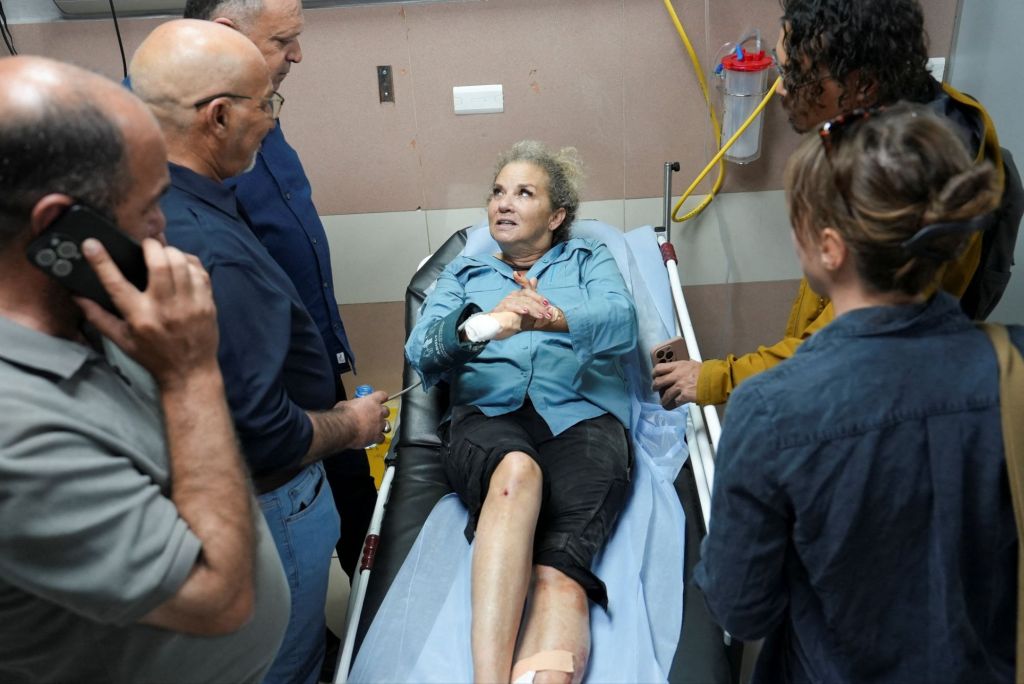
Washington Post photographer Heidi Levine was hospitalised after she was violently assaulted by Israeli settlers
18 Oct 2026, 14:38 | Updated: 53m ago
According to an October 17 post by Maxime Prevot, a number of people including the Belgian Consul General, French and Polish diplomats as well as Catholic representatives were attacked by Israeli settlers in the largely Christian city of Taybeh.
These attacks come days after Washington Post photographer Heidi Levine was hospitalised from a violent assault by Israeli settlers on her and Palestinians she was with.
The attack on Levine garnered international condemnation, including from the United States, with Marco Rubio calling it “disturbing”.
Trump invoked the Graham Act’s national-interest waiver to suspend new duties on Russian goods and major Russian energy buyers, along with other sanctions and restrictions.
The waiver came two days before the law’s implementation deadline and follows a separate temporary easing of sanctions on Russian diesel exports.
The moves have drawn praise from a Russian envoy and criticism from Democrats.
President Donald Trump signed an executive order late Friday waiving parts of a recently enacted package of sanctions aimed at curbing Russia’s ability to prosecute its war against Ukraine.
“I have submitted to the Congress a certification that the issuance of such a waiver is in the national interests of the United States,” Trump wrote in Friday’s order.
The House passed the Russia sanctions bill on Sept. 16, and Trump signed it into law two days later. The bill was introduced over a year ago, and its primary backer was the late Lindsey Graham, a veteran Republican senator who represented South Carolina.
The act required the president to increase duties on all Russian goods imported into the U.S. by up to 500% no later than 30 days after enactment. It also required Trump to impose tariffs of up to 100% on countries including China and India that are among the top five purchasers of Russian crude oil or gas.
Trump’s latest order waives these two parts of the Graham Act and comes two days before the law’s implementation deadline. However, the order preserves existing sanctions on Russia under earlier executive orders.
The law could also sanction Russian leaders, officials, and financial institutions, and expand sanctions on Iran.
The move also comes a week after the Trump administration temporarily waived sanctions on Russian diesel exports through April 2027 to ease a supply crunch caused by the war in Iran.
High fuel prices are a sensitive issue for voters ahead of midterm elections on Nov. 3. Trump’s Republican Party holds a narrow majority in both chambers of Congress.
A ‘historic moment’
“The suspension of some of the provisions of the Graham Act marks an important and truly historic moment,” Kirill Dmitriev, Russian President Vladimir Putin’s economy envoy, said in a post on X.
“The U.S.-Russia economic dialogue and peacemaking efforts will continue,” Dmitriev added.
Houthi missiles strike Yemen presidential palace, killing five
Attack was the first on Aden’s Al-Maashiq palace in the latest fighting between the Iran-aligned Houthis and Saudi Arabia
Guardian staff and agencies
Fri 16 Oct 2026 01.27
Yemen’s Houthis fired missiles at the presidential palace complex in the southern city of Aden on Thursday, killing five people, the government said, as the Saudi-led coalition listed dozens of Houthi attacks on Saudi infrastructure in recent weeks.
The attack was the first on Aden’s Al-Maashiq palace in the current conflict between the Iran-aligned Houthis and Saudi Arabia. The palace is the seat of Yemen’s Saudi-backed and internationally recognised government.
Yemen’s prime minister, Shaya al-Zindani, and cabinet members were safe following the attack, Yemeni information minister Moammar al-Eryani said. Witnesses told Reuters they heard loud booms near the palace. Yemen’s cabinet said the attack involved missiles and drones.
Yemen’s health minister, Qasim Buhaibeh, said five people were killed and 16 wounded in the attack, with casualties including guards and civilian employees.
Houthi military spokesperson Yahya Saree said its fighters had bombed what he described as the Saudi military operations headquarters in Aden, as part of the group’s declared policy of targeting “Saudi reinforcements wherever they were located”.
Agence France-Presse reported that a Yemeni government minister said on condition of anonymity that the palace attack had hit a command centre for the Saudi-led coalition. The official added that the command centre was hit by three missiles, and the headquarters of the coalition forces at the presidential complex with two missiles, adding that there were Yemeni and Saudi casualties, without providing a specific toll.
Fighting has escalated between the Houthi rebels and a Saudi-led coalition as part of clashes linked to the US and Israeli war on Iran, and aid agencies have warned of rapidly worsening conditions in Yemen.
The clashes have complicated efforts to end the wider Iran war and further rattled global markets as Saudi Arabia, one of the world’s top oil exporters, faces repeated attacks. Regional aviation is affected, too, as the rebels have warned airlines about their use of Saudi airspace for attacks. Thousands of flights across the kingdom have been disrupted.
Saudi Arabia is being urged to reconcile with the United Arab Emirates over Yemen as the price Riyadh must pay to form a military alliance capable of driving the Houthis back.
Relations between the UAE and Saudi Arabia in Yemen, where both had backed anti-Houthi forces, plummeted in January this year when a force with which the UAE had been aligned – the separatist Southern Transitional Council (STC) – was attacked and defeated by Saudi Arabia in a move intended to squash its attempt to recreate a separate southern state. The UAE subsequently in effect quit Yemen.
But the unexpected success in mid September of the Iran-aligned Houthis’ drive to the narrow Bab al-Mandab strait against pro-government forces has transformed the geopolitics of the region again. The push south defeated the previously UAE-backed National Resistance Forces led by Tareq Saleh, whose front rapidly collapsed.
The future role of the UAE in Yemen was discussed at a meeting in Abu Dhabi on Sunday attended by the Israeli prime minister, Benjamin Netanyahu, the UAE president, Sheikh Mohammed bin Zayed Al Nahyan, and a group of other Arab states, including representatives of Saudi Arabia.
Netanyahu reportedly offered to help Saudi Arabia defeat the Houthis, an offer that Riyadh would probably find near impossible to accept, even though Donald Trump has failed to answer the Saudi call for US help in Yemen.
A further meeting to discuss Yemen took place on Tuesday in Riyadh between Prince Khalid bin Salman Al Saud, the Saudi defence minister, and Sheikh Mansour bin Zayed Al Nahyan, the UAE vice-president.
It is part of a range of signs from the two sides suggesting they may want to find a path to reconciliation, even if only on energy.
Following the Houthis’ push to the Bab al-Mandab strait, a chokepoint on Saudi oil exports, their forces are now trying to consolidate their gains and take the south-western city of Taiz.
“The Houthi forces are mounting simultaneous waves of attacks on the city, trying to exhaust the Taiz Axis force defending the city,” said Baraa Shiban, a Gulf and Yemen specialist at the defence thinktank Rusi who has just spent a week in Taiz. “The Houthis are pushed back, but then the next day they come again on a different front.
“Efforts are being made to try to end the rift between Saudi Arabia and the United Arab Emirates and there may be some confidence-building measures. But the UAE has left Yemen, and it is unlikely that Riyadh would let them back in since they are aligned with the STC, and that would spell trouble … the UAE and Saudi Arabia are fundamentally on opposite sides.”
In a detailed report published on November 25, the Financial Times revealed information about Russia’s recruitment of hundreds of Yemenis to fight in Ukraine, luring them with promises of high-paying jobs and even Russian citizenship.
According to the newspaper, the recruitment operations are led by a prominent Houthi political figure, using a company linked to the Houthis that deceived recruits with job offers in Russia.
Upon arrival, however, it became clear that they had been forcibly enlisted into the Russian military and sent to the front lines in Ukraine.
The Financial Times reviewed some of the recruitment contracts, finding that they were connected to a company founded by Houthi politician Abdulwali Abdo Hassan al-Jabri.
Registered in Salalah, Oman, the company is listed as a tourism and medical supply retailer.
Al-Jabri, a member of the Yemeni parliament and a brigadier general in the Houthi-aligned army, was among 174 Houthi leaders sentenced to death in absentia by a military court representing Yemen’s internationally recognized government.
On November 27, investigative researcher Lou Osborne from the Swiss Organization Impact stated that the contracts between Houthi mercenaries and the Russian army pass through the company of Houthi politician al-Jabri, who is “involved in the arms trade between Russia and the Houthis”
According to Osborne, some fighters are recruited in Jordan’s capital, Amman, while working in restaurants, with little to no actual military experience.
According to information from the British newspaper, recruitment operations began in July 2024.
While some of the fighters were experienced in combat, the majority had not received any formal training.
The report claims that many were deceived into traveling to Russia, where they unknowingly signed recruitment contracts they were unable to read.
The newspaper reported that it spoke to several Yemenis from a group of 200 individuals, who confirmed they were promised a $10,000 bonus and a monthly salary of $2,000 when they were asked to travel to Ukraine, along with the prospect of Russian citizenship in the end.
Sokolov has been working as an investor for more than 20 years, including in multinational infrastructure and telecommunications projects. His personal biography also notes his background offering strategic counsel to governments and major companies.
A second former USAID administrator said plenty of wealthy political donors used to run the boards of US enterprise funds – including private equity founder Michael Granoff, a major Democratic donor appointed by President Clinton to serve as chairman of the Albanian-American enterprise fund in the 1990s.
Asked about Sokolov, they said: “The question is, does he have the ability to personally benefit from investment decisions? The answer should be no.”
The Trump administration has already taken unprecedented steps to deepen its ties with Armenia since the White House helped broker a peace agreement between Armenia and Azerbaijan last August, committing $9bn to boost its nuclear energy sector and selling $11m of US-made reconnaissance drones to its government, marking America’s first-ever military technology sale there.
The Development Finance Corporation, a government investment arm led by the private equity scion Ben Black, has also announced plans to incorporate the “Tripp Development Company” to build railways and other infrastructure on the proposed route linking Azerbaijan to its contested exclave, Nakhchivan, and to Armenia and Turkey.
Sokolov’s appointment to lead the Tripp+ enterprise fund is only the latest indication of America’s commitment to bolstering development in the strategic corridor linking west Asia to Europe.
The US has operated 13 enterprise funds since 1989, when Congress sent $300m to fund investments in Hungary and Poland after the fall of the Soviet Union. Three years later, Congress authorized the executive branch to create new enterprise funds in any eastern European state. The Tripp+ enterprise fund was set up under the auspices of this post-Soviet legislation.
The Trump administration has asked Congress to expand its authority to create enterprise funds anywhere in the world, according to its 2027 budget request.
There are some indications that Sokolov’s funding pool will grow. Jeremy Lewin, a senior foreign aid official at the state department, told the Council of Foreign Relations in April that the agency had secured $400m to put towards the Tripp+ fund.
“I think that’s, like, one test case of many about how we’re trying to reorient foreign assistance, especially in the sort of economic investment space,” Lewin said.
Both guests added a sixth name. Lautman has published an investigation into Konstantin Sokolov, the Trump ballroom donor the State Department put in charge of a $201 million Caucasus fund; Reuters reported Thursday that he holds major Armenia assets and a history of Russian business. Parnas said he worked with the Reuters reporters on it.
Reported on Zev Shalev’s Substack Oct 16 2026
See Reuters Report:
Reuters: Investigation into Trump Donor Konstantin Sokolov











You must be logged in to post a comment.