Raining In My Heart

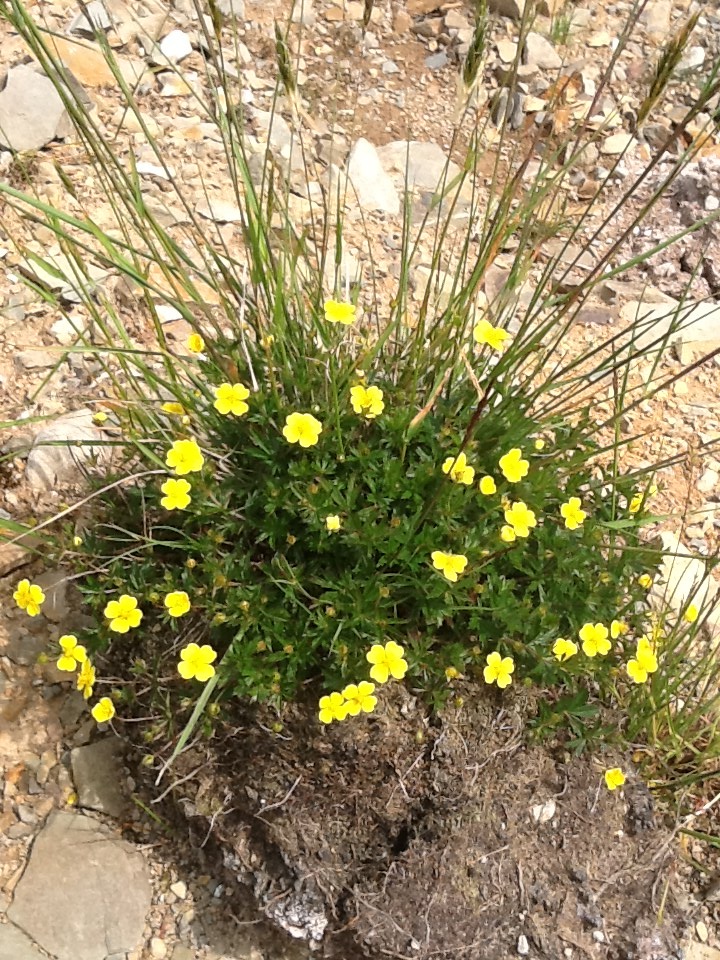
Loose sod of earth inhabited by tormentil

Loose sod of earth inhabited by tormentil


We have enjoyed some glorious hot days since the beginning of the month. The Met Office have warned that may have constituted our Summer for 2013. Certainly, as the jet stream gave us our coldest spring for 50 years, it is set (starting today) to give us high winds, wet and windy weather into August. The jet stream usually flows north of Britain, but we are feeling the consequences of it being trapped here, in the Scottish Borders today, Friday, 14th June, 2013. The wind is bringing temperatures down to 4 degrees celsius chill factor. Our pair of swallows nesting in the small generator shed will be safe from the brunt of the weather, but will they find sufficient food for themselves and their brood before they fly back to Africa? But, they made it last year and came back to us again. Fingers crossed for these wonderful birds.

One success has been a rabbit producing a litter using our insulated wall cavity. She dug her way in underground, then upward, so her young could be kept warm during our cold Spring. We could hear them relating contentedly (a gentle, squeaking sort of sound – even a bit of a cat like purr) whenever she arrived with food (usually mornings and evenings). At times there was such a clatter and fuss, they sounded more like elephants than rabbits. Recently, she led them outside and we could hear them leave, all sounding pleased to be off. I wished them well but know they may soon become an important source of prey for the local buzzards and foxes. We all know rabbits do breed well and it is estimated there are around 9.5 million in Scotland. As the mother rabbit could be pregnant within 24 hours of giving birth, I do hope our recently resident rabbit has found another place to burrow into to have her next brood. Certainly, the wall is currently silent.

If the weather stays as wintry as today, at least the biting midges will be less aggressive. However, I am conscious that the clouds of midges we have had to suffer the past few days have provided essential food for many creatures. The butterflies were already decimated after last years bad weather (thank you jet stream, yet again, for becoming an almost permanent feature). I have only seen a range of white butterflies since the warmer weather began, plus some small day flying moths. Plenty of garden bees and other flying insects – but now what will they do? The rain is pouring heavily down as I write this, and I note the nesting pair of swallows active around the cottage.

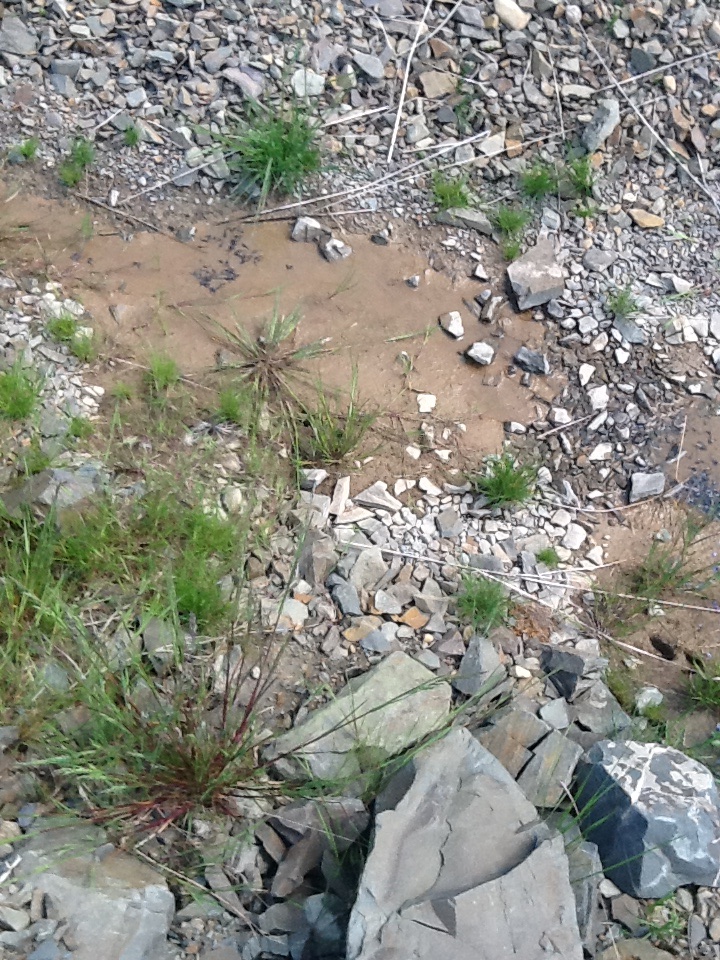
Last of the water in the sun dried ditch

Last of the water in the sun dried ditch

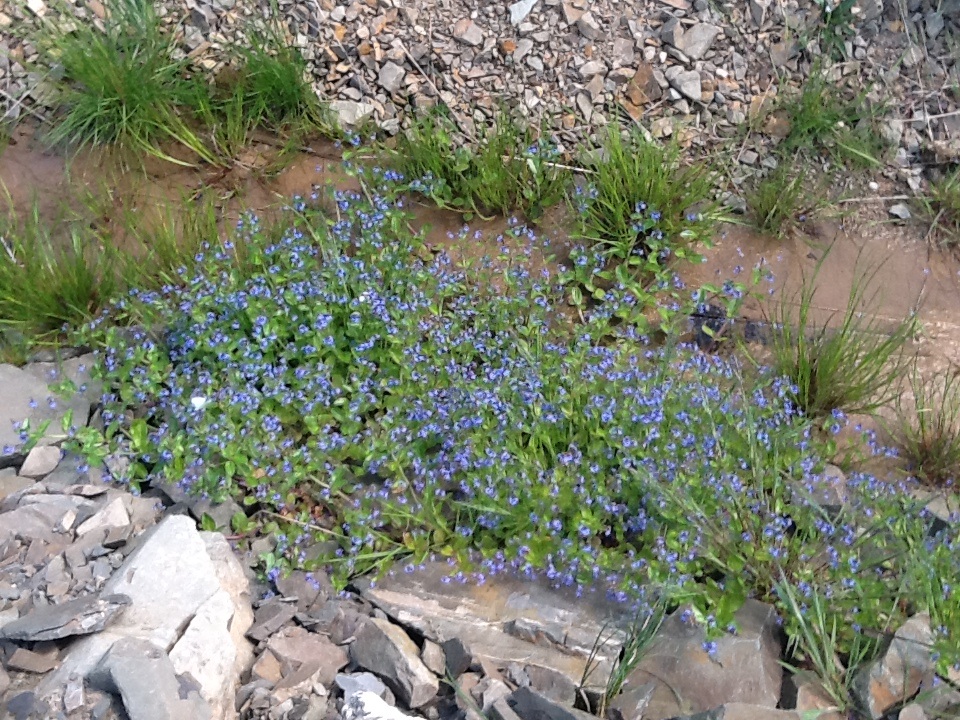
Bright blue speedwell shares the drying ditch with tadpoles

Bright blue speedwell shares the drying ditch with tadpoles


The drought (for it was that) lasted long enough to dry up ditches where frogs had optimistically laid their spawn. I watched hundreds die and there was no way I could help them, I was too far from any running water where they were lying gasping their last breath. This heavy rain will resuscitate those tadpoles in sufficient remaining mud and all will not be lost for these determined critters.

The cuckoo flower, tormentil, bluebell, sweet cicily, vetch, dandelion, primrose, celandine, water avens, wild violets – all fill the landscape on my regular walks. But I will not be walking today, I am not a masochist.

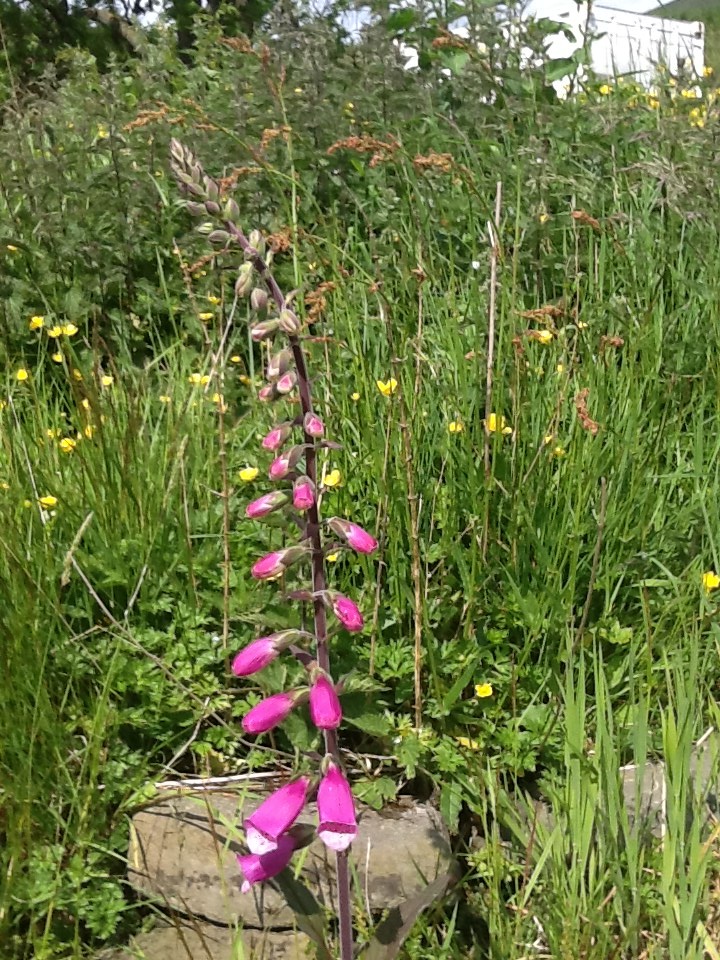
Spears of foxglove pierce through the vegetation

Spears of foxglove pierce through the vegetation

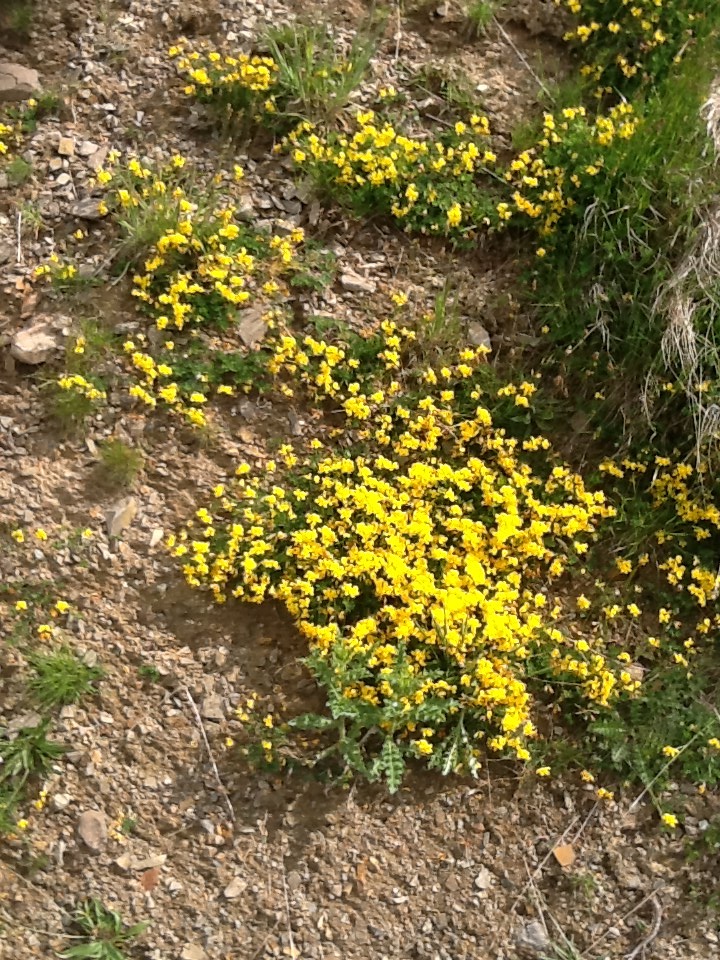
Carpet of vetch on the sandy slopes

Carpet of vetch on the sandy slopes

Bird song has been wonderful as territory was gained and nesting began in earnest. We have blue tits in our nesting box on the ash tree by the burn. That is good and strong and brought the young through last year, despite appalling weather conditions. The cottage garden plants are thick and lush and many insects will find safety therein. The soil is full of life too, which I noticed whilst doing extensive hand weeding.

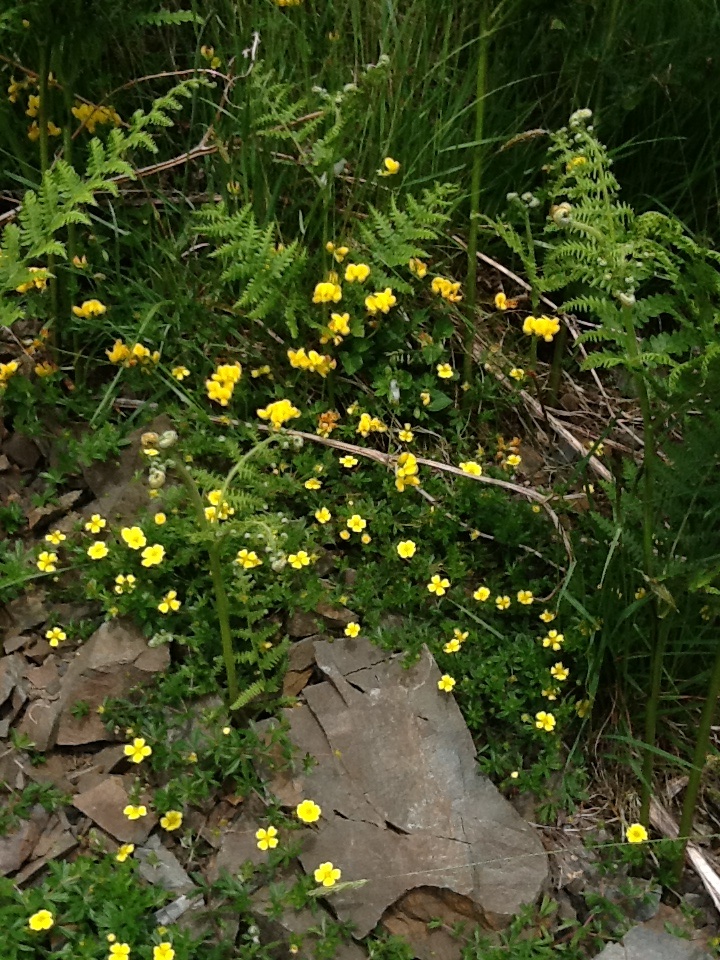
Bright flowers of vetch and tormentil adorn the rocks

Bright flowers of vetch and tormentil adorn the rocks

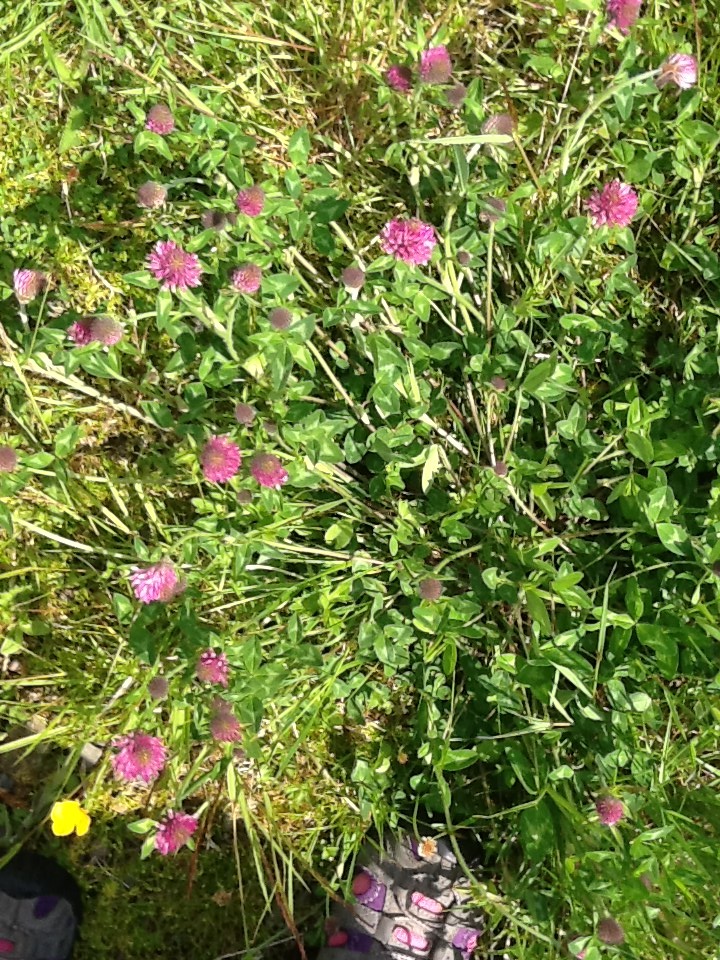
Pink clover, evidence of farming practice for herbal meadow for cattle.

Pink clover, evidence of farming practice for herbal meadow for cattle.


I sometimes use my iPod app to check I have identified a bird correctly, listening to its song to match against what I am hearing. A Warden at a UK reserve has alerted us to being careful how we use this educational tool. Apparently, if you play the sound when a bird is resting, for example, a night jar, because you want it to appear during the day for you to take a photograph, you may cause it such distress it will desert its nest and thus lead to a decline in the bird population. This makes me much more careful of playing bird song outside.

The National Farmers Union reported wheat harvests are likely to be down around 30 percent compared with last year and beekeepers have reported a similar third decline as honeybee colonies were killed off in the severe weather of last year. Today the Met Office declared it is to hold an “unprecedented meeting of experts next week to try and work out the cause of unseasonal weather in recent years”.

When we first came here, a few years ago now, the fells were full of sheep and cattle. They have all been sold off and now we have a smattering of sheep nearby. I used to hear very little birdsong, and no blue feathered birds visited us. Since the fells have been planted with trees, and I have planted what was once a small field into a cottage garden, we get a wider variety of birds visiting, and nesting, nearby. Bernie Krause earned a standing ovation at the annual TED Global Conference ( this time held in Edinburgh) for his presentation of wildlife recordings. He is a musician and also chose to take a doctorate in bioacoustics. He has now made amazing recordings over the past 40 years from various parts of our planet, and has revealed the importance of the voices of the natural world. He has one recording which was of a woodland and meadow, untouched by humans, then a recording after thinning of the forest had been carried out. He went back year after year for 15 years. The pre-logging time was a deafening dawn chorus, post logging was about half the density of sound, until, after 15 years, there is no dawn chorus there. I am not sure what recovery is taking place around our home, as all man made changes, even well intentioned, are not always for the good of the environment.

One thing that is good is that the rain is falling after a drought. The fells are greening and vegetation is growing. We just don’t want it to be cold and windy too!

Posted in anthropocene | Tagged , , , , , , | Leave a comment

Bees and Wild Flowers

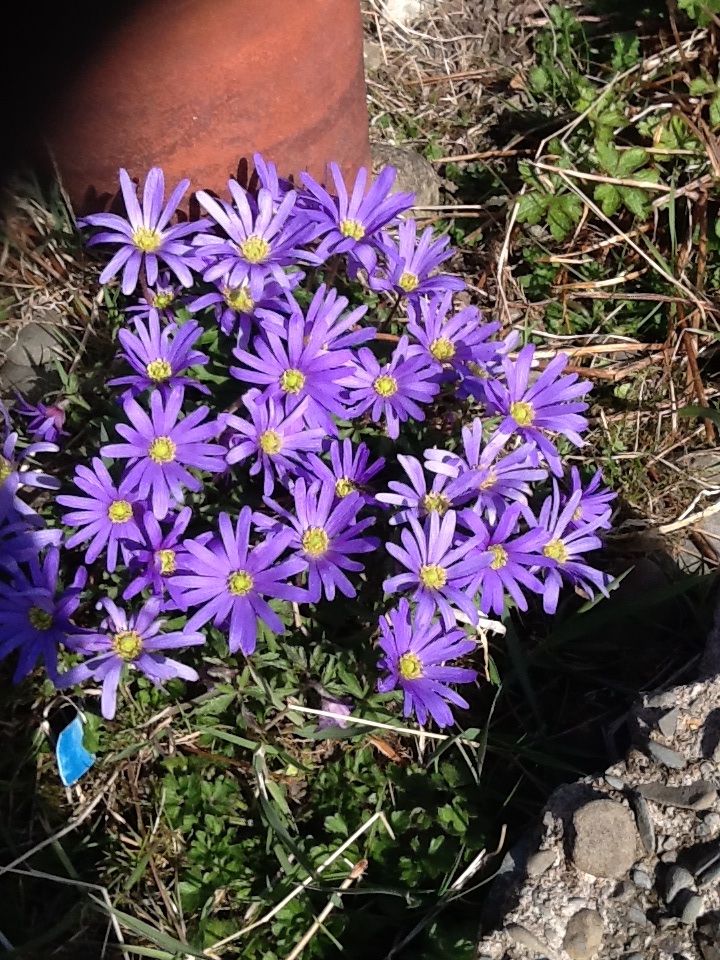
Magically, the anemone emerges and flowers in Spring, then disappears entirely by Summer.

Magically, the anemone emerges and flowers in Spring, then disappears entirely by Summer.

Dead nettle is loved by early bumblebees

Dead nettle is loved by early bumblebees

Welcome in the Forget-me-not

Welcome in the Forget-me-not

The last few days of May, 2013 included a Bank Holiday. Friday through to Monday was glorious; hot sun beating down. Monday turned to rain but quenched the dry ground. I had to remove a few ticks from my dogs, treating them with anti-tick medication ahead of warm moist conditions the ticks love.

I saw more common bumblebees in that time than I have seen for a while thanks to the dead nettle and pulmonaria attracting them to the garden. Today, Tuesday, it is dark with showers. The temperature is about 10 celsius, but no cold wind blowing like yesterday. Some bees still humming around the garden, despite no sun.

The common carder bee is around, for example, Bombus pascuorum, has shaggy hair and the Scottish colour form is lighter than the English, and looks very similar to the rarer moss carder bee, Bombus muscorum, which has shorter, denser hair. As there is plenty of moss here, I am hoping I am also seeing the

On the slopes of the fells wild violets grow.

On the slopes of the fells wild violets grow.

moss carder bee, but am no expert. The black, two banded Bombus Terrestris with the white tail is the other bee I mostly see. I am trying to educate myself about identifying these important creatures, using various ID advice off the Internet. I find the National History Museum pages on bumblebees is most useful. I understand the males are not visible until Autumn, only queens and the smaller worker bees.

The Scottish Wildlife Trust are amongst many other pressure groups to be able to say they have succeeded in persuading the EU to halt the use of neonicotinoids and save our bees. The moratorium was issued on April 28th of this year. It does not start until the end of this year, so farmers will continue to spray their crops with these pesticides until December.

There are plenty of garden spiders scurrying around. When digging the garden, it is good to note worms are plentiful. Sand snails and slugs are doing well after the rain brings them out to munch at the garden plants. The white butterflies are the first to come out in larger numbers, but not profuse. Orange tip are the dominant whites just now. A rare glimpse of a small tortoiseshell butterfly emerging from the nettles, not plentiful at all, as they have been in previous years.

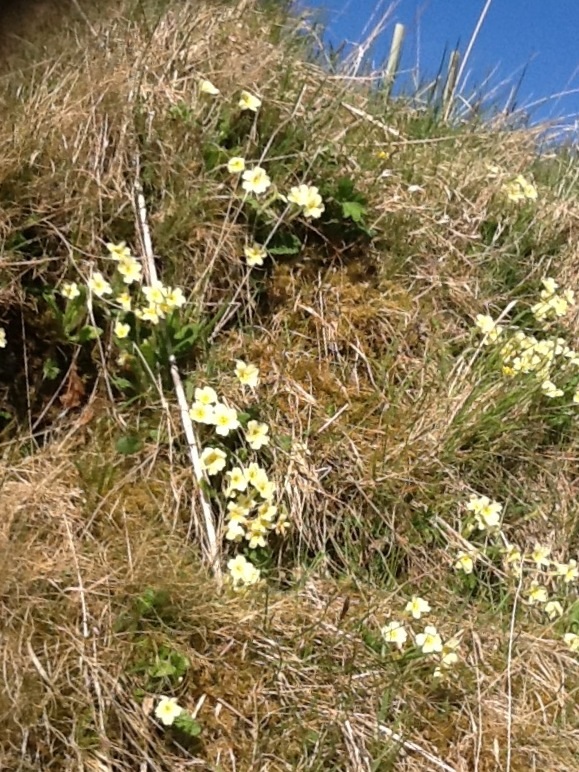
I crossed the burn outside our cottage, climbed over the fencing into the newly wooded area, and tramped through the wintered grasses along one of the sikes, named Weddergrain, to a small waterfall on whose banks grew masses of primroses. I photographed them for this blog, plus the cuckoo flower which is plentiful everywhere in this area.

The Spring never really happened, but as Summer approaches, everything is forcing through in a hurry to catch up. All wildlife activity is at least one month later than it was last year. I have not heard a cuckoo, and usually do as the cuckoo flowers growth co-incides with its arrival. Swallows have made forays over our cottage, but only the couple who no doubt are the same pair who nested here last year, have reconnoitered our generator shed, whose door is now firmly shut since we had electricity installed a month ago. But there are still holes for them to get in the building. The conditions are still not attractive enough for them to get started.

22nd May was Biodiversity Day. David Attenborough launched a report to highlight the work of all the different conservation groups who have come together to produce detailed analysis of the status of species since 1950 in the UK. The news is not all bad, and it is a great relief to see species recovering thanks to a great effort of educating the UK population about the importance of thinking first before we destroy more essential habitat for wildlife. But 60 percent of wildlife have declined since the 1950s. We may never see some species again.

Quoting The State of Nature Report: Sir David Attenborough said: “This groundbreaking report is a stark warning – but it is also a sign of hope. For 60 years I have travelled the world exploring the wonders of nature and sharing that wonder with the public. But as a boy my first inspiration came from discovering the UK’s own wildlife. “Our islands have a rich diversity of habitats which support some truly amazing plants and animals. We should all be proud of the beauty we find on our own doorstep; from bluebells carpeting woodland floors and delicately patterned fritillary butterflies, to the graceful basking shark and the majestic golden eagle soaring over the Scottish mountains. “This report shows that our species are in trouble, with many declining at a worrying rate. However, we have in this country a network of passionate conservation groups supported by millions of people who love wildlife. The experts have come together today to highlight the amazing nature we have around us and to ensure that it remains here for generations to come.”

Dr Mark Eaton , a lead author on the report, said: “This report reveals that the UK’s nature is in trouble – overall we are losing wildlife at an alarming rate. “These declines are happening across all countries and UK Overseas Territories, habitats and species groups, although it is probably greatest amongst insects,
such as our moths, butterflies and beetles. Other once common species like the lesser spotted woodpecker, barbastelle bat and hedgehog are vanishing before our eyes. “Reliable data on these species goes back just fifty years, at most, but we know that there has been a historical pattern of loss in the UK going back even further. Threats including sweeping habitat loss, changes to the way we manage our countryside, and the more recent impact of climate change, have had a major impact on our wildlife, and they are not going away. “None of this work would have been possible without the army of volunteer wildlife enthusiasts
who spend their spare time surveying species and recording their findings. Our knowledge of nature in the UK would be significantly poorer without these unsung heroes. And that knowledge is the most essential tool that conservationists have.”

image

Posted in anthropocene | Tagged , , , , , | Leave a comment

Glass Eels and the Gulf Stream

It is mid-May and snow has fallen to a depth of 2 ins down in the south west of England. Here it is -5 degrees centigrade. The swallows called one day when it was warm, earlier in the month, but mostly it is cold, often wet, and at the moment the rain falls as hail. Three years ago we used to see about 100 minimum chaffinches pecking the ground around the cottage; this year I have counted 10 at the most together. A small tortoiseshell butterfly emerged from its hibernation in April, flew out on a warmish day, but unlikely to have survived the ensuing wintery weather. On the warm day in May when a few swallows arrived, a large white butterfly emerged and fluttered around my cottage garden. Again, wintery weather followed and I hope it found somewhere to hide. So, we in the UK are always talking about the weather patterns, and how they have changed over the past 5 years.

I was reading the Colorado National Snow & Ice Data Centre website today.

It makes grim reading for those of us living in the northern hemisphere, in Europe and North America. The focus is on the Arctic ice which is now measured with satellite instruments. It is this time of year when readings are so important. The summer annual melt season usually begins in March. It ends in September. By October the sea ice minimum will be known. But the melt season is taking longer now and consequently the interaction of ice with the Earth’s global systems are effectively changed. The wintering process should begin in October and by March there should have been sea ice recovery, but this is in decline. It is 80 percent less than it was 30 years ago. As the Arctic is land based and the Antarctic is sea based, each area impacts on the global climate in different ways. Arctic changes in ice cover continue to show extreme weather in mid latitudes with a record sea ice melt in September 2012. This impacts on the jet stream (which earlier blogs have covered regarding the weather changes). Huge areas of normally frozen ocean have prevented the sun’s rays being reflected back into space (the albedo effect), thus more ice melts and there is a momentum now which is likely to damage the permafrost deep down. The wind patterns are changed with the atmospheric disruption and the sea will likely surge more often, leading to storms. In the next years of my life I can expect to hear of record heat, rainfall, drought and floods in the northern hemisphere.

With that in mind, I am not surprised at the cold temperatures here in May.

14th to 15th May – 2 inches of snow fell in Shropshire and that area plus Wales received 3 inches of rain within 24hrs. According to weather forecaster, Philip Avery

“It’s unusual but not unheard of to have snow in May.

If you go back to 1955, 17 May, snow fell widely across England and Wales.

In May 1968 snow fell as far south as the Midlands.

Snow again was confined to the higher ground in 1979, 1981 and 1982 in May.

May 1993 saw several centimetres in central Britain on higher ground.

We have had instances of snow falling as late as June, such as 1975, and there was a sleet shower reported at Birmingham Airport in June 1985.”

An item on the news today about a massive glut of glass eels (Eel Anguilla anguilla; Linnaeus, 1758. Family: Anguillidae) surprising everyone as they arrived into the River Severn. The item was more about eating them as a delicacy though. This was reflected in the Daily Mail headlines:

“Baby eels squirm their way back onto British menus after the biggest harvest in 30 years drops prices

* Elver eel numbers could reach 100million this year – ten times last year
* Fishermen say it is the largest harvest they’ve seen in 30 years
* This has meant restaurants can serve the delicacy at reduced prices”

European eels have a fascinating life cycle, spawned as larvae in the Sargasso Sea (the western part of the subtropical gyre of the North Atlantic Ocean between Bermuda and the Azores, a region of the Bermuda Triangle) before travelling with the Gulf Stream to Europe, developing into glass eels. No one has witnessed an adult eel spawning in the ocean, yet that is where it all happens, in a mysterious and wondrous way. A single eel can unleash 30,000 eggs. She releases her eggs and dies. Only very fine nets of factory ships have evidenced this occurrence after hauling the newly hatched offspring in whilst working in the ocean. They distribute themselves evenly as they migrate to coastal areas and move from salt water to freshwater for the next phase of their life cycle.

In Scotland, eels can be found in all types of water body, including both upland and lowland, flowing water and still, and productive and unproductive waters, although they probably prefer rich, muddy, slow-flowing environments. The eel has a varied diet in fresh waters, feeding habits varying with size and location. Smaller animals tend to feed on vertebrates; larger animals take an increasingly large proportion of fish. Little food is taken in winter. Since the eel grows very slowly in the cool, nutrient-poor waters of Scotland, populations are highly vulnerable to over-exploitation. Consequently there is little tradition of fishing for adult eels in Scotland.

Back in 2008, it was reported :

Groundbreaking project saves glass eels

They’re one of the most endangered species on the planet, but now work on the River Parrett could safeguard their future. Special ‘eel passes’ have been built to help them swim upstream to fresh water.” Why were they endangered? Part of the reason has been hydropower dams that macerate them on their downstream migrations, to coastal and river development that destroys or degrades their habitat, and to fisheries working to satisfy a robust demand for eels in Asia, especially in Japan. (http://e360.yale.edu/feature/a_steady_steep_decline_for_the_lowly_uncharismatic_eel/2316/)

But now, in May 2013:

The Daily Mail goes on to report:

………. that the numbers caught this year could be enough to keep rivers healthily stocked with eels for six to 10 years.

So far, 660,000 Severn elvers have been donated for re-stocking rivers in this country and that figure will rise at the end of the season, he said.

The elvers need to be taken out of the Severn and relocated because flood barriers are now so effective that they would be unable to reach other streams and tributaries and would perish.

Andrew Kerr, former chairman of Gloucestershire Wildlife Trust and now chairman of the Sustainable Eel Group, said ‘It is just extraordinary how many elvers there have been in the Severn this season.’

He said the precise reasons why there are shortages some years and gluts others cannot be explained.

But the variation of currents in the Atlantic as the elvers are swept from the Sargasso Sea to the Severn could be part of the reason.

‘They migrate with the tide and they come up the river in waves. There have been tales this year of fifty mile streams of elvers,’ he said.”

Nobody can explain (yet) why so many have arrived, and wonder if the changes in the Gulf Stream could be the cause. So I thought I would become more educated on the latest scientific research about the Gulf Stream )

The rise in temperature of North Atlantic waters and the decreasing salinity over the past decades, has increased the supply of freshwater into Arctic seas. The salinity of seawater is usually 35 parts per thousand. The most important components of seawater that influence life forms are salinity, temperature, dissolved gases (mostly oxygen and carbon dioxide), nutrients, and pH. pH is a measure of the acidity or alkalinity of a substance and is one of the stable measurements in seawater.

Temperature matters. If any ocean species is moved out of its temperature tolerance range it may die in a short time although temperatures on the cool side of the range are easier for organisms to tolerate than temperatures on the warm side because cell reactions just slow down in the cold but may speed up over six times the normal levels for each 10 degrees C of heat. (http://www.marinebio.net/marinescience/02ocean/swcomposition.htm)

Global warming has resulted in an increase in ocean temperature and this may well have had an impact on the Gulf Stream. The Gulf Stream when off Florida, moves water at 85 million cubic meters per second from the Caribbean Sea. It then moves toward high altitudes via the eastern coastlines of the USA northward and then, south of Newfoundland, the cold Labrador Current slows it down to 8 km a day and reduces its temperature to 25 centigrade. It then changes direction and flows north-eastward through the Atlantic Ocean (known as the ‘North Atlantic Drift’).

The Gulf Stream plays a part, but only contributes 20 percent of the warmer air to Europe. The ocean stores heat in the summer and releases it in the winter and 80 percent of the heat transfer is created by the dominant Western winds coming from the United States blowing over the Atlantic ocean as it releases warmth and brings oceanic air to Europe. On arrival in Europe it divides in two with the northern stream flowing towards Iceland, the southern stream towards the Azores in the direction of the Canaries. This is the ‘conveyor belt style’ system which causes colder water to sink and stream toward the Equator. When the water moves to the Polar regions, it has, in the past, evaporated and transferred heat to the atmosphere. The oceans have frozen, trapping carbon dioxide for hundreds of years, sinking to a depth of more than 3km along “convection chimneys”.

When large water masses with different densities meet the denser water mass slips under the less dense mass. These responses to density are the reason for some of the deep ocean circulation models, such as the Gulf Stream.

Fact: the colder and saltier the water is the denser it is. The pH of the ocean is determined by the level of hydrogen protons (H+) in sea water. The lower the pH, the more acidic the ocean. Co2 is no longer trapped in ice, instead higher levels of CO2 remain in the atmosphere which in turn push up the rate of global warming- and that heats the oceans and prevents ice forming. Instead freshwater surges in to the ocean denying the salinity necessary to retain the density required to help water sink, the pH levels have lowered, thus increasing the acidification. Global weather patterns continue to change as a result..

CO2 peaks in May every year. Atmospheric concentration of carbon dioxide has been rapidly increasing in the last 250 years from the pre-industrial 280 ppm to 400 ppm measured this month. It takes about a year for northern pollution to spread through the Southern Hemisphere to reach the measuring instrument perched on a high mountain in Hawaii, the Mauna Loa. Mauna Loa lags the Arctic, where CO2 levels are higher. A year ago, NOAA reported that the average of its Arctic measurements had exceeded 400 ppm for the entire month of May, not just for a single day. By 2015 or 2016, the whole atmosphere will be averaging 400 ppm for the whole year.

During the Pliocene Epoch, 3 million years ago, greenhouse gas reached this mark, horses and camels lived in the high Arctic. Seas were at least 30 feet higher—at a level that today would inundate major cities around the world. But tens of millions of years ago, CO2 must have been much higher than it is now—there’s no other way to explain how warm the Earth was then. In the Eocene, some 50 million years ago, there were alligators and tapirs on Ellesmere Island, which lies off northern Greenland in the Canadian Arctic. They were living in swampy forests like those in the southeastern United States today. CO2 may have been anywhere from two to ten times higher in the Eocene than it is today. Over the next 45 million years, most of it was converted to marine limestone, as CO2-laden rains dissolved the ingredients of limestone out of rocks on land and washed them down rivers to the sea. CO2-belching volcanoes failed to keep pace, so the atmospheric level of the gas slowly declined. Some time during the Pliocene, it probably crossed the 400 ppm mark, as it’s doing now-but back then it was on its way down. As a result, at the end of the Pliocene, it became cold enough for continental ice sheets to start forming in the northern hemisphere. “The Pliocene”, says geologist Maureen Raymo of Columbia University’s Lamont-Doherty Earth Observatory, “was the last gasp of warmth before the slow slide into the Ice Ages.”

Whilst we continue to shiver mid May, with snow on the crop growing fields of Shropshire, one thing we can be sure of in the coming years: plenty of shocks and surprises as Mother Nature ticks us off for our misdeeds to the Planet.

Posted in anthropocene | Tagged , , , , , , | Leave a comment

Instrument of Death

Birds in cageLast weekend I was appalled to find someone had placed a bird trap between a sycamore tree and the burn which I walk the dogs by twice a day. This was 7 am. A young bird in the nest in the sycamore was screaming in alarm, and the parent, caught in the cage was calling back, flapping desperately to escape, battering itself in the confined area. I released the trapped bird. It was reunited with its offspring. I could not get at the decoy bird, it was sealed in. It, too, was very distressed.

There was a printed notice on the cage stating:

THIS TRAP IS LEGAL
AUTHORISATION NO

L&B XXXX

WILDLIFE OFFICER
Telephone no xxxxxxxxxxxx

I memorised the telephone number, completed the walk with my dogs, and rang the number when I was home. I was put through to the police. I asked for the Wildlife Officer, but the one for my area was off for the weekend. I explained what I had done due to the heartbreaking racket of the distressed birds which I was not going to be made to listen to all day. My details were noted and my actions were not judged. I was told my concerns would be passed to the Wildlife Officer by email which she would read on Monday. Then I went out and moved the cage into a closed, fenced off field so that dogs would not add to the distress of the bird.

Later in the day a local man, who we knew, arrived and started to put the cage back where it was. My husband went down and had a row with this man but all we could get him to agree to was to move the cage back in the closed field, for the reasons I have already explained. He was sneering all the time though, for he told us the law was on his side and if we tampered with the cage it would be us who would be in trouble, not him.

We then rang the police again. This time I asked what the penalty was for freeing a trapped bird. A Wildlife Officer was contacted so that the person I was being advised by could explain. It was a Larsen Cage, perfectly legal. We must not tamper with the cage or we could be prosecuted. I said if the law backed such a wicked instrument of death then I was very disappointed about the direction the law was going.

I have researched the use of the cage and abhor the thrill gamekeepers have in using this dreadful item. Thankfully there are people campaigning to call for a ban, which I hope comes to pass in the near future. I will let Animal Aid have the last word
reported in 2011:

What is wrong with Larsen Traps?

Larsen Traps were designed by a Danish gamekeeper in the 1950s but are now banned in Denmark because of their cruelty. They were introduced to the UK by the Game Conservancy Trust (now named the GWCT) – a keen promoter of the game bird shooting industry. Larsen Traps are designed to eliminate a natural indigenous wild species in favour of large unnatural releases of artificially bred game birds, who are destined to be killed for sport.

The traps are made from wire and wood and have a compartment where a live decoy bird is kept to take advantage of the corvid species’ territorial or inquisitive behaviour. Set in spring or early summer (the breeding season) when these behaviours are strongest, the investigating bird comes down and falls into a cage trap sprung by a collapsing perch and a swing door. When the gamekeeper returns, the caught birds are ‘dispatched’. Decoy birds are often found dead through neglect or starvation, or can only watch on as other trapped birds are killed.

All traps are cruel and unnecessary. The Larsen Trap is particularly brutal because:

* A wild corvid ‘bait bird’ is routinely and legally incarcerated in a cage. This is not legal or routine for any other wild bird in the UK.
* Incarceration causes stress and trauma to the wild bait bird.
* The capture of adult birds in the breeding and nesting season causes the distress and death of corvid hatchlings and fledglings.
* The traps are set at ground level and expose the bait bird to the trauma of prowling predators.
* Gamekeepers abuse the Larsen Trap law and use illegal bait birds to catch raptors and even foxes.
* The traps are indiscriminate and catch other species.
* The traps are set in England without responsibility. The identity of the trap setter is anonymous. In Scotland, a system of police issued codes identifies the owner of the trap.

There are regulations determining how the traps may be used, but these are routinely and regularly flouted. The regulations include:

* The bait bird must be provided with a perch, fresh water and suitable feed.
* Bait birds must be protected from pain, suffering, injury and disease.
* The bait bird must be provided with shelter from wind, rain and sun.
* Larsen Traps should not be used in severe weather conditions or when they are anticipated.
* The bait bird must have room to stretch his or her wings.
* The bait bird must not be mutilated (wing clipped).
* Only corvid birds and certain parakeets may be used as bait birds (not pigeons, who are used to attract raptors).
* Larsen Traps must be inspected every 24 hours and any dead birds or animals must be removed.
* Trapped birds must be dispatched ‘humanely’.
* Larsen Traps must be locked securely when not in use or put out of use by collapsing and storing.
* Any person convicted of an offence under the Wildlife and Countryside Act 1981 may not use a Larsen Trap unless they are ‘rehabilitated’ or absolutely discharged.

In summary, Animal Aid objects to all traps, but Larsen Traps are particularly cruel. Anybody can set them without further specific permission under the General Licences issued by Natural England and devolved UK governments. People may even set them in their own back gardens. There is little enforcement of the feeble regulations in England and Wales, and little chance of proving responsibility for abuses. The permissive law has been upheld by successive governments, which pander to the game shooting industry.

Posted in anthropocene | Tagged , , , , , , | Leave a comment

Reaping the whirlwind

I am currently surrounded by fells covered in sandy coloured dried grasses, beneath which new shoots of vegetation are growing slowly, held back by the persistent easterly cold Siberian wind which has blown over the UK for the past month. It has been the coldest spring in 50 years. Thousands of sheep with their new lambs have died in sudden snow drifts which covered them in such depth the farmers could not rescue them fast enough. Hundreds of tawny owls have starved to death as the rodent activity has also suffered. All wildlife in the UK has been through dreadful weather in 2012, and now 2013 is proving to be disastrous too.

The Met Office website tells us:

2012
After an unusually dry, sunny and warm March, April has seen some very wet and unsettled weather with below average temperatures. So what has caused this about-turn in the UK’s weather? There are many factors which can impact the notoriously changeable weather in the UK, so no single one on its own can be said to be fully responsible. However, it is possible to isolate contributing factors and, in this case, one of those is the northern hemisphere jet stream. This is a narrow band of fast flowing westerly winds (ie blowing from west to east) in the high atmosphere. This band moves around and also changes its track, from a fairly straight line to something more closely resembling a meandering river. Its position can, and does impact weather in the UK and other parts of the northern hemisphere. In both March and April we have seen what we term a ‘blocking pattern’ in the jet stream, where it meanders north and south instead of making its more usual eastward progress. Despite this, March was the 3rd warmest and 5th driest March in the all-UK record going back to 1910, while April has so far been relatively cool with rainfall already 30% above the average for the whole month across England and Wales. So what is causing the difference? It comes down to the position of the blocking feature. In March, the meandering of the jet stream caused it to pass to the north of the UK – anchoring high surface pressure over the UK. This suppressed cloud, increased sunshine and temperatures, and prevented the usual rain-bearing Atlantic weather systems coming in from the west from reaching us. Soon after the start of April, however, the whole pattern moved westwards, so the peak of the northerly meander moved over the North Atlantic Ocean. The UK, in contrast, found itself under the adjacent southerly meander, with the jet stream passing to the south of the UK over France and Spain. This atmospheric set-up brings low surface pressure, cloud and rain. Because the pattern is still blocked, without a west-to-east jet stream to blow the weather system through, the low gets stuck over the UK, resulting in high rainfall totals overall. Like the weather, we can predict the path of the jet stream with a good deal of accuracy up to about five days ahead but it is more difficult to give detail on longer timescales.

And after the summer:

There’s no disputing it has been a very disappointing summer so far in 2012 – with the wettest June for over a century followed up by a very wet start to July.

In fact, barring a warm and dry spell towards the end of May, the weather has been persistently dull and wet since April – which was also the wettest in records dating back to 1910.

Our weather here in the UK is complex and determined by many different factors, including the position of the jet stream.

In 2013, so far we are told:

The jet stream consists of ribbons of very strong winds which move weather systems around the globe. Jet streams are found 9-16 km above the surface of the Earth, just below the tropopause, and can reach speeds of 200 mph……..

The position of a jet stream varies within the natural fluctuations of the environment. They are caused by the temperature difference between tropical air masses and polar air masses. What happens in one part of the world depends on what is happening elsewhere – the atmosphere is a complete environment with numerous connections.

Waves or ripples along the jet stream can cause Atlantic depressions to deepen explosively as they are steered towards the UK, so they are very important to meteorologists………

Blocked weather patterns, where large areas of high pressure remain in place for up to several weeks, occur every so often pushing the jet stream way off its normal course. The displaced jet stream can open the door to cold easterly winds in winter such as occurred in Europe in February 2012; while those directly influenced by the high pressure areas often endure prolonged spells of dramatically hot conditions in summer, such as occurred during the Russian heatwave in summer 2010……….

…..low Arctic sea ice cover is now becoming increasingly linked with significant changes in the North Atlantic jet stream in winter and hence the severity of European winters. A number of studies are indicating that Arctic sea ice depletion, in isolation, may increase sea level pressure over the Arctic in winter and drive more easterly winds across Europe in both observations and computer models. It is possible that continued low Arctic sea ice during the coming years might therefore drive additional changes in northern European climate due to changes in winds as well as the more direct warming effects of longer term climate change…….

And whilst we suffered wet, wind and cold, the US suffered other extremes such as drought, causing headlines such as:

“Drought Devastates U.S. Maize and Soya Crops”

The most valuable crop hit was maize, causing a worldwide shortage. Here in the UK the Gulf Stream is relied upon to warm up the land. The Siberian winds have been drying out the land which improves soil structure. Maize growers in the south of the UK are likely to start planting the maize in May, waiting for warmer soil conditions. Maize requires warm, humid conditions. To cope with colder conditions, Scottish growers use the latest technology to protect the newly planted seeds, and now it is possible to grow maize as far north as Aberdeenshire. It is likely to be grown to use as forage for cattle. However, it is also being considered as a gas producing crop for a new anaerobic digestion plant.

The US ethanol programme pushed up corn prices by up to 21 per cent as it expanded to consume 40 per cent of the harvest last year.

Al Jazeera

This price premium was passed on to corn importers, adding an estimated $11.6bn to the import bills of the world’s corn-importing countries since 2005. More than half of that – $6.6bn – was paid by developing countries between 2005 and 2010. The highest cost was borne by the biggest corn importers. Mexico paid $1.1bnmore for its corn, Egypt $727m.

Besides Egypt, North African countries saw particularly high ethanol-related losses: Algeria ($329m), Morocco ($236m), Tunisia ($99m) and Libya ($68m). Impacts were also high in other strife-torn countries in the region – Syria ($242m), Iran ($492m) and Yemen ($58m). North Africa impacts totalled $1.4bn. Scaled to population size, these economic losses were at least as severe as those seen in Mexico. The link between high food prices and unrest in the region is by now well documented, and US ethanol is contributing to that instability.

Maize constitutes a fundamental ingredient in many of the world’s cuisines, ranging from Mexican enchiladas and Chinese baby-corn, to African-American grits, corn flakes, popcorn, Italian polenta or gruel, corn meal, maize-based alcoholic beverages (such as whiskey and bourbon), mayonnaise, and corn oil.

And Maize originated in Mexico where the ancient peoples, dubbed ‘Mesoamericans’, observed the weed ‘teosinte’ growing in the arid scrubland around them and somehow, still a mystery to this day, turned an inedible grass into edible through a process which is yet to be explained. Archaeological remains of early maize ears, found at Guila Naquitz Cave in the Oaxaca Valley, date back ca. 3450 BC, with the oldest ears from caves near Tehuacán, Puebla, dating to ca. 2750 BC. Maize was therefore used as a food for humans at least 6000 years ago, and very likely 9000 to 10,000 years ago.

The name, teosinte, is of Nahuátl Indian origin, and it has been interpreted to mean “grain of the gods”. One form of teosinte, known as Z. mays ssp. parviglumis, shares a particularly close genetic relationship with maize and available evidence indicates that it is the direct ancestor of maize (Doebley 1990; Matsuoka et al. 2002). This latter teosinte grows in the valleys of southwestern Mexico. In these regions, it grows commonly as a wild plant along streams and on hillsides, although it can also invade cultivated fields as a weed. It is most common in the Balsas River drainage of southwest Mexico and hence is also known as Balsas teosinte.

Protected within its casing, the teosinte kernel can survive the digestive tracks of birds and grazing mammals, enabling the seed to be easily dispersed (Wilkes 1967). By comparison, the massive maize ear can bear 500 or more kernels, each of which is attached to the central axis of the ear or cob. The kernels are naked without adequate protection from predation and are easily digested by any animal that consumes them. Since the kernels are firmly attached to the cob and the ear does not disarticulate, a maize ear left on the plant will eventually fall to ground with its full suite of kernels. When hundreds of maize kernels germinate the next season so close to one another, the emerging plants are unable to obtain adequate light and soil to grow and reproduce. Thus, maize is completely dependent on humans for its survival.

Before farming, Homo Sapiens ate 80 thousand kinds of food. Queensland aborigines in the 19th Century ate 240 separate plants.

Early farmers simplified the plant source to rice, maize and/or wheat. When communities depended on maize, they were unaware that maize inhibits iron, lack of iron leads to anaemia, anaemia to tiredness, weakness and depression. Working in the fields to produce the maize depleted the worker further and their lives were shortened as a result.

Maize is now part of the processed food industry. So instead of eating it made into porridge or tortilla, it is fed to cows to create high fat burgers, chickens to create nuggets and even into fizzy drinks. It was cheap corn which gave rise to fast food. Maize is the main ingredient of chicken nuggets and soft drinks use corn syrup. Milk is often from cows fed on maize rather than fed on grass. Cornstarch is used to make chewing gum, peanut butter, ketchup, car paint, soap, potato crisps, surgical dressings, nail polish, foot powder, salad dressings.

Genetics has influenced the breeding of animals and plants to create a multi million pound agri business. It took thousands of years until Darwin opened the window to genetics which is now having a dramatic impact on our every day life. There are now less hungry people in the world. Hurray.

8 hundred million people in the world are hungry.

BUT

2 billion are overweight. Boo!

The trend over the last decade toward heavier populations cuts across regions and income levels. In India, 19 percent of adults are overweight, up from 14 percent in 2002. In Mexico, the figure has risen by 8 percentage points since 2002, while Brazil’s is up by 7 points and the rate in the U.K. is up by 5 points. East Asia has seen a 4 point increase over the period. The United States leads all industrialized countries with 78.6 percent of the adult population overweight, although Micronesia and Polynesia top all countries. There, nearly 88 percent of the over-15 population is overweight.

Fast, cheap food equals cheap, fast bursts of energy. Fizzy drinks, cheeseburgers, chips – foods all high in fat and salt and low in calcium is the result. UK citizens spend a sixth of their income on their three meals a day. That is half what they spent fifty years ago.

Reducing dietary choice reduces good health outcomes.

Now we have more tired, infirm and sad people due to simple, unhealthy range of food available. The food is cheap and readily available. Expanded waistlines from such diets lead to thirty thousand premature deaths per year in the UK. Those of us who grew up before junk food became available may be the longest lived in history. Perhaps junk food will kill off the world population, rather than a nuclear war.

As the weather disrupts the maize production, prices go up and, as we are dependent on maize for good or evil, I sit here in my cottage and contemplate: are we really evolving as a race since farming became a preferred method of human survival?

Posted in anthropocene | Tagged , , , , , , , , | Leave a comment

Spring Equinox

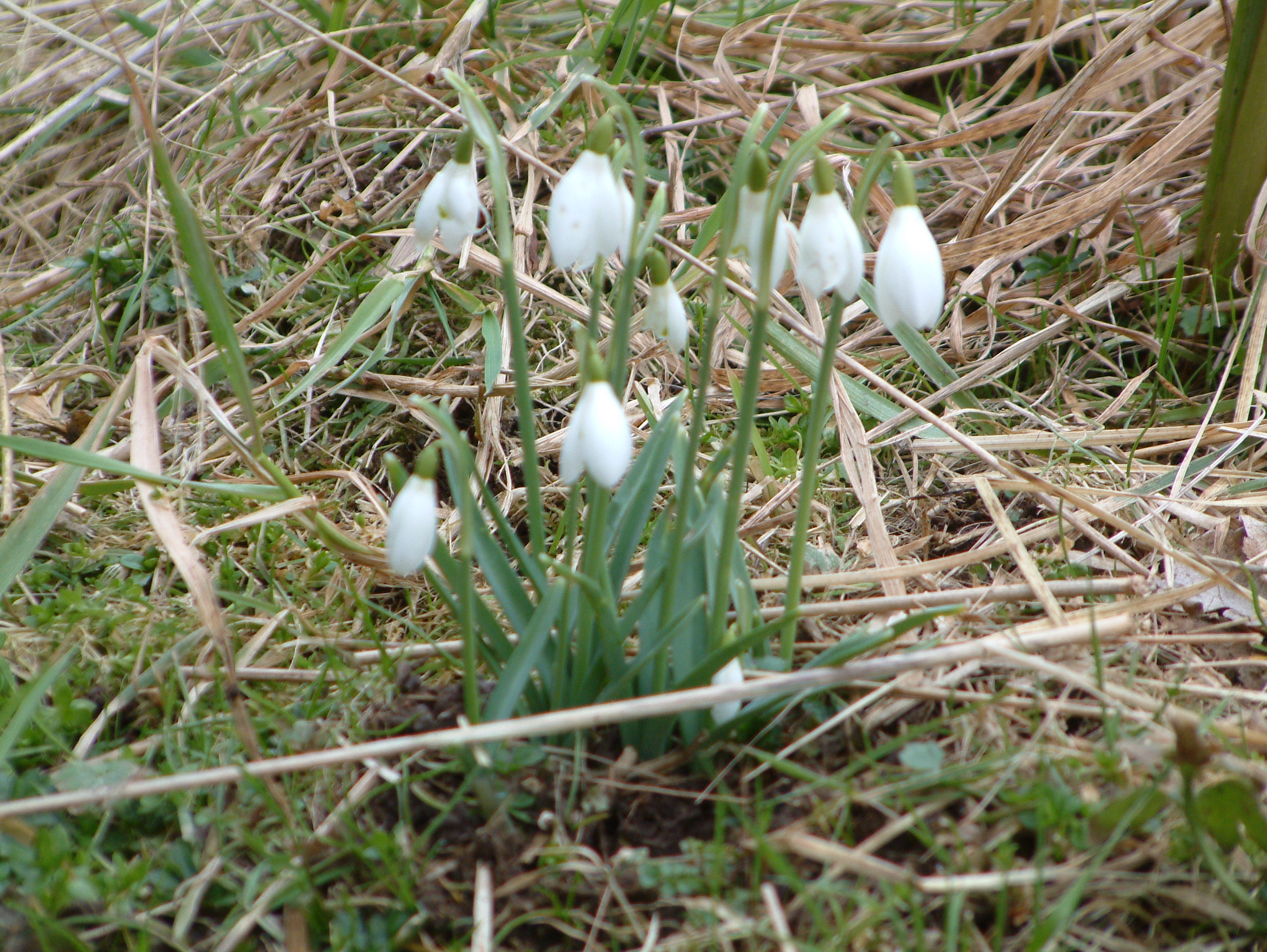
Welcoming sign of Spring

Welcoming sign of Spring

In the last week of February our single snowdrop plant, bearing about 8 stems of flowers, appeared outside our room window. The nearest other snowdrops to be found are 5 miles from our cottage. They grow in abundance where the land is less high above sea level. I greatly treasure my small plant. It has appeared since the sheep stopped grazing in this locality.

The suet bird feeders hanging from our generator shed and trees have only attracted 2 blue tits and 1 dunnock during the grim winter. But now, after a dry and warmer few days, fieldfare have arrived with small flocks of chaffinches. A blackbird now sings a morning chorus from the top of the trees of a small forest nearby, and then the chaffinch sing, fieldfare chatters and the dipper sings its jolly song along the burn. When the sun has shone brightly, the numbers of birds increase, and the robin, which has chosen a cottage half a mile away to stake its territory, flies up to see us and sings in the morning too. We always had a robin using our cottage surrounds as its territory, this is the first time we have not had that honour. A single buzzard occasionally hunts nearby as does a kestrel. The pheasants who survived the annual shoot often call on the nearby fells. Crows argue with ravens most mornings, both want to dominate the local terrain. Little wrens nip in and out of the drystane walls. There are increasingly more insects drifting up from the burn. The food supply is building. Soon the batchelor chaffinches will hear their female mates arriving from the warmer climates, daring to finally take their chances here. When they arrive, you can be sure all the varieties of birds which fly in will soon be brightening our world utilising the moorlands, grassy slopes, woodlands, mountain crevices and pure water rushing down from the high fells.

But the warmer spell of weather I have so far described ended with bitter winds blowing in from the east and snow fell heavily for days. However it came and went as the temperatures fluctuated during March. Plant life struggles to come through despite the weather; there are few days left of winter, The March equinox occurs the moment the sun crosses the celestial equator – the imaginary line in the sky above the Earth’s equator – from south to north. This happens on March 20 this year. On any other day of the year, the Earth’s axis tilts a little away from or towards the Sun. But on the two equinoxes, the Earth’s axis tilts neither away from nor towards the Sun. The Equinox derives its name from the Latin aequus (equal) and nox (night).

The pulmonaria in the garden are at last emerging with vigour. The buds on the daffodils are increasing in size. The euphorbia and helibore are through; the primroses and primula are in full bloom. Cornflowers are revealing their new growth which has been extending underground until now. Lupins are showing their new leaves, as are autumn glory.

Surrounding land here has been grazed by sheep and cattle for at least 500 years, but that is not long considering there were only 1 billion people on the earth by 1820. During the 1500s it was not understood that cold and damp could blight the rye grain which the population used as a main dietary resource. Eating the poisoned grain led to delirium, seizures, fever, loss of consciousness and often death. The illness was known as ‘ergotism’. The brilliance of humans to turn grass into grain became their nemesis.

We have to go back to 6000 years to find “a cooking area where nomad hunter-gatherers boiled or roasted shellfish”. Archaeologists have found this area in Burren, County Clare, Ireland. This is a great example of pre-farming survival. Farming techniques evolved to replace the Stone Age hunter-gatherers, but so much was lost to us by evolving in that direction. The ecology of the planet depends on the health of the food chain of all living things. Farming technology has tampered with the process and upset the fine balance.

Hunter gatherers ate a more varied and nutritious diet than we do today. They had the continental land to roam and search for food. We have to feed 7.073 billion people on the planet now and there is no room to allow people to roam where they choose and select good ground for feeding themselves. Climate change is forcing people from lands which once were hospitable as happened when the climate changed in the past. But now we have too many people and too little land.

Yet China has 1,354,040,000 people (which is 19.14 percent of the world population) and only 7 percent of their land mass is arable, so they have to provide for themselves in the most careful way. An article in the Independent in July 2008 made the suggestion that the Chinese diet could solve the West’s obesity crisis. One quote said of the Chinese diet “If the majority of your meal is vegetables, and you add some protein, you’ll always have a perfect meal.” When they do add protein it might be shark fins, seaweed, frogs, snakes, and even dog and cat meat. They also depend on Soybean curd, called tofu, is an important source of protein for the Chinese. Chinese cuisine is based around rice and vegetables.

A Western nutrition expert named Patrick Holford said: “Vegetables should make up half of what’s on your plate in any given meal, so this fits perfectly with the Chinese diet.”

Global Food Security has become a major issue with disasters to crops occurring through drought, hurricanes, floods and other events which we now have grown to expect.The website on the subject states: The world is facing a potential crisis in terms of food security. The challenge is to produce and supply enough safe and nutritious food in a sustainable way for a growing global population, which is projected to reach 9Bn by 2050.

People are moving away from the land into cities. Cities are where the work is, but also where the demands for high quantities of foods, services and goods intensify the stress on the global food supply infrastructure. When people lived off the land they could provide for themselves without a dependency on trade and commerce.

Jericho was the first city built by the Natufians (an Epipaleolithic culture that existed from 13,000 to 9,800 years ago in the Levant, a region in the Eastern Mediterranean) .They did not provide for themselves through farming. They were hunter-gatherers, foraging for food such as emmer wheat, barley and almonds, and hunting gazelle, deer, cattle, horse, and wild boar.

The diet of a hunter-gatherer was higher in protein and calories than the emerging farming communities. Their intake of vitamin C was five times higher than the settled person living off farming. Nomadic peoples endured tho most bitter temperatures without damage to their health.

The smaller range of food which farming communities survived on ensured deficiencies in their diet. Those eating rice would suffer from inhibition of vitamin A. Consuming wheat products prevents the action of zinc, often leading to stunted growth. Eating maize leads to a lack of amino acids and stops iron being absorbed by the body. Yet farming involved an ingenious development of turning grass into an edible source of food which could be stored by a settled community. The taller nomad became a six inch shorter farmer. In Orkney, prehistoric skeletons show life expectancy of these early farmers was no more than twenty years. Their close living with animals due to their farming practices led to their poorer immunity through diet to make them susceptible to diseases such as bird flu from pigs and fowl, smallpox and measles from cows and sheep, and anthrax from horses and goats. People living together in this way determined their vulnerability to fatal diseases.

The Global Security website tell us,
“The UK is …exposed to volatile global markets for products such as animal feed that have strong impacts on supermarket prices. In the interconnected world, it’s consumers that have to pay more downstream, as they did in 2008. The site goes on to say ” Britain is not self-sufficient in food production; it imports 40% of the total food consumed and the proportion is rising. Therefore, as a food-trading nation, Britain relies on both imports and thriving export markets to feed itself and drive economic growth………Too much or too little rain can reduce harvests. Emerging exotic diseases such as bluetongue and African swine fever threaten to devastate livestock industries.” We have heard this year that many tenant farmers expect to go out of business if the cost of foodstuffs remains high after this year.

At one time there was an excess of grain and the EU paid farmers to ‘set-aside’ land and to grow wild flowers to encourage wildlife, which would benefit the ecosystem. This was a great success for the supporter groups of wildlife, such as the RSPB and Butterfly Conservation. They noticed improvements in birds breeding and butterflies and moths increasing in numbers. Now there is insufficient grain the set aside payments are unnecessary – and there is no money to pay the farmers to do this either.

The RSPB asked me to write to my MEP to consider retaining the ‘set aside’ policy. The RSPB give an example: The recovery of stone-curlews, corncrakes and cirl buntings have all arisen from positive land management by farmers using set-aside and agri-environment schemes.

The response from my MEP’s office a few days ago was as follows:

Dear constituent,

Thank you for your email to Struan Stevenson MEP regarding the Common Agricultural Policy (CAP).

The European Parliament’s position on the reform of this policy is due to be voted on tomorrow during the plenary session in Strasbourg. After this vote, the Parliament will enter into negotiations with the Council and Commission in order to reach a final agreement on the reform package.

We have noted with interest your concerns regarding Greening, Double Funding, cross compliance and specific recognition and support for Organic and High Value Nature farming methods. Please allow me to address these concerns individually below:

Greening – We support measures which aim to deliver environmental benefits through the CAP. However, we believe that these goals are best achieved through Pillar two funding. In this way, measures can be targeted in order to better suit local environmental needs. The UK Conservative Delegation do not believe that all farmers should be forced to put land in set aside, especially at a time of fast rising food prices and growing global demand. Europe needs to be able to respond effectively to the global challenge of food security and unfortunately some of the Commission’s proposals on greening will hinder this objective.

Double Funding – The UK Conservative delegation does not support paying farmers twice for carrying out the same activity and has tabled amendments to reject this concept.

Cross compliance – Farmers will have to comply with cross compliance rules and I support the reintroduction of realistic obligations on farmers. The ECR group does not support small farmers participating in the ‘Small Farmers’ Scheme’ being exempt from cross compliance commitments.

Organic and High Value Nature farming – The UK Conservative delegation believes that all different types of farming methods and systems should be recognised for the contribution they make to Europe’s diverse agriculture sector.

I do hope that my answers have sufficiently addressed your concerns. Please feel free to contact our office should you have any further questions.

Best regards,

Catriona

This 2013 Equinox takes place with a wake-up call to ask whether farming and agricultural policies to date have been well thought through for the benefit of all. The self healing planet on which we live cannot cope with the interferences we have made to its vital mechanisms. We are understanding now that processed food is bad, fresh vegetables and fruit are good. We do not need vast quantities of meat which demand huge amounts of animal grain to be grown on great swathes of land which could be used to grow quality vegetables and fruit. The bees are suffering because of pesticide harm, and farmers reject that fact, fearful their produce will not grow well without present pesticide use. We have so many serious questions we must deal with NOW which can’t wait another day. Let us look at how we got here and think hard if we can go on like this.

Posted in anthropocene | Tagged , , , , , , , , , , | Leave a comment

Ice and its significance

In 1816, headlines in newspapers read: “The Year Without a Summer” (also known as the Poverty Year, “The Summer that Never Was”, “Year There Was No Summer” and “Eighteen Hundred and Froze to Death”. Climate abnormalities caused average global temperatures to decrease by 0.4–0.7 °C (0.7–1.3 °F), resulting in major food shortages across the Northern Hemisphere. It is believed that the anomaly was caused by a combination of a historic low in solar activity with a volcanic winter event, the latter caused by a succession of major volcanic eruptions capped by the 1815 eruption of Mount Tambora, in the Dutch East Indies (Indonesia), the largest known eruption in over 1,300 years, which occurred during the concluding decades of the Little Ice Age, potentially adding to the existing cooling that had been periodically ongoing since 1350 AD.

Without the communication systems we have today, it took years for people to make the connection that an ash cloud far from them had blotted out the sun and sent darkness, foul dust and bitter cold as far south as France. The resultant agricultural devastation and famine became widespread in areas worst hit by the effects of the cloud. Many people died from respiratory illnesses and inability to keep warm. Amazing sunsets were witnessed and Turner famously painted ships sitting on the water against vivid skies as if they were on fire.

A Wikipedia entry on the subject states:

As a result of the series of volcanic eruptions, crops in the above-mentioned areas had been poor for several years; the final blow came in 1815 with the eruption of Tambora. Europe, still recuperating from the Napoleonic Wars, suffered from food shortages. Food riots broke out in the United Kingdom and France, and grain warehouses were looted. The violence was worst in landlocked Switzerland, where famine caused the government to declare a national emergency. Huge storms and abnormal rainfall with floodings of the major rivers of Europe (including the Rhine) are attributed to the event, as was the frost setting in during August 1816. A major typhus epidemic occurred in Ireland between 1816 and 1819, precipitated by the famine caused by “The Year Without a Summer”. It is estimated that 100,000 Irish perished during this period. A BBC documentary using figures compiled in Switzerland estimated that fatality rates in 1816 were twice that of average years, giving an approximate European fatality total of 200,000 deaths.

New England also experienced great consequences from the eruption of Tambora. The corn crop was grown significantly in New England and the eruption caused the crop to fail. It was reported that in the summer of 1816 corn ripened so badly that no more than a quarter of it was usable for food. The crop failures in New England, Canada and parts of Europe also caused the price of wheat, grains, meat, vegetables, butter, milk and flour to rise sharply.

The eruption of Tambora also caused Hungary to experience brown snow. Italy experienced something similar, with red snow falling throughout the year. The cause of this is believed to have been volcanic ash in the atmosphere.

In China, unusually low temperatures in summer and fall devastated rice production in Yunnan, resulting in widespread famine. Fort Shuangcheng, now in Heilongjiang, reported fields disrupted by frost and conscripts deserting as a result. Summer snowfall or otherwise mixed precipitation was reported in various locations in Jiangxi and Anhui, located at around 30 degrees latitude. In Taiwan, which has a tropical climate, snow was reported in Hsinchu and Miaoli, while frost was reported in Changhua.

Agricultural catastrophe hit the UK once again when continual inclement weather hit in the 1870s. Harvests failed 7 years out of 10. Farmers and landowners could not compete with the glut of produce from the US using new farm technology in the new wheat belts of the Prairies. US wheat production increased by 700 per cent. British wheat production fell by 40 per cent. The price of wool dropped in Britain from 28 shillings per 14lb bundle to 12 due to competition from the success of farmers in the Antipodes.

British tenant farmers were driven out of farming. There was no work for agricultural workers. Fields became unused. Landowners no longer received rents. Churches lost their communities. Clergymen no longer had secure tenure. As the country lost it’s way an aristocrat hit on the idea of hitting the pockets of the landed classes. As Chancellor of the Exchequer he brought in a highly unpopular 8 per cent death duties tax which led to a reliable source of revenue. Over many decades that tax reached 60 per cent and led to the disappearance of 2000 stately homes which could no longer be maintained. The wealth accrued through ownership of art works, tapestries, jewellery, porcelain, books and artefacts collected during the Victorian era were sold off over time to pay bills. These goods were bought by wealthy foreigners, particularly wealthy Americans such as J P Morgan. Amazingly, since everything which could be sold was, Sir Edmund Antrobus sold Stonehenge for £300,000 to Sir Cecil Chubb and then he gave it to the nation in 1915. It was not usual to give such gifts to the nation. Landowners would not give up what was on their land, they would rather destroy it and rarely recognised the worth of ancient burial mounds, monuments or archeological finds.

Yet, during that grim period, a man named Sir John Lubbock helped lay the foundations of the science of archaeology. He came up with the terms ‘Palaeolithic’, ‘Mesolithic’, ‘Neolithic’ and ‘Prehistoric’ . He was influenced by his neighbour, Charles Darwin, who he constantly visited as a child. He obediently followed in his father’s footsteps to become a banker, but his great love was the natural world. He was an active Liberal politician

It is only in recent times that ancient relics have been protected. A man named Sir John Lubbock helped lay the foundations of the science of archaeology. He came up with the terms ‘Palaeolithic’, ‘Mesolithic’, ‘Neolithic’ and ‘Prehistoric’ during the 1860 – 80s. He was responsible for setting up the protection of ancient monuments. (He also secured additional holidays and shorter working hours for the working classes). In 1865 He published Pre-Historic Times, which became a standard archaeology textbook for the remainder of the century, with the seventh and final edition published in 1913. His second book, On the Origin of Civilization, was published in 1870.

Without people like Lubbock we would have no evidence of previous civilisations in Britain. Today, in the Scottish papers, we are told remains of a medieval village have been found near Selkirk whilst contractors were laying pipes for new water works. Only a century ago such finds would have been of no interest, as the land was valued for agriculture and the more land owned, the wealthier the owner if it was good for farming.

We now have scientists taking drilled samples of the ocean sediment to date the periods of ice and no ice on this planet since the Earth came into being. As I watch the snow retreat I am thinking how amazing it is that tropical forests and animals roamed land where now we have ice caps in the north and south hemisphere. That explains why there is oil beneath the ice. Russians have drilled thousands of miles down to a hidden subglacial Lake Vostock in an area of Antarctica to take samples. Perhaps their study will reveal what Antarctica’s climate and ecosystem was like millions of years ago.

I now look at ice and snow in a totally different way. Living in Scotland, only a few hundred miles from the Arctic Circle, I realise how significant it is to live on land which once was in the Antarctic and passed through tropical climates, to now living on the same land which has become so close to the Arctic and all that is associated with our growing understanding of that part of our planet.

Tonight a massive asteroid passed by the earth, missing by a few thousand miles. Our scientists told us we had nothing to worry about and they were right. I can upload this onto my Blog but wrote it whilst slightly concerned they had their calculations wrong!

Posted in anthropocene | Tagged , , , , , , , , , | 1 Comment

Where have all the trees gone?

Snow stops the planters from their work in winter

Snow stops the planters from their work in winter

The Forestry Commission persuaded the then farmer, who owned the land around our cottage, to plant pine trees over every slope as far as we can see around us. There are Scots pine, Douglas Fir and Sitka Spruce and Larch. There are also some broadleaved tree plantings of native Scottish trees such as Hazel, Rowan, Willow, Alder, Juniper and Hawthorn.

Since he sold up, the new owner is also planting, but broadleaved trees, wherever suitable land can be found. An ecologist located areas within the 400 hectares to plant thousands of trees, Oak, Grey Willow, Birch, Shrubby Juniper and Alder. There is also Holly and other non native broadleaved trees which should adapt to this terrain. They are being planted as high as trees can be planted, that is, just short of 1500ft. The highest fell on this estate is 1800ft high. This fell bears the scar of recent logging of a plantation which rose to the 1500ft line. The loggers dug furrows following the logging and water runs down twice as fast as it used to into the tributaries which lead to the burn by our cottage.

It was 3.5 billion years ago that blue-green algae (cyanobacteria) were able to photosynthesise, using CO2 from the atmosphere for photosynthesis and releasing large amounts of O2. This formed the basis for Life, including growth out from the swampy waters and on to the land of plants then trees. We still see the cyanobacteria growing on trees in the form of Lichens (of which I have written earlier). The fungus and a green or blue-green algae grow together in a mutually beneficial, symbiotic, relationship.

I have also written in the previous section about the various fungal and other diseases killing trees all over the world in an epidemic.

The tree planters are having to plant those trees which are currently not threatened by these worrying symptoms. There are fewer and fewer trees to choose from. The Scottish nursery must be constantly checking the 1 year saplings for a sound health report. A great deal of money is at stake. No one wants all this effort to be wasted by planting trees which may have to be destroyed if they are carrying one of the fast spreading diseases.

The winter is the best time for planting saplings. However, we have had 4ft snow drifts and it has been impossible for the planters to reach the track which leads to the planting areas. They are all self employed and need the work, but have been laid off for weeks until the snow thawed in the last couple of days. But they are working to be completed before the warmer temperatures of Spring arrive. Rain and strong winds batter the planters as they struggle up the fells and dig the trees in place. The short days still continue, so they arrive at 8 am before sunrise at 8.15am. They leave as it is getting dark at 3pm.

The snow has set their plans back considerably. They began in December and Christmas/New Year holidays and then deep snow stopped them in January. They are about half way but Spring is not far away.

Gradually, the pine trees planted 4 years ago are growing to about 3-4ft high and already were standing out as a young forest when the snow came. The clear lines of the fells will soon be lost in deep pine plantations. This makes me so sad as the diversity and life which filled the vegetation will gradually be lost to a carpet of pine needles. I was able to tell the new owner about a slope which fills with bluebells in Spring and the pine trees were removed and replaced with wild oak. But areas where wild orchid and other delicate wild flowers have grown will be invisible in a couple of years. I feel blessed that I was able to see the wild landscape for 4 years of my life and knew what it was like, how exquisite it was, before the pine trees were put in place.

Woody Guthrie said “this land is your land, this land is my land………this land was made for you and me”…..but decisions about its ‘use’ are made by landowners and we must settle for what is left for us to enjoy. It seems to leave a landscape ‘wild’ is unacceptable to those who see it as an area crying out for some kind of ‘profitable’ development.

I do love trees, in the main. The pines will leave their scar in 30 years time after they are logged (if disease has not led to their removal before then). Then the broadleaved trees will add a varied clothing to the landscape and will attract wildlife. If Gaia is not vanishing (as James Lockwood suggests it might be due to climate change) the landscape here will become increasingly attractive once the pine plantations are a thing of the past. I will not live to see that stage, but I can dream of it.

Posted in anthropocene | Tagged , , , , , , | Leave a comment

Climate Change and Tree Deaths

I was reading an article in the ScienceDaily.com dated December 2012 entitled : “As Climate Warms, Bark Beetles March On High-Elevation Forests”

As Scotland has mountain slopes upon which are many pine plantations, I was naturally interested. Here I quote a paragraph:

The mountain pine beetle’s historic host is the lodgepole pine, a tree common at lower elevations. Typically, the insects, which are about the size of a grain of rice, play a key role in regulating the health of a forest by attacking old or weakened trees and fostering the development of a younger forest. However, recent years have been characterized by unusually hot and dry summers and mild winters, which have allowed insect populations to boom. This has led to an infestation of mountain pine beetle described as possibly the most significant insect blight ever seen in North America.

Here we have not had hot summers, but wet summers. 2012 was the wettest recorded since 2000 in England, and in 2000 it was the wettest summer since records began. Here in Scotland, 2012 is the 17th wettest recorded. The warmth and wet this winter has probably been the cause of a massive spike in the spread of Norovirus in England. Climate changes are changing the patterns of bacterial, insect and fungal life on a global scale. In Britain we have fewer forests than other countries in Europe. Losing trees in Britain is like losing limbs from a body. Our ‘green and pleasant land’ would be no more. Genetics and technology applications are being urgently called to work toward a solution to save our dwindling forests, which have already been ravaged by hurricanes which seem to hit more often now.

At the end of 2012 the Forestry Commission provided this information on their website which I have divided between types of blight the trees of the world (with an emphasis here on the UK) are threatened by:

Top pest and disease threats present in Britain

Bacterial
Acute Oak decline – (http://www.forestry.gov.uk/forestry/INFD-868CUH) – a condition affecting oak trees in parts of England and Wales, in which bacteria, including one species previously unknown to science, are believed to be involved.

Beetle
Asian longhorn beetle (http://www.forestry.gov.uk/forestry/HCOU-4U4J45) – A wood-boring insect that can cause extensive damage to a range of urban and forest broadleaved trees.
Great spruce bark beetle (http://www.forestry.gov.uk/forestry/INFD-868BVP) (Dendroctonus micans) – is present throughout much of the Eurasian region, practically everywhere that spruce trees grow. It was first discovered in Britain in 1982.

Beetle threats not yet present in the natural environment in Britain:
Citrus longhorn beetle (FERA website)- a wood-boring insect that can cause extensive damage to a range of urban and forest broadleaved trees. Very similar in appearance and effects to Asian longhorn beetle (above).
Eight-toothed European spruce bark beetle (Ips typographus) (http://www.forestry.gov.uk/Forestry/INFD-92HL3T ) – an insect that causes mortality, mostly in spruce trees.

Fungal
Chalara dieback of ash (http://www.forestry.gov.uk/forestry/infd-8udm6s) – an aggressive fungal disease of ash trees which causes crown death and wilting and dieback of branches.
Chestnut blight (http://www.forestry.gov.uk/forestry/infd-8s5qbf) , a highly damaging disease caused by the fungus Cryphonectria parasitica, which was confirmed in sweet chestnut trees in two nut orchards in Warwickshire and East Sussex in 2011.
Dothistroma needle blight (http://www.forestry.gov.uk/forestry/INFD-74JJFK) – Formerly known as red band needle blight, and caused by the Dothistroma septosporum fungus. Causes mortality and loss of timber yield in pine trees. Main host is Corsican pine, but lodgepole and Scots pine also increasingly affected.
Phytophthora ramorum (http://www.forestry.gov.uk/forestry/INFD-8XLE56) – a fungus-like organism which attacks many trees and plants. The economically important larch is a host, and large numbers have had to be felled.

Moth:
Horse chestnut leaf miner (http://www.forestry.gov.uk/forestry/INFD-59YJKP) (Cameraria ohridella) – first found in Britain in 2002 in London, this moth’s range has expanded to much of England and Wales.
Oak pinhole borer (http://www.forestry.gov.uk/forestry/HCOU-4U4J4S) (Platypus cylindrus) – once rare in Britain, populations grew in the south after the 1987 gales, when it took advantage of the glut of suitable breeding material.
Oak processionary moth (http://www.forestry.gov.uk/forestry/INFD-74CE39) (Thaumetopoea processionea) – severely defoliates oak trees and can weaken them, making them susceptible to other pests and diseases. Outbreaks in west London and Berkshire.
Pine tree lappet moth (http://www.forestry.gov.uk/forestry/INFD-7U8DW6) (Dendrolimus pini) – has been discovered breeding in Inverness-shire pine plantation forests. It can be a serious defoliator of pines and other conifer trees in some parts of its native range in Europe and Russia.

Moth threats not yet present in the natural environment in Britain
Pine processionary moth (Thaumetopoea pityocampa) (http://www.forestry.gov.uk/forestry/INFD-924HD6) – a species whose caterpillars can cause serious damage to pine and other conifer trees, and which also cause a public and animal health hazard

Pathogen
Phytophthora austrocedrae (http://www.forestry.gov.uk/forestry/INFD-8RAJZ3) – Confirmed as the cause of dieback and deaths of juniper bushes in Northern England in 2011, this pathogen had previously been almost solely associated with Chilean cedar trees in South America. Juniper’s conservation importance makes this a potentially serious development.
Phytophthora kernoviae (http://www.forestry.gov.uk/forestry/INFD-66JLGB) – so far confirmed only in Britain, Ireland and New Zealand, and only in a very few trees. However, the fact that it can infect beech and oak, as well as woodland under-storey species such as bilberry and rhododendron, makes it a forestry concern.
Phytophthora lateralis (http://www.forestry.gov.uk/forestry/INFD-8BPLHD) – usually kills most Lawson cypress trees that it infects. First recorded in the UK, in Scotland, in 2010; now present in Devon, Yorkshire, Northern Ireland and Republic of Ireland.


Insect/ Nematode threats not yet present in the natural environment in Britain:

Wood boring insect
Emerald ash borer (Agrilus planipennis) (http://www.forestry.gov.uk/pdf/epa_emerald_ash_borer.pdf/$FILE/epa_emerald_ash_borer.pdf – a wood-boring insect that causes widespread mortality of ash trees and loss of timber value.

Worm
Pinewood nematode (http://www.forestry.gov.uk/fr/INFD-8TEDC8) – a worm that can cause serious tree damage and mortality.
.

The UK government, like other world governments, is treating this matter seriously with an Action Plan by DEFRA and the Forestry Commission. But, like the previous problem with the Colorado Beetle, they are asking us to be vigilant and let them know if we have seen signs, of Ash Dieback, for example.

The world ecosystem is damaged and will be further damaged by climate change caused by the burning of fossil fuels accelerating the melting of the ice caps. As I write this, bush fires burn extensively in Tasmania and New South Wales. Those fires in the rural areas are said to be ‘catastrophic’. The 40 degree plus temperatures (Celsius) are unbearable for many people, and the ecosystem will be breaking under the strain of drought and intense heat.

We cannot take our world for granted and we must look more closely at our environments and understand what is going on. We can change our personal interactions with our world by reducing our CO2 footprint on it. There are 7 billion of us humans with brains. We must ensure that all humans are educated to the point where they feel confident to work toward solutions within and without their own comfort zone.

I may be learning all this a little late in my life, but the discipline of this Blog is maintaining my hard work. 2013 looms with menace but also with challenges which may be met by understanding, and if I understand I may be less likely to panic.

Posted in anthropocene | Tagged , , , , , , , , , | Leave a comment

The Twin Sycamore

Sentinels on our track to the cottage

Sentinels on our track to the cottage


When William the Conqueror transformed the nation in 1066, a follow on from his success was for future French families to decide to settle in Scotland. One example is the Maitlands, ( known as the Earls and Duke of Lauderdale),who were originally from France,but who became known as a ‘famous Scottish family’ arriving with William the Conqueror. They took on Thirlestane Castle, Lauder, Scottish Borders. Their descendants rebuilding it as the Maitland family home in 1590 and greatly enhanced by the Duke of Lauderdale in the 1670s. In 1840, it was extended and refurbished with the addition of two new wings. During the Middle Ages these French families also brought in to the British Isles plants and trees from their own land. One of these was the Sycamore Tree (though in Scotland it is often called a Plane tree which Americans also call the tree, perhaps because of their Scottish ancestors).

The Sycamore got its name from the Bible where the fig-mulberry ‘Sycomorus’ is mentioned, it having clusters of figs borne on short leafless twigs. From its dense shade, it was chosen in the sacred dramas of the Middle Ages to represent the Sycamore (Luke xix. 4) into which Zaccheus climbed. The Sycamore-fig, Ficus Sycomorus, grows in the lowlands of Syria, Egypt, and elsewhere. Its name may also be of Semitic origin.

It is a member of the Maple family, the largest member of that family in Europe. It is classed as a Eurasian deciduous maple tree (Acer pseudoplatanus) having palmately lobed leaves, winged fruits, and greenish flowers.

This tree has become naturalised in Britain, growing especially well in a wide range of soils, but does best on deep, fresh to moist free-draining soils of medium to rich nutrient status. It is not suited to heavy clays and poor sandy soils, and does not tolerate waterlogging and flooding and is not drought tolerant. It is quite shade tolerant and the species often colonises the understorey of broadleaved woodlands. Cold hardy and tolerant of exposure, salt spray and air pollution, therefore suited to all climatic regions of Britain.

This has been the wettest year for the UK since records began. It has rained for so many days I can’t remember seeing blue skies for a long time. Our Sycamores sit on well drained land, the water rushing down into the burn which is lower down than the trees and even if it floods it cannot reach the trees.

The magnificent trees are identical heights and must have been deliberately planted at least 100 years ago. Their image frames so many of my photographs from either end of the track, throughout the seasons. There are no other such trees in the immediate area.

There is a ruin of a settlement further north of our cottage which is said to be of the Middle Ages. There has been, therefore, a history of settlement along the Billhope Burn for centuries since the Middle Ages. At some point, maybe when the drystane dyke was built in the 1800s, the two Sycamores were planted at either end of the wall, but the saplings may have been found nearby.

I love these Sycamores. Here there have been few trees for at least a century, since sheep and cattle were grazing predominantly on the fells. They were perfectly symmetric but a contractor cut one side away last winter. He needed to get his huge digger past as he drove it to dig rocks from the nearby ancient quarry. He used the rocks to build a new track for the foresters about to plant broadleaved woodland further up the glen. Now my photographs of the trees in perfect symmetry are all I have. When I complained, he said he could have cut them down and I should think myself lucky! I shrank back in horror at the thought.

Posted in anthropocene | Tagged , , , | Leave a comment