Iran’s Islamic Revolutionary Guard Corps Navy said it had intercepted and captured an American unmanned underwater vehicle at the entrance to the Strait of Hormuz following what it described as a “complex intelligence and operational action”. Iranian state media released photographs of the vehicle and portrayed it as a sophisticated piece of American military technology.
……….
The Dive-LD is roughly 5.8 metres long, about two metres in diameter and weighs around three tonnes. It is designed to operate without a crew inside it and can undertake extended underwater missions. Naval News, which analysed the photographs released by Iran, said several physical features appeared to match the Dive-LD design.
The US, however, has sought to significantly reduce the importance of the incident. According to reports, the Pentagon confirmed that an underwater drone had malfunctioned during regional operations more than a day before Iran announced its capture. US officials described the vehicle as an older system and said it did not contain classified equipment. Anduril also confirmed the loss, pointing out that such systems are designed to operate in high-risk environments where losing a vehicle is an accepted possibility.
For Tehran, the incident is evidence that Iran can detect and seize sophisticated American technology operating in waters it regards as strategically vital. For Washington, it was essentially the loss of an expendable, malfunctioning unmanned platform rather than the capture of a sensitive US submarine.
What Does The ‘Robot Submarine’ Do?
Calling the Dive-LD a “submarine” can be slightly misleading. Unlike a conventional submarine, it does not carry a crew. It is an autonomous underwater vehicle, meaning it can navigate underwater and perform programmed missions without sailors physically operating it from inside.
That makes systems such as the Dive-LD attractive to militaries because they can perform dangerous missions without putting human crews directly in harm’s way.
The platform can be used for several types of missions, including mine countermeasures, seabed mapping, intelligence and surveillance, and inspection of underwater infrastructure. It can reportedly dive to depths of up to 6,000 metres and remain operational for as long as 10 days, according to reports. Each vehicle costs roughly $2.5 million.
The mine-hunting capability is particularly relevant in the Strait of Hormuz. The narrow waterway connecting the Persian Gulf with the Gulf of Oman is one of the world’s most important energy chokepoints. Any military mine placed along shipping routes can force commercial vessels to slow down, reroute or wait for clearance.
The US has been conducting a high-risk mine-clearing operation around Hormuz involving Navy SEALs, robotic boats and underwater systems. The operation has involved detecting and neutralising mines in and around shipping lanes.
That means an autonomous underwater vehicle operating in the region can have an important role even if it never fires a weapon. It can map the seabed, look for mines, monitor underwater activity and potentially gather information about maritime infrastructure
The price of oil has risen above $100 a barrel for the first time since July as the escalating conflict in the Middle East threatens further disruption to global supplies.
Brent crude, the international benchmark for oil prices, rose 2.1% past the milestone after tensions increased in the Gulf amid the latest tit-for-tat exchange of fire between the US and Iran.
On Tuesday the Bank of England governor, Andrew Bailey, said the latest rise in oil prices was putting pressure on inflation and interest rates.
“The risks, I’m afraid, are on the upside,” he told MPs. “And that’s really the risks coming from energy prices.”
The oil price has jumped by a quarter since early August as hopes for a permanent resolution to the six-month-old war faded and as fighting flared again.
The climb in costs has hit UK motorists, with petrol at the pump reaching an average of 166.2p a litre on Tuesday, the highest level in four years, according to the motoring body the AA.
The AA said diesel hit an average of 187.7p, a price it last reached in May. Prices per litre of petrol have risen 4.4p since the August bank holiday, with diesel up 4.1p.
Brent is up more than 60% this year, and has risen above the $100 mark for three periods so far in 2026.
China, the world’s largest importer of crude, has increased purchases in recent days, after a hiatus that had been a factor keeping oil prices somewhat in check in the early part of the conflict.
“For the direction of crude prices, we are also monitoring Chinese crude imports as a key indicator,” said Giovanni Staunovo, a commodity analyst at UBS Global Wealth Management, in a note.
“Chinese crude imports recovered to nearly 9m barrels per day in August, up from the June low of 7.15m, but still lower compared to the [pre-conflict] February imports of 12.6m. It looks like the recovery trend could continue.”
Goldman, Bank of America and HSBC have all raised their crude forecasts in the past few days, and the IEA already expects global oil supply to fall by 4.3 million barrels a day this year, about 4%, even with the United States, Canada, Argentina pumping more.
Merchant News, Substack
The Conversation:
Iran’s threat to cut undersea cables in Strait of Hormuz poses a serious threat to Gulf states
Yemen is one of the world’s worst humanitarian crises. It is a result of the bitter civil war, starvation, and a failing economy. Over 18 million people are in need of assistance, that’s more than 55% of the population.
Together with our partner BCHR (Benevolence Coalition for Humanitarian Relief), we are supporting vulnerable communities.
Read more about the crisis in Yemen, how it affects people, and get some crucial facts and figures.
Yemen is facing one of the world’s worst humanitarian crises. Years of conflict, poverty, and climate shocks have forced millions from their homes.
Since 2014, civil war between Yemen’s government and the Houthi movement has devastated the country. Over 18 million people – more than half the population – need support, including 4.5 million people who have been displaced.
Many families have been forced to move again and again, relying on aid just to survive.
A brief truce in 2022 brought hope, but it only lasted six months. Fighting now continues, making it impossible for many to return home.
Yemen remains divided, people are still being displaced, and delivering help is increasingly difficult. On average, displaced families have been without stable homes for eight years – some children have only known war.
The crisis is made worse by extreme poverty, and repeated climate shocks like droughts, storms, heavy rains, and locust swarms. Recent attacks on key trade routes and ongoing airstrikes have deepened the crisis.
Where is Yemen?
Yemen is a country in West Asia, found in the southwestern part of the Arabian Peninsula. The land is mostly made up of mountains and dry areas.
Why is there a war in Yemen?
Since 2004, The Houthi movement has been leading an insurgency against the military in Yemen. The movement is known officially as Ansar Allah. In 2014, tensions between Houthis and government forces escalated into outright civil war.
Protests around the 2011 Arab Spring had pressured Yemen’s President Saleh to hand power to his deputy, Abdrabbuh Mansour Hadi. The transition was not smooth.
As security forces withdrew from outlying provinces, the Houthi rebels took advantage and captured territory in the north. They also had growing support from Yemenis tired of Saleh’s decades-long regime.
By the end of 2014, Houthi forces had occupied Yemen’s capital city, Sanaa. In early 2015, President Hadi fled Yemen.
After Hadi appealed to the international community, Saudi Arabia led a coalition of Arab states to try and restore full power to the Yemen Government. Relentless airstrikes and ground offensives killed thousands of civilians
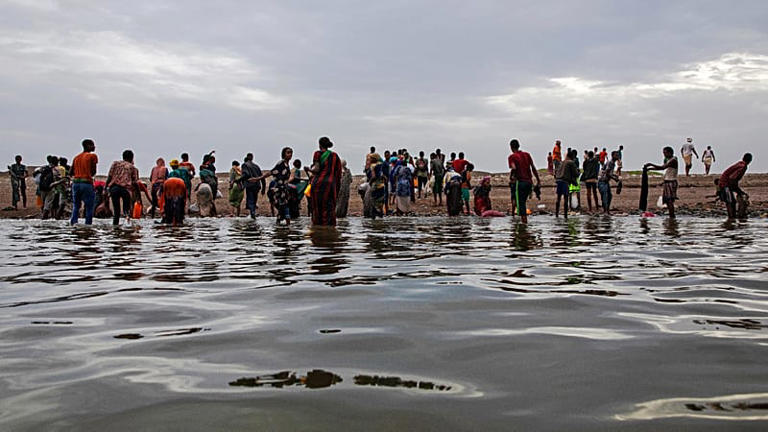
18,500 Displaced in 72 Hours as Fighting Flares Across Yemen West Coast
Over 2,000 families have been displaced in a flareup of fighting in Yemen. Photo: IOM 2026/Yemen
Aden/Geneva, 7 September 2026 — Renewed hostilities along Yemen’s western coast and in parts of Taiz and Al-Hodeidah have forced thousands of people from their homes, with civilians reportedly among those killed and injured as clashes intensify.
Approximately 18,500 people have been displaced in the governorates of Taiz and Al-Hodeidah since hostilities escalated rapidly on September 3, according to the International Organization for Migration’s (IOM) Displacement Tracking Matrix, government and partners. The number is increasing by the hour as families continue to arrive in host communities and displacement sites.
“Families are arriving with nothing: no shelter, no food, no way to know if it’s safe to go back,” said Abdusattor Esoev, IOM Yemen’s Chief of Mission. “Many of these are people who have already been displaced once, twice, even four times before. Every time fighting flares up, they lose whatever little they had managed to rebuild. We are particularly concerned by reports that some families may be unable to leave frontline areas safely because of continuing hostilities and insecurity along access routes.”
Reports indicate significant displacement from affected communities in Maqbanah, Al Ma’afer and Jabal Habashi, including Al-Hajab, Al-Rajehi, Hajjat Gabeh and Al Kadaha. Renewed fighting has also reportedly caused secondary displacement among families previously living in displacement sites in Hays.
Urban centres and host communities across South Taiz and the West Coast, including Al Mokha, Hays, Mawza, Al Ma’afer and Jabal Habashi, are experiencing significant pressure due to the continued influx of newly displaced families fleeing ongoing hostilities. With displacement figures continuing to rise, and local capacities overstretched, authorities have issued urgent appeals to humanitarian partners and UN agencies for additional support to address growing needs.
Challenges in road access due to ongoing clashes and disruption of telecommunications networks in the affected districts are slowing efforts to reach, register and verify newly displaced families, complicating an already difficult response. Emergency stocks, particularly food assistance, shelter and household items are severely depleted following recent flood and West Coast responses, leaving humanitarian partners with little to distribute to families arriving at reception sites.
Displaced families are urgently in need of cash assistance, emergency shelter, essential household items and food assistance. At reception sites and throughout host communities, access to safe drinking water and hygiene support remains problematic. In addition, affected populations urgently require emergency healthcare and referral pathways for the injured.
“At the same time, we recognize the presence of migrants using the Eastern Route who may also become trapped or stranded in these areas as a result of the deteriorating security situation and restrictions on movement. Their limited access to assistance, information, safe shelter, voluntary humanitarian return, and essential services may further increase their vulnerabilities and exposure to protection risks,” noted Esoev.
IOM is working alongside Yemen’s Executive Units for Internally Displaced People and humanitarian partners to track, verify and consolidate displacement figures, identify people in urgent need, and mobilize resources for a rapid response. Already, 663 households have been reached with vital household items across Taiz and Hodeidah governorates, while further supplies are on the way.
IOM calls on all parties to the conflict to protect civilians, allow safe passage for families trying to flee, and ensure unimpeded humanitarian access to those still trapped by the fighting.
The Organization is urging donors to urgently replenish emergency stocks and fund the response, as the scale of need continues to outpace available resources.
Houthi attacks on Saudi Arabia ignite fires at oil facilities and wound 73 people
The attacks come after weeks of escalating clashes between the important U.S. ally and the Iranian-backed rebels in Yemen, which shattered a four-year truce in the country’s civil war.
Sept. 8, 2026, 7:47 AM GMT+1 / Updated Sept. 8, 2026, 9:29 AM GMT+1/ Source: The Associated Press
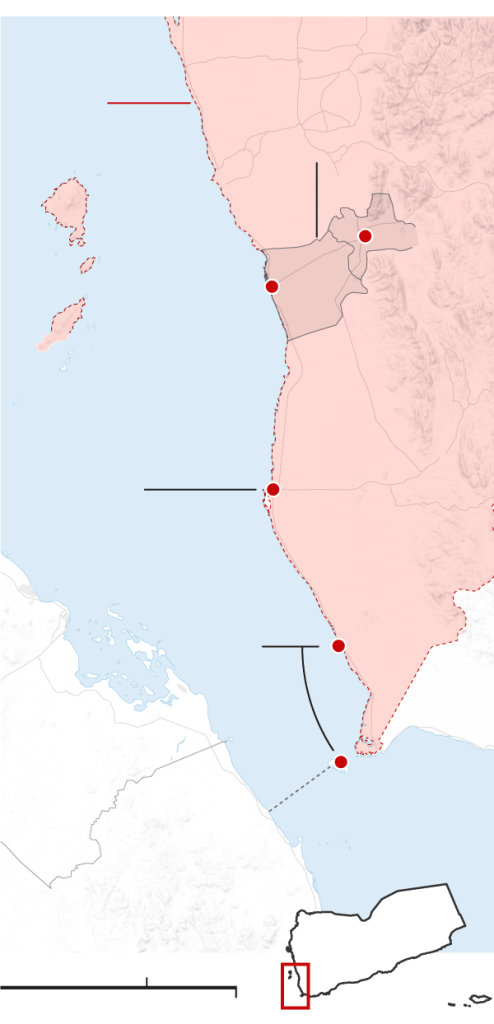
On Thursday and Friday, a rapid Houthi advance southwards along Yemen’s western coast resulted in the capture of the port city of Mocha and then the strategic island of Perim in the the Bab al-Mandab strait. Pending a counter-offensive from government forces, the group is now in a position to control shipping through the strait.
…………
The Red Sea, via Bab al-Mandab, has become a vital lifeline for Saudi Arabia to export its oil. If the Houthis gained full control over the strait, the group would be able to virtually close shipping through the waterway, or charge tolls. It would give Iran and its allies control over two key shipping lanes in the region.
Who stands out for his endeavour to stimulate right wing sentiment to break democracy in Europe?
Epstein files shed light on Steve Bannon’s efforts to influence European politics
Donald Trump’s former adviser told Epstein in 2019 he was ‘focused on raising money for Le Pen and Salvini’ before European elections
Donald Trump’s former strategist Steve Bannon with Jeffrey Epstein. Photograph: House Committee on Oversight and Government Reform
Angela Giuffrida in Rome
Deborah Cole in Berlin
Angelique Chrisafis in Paris
Thu Feb 05 2026
Dozens of messages contained in the latest tranche of Epstein files lay bare the attempts by Donald Trump’s former chief strategist Steve Bannon to tap Jeffrey Epstein for support and funding to bolster European far-right parties.
The messages mostly date from 2018 and 2019, when Bannon, after being sacked by Trump, regularly visited Europe in his quest to forge a movement in the European Parliament uniting ultra-right wing and Eurosceptic forces from several countries including Italy, Germany, France, Hungary, Poland, Sweden and Austria.
Bannon especially set his sights on Matteo Salvini, the Italian deputy prime minister and leader of the far-right League party, who at the time was at the height of his political power. Italian opposition parties this week urged Salvini to clarify whether Epstein influenced the rise of the League after Salvini’s name was cited several times in messages exchanged between Bannon and Epstein.
In France, the left-wing party La France Insoumise also called for a cross-party parliament inquiry after several French figures, including Jack Lang, a former minister for culture, and his daughter appeared in the latest Epstein trove, as did exchanges between Epstein and Bannon in which Bannon spoke of his desire to raise money for the far-right leader Marine Le Pen.
Italian deputy prime minister Matteo Salvini was at the height of his political power when Steve Bannon especially set his sights on him. Photograph: Gabriel Bouys/AFP/Getty Images
In Germany, the files revealed exchanges between Epstein and Bannon promoting Alternative für Deutschland (AfD) while denigrating the then German chancellor, Angela Merkel.
In texts from 2018, Bannon bragged about his influence as an “adviser” to the new right-wing populists and saw the parties’ gains in Europe as a chance to use them to his and Epstein’s benefit.
There is no evidence of any direct relations between Salvini and Epstein, nor any suggestion that Salvini was involved in Epstein’s sex-trafficking network. But what the messages do reveal is Epstein’s interest in European nationalists.
In a message contained in one of the files and dated March 5th, 2019, a couple of months before the European parliamentary elections, Bannon writes that he is “focused on raising money for Le Pen and Salvini so they can actually run full slates”.
Other messages detail Bannon’s travels in Europe at the time and his ambition for increased nationalist power in Brussels, as highlighted in a flurry of exchanges between the pair at the time of the European Parliament ballot in late May 2019.
The messages also refer to Bannon’s meeting with Salvini in Milan in March 2018, just a few days after Italian general elections that culminated in the League forming a government with the populist Five Star Movement (MS5).
Bannon met Salvini again in Italy in September that year when the League joined his anti-EU organisation The Movement. By the following summer, Salvini was in opposition after collapsing the League’s coalition with M5S in a failed attempt to trigger early elections.
There is no evidence that Epstein financed the League, which returned to government in 2022 as an ally in Giorgia Meloni’s ruling coalition, and other European far-right parties. However, it does appear that Bannon tried to tap him for funds.
………..
In France, Lang, who currently heads Institut du Monde Arabe, a cultural organisation, features in emails discussing meetings and holidays. He admitted knowing Epstein, saying it was “at a time when nothing suggested Jeffrey Epstein was at the heart of a network of criminality”.
His daughter Caroline, a film producer, resigned this week from France’s Union of Independent Producers after the emails showed she had founded an offshore company with Epstein in 2016 to invest in the work of young artists. There was no suggestion of illegality. She said she had resigned from the company when Epstein’s criminal acts were revealed.
The emails also showed extensive communications between Epstein and Olivier Colom, a former diplomatic adviser to the former president Nicolas Sarkozy. One email exchange with Colom in 2018 suggested that the former minister for finance Bruno Le Maire had gone to Epstein’s house in New York at an unspecified date. A person close to Le Maire told Politico that Le Maire had not known whose house he was visiting in September 2013, before he was minister for finance, and quickly left when he saw Epstein at the residence, never seeing him again.
Casu said the issue was not Epstein’s files per se, “because he is dead”, but the questions the messages raise about powerful foreign influences and the networks aimed at weakening Europe.
“These files are getting a lot of attention in the US, as is obvious,” he said. “But in my opinion, they should be given just as much attention for what they represent for Europe today, and for the political situation in which we are in.”
Published date: 2 February 2026 16:09 GMT|Last update: 7 months 6 days ago
Former Donald Trump strategist Steve Bannon boasted he had become an adviser to right-wing British politician Nigel Farage in a message to disgraced child sex offender Jeffrey Epstein in March 2018.
This comes as an image has surfaced of Bannon posing for a photo in January 2025 with a smiling Matt Goodwin, the candidate for Farage’s Reform UK in the crucial Gorton and Denton by-election this month.
Newly released files show Epstein and Bannon messaging each other on 10 March 2018, arranging to meet in Paris.
That day, Bannon gave a speech to France’s far-right Front National party, telling the event that “history is on our side and will bring us victory”.
Bannon said: “You are part of a movement that is bigger than that in Italy, bigger than in Poland, bigger than in Hungary.”
“I also attended Nigel Farage’s ‘Stars and Stripes’ party at the Hay Adams Hotel, which was absolutely packed with countless American and British politicians and donors, offering a sharp contrast between Nigel Farage’s visible and growing influence in Washington and Keir Starmer who was nowhere to be seen in Washington.”
Goodwin added that “one of my most interesting discussions was at another party, hosted by Steve Bannon, Donald Trump’s former (and no doubt ongoing) consiglieri”.
He posted a photo of himself shaking hands with Bannon.
Bannon told him that the Conservative party was “finished”, Goodwin said.
He added that Bannon believed Reform “look much better placed to pick up and run with the ongoing realignment of British politics —to drive home the same kind of rebellion that America is witnessing today”.
Die “Epstein Files” werfen neues Licht auf alte Kontakte: Steve Bannon suchte offenbar gezielt die Nähe zur AfD, traf Parteispitze und plante Netzwerke für Europas Rechte.
Die sogenannten “Epstein Files” könnten für die AfD zum Problem werden. In den vergangenen Wochen hat das US-Justizministerium weitere Dokumente aus den Ermittlungen rund um den 2019 verstorbenen Jeffrey Epstein veröffentlicht.
The Hippocratic Oath is an ethics code for physicians that was historically taken by doctors, and it is one of the best-known Greek medical texts in the Western world. It emphasizes following ethical standards such as doing beneficial treatment, avoiding harm, and keeping patient information confidential. Wikipedia News-Medical
But, like the infamous Doctor Mengele, this oath has been discarded by some:
ICE given permission to force-feed Cuban hunger striker with gastric tube
Exclusive: court orders seen by Guardian show agency given approval to fit Texas detainee with tube without his consent
José Olivares in New YorkSat 5 Sep 2026 11.00 BSTShare
Federal immigration officials quietly received permission from a judge in recent weeks to force-feed a detained Cuban hunger striker inside a Texas detention center, including with the use of a rare, nonconsensual surgical procedure, court records reveal.
The man is likely the 19th hunger striker in Immigration and Customs Enforcement (ICE) detention where the agency has had an application approved to conduct “involuntary medical procedures” since January 2025. The rising number of cases under the second Trump administration has alarmed advocates amid wide-ranging accusations of mistreatment inside facilities nationwide.
Court orders from the southern district of Texas federal court seen by the Guardian suggest ICE followed through with force-feeding via a nasal tube on the Cuban man in August, since agency officials successfully requested this week that the court order be extended. He is currently detained at the Montgomery ICE processing center, a privately-run detention facility near Houston.
The Department of Homeland Security (DHS), the parent agency of ICE, said on Thursday evening the man had “resumed eating and drinking again” and was not being force-fed. The DHS did not answer whether the man had broken his hunger strike this week after the latest court order, or how many times he had been force-fed prior.
The new order had given ICE permission to operate on him to fit a surgical feeding tube without his consent.
The Guardian is not naming the man because efforts to contact him have been unsuccessful. Like in all force-feeding cases, the majority of his court records are sealed, concealing many details from the public.
During a prolonged hunger strike, ICE will request permission from a federal judge to conduct force-feeding, forced hydration and other measures.
Typically, after a judge approves the request, detention center guards hold down a hunger striker while medical staff forcibly insert a tube through the person’s nose and down their throat, and pump nutritional liquid into their stomach.
But in this latest case in Texas, ICE also received permission to force-feed the Cuban hunger striker through a “percutaneous endoscopic gastrostomy” tube insertion. This is a surgery in which medical staff make an incision in a person’s abdomen, insert a tube that remains in place indefinitely until it is surgically removed again and pump liquid directly into the stomach. This procedure has not been previously identified in other force-feeding cases reviewed by the Guardian.
“The cruelty of the extreme tactics at ICE’s disposal to end lawful protest, including forcibly cutting into a protester’s body to insert a tube in their stomach, underscores the horrors happening outside our view in ICE detention centers,” said Savannah Kumar, a staff attorney at the American Civil Liberties Union (ACLU) of Texas. “ICE’s brutal use of involuntary medical procedures on hunger strikers demonstrates how degrading conditions have gotten in these hidden places, which is often exactly what hunger strikers are protesting in the first place.”
Last month, the Guardian published a series of stories about the extent of ICE’s force-feeding practices under the second Trump administration, with the agency getting the green light to perform involuntary medical procedures in 18 hunger strike cases – and the latest being the 19th.
“The high number of verified court orders since January 2025 raises serious concern,” said Eunice Cho, an immigrant and civil rights attorney who has extensively documented forced treatment on hunger strikers in ICE detention.
Cho added that the high number “suggests several possibilities, none of which are positive”, including that conditions are so bad that more people are hunger striking in protest, and that officials “are more frequently failing to attempt to resolve the issue in a less confrontational and dangerous manner, instead resorting to forced medical intervention”.
The Cuban man was arrested by ICE on 22 July and was declared a hunger striker three days later, court records show. The Montgomery facilityholding him is run by the private prison company GEO Group.
A GEO Group spokesperson referred all questions to ICE. The US attorney’s office in the southern district of Texas, which is representing ICE in the latest court proceedings, did not respond to a request for comment.
An ICE official and a doctor at the facility requested permission to force-feed the Cuban hunger striker in August, filings show.
On 19 August, federal judge Andrew Hanen gave permission for ICE to force-feed the hunger striker. And on 1 September, ICE requested the judge extend his order.
This Wednesday, Hanen extended the order, which is set to expire in mid-September. It includes the option for ICE touse the surgical tube insertion.
Like in many cases reviewed by the Guardian, the Cuban hunger striker does not have any current legal representation.
“The fact that this person lacks legal representation in a process where the government seeks to subject him to an invasive, involuntary medical procedure performed without consent is a tragedy, and a clear failure of our justice system,” Cho said. “The secretive nature of these cases, and the opacity of the legal process by which the government brings these motions, should concern us all.”
According to a DHS spokesperson, the Cuban hunger striker entered the US unlawfully in 1980 and was ordered deported in 2004. The DHS claims he was previously convicted of “aggravated assault with a weapon, aggravated battery, drug possession, and carrying a concealed firearm”. The spokesperson added that he “received due process and will remain in ICE custody until removed from the United States”.
The DHS also said facilities distribute proper food, hygiene, phone and other basic services, and that “during hunger strikes, ICE continues to provide three meals a day, delivered to the detained alien’s room”.
The Trump administration had previously refused to acknowledge the force-feeding of hunger strikers in ICE detention, until later into the Guardian’s investigation confirming the practice.
In the mid-1970s, the force-feeding of Northern Irish prisoners led the World Medical Association (WMA) to establish stricter guidance on how doctors respond to hunger strikes. Force-feeding, always considered an ethically dubious practice, had been used in British and Irish prisons since the suffragette hunger strikes of 1909-14. The WMA criticised doctors who force-fed for having abandoned the Hippocratic Oath to instead helping governments participate in torture and abuse. This was a direct response to medical ethical issues that arose during the Troubles.
‘Medical neutrality’ and ethical standards often proved difficult to maintain in a complex conflict.[1] A desire to appear ‘neutral’ encouraged some medical professionals to turn a blind eye towards, or remain silent about, medical activity that breached ethical standards.[2] In one of our own podcast episodes, former prisoner Séanna Walsh describes the fraught relationships that formed between prisoners and their doctors. When force-feeding was used between 1973-74, a global controversy erupted.
What is Force-Feeding?
Force-feeding involves inserting a tube into the mouth of a prisoner which is pushed downwards into the stomach, causing patients to gag, choke and even vomit over themselves. Once the patient eventually calms down, medical staff pour liquid food into the tube through a funnel. Force-feeding can also be performed using a nasal tube. It shares similarities with ‘artificial feeding’, used to keep alive mentally ill patients who refuse food, but important differences exist.
A hunger strike has been defined as “an action in which a person or persons, with decision-making capacity, refuses to ingest vital nourishment until another party accedes to certain specified demands.“1 It is a high-stakes protest strategy undertaken by incarcerated individuals to bring attention to a set of grievances. Grievances may include poor facility conditions, unjust modes of punishment, lengthy detention, denial of due process, imminent deportation, and inadequate access to legal representation. For many detainees, it is an option of last resort and represents a desperate appeal to be heard after exhausting other means of recourse. Between 2015 and 2020, approximately 1600 individuals held in immigration detention facilities by the United States Immigration and Customs Enforcement (ICE) agency participated in a hunger strike.2
Clinicians may be asked to care for with patients who hunger strike or subsequently stop a strike, especially when they work in a carceral setting, or in a facility near a detention center. They should be aware of the ethical challenges of treating individuals who choose to stop eating in such a setting, and the clinical management of those who break their fast. Hunger strikes in ICE detention represent an illustrative case study for exploring the clinical and ethical challenges faced by clinicians involved in the care of these individuals. Despite the dire health complications that can arise from fasting, it is unethical for clinicians to engage in forced feeding or forced hydration measures. Knowledge about the complications and the ethics of hunger striking and force feeding is important for clinicians who work in detention facilities as well as those who care for them when they are referred to hospitals.
A new Immigration and Customs Enforcement detention facility on this site in Conroe, Texas, will house up to 1,000 immigrants at a cost of $44 million a year to U.S. taxpayers.
The Trump administration wants to expand its network of immigrant jails. In recent months, Immigration and Customs Enforcement has called for five new detention facilities to be built and operated by private prison corporations across the country. Critics are alarmed at the rising fortunes of an industry that had fallen out of favor with the previous administration.
The Joe Corley Detention Facility is a sprawling complex surrounded by shiny concertina wire located in Conroe, Texas — about an hour north of Houston.
ICE spends more than $2 billion a year on immigrant detention through private jails like this one.
The Corley facility is owned by GEO Group, the nation’s largest private prison company.
ICE and the U.S. Marshals Service pay GEO $32 million a year to house, feed and provide medical care for a thousand detainees.
Between 2013 and 2014, Douglas Menjivar was one of those ICE detainees.
Menjivar says he was raped by gang members in his cell, and when he reported it to the medical staff they mocked him. ICE found the rape allegation to be unsubstantiated. His lawyer has filed a federal civil rights complaint.
Menjivar also says he was forced to work for a dollar a day.
“Lots of things happened to me in Conroe,” he says.
He is a 42-year-old Salvadoran who entered the country illegally and is charged with violating a prior deportation. He’s out now, fighting to get legal status in immigration court.
Menjivar has become a bitter critic of immigrant detention centers, which are supposed to be holding facilities for civil matters, not prisons for meting out punishment.
GEO “strongly refutes” these claims and plans to fight them. In an emailed statement, the company says detainee labor is voluntary and immigrant workers are paid a dollar a day because that’s the rate set by ICE. GEO also says it provides “culturally responsive services in safe and humane environments,” and that all of its facilities comply with national detention standards.
Here’s GEO’s full statement defending its facilities:
“GEO has a long history of providing culturally responsive services in safe and humane environments that meet the needs of individuals in the care and custody of federal immigration authorities as confirmed in the U.S. Department of Homeland Security Advisory Council report in 2016 on privately operated ICE facilities. As a matter of long-standing policy, GEO does not take a position on or advocate for or against any immigration policies, such as the basis for an individual’s detention or the length of detention.”
GEO also rebuts the class-action lawsuit filed in Colorado:
“GEO has consistently, strongly refuted the allegations made in this lawsuit, and we intend to continue to vigorously defend our company against these baseless claims. The volunteer work program at all immigration facilities as well as the minimum wage rates and standards associated with the program are set by the Federal government under mandated performance-based national detention standards. Our facilities, including the Aurora, Colo. Facility, are highly rated and provide high-quality services in safe, secure, and humane residential environments pursuant to the Federal Government’s national standards.”
“I don’t get the impression that the Trump administration has any interest in implementing new detention reforms. If anything it looks like they may be eliminating some safeguards,” says Kevin Landy, who was director of the Office of Policy and Planning at ICE for six years. That office tried to reform federal oversight of immigrant jails during the Obama administration. He also advocated for raising the pay rate of a dollar a day, which was set in 1974.
“I believe contractors save a lot of money by using detainee labor because they’re performing work that would otherwise have to be performed by paid employees,” Landy says. That work includes cooking and cleaning the facility.
But now, ICE is shutting down Landy’s old office and moving the functions elsewhere in the agency.
“It is incredibly scary to contemplate the notion that ICE would be removing even the dysfunctional oversight that currently exists,” says Carl Takei, senior staff attorney with the American Civil Liberties Union’s National Prison Project.
At the same time, immigration authorities want to increase detention space. In its latest budget request, ICE has asked for more than 51,000 detainee beds — a 25 percent increase over the last year.
ICE, however, believes lockups are the surest way to get detainees to show up in immigration court. So ICE is turning once again to the private prison industry.
“I think what’s driving this is the administration wants to make a point that they’re serious about immigration enforcement,” says Lauren-Brooke Eisen of the New York University School of Law. She’s author of a new book, Inside Private Prisons.
“They’re going to put their money where their mouths are and I think they’re going to invest in more immigrant detention centers,” she continues.
The two largest private corrections corporations, GEO Group and CoreCivic, each gave $250,000 to Trump’s inaugural festivities.
The Obama administration took the extraordinary step of phasing out contracts with private prisons that house immigrants convicted of crimes committed in the U.S. The Justice Department found these prisons fall short on safety and security, and are no cheaper than those run by the federal government.
Since Trump took office, the Bureau of Prisons has restored those contracts.
And ICE is proposing five new private detention centers — in Detroit, Chicago, St. Paul, Salt Lake City and south Texas.
Traditionally, ICE has put its jails in border states close to where most people were caught. But immigration agents under Trump have been much more aggressive in the interior.
Quick facts Senior Judge of the United States District Court for the Southern District of Texas, Judge of the United States District Court for the Southern District of Texas …
Hanen maintained chambers in Brownsville, Texas from 2002 until 2018, when he relocated to Houston, also within the Southern District.[5]
Notable cases
During the sentencing of a convicted child smuggler in December 2013, Hanen sharply criticized the United States Department of Homeland Security in an opinion that “veered far from the matter at hand” and “that quickly won rave reviews on right-wing news sites.” Not only did he criticize the policy of reuniting children with their illegal immigrant mothers, he further rebuked the department for not prosecuting this child’s mother.[6] Hanen wrote, “DHS should cease telling the citizens of the United States that it is enforcing our border security laws because it is not. Even worse, it is helping those who violate these laws.”[7] In February 2015, Hanen granted the State of Texas’s motion for a nationwide preliminary injunction barring President Barack Obama from carrying out the Deferred Action for Parents of Americans (DAPA) program.[6] In United States v. Texas, that ruling was affirmed by an equally divided Supreme Court of the United States on June 23, 2016 (with an eight-member bench due to the death of Justice Antonin Scalia).[6]
Hanen made national news for related assertions and sanctions which were later withdrawn. On May 19, 2016, while the case was awaiting a decision at the Supreme Court, Hanen demanded that some 3,000 Department of Justice lawyers in 26 states take ethics classes, and ordered other sanctions for those who argued Texas v. United States, involving President Obama’s immigration executive actions.[8][9] Hanen did not explain why he extended his sanctions to attorneys who had no involvement in the case.[10] Hanen accused Justice Department’s lawyers of lying to him during arguments in the case, and barred them from appearing in his courtroom.[8] He accused the department of “a calculated plan of unethical conduct”.[11] Hanen further ordered Attorney GeneralLoretta Lynch to appoint someone within the department to ensure compliance with his order.[11]
Hanen also ordered U.S. immigration officials to turn over, within weeks, the names and addresses of 50,000 people who received deferral under the expanded deferred action initiative.[9] The National Immigration Law Center, the American Civil Liberties Union (ACLU) Immigrants’ Rights Project, and the ACLU of Texas petitioned the United States Court of Appeals for the Fifth Circuit to vacate the order or postpone the deadline.[9] Separately, the Justice Department argued in a filing in the district court that Hanen’s ordered sanctions “exceed the scope of [the court’s] authority and unjustifiably impose irreparable injury on the Department of Justice, the Department of Homeland Security and thousands of innocent third parties.”[10][12] The Justice Department also argued that additional ethics courses could cost up to $7.8 million over five years.[9]
On June 7, 2016, Hanen stayed his order requiring ethics courses for federal attorneys and requiring U.S. immigration officials to turn over the names and addresses until August 22, 2016.[9] On January 19, 2017, Hanen withdrew the sanctions in the order issued on May 19, 2016, as well as his demand that Immigration and Customs Enforcement (ICE) turn over personal information of 50,000 DACA recipients, stating: “This Court finds upon [DOJ’s] newly filed evidence, that the statements in question, though repeated on multiple occasions, were not the product of a bad faith intent to deceive the Court or that they were made with malice.”[13]
2017: The Conservatives invite Blackstone to invest in UK Housing:
American private equity titan Blackstone is one of the world’s largest property investors. It entered the UK affordable housing market in 2017 when it launched Sage Homes, a for-profit provider of affordable homes.
In 2021, Blackstone and Regis launched build-to-rent firm Leaf Living.
Sage Homes buys Section 106 properties from house builders as either affordable rent or shared ownership, then manages them, providing builders with more capital for development.
Gemma Kataky, managing director of real estate, joined Blackstone in 2015 and has been involved in both Sage Homes and Leaf Living from their inception.
As a global investor, what are the attractions of the UK affordable housing market to Blackstone? What does affordable housing mean to you?
We believe private capital is a valuable part of the solution to the chronic undersupply of affordable housing, which is an issue not only in the UK but in many major economies around the world. This is why, together with Regis, we founded Sage Homes in 2017 to create a long-term affordable housing provider in the UK.
To us, affordable housing means creating homes for the people who need them most. Having committed to funding the development of 23,000 affordable homes to date, we are proud to have established and backed a platform which has been recognised as the largest provider of new build affordable homes in England for three years running.
Blackstone’s Housing Strategy?
Blackstone traded the homes via its Sage Homes vehicle, a housing cooperative venture with the private equity investor Regis Group that was launched in 2017. The portfolio, which is found across the UK, consists of shared properties across 250 Sage Homes sites. USS has undertaken Sparrow Shared Ownership, a documented provider of social housing, to manage the homes.
James Seppala, the head of real estate Europe at Blackstone, stated the company had “created an institutional-grade portfolio which has, in turn, enticed more long-term institutional capital into the sector”. He stated the sale proceeds would be invested in Sage to help ease the undersupply of housing in the UK.
“Through Sage Homes, which was founded in 2017, Blackstone has been the biggest provider of newly built affordable housing in the nation for the last three years,” he said. Sage has perpetrated £3.7bn to fund the development of 22,600 affordable rent and shared ownership homes, of which more than 17,000 have been built so far.
Institutional acquisition in UK housing is still tiny compared with the US and continental Europe, and makes up just 2% of the total rented inventory, compared with more than 35% in Germany and the US, according to Savills.
The Wall Street Takeover of London Housing: How Labour Sold Out Renters to Blackstone
While The Guardian reports “viability issues,” Chancellor Rachel Reeves is engineering the largest transfer of British housing to American finance capital in history
Oct 17, 2025
The Policy Change They’re Not Explaining
On October 17th, The Guardian reported that London developers would be “allowed to reduce the percentage of affordable homes” from 35% to 20%. The framing? Struggling developers need relief due to rising construction costs and regulatory burdens.
…………apply via the “Continuous Market Engagement Programme”, that is, bids for individual schemes. We don’t know yet when an announcement will be made in relation to them. As under the Keir Starmer government, there is no funding ringfenced for councils. They will have to compete for funding with housing associations, for profit providers, builders and developers. Moreover, the government has said that they expect bidders to minimise their grant request and maximise their own contribution.
Overall, the £39 billion programme is for 30,000 “affordable homes” a year for ten years, 10% of the government’s annual target of 300,000. 18,000 of the “affordable homes” will be social rent, 6% of the government’s target. We have explained elsewhere why this programme is “a flawed programme which will not solve the housing crisis” and in our letter to Angela Rayner what changes need to be made.
Essentially, this is the programme drawn up under Steve Reed. There is no addition to the original £39 billion, a majority of which has been ‘backloaded’ until after the next general election. The government is still keeping in place the Tory definition of “affordable housing”, so it is still funding
“affordable rent” (up to 80% of market rents) which was introduced by the coalition government to facilitate a 60% cut in funding,
“shared ownership” and
‘for profit providers’ and big builders like Vistry.
1947 Establishment of modern planning system nationalises development rights over land
For 20 years after the Second World War, councils are allowed to buy land cheaply, sparking the boom in council-house building (right), but landowners succeed in changing land compensation rules.
1979 Publicly owned land starts to be sold off
Start of the great sell-off of publicly owned land under successive governments.
……..
2003 Peak home ownership
Home ownership levels hit a peak, with 71% of homes in England owned outright or with a mortgage, before going into decline. Start of the present housing crisis; rise of ‘generation rent’.
The tmes in which we live. Only a poet can describe it:
‘The Second Coming’ By William Butler Yeats, 1920.
Turning and turning in the widening gyre The falcon cannot hear the falconer; Things fall apart; the centre cannot hold; Mere anarchy is loosed upon the world,
The blood-dimmed tide is loosed, and everywhere The ceremony of innocence is drowned;
The best lack all conviction, while the worst Are full of passionate intensity.
Surely some revelation is at hand; Surely the Second Coming is at hand. The Second Coming!
Hardly are those words out When a vast image out of Spiritus Mundi Troubles my sight: somewhere in sands of the desert
A shape with lion body and the head of a man, A gaze blank and pitiless as the sun, Is moving its slow thighs, while all about it Reel shadows of the indignant desert birds.
The darkness drops again; but now I know That twenty centuries of stony sleep Were vexed to nightmare by a rocking cradle,
And what rough beast, its hour come round at last, Slouches towards Bethlehem to be born?
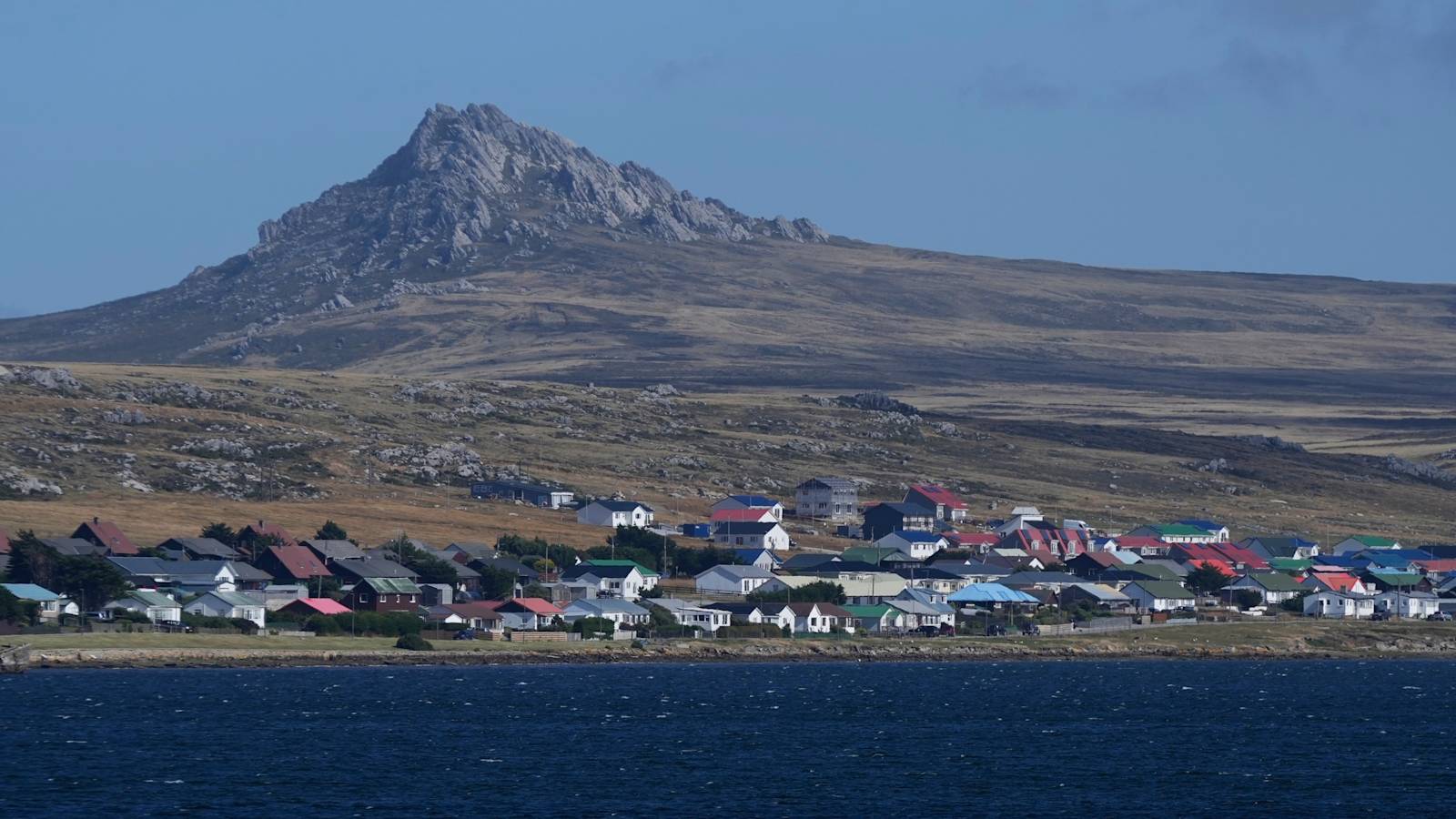
Roughly 3,700 people live on the Falkland Islands, a windswept British Overseas Territory in the South Atlantic best known for its sheep, squid fisheries, and a brief but fierce war in 1982. By 2028, those same 3,700 people will begin receiving a cut of one of the largest deepwater oil developments outside Brazil, the Sea Lion field, holding an estimated 917 million barrels of recoverable oil. The project is expected to generate around £4 billion in revenue over 35 years. Yet beyond the headline numbers, the story of who owns the oil, who pays for its protection, and who ultimately benefits from Falkland Islands oil is far more surprising than most realise.
The Scale of the Sea Lion Field
The Sea Lion field sits approximately 220 kilometres north of the Falkland Islands, beneath roughly 450 metres of water in the North Falkland Basin. Discovered in 2010 by a small British company called Rockhopper Exploration, the field languished for over a decade. The post-2014 oil price slump and the reluctance of major oil companies to invest in a remote, politically sensitive frontier project kept Sea Lion frozen until an unlikely player arrived.
In December 2025, the partners took a final investment decision (FID), unlocking the project for full-scale execution. Phase 1 targets 170 million barrels, with 11 subsea wells tied back to a redeployed floating production, storage, and offloading (FPSO) vessel. Peak production is expected to reach approximately 50,000 barrels per day, with first oil planned for March 2028.
The project has followed a long and uncertain path to reach this point:YearMilestone2010Rockhopper Exploration discovers the Sea Lion field2012Premier Oil acquires 60% stake in $1 billion farm-in deal2014–2019Oil price slump; project frozen; production timelines repeatedly pushed back2020Navitas Petroleum enters as minority investor, reviving the project2022Harbour Energy exits; Navitas becomes majority owner (65%) and operatorNov 2025Environmental Impact Statement approved by Falkland Islands GovernmentDec 2025Final Investment Decision (FID), unlocking the project formally sanctionedMar 2028First oil targeted
Phase 2, expected within three years of first oil, will add 12 more wells. Across all five planned development phases, the project envisions 64 wells and multiple FPSOs extending production over several decades.
Total funding from FID to first oil stands at $1.8 billion, rising to $2.1 billion for project completion, financed through $1 billion in senior secured debt alongside project equity. And in early 2026, Navitas executed a farm-in for the adjacent PL001 license, which covers an estimated 3.1 billion barrels of prospective recoverable resources, suggesting the North Falkland Basin may hold far more than Sea Lion alone
Who Owns the Oil? Not Who You Would Expect
Ask most people to name the company drilling for Falklands oil, and they might guess Shell, BP, or ExxonMobil. The reality is altogether different and more revealing.
The Sea Lion project is a two-player partnership. Navitas Petroleum, through its UK-registered subsidiary Navitas Petroleum Development and Production Ltd (NPDP), holds a 65% working interest and serves as operator. Rockhopper Exploration, the original discoverer, holds the remaining 35%. This split represents the companies’ working interest, their share of project costs and post-tax profits, and does not include the Falkland Islands Government, which collects its revenue separately through a 9% royalty on production and a 26% corporation tax on oil company profits, among other levies. In effect, the government takes its cut before the companies divide what remains.
Argentina President Javier Milei says his country needs to ‘recover’ the Falklands Islands – but Defence Secretary Wes Streeting says Britain’s commitment remains ‘absolute and unshakeable’
Argentina’s President Javier Milei reiterated his claim to the Falklands overnight
The UK Government has issued a response after Argentina President Javier Milei announced new punitive measures to be imposed on the Falklands Islands.
Defence Secretary Wes Streeting said Britain’s commitment to the Falkland Islands is “absolute and unshakeable” after Milei said his country needs to “recover these islands”.
The Falklands War was a brief conflict between Argentina and the United Kingdom that occurred from April 2 to June 14, 1982, over the disputed sovereignty of the Falkland Islands. The war resulted in a British victory, with significant casualties on both sides, including approximately 649 Argentine and 255 British military personnel killed. helpforheroes.org.uk Wikipedia
Leopoldo Alejandro Betancourt López was born in Caracas in 1980.
He is an economist and businessman and is part of the group known as “bolichicos”, a term used in Venezuela for young entrepreneurs who built large fortunesthrough public contracts during the governments of Hugo Chávez and Nicolás Maduro.
His business breakthrough came with Derwick Associates, a company he founded with Pedro Trebbau and other partners.
Although the company had little initial experience in the energy sector, it secured contracts to build thermoelectric plants during Venezuela’s electricity emergency.
According to various journalistic investigations, Derwick obtained at least 11 public contracts without bidding, with an estimated value between $2 billion and $5 billion.
Transparency Venezuela has pointed to alleged overpricing and issues with the promised capacity at some facilities. Betancourt and his associates have denied the corruption allegations.
After building his fortune in Venezuela, Betancourt moved much of his investments abroad.
In 2021, Reuters reported that he had invested more than $300 million in companies and properties in various countries.
In Spain, he became especially well-known through Hawkers, the sunglasses company.
In 2016, his investment group O’Hara Administration participated in a €50 million funding round to support the company’s international expansion.
Later, Betancourt became president of Hawkers and took majority control through his business structure.
But sunglasses are not his only business in Spain. He has also been linked to Auro New Transport, one of the main VTC license holders, as well as investments in energy, banking, technology, and real estate.
Among his best-known properties is the El Alamín estate in Toledo, which includes a castle and thousands of acres.
What is Alejandro Betancourt’s connection to Delcy Rodríguez?
The latest chapter in Alejandro Betancourt’s story is directly tied to oil.
According to reports published in recent weeks, the businessman is said to have returned to Caracas to informally advise Delcy Rodríguez on strategic matters for Venezuela.
These include:
Restoring oil production.
Attracting investment from the United States.
Restarting mining projects.
Restructuring Venezuelan debt.
However, it is important to clarify: Caracas has not confirmed that Betancourt is an official adviser to Delcy Rodríguez.
According to reports, his influence is related to business contacts, political mediation, and involvement in private oil companies.
Betancourt is said to have traveled to Venezuela several times during June and July 2026. El País documented his arrival in Caracas on June 27, from Palm Beach on a private jet.
The Possible Link Between Delcy Rodríguez and Donald Trump
One reason Alejandro Betancourt has drawn renewed attention is his alleged role as a go-between for the Delcy Rodríguez government and the Donald Trump administration.
Mauricio Claver-Carone, identified as an informal envoy of U.S. Secretary of State Marco Rubio for Venezuela, acknowledged that U.S. officials used Betancourt as an intermediary.
The businessman reportedly has something valuable for both sides: he knows the Venezuelan oil sector and maintains business and political contacts in the United States.
His role would focus on facilitating talks about restoring oil production, bringing in U.S. capital, and operations that could take place under the sanctions regime.
In short, Betancourt could serve as a bridge between the interests of Caracas and Washington.
What Oil Interests Does Alejandro Betancourt Have?
Betancourt’s influence is also tied to NABEP, considered one of the largest private oil companies in Venezuela.
According to available information, Betancourt is its main shareholder. In addition, a group close to the businessman reportedly bought for about $300 million the minority stake held by American Harry Sargeant III.
His name is also linked to projects with Petrocedeño, Petrocabimas, and Petrosur, as well as operations in oil fields in Zulia state.
Thus, the businessman is once again close to one of Venezuela’s most important assets: its oil industry.
Why Is Spain Investigating Alejandro Betancourt?
As his business influence grows, Spanish authorities continue to investigate Betancourt.
Judge Santiago Pedraz of the National Court is investigating the businessman and five other Venezuelan citizens for alleged money laundering and tax crimes.
The investigation began after a cooperation request sent in September 2024 by the Zurich Prosecutor’s Office, as part of the so-called “Operation Bolívar.”
The case is linked to a 2012 transaction between PDVSA and Administradora Atlantic.
According to the investigation, the loan was issued in bolivars and was to be repaid in dollars using the official Venezuelan exchange rate. The large difference between that rate and the real value of the currency reportedly generated multimillion-dollar profits.
Investigators estimate that the alleged fraudulent transaction totaled $4.85 billion and claim that about $42 million in bribes were paid to three Venezuelan officials.
The National Court is seeking to determine whether some of that money ended up in Europe through properties, companies, shares, bank accounts, and investments in Spain.
But this is important: a judicial investigation does not equal a conviction. Betancourt remains under investigation and has not been convicted in Spain in connection with these events.
In March 2026, Judge Santiago Pedraz temporarily closed the investigation.
The judge found that Venezuelan authorities had already reviewed the loan between PDVSA and Administradora Atlantic and determined the transaction was legal.
The Anti-Corruption Prosecutor’s Office appealed the decision, arguing that Venezuelan authorities had not investigated exactly the same facts as those being examined in Spain.
The Criminal Chamber of the National Court ultimately sided with the Prosecutor’s Office and ordered the case reopened.
As a result, Alejandro Betancourt remains under investigation.
His return does not erase the ongoing legal investigations. On the contrary, it raises a new question:
How has a businessman whose fortune and operations linked to PDVSA are still under judicial review become a key figure for Venezuelan authorities and a possible link to the Donald Trump administration?
In 2025, the businessman again made headlines when he was detained twice by British police in London, where he had settled in recent years.
A few days later, Spanish authorities raided Alamín Castle, a palatial estate that Betancourt owned in the province of Toledo.
Both swoops were reportedly linked to an investigation into alleged money laundering initiated by the Swiss public prosecutor’s office.
Right place, right time
According to the Washington Post, US authorities urged Switzerland to drop its extradition request against the businessman before the British courts.
The request was granted by the Swiss authorities, and last May a London court lifted the travel ban placed upon him.
“Switzerland did not present the evidence requested by the English judges to support its extradition request, and therefore the travel ban was lifted,” Betancourt’s lawyer told BBC News Mundo, while acknowledging this does not necessarily mean the end of the Swiss investigations.
According to Axios, in the first minutes after the military operation on 3 January that concluded with US forces seizing Maduro and his wife, Cilia Flores, Betancourt spoke with then-Vice-President Delcy Rodríguez and convinced her to speak with Rubio.
This version was corroborated by his lawyer.
“He acted as an intermediary,” said Sale. “He had nothing to do with Maduro’s departure, but since he had everyone’s trust, he became an intermediary.”
On Wednesday, Delcy Rodríguez, now interim president of Venezuela, defended Betancourt, saying he has no pending cases in that country or the US.
“Often a person is judged in the media before in the courts,” she said in the oil baron’s defence.
For those who have followed Betancourt’s career for years, one thing is clear.
“He’s very skillful,” Boyd concluded.
“He always manages to be where he needs to be to avoid problems and make money.”
In the late 19th and early 20th century, pistachios were popularised in the US by migrants from the Middle East. By the 1930s, pistachio orchards were established in California. The warm, dry climate of California provided ideal conditions for pistachio trees, so much so that the US has now overtaken Iran and Turkey as the world’s largest producer of pistachio
But when the climate heats up and drought occurs, pistachio production is crippled.
As with many crops requiring irrigation during drought conditions, future proofing for water supply for crops has to be put in place:
The larger concern from a sustainability standpoint, however, is the amount of water used in pistachio production, especially as pistachios are predominantly grown in areas susceptible to drought. Pistachios require over 7,600 litres of irrigated water per kg according to one study published in 2020. That is more than almost any other food source. Only beef and lamb are more water intensive, but they generally consume mostly rainwater, which doesn’t deplete as much groundwater as irrigation typically does.
Source: The Conversation
Highlights
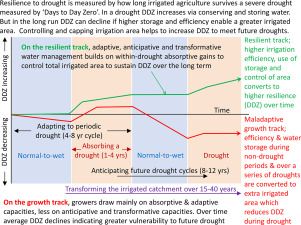
•A ‘Water, Efficiency, Resilience, Drought’ framework and model was developed.
•Days to Day Zero (DDZ) measures the resilience of irrigated agriculture to drought.
•Absorptive, adaptive, anticipative and transformative capacities can change DDZ.
•Improved irrigation efficiency and water storage can increase resilience and DDZ.
•But resilience and DDZ decline if efficiency and storage expand irrigated areas.
4.3. On storage as a resilience factor
As a result of running various scenarios in WERD-M, we draw the following insights on how water storage mediates resilience:
•The presence of the large water storage bodies provides an important safeguard against drought impacts (McCartney and Smakhtin, 2010) and if governed well, helps build resilience (Matthews and McCartney, 2018). For example, in our modelled GLC, a refilled storage of 230 MCM can provide 402 days of protective watering for 28,000 ha of irrigated crops. Furthermore, dams and groundwater provide water security for supplying priority non-agricultural sectors.
•The presence of storage allows inter-drought water to be captured and stored which supports drought resilience. The larger the potential drought store (PDS) the greater the chance of this being refilled by high flow events leading to DDZ being sustained or increased (although this phenomenon was not fully modelled by WERD-M).
•The presence of storage underpins the ability of irrigators to conserve water and retain that conserved water in storage for release later in the drought to meet protective irrigation needs. Put another way, it is large volumes of water storage which enable the relative gains in DDZ and DPI to occur when water conservation is undertaken. Two corollaries follow – both of which can be demonstrated by adjusting variables in WERD-M. First, if access to storage is switched off so that farmers draw only on low UDF streamflows during a drought, their water conservation attempts would have a much smaller effect on boosting DDZ. Second, if farmers are given access to much larger UDF streamflows during a drought, their reliance on storage for retaining conserved water diminishes.
•In the long-term, the presence of high-capacity storage, combined with efficiency gains, allows irrigated area to increase by providing a buffer to drought. (A contrasting explanation is that with no or little storage, irrigation would be constrained by a lack of water during drought which would throttle long-term growth). This combined effect supports observations by Di Baldassarre et al. (2018) that higher water demand can offset the initial benefits of reservoirs.
Thus, similar to the previous section’s discussion about efficiency, and as WERD-M demonstrates, the capacity of water storage and size of streamflows accessible by irrigation during a drought variously combine to mediate DDZ resilience. These interactions are further revealed and amplified when irrigated areas are controlled and capped in the longer-term.
After 5 successive heatwaves this year in the UK, farming has become near impossible due to drought. The UK government is now future proofing UK farming:
Funding Available for On-Farm Reservoirs Following Government Drought Support Package
We all know it has been a very dry summer and, whilst the weather has been celebrated by some, for many farmers it has caused notable hardship and will continue to do so over the coming months.
Whilst it is clearly too late to improve water storage for this summer, action can be taken now to put things in place for future years. The warning from the Met Office of an even hotter 2027 may also be a sign of things to come.
On 14 August 2026, the Government announced a £65 million drought support package for English farmers, including:
Up to £15 million specifically for on-farm reservoirs.
The reopening of the Water Management Grant in autumn 2026.
The recently published National Planning Policy Framework (NPPF) also directs councils to look favourably upon infrastructure projects that help address climate and drought risks, including on-farm reservoirs and water storage projects.
The Alarming Rise of Black People Found Hanging but Ruled as Suicides
Emerald Book PublicationAugust 15, 202
67 min read
As public hangings of Black people rise, local authorities are dismissing them as suicides within 72 hours—contradicting CDC data, historical trauma, and the pleas of grieving families demanding the truth.
Photo: Emerald Book Image
Across the United States, a deeply unsettling pattern has emerged over the past decade, intensifying in recent years. A rising number of Black individuals are being found hanging from trees in public spaces, and in the vast majority of these cases, local authorities are swiftly ruling their deaths as suicides. However, this official narrative is increasingly at odds with statistical reality, historical context, and the desperate pleas of the victims’ families, fueling a crisis of trust and demands for federal intervention.
Independent civil rights organizations and news media have meticulously documented this phenomenon. The comprehensive 2026 report, A Crimson Record, released by the civil rights organization JULIAN, documented over 70 suspected modern-day lynchings across seven Southern states between 2000 and 2025. The report highlights a recurring pattern of “systemic neglect” where local coroners prematurely close cases as suicides without comprehensive investigations. This data points to a clear and alarming trend, with Mississippi alone accounting for at least 20 of these documented cases over the 25-year period.
“
You have a statistical contradiction where Black people are the least likely demographic to die by suicide via hanging, and yet, we see this specific, rare method being used in public spaces with alarming frequency.
— Emerald Book analysis
Independent tracking by groups like BLM Georgia recorded an alarming uptick between March 2025 and August 2026, finding at least 22 Black individuals dead under unusual or suspicious hanging circumstances across the country. During the peak of racial justice protests in the summer of 2020, at least six Black and Brown individuals were found publicly hanged in trees across California, Texas, Georgia, New York, and Oregon within a single month. High-profile cases have become a tragic refrain. In 2024, Dennoriss Richardson was found in Alabama. In 2025, the country witnessed the deaths of Javion Magee in North Carolina and freshman Demartravion “Trey” Reed on the campus of Delta State University in Mississippi. By August 2026, the list had grown to include Kyle Bassinga in Georgia, 16-year-old Juliana Nzita in North Carolina, Tonea Nicole Miller in Florida, and Tasia Fortune in Mississippi.
The Statistical Contradiction
The core of the outrage lies in a stark statistical contradiction. According to data from the Centers for Disease Control and Prevention (CDC) and the National Center for Health Statistics, Black Americans are the least likely demographic group to die by suicide using hanging or suffocation. The CDC’s age-adjusted data shows that non-Hispanic White individuals die by suicide via suffocation/hanging at a rate of 4.6 per 100,000, more than double the rate for non-Hispanic Black individuals, which sits at 2.0 per 100,000. This data point is central to the argument made by families and civil rights attorneys: the method of death is statistically rare for the demographic most affected, making any public hanging inherently suspicious and demanding a rigorous investigation from the outset.
This statistical anomaly is compounded by the historical weight of racial terror in America. For generations, public hanging from a tree was the primary method of extrajudicial murder and intimidation used by white supremacists. For many in the Black community, the choice of a public tree as the location of a suicide is seen as deeply illogical and unnerving, given this horrific legacy. The expectation is that the system should treat such deaths with the utmost suspicion, not as an open-and-shut case of self-harm.
Statistical Rarity: Black Americans are the least likely to die by suicide using hanging, making the frequency of these public cases a glaring anomaly.
Historical Trauma: Public tree hangings carry a deeply traumatic and specific history of racial terror in the U.S., making suicide a less likely explanation for many.
Geographic Concentration: The majority of these cases are occurring in the Deep South, mirroring the historical epicenter of lynchings.
The 72-Hour Rush to Judgment
Despite the statistical and historical red flags, the response from local authorities has been remarkably consistent. Law enforcement and medical examiners often rule these deaths as suicides within 24 to 72 hours of the body being found. This swift conclusion, which civil rights organizations describe as a “rush to judgment,” is driven by a combination of bureaucratic inertia, resource constraints, and a desire to protect local reputations.
The process often begins with local coroners, who in many rural Southern counties are elected officials, not trained medical professionals. Their standard forensic approach looks for immediate physical evidence: an absence of defensive wounds, a lack of a struggle at the scene, and a rope. If these surface-level indicators are present, the file is often closed. This approach frequently leads to critical investigative steps being skipped. In the case of 16-year-old Juliana Nzita in North Carolina, the medical examiner ruled her death a suicide in three days, and police closed the case without performing a full autopsy, tracking down her missing cell phone, or even interviewing the person who discovered her body. In the case of Demartravion “Trey” Reed, an independent forensic investigation later uncovered blunt force trauma and extensive bruising across his body—evidence that was overlooked by the initial state medical examiner’s report.
The local entities responsible for these rulings form a specific network of county-level elected officials, state medical examiners, and local police chiefs. Because the United States has no centralized federal system for investigating sudden deaths, these local entities hold absolute power over how a body is classified. Civil rights organizations like JULIAN point to three specific tiers of local authority driving these controversial rulings.
1. Small-Town and Rural County Coroners: In most Southern states, death investigations are handled by County Coroners. In many rural counties, coroners are elected political officials, not medical doctors or trained forensic scientists. They are frequently local funeral directors, tow-truck operators, or business owners who won an election. Because they lack advanced forensic training, they heavily rely on a “visual assumption”—if they see a body hanging from a rope, they routinely fill out the death certificate as a “suicide” right at the scene, which legally prevents a homicide team from treating the area like a secure crime scene.
2. Contested State Medical Examiners: If a body is sent past the local coroner for an actual autopsy, it goes to the State Medical Examiner’s office. Dr. Staci Turner, Chief Medical Examiner of Mississippi, is currently at the epicenter of national civil rights protests. Her office ruled the campus hanging death of Demartravion “Trey” Reed a suicide, despite independent findings of blunt force trauma. Her office is facing similar intense scrutiny over the August 2026 hanging death of 29-year-old Tasia Fortune in Jackson.
3. Local Police Chiefs and County Sheriffs: Once the coroner hints at suicide, police chiefs use public press conferences to lock in the suicide narrative before testing is complete. In the case of Juliana Nzita, local police closed the investigation just days after the medical examiner’s initial ruling, finalizing it as a suicide without executing basic steps like analyzing her cell phone or interviewing the individual who found her body. On university campuses, such as Delta State University, campus police chiefs often control the initial press updates, framing the public message around a “student mental health crisis” rather than leaving the door open for foul play.
This local loop—sheriff, coroner, state lab—is what civil rights attorneys call the “Good Old Boy” bureaucracy. Once this loop is complete, it requires a massive expenditure of money by the family to pay for independent pathology reports to prove the ruling was wrong.
Why the System Defaults to Suicide
From a bureaucratic standpoint, local coroners look for immediate physical indicators like a lack of defensive wounds or the presence of a note. If no glaring, immediate signs of a physical struggle are present on the body, the case is processed as self-inflicted to quickly close local precinct logs. Declaring a death a suicide protects a town’s public image, shields it from intense media scrutiny, and prevents the massive expenditure of time and money that a hate-crime investigation would require. A confirmed hate-crime or public lynching instantly damages a city’s public image, threatening local businesses, property values, and tourism. Local sheriffs, police chiefs, and politicians are highly incentivized to keep violent crime and hate-crime statistics low to project an image of safety and maintain their positions.
Civil rights attorneys highlight that local authorities often function as a closed loop. The local sheriff handles the scene, the elected coroner (who is often a political ally of the sheriff) signs the form, and the state lab rubber-stamps the file to clear the backlog. Investigating a public hanging as a potential racially motivated murder forces local departments to coordinate with federal entities, such as the FBI Civil Rights Division or the Department of Justice (DOJ). Federal intervention subjects the local police department to intense external audits, rigorous background checks, and an unprecedented level of national oversight, which local law enforcement actively resists.
This creates a devastating reality for the families of the victims. In almost every highly publicized case, the victims’ families adamantly state that their loved ones showed zero signs of depression, were actively making plans for the future, or were dynamic individuals with no history of mental illness. The family of Javion Magee fiercely contested the state’s suicide ruling, demanding transparency into the timeline of his death. For them, the loss of a loved one is compounded by a legal system that seems designed to close the case rather than pursue justice, leaving them to hire independent attorneys and fight for the most basic investigative steps to be taken. Unless civil rights attorneys like Ben Crump or intense public protests force the state Attorney General or the FBI’s Civil Rights Division to intervene, these cases are rarely investigated as potential hate crimes or homicides.
No Ads. By Us. For Us.
This article was made possible by readers like you. We hope it inspired you to support Emerald Book, so we can continue producing content like this.
We will never show you ads, sell your data, or require a subscription to consume our content. Your gift helps us keep the truth accessible.
Click the Support button to give a gift of any amount today.
Thank you for making this work possible.
◆
Emerald Pages is a publication of Emerald Book, Inc.subscribe
Tonight on The Joy Reid Show, we are doing our special coverage on the series of hangings of Black people across the United States.The law is quick to dismiss these deaths as suicides, but anyone with even a passing familiarity with American history has very good reason to doubt the validity of these rulings. It’s strange and scary times in the United States, y’all. But we won’t allow these deaths to go unnoticed and unreported on.















 By
By 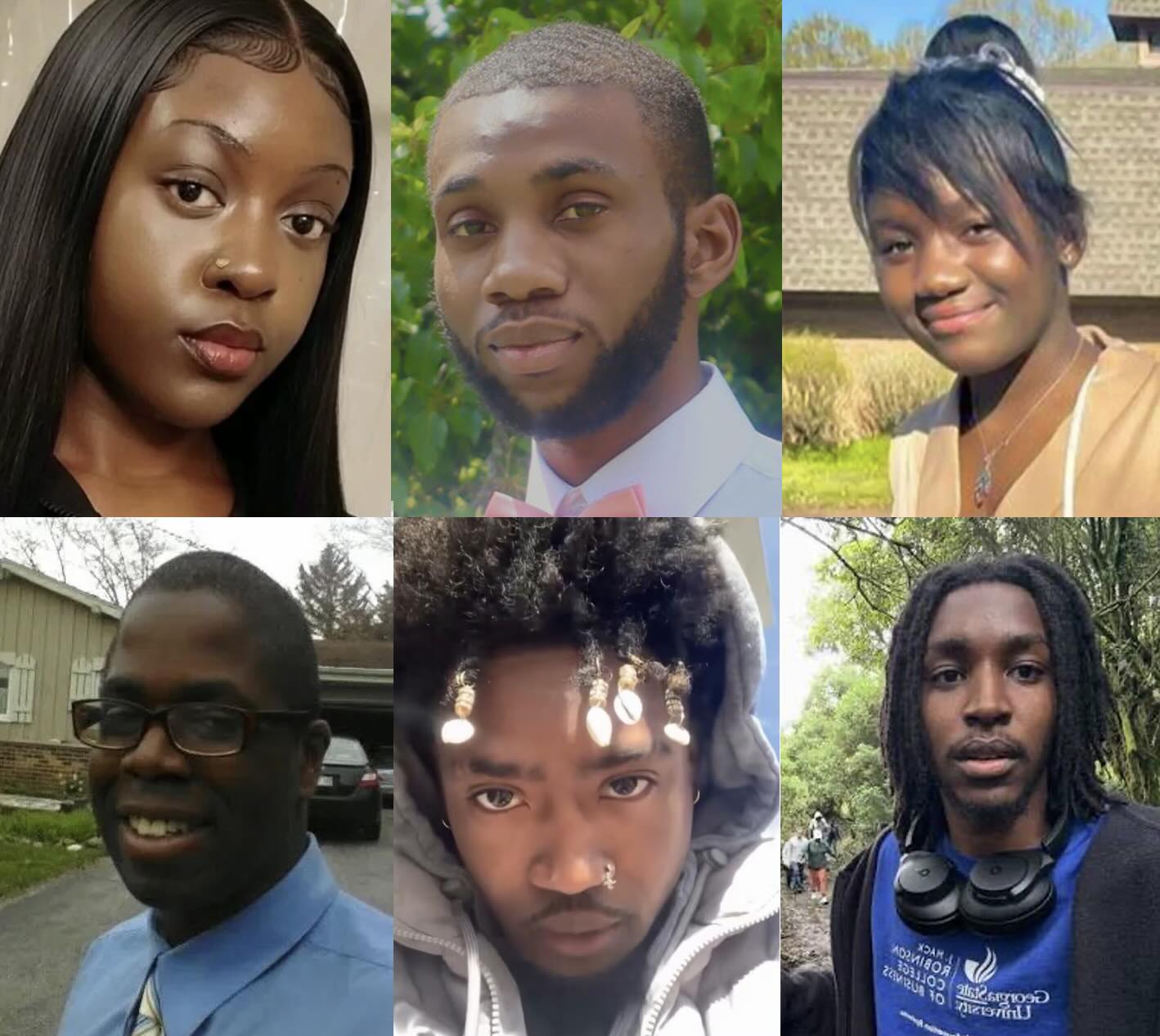


You must be logged in to post a comment.