Poland has been forced to reduce output on its coal-fired power plants following critically low water levels in the Vistula River.
Poland has been urged to double down on clean energy after Europe’s drought wreaked havoc on its coal industry.
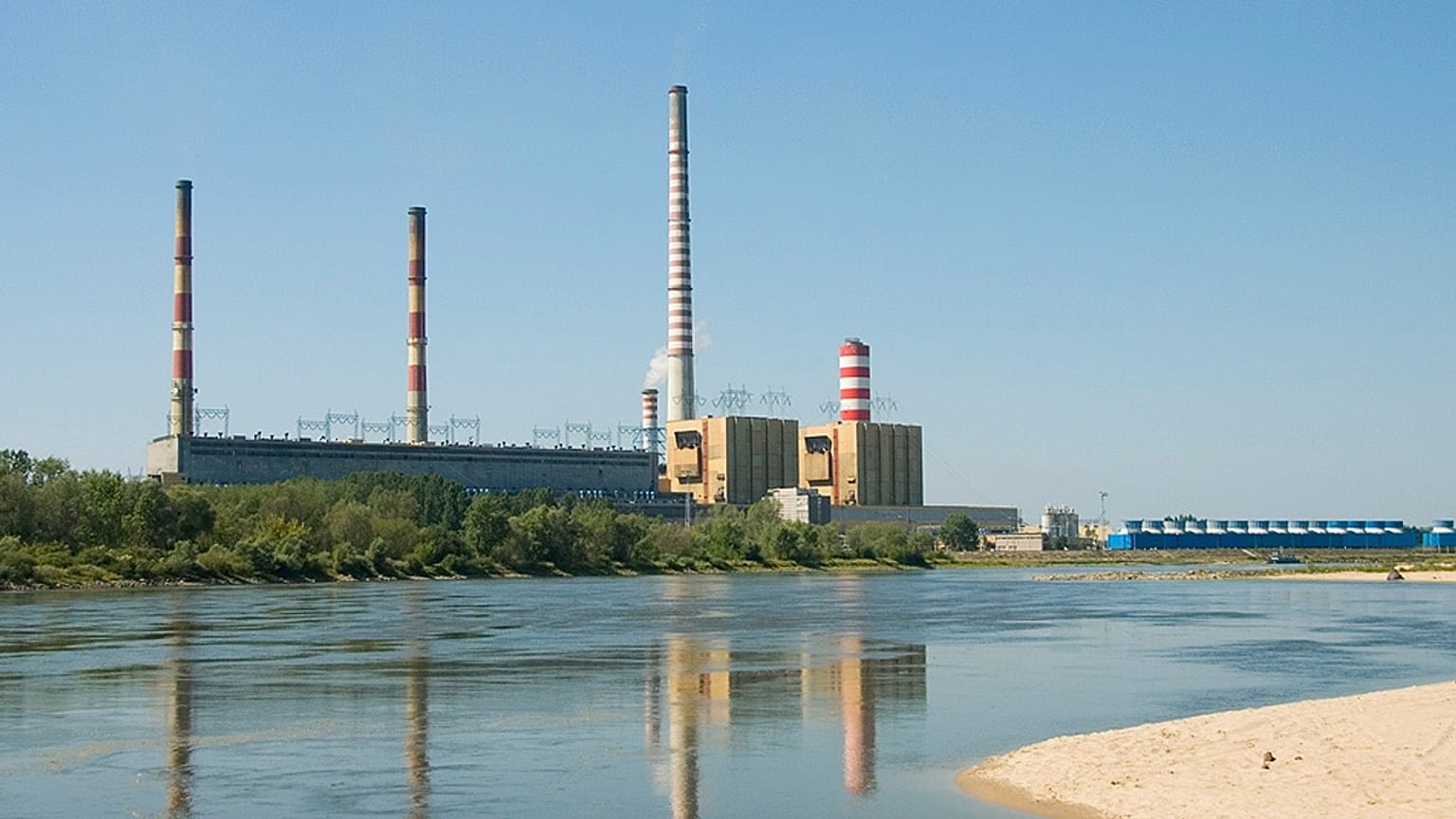
Earlier this week (4 August) utility giant Enea was forced to reduce generation at the Kozienice and Połaniec coal-fired power plants after critically low water levels in the Vistula River limited cooling water supplies.
The move is said to have removed 1.3 GW from Poland’s power system, enough to power more than one million average households. This is around two per cent of the country’s current energy capacity.
River flow near the Kozienice Power Plant fell to just 135 cubic metres per second on 5 August, reflecting severe drought conditions.
Volcanic eruptions send a cocktail of debris and emissions into the air. The most obvious is ash, but volcanoes also emit carbon dioxide and sulfur dioxide, as well as small amounts of hydrogen sulfide, hydrogen chloride and hydrogen fluoride.
……..The US Geological Survey explains that gases such as sulfur dioxide can cause global cooling while carbon dioxide has the potential to promote global warming.
The impact is minimal, however. NASA says that human activities generate 100 times the carbon dioxide of the planet’s volcanic eruptions.
And climate change itself doesn’t influence eruptions. “There is no correlation between meteorological events, including climate change, and the Earth’s volcanic or tectonic activity,” Costa tells Euronews Earth.
Wildfires are an important and growing factor in the carbon cycle. In high-carbon landscapes like the UK uplands, North American boreal forests, and Australian bush, wildfire management is now seen as integral to climate strategy.
Limiting wildfire carbon emissions – through better fire prevention, rapid suppression, ecosystem restoration, and climate change mitigation – will be crucial for meeting long-term emissions targets and preserving the carbon storage functions of the world’s forests and peatlands.
The FAQs below are supported by a number of sources including scientific reviews, peer reviewed research papers, government data and case studies from the UK and elsewhere.
Retired, living in the Scottish Borders after living most of my life in cities in England. I can now indulge my interest in all aspects of living close to nature in a wild landscape. I live on what was once the Iapetus Ocean which took millions of years to travel from the Southern Hemisphere to here in the Northern Hemisphere. That set me thinking and questioning and seeking answers.
In 1998 I co-wrote Millennium Countdown (US)/ A Business Guide to the Year 2000 (UK) see https://www.abebooks.co.uk/products/isbn/9780749427917

Rob Beeson


