September 25, 20261:17 AM GMT+1Updated September 25, 2026
Summary
Mufti says Saudi-backed Yemeni government must assert authority over entire country
Statement follows weeks of missile, drone and airstrike escalation between Saudi Arabia and Houthis
Yemeni forces lost control of Bab el-Mendeb waterway to Houthis two weeks ago
RIYADH, Sept 25 (Reuters) – Saudi Arabia’s top religious authority called on soldiers in the kingdom to be ready to lay down their lives to fight the Iran-backed Houthis until the group is ousted from power, a statement posted on the Saudi state news agency said.
The rare and strongly worded message by Saudi Grand Mufti Sheikh Saleh bin Fawzan Al-Fawzan was addressed to soldiers stationed at the country’s borders and drew heavily on Quranic verses and recorded sayings of the Prophet Mohammad related to sacrifice and struggle in defence of God.
Yemen’s Houthis threaten to strike Saudi bridges in retaliation for airstrikes
Story by TZVI JASPER
• 17h
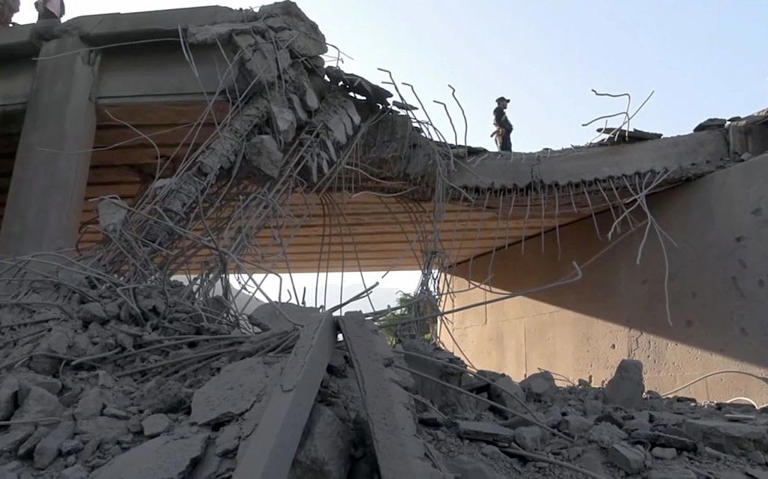
In this handout photo provided by Houthi Media Center, people inspect Al-Dalil Bridge following an aerial attack carried out by a Saudi war jet targeted it on September 26, 2026 in Ibb province, Yemen.
Yemen‘s Houthis could begin targeting bridges in Saudi Arabia as a form of retaliation against airstrikes that the terror group claims were made by the Saudi military, a Sana’a military source told Lebanese outlet Al-Akhbar on Monday.
According to the source, Saudi Arabian airstrikes have targeted Yemeni bridges and other civilian infrastructure while claiming they were missile launch platforms.
“Civilian bridges are not used for military purposes,” the source said, calling the Saudi practice “utter bankruptcy.”
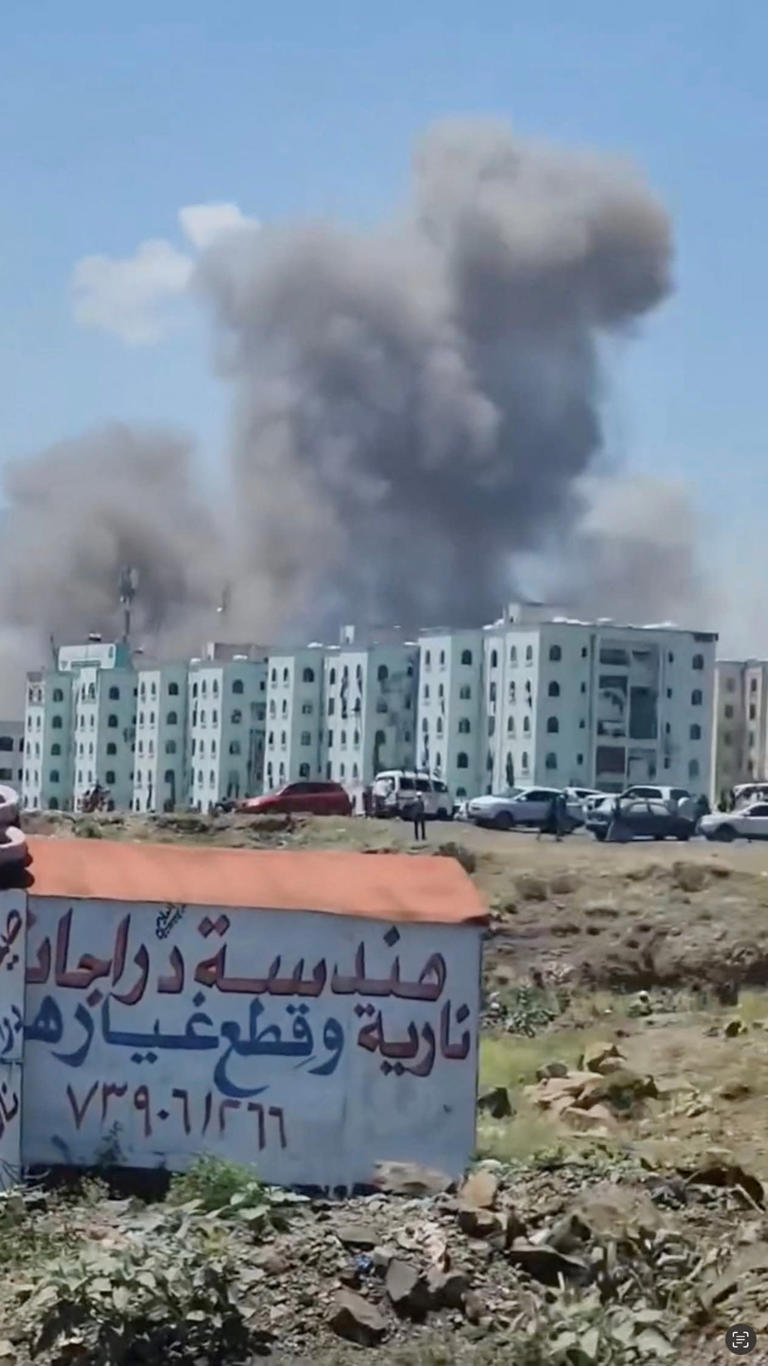
Smoke rises near buildings in Taiz Governorate, Yemen, following what the Houthi-run health ministry says was a strike on shops at a market, while Yemen’s internationally recognised government says its forces targeted a Houthi military camp and vehicles at the same junction, September 27, 2026. (credit: Social Media/via REUTERS)
Houthis claim Saudi Arabia struck market in Yemen
On Sunday, Houthi military spokesperson Yahya Saree claimed that an attack against a market at the Mawiya junction in Taiz province was carried out by Saudi Arabia and not Yemen’s internationally recognized government.
According to Houthi claims, the attack targeted a market in the city and left more than 50 casualties, including the wounded and the dead.
The Houthis accused the Saudis of “committing a heinous crime against civilians,” while they also claimed that the attack was performed by a Saudi F-15 squadron.
Jerusalem Post Staff and Reuters contributed to this report.
Saudi’s desire for F35 jets:
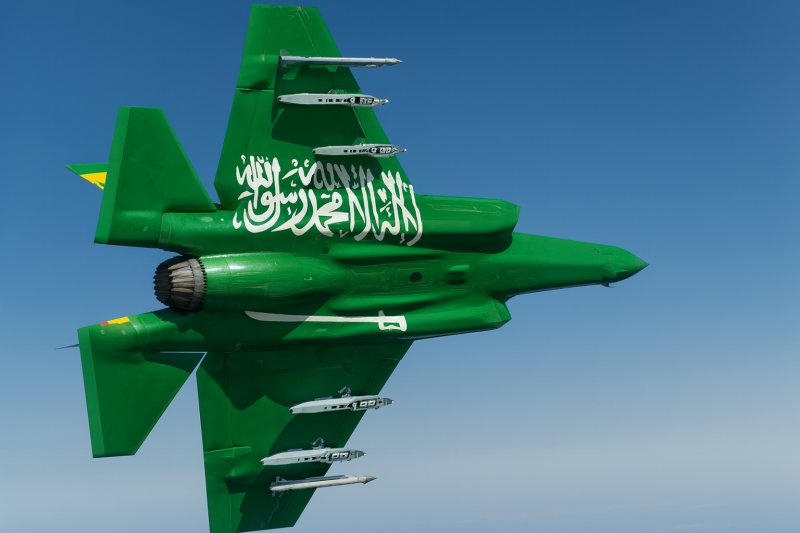
Royal Saudi Air Force F-35
The US Department of State approved on 17 September 2026 a possible Foreign Military Sale of forty-eight F-35A Lightning II fighters to Saudi Arabia, an estimated $24.3 billion package that the Defense Security Cooperation Agency notified to Congress the same day as Transmittal 26-69. The request covers forty-nine Pratt & Whitney F135-PW-100 engines — forty-eight installed, one spare — along with cryptographic equipment, electronic warfare database support, simulators, and the long tail of spares, software and training that any fighter purchase drags behind it. If Congress lets it stand, the kingdom would become the second Middle Eastern operator of the aircraft after Israel, and the first Arab one. The notification came ten months after President Donald Trump publicly committed to the sale, and it arrived while Saudi Arabia was fighting on two fronts at once: absorbing Iranian missile and drone strikes since the United States and Israel opened their war on Iran on 28 February 2026, and trading blows with Yemen‘s Houthi movement, which claimed on 16 September 2026 that it had shot down a Royal Saudi Air Force F-15SA over Marib.
The public commitment dates to 17 November 2025, the day before Crown Prince Mohammed bin Salman’s White House visit. Asked about the jets, Trump said “I will say that we will be doing that, we’ll be selling F-35s, yeah.” He said the Saudis “want to buy” them, and that they had “been a great ally.” At the time, the potential sale of forty-eight aircraft was widely treated as the main bargaining chip in the administration’s effort to bring Saudi Arabia into the Abraham Accords. That linkage did not survive. The State Department cleared the aircraft in September 2026 with Saudi-Israeli normalization still stalled on the question of Palestinian statehood, and with the Pentagon’s own intelligence arm still warning that Chinese access to Saudi bases and networks could put the fighter’s technology at risk.
The Trump administration has approved a $24.3 billion sale of 48 F-35 fighter jets to Saudi Arabia, along with engines and other parts.
The deal comes as Iran-backed Houthis escalate attacks on Saudi Arabia and seek control of the strategically important Bab el-Mandeb Strait.
Congress has 30 days to scrutinize deal, with lawmakers raising concerns over the potential transfer of sensitive U.S. military technology and Riyadh’s ties to China.
New Delhi, Sept. 19 — Questions continue over the fate of two Royal Saudi Air Force personnel after Yemen’s Houthi movement claimed it shot down an F15 over Marib province on September 16. Footage released by the Houthis appears to show burning aircraft wreckage, and open-source observers have linked a visible tail number, 5539, to a Saudi F15 operated by the 55th Squadron. The exact variant, aircraft status and cause of the crash have not been officially confirmed by Riyadh. If the jet was an F15SA or F5SR, it would normally carry two crew members: a pilot and a weapons-systems officer. No reliable information has emerged on whether either aircrew member ejected, survived, was recovered or was detained.
Some history:
Muhammad ibn Saud’s son and successor, Abdulaziz I (reigned 1765–1803), who had been largely responsible for this extension of his father’s realm through his exploits as commander in chief of the Wahhābī forces, continued to work in complete harmony with Muḥammad ibn ʿAbd al-Wahhāb. It was the latter who virtually controlled the civil administration of the country, while Abdulaziz himself, later in cooperation with his warlike son, Saud I (1803–14), busied himself with the expansion of his empire far beyond the limits inherited by him. Meanwhile, in 1792, Muḥammad ibn ʿAbd al-Wahhāb died at the age of 89. Wahhābī attacks on settled areas had begun to attract the attention of officials of the Ottoman Empire, the dominant political force in the region. In 1798 an Ottoman force invaded Al-Hasa, though it later was compelled to withdraw. Qatar fell to the Saudis in 1797, and they also gained control through local allies over Bahrain and parts of Oman.
In 1801 the Wahhābīs captured and sacked the Shiʿi holy city of Karbala in Ottoman Iraq, plundering and damaging important religious buildings. In the following year, Saud led his father’s army to the capture of Mecca itself in the Hejaz, which was also under Ottoman control. It was soon after Saud’s return from this expedition that his father was assassinated by a Shiʿi in the mosque of Al-Dirʿiyyah in revenge for the desecration of Karbala.
Retired, living in the Scottish Borders after living most of my life in cities in England. I can now indulge my interest in all aspects of living close to nature in a wild landscape. I live on what was once the Iapetus Ocean which took millions of years to travel from the Southern Hemisphere to here in the Northern Hemisphere. That set me thinking and questioning and seeking answers.
In 1998 I co-wrote Millennium Countdown (US)/ A Business Guide to the Year 2000 (UK) see https://www.abebooks.co.uk/products/isbn/9780749427917