West Bank’s ancient olive tree a ‘symbol of Palestinian endurance’
by Louis BAUDOIN-LAARMAN
Nov 7, 2025
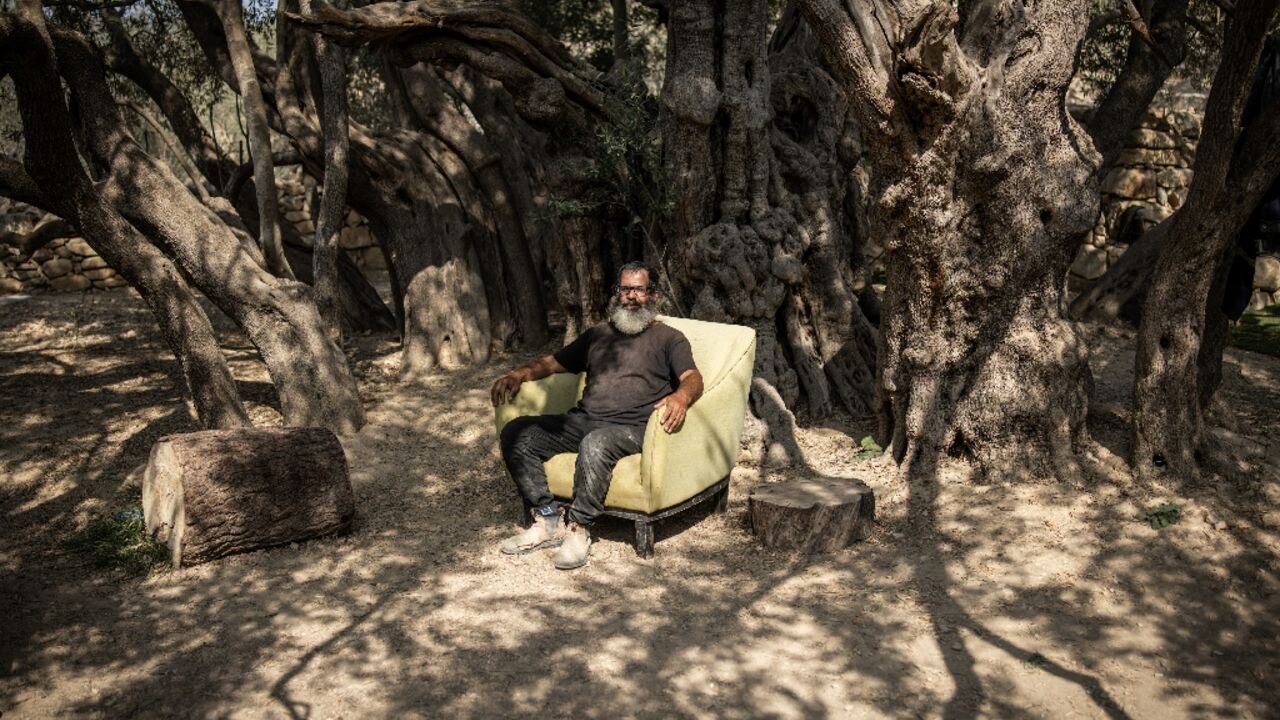
Italian and Japanese experts estimate the tree to be 3,000 to 5,500 years old — John Wessels
As guardian of the occupied West Bank’s oldest olive tree, Salah Abu Ali prunes its branches and gathers its fruit even as violence plagues the Palestinian territory during this year’s harvest.
“This is no ordinary tree. We’re talking about history, about civilisation, about a symbol,” the 52-year-old said proudly, smiling behind his thick beard in the village of Al-Walajah, south of Jerusalem.
Abu Ali said experts had estimated the tree to be between 3,000 and 5,500 years old. It has endured millennia of drought and war in this parched land scarred by conflict.
Around the tree’s vast trunk and its dozen offshoots — some named after his family members — Abu Ali has cultivated a small oasis of calm.
A few steps away, the Israeli separation wall cutting off the West Bank stands five metres (16 feet) high, crowned with razor wire.
More than half of Al-Walajah’s original land now lies on the far side of the Israeli security wall.
Yet so far the village has been spared the settler assaults that have marred this year’s olive harvest, leaving many Palestinians injured.
Israel has occupied the West Bank since 1967, and some of the 500,000 Israelis living in the Palestinian territory have attacked farmers trying to access their trees almost every day this year since the season began in mid-October.
The Palestinian Authority’s Colonisation and Wall Resistance Commission, based in Ramallah, documented 2,350 such attacks in the West Bank in October.
– ‘Rooted in this land’ –
Almost none of the perpetrators have been held to account by the Israeli authorities.
Israeli forces often disperse Palestinians with tear gas or block access to their own land, AFP journalists witnessed on several occasions.
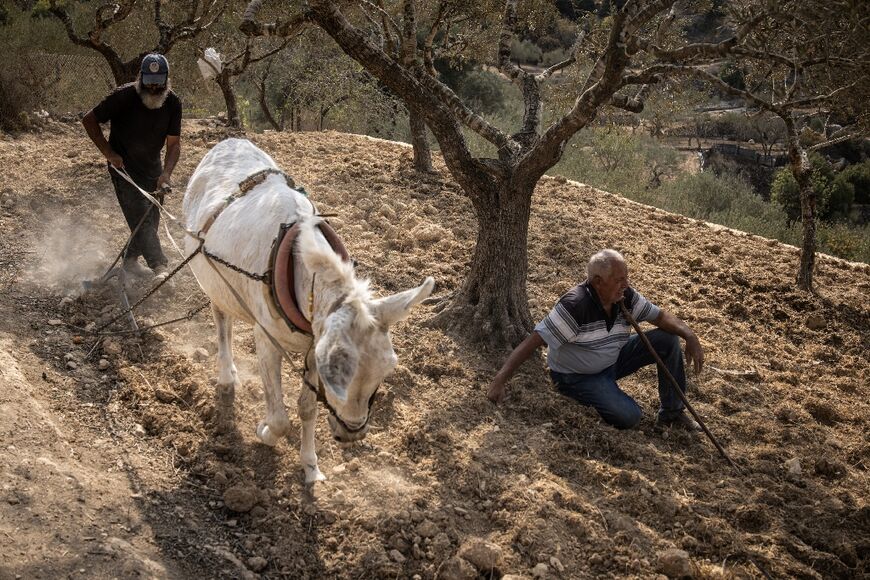
But in Al-Walajah for now, Abu Ali is free to care for the tree. In a good year, he said, it can yield from 500 to 600 kilograms (1,100 to 1,300 pounds) of olives.
The reason why the olive trees should not be burned
March 5, 2025
In many agricultural areas, the burning of branches resulting from the pruning of the olive trees remains a common practice. Although a quick and simple method for waste management is considered, this action has considerable environmental consequences, since Contributes to climate change.
When olive branches burn, contaminating gases such as carbon dioxide are released. In addition, burning destroys organic matter that, if letting decompose naturally, could provide essential nutrients to the soil and improve its structure. The elimination of this waste through fire also increases the Forest fire riskan increasingly frequent threat in agricultural and rural areas.
Retired, living in the Scottish Borders after living most of my life in cities in England. I can now indulge my interest in all aspects of living close to nature in a wild landscape. I live on what was once the Iapetus Ocean which took millions of years to travel from the Southern Hemisphere to here in the Northern Hemisphere. That set me thinking and questioning and seeking answers.
In 1998 I co-wrote Millennium Countdown (US)/ A Business Guide to the Year 2000 (UK) see https://www.abebooks.co.uk/products/isbn/9780749427917