Sexpionage is the likely reason Jeffrey Epstein became a useful asset to intelligence agencies. He was already building his criminal skills with someone 8 years older than him, Steven Hoffenberg.
The two carried out financial scams and the media often had stories about the wealth they generated in the 80s.
Born in Brooklyn in 1945 to Jewish parents, Hoffenberg founded the Towers Financial Corporation in the early 1970s after dropping out of college.
The company started out as a debt collection agency, buying outstanding medical bills and forcing debtors to pay out what they could.
Towers Financial grew quickly, acquiring several insurance companies that Hoffenberg would use to siphon funds from.
Hoffenberg was introduced to Epstein in 1987 by the British arms dealer Douglas Heubert Leese.
Douglas Heubert Leese was a British Defence Contractor who died in 2011.
Douglas Leese operated in Saudi Arabia through Adnan Kashoggi (died 2017):
Adnan Khashoggi was a Saudi businessman and arms dealer known for his business dealings, extensive geopolitical influence, and opulent lifestyle, which earned him the moniker “The Great Gatsby of the Middle East.” During his peak in the early 1980s, Khashoggi’s net worth was estimated at around $4 billion, amassed through his pivotal role as an intermediary between Western defense companies and the Saudi government.
Epstein became a fixer for Kashoggi
Records show Jeffrey Epstein’s requests for multiple passports, travels to Africa and Middle East
More than 50 pages from Epstein’s passport forms were obtained by ABC News.
Jeffrey Epstein is reported to have been under the surveillance of the CIA since at least 1983, when he was involved as a financial fixer for Adnan Khashoggi, a key figure in the CIA’s Iran-Contra covert arms deals. Epstein managed covert funds connected to the CIA’s primary operative in the Iran-Contra scandal. The CIA’s oversight of Epstein during this period is considered likely due to his role in financing arms transactions in the Middle East. Epstein’s connections extend to various entities including Mossad, Saudi Arabia, and the Iran-Contra network, highlighting his involvement in complex international covert operations. This analysis aligns with historical accounts of Khashoggi‘s role in trafficking weapons for the CIA’s Iran-Contra operation, which also involved Canadian routes.
The Mysterious DARPA Grants Epstein claimed to manage money for billionaires, yet his only documented funding source was a $30 million grant from the Pentagon’s DARPA (Defense Advanced Research Projects Agency) in the early 2000s. Why would a defense agency fund a man with no scientific background? Former intelligence officials have speculated this was a cutout for black-budget operations, possibly related to human behavior studies (a known CIA interest post-MKUltra).
The 2006 Sweetheart Plea Deal Despite overwhelming evidence, Epstein served just 13 months in a private wing of a county jail—a deal orchestrated by Alexander Acosta, who later admitted he was told to back off because Epstein “belonged to intelligence.” (Source: [Miami Herald](https://www.miamiherald.com/news/local/article220097825.html))
Private Island Surveillance Witnesses describe Epstein’s Caribbean estate as littered with cameras, with recordings of high-profile guests. This aligns with Cold War-era CIA honeypot ops, where compromising material was used to manipulate politicians and scientists.
Epstein’s Mossad Links: The Maxwell Connection
If the CIA had a stake in Epstein, Mossad’s involvement is even clearer. His longtime accomplice, Ghislaine Maxwell, was the daughter of Robert Maxwell, a known Mossad operative who died mysteriously in 1991 after looting his employees’ pensions to fund Israeli intelligence operations.
The Israeli Billionaire Network Epstein’s closest financial ties were to Leslie Wexner (L Brands/Victoria’s Secret) and Ehud Barak (former Israeli PM). Wexner, who signed over $46 million in properties to Epstein, had deep Mossad-linked business dealings. Barak, meanwhile, visited Epstein’s townhouse multiple times post-conviction (Source: [Daily Mail](https://www.dailymail.co.uk/news/article-7362345/Ehud-Barak-defends-visiting-Epsteins-home.html)).
The “Scientific” Fronts
Epstein’s donations to Harvard’s Program for Evolutionary Dynamics and his associations with physicists like Stephen Hawking suggest an intelligence recruitment pipeline. Mossad has a history of targeting academics for tech espionage—was Epstein vetting potential assets?
The Likely Truth: A Multi-Agency Blackmail Hub
Epstein’s operation reeks of a joint venture:
Mossad provided the blackmail leverage (via Maxwell’s connections).
The CIA (or FBI) ensured legal protection in exchange for access to kompromat on powerful Americans.
Other agencies (MI6, Saudi intelligence?) may have played roles, given Epstein’s ties to Prince Andrew and Gulf financiers.
The Cover-Up: Why Epstein Had to Die
His 2019 “suicide” in a high-security federal jail—despite being taken off suicide watch and guards allegedly sleeping—fits the playbook of an intelligence cleanup. Whether killed by U.S. actors (to protect political figures) or foreign ones (to bury Israeli ops), his death ensured the full truth would never surface.
The Takeaway
Epstein wasn’t just a predator. He was a weaponized intermediary, a living blackmail database for agencies that operate above the law. Until we confront the intelligence shadow world that enabled him, his story will remain unfinished—and his accomplices unpunished.
Towers was a bill collection agency founded by Steven J. Hoffenberg, who told CBS News he hired Epstein in 1987 to help commit a billion dollars worth of financial fraud.
“He was my best friend for years. My closest friend for years,” Hoffenberg told CBS News, speaking of Epstein. “We ran a team of people on Wall Street, investment people that raised these billion dollars illegally. He was my guy, my wingman.”
1993 Hoffenberg briefly owned the New York Post. He was close friends with Donald Trump and once rented an entire floor of Trump Tower.
8 March 1997 Hoffenberg was sent to jail for 20 years, (Hoffenberg stole $460m from 200,000 investors to fund a lavish lifestyle of private jets, expensive cares, and luxury homes in New York and Florida).
Epstein was not prosecuted.
Hoffenberg got out of jail after 18 years (2025), the years that Epstein spent committing crimes of blackmail using his pedophilia to lure young girls into a sex trafficking web.
Hoffenberg always claimed the ponzi scheme was not his idea:
….it was his protege Jeffrey Epstein who had masterminded the scam…..
After leaving prison, he launched a lawsuit against Epstein in 2016 in which he claimed the late paedophile was the “architect” of the scheme.
2017 Steven Hoffenberg was found dead in his Connecticut apartment, aged 77. He lived alone.
The Daily Mail reported that one of Epstein’s abuse victims Maria Farmer had contacted police after becoming concerned about Mr Hoffenberg.
Steven Hoffenberg was convicted of ‘one of the largest Ponzi schemes’ in the mid-90s (New York Post/YouTube)Jeffrey Epstein, pictured with Ghislaine Maxwell, was identified as the mastermind of a Ponzi scheme by Steven Hoffenberg (Channel 4)Maria Farmer became one of Epstein’s most high profile victims after going public with sexual abuse allegations (CBS News)
Hoffenberg was a prolific social media user, tweeting more than 35,000 times about Epstein, Ghislaine Maxwell, Prince Andrew and politics.
His Twitter account shows he posted eight times on 27 July, before going silent.
Ms Farmer told Dailymail.com that she became concerned as Hoffenberg had been in poor health after being diagnosed with Covid-19.
“Hoff was one of my dearest friends on earth, more like a father than my own father ever was to me,” Ms Farmer told Dailymail.com.
“He lived in kindness, always giving what little he had, never asking for anything.
“This man was beyond incredible and a dear friend to survivors of Epstein… as he was also.”
Maria Farmer was one of the first of Epstein’s victims to go public with sexual abuse allegations.
Her sister Annie Farmer was one of four women to testify at Ghislaine Maxwell’s child sex trafficking trial in December last year.
Ghislaine Maxwell has been moved from a federal prison in Florida to a minimum-security federal prison camp in Bryan, Texas, where she is serving a 20-year sentence for sex trafficking. The reason for her transfer has not been publicly disclosed. NBC News Go.com
6 August 2025
Attorney Gloria Allred, who represents multiple survivors of Jeffrey Epstein’s abuse, publicly called for the House to issue subpoenas to past and current key Trump officials—Alex Acosta, Attorney General Pam Bondi, and Deputy AG Todd Blanche.
Jeffrey Epstein, the billionaire who now sits in jail on federal charges for the sex trafficking of minors, has continued to draw media scrutiny in the weeks after his arrest on July 6. Part of the reason for this continued media interest is related to Epstein’s alleged relationship to the intelligence services and new information about the true extent of the sexual blackmail operation Epstein is believed to have run for decades.
As MintPress reported last week, Epstein was able to run this sordid operation for so long precisely because his was only the latest incarnation of a much older, more extensive operation that began in the 1950s and perhaps even earlier.
As I sit here in Washington, D.C., honored to receive the 13th Annual Pillar Award for Whistleblowers, I feel the weight of truth more than ever. I’m humbled. I’m proud. And I’m furious.
Because while I’m being recognized for shining a light, Donald Trump and his inner circle are working overtime to bury the darkness.
What you’re watching play out on social media—the legal back-and-forth between Ghislaine Maxwell’s lawyers, Congress, and the media—isn’t justice. It’s theater. Carefully choreographed theatrics designed to confuse, delay, and distract. And according to my sources, it’s all being orchestrated behind the scenes by Todd Blanche, David Oscar Markus, and James Comer—under the direct guidance of Donald Trump.
This isn’t random. This is deliberate.
The goal? Delay. Prolong. Distract. And ultimately, rewrite the Epstein narrative—to whitewash Trump’s role, to cast blame on political enemies, and to walk away clean.
My sources are telling me that this carefully designed plan isn’t just about clearing Trump’s name. It’s about laying the groundwork to go after big names—President Clinton, other Democrats, and even some of Trump’s own allies. He’s prepared to sacrifice some of his own donors just to craft a narrative that keeps him out of the fire.
He wants to pin this on anyone but himself. He wants to make you forget. But I won’t.
And that’s why I had to write this.
Because while Trump talks about Epstein “stealing” Virginia Giuffre—as if she were a car or a stock tip—he forgets she was a child. A victim. A human being.
Trump talks about these girls like objects—like things—but they were daughters. They were survivors. And some, like her, didn’t survive.
That’s why I’m writing this.
For Virginia Giuffre.
For every survivor whose name we’ll never know.
For the girls who are still too scared to speak.
For the women who were trafficked, raped, silenced—and are still waiting for justice.
If Trump truly wanted the truth, he wouldn’t be playing courtroom games with Maxwell. He wouldn’t be asking the courts to unseal documents just to then delay them.
He’d simply say: Release all the Epstein files. Every single one. Today.
But that’s not what he wants.
What he wants is control.
What he wants is to scrub, sanitize, and rewrite.
Just like he’s trying to rewrite the truth about January 6, about Putin, about Project 2025.
But we won’t let him.
And let’s talk about Ghislaine Maxwell.
Because this narrative being peddled that she’s a “victim” too? It’s disgusting. It’s a lie. It’s gaslighting every survivor who trusted her, only to be abused, brainwashed, and trafficked.
Ghislaine Maxwell was the key.
She wasn’t just an accomplice. She was the recruiter. The handler. The one who made those girls feel safe just long enough to hand them over to monsters.
She didn’t just participate—she led.
She took their clothes off.
She taught them how to “please” Epstein.
She molested them herself.
And let me remind you: Donald Trump’s relationship with Ghislaine Maxwell didn’t begin with Epstein. It started way before.
Back when she worked for her father, Robert Maxwell, the disgraced media tycoon who once owned the New York Daily News. And Trump was right there, orbiting that same world.
So when Trump said, “I wish her well,” —he meant it.
He wasn’t distancing himself. He was sending a message.
Keir Starmer has announced that the UK will recognise Palestinian statehood by September 2025 unless Israel meets certain conditions, marking a significant shift in UK policy.
For decades, successive UK governments withheld recognition, insisting it could only come as part of a negotiated settlement between Israel and Palestine. This position, rooted in the Oslo accords of the 1990s and aligned with US policy, effectively gave Israel a veto over Palestinian statehood. As long as Israel refused to engage seriously in peace talks, the UK refrained from acting.
Starmer has now broken with this precedent, potentially aligning the UK with 147 other countries. But the Israeli government must take what the UK calls “substantive steps” toward peace. These include agreeing to a ceasefire in Gaza, allowing full humanitarian access, explicitly rejecting any plans to annex West Bank territory, and returning to a credible peace process aimed at establishing a two-state solution.
If Israel meets these conditions, the UK would presumably withhold recognition until the “peace process” has been completed. Starmer made clear that Britain will assess Israeli compliance in September and reserves the right to proceed with recognition regardless of Israel’s response. The message was unambiguous: no one side will have a veto.
This is more than just clever internal politics and party management. Anything that puts any pressure on Israel to move towards peace should be welcomed. But will it amount to much more than that?
Our mission is to share knowledge and inform decisions.
About us
Starmer has faced criticism over the last few years for resisting recognising Palestine as a state. While Labour’s frontbench held the line for much of the past year, rank-and-file discontent has grown – and with it, the political risks.
At the heart of Labour’s internal tensions lie two irreconcilable blocs. On one side are MPs and activists – both inside the party and expelled from it – who are vocally pro-Palestinian and have been outraged by the government’s failure to act. On the other side are members of the Labour right who continue to back Israel, oppose unilateral recognition of statehood and focus on the terrible crimes of Hamas but not the IDF campaign in Gaza.
Between them sits a soft-centre majority, for whom foreign policy is not a defining issue. They are not ideologically committed to either side but have become increasingly uneasy with the escalating violence and the UK’s diplomatic inertia.
As the humanitarian catastrophe in Gaza deepens, public outrage in the UK has grown. Mass protests have put mounting pressure on the government to act. Within parliament, over 200 MPs, including many from Labour, signed a letter demanding immediate recognition of Palestine. Senior cabinet ministers reportedly pushed hard for the shift on electoral grounds, as well as principle.
Public pressure on Starmer has grown as the humanitarian crisis in Gaza worsens. Neil Hall/EPA-EFE
International dynamics have also played a crucial role. France’s announcement that it would recognise Palestine by September, becoming the first major western power to do so, created additional pressure. Spain, Ireland, Norway and several other European states have already taken the step. Britain chose to align itself with this emerging consensus.
These pressures combined created a sense of urgency and political opportunity. Starmer’s government appears to be using the threat of recognition as leverage –pressuring Israel to return to negotiations and halt annexation plans.
The calculation seems to be that Israel will either meet the UK’s conditions or face diplomatic consequences, including recognition of Palestine without its consent. There is also the possibility that Israel will simply ignore the UK and press on with its campaign for “Greater Israel”.
Challenges ahead
That is why, while this is a meaningful departure from the past, it is not without problems. Chief among them is the principle of conditionality itself. By making recognition contingent on Israeli behaviour, the UK risks reinforcing the very logic it claims to be rejecting – that Palestinian rights can be granted or withheld based on the actions of the occupying power.
There is also concern that the September deadline could become another missed opportunity. If Israel makes vague or symbolic gestures – such as issuing carefully worded statements or temporarily suspending one settlement expansion – will the UK delay recognition further, claiming that “progress” is being made?
Palestinians have seen such tactics before. Recognition has been delayed for decades in the name of preserving leverage. But leverage for what?
The Israeli government, dominated by ultra-nationalists and pro-annexation hardliners, is unlikely to satisfy the UK’s conditions in good faith. The risk is that the deadline becomes a mirage – always imminent, never reached.
Recognition also comes as part of a proposed new peace plan. This will be supported by the UK, France and Germany, and it allows the government to say it is being consist with its policy that recognition is part of a peace plan.
If, by some miracle, pressure works and Israel meets all the conditions, then the UK can claim that recognition has played a role in bringing Israel back to the negotiating table.
But if recognition is then withheld, there will not be two equal actors at that table. The State of Palestine will not have been recognised by key international players, and a new round of western-run peace processes will begin. These do not have a good track record.
If Israel fails to agree to a ceasefire and let aid into Gaza, then Starmer will be forced to go through with recognition.
For now, he has defused the internal division in his party. It is clever politics, good party management – it remains to be seen if it is also statesmanship.
Get your news from actual experts, straight to your inbox.Sign up to our daily newsletter to receive all The Conversation UK’s latest coverage of news and research, from politics and business to the arts and sciences.
B’TSELEM, The Israeli Information Center for Human Rights in the Occupied Territories was established in 1989 by a group of prominent academics, attorneys, journalists, and Knesset members. It endeavors to document and educate the Israeli public and policymakers about human rights violations in the Occupied Territories, combat the phenomenon of denial prevalent among the Israeli public, and help create a human rights culture in Israel.
B’Tselem in Hebrew literally means “in the image of,” and is also used as a synonym for human dignity. The word is taken from Genesis 1:27 “And God created humans in his image. In the image of God did He create him.” It is in this spirit that the first article of the Universal Declaration of Human Rights states that “All human beings are born equal in dignity and rights.”
As an Israeli human rights organization, B’Tselem acts primarily to change Israeli policy in the Occupied Territories and ensure that its government, which rules the Occupied Territories, protects the human rights of residents there and complies with its obligations under international law.
B’Tselem is independent and is funded by contributions from foundations in Europe and North America that support human rights activity worldwide, and by private individuals in Israel and abroad.
B’Tselem has attained a prominent place among human rights organizations. In December, 1989 it received the Carter-Menil Award for Human Rights. Its reports have gained B’Tselem a reputation for accuracy, and the Israeli authorities relate to them seriously. B’Tselem ensures the reliability of information it publishes by conducting its own fieldwork and research, the results of which are thoroughly cross-checked with relevant documents, official government sources, and information from other sources, among them Israeli, Palestinian, and other human rights organizations.
Click to view B’Tselem’s interactive publication, “The Tip of the Iceberg,” on the occasion of B’Tselem’s 30th year. The publication presents 30 cases – one from each year – in which soldiers killed, wounded, or beat Palestinians.
Click to view B’Tselem’s interactive resource, “Conquer and Divide,” a series of maps illustrating what it is exactly that Israel has done in the Occupied Territories since 1967.
The UK recession of 1991 was primarily caused by high-interest rates, falling house prices and an overvalued exchange rate. Membership of the Exchange Rate Mechanism (1990-1992) was a key factor in keeping interest rates higher than desirable.
The recession also came after the late 1980s economic boom – a period of high economic growth and rising inflation.
Anyone who had leveraged loans suffered as interest rates rose dramatically.
A BBC documentary made 3 years ago, House of Maxwell, describes how Robert Maxwell’s business empire was hit by increasing costs for his many business projects:
In Tom Bower’s book, Maxwell: the Final Verdict, he says:
Maxwell’s death shocked the world. Few will forget the moment that the news was first broadcast. I heard it in Moscow while speaking to the former head of the KGB’s Department S, a man responsible for sending ‘illegal’ agents into the West. During his last months, Maxwell had been a frequent visitor to the Kremlin. Bizarrely, it later transpired that he was negotiating to sell blood donated by Russians in the West – a market inspired by the new HIV crisis. Even thirty years later, the end of Captain Bob’s life remains astonishing, and provides a lesson which should never be forgotten.
Facts have emerged over time which contribute to the answer to “Where did Jeffrey Epstein get his money from?”
And Ghislaine Maxwell testified she met Jeffery Epstein after her father died in mysterious circumstances. She has always believed her father was murdered.
She may have met Epstein before her father died:
The claim that Robert Maxwell introduced his beloved daughter to Epstein comes from a convicted Ponzi schemer who had dealings with the men, according to Distractify. Other sources have Ghislaine Maxwell meeting Epstein through mutual friends around 1991, the year when Robert Maxwell died after suffering a heart attack and drowning.
And where did the money go after the death of Jeffery Epstein?
Epstein’s Estate: A $600M Web of Trusts, Islands & Questions
Two days before his death, Epstein executed a pour-over will that transferred his assets into a private trust known as “The 1953 Trust,” named after the ex financier’s birth date and established in the U.S. Virgin Islands to obscure legal transparency. Valued at roughly $578–$630 million, Epstein’s estate included properties like his Manhattan mansion, Palm Beach home, and the infamous Little St. James—his private island in the U.S. Virgin Islands. His executors, longtime associates lawyer Darren Indyke and accountant Richard Kahn, immediately began managing the estate. But because the trust structure lacked transparency, victims and regulators feared a cover-up—so they sued.
How did Robert Maxwell die? It seemed the autopsy revealed no water in his lungs. Maybe this book has the answer:
P205 to 209 Gideon’s Spies, Gordon Thomas
In London Robert Maxwell’s newspaper empire was in grave financial difficulties.. In the Bank of England and other financial institutions in the City, the word was that Maxwell was no longer a safe bet.
Their information was partially based on confidential reports from Israel that Maxwell was being pressed by his original Israeli investors to repay them the money that had helped him to acquire the Mirror Group……..This is when Maxwell had come to Tel Aviv; he hoped to cajole them into granting another extension. ..
There was a further matter to be concerned over. He had stolen some of the very substantial profits from ORA that he had been entrusted to hide in Soviet Bloc banks. He had used the money to try to prop up the Mirror Group. Maxwell had already stolen all he could from the staff pension fund, and the ORA money would not stretch that far.
And, unlike the Israeli investors, once that theft was uncovered, he would find himself confronting some very hard men, among them Rafi Eitan. Maxwell knew enough about the former Mossad operative to realize that would not be a pleasant experience……..
The final option was for Mossad to break off all contact with Maxwell. There was a risk there. Maxwell, on the evidence of his present unpredictable state of mind, could well use his newspapers to actually attack Mossad. Given the access he had been given, that could have more serious consequences.
……preposterous plan finally convinced Mossad that Robert Maxwell had become a dangerous loose cannon.
On September 30, 1991, further evidence of Maxwell’s bizarre behaviour came when he telephoned Admoni….Maxwell then said that unless Mossad arranged to immediately return all the stolen Mirror pension fund money, he could not be sure if he would be able to keep secret Admoni’s meeting with Vladimir Kryuchkov, the former head of the KGB. Kryuchkov was now in a Moscow prison awaiting trial for his role in an abortive coup to oust Mikhail Gorbachev. A key element of the plot had been a meeting Kryuchkov had on Maxwell’s yacht in the Adriatic shortly before the coup was launched.
Mossad had promised that Israel would use its influence with the United States and key European countries to diplomatically recognize the new regime in Moscow. In return, Kryuchkov would arrange for all Soviet Jews to be released and sent to Israel. But revealing it could seriously harm Israel’s credibility with the existing Russian regime and with the United States.
That was the moment, Victor Ostrovsky would write, when “a small meeting of right wingers at Mossad headquarters resulted in a consensus to terminate Maxwell.” On October 29, 1991…. Maxwell was told to fly to Gibraltar and board his yacht…and order his crew to set sail to the Canary Islands” and “wait for a message.”
“His caller promised that things would be worked out so there was no need to panic.”
For other information about Kryuchkov, and that critical time in history:
It was Kryuchkov who, first as head of the KGB’s First Chief Directorate and then as chief of the spy agency, presided over the worst damage ever done to U.S. intelligence, inflicted by two super-moles, Aldrich Ames and Robert Hanssen. In large measure, Kryuchkov owed his job as KGB chairman to Ames, the CIA officer who was paid, or promised, $4.6 million for the secrets he sold to the Russians.
Mega Group, Maxwells and Mossad: The Spy Story at the Heart of the Jeffrey Epstein Scandal
The picture painted by the evidence is not a direct Epstein tie to a single intelligence agency but a web linking key members of the Mega Group, politicians, and officials in both the U.S. and Israel, and an organized-crime network with deep business and intelligence ties in both nations.
I’m not sure if it was the effect of the atomic bomb, but I have always had a weak body, and when I was born, the doctor said I wouldn’t last more than three days.
These are the words of Kazumi Kuwahara, a third-generation hibakusha – a survivor of the atomic bombing of Hiroshima and Nagasaki in Japan 80 years ago.
Kuwahara, who still lives in Hiroshima, was in London on May 6 this year to give a speech at a Victory Over Japan Day conference organised and hosted by the University of Westminster. Now 29, she told the conference that she felt she had been “fighting illness” throughout her 20s. When she was 25, she needed abdominal surgery to remove a tumour which post-surgery tests showed was benign.
When she found out about the operation, her grandmother, Emiko Yamanaka – now aged 91 and a direct survivor of the atomic bombing of Hiroshima – told her: “I’m sorry, it’s my fault.” Kuwahara explained:
Ever since I was young, whenever I became seriously ill, my grandmother would repeatedly say: ‘I’m sorry.’ The atomic bombing didn’t end on that day and the survivors – we hibakusha – continue to live within its shadow.
Kuwahara came to stay with me ten years ago during a study abroad break after I had interviewed her grandmother for my doctoral research. When I’d made a film about Yamanaka in 2012, I immediately noticed her reluctance to share her harrowing experience. But she then invited me to interview her in Hiroshima – the first of ten trips I made there for research which would become an interview archive.
I wanted to research hibakusha like Kuwahara and her grandmother as they continue to confront the physical, social and psychological effects of the atomic bombs dropped on August 6 and August 9 1945, on Hiroshima and Nagasaki respectively.
The 16-kiloton bomb dropped on Hiroshima at 8.15am by a US B-29 bomber was codenamed “Little Boy” by the Americans. It exploded about 600 metres above the Shima Hospital in the downtown area of Nakajima – a mix of residential, commercial, sacred and military sites. The bomb emitted a radioactive flash as well as a sonic boom. A gigantic fireball formed (about 3,000–4,000°C), as well as an atomic mushroom cloud which climbed up to 16km in the air.
In Japan in the immediate aftermath of the bombing, people couldn’t even utter the phrase “atomic bomb” due to censorship rules initially enforced by the Japanese military authorities, up until the day of surrender on August 15. The censorship was reinstated and expanded by the US during its occupation of the Japanese islands from September 2 1945.
The Insights section is committed to high-quality longform journalism. Our editors work with academics from many different backgrounds who are tackling a wide range of societal and scientific challenges.
For decades, the hibakusha have faced discrimination and difficulty in obtaining work and finding marriage partners due to a complex combination of suppression, stigma, ignorance and fear around the dropping of the atomic bombs and their aftereffects.
Wartime propaganda in Imperial Japan precluded free speech while also imposing bans on luxury goods, western language and customs (including clothes) and public displays of emotion.
However, the US occupation – which lasted until the San Francisco treaty was signed on April 28 1952 – went further, establishing an extensive Civil Censorship Department (the CCD) which monitored not only all newspapers, magazines, pamphlets, books, films and plays but also radio broadcasts, personal mail, as well as telephone and telegraph communications. Little wonder the scars of the bomb remained untreated, for generations.
Emiko Yamanaka’s story
Yamanaka was 11 years old when she was exposed to the atomic bombing, just 1.4km from ground zero.
She told me about her experiences of surviving on the bank of the River Ota, which divides into seven rivers in the estuary of Hiroshima. Yamanaka was the oldest of five siblings in 1945. Although the family had been evacuated to an island near Kure 25km away, she returned to their home on the outskirts of the city with her mother and nine-year-old brother early on the morning of August 6, so she could attend an appointment with an eye-doctor for a case of conjunctivitis.
Making her way into the city by herself, the tram she was travelling on needed to stop due to an air-raid warning. It was a “light” warning as just two B-29s had been spotted approaching the mainland (a third photography plane was not yet visible on the horizon), so Yamanaka needed to continue her journey on foot. She recalled:
When I got to Sumiyoshi shrine, the strap of one of my wooden geta [Japanese clogs] had snapped off. I tried to fix it with a torn piece of my handkerchief in the shade of a nearby factory building. Then a man came out of the factory and gave me a string of hemp. He advised me to enter the doorway because the sun was very hot already.
When I was repairing my strap, there was a flash. I was blinded for a moment because the light was so strong, as if the sun or a fireball had fallen down over my head. I couldn’t tell where it came from – side, front or behind. I didn’t know what had happened to me. It felt like I was mowed down, pinned or veiled in by something very strong. I couldn’t exhale.
I cried out: “I can’t breathe! I’m choking! Help me!” I fainted. It all happened in a matter of seconds. I heard something rustling nearby and suddenly recovered my senses. “Help me. Help me,” I cried.
A man wearing what seemed like an apron, tattered gaiters and ammo boots came towards her and called out: “Where are you? Where are you?” He pushed aside the debris and extended his arm to Yamanaka:
When I caught his hand, the skin of his hand stripped off and our hands slipped. He adjusted his hand and dragged me out of the debris, grabbing my fingers … I felt a sense of relief, but I forgot to say thank you to him. Everything happened in a moment.
Yamanaka started to run back the way she had come along the river, as “the city was not yet burning”. She saw the shrine just beyond Sumiyoshi bridge, not far from the river. But the bridge had been damaged by the bomb, so she couldn’t cross it.
Yamanaka’s family home was at Eba across the river. In those days, the River Ota was used for river transport and business, and there were huge stone steps going down to the river for loading. She said:
I wanted to get across to the other side. Then the city started to burn: the fires were chasing me and I had to run along the riverbank. I had to keep running as fast as possible until I finally reached Yoshijima jail. I was so scared but the area was not burning yet. I felt so relieved, I lost my consciousness.
She awoke hearing shouts of “is there anyone who is going back to Eba from Funairi?” and recognised a neighbour. She asked him to take her across, but he couldn’t recognise her. “I shed big tears when I heard his voice,” she told me. There were about ten people in a small wooden boat, all with “big swollen grotesque faces and frizzy hair. I thought they were old people. Maybe I also looked like an old woman,” she added.
After crossing the river in the small boat, Yamanaka ran to her Eba home which, even though it was 3km from ground zero, had collapsed. She couldn’t find her mother. Someone told her to go to the air-raid shelter nearby, but there were too many people to fit inside.
When she finally found her mother, she was barely recognisable, wrapped in bandages from her injuries. Yamanaka herself had to go to hospital as tiny pieces of glass from the factory windows where she had been exposed were lodged in her body.
She told me how some shards of glass still emerge from her body occasionally, secreting a chocolate-coloured pus. The family – Yamanaka, her mother and her younger brother (her father, grandparents and the other siblings had remained evacuated) – stayed up all night in a shelter on Eba hill, listening to the sounds of the burning city, the cries for mothers, the sounds of carts filled with refugees.
“All those sounds horrified me,” Yamanaka recalled – decades on from the day that changed everything.
The day the world changed
The immediate effects of the bomb, including heat, blast and radiation, extended to a 4km radius – although recent studies show the radioactive fallout from “black rain” extended much further, due to the winds blowing the mushroom cloud. And some survivors told me they witnessed the blast effects of the bomb, including windows blown out or structures disturbed, in outlying towns and villages up to 30km away.
But the closer you were to ground zero, the more likely you were to suffer severe effects. At 0.36km from ground zero, there was almost nothing left; about 4km away, 50% of the inhabitants died. Even 11km away, people suffered from third-degree burns due to the effects of radiation. The neutron rays also penetrated the surface of the earth, causing it to become radioactive.
The mushroom cloud was visible from the hills of neighbouring prefectures. Those who were beyond the immediate blast radius may not have shown any external injuries immediately – but they commonly became sick and died in the days, weeks, months and years that followed.
And those outside the city were exposed to radiation when they tried to enter to help the injured.
Radiation also affected children who were in the womb at the time. Common radiation-related diseases were hair loss, bleeding gums, loss of energy (“no more will” in Japanese) and pain, as well as life-threatening high fever.
About 650,000 people were recognised by the Japanese government as having been affected by the atomic bombings of Hiroshima and Nagasaki. While most have now passed away, figures held by the Ministry of Labour, Health and Welfare from March 31 2025 show there are an estimated 99,130 still alive, whose average age is now 86.
In a radio broadcast following the atomic bombings, Emperor Hirohito announced Japan’s surrender and called on the Japanese people to “bear the unbearable”, referring to the “most cruel weapons” that had been used by the Allied forces without directly identifying the nuclear attack. Due to ill-feeling about the defeat, shame over Japan’s imperial past and role in the war, plus censorship and ignorance about the reality of nuclear weapons, the idea grew that the dead and injured hibakusha were simply “sacrifices” (‘生贄 になる’) for world peace.
Generations affected
It took Yamanaka around seven years to recover her strength enough to lead a relatively normal life, so she barely graduated from high school. She has subsequently been diagnosed with various blood, heart, eye and thyroid diseases as well as low immunity – symptoms that can be related to radiation exposure.
Her daughters also suffered. In 1977, when her eldest daughter was 19, she had three operations for skin cancer. In 1978, when her second daughter was 14, she developed leukaemia. In 1987, her third daughter suffered from a unilateral oophorectomy (a surgical procedure to remove one ovary).
I interviewed Yamanaka’s daughters, granddaughter and several other survivors repeatedly, beginning with experiences prior to the atomic bombing and then continuing up to the present day.
null
While these interviews generally started in the official location of the Hiroshima Peace Memorial Museum, I also conducted walking interviews and went to sites of special importance to their personal memories. I shared car journeys, coffees and meals with them and their helpers, because I wanted to see their lives in context, as part of a community.
Their trauma and suffering are dealt with socially. For the relatively few survivors who tell their stories in public, it is through the help of strong local networks. While I was at first told I would not find survivors who wanted to share their stories, gradually more came forward through a snowball effect.
Returning to interview Yamanaka in August 2013, we travelled by car to her former home of Eba, pausing at the site where she had alighted after her journey across the river. There, Yamanaka struck up conversation with a fellow survivor who was passing on his bicycle. His name was Maruto-San. They had attended the same temple-based elementary school.
The two hibakusha, who had both been exposed when young (part of a category known as jakunen hibakusha) exchanged stories about their experiences after “that day” (ano hi) – as August 6 and 9 are still known in the atomic-bombed cities.
They talked about how just one or two friends were still alive – one survivor ran a well-known patisserie in the local department store. Yamanaka informed Maruto-San that she had met a few friends from childhood on a reunion coach trip, during which they had tried to retrieve some happier pre-bomb memories. The meeting offered a rare glimmer of recognition and reconnection.
Keisaburo Toyanaga’s story
In 2014, I travelled to the childhood home of hibakusha Keisaburo Toyanaga, a retired teacher of classical Japanese who was nine on August 6 1945. After visiting his original home in east Hiroshima, we took the route he, his mother, grandfather and three-year-old younger brother had travelled, fleeing Hiroshima towards his grandfather’s house in the suburb of Funakoshi, about 8km away. He told me:
I remember coming this way on that day … My family was just one of many others, we were all travelling with our belongings on push-carts.
The family set up home in this poor suburb, which was shared with many Korean families who could not find a way out of poverty due to historic discrimination. Korea was annexed by Imperial Japan, and Koreans had been recruited en masse into Japan’s war effort. An estimated 40,000-80,000 were in Hiroshima in 1945.
Some high-ranking Koreans were accepted by the Japanese – for example, royals like Prince Yi U who was said to have been astride his horse at the time of the bombing. But ordinary Koreans had to refrain from using their language or wearing Korean clothes in public. Even after the war was over, they needed to use Japanese names outside the home. After the war, Koreans in Hiroshima took menial agricultural work – in Funakoshi, they kept pigs.
Confronted with discrimination in the classroom where he taught at the Electricity Workers’ school, Toyanaga became a campaigner for the right of repatriated South and North Koreans to be officially recognised as hibakusha from the 1970s onwards. He showed me the wooden talisman he wore around his neck, awarded by the Korean community for his support.
The ghosts of Hiroshima
When I was living and working in Japan from 2004, before I started my academic research, I was advised to stay away from the atomic-bombed cities because speaking of the atomic bombings was considered “kanashii” (悲しい) “kowai” (怖い) and “kurushimii” (苦しみい) – sad, scary and painful. Some Japanese friends even expressed horror when I first went to Hiroshima and Nagasaki to do research. They seemed to feel it was like an act of self-harm. A young student I met warned me that the ghosts of the victims of Hiroshima rise at night to take over the city.
On my first visit in 2009, I stayed for one night in a youth hostel beside the railway tracks and the Hiroshima Carp baseball stadium. That night, a friend and I went for a drink with a couple, both second-generation hibakusha or “hibaku nisei”.
This couple, Nishida San and his wife Takeko, were involved in organising the annual Hiroshima Peace Memorial ceremony. Takeko sang in a choir that had been involved in several exchange visits to Europe, including visiting Notre Dame in Paris and Christ Church Cathedral in Oxford.
She said her parents had never told her about their experiences of the bomb, even though her father had been exposed close to ground zero. I was surprised to discover that hibakusha were reluctant to share their stories even within their own families, often for fear of physical and psychological harm being passed through the family line.
After our meeting in the bar, we went to eat okonomiyaki (“delicious food”), a pancake with cabbage, egg, pork and noodles, in a building known as “okonomiyaki mura” or okonomiyaki village. To me, it recalled a New York tenement block with an outdoor staircase serving as the entrance to all floors – the outlines of unbuilt rooms decorating its temporary facade. Such temporariness had lasted from the 1950s when concrete blocks like these went up around the city centre to service a whole new population after Hiroshima’s near-erasure. Since 1945, most inhabitants come from outside the city.
‘Flash … boom’
I was sitting with Nishida San on makeshift bar seats in front of a counter with a huge, heated iron plate. The chef, Shin San, took our order and as we chatted, one of our Hiroshima friends asked him if he remembered the atomic bomb. Shin replied: “Of course I do.”
Then he spread his arms wide and a strange expression appeared on his face, as he said: “Pikaaaaa… doon.” This translates as “flash… boom” – two onomatopoeic words that encapsulate so much for Hiroshima people. Many survivors, especially those downtown, only experienced the flash. Others, usually at some distance, experienced the sonic boom. So these two words were used in place of “gembakudan” (原爆弾) – meaning atomic bomb – due to censorship.
Nobel prize-winning author Kenzaburo Ōe, in his 1981 work Hiroshima Notes, wrote, ‘For 10 years after the atomic bomb was dropped there was so little public discussion of the bomb or of radioactivity that even the Chugoku Shimbun, the major newspaper of the city where the atomic bomb was dropped, did not have the movable [kanji] type for the words “atomic bomb” or “radioactivity.”’ To support this, I noticed how some monuments for those who died in downtown Hiroshima bear the simple inscription E=MC², Einstein’s formula for relativity – the source of the science that created the bomb, but not the actual words for “atomic bomb”.
Keiko Ogura: ‘40 years of nightmares’
The older generation often told me how they dreaded visiting the Hiroshima Peace Memorial Museum and its surrounding park, as they are built over ground zero. However, some found that after encountering visiting foreigners there who had also experienced mass suffering, such as the Holocaust or a nuclear test, they were more able to open up.
Keiko Ogura, now aged 87, was eight on August 6 1945 and was exposed to black rain at her home in Ushitamachi, 5km from the centre of Hiroshima. She said:
For 40 years, I had nightmares and did not want to tell the story. Growing up, our mothers did not speak of the atomic bombing as they were afraid of discrimination and prejudice. Getting older, we started to worry about our children and grandchildren’s health. After the Atomic Bomb Casualty Commission was established in 1947, some people expected to be cured of ABI [atomic bomb injury] … but in fact, the doctors there were just gathering blood and data.
Ogura had thought, as a child, that she would never find a partner due to the discrimination against hibakusha, but she was also acutely aware that other survivors had suffered more than her.
However, when Robert Jungk, a Holocaust survivor, came to research his book Children of the Ashes with the help of Kaoru Ogura – a bilingual American who had been interned during the second world war and would become Keiko’s husband – things started to shift for her. Finding out about the Holocaust lent a new dimension to her own experiences of discrimination.
Jungk – along with Robert J. Lifton, a genocide historian – wrote their interview-based studies of Hiroshima in the 1950s and ‘60s, when ordinary citizens around the world were largely ignorant of the enormity of what had happened in Hiroshima, Nagasaki and the nuclear test sites. Lifton, originally a military psychiatrist, explained that after the 1962 Cuban missile crisis, he had been motivated to study in Hiroshima as he was afraid the world was in danger of “making the same mistake again”.
However, the link between Hiroshima and the Holocaust was first made by Otto Frank, Anne Frank’s father, who organised for an Anne Frank rose garden to be planted in the Peace Memorial Park in honour of an 11-year-old girl, Sadako Sasaki, who died from leukaemia nine years after the bomb.
One autumnal afternoon in 2013, after my third round of interviews with my cohort of hibakusha, I visited Mitaki Temple Cemetery, about 6km outside Hiroshima. The graveyard is dedicated to hibakusha, many of whose ashes are kept there. The hibakusha headstones are engraved with haiku written by family members. However, many of the headstones which existed prior to 1945 have been left at jagged angles – positioned as they were after being upset by the seismic effects of the atomic bombing.
In among the recent graves, I was shown some Jewish hanging mobile memorials – gifts from Oświęcim in Poland, location of the Auschwitz concentration camp. The temple’s former head priest had been involved in the Hiroshima-Auschwitz Peace Committee, an interfaith group which had started with a walk around the world to link atomic bomb survivors with Holocaust and other war victims.
Making the connection was important to hibakusha who were accused, then as now, of highlighting the atrocities of the bomb but downplaying the importance of Japan’s role in the war. When visiting Japan’s former colonies and elsewhere, hibakusha still offer apologies for Japanese behaviour in the second world war.
For institutions in Hiroshima, it’s important to change the narrative around nuclear weapons – not only through more and better medical research, but by disseminating hibakusha stories. The local newspaper, Chugoku Shimbun, aims to strengthen informal networks of hibakusha who meet up to share memories of that day. Some local journalists I met, Rie Nii and Yumi Kanazaki, help young people to interview their grandparents’ generation, building up a valuable archive of experiences.
There are two ways the younger generation can carry these stories forward: either by training as denshōsha (ambassadors) or by interviewing family members.
Kazumi Kuwahara decided to do both. When she was just 13, she wanted to pass on her grandmother’s story, becoming the winner of a prefecture-wide speaking competition about the bomb. In her 20s, after graduating from university, she also decided to train as a denshōsha and peace park guide, a role that requires intensive training over a six-month period. As the youngest guide to the Hiroshima Peace Park, she says:
Each visitor has a unique nationality and upbringing and, as I interact with them, I constantly ask myself how best to share Hiroshima’s significant history.
Toward the end of my field work, having gained interviews with three generations of survivors as well as their helpers, I realised this was just the beginning of a much larger conversation.
John Hersey, author of the Pulitzer-prize winning 1946 work Hiroshima, said: “What has kept the world safe from the bomb since 1945 has been the memory of what happened at Hiroshima.”
However, as our memories get more spotty with the passing of time, and as more survivors’ names are added to the roll of the dead at the cenotaphs of Japan’s atomic-bombed cities, perhaps our greatest hope is to grow the cohort of today’s listeners – so that tomorrow’s storytellers may emerge.
To hear about new Insights articles, join the hundreds of thousands of people who value The Conversation’s evidence-based news. Subscribe to our newsletter.
The bill would accept the International Holocaust Remembrance Alliance’s (IHRA) working definition of antisemitism, which conflates criticism of the state of Israel and Zionism with antisemitism.
Today I testified at a hearing in Trenton, New Jersey to the State Assembly and local government committee to oppose the adoption of Bill A3558 in New Jersey. The bill would accept the International Holocaust Remembrance Alliance’s (IHRA) working definition of antisemitism, which conflates criticism of the state of Israel and Zionism with antisemitism. The IHRA definition has been recognized by 35 states in the U.S., and New Jersey may soon become the 36th.
Posted here is the video with slight audio touch-ups, video editing and captions.
I am the former Pulitzer-prize winning Middle East Bureau Chief for The New York Times. I spent seven year covering the Middle East, including in Gaza and the West Bank. I am an Arabic speaker. During my time in the Middle East, I was based in Jerusalem and Cairo. I am also the author of 16 books and have taught at Columbia University, New York University, Princeton University and Rutgers University. I live in Princeton.
I strongly oppose A3558, which expands antisemitism’s definition to include most anti-Zionst expression for the purpose of civil rights law. This is a dangerous assault on free speech by seeking to criminalize legitimate criticism of Israeli policies.
The Trump administration’s campaign to ostensibly root out antisemitism on college campuses is clearly a trope to shut down free speech and deport non-citizens, even if they are here legally. This bill falsely collapses ethnicity with a political state. And let’s be clear, the brunt repression on college campuses was directed against students and faculty who opposed the genocide in Gaza, 3,000 of whom were arrested and hundreds of whom were censored, suspended, or expelled. Many of these students are Jewish. What about their rights? What about their constitutional protections?
I have had numerous relationships with Israeli journalists and political leaders. I knew, for example, former Israeli Prime Minister Yitzhak Rabin, who negotiated the Oslo peace agreement. Rabin, who was assassinated in 1995 by an Israeli ultranationalist who opposed the peace accord, stated bluntly that the occupation was not beneficial to Israel. Israeli colleagues frequently criticize Israeli policies in the Israeli press in language that would be defined as antisemitic by A3558.
For example, the Israeli journalist Gideon Levy, who served in the Israeli army and writes for the newspaper Haaretz, has called for sanctions to be imposed on Israel to stop the slaughter in Gaza, saying “Do to Israel what you did to South Africa.”
Omer Bartov, who served as an Israeli company commander in the 1973 war, is Professor of Holocaust and Genocide Studies at Brown University. He stated in an article on July 15 in The New York Times that his “inescapable conclusion has become that Israel is committing genocide against the Palestinian people.”
These kinds of statements, and many more I can quote from Israeli colleagues and friends, would see them under this bill criminalized as antisemites.
As someone who speaks and writes frequently about the conflict, I fear that any criticism I make of the Israeli government, although grounded in my long experience in the region, will make me a target if this measure is adopted.
It is imperative, especially with the press under attack from the Trump administration, that we do not erode our constitutionally protected speech and political expression.
The Chris Hedges Report is a reader-supported publication. To receive new posts and support my work, consider becoming a free or paid subscriber.
Thanks for reading The Chris Hedges Report! This post is public so feel free to share it.
When the history of the genocide in Gaza is written, one of the most courageous and outspoken champions for justice and the adherence to international law will be Francesca Albanese, the United Nations Special Rapporteur, who today the Trump administration is sanctioning. Her office is tasked with monitoring and reporting on human rights violations that Israel commits against Palestinians.
Albanese, who regularly receives death threats and endures well-orchestrated smear campaigns directed by Israel and its allies, valiantly seeks to hold those who support and sustain the genocide accountable. She lambasts what she calls “the moral and political corruption of the world” that allows the genocide to continue. Her office has issued detailed reports documenting war crimes in Gaza and the West Bank, one of which, called “Genocide as colonial erasure,” I have reprinted as an appendix in my latest book, “A Genocide Foretold.”
She has informed private organizations that they are “criminally liable” for assisting Israel in carrying out the genocide in Gaza. She announced that if true, as has been reported, that the former British prime minister David Cameron threatened to defund and withdraw from the International Criminal Court (ICC) after it issued arrest warrants for Israeli Prime Minister Benjamin Netanyahu and former defense minister Yoav Gallant, which Cameron and the other former British prime minister Rishi Sunak could be charged with a criminal offense for, under the Rome Statute. The Rome Statute criminalizes those who seek to prevent war crimes from being prosecuted.
She has called on top European Union (EU) officials to face charges of complicity of war crimes over their support for the genocide, saying that their actions cannot be met with impunity. She was a champion of the Madleen flotilla that sought to break the blockade of Gaza and deliver humanitarian aid, writing that the boat which was intercepted by Israel, was carrying not only supplies, but a message of humanity.
You can see the interview I did with Albanese here.
Her latest report lists 48 corporations and institutions, including Palantir Technologies Inc., Lockheed Martin, Alphabet Inc. (Google), Amazon, International Business Machine Corporation (IBM), Caterpillar Inc., Microsoft Corporation and Massachusetts Institute of Technology (MIT), along with banks and financial firms such as BlackRock, insurers, real estate firms and charities, which in violation of international law, are making billions from the occupation and the genocide of Palestinians.
You can read my article on Albanese’s most recent report here.
Secretary of State Marco Rubio condemned her support for the ICC, four of whose judges have been sanctioned by the U.S. for issuing arrest warrants for Netanyahu and Gallant last year. He criticized Albanese for her efforts to prosecute American or Israeli nationals who sustain the genocide, saying she is unfit for service as a special rapporteur. Rubio also accused Albanese of having “spewed unabashed antisemitism, expressed support for terrorism, and open contempt for the United States, Israel, and the West.” The sanctions will most likely prevent Albanese from travelling to the U.S. and will freeze any assets she may have in the country.
The attack against Albanese presages a world without rules, one where rogue states, such as the U.S. and Israel, are permitted to carry out war crimes and genocide without any accountability or restraint. It exposes the subterfuges we use to fool ourselves and attempt to fool others. It reveals our hypocrisy, cruelty and racism. No one, from now on, will take seriously our stated commitments to democracy, freedom of expression, the rule of law or human rights. And who can blame them? We speak exclusively in the language of force, the language of brutes, the language of mass slaughter, the language of genocide.
“The acts of killing, the mass killing, the infliction of psychological and physical torture, the devastation, the creation of conditions of life that would not allow the people in Gaza to live, from the destruction of hospitals, the mass forced displacement and the mass homelessness, while people were being bombed daily, and the starvation — how can we read these acts in isolation?” Albanese asked in an interview I did with her when we discussed her report, “Genocide as colonial erasure.”
The militarized drones, helicopter gunships, walls and barriers, checkpoints, coils of concertina wire, watchtowers, detention centers, deportations, brutality and torture, denial of entry visas, apartheide existence that comes with being undocumented, loss of individual rights and electronic surveillance, are as familiar to desperate migrants along the Mexican border, or attempting to enter Europe, as they are to Palestinians.
This is what awaits those who Frantz Fanon calls “the wretched of the earth.”
Those that defend the oppressed, such as Albanese, will be treated like the oppressed.
Readers may puzzle over this cartoon and its relationship to Crypto. It is taken from the British artist William Hogarth’s famous work of 1721: The South Sea Bubble, as I explain in my forthcoming book – The Global Casino: How Wall St Gambles with People and Planet. For more, see the addendum below.
The Global Crypto Bubble
Crypto – the criminal currency promoted by libertarians of a pioneering, frontier spirit – is being looted by the age-old criminality of capitalism – even while its global valuation rockets to $4 trillion; and even as it is clothed in the respectability of US Congressional and Presidential approval, with cover promised by US regulatory institutions.
One of the gangster bosses looting the decentralised system (DeFi) is none other than the President of the United States. As Bloomberg reported on 21 July, 2025
Trump Media & Technology Group Corp., the firm behind Truth Social, has acquired about $2 billion in Bitcoin and related securities as part of its previously announced plan to become a crypto treasury company.
Bear that phrase in mind: “a crypto treasury company” as I walk you through the process whereby libertarian, de-regulated crypto has met its nemesis: rampant, and corrupt financialised capitalism. In short, Wall Street and the White House.
It all began with Stablecoins
…. like Tether and USD Coin, which like so much about crypto, are not coins. Instead they are the digital currency used in a discredited Hayekian and unregulated system known as ’narrow banking’ or full reserve banking. As Gary B Gorton and Jeffery Y. Zhang argue in an excellent paper Taming Wildcat StablecoinsStablecoins have no intrinsic value. Instead, like the unregulated banks of old, they are currency used by platforms to facilitate exchanges and like banks manage transactions between different cryptocurrency buyers and sellers and between crypto buyers and sellers of US dollars. (There are now more than 15 million different cryptocurrencies, according to price-tracking website CoinMarketCap). To facilitate those transactions Stablecoin platforms issue a form of ‘fiat currency’ (the Stablecoin) which is new, private money creation.
Owners of Stablecoins can “pledge them in decentralised finance (DeFi) platforms that (allegedly) provide interest rates that far exceed the yield that retail investors can obtain” via TradFi (Traditional Finance) – like a bank savings account” write Gorton and Zhang.
Are Stablecoins stable?
Their claim to be stable, and therefore reliable for those wishing to exchange their cryptocurrency for another cryptocurrency or for US dollars, is based on the assertion that Stablecoin’s value does not deviate from the assets they hold; assets that back up the currency. Those assets (or collateral) are mainly short-term US Treasuries, or US government debt.
Back in the 1830s in the United States, unregulated ‘narrow’ banks issued bank notes and arranged transactions in much the same way as Stablecoin platforms do today. In exercising the power to create new money, they would claim falsely, that all the banknotes issued were fully backed by gold stacked in their vaults, or in the vaults of partner banks.The implication was that the notes could be exchanged for gold. Only in a downturn when suspicious customers checked, panicked and caused a run on the bank, were those falsehoods revealed.
Like the US banks of the 1830s, the unregulated Stablecoin ‘bank’ is not backed by gold, but by its holdings of valuable assets that can, it is alleged, be exchanged at par. In other words, the owner of a Stablecoin can allegedly, and at any time, swap the digital ‘coin’ for the exact value of a safer, equally valuable US Treasury bill. This makes a Stablecoin distinct from volatile cryptocurrencies like Bitcoin that are not backed by assets, and whose prices are highly volatile.
Finally, in resembling the ‘narrow banks’ of the 1830s, Stablecoins too are susceptible to downturns, suspicion, panics and bank runs.
There are reasons for investors to worry. Short-term US Treasuries (bonds) that back Stablecoins are just that: promises to pay back quickly, with interest. A maturing bond could lead to the evaporation of the currency’s chosen collateral. Similarly, cuts in the issuance of US government debt (borrowing) can lead to shortages of short-term Treasury bills. That in turn would cause concern amongst Stablecoin investors, and could threaten a run on the ‘bank’ as investors test whether their Stablecoin really can be exchanged at par.
To help avoid such lack of confidence, Stablecoins have sought the protection of the US Congressional legislature, and of US institutions. And in providing the imprimatur of regulation, the US Congress has helped to fire up the valuation of global crypto assets to an extraordinary $4 trillion.
Could that be a bubble?
The Stablecoin exchange system had seemed to be working well, with the most trusted platform owners regularly providing monthly accounting reports and audits of their assets. The market capitalisation of the best known, Tether, was $4.6bn in February 2020 and today is valued at a whopping $160bn, according to CoinLore. Backed by large technology companies and Wall Street banks, Stablecoins have “potential for even greater adoptions” argue Gorton and Zhang.
Pushed by the Crypto sector, and ushered in by the American Presidency the Act won the bipartisan support of both US Congressional Republicans and Democrats. The passage of the Act was initially purchased during the Trump presidential campaign. Thanks to generous crypto donations to US politicians, and to the defeat of crypto-sceptics like Democrat Senator Sherrod Brown, passage of the GENIUS Act was assured. One of the co-sponsors of the Act is the New York (for which read Wall Street) Democrat Senator, Kirsten Gillibrand.
In the week of its adoption President Trump held a gala dinner at the White House to celebrate its passing. The top 220 holders of the $Trump memecoin competed (by buying more memecoins) to be invited to the dinner. Trump had reason to celebrate. The adoption of the GENIUS Act by the US Congress fuelled the rise in valuations of cryptocurrencies held by his company, enriching the president and his sons. Together they are joint owners of a Stablecoin through their cryptocurrency company, World Liberty Financial. (You gotta love the way in which the word ‘liberty’ is put to service here.)
leans suspiciously centralized for a project that claims to be decentralized, and it has a governance token that holders can’t trade and a revenue model that funnels 75% of net profits to a Trump-affiliated entity.
It’s enough to make a crypto-sceptic cry….
DeFi clashes with TradFi
Crypto interests wanted to integrate Stablecoins into the regulated US financial system so that crypto assets and bank accounts could in future be protected by the Securities and Exchange Commission and the Federal Deposit Insurance Corporation, just as ordinary bank deposits are. In other words, the crypto sector wanted to be protected from losses or failure (insolvency) by the US rules-based system sponsored by the American taxpayer.
With the passing of the GENIUS Act, Stablecoin interests achieved their goal.
But Financialised Capitalism – i.e. Wall Street – had a very different, and a far more devious motive for integrating digital Crypto ’narrow banks’ within the financial system.
That motive: nothing less than the subordination of DeFi to the financial interests of TradFI.
This is where ‘crypto treasury companies’ come into the picture. By first luring the global crypto community of fiery libertarians into the rules-based system governed by the GENIUS ACT, THE US Federal Reserve and US institutions, Wall Street helped to inflate the price of crypto currencies. . As a consequence, sky-rocketing crypto valuations have risen to what many consider are unsustainable levels.
But it was the third development that has proved momentous: the creation of a new corporate identity: the ‘crypto treasury company’. Like the deployment of the word ‘Liberty’ in Trump’s World Liberty Financial, the use of the word ‘treasury’ here adds a touch of kingly gravitas to this novel corporate construct.
‘Crypto Treasury Companies’ are designed to get rich by doing nothing except warehousing Bitcoin – an asset of no intrinsic value. Second, they finance their purchases of Bitcoin by luring naive investors into ’the treasury’ as shareholders and lenders of cheap money. The more are lured in, the more attractive the share price, and the more money can be raised for the acquisition and warehousing of even more Bitcoins.
Strategy: the richest crypto treasury company of them all
President Trump is a little late to this particular, and very bubbly form of acquisitive, greedy corporate capitalism. Crypto treasury companies are already well established and one is way ahead in the race to inflate the biggest bubble in Wall Street’s history.
That company is Strategy, previously MicroStrategy, and is led by one Michael Saylor.
Strategy bears an uncanny resemblance to a company at the heart of one of the biggest Ponzi schemes in history – the South Sea Company (about which more below).
As the FT reports,
Strategy now holds 553,555 bitcoins or 2.64 per cent of total supply, acquired at an average price of $68,459 apiece and currently worth over $53bn.
The company itself is valued at $90bn – well in excess of the value of Bitcoin assets it warehouses.
MicroStrategy sells shares and convertible bonds to buy bitcoin. The purchases help support bitcoin’s price, which lifts MicroStrategy’s stock price. Then MicroStrategy sells more shares and convertibles off the higher price to buy more bitcoin.
Wash, rinse, repeat.
Sky-high share prices are attracting a constant flow of new investors all keen to make quick capital gains from this giant and expanding Ponzi scheme. In a process not unlike the financial wheel of fortune depicted in Hogarth’s merry-go-round of 1721 (see below), the purchase of Strategy shares speeds up the speculative frenzy and in a positive feedback loop, further inflates the market capitalisation of the company.
At some point – who knows when – the spinning wheel will come to a violent halt.
The Subordination of DeFi to TradFi
Back in 2008 Satoshi’s legendary White Paper heralded a financial revolution. As Michael Kendall wrote on 17 July this year, Satoshi wanted to establish
..a digital currency that would compete with the dollar and provide an end run around the global fiat system. Defi, decentralized finance, will become the name of the game, while Tradfi, traditional finance, slowly, then with a boom, disappears as another historical anachronism. Bitcoin was a decentralized digital system that promised stable money and a permanent ledger transaction history that would revolutionize every aspect of financial life. All the world would have access to this new, revolutionary transaction currency free from government control.
That is not how the decentralised finance system has turned out. Kendall explains far more eloquently than I ever could that:
Everything Satoshi’s White Paper envisioned for Bitcoin no longer exists. All that remains is a non-sustainable, manipulated asset where speculative frenzy defines its valuation.
All manias end the same.
Even Beanie Babies.
It’s not different this time.
Ah, but it is.
This time the President of the United States has climbed aboard the spinning wheel driving ‘crypto treasury companies’ – and dragged hundreds of thousands of gullible MAGA investors along with him.
My mission – and that of my new book – sets out to make common sense of supposedly complex issues for readers. If you learn something from my work, please consider becoming a paid subscriber. It oils the wheels wonderfully.
Hogarth illustrated the aftermath of a financial crisis known as the South Sea Bubble with this famous etching and engraving that satirised the greed that had led to the Bubble and subsequent, catastrophic crash.
In the year before, thousands of investors and brokers across Europe had embarked on a feverish bout of financial speculation in which vast sums of money were invested in fraudulent, nonexistent and highly risky trading ventures. ‘Both the rich and the less affluent were falling under the thrall of the alluring but fickle figure of Fortune’, wrote one commentator. In Hogarth’s print, the grossly mutilated figure of Fortune is shown in the foreground, blindfolded and pinned to a wheel…
her body hacked by a scythe-wielding devil, who throws hunks of her flesh to the crazed speculators below. Honesty and Honour are similarly unclothed and exposed. Self-Interest is scourged by the two-faced figure of Villainy. Meanwhile, the frantic whirl of speculation is allegorised by the merry-go-round that spins in the mid-distance … Another form of gambling is highlighted on a nearby balcony, where a procession of spinsters queue to take part in a raffle for lottery-winning husbands.
Hogarth did not pull his artistic punches.
He should be living now.
Addendum 2 I am relieved to report that the laborious process of fact-checking and reference-fixing the new book – The Global Casino – is now done.
It was almost, but not quite as painful as giving birth. Grateful thanks are due to my Verso copy-editors Mark Martin and Joy Hoppenot. The big chief at Verso, Leo Hollis, is now discussing the first Jacket proof with designers and we’re working on the summarising text. (Not easy). The manuscript has gone to the printers, and I am told proofs will return some time in August. It will then get a final once-over with a pen…and after that dispatched for final printing, and publication in January.
As dedicated and beloved readers I will ensure you get an early bite at the cherry…and alert you to the opening of the pre-order window….
[i] Mark Hallett and Christine Riding, Hogarth.The South Sea Scheme c. 1721, Tate Publishing, 2007, p. 57.
Letourneau is director of the Moore Center for the Prevention of Child Sexual Abuse at the Johns Hopkins Bloomberg School of Public Health. Malone is an award-winning journalist who reports on child sexual abuse and victimization. They are co-writing a book about child sexual abuse prevention and the history of U.S. sex crime laws for Basic Books
Most of us would say that you can‘t put a price tag on keeping kids safe from sexual violence. Yet we do. And the amount is either generous or entirely inadequate, depending on which metric we are looking at.
Incarceration is one area in which we invest serious resources. A research paper we published with our colleagues at the Johns Hopkins Bloomberg School of Public Health tallies, for the first time, the amount that U.S. taxpayers spend incarcerating people for sex crimes against children each year—an impressive $5.4 billion. There are currently around 145,000 adults incarcerated for sex crimes involving kids, and the majority of these inmates will remain incarcerated for about eight years, some much longer. We will invest approximately $49 billion on the current cohort of inmates, with new prisoners arriving all the time. This sounds like progress, and to some extent it is. We need laws and consequences that send the unmistakable message that the sexual abuse of children is immoral, illegal, and intolerable, and that adult perpetrators will be held criminally accountable. But there is a wrinkle in all of this. By the time these men—and it is typically males—engage with the criminal justice system, a child, and in some cases several children, have already been victimized. This raises a couple of questions: Is this the best we can do when it comes to serving victims of sexual abuse? And is there a way to stop people from offending against a child in the first place? The answers are no and yes.
Up until a couple of years ago, we allocated almost no federal dollars to the primary prevention of child sexual abuse. That is, we failed to invest in developing, testing, or disseminating programs designed to prevent the sexual victimization of kids before the criminal justice system even needs to get involved. But Congress recently began adding funding to the federal budget for this very purpose. In the 2022 fiscal year, $2 million was allocated toward child sexual abuse prevention research. This is a great start, but strikingly different to what we spend on punishment—for every dollar that we spend on prevention research we allocate $2,700 toward incarceration. The latter figure doesn’t include costs related to the detection and prosecution of crimes or the post-release costs associated with parole, sex offense registration, and public notification.
We need to address this imbalance. There are over 37 million adult survivors of child sexual abuse living in the U.S. today. 1 in 5 girls and 1 in 13 boys will go on to experience sexual abuse before the age of 18, and while many will live healthy happy lives, survivors are at increased risk for debilitating psychological, physical, and financial harms. These statistics are so overwhelming, the ramifications so pervasive and complex, that we can feel powerless to do anything more than we’ve always done, which is lock up offenders. This myth about the inevitability of child sexual abuse leads us to overlook, and underfund, the development and dissemination of prevention strategies.
One of us directs the country’s leading center for child sexual abuse prevention research, the other has a decade of experience reporting on sexual abuse perpetration and harm. For the past couple of years, we have been working on a book about about how to better prevent child sexual abuse, which includes taking a close look at the history and impact of U.S. sex crime legislation. During this time, we have met many people who have experienced the devastating consequences of victimization. One of whom is a young man named Connor.
Connor (his name has been changed to protect his identity and that of his victim) was 10 when he began sexually abusing a six-year-old relative. He abused this boy at least five times over the next three years. When it was finally detected, Connor, then 13, was adjudicated in juvenile court of first-degree criminal sexual conduct with a minor. He spent the next four years in juvenile prison and, at 17, became the youngest person committed to his state’s sex offense civil commitment program. Sex offense civil commitment is the involuntary and indefinite confinement of people convicted of sexual offenses in secure facilities following their prison sentence. It is ostensibly for treatment, though Connor’s program at the time was not housed in a hospital with rolling green grounds, but in a prison block originally built for death row inmates. The program director did not want Connor there, reasoning that he presented a low risk of reoffending and that his young age and slight build would make him vulnerable to the adult offenders at the facility.
The director was right. Within hours of Connor’s arrival an older resident tried to rape him. Sexual victimization became the norm during Connor’s four years in the facility. Adult men—all of whom had been locked up for years or decades—would expose themselves or masturbate in front of him. They’d come up behind him when he was alone in his room and tell him how much they wanted to rape him.
“I didn’t know how to navigate it,” Connor said. “It was completely different from juvenile [prison]. It’s a whole other level… knowing the consequences are going to be worse than just a fist fight.” Connor was not innocent. He caused real harm to his young relative and action was needed to end the abuse, provide services to his victim, and guard against future harm. Yet there were opportunities to intervene before Connor began sexually offending…..
Luke Malone has put the emphasis on prevention since he began to study the plight of young men who were troubled by their thoughts of addiction to pre-pubescent children.
It’s an issue of great national and international importance. Around one percent of adult men meet the diagnostic criteria for pedophilia, which means there are at least 1.2 million pedophiles currently living in the U.S. There are likely more, but reliable statistics aren’t available for female pedophiles. While some do go on to offend, a surprisingly large number are doing everything they can to avoid giving in to their desires.
Maybe such people amongst us feel bonded to, yet disgusted by, Epstein’s behaviour with under age kids? Just as they may feel compassion for predatory male behaviour, for having an addiction to pursue girls and adult women, and/or boys. They feel disgusted by their own thoughts, by being who they are, but rarely find help and may become a harmful predator.
Thousands of vulnerable kids and adults are sex trafficked globally. It is a terrible crime but makes the traffickers wealthy. There is a constant demand, so there is a supply. Moral codes are non existent. The traffickers will find ways to silence their victims, so murder or threat of harm, is part of the playbook.
And yet, when a young person kills her trafficker, she gets a jail sentence!
Woman who said she legally killed sex trafficker gets 11 years in prison
Chrystul Kizer, shown in court with attorney Gregory Holdahl, was sentenced to 11 years in prison after pleading guilty to reckless homicide.
(Sean Krajacic / Associated Press)
Associated Press
Aug. 20, 2024 7:43 AM PT
KENOSHA, Wis. — A Milwaukee woman who said she was legally allowed to a kill a man because he was sexually trafficking her has been sentenced to 11 years in prison after pleading guilty to a reduced count of reckless homicide.
A Kenosha County judge on Monday sentenced Chrystul Kizer to 11 years of initial confinement followed by five years of extended supervision in the 2018 death of Randall Volar, 34. She was given credit for 570 days, about 1½ years, of time served.
…………
Kizer, now 24, said she met Volar on a sex trafficking website. He had been molesting her and selling her as a prostitute over the year leading up to his death, she said. She told detectives that she shot him after he tried to touch her.
The victim would seem to kill in self defence.
The human hive mind is confused about who is the victim and has the right to plead self defence. Laws are made by powerful people but are usually flawed if not scrutinised and clarified to ensure no injustice or further harm is caused by the legal process.
In America there is an attempt to prevent sex abuse through an awareness programme:
Certainly this world would be a better place if we could all protect one another from mental issues developing which could result in uncontrollable actions against vulnerable others.
Any kind of abuse when one is still a child will scar a developing mind.
Tina Brown wrote the following on Substack:
In the course of writing The Palace Papers, my 2022 book on the royal family, I came across a shocking story in a memoir by Eleanor Berry, daughter of the then-Daily Telegraph owner Lord Hartwell. Berry tells how, at the age of ten, Ghislaine invited her to come upstairs and see her bedroom. Berry noticed an odd-shaped hairbrush, a strap, a slipper, and other implements laid out on the child’s dressing room table. Ghislaine proudly said, “This is what Daddy uses to beat me with. But he always allows me to choose which one I want.” This sadistic offering of power to the powerless—her father asking her, in essence, to procure herself for him— makes it more understandable how susceptible she would be to the twisted machinations of Jeffrey Epstein.
The victim becomes the aggressor.
More on Ghislaine and her bully of a father, from a book by Tom Bower, Maxwell, the Final Verdict
At the beginning of 1991, Ghislaine was receiving a monthly income from Maxwell’s Liechtenstein trust through the Bank Leumi in New York. No one has been able to gain access to those Liechtenstein bank accounts or understand the flow of money to Ghislaine. After his death, at least £25 million remained unaccounted for from the debris of the Maxwell empire in New York and a lot more disappeared into unknown bank accounts in tax havens. Some of that money financed Ghislaine Maxwell’s lifestyle. The result was clear. Through her father’s considerable presence in New York, not least through his ownership of the New York Daily News, she had met most of the city’s financiers and power brokers. Liberated by Maxwell’s death, Ghislaine bought a house in Manhattan and burst into New York’s gossip columns as a brash, party-hopping socialite. Among those she met was Jeffrey Epstein, an investment manager for the super-rich. Undoubtedly, her attraction to a magnetic man with unusual sexual habits was influenced by her childhood. Rich, domineering men could seduce her. Until Ghislaine, then aged thirty, arrived in Tenerife to inspect her father’s yacht after his death, she had been relatively invisible except when she disingenuously congratulated a London policeman after being stopped for drunken driving. Known in the Mirror building as arrogant, she was an aspiring status-seeker, enjoying lunch with Mick Jagger and other celebrities who instantly accepted her father’s invitation. Her life had been dominated by her father’s tyranny. Betty Maxwell, Ghislaine’s mother, would recall that her youngest daughter had been woefully neglected since her birth in 1961. ‘I was devastated,’ Betty would recall of the occasion when her four-year-old daughter had exclaimed, ‘Mummy, I exist.’ During her childhood, Ghislaine had witnessed her father’s merciless bullying, especially at the family’s regular Sunday lunches. Maxwell would question his children about world affairs. In the event that they made a mistake, the meal was interrupted while he physically beat the errant child in front of the others. ‘Bob would shout and threaten and rant at the children until they were reduced to pulp,’ Betty Maxwell wrote about her husband after his death. If a comment in a school report was not perfect, Maxwell caned the child. ‘Remember the three C’s,’ he growled, ‘Concentration, Consideration and Conciseness.’ Ghislaine could expect little protection from her mother even in front of her friends at her birthday party. Betty, who had met Robert during the liberation of France in 1944, collaborated with the beatings of her children just as she connived in her husband’s financial crimes. Except that Maxwell could be particularly protective towards his daughter. As a teenager, Ghislaine was once summoned to Maxwell’s office in Holborn while he was speaking to Roy Greenslade, editor of the Mirror. ‘What’s this about you nearly drowning?’ he asked his daughter. He had heard about an incident in the sea from Gianni Agnelli, the Italian tycoon with whom Ghislaine had been staying. ‘Oh, you don’t mean that little accident,’ replied Ghislaine. ‘There was no danger.’ ‘You’re always taking risks, doing stupid dangerous things,’ said Maxwell. ‘Oh Daddy,’ she exclaimed. Maxwell became serious: ‘I told you about jumping out of a helicopter with my skis on. It won’t happen again.’ Even while Ghislaine studied at Balliol, she succumbed to her father’s control over her boyfriends. Her reward in 1987 was to push the button for the bottle of champagne to crack on the bow of the newly built Lady Ghislaine, sealing her anointment as the mogul’s favourite child and his obedient servant. Her loyalty during the last year of her father’s life is described in this book. But does that oppression explain why she developed a close relationship with Jeffrey Epstein, a paedophile? Or that she seemingly became his pimp? In 2013, I met Ghislaine at a summer party in a large compound overlooking the sea in St Tropez. The host was a London property developer. I had last seen Ghislaine forty years earlier while filming the BBC documentary. Not surprisingly, she knew nothing about that venture – or, curiously, about the two books I had written about her father. While we chatted over a drink she seemed uninterested in him. Similarly, she seemed oblivious to the presence inside the glass-walled bar of a naked girl, writhing to the music. Nor did she express any emotion when a rocket from the party’s firework celebration landed on Club 55 on the beach below, setting fire to a hut. The fifty-two-year-old woman was hardened and alone. By then, her association with Epstein had become notorious and her friendship with Prince Andrew proven by a series of photographs. She did not want to speak about that except to say that her relationship with Epstein had ended years earlier. Subsequently, I was told by a member of her family that she had enjoyed two long-term relationships with other rich men after parting from Epstein in 2001. That was untrue. Their relationship had continued, even if it was not intimate. In 2019, pursued by the media and women alleging that she had trafficked them on Epstein’s behalf, she disappeared in America. To protect her location, even her family can only reach her – by phone or email – through a third party. Ghislaine Maxwell is a hunted woman, undoubtedly a casualty of her father and mother. While one can declare a final verdict on Robert Maxwell’s life, her ultimate fate is yet to be written – an outcome which her father could not have imagined in 1991. Maxwell’s death shocked the world. Few will forget the moment that the news was first broadcast. I heard it in Moscow while speaking to the former head of the KGB’s Department S, a man responsible for sending ‘illegal’ agents into the West. During his last months, Maxwell had been a frequent visitor to the Kremlin. Bizarrely, it later transpired that he was negotiating to sell blood donated by Russians in the West – a market inspired by the new HIV crisis. Even thirty years later, the end of Captain Bob’s life remains astonishing, and provides a lesson which should never be forgotten.

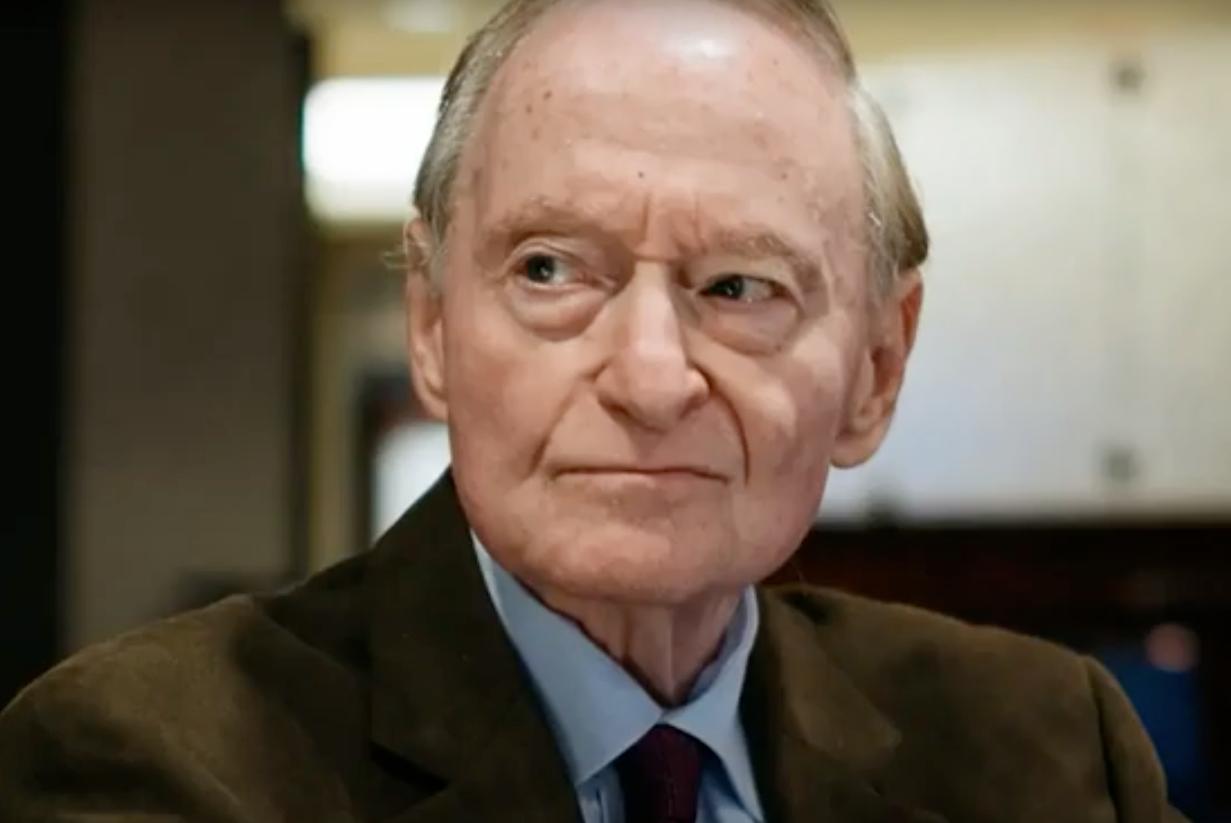
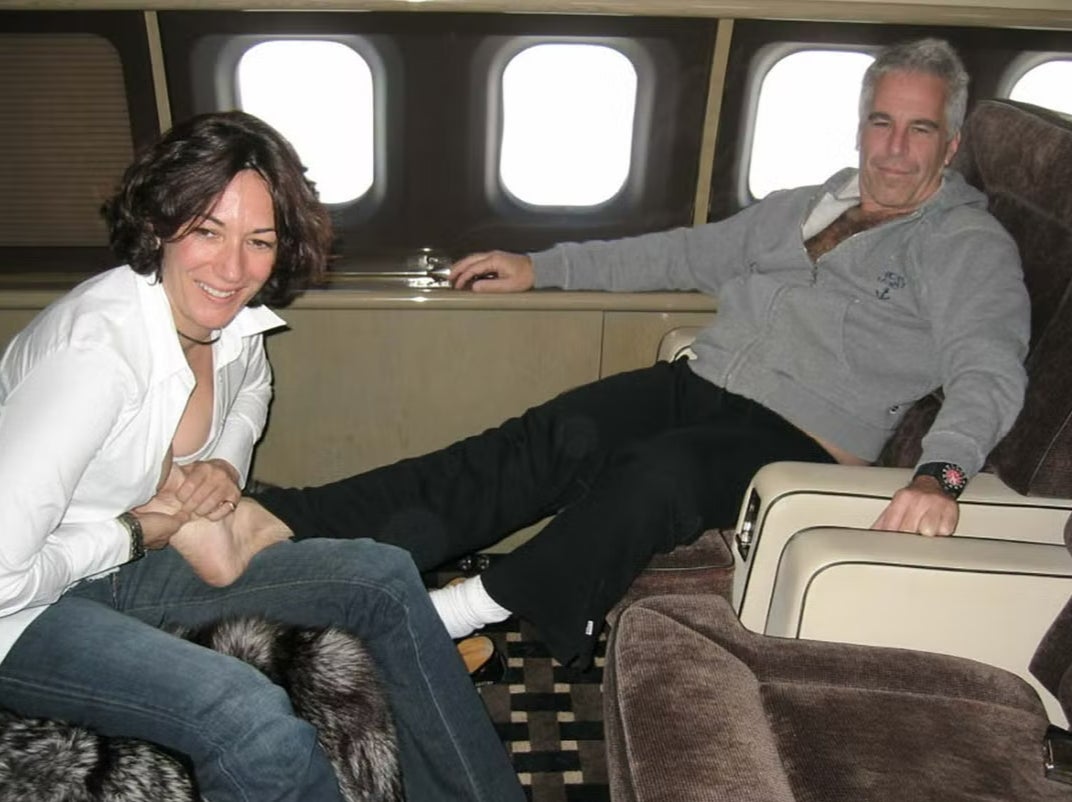
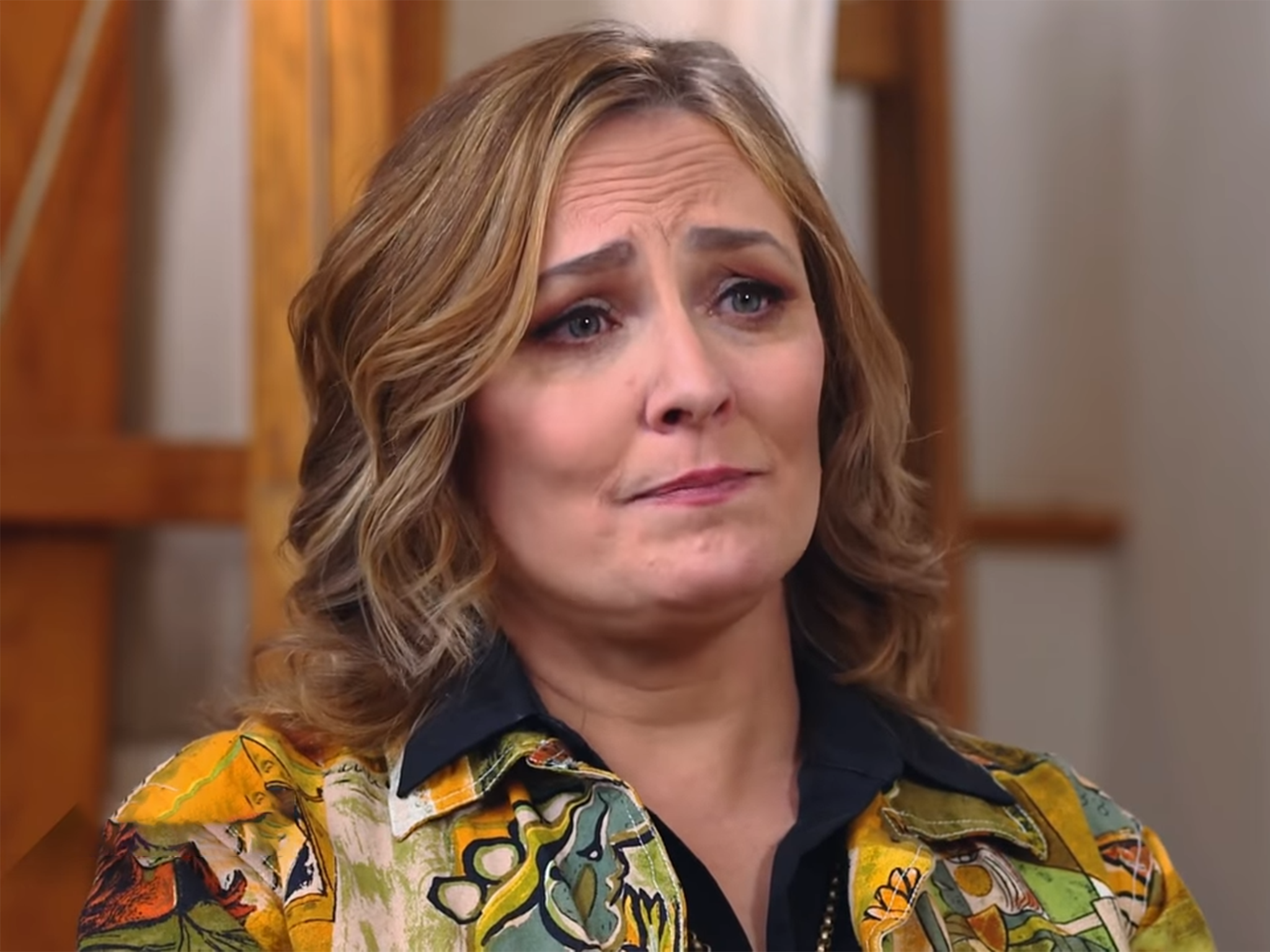
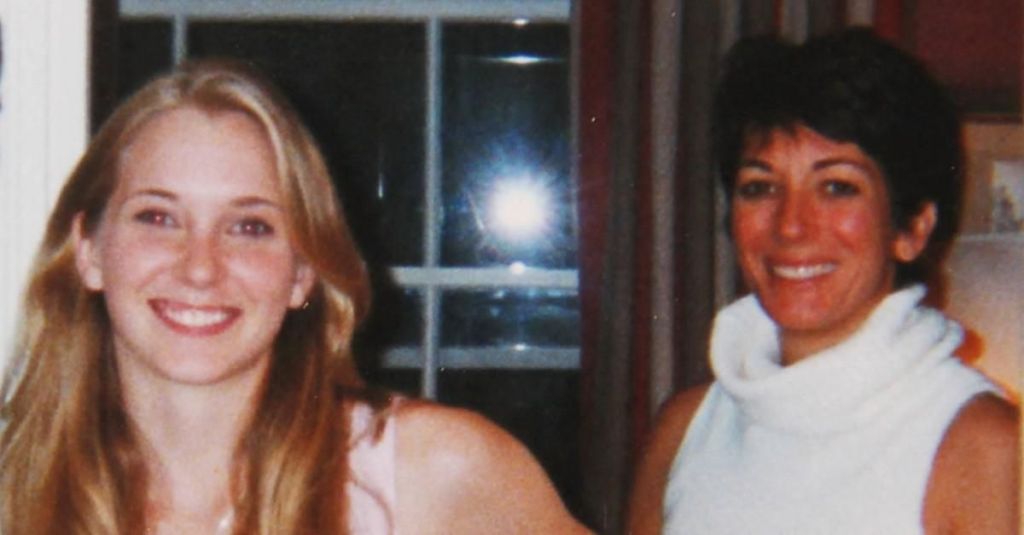


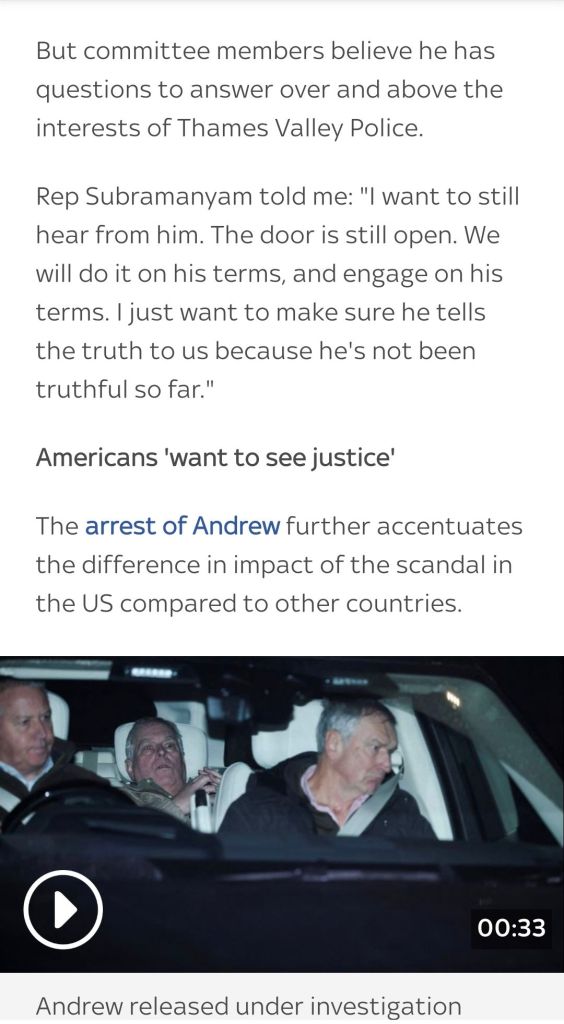
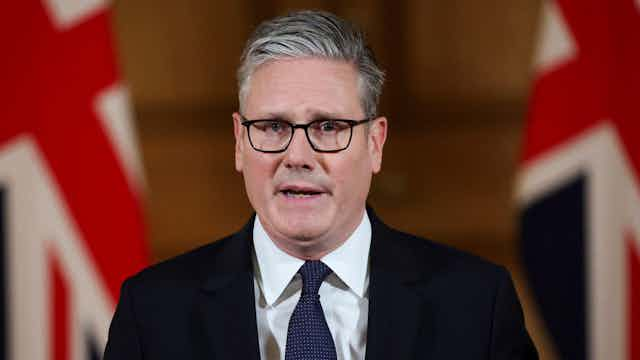
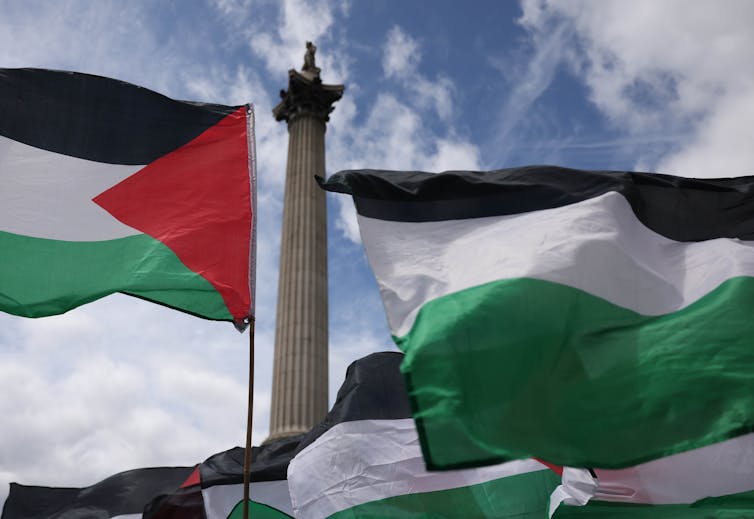





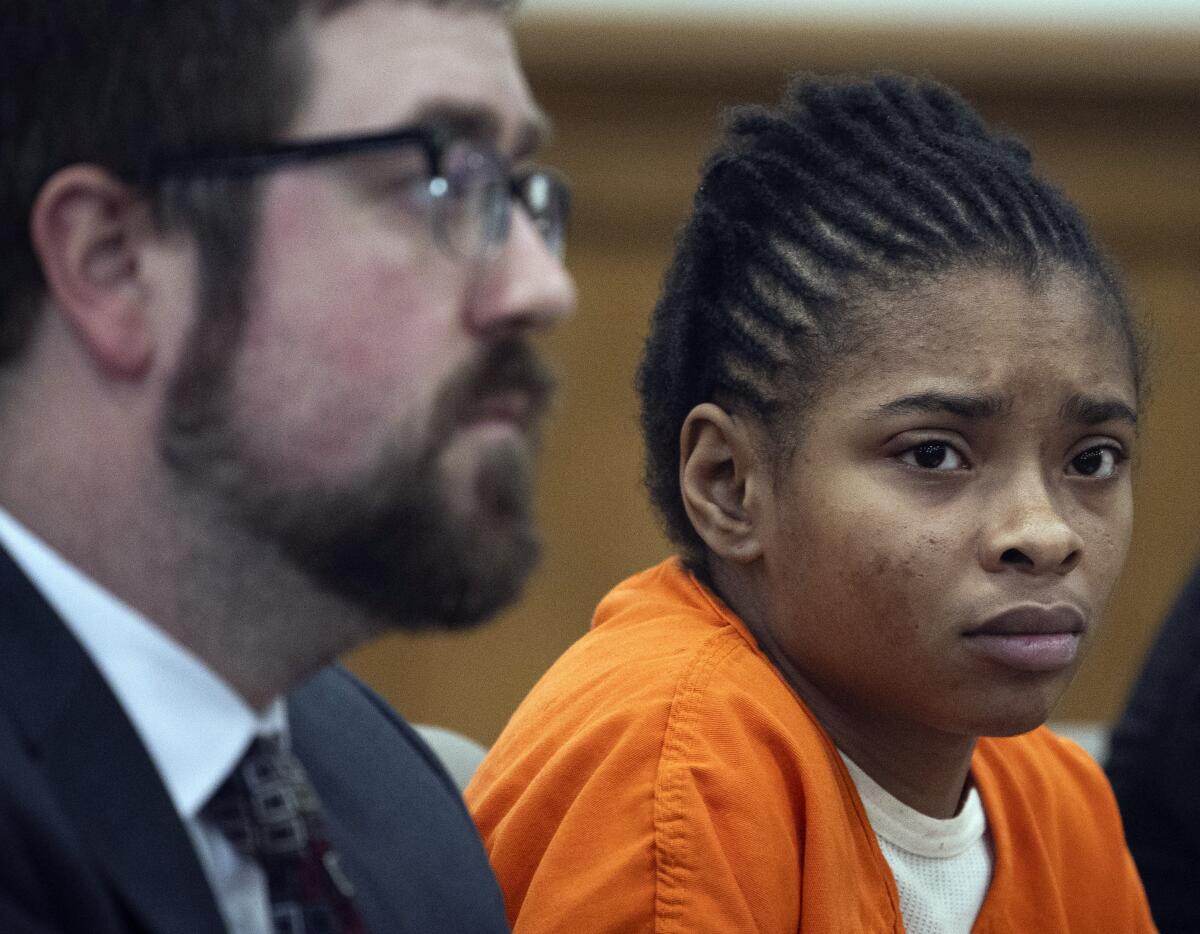


You must be logged in to post a comment.