Any other form of life is perfectly fitted to its environment. We were probably at our best when our bodies were covered in fur and we lived in jungle terrain. Since we lost our fur, we have had to clothe ourselves to protect our vulnerable, naked bodies from changing climates as we explored new terrains once we became nomadic.
We killed animals which we envied for their warm skins. We cut the skins from their flesh and used them to cover our bodies. We ate their flesh and believed we would become like them, strong and fearless.
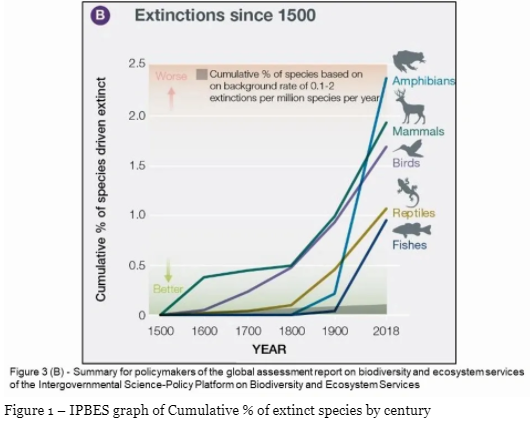
Even today, with so many species becoming extinct, we still adorn ourselves with animal skins and use the animals for not just eating, but medicinal purposes, their bones for fertilizers, and endless inventive ways to incorporate them into our very beings. Causing extinction of diverse wildlife does not make us superior in the hierarchy of living things. Cruelty to animals for the sake of fashion is a well known activity of we, so called, ‘superior; beings.
We must now climb from the dark place where we have chosen to position ourselves, and make a supreme effort to avoid rhetoric and really act now to save what is left and protect, not destroy.
We have filled our bodies with plastic and contaminated air, soil, water with petroleum based forever chemicals. We must prove we can live without causing further harm and halt the continuation of destruction which currently has a momentum.
My next sequence of blogs will be about the development of materials we have inventively procured to clothe our naked bodies to cope with temperatures which vary around the globe during our nomadic travels. What else could we do? Well, we might have stayed in warmer climates where clothing was not necessary, such as the Rainforests. But now we have pushed indigenous people who defend those precious places to near extinction, and the wildlife to definite extinction. Why are we so incapable of working WITH Nature? We have attacked her since we lost our fur and walked in a bipedal fashion.
Did we evolve since then, or did we become an aberation upon the land and sea?
Since Neolithic times, when humans became farmers, we have sought ways to change land use to fit our needs. We have terraced hillsides to grow food, we have developed irrigation and switched routes of rivers to benefit land where water was needed. We have created food after years of genetic propagation, out of wild grasses. We have logged forests to clear land for breeding cattle, pigs and shelter for ourselves. We have copied nature and emulated the nourishment required to increase plant growth and health by creating fertilizers.
Synthetic chemicals in industrial fertilisers can have major negative consequences. Understanding the use of beneficial and environmentally safe fertiliser use on farms was known before the industrial revolution, such as bat guano and bone meal. But industrial fertiliser production has other uses in post industrial times, many beneficial and difficult to do without. It is suggested that there would be two to three billion less people in the world today if we had not applied ammonia-based fertilisers to farming globally. The ammonia is usually made by steam reforming of natural gas, but also coal gasification (common method used in China).
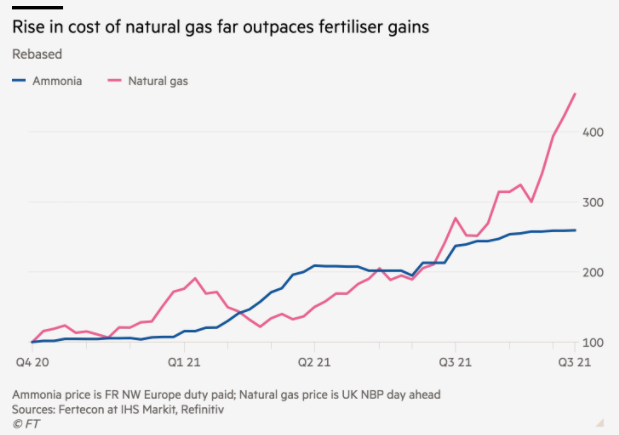
I have written about farming practise and misuse of fertilizers which lead to phosphate contamination in rivers. I am currently newly aware of the National Infrastructure dependence on fertilizer production with its vital CO2 co-product, due to headlines in UK media, September 2021. The explanation was the linking of the worldwide energy crisis resulting in UK shortages of reserve gas and the high energy costs closing fertiliser plants, unable to meet those costs. When the fertiliser plants closed, there was a knock on crisis of 60% reduced supply of CO2 which is used extensively for numerous applications vital to the smooth running of the National Infrastructure. Added to this perfect storm was the shortage of HGV drivers halting the flow of transportation of all goods, including CO2.
One of the US owned fertilizer plants in Teesside, North East England, was only able to reopen when the UK government stepped in and used taxpayers money to take the energy burden costs off the company.
The vital importance of this industry gradually became apparent. I never knew, until this incidence occurred, that carbon dioxide is supplied in numerous forms, such as cylinders, dry ice pellets, refrigerants in many types of containers and that the National Infrastructure would collapse without these supplies.
The US firm was later named as CF Industries (a leading global manufacturer of hydrogen and nitrogen products) supplied 60 percent of the UK required carbon dioxide. Their Ammonia Plant at Teesside uses Natural gas ( Methane CH4) as one of the raw materials for the production of ammonia. A co-product is carbon dioxide.
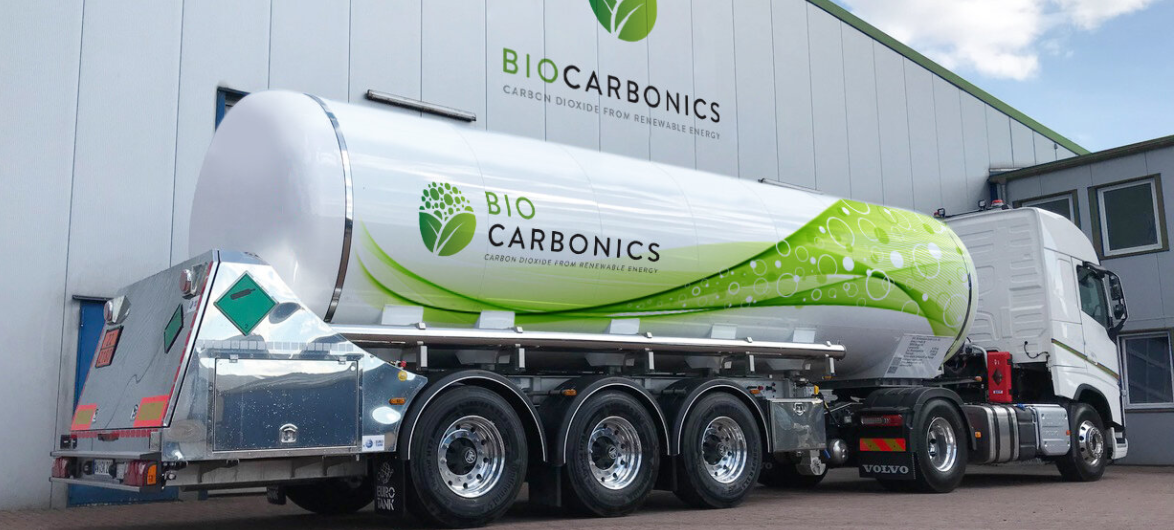
CO2 requires specially equipped ships and trucks. These are also not in sufficient supply world wide.
Approximately 20% of the UK’s carbon dioxide is imported, mostly from plants in Scandinavia and the Netherlands. However, soaring energy prices are also having an impact on European firms. They are also reducing or closing fertiliser companies for the same reason, excessive energy costs. The UK cannot expect help from Europe.
Ammonia is a basic building block for ammonium nitrate fertilizer, which releases nitrogen, an essential nutrient for growing plants, including farm crops and lawns. About 90 percent of ammonia produced worldwide is used in fertilizer, to help sustain food production for billions of people around the world. The production of food crops naturally depletes soil nutrient supplies. In order to maintain healthy crops, farmers rely on fertilizer to keep their soils productive. Fertilizers can also help increase levels of essential nutrients like zinc, selenium and boron in food crops.
Such industrial processes as making fertilizer emit more CO2 than any other chemical mix. This is one of the major contributing factors to increases in Greenhouse Gas acceleration which is heating up the planet faster than scientists once predicted. The previous two blogs to this one showed the data from 2013/2014. The IPCC has updated its guidelines which were set in 2006, to incredibly more relevant measuring advice than was possible in the past. This new data collection and analysis will provide a much more accurate picture of the natural world emissions compared with anthropocene era causes of the climate warming effect.
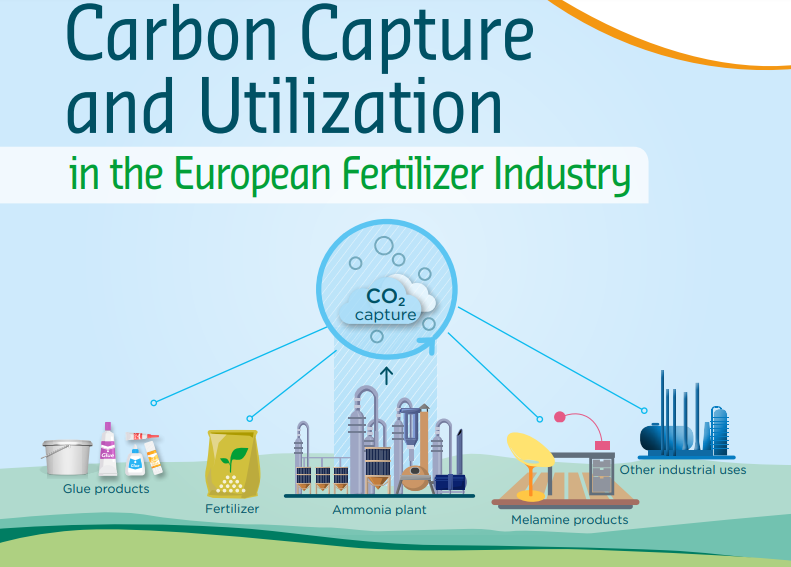
Carbon Capture is the only way to remain in the game. The 2019 graphic below is from a .pdf explaining the plan.
The Rough Storage facility owned by Centrica, sited in the North Sea to hold a huge reserves of natural gas, was closed by the government in 2017. Their reason was to save money on the high cost of maintenance. We lost our reserves. The UK depends on gas for 50% electricity generation. Fertiliser companies also depend on a gas supply to make their products, including the co-product of CO2. This Rough facility has existed for 30 years
This article explains the business side to this ongoing threat to carbon supplies due to lack of attention to storage containment for use in times of crisis.
The shortage of CO2 product was felt almost immediately:
Meat Industry: used in the gas chambers where pigs and chickens are ‘stunned’ before killing.
Dry Ice applications (Dry ice is solid carbon dioxide (CO2). It is made by compressing and cooling gaseous CO2. Expansion converts the liquid into the snow form of the solid state. The snow is then compressed by a hydraulic press into dry ice blocks, slices or pellets).: .Used by Pharmaceuticals to hold vaccines in cool conditions during transportation. Used in plant growth, killing bed bugs, transporting plants.
Refrigerants: Applications have varied from data centres to temperature-controlled warehouses and food production
Food and Drinks Industry paid an advisory firm Global Counsel to produce a report in 2019 warning of this very scenario and to underline the need to prevent the shortage.
Cylinders of CO2: used in medical applications such as special surgical operations. Food industry such as making drinks fizzy. Used in many industrial applications. Food packaging ensuring food stays fresh for supermarket shelves.
Now we, the public, are aware of the major role CO2 plays in maintaining our National Infrastructure. We now realise, if we did not before, that protection of our Infrastructure has been lacking. We are also aware that we cannot afford to wait for carbon capture techniques to replace current harmful climate- warming-gases processes via ammonia plants like the one in Teesside. With COP26 in November, this crisis has highlighted the examples of a greener way to produce CO2 product must be turned into the only alternatives so that the high CO2 dangerous emissions cease.
The economics of industrial gases production has caused mergers such as that of Praxair and Linde and all see growing demand for their products.Reports such as this at mordorintelligence.com are helping decision makers on where to place investment. But now it is not just the economic imperative driving decisions, but how to go forward and not create excessive and harmful greenhouse gases.
Commercial production of CO2 is still going to be a co-product of ammonia plants if we do not change tack immediately. We must not be trapped in an outdated cycle of producing harmful climate warming gases.. Why did we not focus on funding alternative and zero emission production of CO2 long before, when those who oversee the protection of National Infrastructure should have known this was a serious subject for many years? Why do we need to expand meat production when we could be reducing it and thus reduce the demand for so many animals to be gassed prior to killing? Why keep on logging the Amazon Forest to make room for cattle rearing and continue destroying this CO2 sink for the world? Do we really need all those sugar content drinks which then need CO2 to make them fizzy?.
There are many ways to approach this challenge and we must all use our brains to come up with solutions as we cannot rely on politicians to do so. I note research of Cryogenics is providing specialised refrigeration for space vehicles and helping in the fight to capture carbon and reduce greenhouse gases.We need a mighty effort if we are to prevent more melting of permafrost in the Arctic and thus much more harmful releases of methane to the atmosphere.
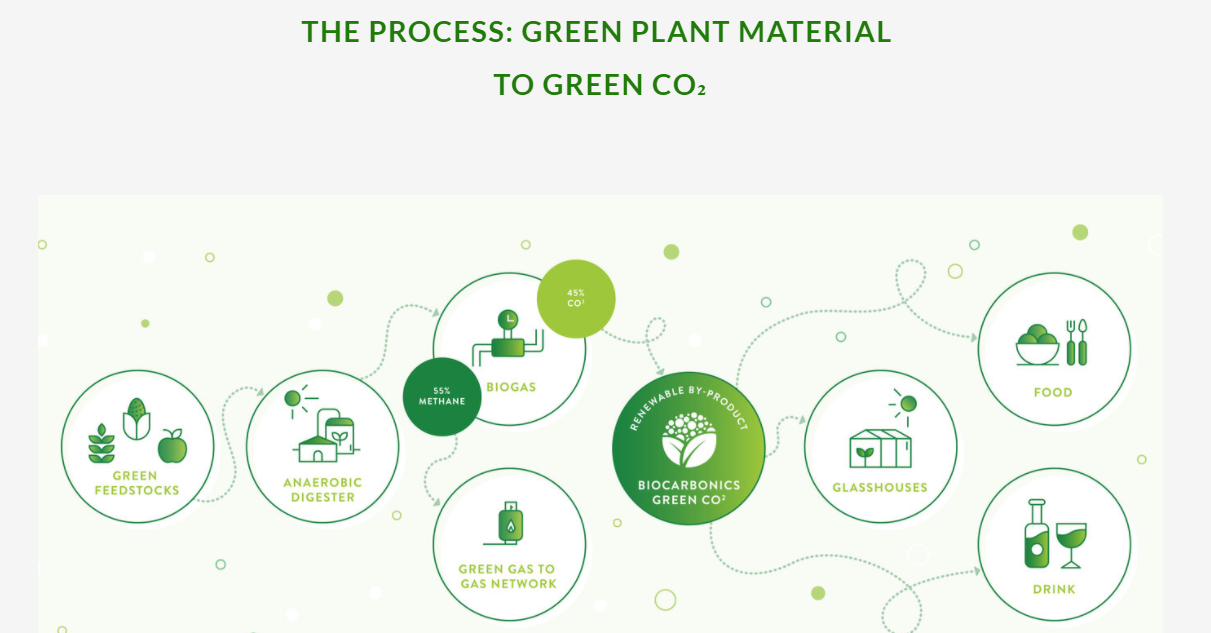
But for local greener supplies of CO2 there are signs of progress. Below is an example of one solution which could be expanded around the UK and globally.
Another developing Green Gas operation can be read here. Ecotricity want to ‘Save our Boilers’ as it is planned to replace them across the UK with expensive and unproven Blue Hydrogen pump systems.
Since Joseph Black discovered carbon dioxide and chemists began to understand its importance, we have harnessed it for many advantageous applications which assist humans in their endeavours.
The medical world has grown thanks to our understanding of how living things depend on carbon dioxide.
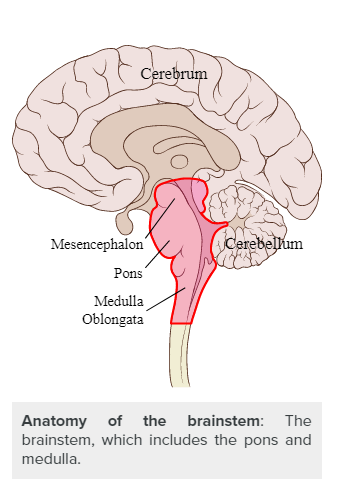
The level of carbon dioxide (CO2) in our body is what controls our breathing. When carbon dioxide reaches a certain level, a signal is sent from the Medulla ( breathing centre in our brain stem) to the breathing muscles, which triggers an inhalation.
Upon exhalation, we exhale carbon dioxide and a new breathing cycle starts. Carbon dioxide is produced in the body all the time, and when we breathe, we exhale the CO2 that has been built up in our body. The more active we are, the more CO2 is produced.
This model applies to all animal life.
Everything we eat can be traced back to photosynthesis, the process by which plants take up carbon dioxide from the air and use it to produce the vast array of organic compounds needed for life.
During cellular respiration animal cells combine oxygen with food molecules to release energy to live and function………cellular respiration produces carbon dioxide as a waste product. Animals use energy to grow, reproduce, and to function. They release the carbon dioxide into the air as a waste product. When animals die, their bodies decompose with the help of bacteria. Decomposition releases carbon dioxide into the atmosphere or water.
Fossilised plants and animals have formed ancient layers beneath the surface of the earth which humans discovered and mined as coal, then oil, then gas, thus releasing carbon dioxide when brought in to use in the Industrialised Era. This activity has upset the balance of the carbon cycle required for life on this planet. Greenhouse Gases have protected the earth’s temperature. Without these gases Earth would be 30 degrees cooler. But human activities have pushed the temperatures up. For an understanding of Climate Change read the Met Office UK page here.
Multiple gases contribute to the greenhouse effect that sets Earth’s temperature over geologic time. Small changes in the atmospheric concentration of these gases can lead to changes in temperature that make the difference between ice ages when mastodons roamed the Earth, and the sweltering heat in which the dinosaurs lived.
Two characteristics of atmospheric gases determine the strength of their greenhouse effect.
The first is their ability to absorb energy and radiate it (their “radiative efficiency”). The second is the atmospheric lifetime, which measures how long the gas stays in the atmosphere before natural processes (e.g., chemical reactions) remove it.
These characteristics are incorporated in the Global Warming Potential (GWP), a measure of the radiative effect (i.e. the strength of their greenhouse effect) of each unit of gas (by weight) over a specified period of time, expressed relative to the radiative effect of carbon dioxide (CO2). This is often calculated over 100 years, though it can be done for any time period. Gases with high GWPs will warm the Earth more than an equal amount of CO2 over the same time period. A gas with a long lifetime, but relatively low radiative efficiency, may end up exerting more warming influence than a gas that leaves the atmosphere faster than the time window of interest but has a comparatively high radiative efficiency, and this would be reflected in a higher GWP.
The table below presents atmospheric lifetime and GWP values for major greenhouse gases from the Fifth IPCC Assessment Report (AR5) released in 2014. These values are periodically updated by the scientific community as new research refines estimates of radiative properties and atmospheric removal mechanisms (sinks) for each gas.
Despite carbon dioxide’s comparatively low GWP among major greenhouse gases, the large human-caused increase in its atmospheric concentration has caused the majority of global warming. Likewise, methane is responsible for a large portion of recent warming despite having a GWP much lower than several other greenhouse gases because emissions have increased drastically.
* No single lifetime can be given for carbon dioxide because it moves throughout the earth system at differing rates. Some carbon dioxide will be absorbed very quickly, while some will remain in the atmosphere for thousands of years.
The table below shows the relative concentrations of these major greenhouse gases and their sources. Some gases (like CO2) are made by both natural and manmade processes, while others (like hydrofluorocarbons) are only the result of human industrial activity. CO2 is typically measured in parts per million because it is 1,000 times more prevalent than the other gases, but is shown as parts per billion in the table for consistency.
Greenhouse gas
Major sources
Pre-industrial concentration (ppb)
2011 concentration (ppb)
Carbon Dioxide
Fossil fuel combustion; Deforestation; Cement production
278,000
390,000
Methane
Fossil fuel production; Agriculture; Landfills
722
1,803
Nitrous Oxide
Fertilizer application; Fossil fuel and biomass combustion; Industrial processes
271
324
Chlorofluorocarbon-12 (CFC-12)
Refrigerants
0
0.527
Hydrofluorocarbon-23 (HFC-23)
Refrigerants
0
0.024
Sulfur Hexafluoride
Electricity transmission
0
0.0073
Nitrogen Trifluoride
Semiconductor manufacturing
0
0.00086
NOTESAtmospheric concentrations are all shown in parts per billion (ppb).SOURCEFifth Assessment Report (Intergovernmental Panel on Climate Change IPCC, 2014)
A Scot, Joseph Black discovered Carbon Dioxide in 1755
The Discovery of Carbon Dioxide
In Black’s early years at Glasgow, he probably started his work on the chemistry of “magnesia alba“. He submitted his work later for his MD thesis in Edinburgh including the discovery of what we now call carbon dioxide, Joseph Black called it “fixed air“. Black observed that the fixed air was denser than air and did not support either flame or animal life. Black also found that when bubbled through an aqueous solution of lime (calcium hydroxide), it would precipitate calcium carbonate. He used this phenomenon to illustrate that carbon dioxide is produced by animal respiration and microbial fermentation. These works foreshadowed Lavoisier’s work, and highly contributed to the foundations for modern chemistry.[4,5]
Before life on earth began, the atmosphere was likely mostly carbon dioxide.
……… CO2 is more than merely a plant fertilizer, as important as that is. CO2 is also a pollution fighter. The gas of life – this miracle molecule – does not merely enable land, lake, river and ocean plants to grow and prosper. It doesn’t just make life on Earth possible, and enhance our health, welfare and environmental quality
Scientists have realised the earth evolved an oxygen cycle and a carbon dioxide cycle which created life. See biology dictionary..
The oxygen cycle and the carbon dioxide cycle (carbon cycle) are two of the biogeochemical cycles on Earth that make life possible. They act separately but are dependent on each other because the carbon cycle gives off oxygen for the oxygen cycle to use, and in turn, the oxygen cycle emits carbon dioxide (CO2) which goes back into the carbon cycle. Plants are the main vehicle by which the oxygen and carbon cycles are connected. Respiration, combustion and decomposition are three other ways that CO2 and/or oxygen is released back into the atmosphere. Another biogeochemical cycle, the hydrogen cycle, connects some of the pathways in nature that are involved in the carbon and oxygen cycles.
……….Life on Earth is based on carbon. The carbon reservoirs are the atmosphere, the biosphere, the oceans, sediments (including fossil fuels) and the mantle and crust of the planet. Carbon dioxide and methane are the two principal forms of carbon in the atmosphere. Plants take in CO2 and water to create sugars like glucose through the process of photosynthesis. The plants then release oxygen and water vapor as byproducts. The oxygen goes back into the oxygen cycle and the water vapor enters the water cycle. Without plants, CO2 would build up to dangerous levels in the atmosphere and add to the greenhouse effect. About 500 gigatons of carbon are stored in the plants and animals that live on the surface of the planet and the soil holds about 1,500 gigatons.
Like the carbon that is used during photosynthesis, the carbon in the oceans, sediments, mantle and crust of the planet has been moving through the carbon cycle for hundreds of millions of years. Carbon can be cycled through the various processes over the course of days, weeks, months or years. It can take tens of millions of years for carbon stored in the ocean floor to be released, if it is ever released at all. Volcanic eruptions are one way that carbon-containing molecules from deep within the planet are released to the surface. The combination of burning fossil fuels (releasing CO2) and deforestation (reducing photosynthesis and carbon storage) caused by humans is disrupting the carbon cycle in a negative way
To me, the Yin-Yang symbol represents the ideal of homeostasis, which we have now lost due to our human activities wrecking the Carbon Cycle.
Ancient Taoist philosophy believes peace and abundance can only take place when there is balance and harmony between yin and yang.
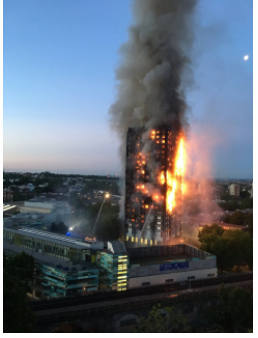
72 people died in the infamous Grenfell Tower Building, situated in London, UK. The fire was due to it being ‘wrapped in plastic’. Surely this council building must be a horrible exception?
Grenfell Fire
No matter how low or high the building, combustible plastic materials should never have been used in the construction of any building. Years later, after the fire, full assessments of all buildings have been made for the UK, and there are THOUSANDS of buildings which have incorporated the plastic material as cladding and insulation. The process of carrying out the specialised fire safety assessment is an extra qualification demanded by the Royal Institute of Chartered Surveyors. At the time of the Grenfell Fire, there were insufficient surveyors with this extra qualification. It is like running hospitals without enough nurses. Yet the system is undermanned, I feel certain, those who lobby against Health and Safety regulations do so to escape stricter standards. Standards should be high in order to prevent deaths such as those which occurred in the inferno of Grenfell Tower. It is unsettling to know that lobbyists can reduce these standards despite horrendous consequences. Corporates apply Conscious Disregard as a matter of doing business.
The plastics-based materials industry has lobbied government to minimise the threat to their industry! Kingspan is one of the major lobbyists. An Irish company, it provided some of the combustible phenolic foam used on Grenfell Tower. It objects to an ‘outright ban’ on such materials. Once this company’s name became known to people, the logo was spotted on foam boards on a building site of a new school and parents immediately flew into a concerted anger aimed at their local council to not repeat the errors of Grenfell.
We expect architects to assign safety as a priority in their building design? Builders must surely also agree the specification of materials must have the highest safety standard? Governments certainly should ensure the safety of their citizens wherever they reside?
Testing of materials is expensive, as this American online course explains:
NFPA 286: Standard Methods of Fire Tests for Evaluating Contribution of Wall and Ceiling Interior Finish to Room Fire Growth
The flame spread test is not reflective of real-world conditions, so NFPA developed a second test to better simulate conditions in an actual fire. NFPA 286 measures flame spread in a room configuration, including fire spread along walls, ceilings, and combinations of both. Though this method is preferred over NFPA 255, it is more expensive. Test results for heat, smoke, and combustion product release from NFPA 286 can be used in fire models for performance-based design, whereas results from NFPA 255 cannot.
Was lack of testing on these combustible materials purely an economic decision?
In the UK we now have updated and clearer specifications. This is ‘after the horse has bolted’.
………….the key criteria that must be met for a product to be used as external wall cladding. It specifically mentions that the material that is used as external cladding for relevant buildings above 18m in height must have a European Classification (see below) of A2-S1-d0 or higher. In this context, point (4) subsection “a” outlines the meaning of the phrase ‘relevant buildings’ which states that ‘relevant buildings’ refers to a building more than 18m above ground level which contains a storey which contains (1) one or more dwellings; (2) an institution or (3) a room for residential purposes (with certain exceptions). Institutions in this instance refers to residential areas, schools, care homes, hospitals, sheltered accommodation, student residences and other institutional accommodation buildings.
We need to act with intent to protect those who inhabit buildings, who trust those who construct our public and private buildings not to skimp on safety by purchasing inferior and dangerous materials not properly tested or accredited. Our Firemen brave these toxic and dangerous situations far too often as a result, being placed in added danger due to toxicity and flame spread issues of combustible plastics.
Grenfell will remain a constant reminder, even though there are plans to demolish the building, like 9/11 the terror of burning tower blocks lives in our memories.
Continuing with my previous theme of fire and toxins, and also looking at another endocrine disrupter, we find this one was invented by chemists during World War Two, as part of rocket propulsion experiments by military weapons makers. Indeed, the military have used this component in rocket propelled weapons ever since, and in space exploration rockets. Only now is Perchlorate not as prominent as it was as rocket propulsion has ‘advanced’.
Definition: Perchlorate is a chemical utilized as a part of the assembling of explosives and rocket propellants for the aerospace, defense, and many other industries. Low levels of ammonium perchlorate collect naturally in the environment.
Perchlorate is categorized as a goitrogen by the United States Environmental Protection Agency (EPA), since at abnormal levels, it can meddle with the thyroid’s capacity to uptake iodide and in this way influence hormone generation.4 Thyroid hormones play a key role in the development and furtherance of the central nervous system of fetuses and newborn children. As indicated by the National Research Council, pregnant women, babies, kids, and individuals with iodine-inadequate weight control plans or prior thyroid problems might be more vulnerable to perchlorate than the general public.1 link found here.
A new analysis of data from the U.S. Centers for Disease Control indicates that a toxic chemical in rocket fuel has severely contaminated the nation’s food and water supply (read the Environmental Working Group study here).Scientists warn that the chemical, known as perchlorate, could cause thyroid deficiency in more than 2.2 million women of childbearing age.
The EPA testing of water in states in the US believe perchlorate no longer is present in drinking water to any worrying degree. But what happened to the health of those people who did experience the problem back in the early 2000s?
According to a recent study:
The American Cancer Society’s most recent estimates for thyroid cancer in the United States for 2021 are:
About 44,280 new cases of thyroid cancer (12,150 in men and 32,130 in women)
About 2,200 deaths from thyroid cancer (1,050 men and 1,150 women)
The death rate for thyroid cancer increased slightly from 2009 to 2018 (0.6% per year) but appears to have stabilized in recent years. Statistics on survival rates for thyroid cancer are discussed in Survival Rates for Thyroid Cancer.
Because of modern systems such as MRI and CT Scans, it is believed more cases can be spotted than could have been found in previous years.
But a pleasing firework display will similarly spew out perchlorate which will end up in groundwater, and these pyrotechnics are used all over the world.
This site explains the efforts being made to tackle the pollution from pyrotechnics. But also tells us how we have unknowingly watched fascinating displays not understanding the contamination implications:
Like other things in need of a combustive blast (think: matches, military explosives and rocket fuel), fireworks rely on a chemical called perchlorate, now known to be a powerful thyroid toxicant. In some locales (including explosives factories, military grounds where there is prolonged or repeated blasting, and yes – favored sites for firework displays) perchlorate can be found in groundwater and surface waters where it tends to persist in potentially toxic concentrations.
The above author recommends this site, by Andy Brunning I have republished his graphic which clearly explains the process.
If perchlorate is found in your drinking water, Reverse osmosis systems can be purchased to fit under the sink. If you can afford this, see
Reverse Osmosis
Under-sink Reverse Osmosis Systems, and whole-house/business purification systems like the Pureoflow, can provide about 95% rejection of Perchlorates. For extremely high levels, a specialty Ion Exchange polishing filter might be required after the RO to achieve very low levels.
If you cannot afford the system, be sure you can get reassurance from a test of your water that it does not contain this dangerous substance.
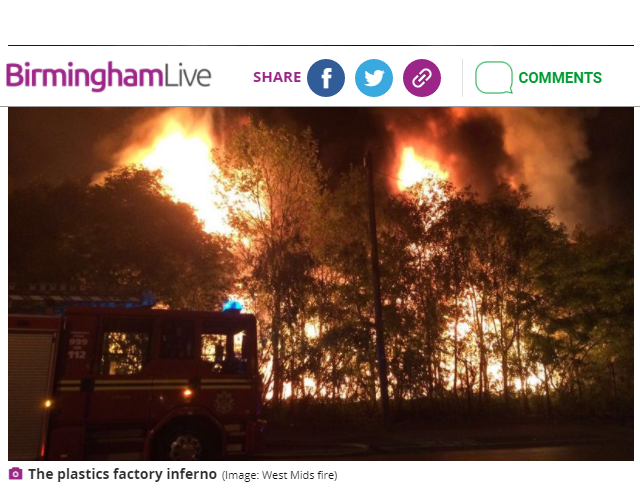
It is helpful to read this article, written over twenty years ago, which describes how different plastics burn. The Firefighters who attend a plastics factory fire need to understand which are the likely plastics burning at the site. It seems to take so long to make sure we live in a safe environment. So many barriers, regulatory and economic, prevent swift action to overcome these threats to communities with plastic factories sited in their midst.
After any toxic fire where evacuations of local communities have occurred, there is a monitoring process such as this service described here. But no amount of monitoring will bring much comfort to those affected.
Plastic toys used to delight children at Christmas usually were made from one particularly nasty group of chemicals, Pthalates. We have been buying such a huge variety of goods since Pthalates were incorporated into the plastics manufacture process
Phthalates are a group of chemicals used in hundreds of products, such as toys, vinyl flooring and wall covering, detergents, lubricating oils, food packaging, pharmaceuticals, blood bags and tubing, and personal care products, such as nail polish, hair sprays, aftershave lotions, soaps, shampoos, perfumes and other fragrance preparations.
As early as 2013, research was beginning to show worrying signs, but it had taken decades to alert us to the dangers:
Six studies from four different prospective cohorts report that gestational BBzP, DEHP, di-butyl phthalate (DBP), and di-ethyl phthalate (DEP) exposures are associated with alterations in infant/toddler physical development as well as parent-reported externalizing, internalizing, and autistic-like child behavior.Author: Joseph M. Braun, Sheela Sathyanarayana, Russ HauserCited by: 280Publish Year: 2013
There are many different types of pthalates, and all must be researched in order to link them to proven harm. As always, if we study the wildlife we can usually show the damage ahead of finding harm in humans. Based on recent research on ants, scientists have concluded that the high levels of phthalates in the bodies of insects around the world are the result of phthalates in the air. [1]
Phthalates are called “endocrine disruptors” because they affect the body’s hormones by mimicking them or blocking them. They interfere with the body’s natural levels of estrogen, testosterone, and other hormones, which is why they are called “disruptors.” Endocrine disruptors are hard to study for several reasons: 1) we are exposed to very small quantities from many different sources every day, 2) researchers have proved that, unlike other chemicals, these appear to have more serious effects at lower levels than at higher levels.[3] Usually, we assume that the higher the dose or exposure, the greater the harm, but endocrine disruptors play by different rules. The director of the National Institute of Environmental Health Sciences, Linda Birnbaum, says that chemical manufacturers are asking “old questions” when they test for safety even though “science has moved on.”[4]
And, yes. You’ve guessed it. They are a major cause of colon cancer.
So now we read about ‘Restrictions of Phthalates’:
EU Expands Restriction of Phthalates Under REACH
January 1, 2019
The EU has added DIBP and expanded the scope from toys and childcare articles to articles in entry 51 to Annex XVII of REACH. The new law will be implemented in phases, starting January 7, 2019.
SAFEGUARDS | Consumer Prod NO. 002/19
But let’s not rush, let us do this gradually so no corporate will suffer.
We know packaging is changing. that is because our diet is believed to be the main source of phthalates because fatty foods such as milk, butter and meats are commonly packaged or stored in plastics containing this dangerous toxin. And a 2018 study gives us even more reason to pay attention to this everyday threat. Researchers at George Washington University compared phthalate levels in people who ate home-cooked meals to those who frequently dined out at restaurants, cafeterias and fast-food outlets. The results? On average, people who are eating food prepared outside of the home have nearly 35 percent higher levels of phthalates circulating in their bodies.
See this article for further everyday language understanding of the threats and how to make efforts to avoid excess disruptors.
The 12 worst endocrine disrupters are known as the “Dirty Dozen List of Endocrine Disruptors”and include:
Bisphenol-A (BPA)
Dioxin
Atrazine
Phthalates
Perchlorate
Fire retardants
Lead
Arsenic
Mercury
Perfluorinate chemicals
Organophosphate pesticides
Glycol ethers
And what of the fires, the images I began this blog with? No wonder we breathe harmful chemicals around the world, everywhere, every corner of the world. Oil based chemicals have been destroying all life on the Planet since we began to invent applications and patted ourselves on the back for our brilliance.
Just try to avoid unnecessary purchases of products this last article warns us about. We already have houses full of these items, but try to reduce consuming these and help our children to spot them and replace them with safer items whenever they can. A tall order? Yes, it is. But let us now ask for Extended Producer Responsibilty to be enforced worldwide.
Renewable industry manufacturers, whether they be start-ups or high fliers, are rubbing their hands with anticipation of financial wealth beyond their wildest dreams. Governments can sell their concepts to citizens as climate change solutions, winning votes and ensuring election.
What was a thriving fishing industry in the UK North Sea Dogger Bank area has been sacrificed to the world’s largest wind turbine farm. The Port of Tyne, once famous for shipbuilding and fishing creating thousands of jobs, is to be the base for maintenance teams to oversee the servicing of this massive offshore site. 200 jobs might be created.
Though Britain has exited Europe, it is European partners who will build the base of the wind farm.
Equinor are a Norwegian company and their website says ‘We’re Equinor, a broad energy company with more than 20,000 colleagues committed to developing oil, gas, wind and solar energy in more than 30 countries worldwide. We’re dedicated to safety, equality and sustainability. As the largest operator in Norway, a leading international offshore operator and a growing force in renewables, we’re shaping the future of energy. ‘
Many of my blogs cover different areas of mining around the world (for example see https://borderslynn.com/2021/05/03/rare-earth-elements-and-balance-of-power/) which, more often than not, poison those who work within the mines or close to them. Wind Turbines require so many elements which, when mined leave devastation to areas of the world, leaving a high human cost which is not compensated. We cannot have these large projects without putting in place ‘extended producer responsbility’. Climate Change is a result of these activities and we cannot begin to fix it only with greenwashing propaganda.
The COP26 UN climate conference will now take place between 1 and 12 November 2021 in Glasgow, Scotland. People will talk of reducing to the point of zero, the use of fossil fuels. They will say we will recycle existing plastics and other materials and no longer need to mine and create them using coal, gas and oil. But if you read my blogs, it looks to me, a mere amateur I admit, we will always need coal, gas and oil to produce ‘green-looking’ products, like hydrogen heating systems and fuels.
We will all be told we are winning if we all stop burning coal in the home and replace it with hydrogen heating systems. If we drive electric cars we will reduce harmful emissions to zero. All our electricity will be produced using wind turbine and solar panel renewables, thus shutting down our coal fired power stations.
But from my experience as a consumer, I doubt we will be winners. We have seen this before. Margaret Thatcher campaigned for the Dash for Gas, and many of us had to whip out our coal fires and replace them and our cookers with Natural Gas, thanks to the oilfields of the North Sea piping the gas to us. Of course the gas is running out now and we have to replace the gas central heating in the near future with, as yet, untried and tested, and currently very expensive, blue hydrogen heating systems (greater carbon footprint than coal and gas). We had to stop using the familiar lightbulbs and start using ‘energy efficient’ lightbulbs, but then found they were not efficient after all and it was a scam to make a few people very rich. These bulbs became hazardous waste.
Although we had 200 years of coal left in the ground, we saw our pits close and instead coal was expensively brought to us from Poland, America and Columbia at a time when 40% of our energy still came from coal. Massive unemployment was almost instant as the pits closed one after another, with pit villages becoming Category D.
An extract here of the Category D inhabitants who stayed when it was planned they should leave, is described here: Tom Kitching’s blog:
I drove into Chopwell (Now Tyne and Wear) on a grey Thursday the week before Christmas. Originally a Category A, in 1964 the anticipated loss of the mine in 1966 saw it regraded as a Category D. This is not some small place of a few rows of cottages, but a small town of several thousand people destined for demolition. Parking outside the healthcare centre I was surrounded by proof that Category D had failed in its most central task. Chopwell was abundantly still here.
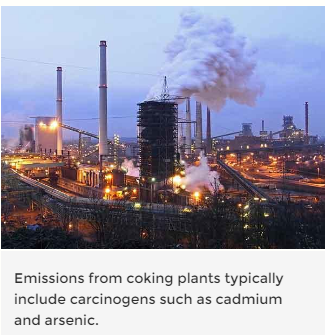
Governments say we are moving away from fossil fuels. Are we? There will be no need to have smelters? No need to have coke furnaces? (I have linked a couple of my blogs written this year to demonstrate these activities are required to create materials needed to build turbines and many other so called ‘green’ products).
Linking my previous blogs written this month about lithium, let us not forget how the UK government is proud to say these islands have ‘ the largest installed capacity of offshore wind in the world’, This government website press release explains how planning permission is no longer a hurdle to companies wanting to get into the energy storage business in a big way.
They state :
Removing barriers for energy storage projects, which are discouraging bolder investment decisions in larger battery facilities, could treble the number of batteries serving the electricity grid. It will help bring about storage cells that are 5 times bigger than those currently available.
They go on to say:
Flexible technologies like batteries will form part of the UK’s smarter electricity grid, supporting the integration of more low-carbon power, heat and transport technologies, which it is estimated could save the UK energy system up to £40 billion by 2050……
and the direction is new types of batteries:
Last month ministers invested £10 million in the world’s largest and first liquid air battery facility in Manchester. The 50 MW project, to be built in Trafford, will be able to store energy for longer than a lithium battery – helping power 200,000 homes. But today’s announcement could usher in batteries that are even bigger.
As lithium batteries degrade they incur high maintenance solutions. Inventors are working hard to offer solutions (and attract investors). There is BIG MONEY in these ‘green industry projects’.
High profile projects may not pay off in the long term, but for now, investors like ‘green’ ideas and that is where £billions will go as we race to appear as if we might be in time to stop the climate change apocalypse. Maybe this is the ‘dot com bubble’ syndrome, but we cannot have funds create more inequalities and devastation in the world in the name of ‘green ideas’. No matter how you spin it, we must have an inclusive plan for the benefit of all as we work toward repairing this poor planet on which we spin.
But let us build in ‘Extended producer responsibility’ to all projects so that we have no legacy of harm inflicted on an innocent Planet.
So far, from what I read about clearing barriers to planning permission, such as flag ship enterprises like HS2 which is destroying precious landscape as we speak, now we see the Dogger Bank project rearing up and all these massive battery storage ideas springing up.
We still have toxic industries running alongside, these are not being replaced with cleaner energies, they are as well as. It is not transitional to green living, it is additional. There was no oversight to protect the planet from industrial pollution before, and I cannot see signs of that changing. So how can we be optimistic? We need optimism, not fear, but all we get is fear based on past experience.
If anything is not economic to recycle, we have always dumped it in landfill with a pretence we had no choice.
All landfill activity is known to be a last resort, but landfills are growing around the globe despite that. We are horrified to smell and see them. Only desperately poor people seek them out to scavenge on them, along with rodents and birds.
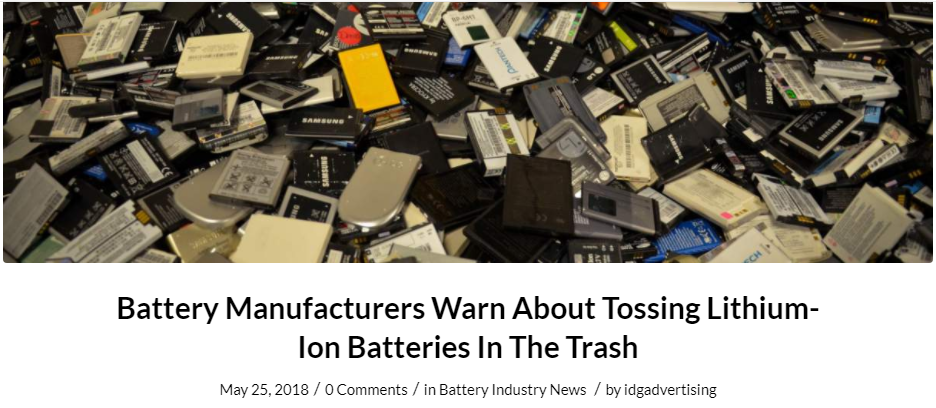
Many of us are familiar with all the toxins which seep into the ground and then are carried by groundwater to the rivers, then the sea. In the case of lithium batteries in everyday household products, we see the warning on the packaging to NOT DISPOSE IN LANDFILL waste. So many of us dutifully place the dangerous item carefully in a container, ready to take to the Recycling Centre near our home. We then place the batteries we have collected in the household battery section, along with all the new technology lightbulbs which are also dangerous and must be recycled carefully. We trust, as we have done our part, we have an efficient system which recycles the batteries carefully and ensures they do not end up in the ‘last resort’ of landfill. But to our horror, invariably we see that most of these household lithium batteries are thrown by householders into the trash, thoughtlessly, with the added toxic harm and explosion danger, we know exists and will permeate our local environment and groundwater.
The new lithium car batteries are a different matter. We know they will soon be made in vast quantities, and China is well ahead in making most of them for their many electric vehicles which are common in their country. They know from experience that a lithium car battery, when it has been used to the end of its life for a car, still has 70 percent life left to be repurposed, and they have become adept at coming up with highly useful repurposing uses.
We now have the dilemma of dealing with a growing imminent problem of lithium car batteries in the UK.
Lithium car batteries, on the other hand, have much more complicated chemistries and a mix of materials that don’t work and play well together in an industrial recycling process. A lithium-ion battery is not just lithium but also has cobalt, manganese, iron phosphate, or nickel compounds, not to mention aluminum, copper, and graphite. Not only is the mix of metals more complicated, but their physical form as powders coated onto metal foil makes recovery of each component far more complicated than just throwing it in a furnace.
The electrolyte in a lithium battery is much more complicated too, consisting of lithium salts in volatile organic solvents like ethylene carbonate. This makes the liberated electrolytes much more difficult to deal with as well; no simple dilution and neutralization with a basic solution like sodium bicarbonate will render these compounds safe enough to discharge to a sewer as is the case for lead-acid recycling. Dealing with that adds to the cost of recycling and cuts into the potential profit.
A good article tells us about the difficulties with a headline:
If Cobalt, which is becoming harder and more expensive to locate and mine, is no longer a component, as Elon Musk has determinedly planned, as part of the essential functioning lithium battery, then the economics of recycling a lithium battery will no longer be viable.
Recycling is not done to save the Planet. It is done to make money, and when not economically viable, it simply does not happen. We have toxic waste accumulating in landfills, or exported to countries who currently have recycling plants designed for extracting valuable resources.
We attempt ‘out of sight, out of mind’ harmful waste exports as if no one will ever know. But of course, we find out. The UK will soon have rid itself of diesel and petrol cars and we will find we cannot keep using the expensive and dangerous process of transporting end of life lithium batteries to Europe for recycling. We may copy China and make manufacturers of the electric cars responsible for recycling/ repurposing, which seems an eminently good idea. Indeed, all manufacturers of dangerous waste filled products could take ownership of the disposal problem, just as they are beginning to do in Australia with lithium batteries.
We also need a much higher profile campaign to STOP householders throwing their used batteries into landfill destined trash. Also, hoarding old phones and products we no longer use which have time-bomb potentially exploding lithium batteries sitting within them must be carefully disposed of and all users need advice and instruction to attend to this with some urgency.
Paul RogersProfessor of Peace Studies, University of Bradford
Disclosure statement
Paul Rogers is a Council member of Rethinking Security and a sponsor of the Peace and Justice Project. The fourth edition of his book, “Losing Control: Global Security in the 21st Century”, has just been published.
The September 11 attacks in New York and Washington were visceral in their impact. In less than three hours, the twin towers of the World Trade Center were reduced to a mountain of twisted metal and rubble, killing more than 2,700 people, while hundreds more were killed at the Pentagon. All three were destroyed by men armed with nothing more than parcel knives hijacking fuel-laden passenger aircraft.
America was under attack. It came not long after after George W. Bush had formed his new administration with highly influential neoconservatives and assertive realists at the Pentagon and State Department, as well as in the White House itself. All were determined to see the vision of a “new American century” fulfilled – a neoliberal free market world rooted in US experience and guided by its post-cold war progress as the world’s sole economic and military superpower.
At the time, commentators compared the attack to Pearl Harbor, but the effect of 9/11 was much greater. Pearl Harbor had been an attack by the naval forces of a state already in great tension with the United States. It was against a military base in the pre-television age and away from the continental United States. The 9/11 attack was a much greater shock, and if war with Japan was a consequence of Pearl Harbor, then there would be war after 9/11 even if the perpetrators and those behind them were scarcely known to the American public.
The vision of the new American century had to be secured and force of arms was the way to do it, initially against al-Qaida and the Taliban in Afghanistan.
Hold the front page: the attacks dominated news headlines for weeks afterwards. Walter Cicchetti/Alamy Stock Photo
A few people argued against war at the time, seeing it as a trap to suck the US into an Afghanistan occupation instead of treating 9/11 as an act of appalling mass criminality, but their voices did not count.
The first “war on terror” – against al-Qaida and the Taliban – started within a month, lasted barely two months and seemed an immediate success. It was followed by Bush’s State of the Union address in January 2002 declaring an extended war against what Bush referred to as an “axis of evil” of rogue states intent on supporting terror and developing weapons of mass destruction.
Iraq was the priority, with Iran and North Korea in the frame. The Iraq War started in March 2003 and was apparently over by May 1, when Bush gave his “mission accomplished” speech from the flight deck of the USS Abraham Lincoln.
That was the high point of the entire US-led “war on terror”. Afghanistan was the first disaster, with the Taliban moving back into rural areas within two to three years and going on to fight the US and its allies for 20 years before taking back control last month.
In Iraq, even though the insurgents appeared defeated by 2009 and the US could withdraw its forces two years later, Islamic State (IS) rose phoenix-like from the ashes. That led to the third conflict, the intense 2014-18 air war across northern Iraq and Syria, fought by the US, the UK, France and others, killing tens of thousands of IS supporters and several thousand civilians.
Even after the collapse of its caliphate in Iraq and Syria, IS arose once again like the proverbial phoenix, spreading its influence as far afield as the Saharan Sahel, Mozambique, the Democratic Republic of the Congo, Bangladesh, southern Thailand, the Philippines, back in Iraq and Syria once more and even Afghanistan. The spread across the Sahel was aided by the collapse of security in Libya, the 2011 NATO-led intervention being the fourth of the west’s failed wars in barely 20 years.
In the face of these bitter failures, we have two linked questions: was 9/11 the beginning of decades of a new world disorder? And where do we go from here?
9/11 in context
It is natural to see the single event of 9/11 as turning traditional military postures on their heads, but that is misleading. There were already changes afoot, as two very different events in February 1993, eight years before the attacks, had shown all too well.
First, incoming US president, Bill Clinton, had appointed James Woolsey as the new director of the CIA. Asked at his Senate confirmation hearing how he would characterise the end of the cold war, he replied that the US had slain the dragon (the Soviet Union) but now faced a jungle full of poisonous snakes.
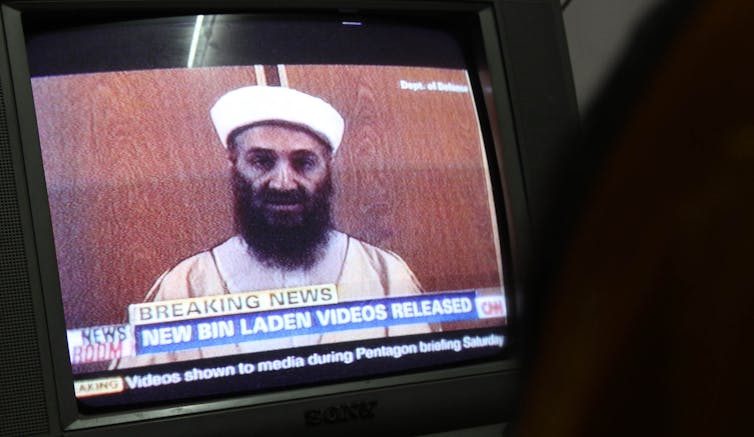
Snake #1: Osama bin Laden. EPA/Rehan Khan
During the 1990s, and very much in line with Woolsey’s phrase, the US military moved from a cold war posture to preparing for small wars in far-off places. There was more emphasis on long-range air strike systems, amphibious forces, carrier battle groups and special forces. By the time Bush was elected in November 2000, the US was far more prepared to tame the jungle.
Second, the US military and most analysts around the world missed the significance of a new phenomenon, the rapidly improving ability of the weak to take up arms against the strong. Yet the signs were already there. On February 26 1993, not long after Woolsey had talked of a jungle full of snakes, an Islamist paramilitary group attempted to destroy the World Trade Center with a massive truck bomb placed in the underground car park of the North Tower. The plan was to collapse it over the adjoining Vista Hotel and the South Tower, destroying the entire complex and killing upwards of 30,000 people.
The attack failed – though six people died – and the significance of the attack was largely missed even though there were many other indicators of weakness in the 1990s. In December 1994, an Algerian paramilitary group tried to crash an Airbus passenger jet on Paris, an attack foiled by French special forces during a refuelling stop at Marseilles. A month later a bombing by the LTTE of the Central Bank in Colombo, Sri Lanka devastated much of the central business district of Colombo, killing over 80 and injuring more than 1,400 people.
A decade before the first World Trade Center attacks, 241 Marines had been killed in a single bombing in Beirut (another 58 French paratroopers were killed by a second bomb in their barrack) and between 1993 and 2001 there were attacks in the Middle East and East Africa including the Khobar Towers bombing in Saudi Arabia, an attack on the USS Cole in Aden Harbour and the bombing of US diplomatic missions in Tanzania and Kenya.
The 9/11 attacks did not change the world. They were further steps along a well-signed path leading to two decades of conflict, four failed wars and no clear end in sight.
What now?
That long path, though, has from the start had within it one fundamental flaw. If we are to make sense of wider global trends in insecurity, we have to recognise that in all the analysis around the 9/11 anniversary there lies the belief that the main security concern must be with an extreme version of Islam. It may seem a reasonable mistake, given the impact of the wars, but it still misses the point. The war on terror is better seen as one part of a global trend which goes well beyond a single religious tradition – a slow but steady move towards revolts from the margins.
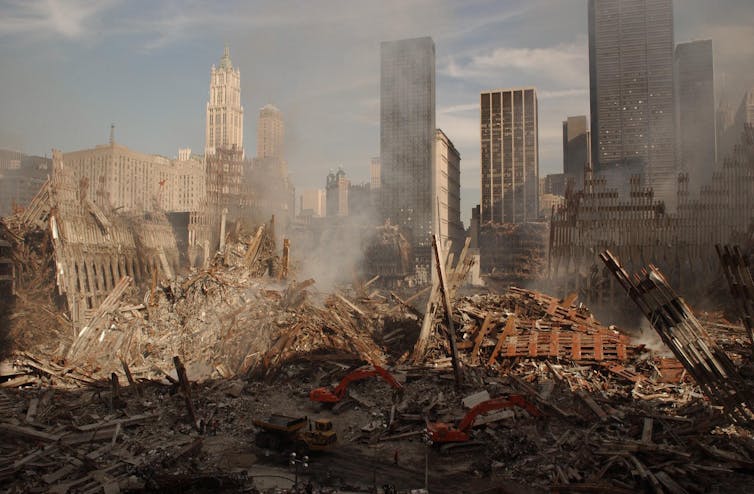
Devastation: Ground Zero the day after the 9/11 attacks on New York. Everett Collection Historical/Alamy Stock Photo
In writing my book, Losing Control, in the late 1990s – a couple of years before 9/11 – I put it this way:
What should be expected is that new social movements will develop that are essentially anti-elite in nature and will draw their support from people, especially men, on the margins. In different contexts and circumstances, they may have their roots in political ideologies, religious beliefs, ethnic, nationalist or cultural identities, or a complex combination of several of these.
They may be focused on individuals or groups, but the most common feature is an opposition to existing centres of power … What can be said is that, on present trends, anti-elite action will be a core feature of the next 30 years – not so much a clash of civilisations, more an age of insurgencies.
This stemmed from the view that the primary factors in global insecurity were a combination of increasing socioeconomic divisions and environmental limits to growth coupled with a security strategy rooted in preserving the status quo. Woolsey’s “jungle full of snakes” could be seen as a consequence of this, but there would be military responses available to keep the lid on problems – “liddism” in short.
More than two decades down the road, socioeconomic divisions have worsened, the concentration of wealth has reached levels best described as obscene and has even increased dramatically during the COVID-19 pandemic, itself leading to food shortages and increased poverty.
Meanwhile climate change is now with us, is accelerating towards climate breakdown with, once again, the greatest impact on marginalised societies. It therefore makes sense to see 9/11 primarily as an early and grievous manifestation of the weak taking up arms against the strong, and that military response in the current global security environment woefully misses the point.
At the very least there is an urgent need to rethink what we mean by security, and time is getting short to do that.










 A new
A new 





 We believe in the free flow of information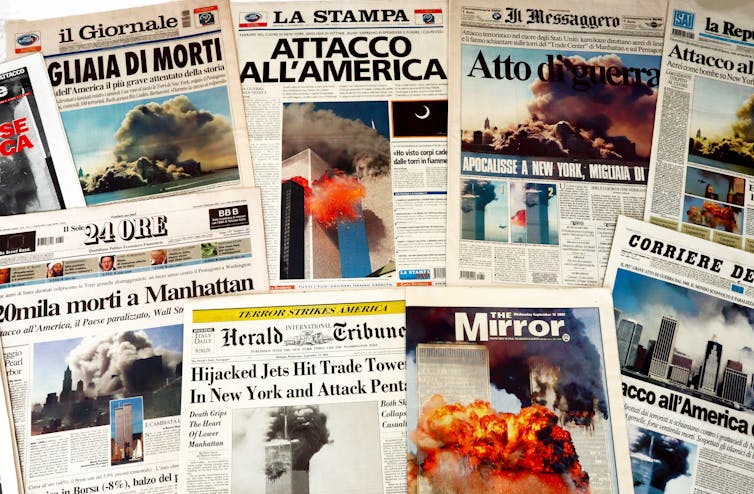
 borderslynn
You must be logged in to post a comment.